
Busan’s ‘바다가 잇는 맛과 말’ explores food and migration, Oct. 14–22
The Busan Cultural Foundation’s project ‘바다가 잇는 맛과 말’ (‘Tastes and Words Across the Sea’) runs from 14 to 22 October 2026 at F1963 and in Suyeong-gu and the old town. Marking 150 years since Busan Port opened in 1876, it examines how migration and exchange shaped dishes such as milmyeon and eomuk, and everyday language, through an exhibition, a talk, films and food walks.
Milmyeon and wartime refugees
Busan’s Future Heritage programme traces the development of milmyeon, the city’s wheat-noodle dish, to wartime refugees in Uam-dong, flour distributed by Donghang Catholic Church and a shop that turned that flour into noodles. Familiar cooking methods were adapted to the ingredients available in a new city.
The project runs from 14 to 22 October 2026 at F1963 and locations in Suyeong-gu and the old town, with an exhibition, conversations, film screenings and food-culture walks. Timed for the 150th anniversary of the opening of Busan Port in 1876, it looks at how people’s journeys remain in food names and everyday speech.
The history of eomuk
The city’s Future Heritage account of Bupyeong Kkangtong Market says fishcake-making techniques arrived with Japanese settlers, passed to Korean producers after liberation and became everyday food during the Korean War and the years of displacement. Fishcake shops stayed in the market after the factories moved out.
These histories also involve colonial rule and war. The Busan Modern and Contemporary History Museum’s account of Yeongdo links the growth of modern fisheries and fishcake production to Japanese fishing settlements and industrial facilities.
The published information does not say how milmyeon or eomuk will feature in the exhibition or what participants will eat on the walks.
Exhibition: ‘A Table Set by the Port’
Kiswire says it converted its Suyeong factory, built in 1963, into the F1963 cultural space in 2016. The site now houses exhibition and performance spaces, a bookstore, cafés and gardens.
The exhibition ‘항구가 차린 식탁’, roughly ‘A Table Set by the Port’, runs in the F1963 Glasshouse from 14 to 22 October, daily from 10:00 to 19:00. According to Newsis, it is organised around shortages of ingredients, cultural mixing, everyday life and the use of tools, with artworks, ingredients, tableware and video tracing movement and exchange in Busan’s food.
Busan–Taiwan food talk
On 17 October, from 15:00 to 17:30, the YES24 Busan Suyeong bookstore at F1963 hosts a discussion. Topics include how Busan dishes change as they travel, memories of migration in Taiwanese food, the transmission and reinvention of fishcake-making, and building relationships through food.
YES24 lists Pusan National University professor Choi Jin-a (최진아), Catherine Lee (캐서린 리) of the Taipei Culture Foundation, Jung Sung-woo (정성우) of Samjin Amook and independent curator Cho Hye-su (조혜수) as speakers, with Jang Hyeon-jeong (장현정), head of Homilbat Publishing, moderating.
Food-culture walks
The walks run from 11:00 to 15:00 in Suyeong-gu on 17 October, focusing on longstanding foods and changing tastes, and in the old town on 18 October, focusing on memories of the port and its food. Newsis reports that poet and food-culture columnist Choi Won-jun will accompany them.
The restaurants and meeting points have not been published. The Saturday walk ends at 15:00, when the bookstore talk begins, so joining both may not be practical.
Film screenings
Films will be shown at F1963 Square on 16 and 17 October, from 18:30 to 20:30. Newsis names ‘Little Forest’ and ‘Kamome Diner’ among the titles. The published material does not say which film screens on which date or how admission works.
Visitor information
The talk has a free lottery for 25 participants. YES24 lists 14 October as the entry deadline, with results at 11:00 on 15 October; conditions are on the official application page.
F1963 is at 20, Gurak-ro 123beon-gil, Suyeong-gu, Busan (부산 수영구 구락로123번길 20). The event poster directs visitors to the Kiswire stop (고려제강) on city bus 54 or Sanjeong Apartment (산정아파트) on Suyeong-gu village bus 2, and recommends public transport because of weekend traffic. All times are Korea Standard Time.
The public material does not fully cover fees and booking conditions for the exhibition, films and walks, interpretation and subtitle languages, or accessibility. Enquiries go to the Busan Cultural Foundation’s Global Culture Team on 051-745-7273, or +82-51-745-7273 from abroad.
Sources & context
2026-10-13T10:32:58.466Z
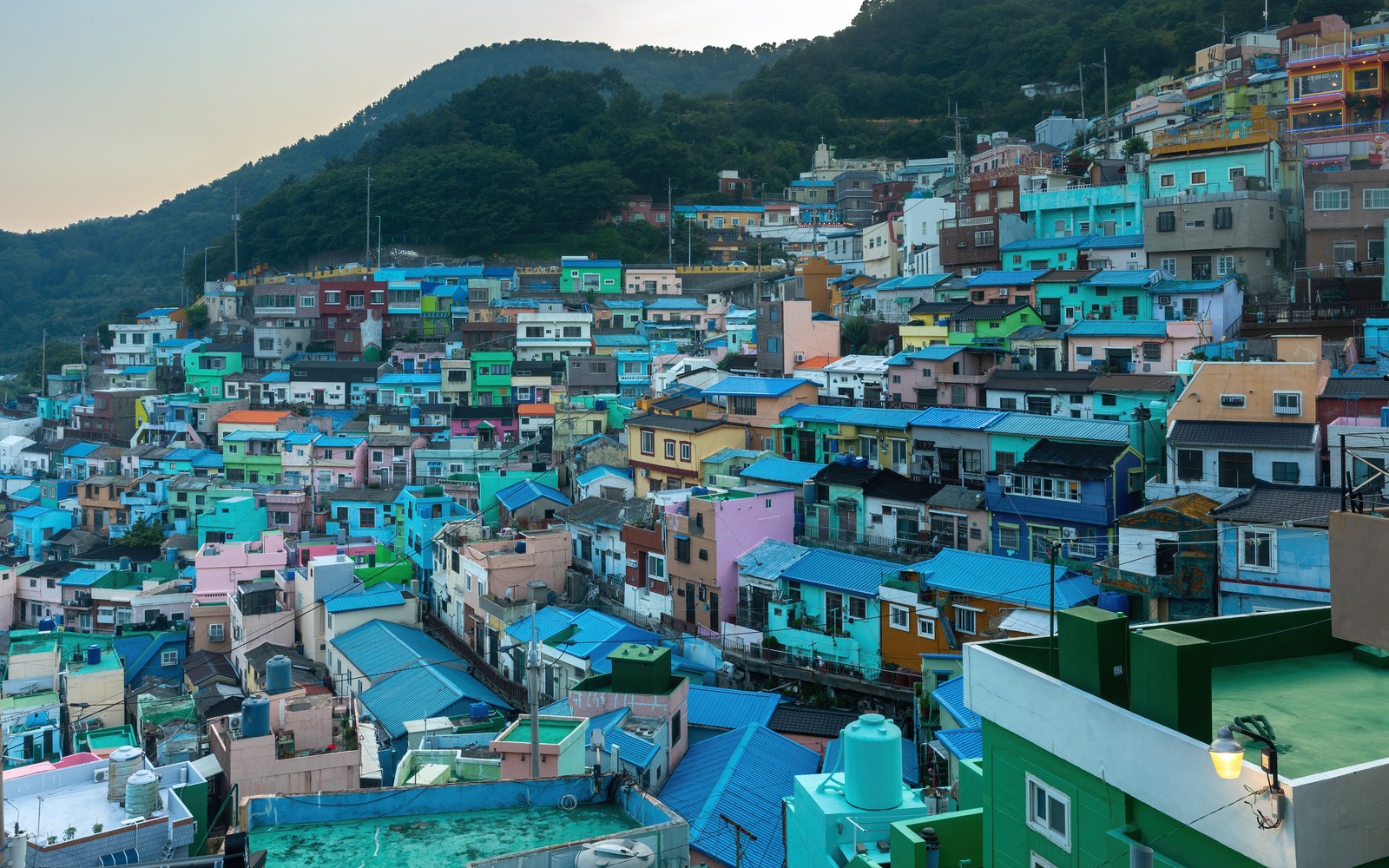
bscf.or.kr ↗bscf.or.kr ↗YES24 ↗Newsis ↗Busan Metropolitan City ↗Busan Metropolitan City ↗busan.go.kr ↗kiswire.com ↗Busan Metropolitan City ↗Basile Morin / Wikimedia Commons · original photograph and license ↗CC BY-SA 4.0 · license terms for the photograph ↗Bernard Gagnon / Wikimedia Commons · original photograph and license ↗CC0 1.0 · license terms for the photograph ↗hyolee2 / Wikimedia Commons · original photograph and license ↗CC BY-SA 3.0 · license terms for the photograph ↗Gamcheon Culture Village, Busan, 13 June 2024. An archival illustration of city life, not this event or a confirmed tour stop. Photo: Basile Morin / “Colorful houses in Gamcheon Culture Village at sunset in Busan South Korea.jpg” / Wikimedia Commons / CC BY-SA 4.0. Proportionally resized and JPEG-encoded. The card uses a centred crop; open the photo to see the complete frame.
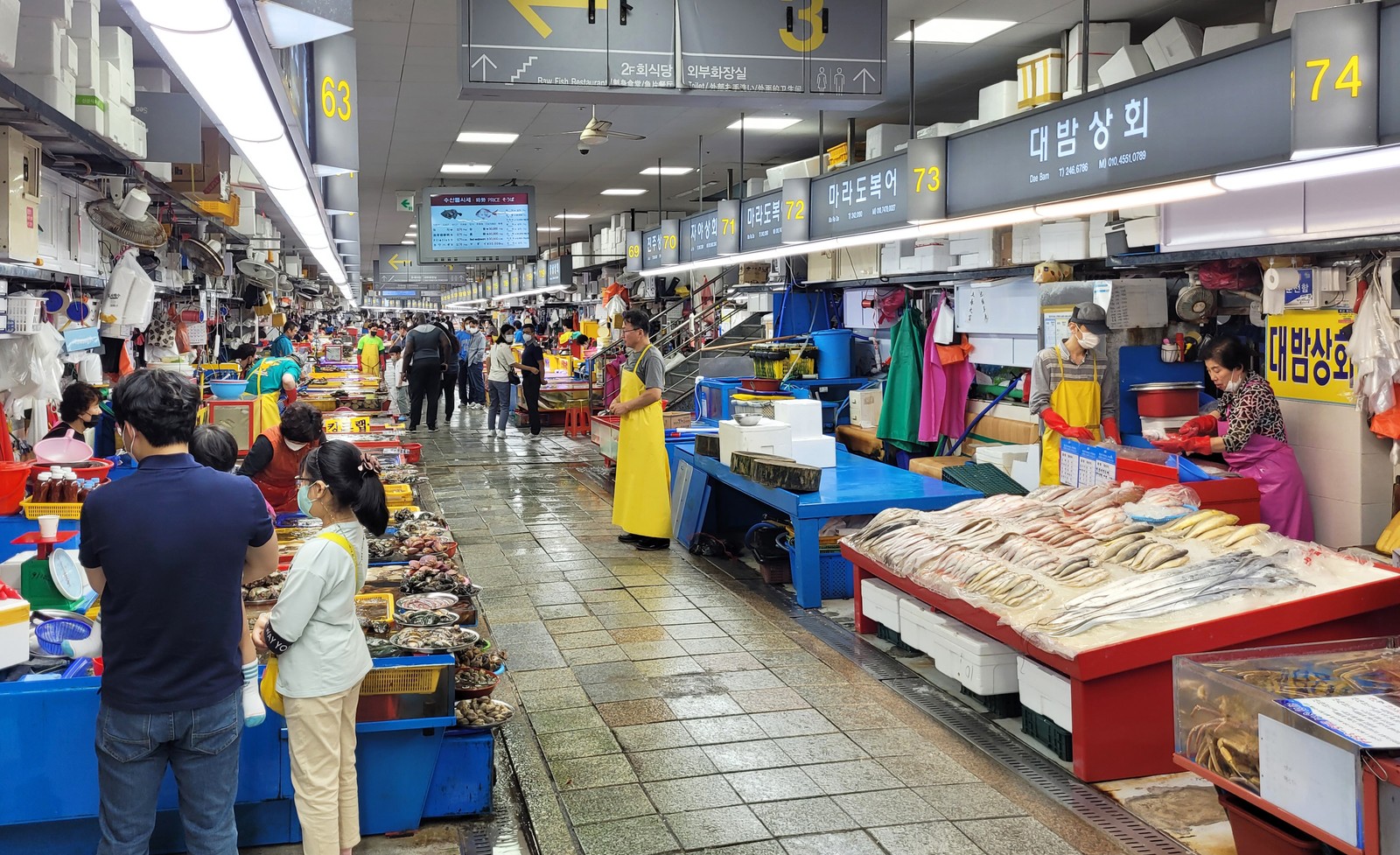
Inside Jagalchi Market, Busan, 2 October 2022. An archival food-culture illustration, not this event or a confirmed tour stop. Photo: Bernard Gagnon / “Jagalchi Market 01.jpg” / Wikimedia Commons / CC0 1.0. Proportionally resized and JPEG-encoded. The card uses a centred crop; open the photo to see the complete frame.
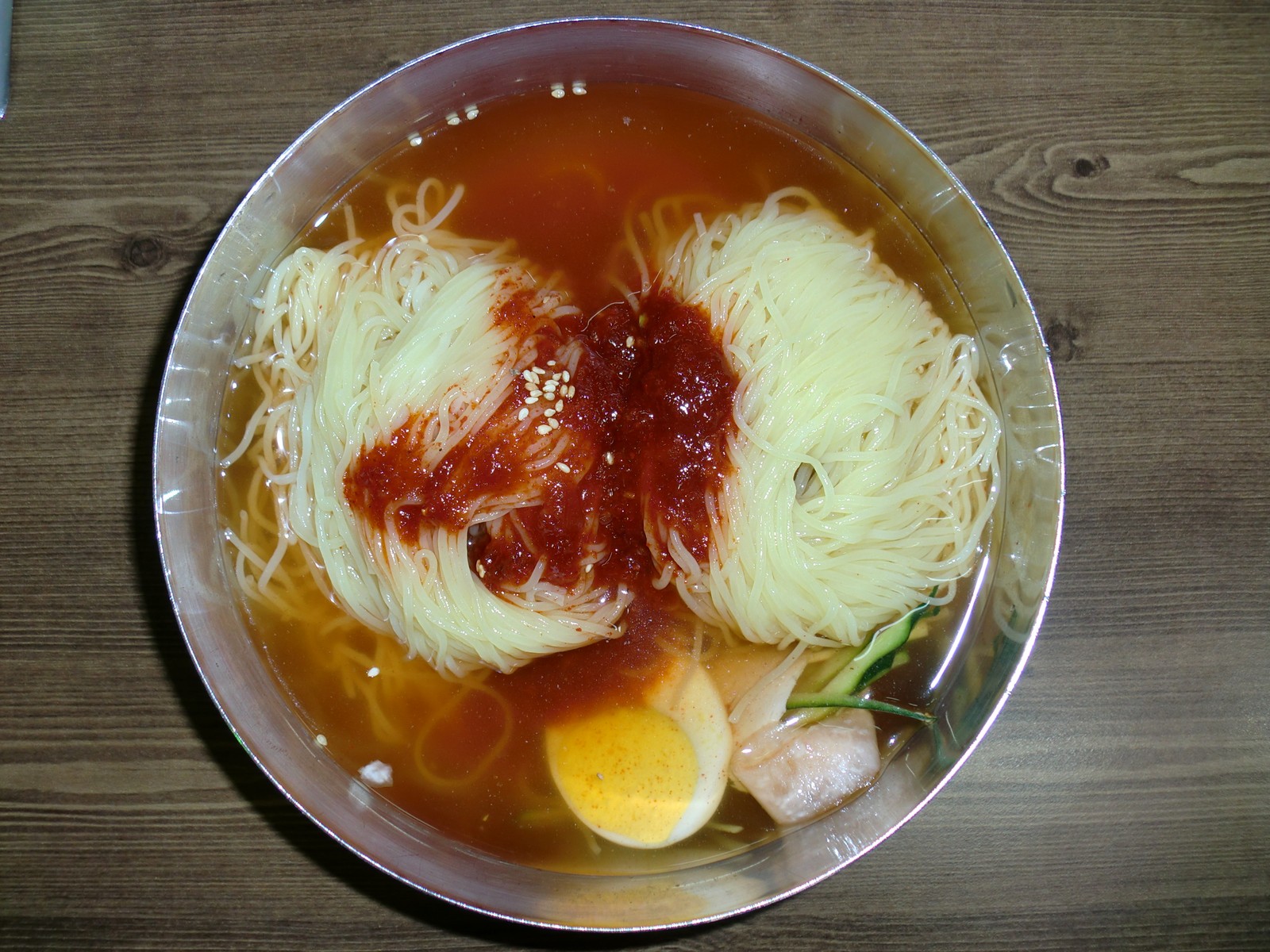
Milmyeon at Yeongdong Myeonok in Choryang, Busan, 21 October 2013. An archival food-history illustration, not an event menu or confirmed tour restaurant. Photo: hyolee2 / “Milmyeon choryang yeongdong myeonok.JPG” / Wikimedia Commons / CC BY-SA 3.0. Proportionally resized and JPEG-encoded. The card uses a centred crop; open the photo to see the complete frame.
These three real Busan photographs were taken between 2013 and 2024. They illustrate the city and its food, not the 2026 event, exhibits or walking-tour route.