
Taste and make kimchi at the Gwangju Kimchi Festival, Oct. 23–25
The 33rd Gwangju Kimchi Festival runs 23–25 October around the Gwangju government complex, with tastings at a foreign-visitor lounge, a kimchi school where participants mix 1 kg of kimchi, and a food area serving dishes made with kimchi. Festival admission is free; the school charges separately.
The festival
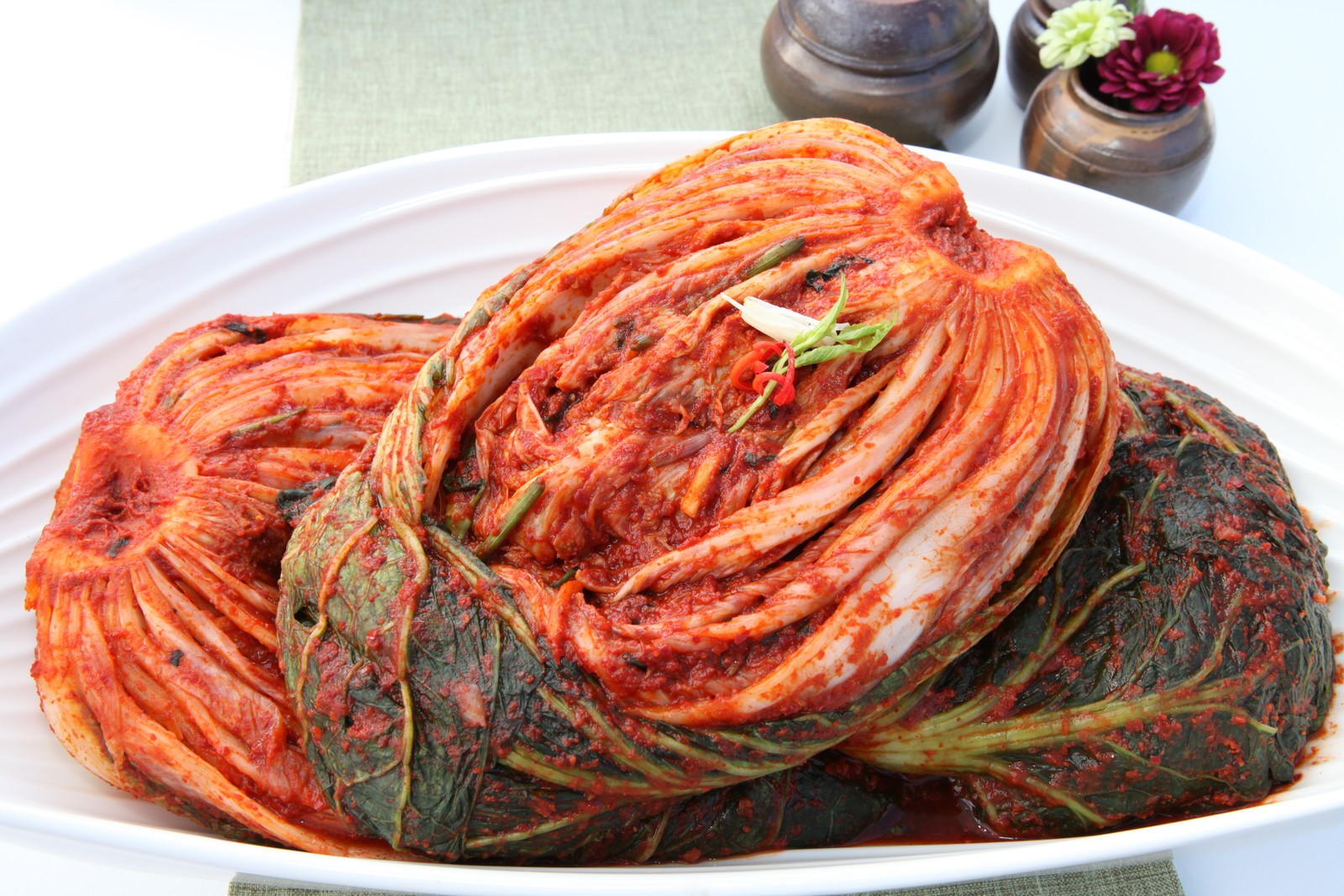
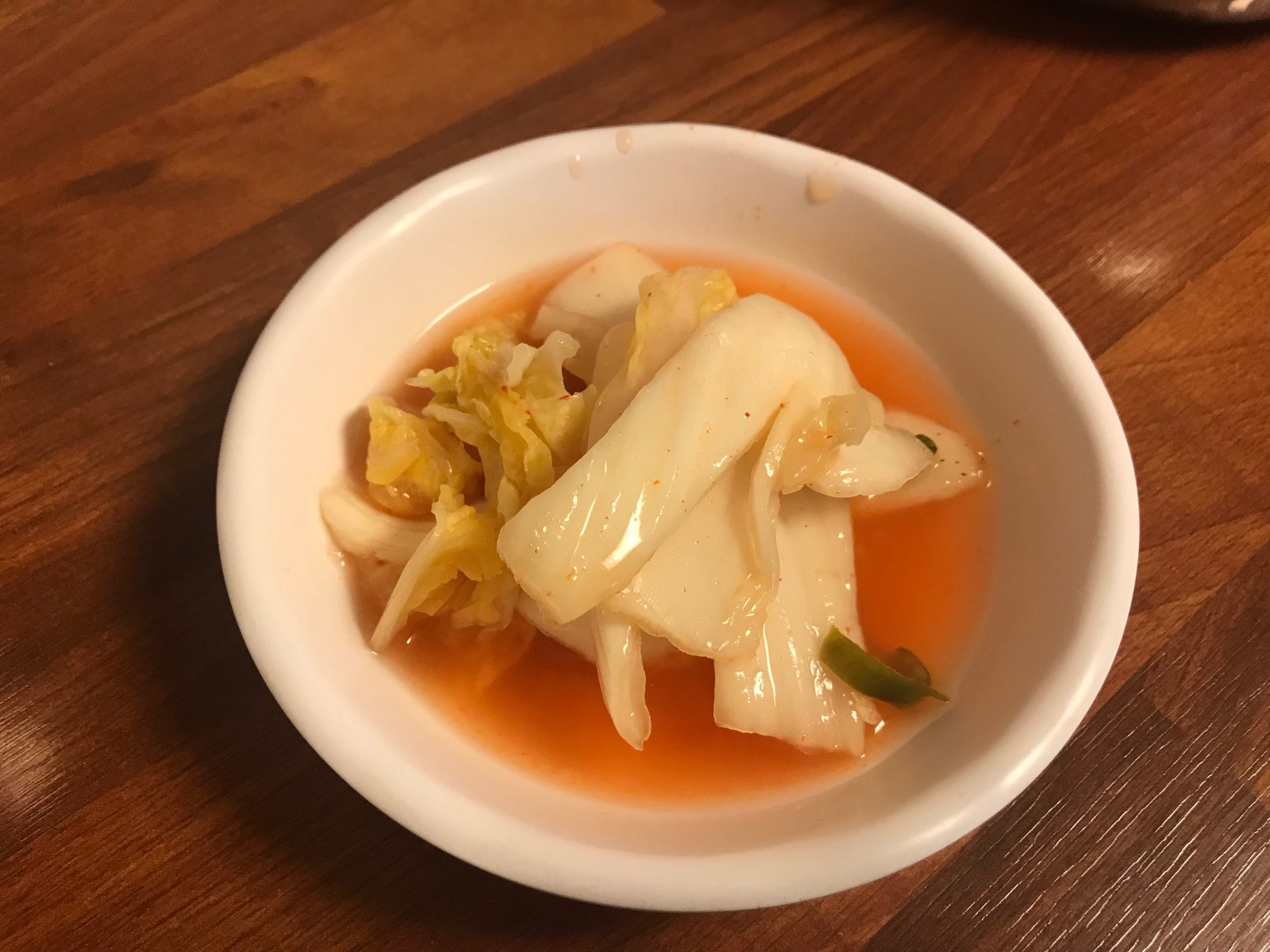
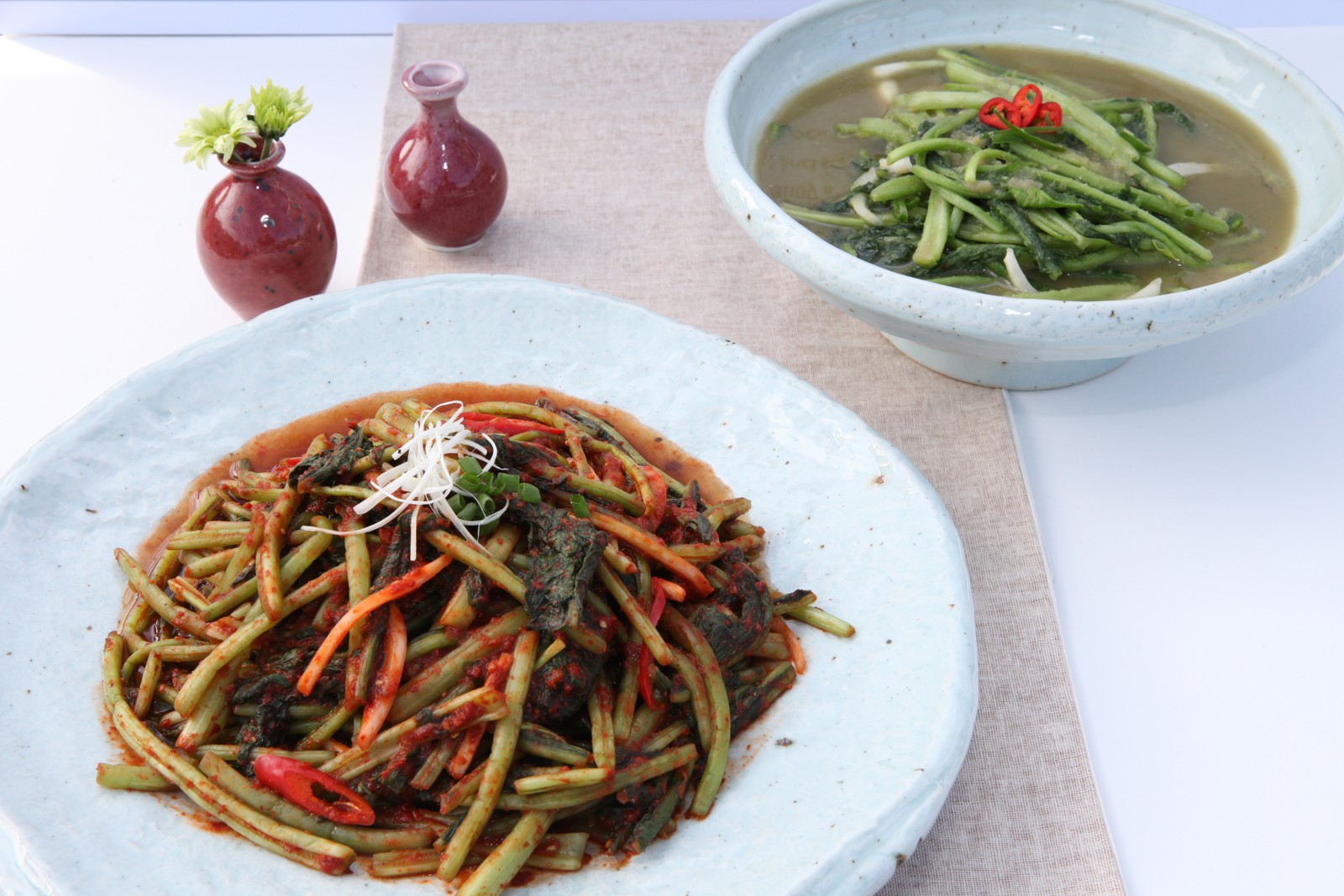
Thick cabbage stems, green young-radish leaves and cabbage in broth: each kind of kimchi differs in texture, seasoning and ripeness.
The 33rd Gwangju Kimchi Festival runs from 23 to 25 October 2026 around the Gwangju government complex. Admission is free; the Kimchi Experience School charges separately.
Seafood in white kimchi
Red cabbage kimchi and baek-kimchi, or white kimchi, differ first in colour. The National Institute of Crop and Food Science’s seasoning comparison gives a white-kimchi formula without red-chilli powder but with jeotgal, salted fermented seafood. A pale colour does not mean a dish has no animal ingredients.
Yeolmu-kimchi uses both the leaves and stems of young radish. The photographs illustrate kimchi varieties and are not a confirmed festival tasting menu.
Heat and sourness
The World Institute of Kimchi explains that organic acids produced by lactic-acid bacteria contribute to kimchi’s sour taste, so ripeness changes the flavour even when the vegetable is the same.
Kimchi just mixed in a workshop tastes different from a well-fermented batch. Staff give guidance on storing and eating the kimchi participants make.
Gwangju’s seasoning
The organizer’s introduction to Gwangju and Jeonnam food culture highlights ingredients including fermented anchovies, anchovy fish sauce and glutinous-rice paste, so a vegetable dish can carry flavours from the sea. This is a regional tendency, not a uniform recipe.
Visitors avoiding seafood, nuts or other ingredients should name them specifically to vendors. A useful question is “젓갈이 들어가나요?” meaning “Does it contain fermented seafood?” Appearance and names cannot establish allergen safety or suitability for vegetarians.
Lounge and kimchi school
The foreign-visitor lounge runs sessions on the lawn plaza between 10 AM and 6 PM on all three days. The official programme lists venue guidance, kimchi tasting, a look at pickling cultures around the world and pumpkin injeolmi rice cakes.
At the Kimchi Experience School, participants mix 1 kg of kimchi and make rice balls with pickled Mudeungsan watermelon. The 30-minute sessions begin daily at 1:30, 2:30, 3:30, 4:30 and 5:30 PM. Advance booking is through Naver, with walk-ins only if places remain, and a take-home container is provided. An open booking page does not guarantee a place.
Cheon-in-ui Bapsang
The Cheon-in-ui Bapsang food area in the outdoor auditorium plaza opens 10 AM to 8 PM. This year’s official menu lists aged-kimchi oil pasta, kimchi-mayo chả giò and pork boiled with mustard-leaf kimchi and doenjang, showing kimchi as an ingredient rather than a side dish. Menus may change, and meals cost extra.
Transport, booking, enquiries
The venue is at 111 Naebang-ro, Seo-gu. Official directions give a walk of about 25–30 minutes from Sangmu Station exit 4 or Uncheon Station exit 3. The City Hall bus stop is nearby.
Experience School fees and session conditions are on the official linked booking page. Operating languages, interpretation and foreign-card acceptance are not confirmed in published information. The separate master class lists eligibility as “대한민국 성인 누구나,” adults of South Korea, so foreign nationals need to check with the festival office on 062-613-3955, open 10 AM–6 PM.
LOCATION
Source kimchi.gwangju.go.kr Checked 2026.10.12 21:49
Sources & context
2026-10-13T10:32:58.466Z
kimchi.gwangju.go.kr ↗kimchi.gwangju.go.kr ↗kimchi.gwangju.go.kr ↗kimchi.gwangju.go.kr ↗kimchi.gwangju.go.kr ↗booking.naver.com ↗Korea Tourism Organization ↗nics.go.kr ↗HELLO KIMCHI 2023.09 Vol.49, pp.36–37 ↗gwangju kimchi, “Baechu-gimchi.jpg”, Wikimedia Commons · individual photo licence ↗lazy fri13th, “Baek-gimchi.jpg”, Wikimedia Commons · individual photo licence ↗gwangju kimchi, “Yeolmu-gimchi.jpg”, Wikimedia Commons · individual photo licence ↗Creative Commons · photo reuse licence ↗Creative Commons · photo reuse licence ↗Napa cabbage kimchi, 2013-09-07. An archive illustration of a kimchi variety, not the 2026 event or a confirmed festival serving. Photo: gwangju kimchi, “Baechu-gimchi.jpg”, Wikimedia Commons / CC BY-SA 2.0. Proportionally resized and JPEG-encoded. The card may crop the edges; enlarge to see the full supplied photograph.
White kimchi, 2018-06-16. An archive illustration of a kimchi variety, not the 2026 event or a confirmed festival serving. Photo: lazy fri13th, “Baek-gimchi.jpg”, Wikimedia Commons / CC BY 2.0. Proportionally resized and JPEG-encoded. The card may crop the edges; enlarge to see the full supplied photograph.
Young-radish kimchi, 2013-09-07. An archive illustration of a kimchi variety, not the 2026 event or a confirmed festival serving. Photo: gwangju kimchi, “Yeolmu-gimchi.jpg”, Wikimedia Commons / CC BY-SA 2.0. Proportionally resized and JPEG-encoded. The card may crop the edges; enlarge to see the full supplied photograph.
These three real kimchi photographs date from 2013 and 2018. They do not show this year’s festival or its served dishes.