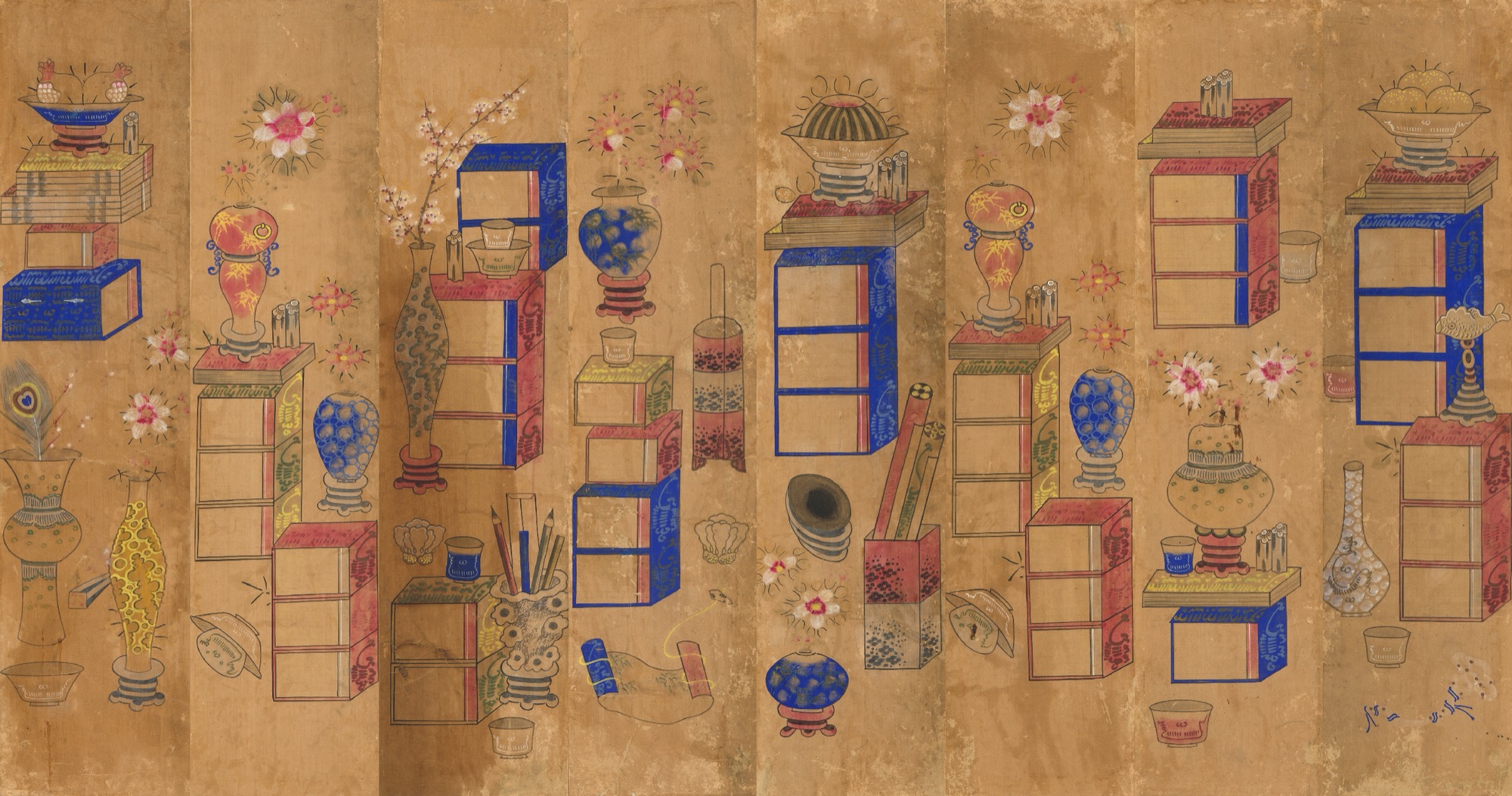
Korean chaekgeori paintings, popular in the late Joseon period, show books alongside vases, vessels and fruit. The still lifes reflect the objects people valued and the lives they hoped for.
King Jeongjo and chaekgeori
Chaekgeori, which became popular in the late Joseon period, depicts books together with ceramics, writing tools, flowers and fruit. Incheon Metropolitan City Museum traces the genre to paintings of Qing Chinese display cabinets and notes that King Jeongjo, who prized books, set chaekgeori as a subject in court-painter examinations.
Collecting and aspiration
Elite versions included imported objects, reflecting a taste for collecting alongside learning. As chaekgeori spread more widely, the paintings also came to express wishes for prosperity and peace.
Works at the National Museum of Korea
The National Museum of Korea’s Hongsan 465 is an eight-panel chaekgeori screen. Books, vases and vessels are spread across its panels, so the full screen and a single panel show different arrangements.
Sinsu 11431 is a separate work that gathers stacked books, a flowering tree and other objects in one composition. The final photo is a museum-supplied detail of one panel of Hongsan 465. The museum catalog does not give a production date for that screen.