
Counting rods and abacuses: numbers moved by hand
Koreans of the Joseon period calculated by laying out thin rods or sliding wooden beads. Counting rods, called sangaji, remained a basic tool of mathematics until the end of the dynasty, while the abacus was used for commercial sums. A bundle of rods and a Joseon-period abacus at the National Museum of Korea show how each worked.
How the rods were laid out
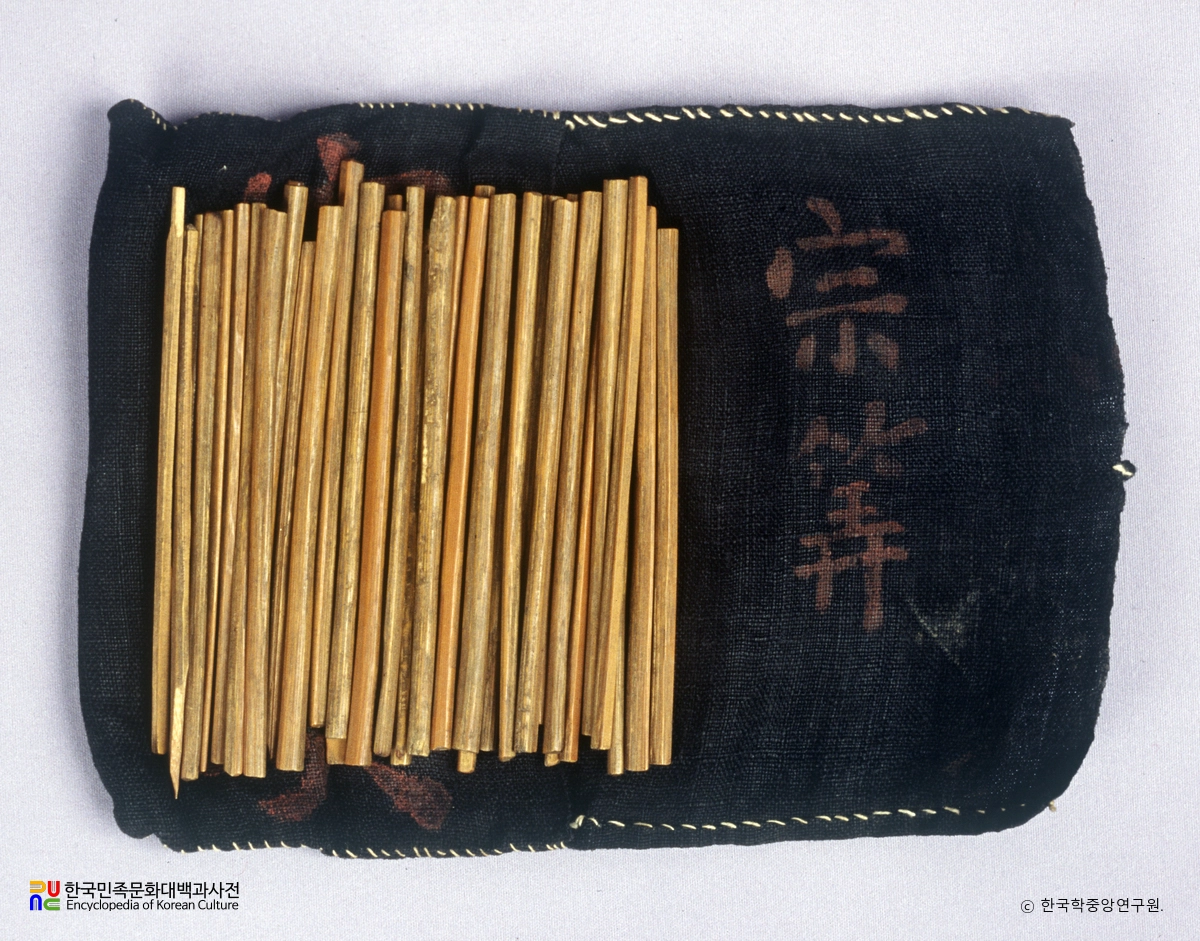
Sangaji, also called sanmok, are slender rods made from bamboo, wood or other materials. The same rod could stand for different numbers depending on where and in which direction it was placed.
According to the Encyclopedia of Korean Culture, rods for the units, hundreds and ten-thousands were placed vertically, and those for the tens, thousands and hundred-thousands horizontally. The orientations were sometimes reversed, so the convention was not fixed.
The encyclopedia says rods were the basic method of calculation in Korean mathematics until the end of the Joseon period. The rods in the photograph carry no numerals; the value came from the rules for arranging them.
A Joseon-period abacus
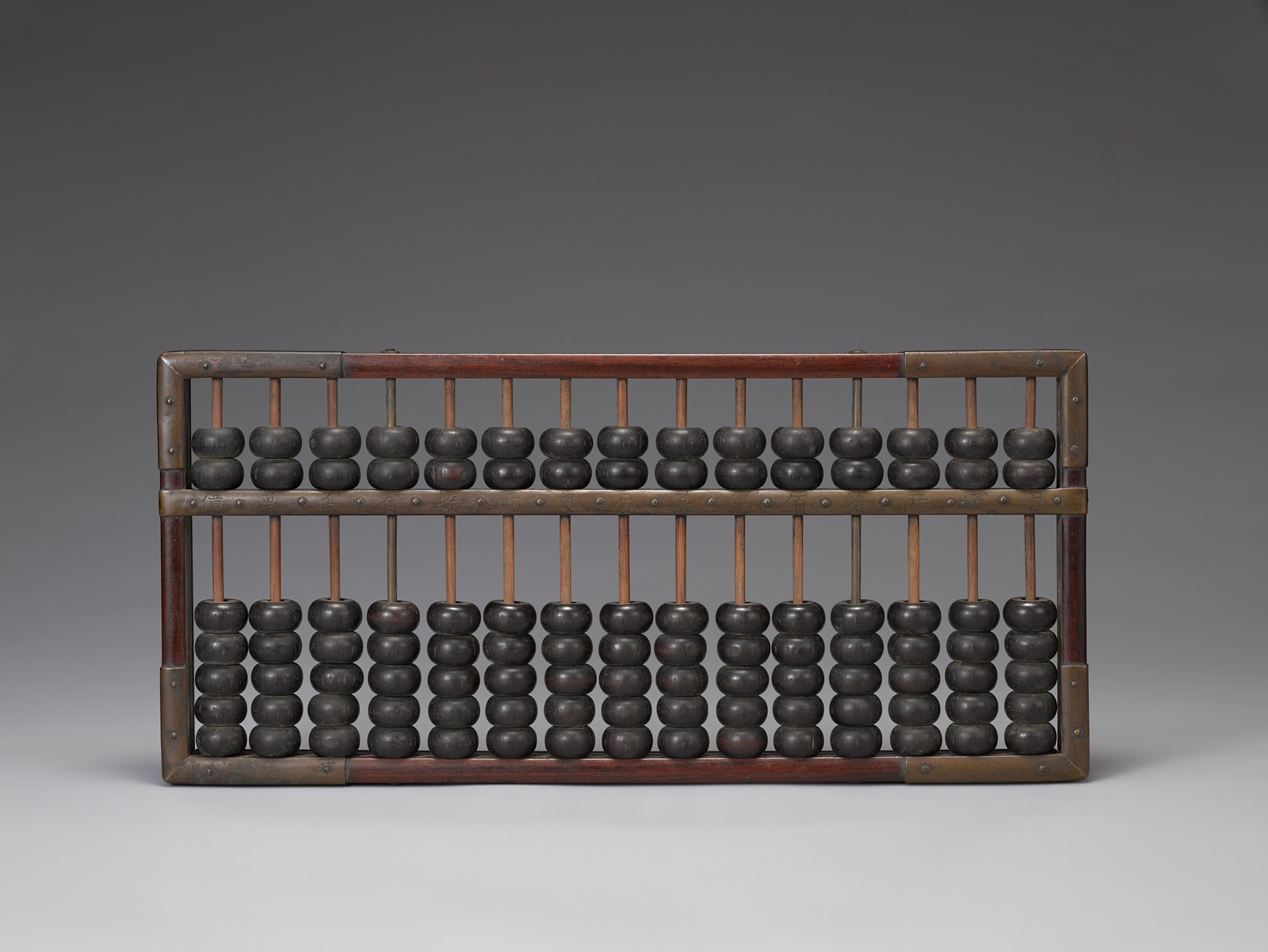
National Museum of Korea collection item Sinsu1113 includes a Joseon-period abacus. The museum says the tool, also called sanban, was used for commercial and other calculations. Where counting rods are laid out loose, an abacus holds bead-threaded rods inside a wooden frame.
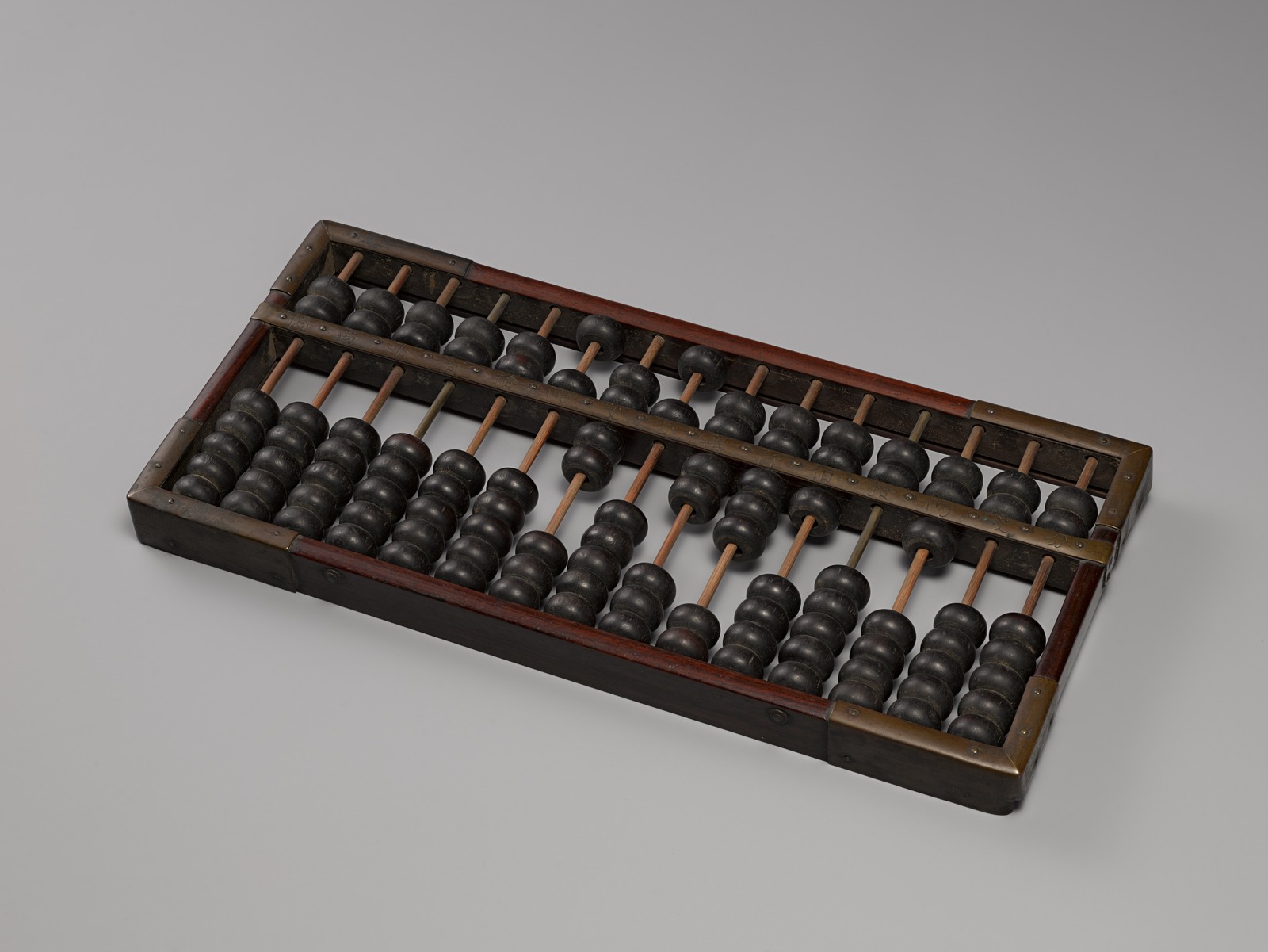
Beads above and below the central crossbar carry different values: an upper bead represents five and a lower bead one. Bead counts vary between designs; this one has two beads above the bar and five below on each rod.
Bead positions
The front view shows the frame, the crossbar and the rows of beads. In the angled photograph, some beads have been pushed toward the crossbar, showing how the same object changes a number.
The counting-rod photograph shows the sticks with their storage pouch. Unlike a sheet that records only an answer, both tools preserve the hand movements of calculation.
Rods as a game
Counting rods were also used for play. The Encyclopedia of Korean Culture describes games such as removing one rod from a scattered pile without disturbing the others.
Calculation followed the agreed arrangement of the rods; the game required keeping the surrounding rods still.
Sources & context
2026-10-15T08:05:20.458Z
Academy of Korean Studies · Counting rods ↗Academy of Korean Studies · Counting-rod games ↗Academy of Korean Studies · Mathematics ↗National Museum of Korea · Abacus and Tobacco Pipes ↗Korea Copyright Commission · Abacus ↗Korea Open Government License · Type 1 ↗Front view of a Joseon-period abacus: two beads above the crossbar and five below on each rod. National Museum of Korea, “Abacus and Tobacco Pipes,” Sinsu1113. KOGL Type 1 (attribution). Photograph date unknown; proportionally resized to 1600 pixels wide.
Photo credit
Academy of Korean Studies · Encyclopedia of Korean Culture · media aaa32c18 · KOGL Type 1 — attributionCounting rods and their storage pouch, identified as a Joseon-period calculating tool. Academy of Korean Studies, Encyclopedia of Korean Culture, “Counting Rods / Sanmok” (media aaa32c18). KOGL Type 1 (attribution). Photograph date unknown; file unmodified.
An angled view of the same abacus. Several beads have been moved toward the crossbar, unlike in the front view, showing the beads in different positions. National Museum of Korea, Sinsu1113; KOGL Type 1 (attribution). Photograph date unknown; proportionally resized to 1600 pixels wide.