
A century of change in the shape of gomusin
A low heel, an open instep and a gently raised toe: the outline of gomusin, Korea’s rubber shoes, carries both older footwear styles and the arrival of factory-made shoes. A practical pair for wet weather was once a coveted possession, and today it is a starting point for designers.
An older shape in a new material
Rubber alone does not explain the shape of gomusin. According to the Encyclopedia of Korean Culture, men’s versions were modeled on gatsin, or leather shoes, and women’s on a type of danghye, a traditional low shoe. A National Folk Museum of Korea account also notes their resemblance to unhye, another women’s shoe.
The gently rising toe already appears in Joseon-period shoes, and factory-made gomusin carried that outline into rubber. Shapes varied, from broad and round-toed to slender with a pronounced toe.
A new manufactured product in the 1920s
Gomusin spread widely from the late 1910s through the 1920s, during Japanese colonial rule. Imports from Japan opened the market, and growing demand led to production on the Korean peninsula. The Joseon Rubber Works, founded in Seoul’s Jongno district in 1922, was one example.
Production centered on Gyeongseong, today’s Seoul, Pyongyang and Busan. Korean owners predominated in the first two cities, Japanese owners in Busan. The history of gomusin is one of urban factories, skilled workers and competing brands as well as rural memories.
Shoes for everyday wear
Straw jipsin wore out quickly and soaked up water. Rubber shoes resisted water and lasted longer, making them practical for daily wear.
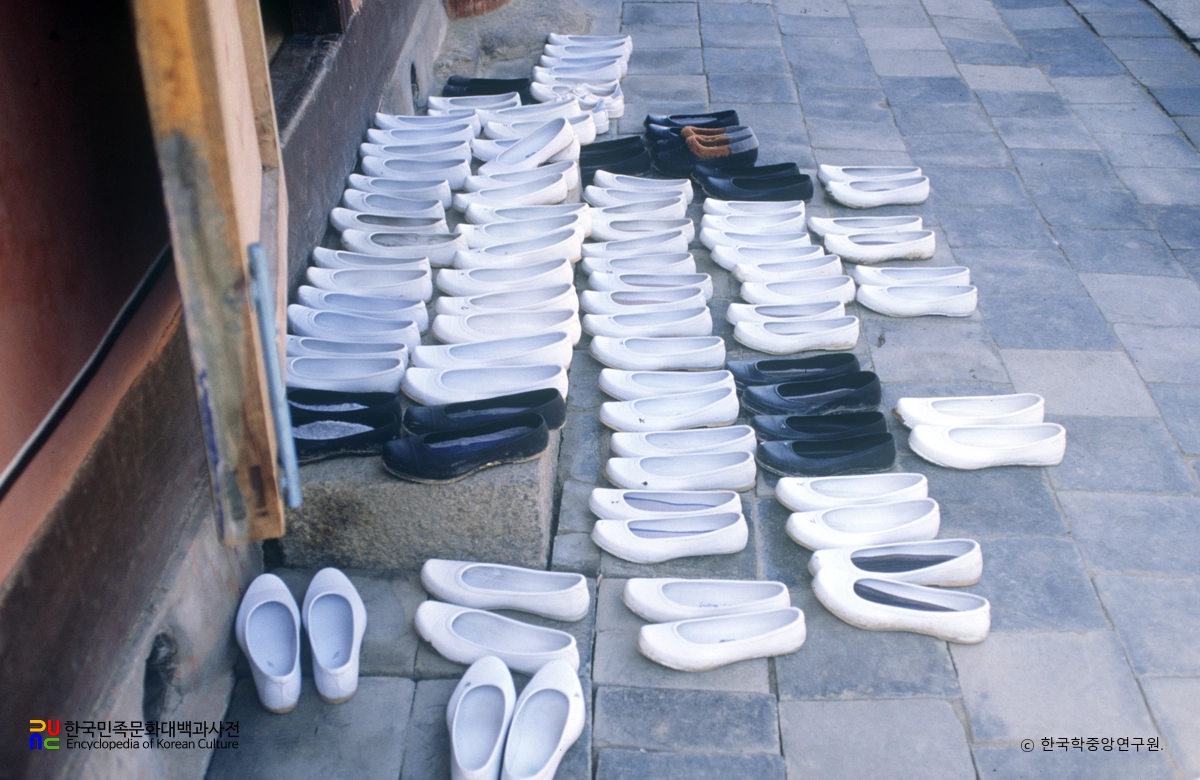
Men and women wore gomusin as their everyday outdoor shoes. An Academy of Korean Studies photograph shows rows of white and black pairs left outside monks’ quarters at Haeinsa Temple.
The joy of new white shoes
In Jeong Bi-seok’s 1937 story Seonghwangdang, cited by the National Institute of Korean History, Sun-i delightedly tries on her new white gomusin again and again. The scene shows how precious a seemingly modest pair could be.
Gomusin combined durability with the pleasure of dressing well. Factory production brought outlines associated with leather and silk shoes into more people’s daily lives.
Different shapes and colors
Archival photographs show a broad black shoe, slender white pairs and a red-and-white version. Today’s colored gomusin build on an object that already came in different shapes and colors.
From around 1960, as sneakers and leather shoes became common, demand for gomusin fell. A once-new purchase became an everyday item and, later, a reminder of the past.
New Color Gomusin, 2019
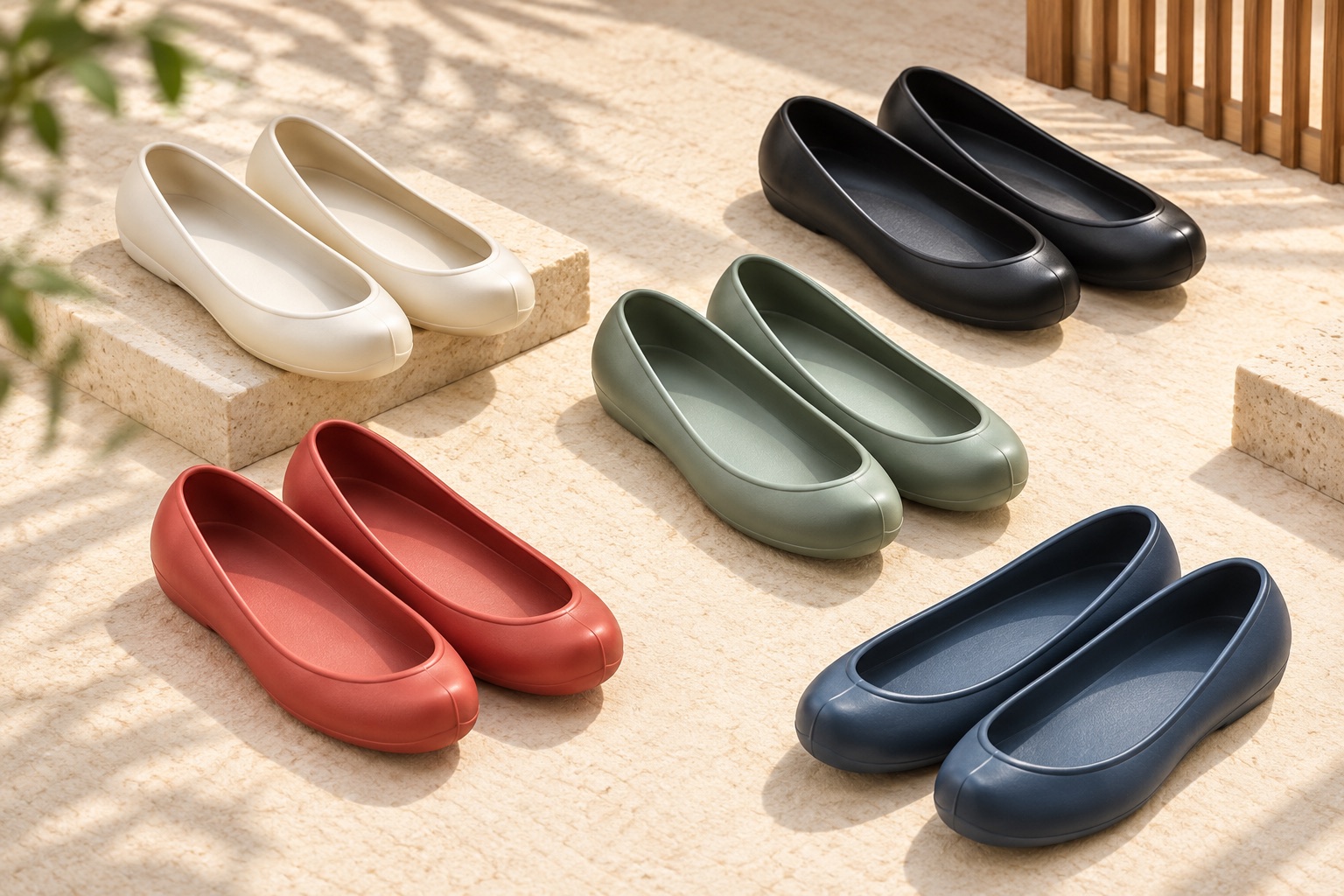
Blank Project worked with Woosung Chemical to launch PVC “New Color Gomusin” in 2019. The official crowdfunding campaign offered three colors and styled them with jeans and skirts. As of October 2026, the official product page lists seven colors: Pale Banana, Emerald, Burgundy, Eden Green, Coral Leaf, Purple Rose and Old Glory Red.
The familiar curve and open instep remain, while color and clothing change the effect. A shoe that once put an old form into a new material has itself become a basis for new design.
Sources & context
2026-10-09T11:21:15.541Z
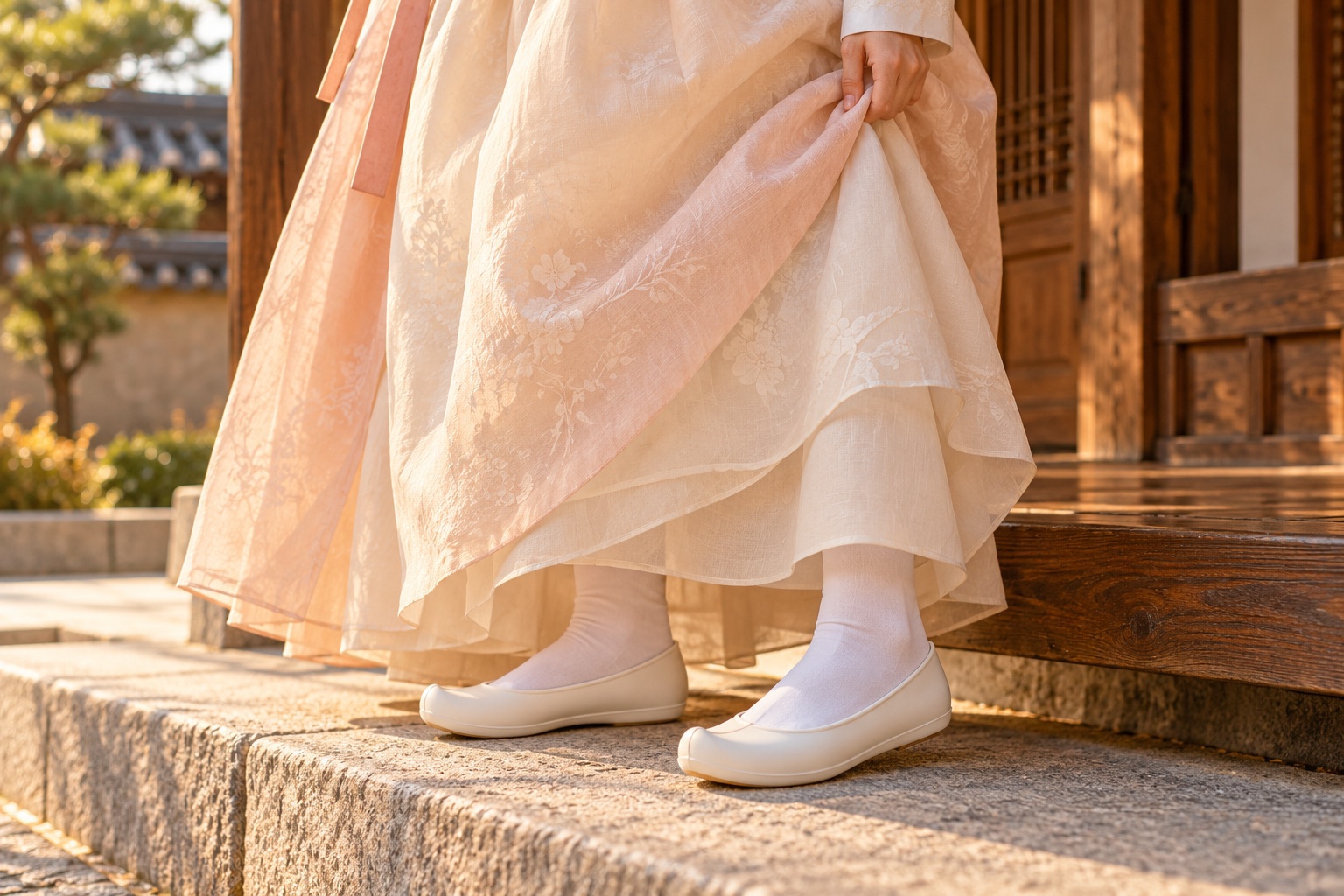
Encyclopedia of Korean Culture ↗Academy of Korean Studies ↗Encyclopedia of Korean Culture ↗Encyclopedia of Korean Culture ↗Encyclopedia of Korean Culture ↗Encyclopedia of Korean Culture ↗New Color Gomusin 2019 ↗blankproject.kr ↗AI-staged white gomusin worn with hanbok, not a photograph of a specific brand's product.
AI gomusin color concept; not real product colorways or a particular brand.
Gomusin left outside monks’ quarters at Haeinsa Temple, as identified by the Academy of Korean Studies. Photograph undated.
The first two images are AI-staged styling and color concepts, not archive or product photographs.