
Haeju soban: a small wooden table that carried a meal
A soban is a small table that carries dishes and becomes a dining table when set down. A Haeju example at the National Museum of Korea shows the decoration and structure built into a piece made to move a meal.
From kitchen to room
In Joseon-period houses, the kitchen was separate from the room where people ate. A soban carried food and dishes between them, then served as the dining table.
It had to be light enough to carry yet strong enough to hold brass or ceramic tableware, so makers used light, sturdy wood. Its compact size reflects the custom of giving each person an individual table.
A 42-centimetre tabletop
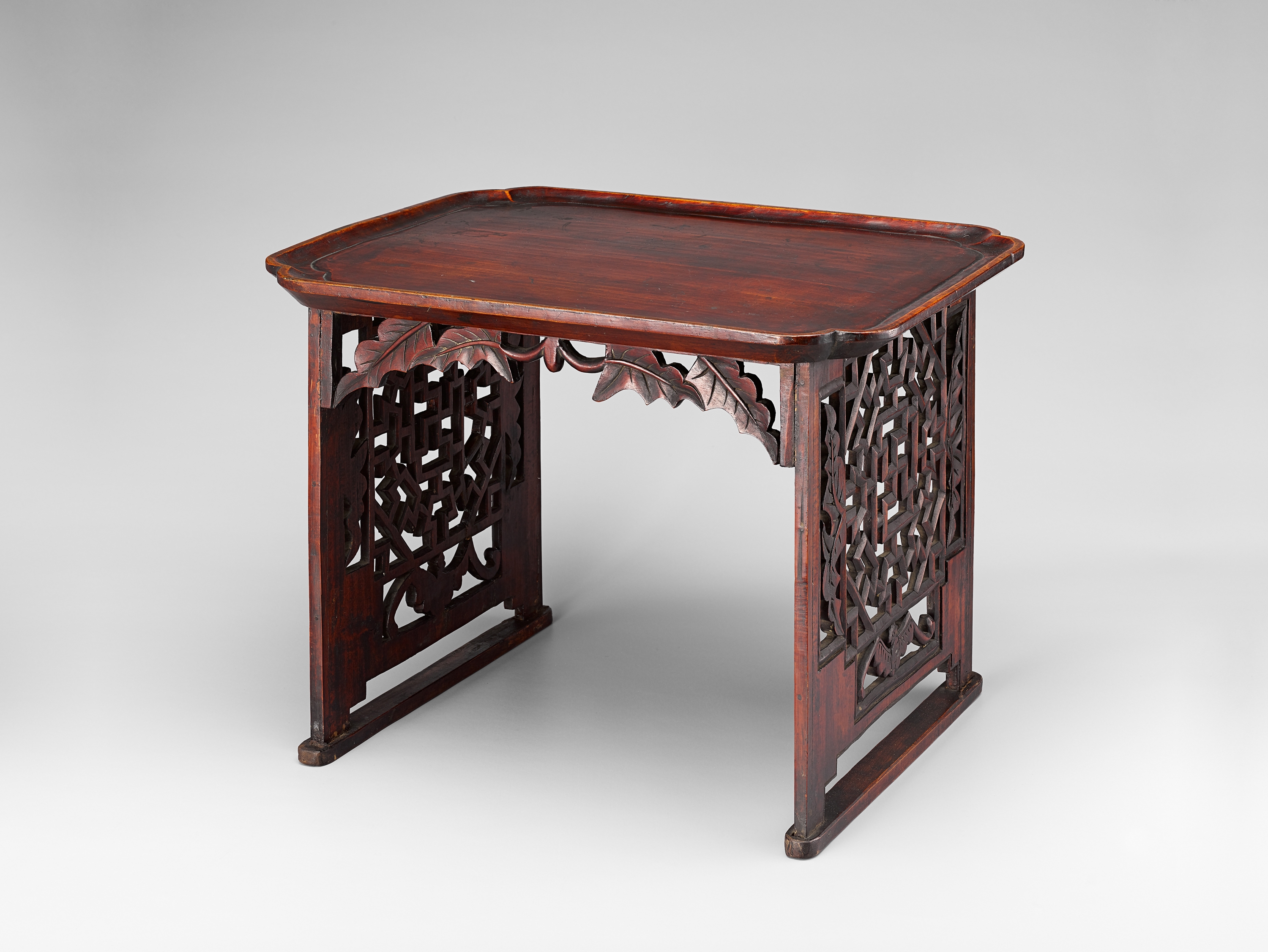
The object shown is the National Museum of Korea’s Haeju tray-table, collection number Namsan 1758. A Joseon-period wooden piece, it measures 42 cm long, 33.7 cm wide and 30.4 cm high.
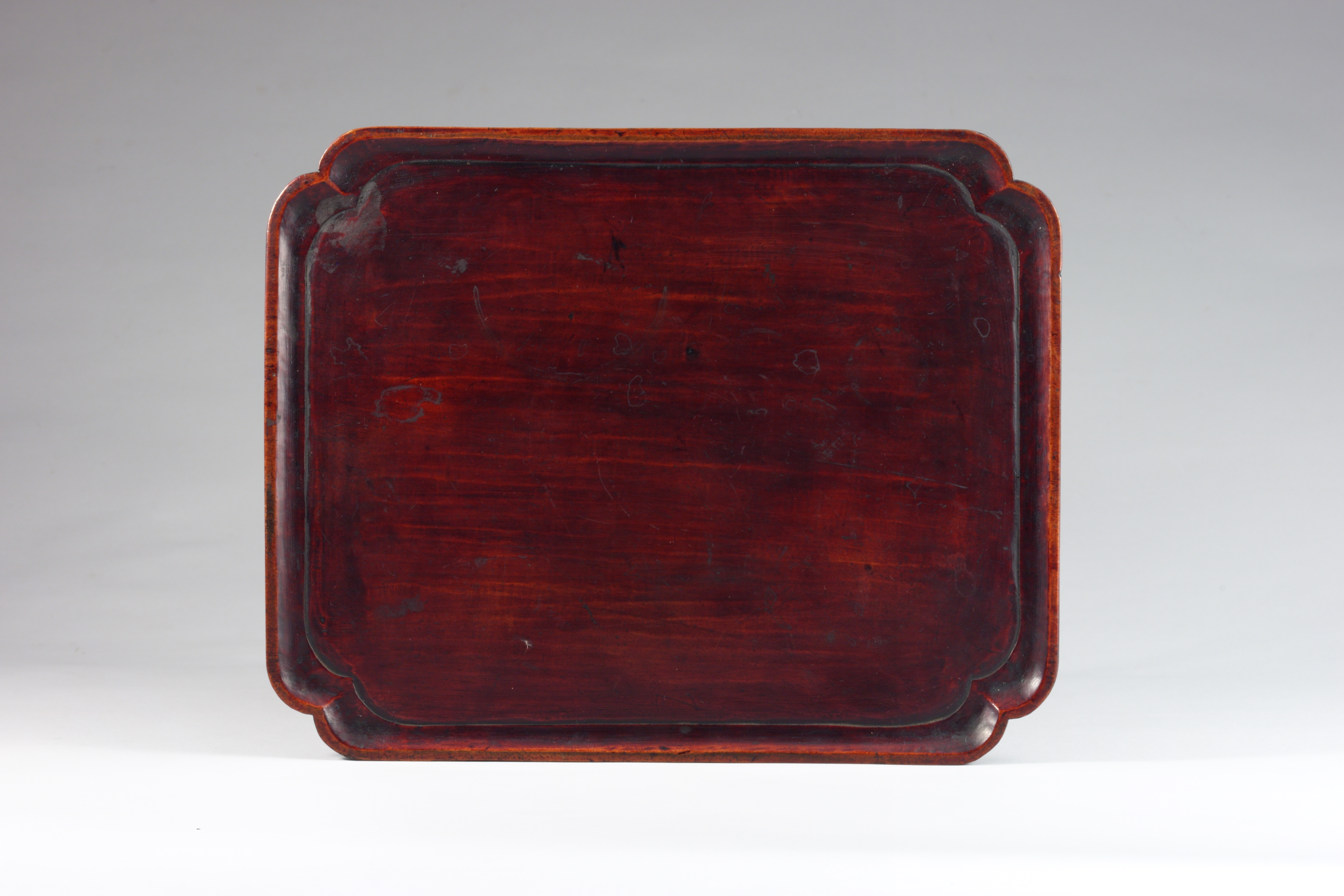
The second, overhead photograph shows the rounded corners and outline of the top. The angled view shows its low height and two panel-shaped legs.
Openwork legs
Haeju tables were made mainly in Haeju, Hwanghae Province. This example’s two leg panels splay slightly outward and carry symmetrical openwork of the characters 卍 and 囍 and floral designs.
The leaf-shaped apron directly beneath the top is called ungak. The museum says it connects the legs and keeps the tabletop from warping.
Variation by use and region
Jeonju National Museum’s interpretation for its 2013 exhibition Soban of Joseon says the tables’ forms varied with use, region, maker and owner. They served rituals and religious life as well as meals, and floor-seated living and the domestic layouts of the period shaped how they were built.
The craft of soban making
Soban making was designated Important Intangible Cultural Property No. 99 in 1992 and continues today as the National Intangible Heritage Sobanjang. A 2017 National Folk Museum education record documents craftsman Kim Chun-sik demonstrating a Naju table. Regional tables differ in how their tops and legs are joined.
Sources & context
2026-10-14T07:05:10.631Z
National Museum of Korea · Haeju tray-table, Namsan 1758 ↗Jeonju National Museum · Interpretation for the 2013 Soban exhibition ↗National Folk Museum of Korea · 2017 soban workshop record ↗National Institute of Korean Language · Sobanjang term and designation year ↗Korea Heritage Service archive · Sobanjang designation ↗KOGL · Type 1 reuse terms ↗Photo credit
국립중앙박물관 / National Museum of Korea · KOGL Type 1Angled view of the Haeju table, showing its panel legs and openwork. Collection and photo: National Museum of Korea, Haeju tray-table, Namsan 1758. Collection photograph; capture date unspecified. KOGL Type 1 (attribution). Original JPEG unchanged. Source: https://www.museum.go.kr/MUSEUM/contents/M0502000000.do?relicId=907&schM=view&searchId=search · Terms: https://www.kogl.or.kr/info/licenseType1.do . Centered 4:3 display retains the entire table and removes only a small amount of surrounding background.
Photo credit
국립중앙박물관 / National Museum of Korea · KOGL Type 1Overhead view of the Haeju table, showing the rounded corners and tabletop outline. Collection and photo: National Museum of Korea, Haeju tray-table, Namsan 1758. Collection photograph; capture date unspecified. KOGL Type 1 (attribution). Original JPEG unchanged. Source: https://www.museum.go.kr/MUSEUM/contents/M0502000000.do?relicId=907&schM=view&searchId=search · Terms: https://www.kogl.or.kr/info/licenseType1.do . Centered 4:3 display retains the entire table and removes only a small amount of surrounding background.