
Does a pillow have to be soft?
A headrest with a hidden drawer, a bamboo pillow holding herbs and a long pillow for a couple show that old Korean pillows were designed for more than softness.
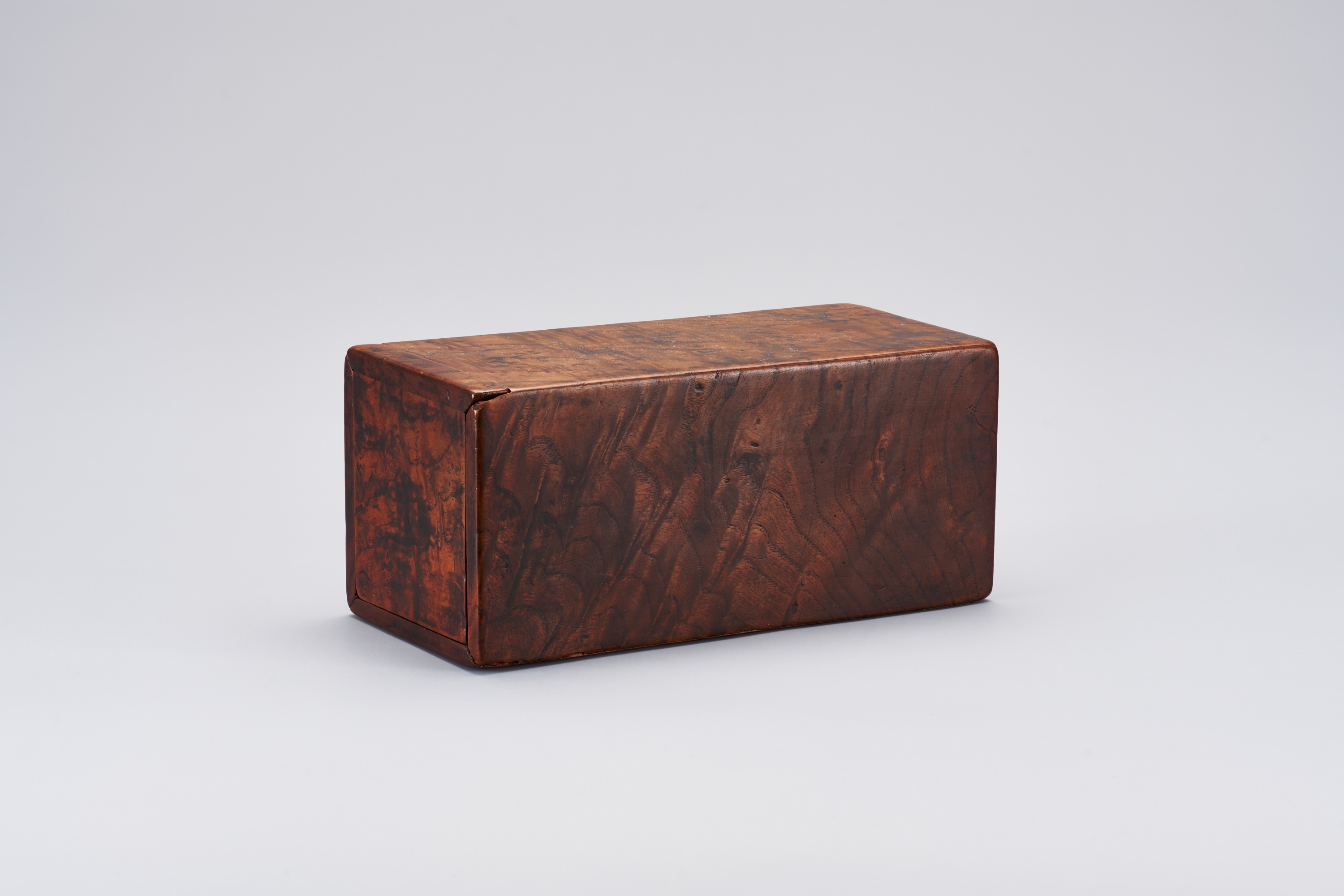
A small wooden box seems an unlikely piece of bedding. This headrest at the National Museum of Korea supported the head during short rests and naps.
Catalogued to Korea’s Japanese colonial period, it measures 21 cm across. Its zelkova panels meet in 45-degree mitre joints.
Inside is a drawer: lifting the side panel reveals a storage compartment. The photo shows the headrest closed, but the museum record describes the hidden space. The place for the head was also a place for belongings.
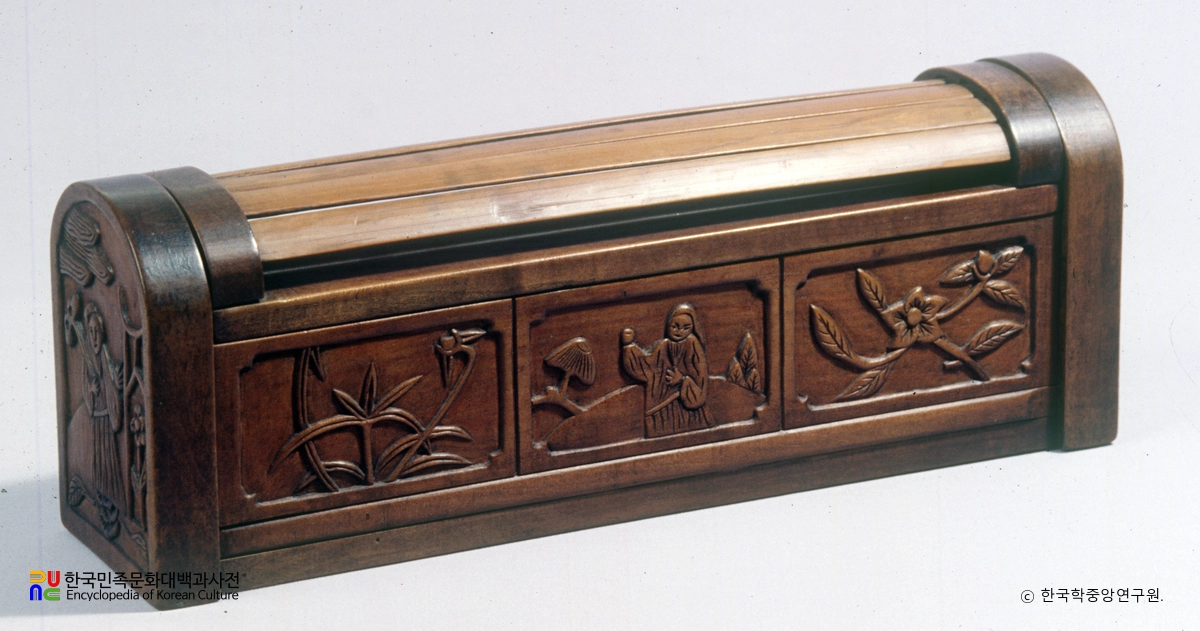
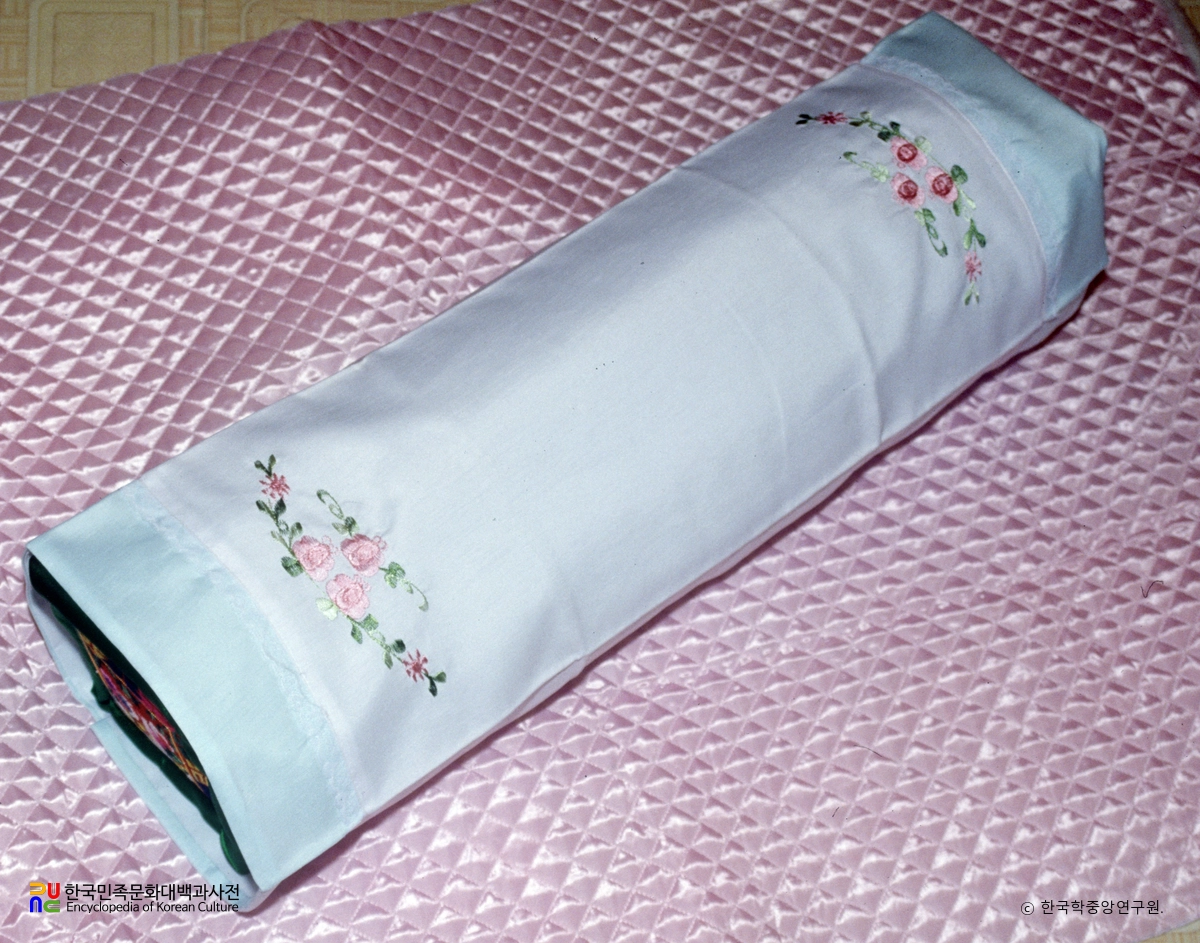
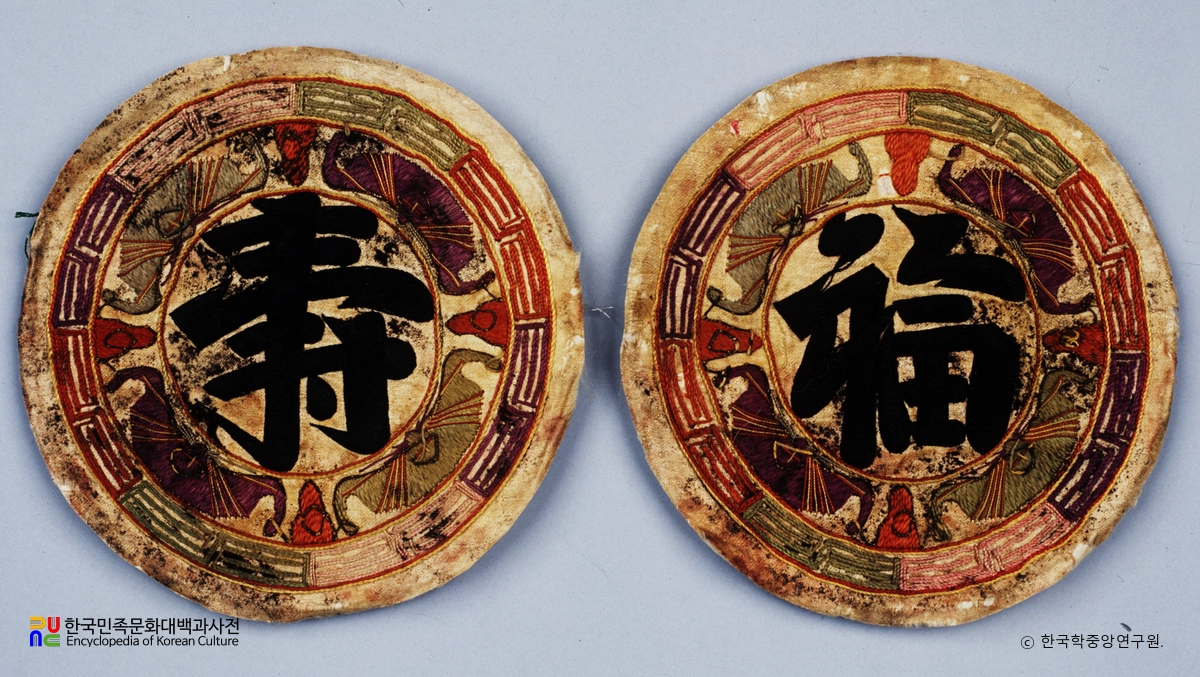
The Encyclopedia of Korean Culture records other examples. A Joseon-period bamboo headrest has a compartment for medicinal herbs beneath its top. A wonangchim is a long pillow shared by a married couple. Pillow-end panels bear characters wishing for longevity and good fortune.
Storage, material, a length meant for two and decoration at the ends: each reflects a choice beyond comfort. Together, the four file photos show how a familiar household object recorded what people kept, shared and hoped for.
Sources & context
2026-10-09T23:00:00+09:00
National Museum of Korea ↗Encyclopedia of Korean Culture ↗Photo credit
국립중앙박물관, 퇴침, 신수9487 · 공공누리 제1유형 · KOGL Type 1Wooden headrest, Japanese colonial period, NMK collection ssu9487. The drawer is inside and not visible in this closed view.
Joseon-period bamboo headrest, private collection. The catalogue describes a bamboo top and a lower compartment for medicinal herbs.
An archival image of a wonangchim, identified as a pillow shared by a couple. Making and photography dates are not supplied.
Archival pillow-end panels bearing wishes for good fortune and longevity, rather than a photograph of a complete pillow.