
Maetdol, the stones that turned grain into meals
The maetdol, a Korean stone hand mill, ground beans for tofu and grain into flour. Its story links a long history of processing food with stone to the work of preparing meals in homes and temple kitchens.
Neolithic grinding stones
Grinding food with stone predates the round hand mill. The National Museum of Korea displays grinding stones and slabs from Neolithic sites including Amsa-dong in Seoul and Gadeokdo in Busan. A long stone was pushed back and forth across a slab, mainly, archaeologists believe, to process gathered plant foods.
These are not rotary maetdol. They do show that breaking down hard food was part of daily work long ago.
How a maetdol works
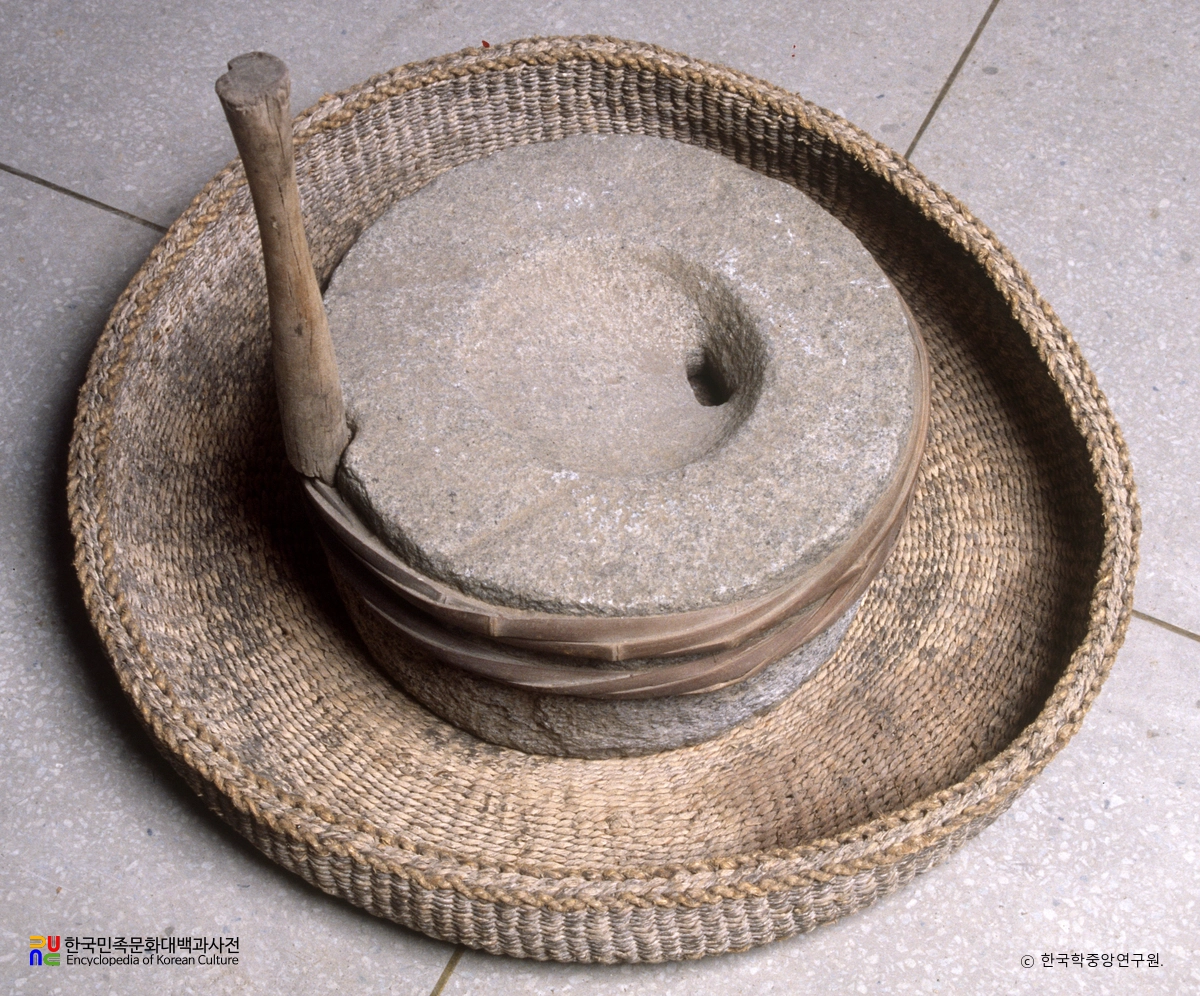
A maetdol grinds grain between an upper and a lower stone. Ingredients go into a hole in the upper stone, which is turned by a handle, and the ground material comes out the side.
Small mills called pulmae also ground rice for fabric starch or ingredients for pine-nut and sesame porridge. Wooden mills were used in mountainous Gangwon, and Jeju had large mills turned by four people. Size, material and use varied.
Making tofu
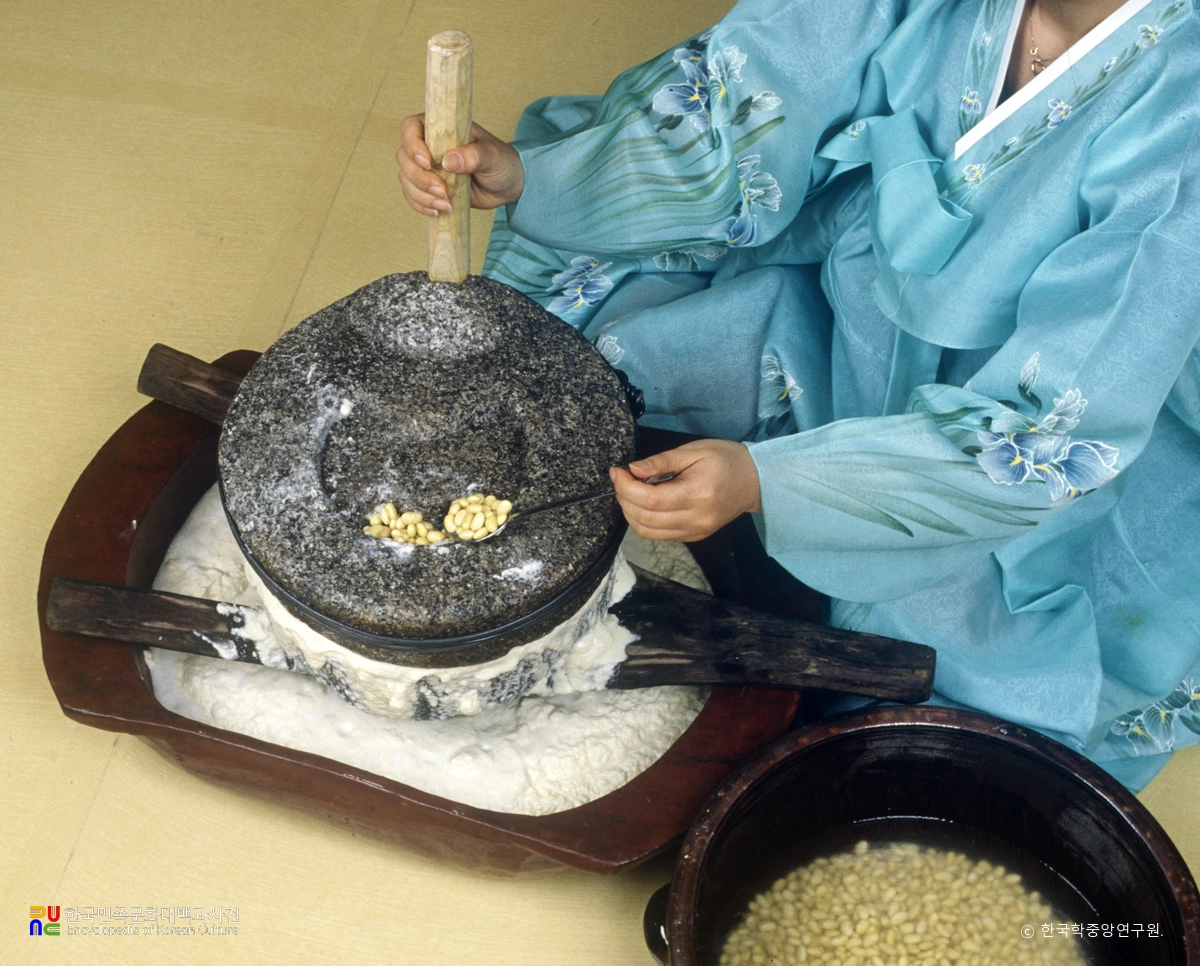
In traditional tofu-making, soaked beans were ground in a maetdol, then boiled and strained to obtain soy milk. A coagulant set the curds, which were pressed to drain the water.
One hand turned the handle while the other fed beans in with a spoon, and the ground beans collected in a basin below.
The Hoeamsa Temple Site mills
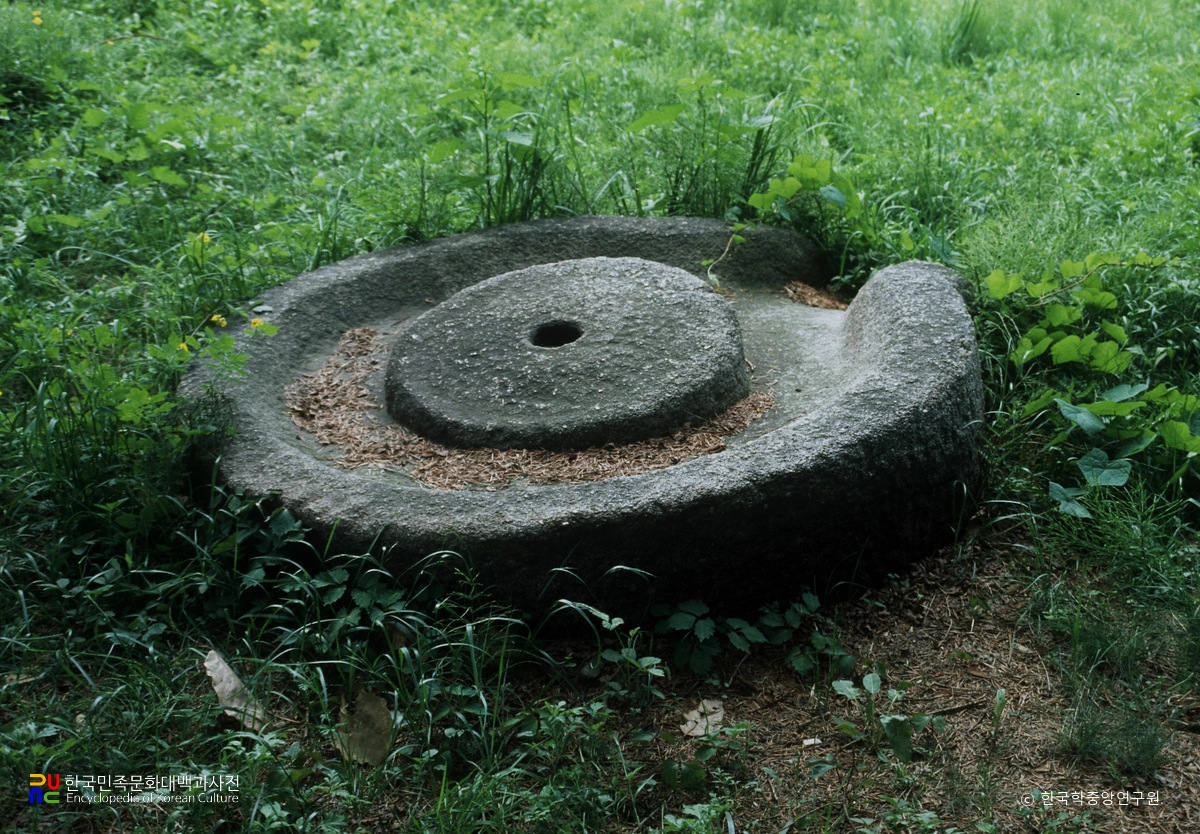
The same principle served larger kitchens. At Hoeamsa Temple Site in Yangju, each of two mills has a collecting basin and lower stone carved from a single block of granite. Large water tanks excavated nearby suggest the area was used for cooking.
The Korea Heritage Service tentatively dates the mills to early Joseon, when the temple flourished. Their large stone basins show the grinding method used on a scale fit for feeding many people.
Sources & context
2026-10-09T06:17:52.099Z
Encyclopedia of Korean Culture ↗Academy of Korean Studies ↗KOGL ↗Encyclopedia of Korean Culture ↗digital.khs.go.kr ↗National Museum of Korea ↗A millstone with a binding around the stone and a woven straw base. Photograph undated.
Beans are fed in with a spoon while the millstone is turned. The ground mixture collects in the wooden basin below. Photograph undated.
An archival photograph of a millstone at Hoeamsa Temple Site in Yangju, a separate example from the household tools above. Photograph undated.