
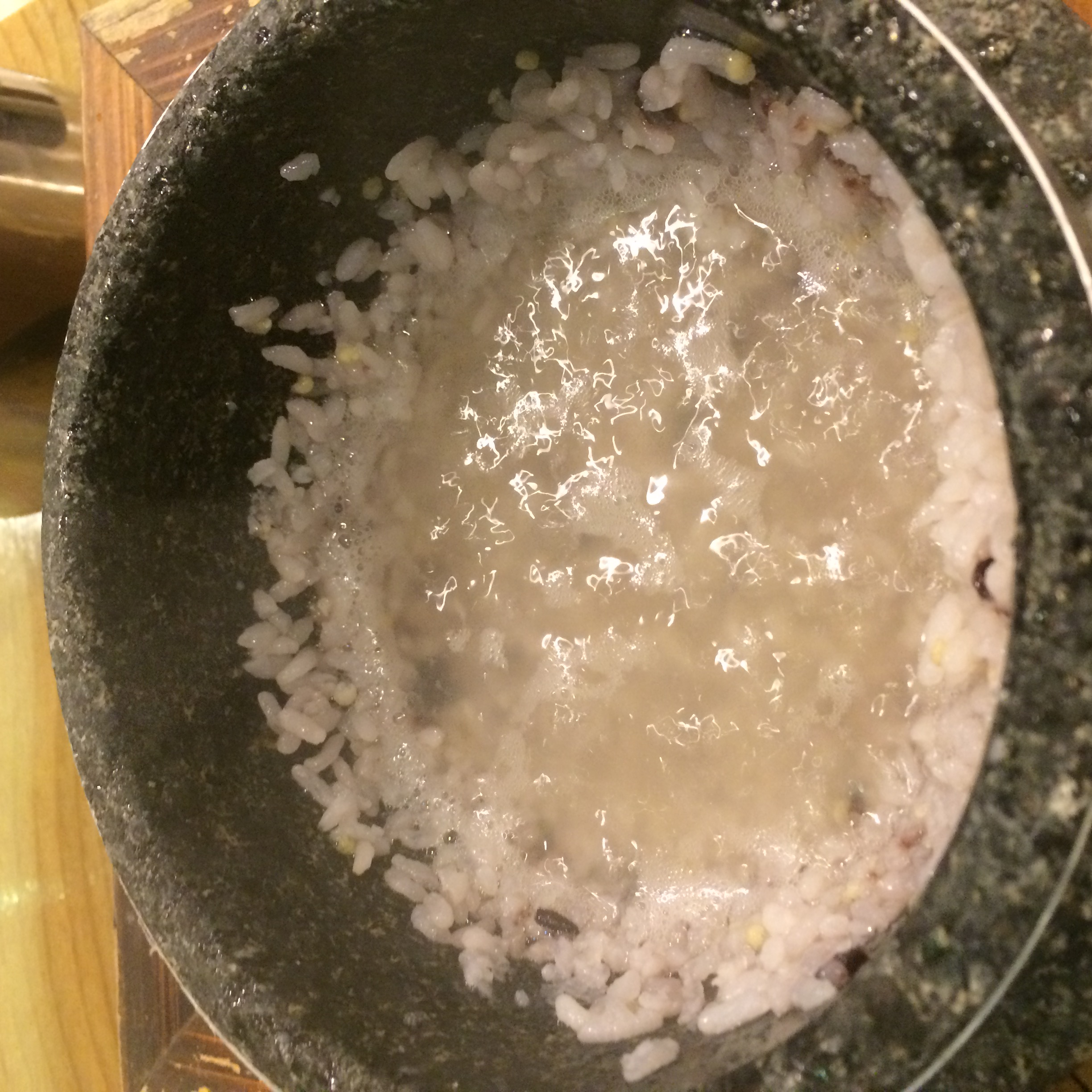
Why pour water into the rice pot?
Pouring hot water into a stone rice pot after the rice is served makes sungnyung, a toasty drink brewed from the crust at the bottom of the pot that rounds off the meal.
Nurungji and sungnyung
Nurungji is the firm, golden layer that forms at the bottom of a pot as rice cooks. It can be lifted out and eaten or boiled with water. The Encyclopedia of Korean Culture distinguishes the crust, nurungji, from the boiled rice, nurungjibap, and its liquid, sungnyung.
The order of a stone-pot meal
With stone-pot rice, the rice is first transferred to a bowl and hot water is then added to the crust left at the bottom. The Korea Tourism Organization describes this sequence in its hot stone-pot rice guide. The water draws out the flavour left in the pot, giving the meal a different texture from crisp nurungji.
Origins of sungnyung
The encyclopedia’s sungnyung entry links the drink’s development to the fixed cauldrons of older kitchens. Boiling water over the stuck rice produced a drink and helped clean a pot that was hard to wash. The entry also records the custom of ending a meal with sungnyung.
Sources & context
2026-10-11T19:53:00+09:00
Korea Tourism Organization · Korea Tourism Organization · Scorched Rice ↗Korea Tourism Organization · Korea Tourism Organization · Hot Stone Pot Rice ↗Encyclopedia of Korean Culture · Encyclopedia of Korean Culture · Nurungji, Han Bok-jin ↗Encyclopedia of Korean Culture · Encyclopedia of Korean Culture · Sungnyung, Hwang Hye-seong ↗chomjong · original photograph and individual CC BY 2.0 licence, Wikimedia Commons ↗Creative Commons · CC BY 2.0 licence terms ↗Photo credit
chomjong, “Making sungnyung 2 pouring water on nurungji” / Wikimedia Commons · CC BY 2.0 · CC BY 2.0Water added to a stone pot after the rice has been served. Archive photograph dated August 12, 2016. Photo: chomjong, “Making sungnyung 2 pouring water on nurungji” / Wikimedia Commons · CC BY 2.0. Original file unchanged.