

Old digicams come out of the drawer: what ‘dinol’ means
“Dinol,” the pastime of taking old digital cameras on outings, has become a popular pastime in Korea. Fashion platform ZIGZAG’s digital-camera transaction value for January–September 2026 rose to 6.4 times the year-earlier level. Here is what that figure covers, what CCD nostalgia gets wrong and what to check before reviving a camera from the drawer.
What dinol means
“Dinol” combines the Korean shorthand for digital camera with the word for play. In February 2026, Yonhap described camera outings and people decorating their cameras with stickers.
Friends meet with a small camera in a bag and set themselves simple tasks, such as photographing only red objects or each choosing one picture of the same scene. Meeting, choosing and showing pictures become part of taking them.
What the 6.4-times figure covers
On October 9, Maeil Business reported that ZIGZAG’s digital-camera transaction value rose 540% in January–September 2026 from the same period in 2025, or 6.4 times the earlier amount. A separate figure in the report, 63% of September purchasers aged 29 or younger, came from ABLY.
Transaction value is not units sold, and prices and product mix affect it. The figures do not show that the whole vintage secondhand-camera market grew 6.4 times. Newly made retro-style cameras also need separating from genuinely old devices. The companies’ original data were not directly verified.
From new technology to vintage
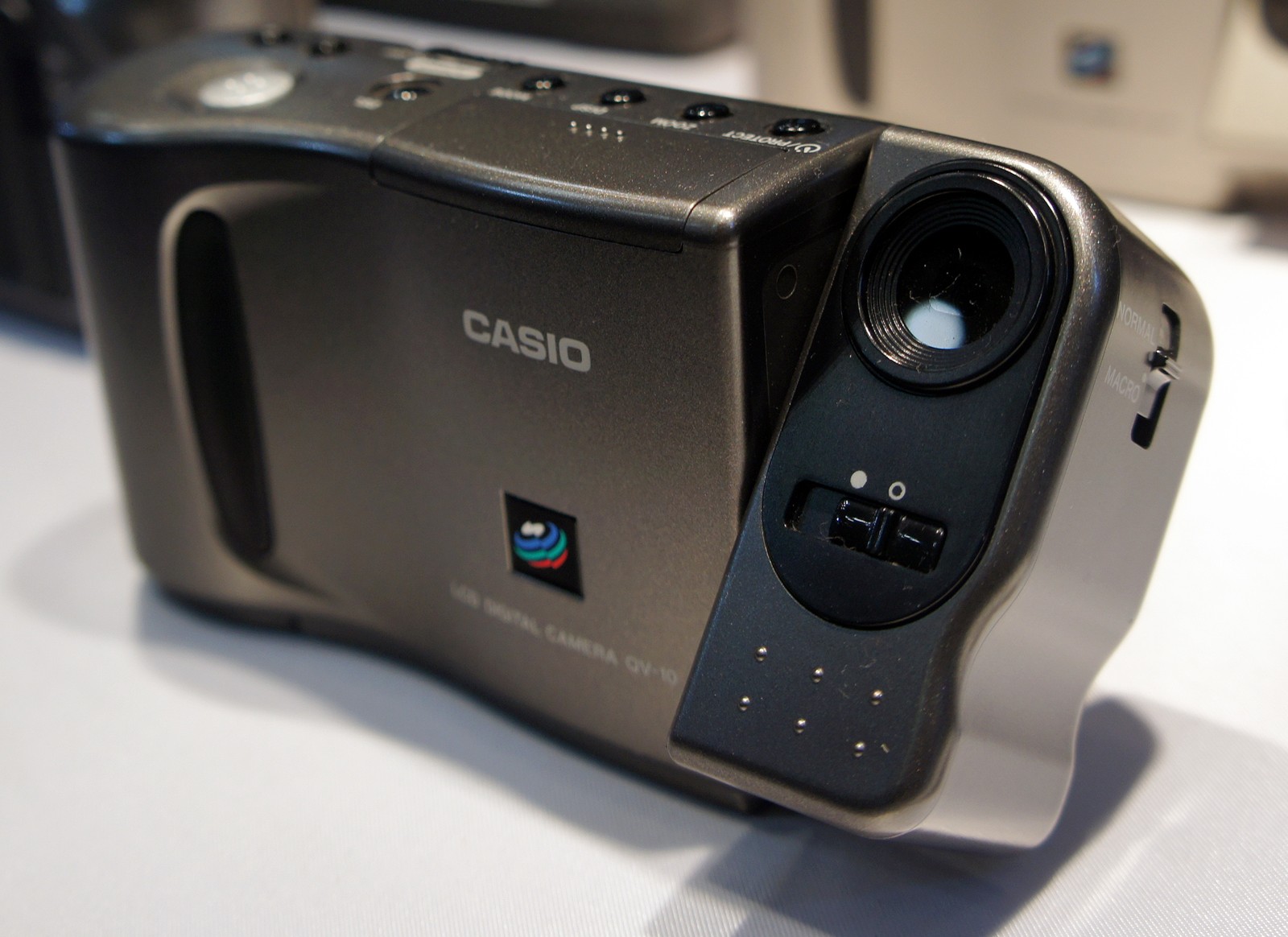
Casio’s official timeline dates the QV-10 to March 1995. Its key features were reviewing pictures on an LCD and sending them to a television or computer, a new way to handle photographs at the time.
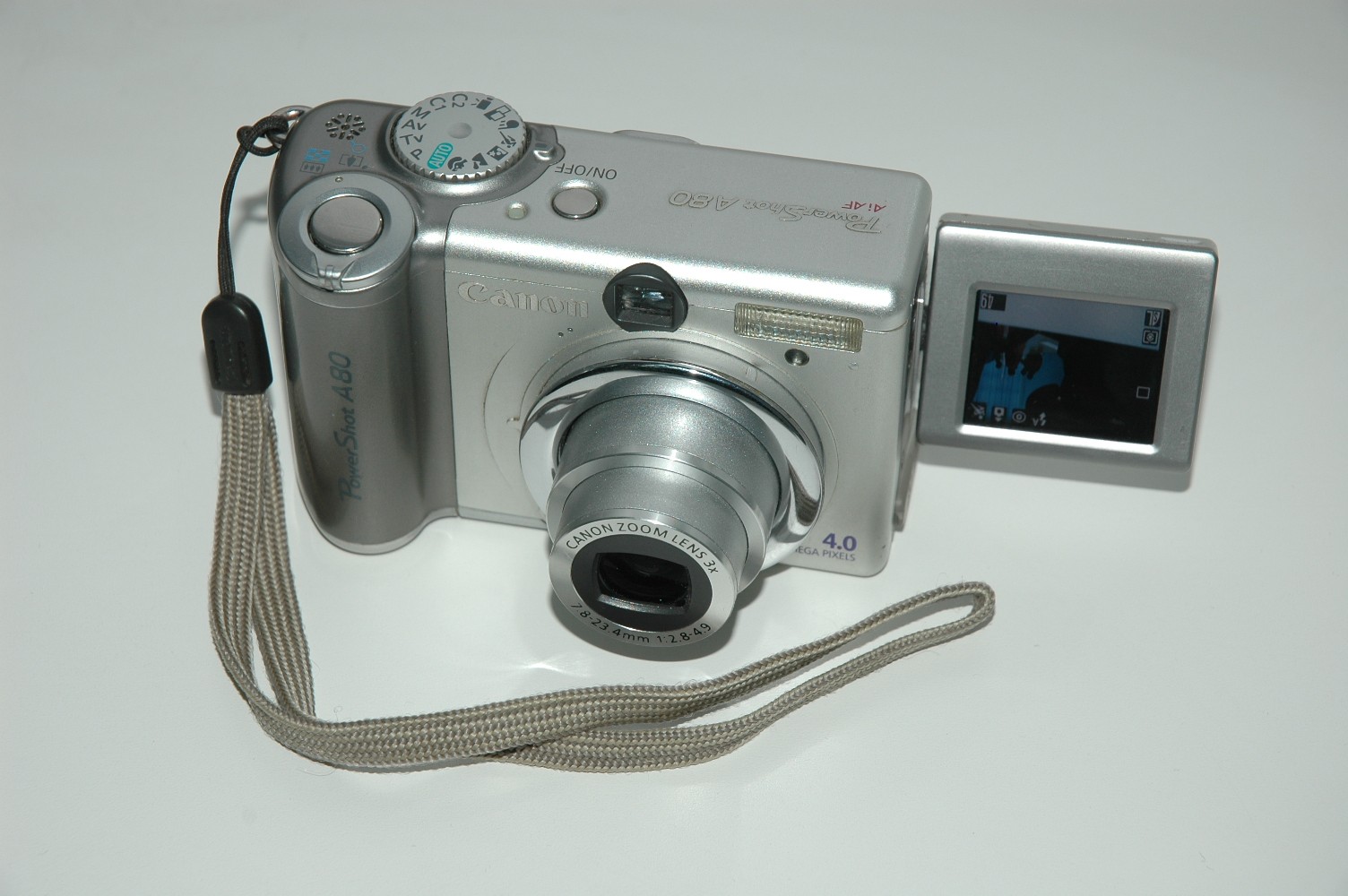
Canon’s October 2003 PowerShot A80 paired a roughly four-megapixel CCD with an articulated LCD. Each camera had its own handling. For some users these are remembered objects; for others they are unfamiliar pieces of design.
CCDs and colour
Not every old digital camera uses a CCD. Canon’s May 2010 IXUS 300 HS used a ten-megapixel back-illuminated CMOS sensor and DIGIC 4 processor. It was sold as the PowerShot SD4000 IS DIGITAL ELPH in North America and the IXY 30S in Japan, so different listing names can describe the same model.
Colour depends on more than the sensor. Nikon’s manual explains that lighting changes apparent colour and white balance compensates for it. Whatever the “film-like” impression, a CCD camera does not capture images the way film does; the A80 records digital JPEG files.
Noise and smear
Sony’s ISO guide explains that higher sensitivity allows faster shutter speeds in low light but can add noise or reduce sharpness. A rough-looking picture may reflect movement, focus, lighting or settings rather than a sensor’s character.
Sony’s DSC-W800 help page describes CCD smear, vertical streaks around intense light sources. According to that guidance, it generally does not appear in still photographs but may affect movies or panoramas. Pointing the camera directly at the sun or another strong light to produce the effect should be avoided.
Batteries and memory cards
Power and storage vary by model. Canon specifies four AA alkaline or rechargeable NiMH batteries and CompactFlash Type I for the A80. The IXUS 300 HS uses an NB-6L battery and SD, SDHC or SDXC cards. Similar-looking bodies do not guarantee compatible cards or chargers.
Sony’s DSC-W1 manual sets out Memory Stick and adapter requirements and warns that its supplied charger is only for specified Sony NiMH batteries; alkaline cells must not be charged. A USB socket does not mean USB charging. Testing shooting, playback and file transfer before an outing avoids surprises.
A ten-picture walk
A NowHitz suggestion: if a camera you already own works, take ten pictures close to home before buying another, one in sunlight and one in shade, starting on automatic and comparing the results. Ask before photographing or sharing anyone’s face.
Transferring the files at home and choosing one picture each is part of the outing. Image quality need not be the reason to use an old camera; the appeal is remembering an afternoon together at a different pace.
Sources & context
2026-10-13T09:48:24.735Z
mk.co.kr ↗Yonhap News ↗CASIO ↗Canon Camera Museum ↗Canon Camera Museum · IXUS 300 HS ↗Sony · DSC-W1 ↗Nikon ↗Sony ↗Sony ↗Alexei Kouprianov / Wikimedia Commons · original photograph and license ↗CC BY 3.0 license terms ↗Morio / Wikimedia Commons · original photograph and license ↗CC BY-SA 3.0 license terms ↗Marie-Lan Nguyen / Wikimedia Commons · original photograph and license ↗CC BY 2.5 license terms ↗Svdmolen / Wikimedia Commons · photograph, EXIF and individual license ↗benoitnewton / Wikimedia Commons · photograph, EXIF and individual license ↗CC BY 2.0 license terms ↗Clementina / Wikimedia Commons · photograph, EXIF and individual license ↗Nikon · COOLPIX 3200/E3200 original manual, introduction p.1 (PDF p.11) ↗Photo credit
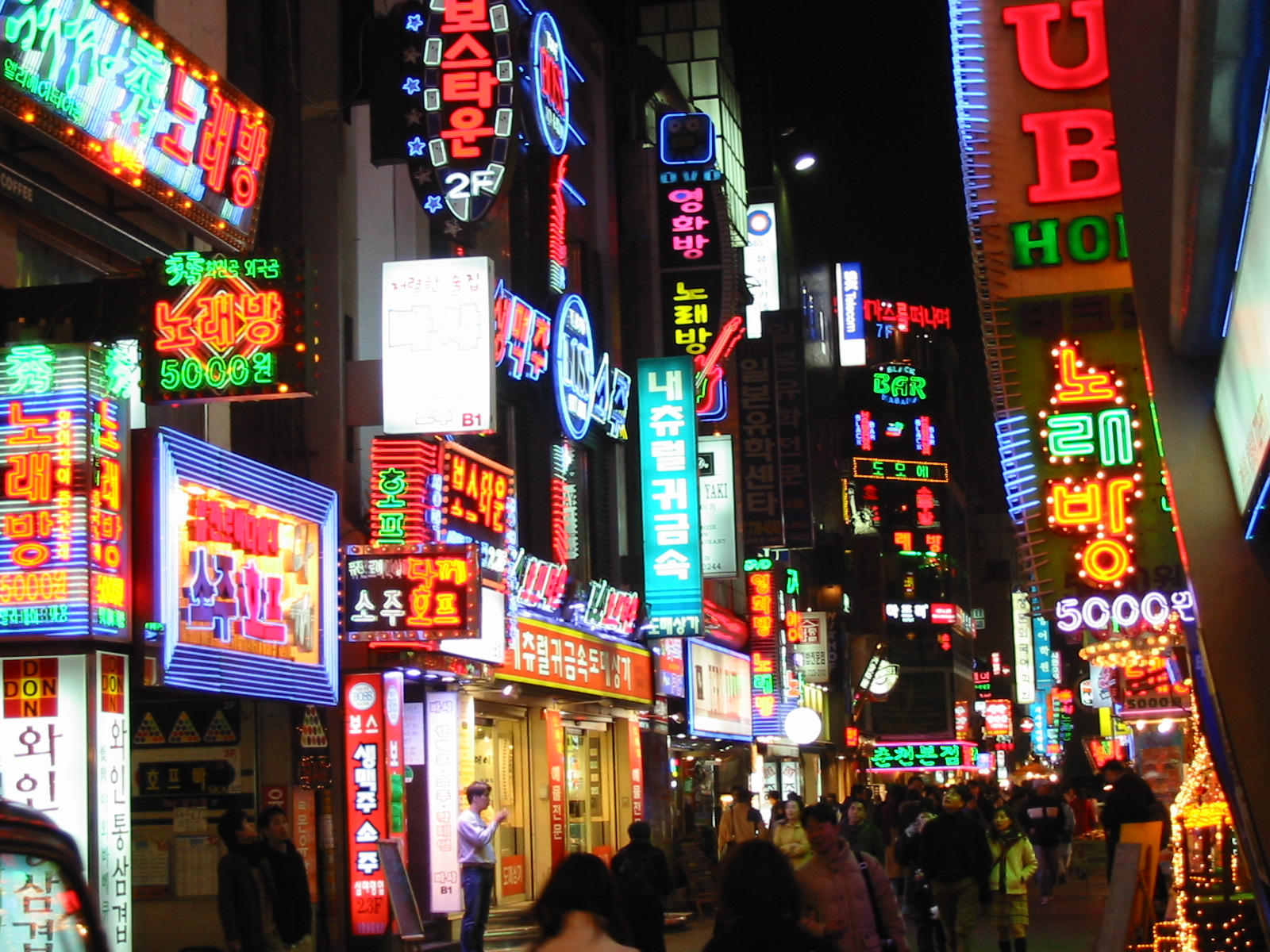
Philippe Teuwen / “Seoul at Night.jpg” / Wikimedia Commons / CC BY-SA 2.0 · CC BY-SA 2.0A Seoul street at night in December 2003, packed with Korean neon signs and passers-by. The original EXIF records a Canon PowerShot A20, a 2-megapixel compact released in 2001. Neon blooms and the shadows carry noise. Photo: Philippe Teuwen / “Seoul at Night.jpg” / Wikimedia Commons / CC BY-SA 2.0. The original file is shown unedited. The EXIF time reads early afternoon, so the camera clock was probably not set.
Photo credit
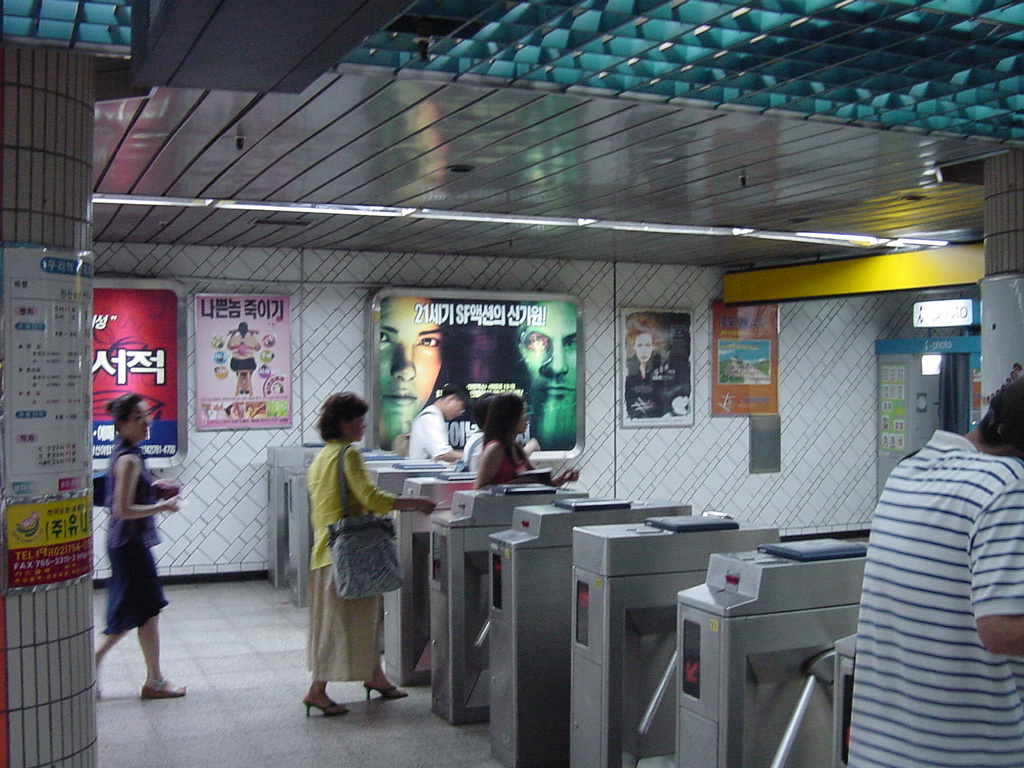
Alex C / “Turnstiles of the Seoul Subway 2001.jpg” / Wikimedia Commons / CC BY 2.0 · CC BY 2.0Passengers going through Seoul subway ticket gates in July 2001. The original EXIF records a Sony CYBERSHOT at 21:54. Colours lean under fluorescent light and the file is 1024×768. Photo: Alex C / “Turnstiles of the Seoul Subway 2001.jpg” / Wikimedia Commons / CC BY 2.0. The original file is shown unedited.
Photo credit
Alexei Kouprianov / “Canon PowerShot A80.jpg” / Wikimedia Commons / CC BY 3.0 · CC BY 3.0Canon PowerShot A80 with its articulated screen extended, photographed on October 28, 2007. Archival photographs of the devices, not sample pictures taken with them or a 2026 dinol outing. Photo: Alexei Kouprianov / “Canon PowerShot A80.jpg” / Wikimedia Commons / CC BY 3.0. Original dimensions retained; JPEG re-encoded. The card uses an 8:5 centred crop; enlarge to see the full frame.
Casio QV-10 displayed at CP+ in Yokohama on February 12, 2011. A 2011 photograph of the model launched in 1995. Archival photographs of the devices, not sample pictures taken with them or a 2026 dinol outing. Photo: Morio / “Casio QV-10 CP+ 2011.jpg” / Wikimedia Commons / CC BY-SA 3.0. Proportionally reduced and JPEG-encoded. The card uses an 8:5 centred crop; enlarge to see the full frame. The adapted image retains the same license.
A Seoul restaurant table in August 2005: meat on the grill turned with tongs, lettuce and side dishes around it. The original EXIF records a Canon PowerShot A520 with the built-in flash fired. Photo: IGEL / “Korean food 8.jpg” / Wikimedia Commons / CC BY-SA 3.0. The original file is shown unedited.
Photo credit
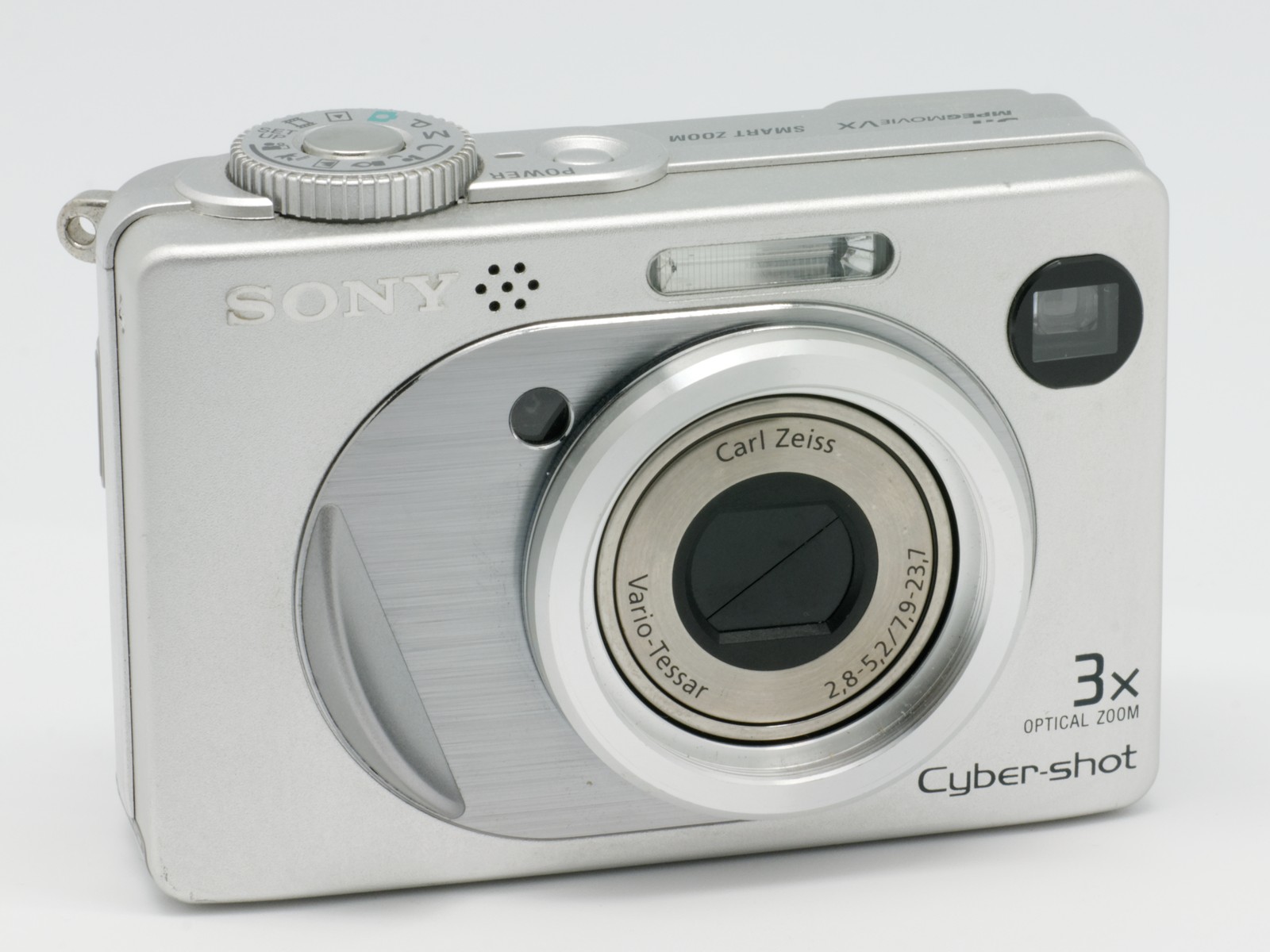
© Marie-Lan Nguyen / “Sony Cyber-shot DSC-W1.jpg” / Wikimedia Commons / CC BY 2.5 · CC BY 2.5Front of a Sony Cyber-shot DSC-W1 against a grey background, photographed on September 3, 2012. Archival photographs of the devices, not sample pictures taken with them or a 2026 dinol outing. Photo: © Marie-Lan Nguyen / “Sony Cyber-shot DSC-W1.jpg” / Wikimedia Commons / CC BY 2.5. Proportionally reduced and JPEG-encoded. The card uses an 8:5 centred crop; enlarge to see the full frame.
Photos 1–3 show the cameras themselves; photos 4–6 are Korean scenes taken with older digital compacts, identified through the original EXIF. Their colours and atmosphere describe these particular images, not a universal CCD look or proof of unedited output.