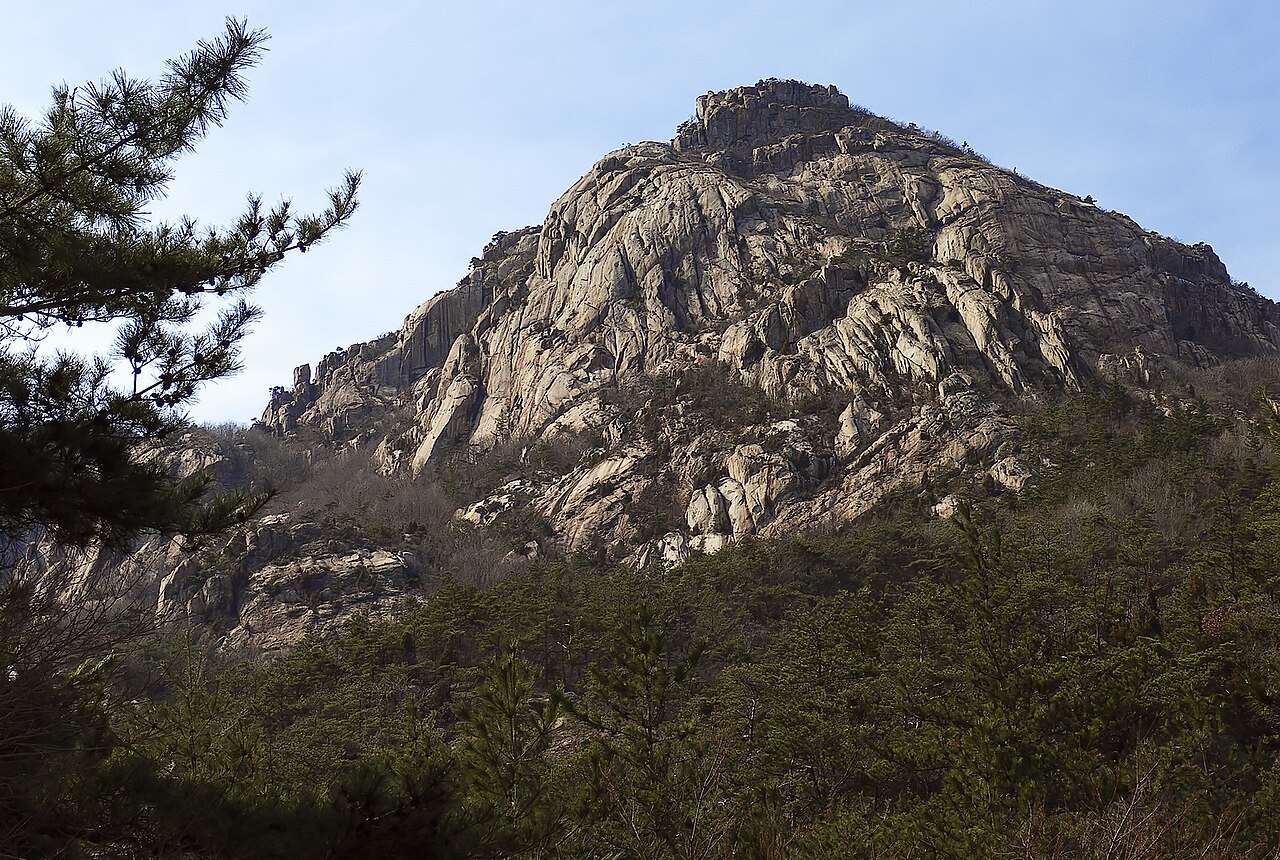
The Korea Heritage Service on Oct. 16 designated “Wolchulsan and Surroundings” a Scenic Site, a category of national natural heritage. The roughly 2.26 million square meters in Yeongam and Gangjin counties, South Jeolla, were recognized for a granite mountain landscape layered with state rites and Buddhist culture.
71 lots in Yeongam and Gangjin
The Korea Heritage Service announced the designation on Oct. 16. The site lies in Yeongam-eup and Gunseo-myeon in Yeongam County and Seongjeon-myeon in Gangjin County.
The designated area covers 71 lots, 2,256,208 square meters. The province, Gangjin County and Yeongam County manage it.
A mountain of state rites and Buddhism
Wolchulsan first appears in the Samguk Sagi as “Wollaeak” in Wolna-gun. Cheonhwangbong peak hosted state rites from the Unified Silla period.
From Goryeo to Joseon it was a center of Buddhist culture in the south-west. Muwisa temple keeps its Geungnakbojeon hall and murals; Dogapsa holds records of the monk Doseon and traces of royal patronage.
A granite massif rising from the plain
The mountain is an isolated granite massif that rises sharply from the plain. Dome-shaped peaks, castle-like ridges, tors and tafoni have developed. A sharp northeast-southwest skyline and the cliffs of Cheonhwangbong and Gujeongbong anchor the scenery.
Insectivorous plants grow there, and vegetation shifts from warm-temperate at the base to temperate at the summit.
Names and records
Gujeongbong carries beliefs and tales about nine wells. The mountain has been called Wollaeak, Sogeumgang and Cheonbul in different eras, and travel accounts by Jeong Yak-yong and Kim Chang-hyeop survive.
The service said it will manage the site systematically based on follow-up research and prepare ways for the public to experience its value.