Mullae is still a working neighborhood of metal shops and small factories. Artist studios, tiny galleries, cafés and restaurants now share the same lanes. Its appeal is not a staged “old factory” look, but the fact that industry and creative life still occupy the same blocks.
Mullae Station · Line 2 · 5 min walk
How steelwork and art came to share the same lanes
Mullae grew as an industrial area after textile factories arrived in the 1930s, and later became dense with metalworking and machine-parts businesses. Yeongdeungpo-gu records describe a strong machinery-parts industry here in the 1970s. As the industrial structure changed and small workspaces opened up, artists began moving in. Seoul Art Space Mullae, a city-run creative space, opened in 2010, helping shape the mixed streetscape seen today. There are several stories about the origin of the name “Mullae,” so it is better not to present one folk explanation as settled fact.
Because this is still a working district, not a retro set
On weekday afternoons, the soundtrack is metal being moved, cut and welded. Later, workshop shutters come down and people arrive for exhibitions, dinner and drinks. Mullae keeps both timelines visible at once instead of erasing one to make room for the other.
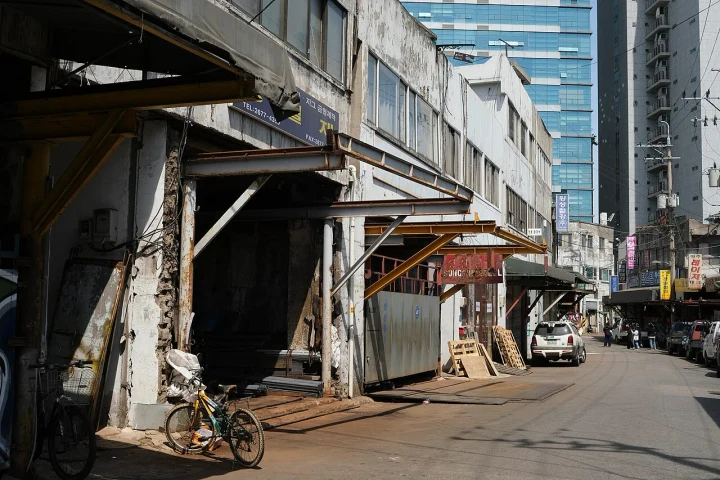
Exhibition posters beside the sound of cutting steel
Along Dorim-ro 126-gil and 128-gil, active metal shops and artist studios sit only steps apart. Keep workshop entrances and delivery routes clear.
Artwork that appears when the shutters come down
Official Seoul tourism information notes that many studios and workshops close on weekends, making art painted on shutters and doors easier to see. In Mullae, a closed door can still be part of the street gallery.
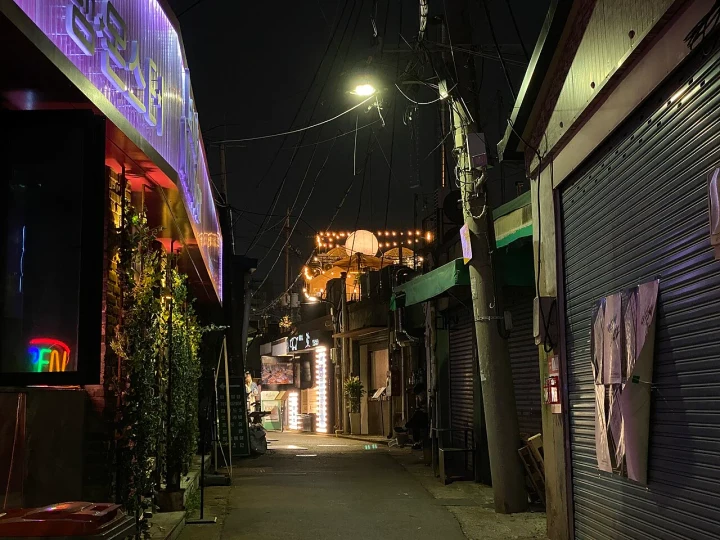
Cafés and small restaurants across from the steel streets
Across the road from the metalworking lanes are alleys of cafés, eateries and pubs. Within one block, the neighborhood can shift quickly from workplace to evening meeting place.
Weekdays 16:00–19:00
Start while the metal shops are still active and stay long enough to see the evening lights come on.
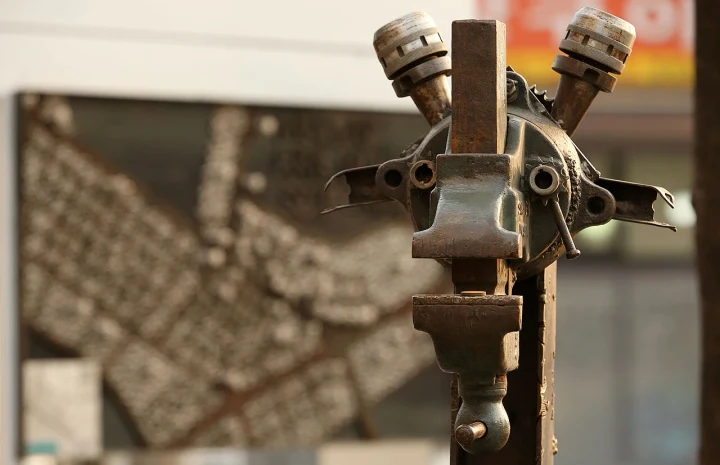
Photo credit
Republic of Korea from Seoul, Republic of Korea ↗ · CC BY-SA 2.0 · Resized and converted to WebPWeekday daytime
Best for understanding the neighborhood’s original role as a metalworking district.
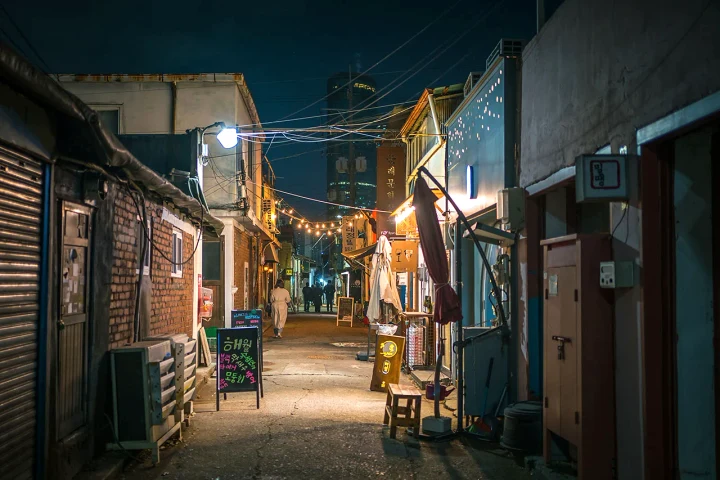
After dark
Restaurants, cafés and pubs become more visible, while most of the industrial work has finished for the day.
QUICK WALK
See the core steel streets and art-village lanes
RECOMMENDED
Steel streets → art village → café and restaurant alleys at an easy pace
WITH FOOD
Add an exhibition, meal or café stop after the walk
Before you visit
Many metal shops are active workplaces during the day. Do not block entrances, vehicles or delivery routes. Ask before photographing workers at close range or shooting inside workshops. Visit on a weekday for the industrial side; weekends feel different, with more shutter art and café traffic.
Station access
Mullae Station
STORE INFO
LOCATION
NEARBY
Source english.visitseoul.net
Sources & context
2026-09-30
english.visitseoul.net ↗english.visitseoul.net ↗english.visitseoul.net ↗www.ydp.go.kr ↗www.ydp.go.kr ↗