The KBO on October 14 named six nominees for its September–October monthly MVP award: pitchers Avila and Jo Byeong-hyeon of SSG and Daniel of KT, and hitters Choi Won-jun and Hilliard of KT and Davidson of Kiwoom. Fan voting runs through October 19.
The pitchers
Over September and October, Avila threw 44⅔ innings with five wins and a 1.21 ERA. Jo recorded eight saves and a 0.00 ERA in nine appearances. Daniel had five wins and 54 strikeouts.
The hitters
Choi batted .413 with 57 hits over the period. Hilliard hit 14 home runs with 40 RBIs, and Davidson hit 12 homers with an .806 slugging percentage. The figures cover September–October only, not the full season.
The award
The vote is for the September–October monthly award, not the season MVP. The nominees include a starter, a closer, a high-average hitter and power hitters.
How to vote
Fan voting opened at 10 a.m. KST on October 14 and closes at midnight at the end of October 19 (00:00 KST on October 20) in Shinhan Bank’s Super SOL mobile app. The winner is decided by combining the fan vote with a vote by the Korea Baseball Writers Association.
The notice does not specify registration or identity-verification requirements for foreign account holders, or whether voting is available in other languages.
Nominee Matt Davidson batting at the Triple-A Home Run Derby on July 13, 2015. Archive photograph, not a 2026 Kiwoom game. Minda Haas Kuhlmann · CC BY 2.0 · Original JPEG unchanged. https://creativecommons.org/licenses/by/2.0/
Brick-fronted shops, workshop lanes and handmade-shoe stores share the streets around Yeonmujang-gil in Seoul’s Seongsu-dong, where car repair, printing and shoemaking businesses still operate. This walk covers the neighborhood beyond its best-known stops.
Workshops beside shops
Around Yeonmujang-gil in Seongsu-dong, car repair, printing and shoemaking workshops sit alongside cafés, shops and cultural spaces. The Korea Tourism Organization says industrial activity continues in the area.
Factory doors, small workshop signs and new storefronts line the same streets.
Seongsu Handmade Shoes Street
Seongsu Handmade Shoes Street brings together businesses in footwear design, development, production and sales. Handmade means the shoes go through hand-crafting processes; it does not mean every pair can be made to measure on the spot.
Buyers should ask the shop about fitting, production time and collection in advance.
Factories put to new use
The Seoul Tourism Organization describes Yeonmujang-gil as a street where old factories and warehouses have been converted to new uses. New shop signs hang on red-brick walls and wide factory entrances.
Workshop lanes
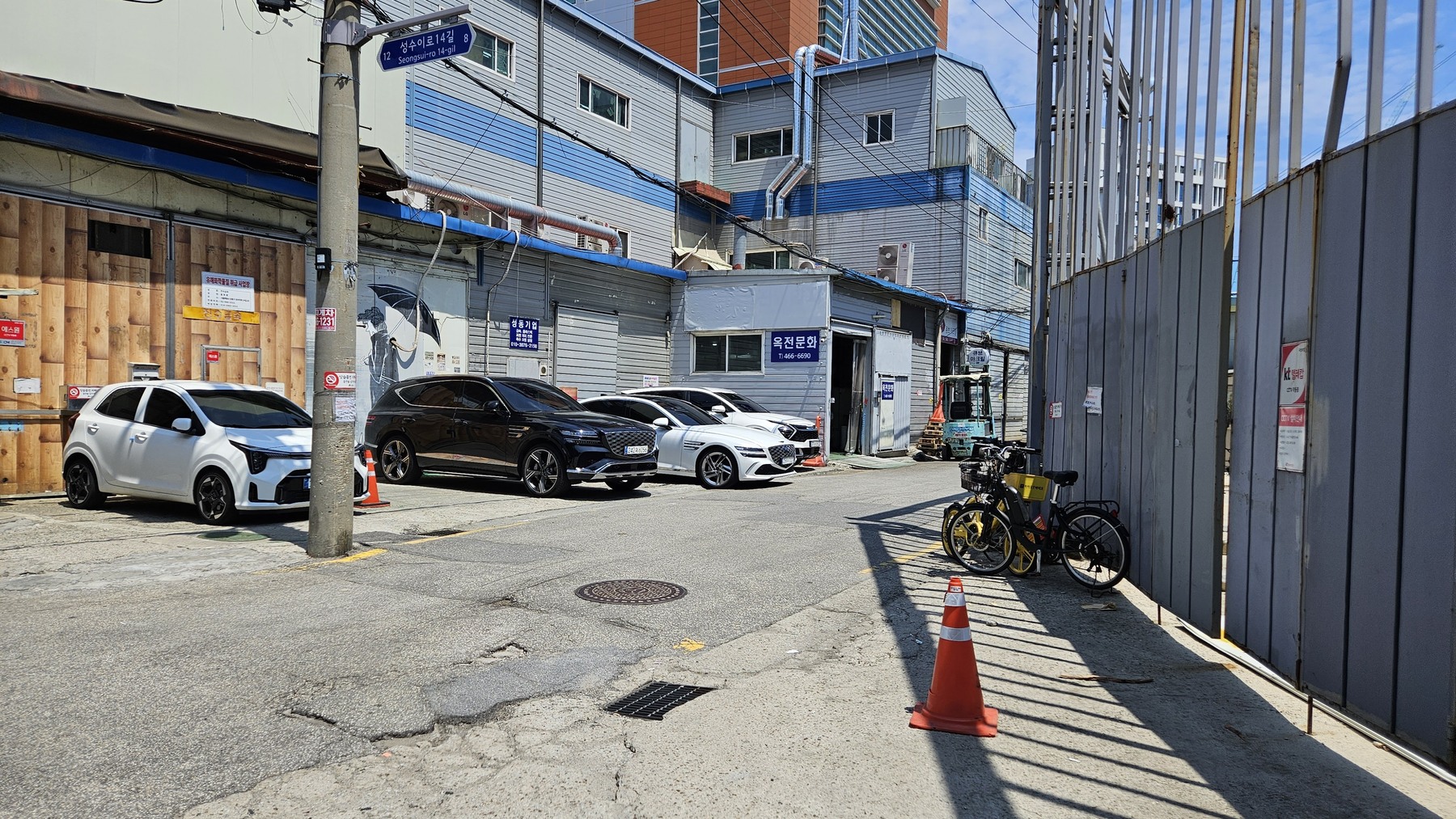
A short step away from the larger shops, the backs of buildings and small workshop entrances line the lanes. Seongsui-ro 14-gil is one street where these can be seen.
Workshops are not visitor attractions. Walkers should stay on public paths and keep clear of working vehicles.
Opening hours
According to the Korea Tourism Organization, Seongsu-dong’s Cafe Street is open 24 hours a day, year-round, with no admission fee. Shoe shops and cafés keep their own hours.
Daylight is best for seeing the façades and lanes. Visitors heading to a particular shop should check its hours for the day.
Time needed and Seoul Forest
The shoe-shop streets and the area around Yeonmujang-gil can be covered on foot in 60–90 minutes, not counting queues, shopping or indoor visits. This is an estimate, not an official course time.
With more time, Seoul Forest is nearby. The park is open 24 hours, except for some facilities.
Starting point and parking
The Seoul Tourism Organization guide, updated October 13, lists 1 Yeonmujang-gil as a visiting point 533 m from Exit 3 of Seongsu Station on Line 2. That is the distance to this point only, not the length of the walk or the distance to Handmade Shoes Street.
The Korea Tourism Organization says Cafe Street has no dedicated parking; drivers are directed to the public lot at Seongsu Station. Inquiries: Seongdong District, +82-2-2286-5114.
PLACE INFO
Street access24 hours, year-round · free street admission
Individual businessesCheck each shop’s hours, closures and prices
SubwayLine 2 Seongsu, Exit 3 · 533m to 1 Yeonmujang-gil
ParkingNo dedicated Cafe Street parking; Seongsu Station public parking suggested
EnquiriesSeongdong District · +82-2-2286-5114
LOCATION
Seongsu-dong · Yeonmujang-gil and Handmade Shoes Street area1 Yeonmujang-gil, Seongdong-gu, Seoul · 서울 성동구 연무장길 1 · starting point
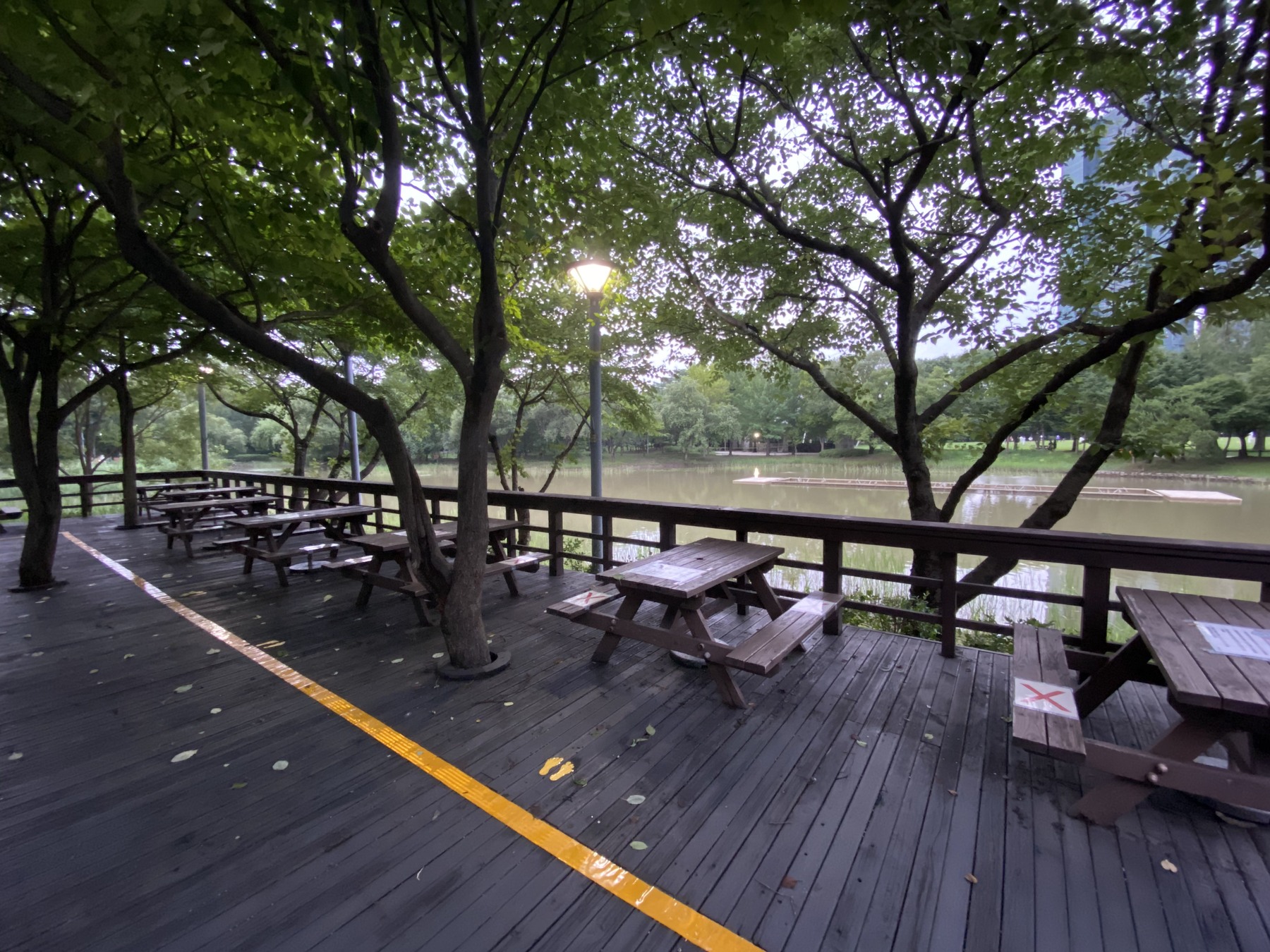
Seoul ForestA nearby park for a pause beneath the trees. A wooden deck and tables beneath trees in Seoul Forest. Archive photo, 2020-08-06; not evidence of current shops, events or seasonal conditions. Photo: CartoonChess · CC BY-SA 4.0. EXIF orientation applied; proportionally resized and JPEG recompressed. Full frame retained. https://creativecommons.org/licenses/by-sa/4.0/
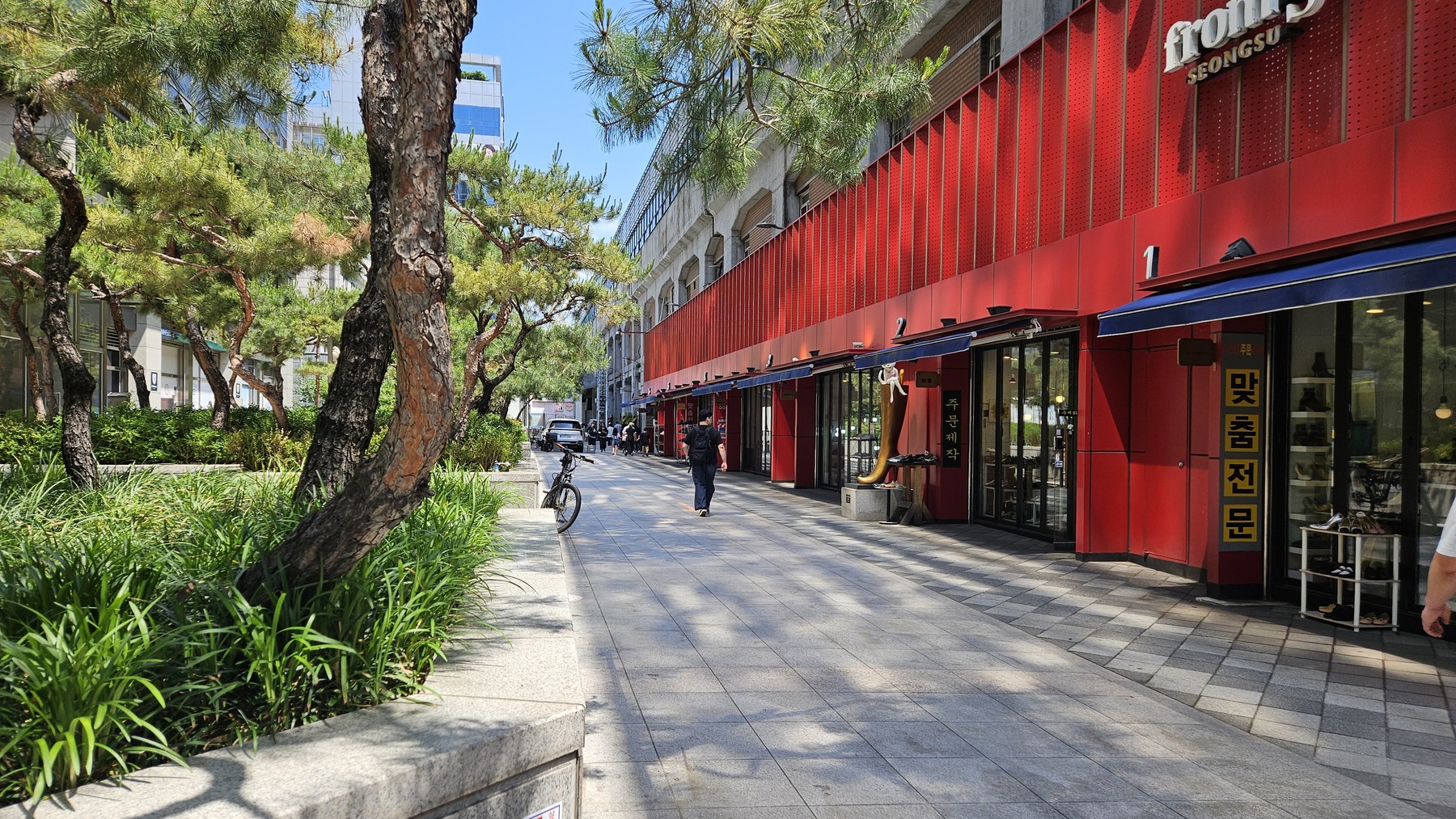
Red frontage and shoe shops on Seongsu Handmade Shoes Street. Archive photo, 2026-05-23; not evidence of current shops, events or seasonal conditions. Photo: Aspere · CC0 1.0. EXIF orientation applied; proportionally resized and JPEG recompressed. Full frame retained. https://creativecommons.org/publicdomain/zero/1.0/
Industrial buildings and a lane on Seongsui-ro 14-gil in Seongsu-dong. Archive photo, 2026-05-23; not evidence of current shops, events or seasonal conditions. Photo: Aspere · CC0 1.0. EXIF orientation applied; proportionally resized and JPEG recompressed. Full frame retained. https://creativecommons.org/publicdomain/zero/1.0/
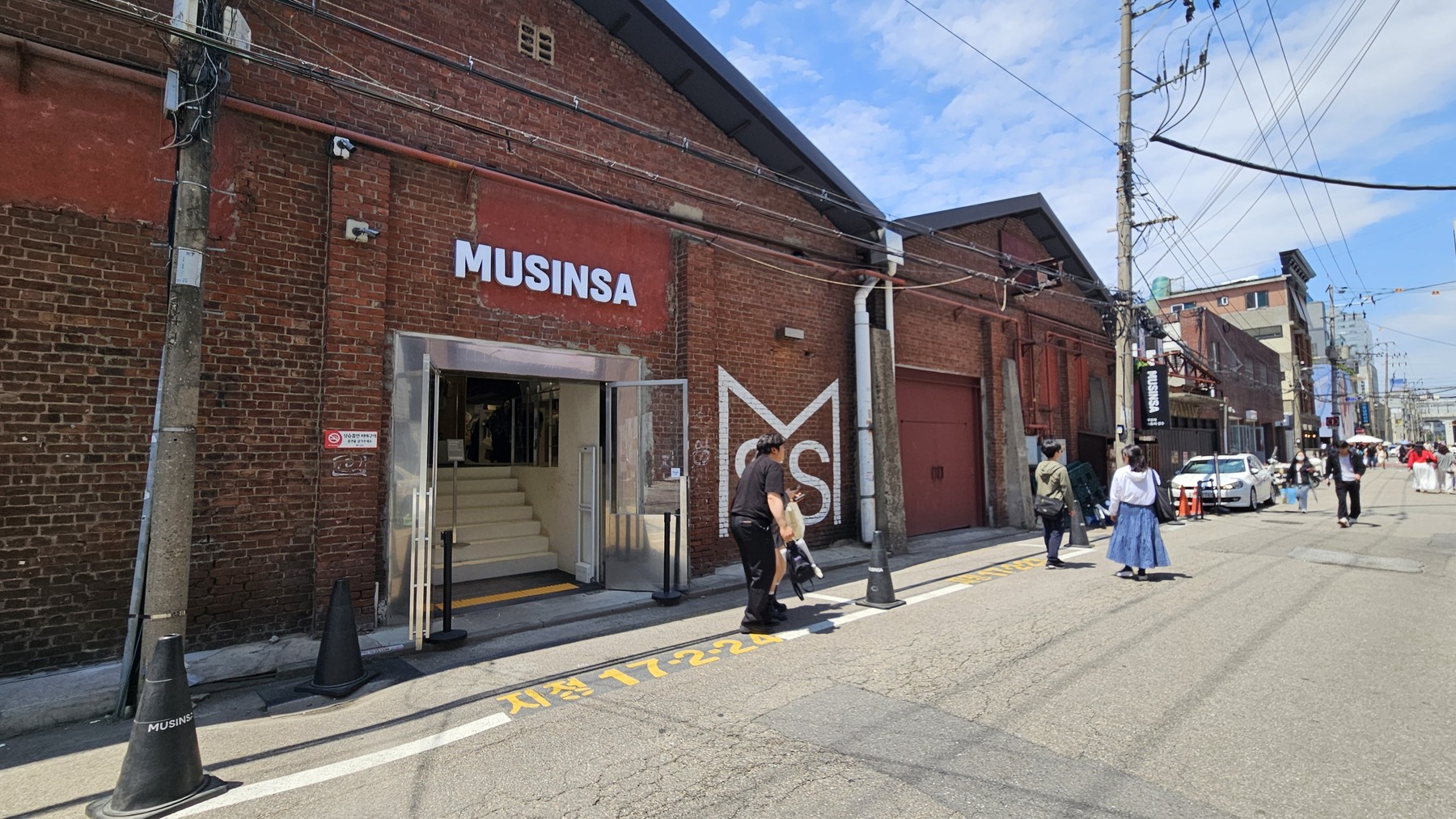
A Seongsu street with red-brick buildings and a MUSINSA sign. Archive photo, 2026-05-23; not evidence of current shops, events or seasonal conditions. Photo: Aspere · CC0 1.0. EXIF orientation applied; proportionally resized and JPEG recompressed. Full frame retained. https://creativecommons.org/publicdomain/zero/1.0/
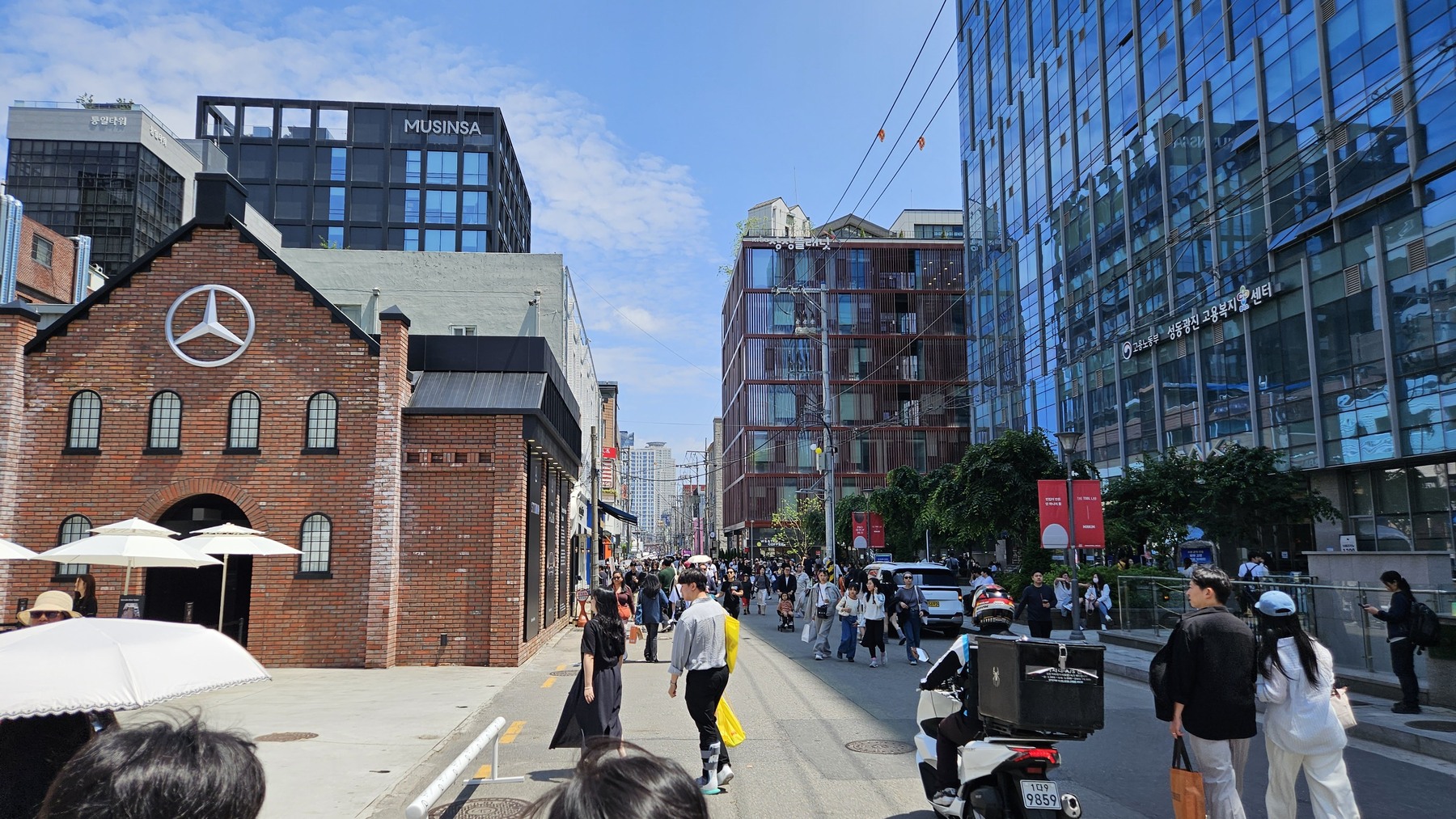
People walking between brick and glass buildings in Seongsu-dong. Archive photo, 2026-05-23; not evidence of current shops, events or seasonal conditions. Photo: Aspere · CC0 1.0. EXIF orientation applied; proportionally resized and JPEG recompressed. Full frame retained. https://creativecommons.org/publicdomain/zero/1.0/
Korean restaurants serve rice with an array of small side dishes called banchan. Here are a few common dishes, including seasoned spinach and stir-fried anchovies, and how to order banchan at restaurants and markets.
Bansang and banchan
Bansang is a table setting of rice and side dishes. Soup or stew is served alongside dishes made in different ways, such as raw-seasoned vegetables, grilled foods, braises and pancakes. Banchan are part of the meal, not garnish.
Varies by region, home and season
Korea.net says banchan vary by region, household and seasonal ingredients, so the same restaurant may serve different dishes from day to day. Staff can tell diners the name of an unfamiliar dish.
Spinach and anchovies
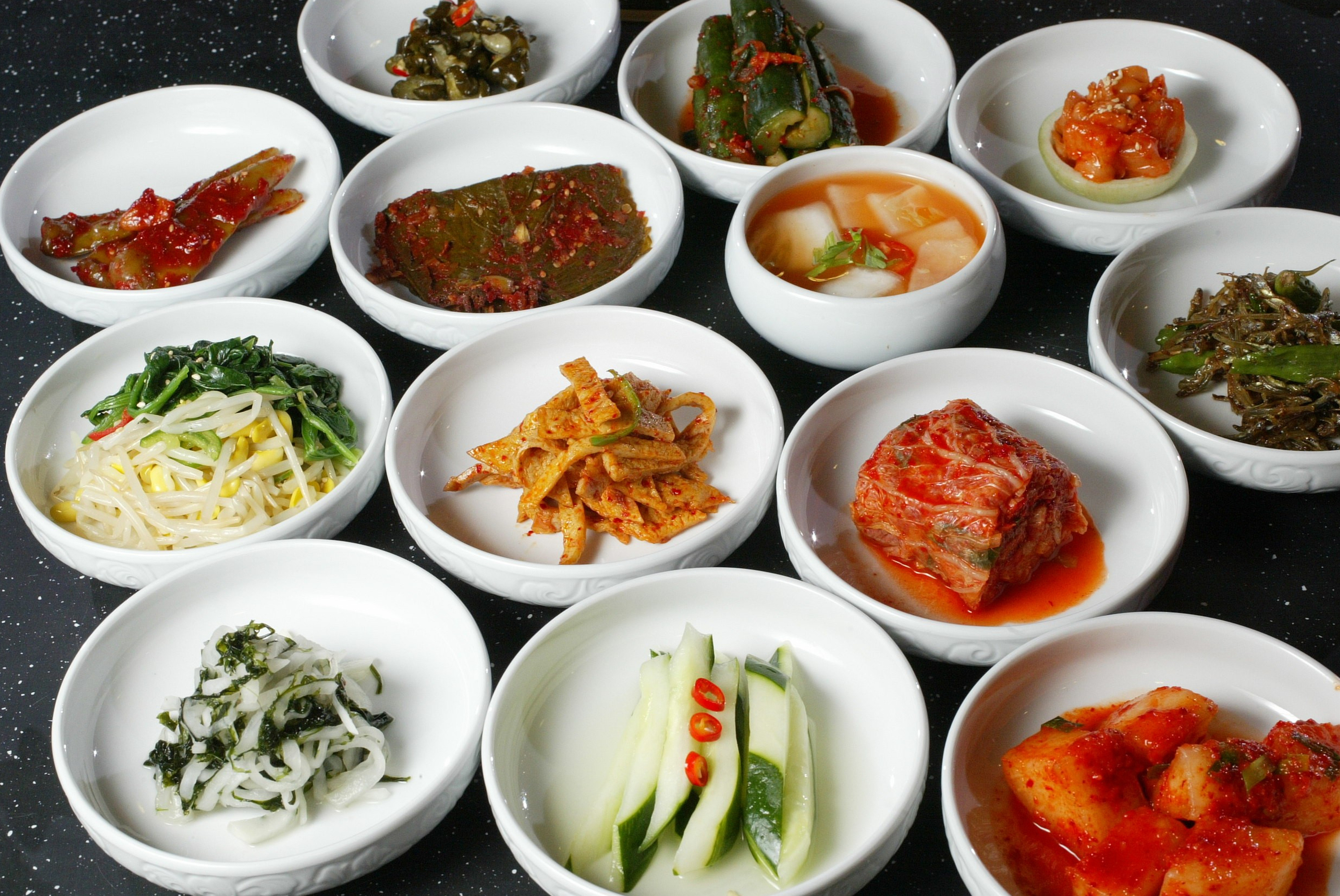
Sigeumchi-namul is blanched spinach with seasoning; cook Maangchi’s recipe uses soy sauce, garlic and sesame oil. Myeolchi-bokkeum is dried anchovies stir-fried with seasoning, sometimes with peanuts.
Ingredients and seasonings vary from place to place. Diners who need to avoid an ingredient should ask before ordering.
Asking for more
To ask for more of a side dish, say “이 반찬 조금 더 받을 수 있을까요?” (“Could I have a little more of this side dish?”). Whether refills are offered, and whether they cost extra, depends on the restaurant. Asking for small amounts avoids waste.
Buying banchan at a market
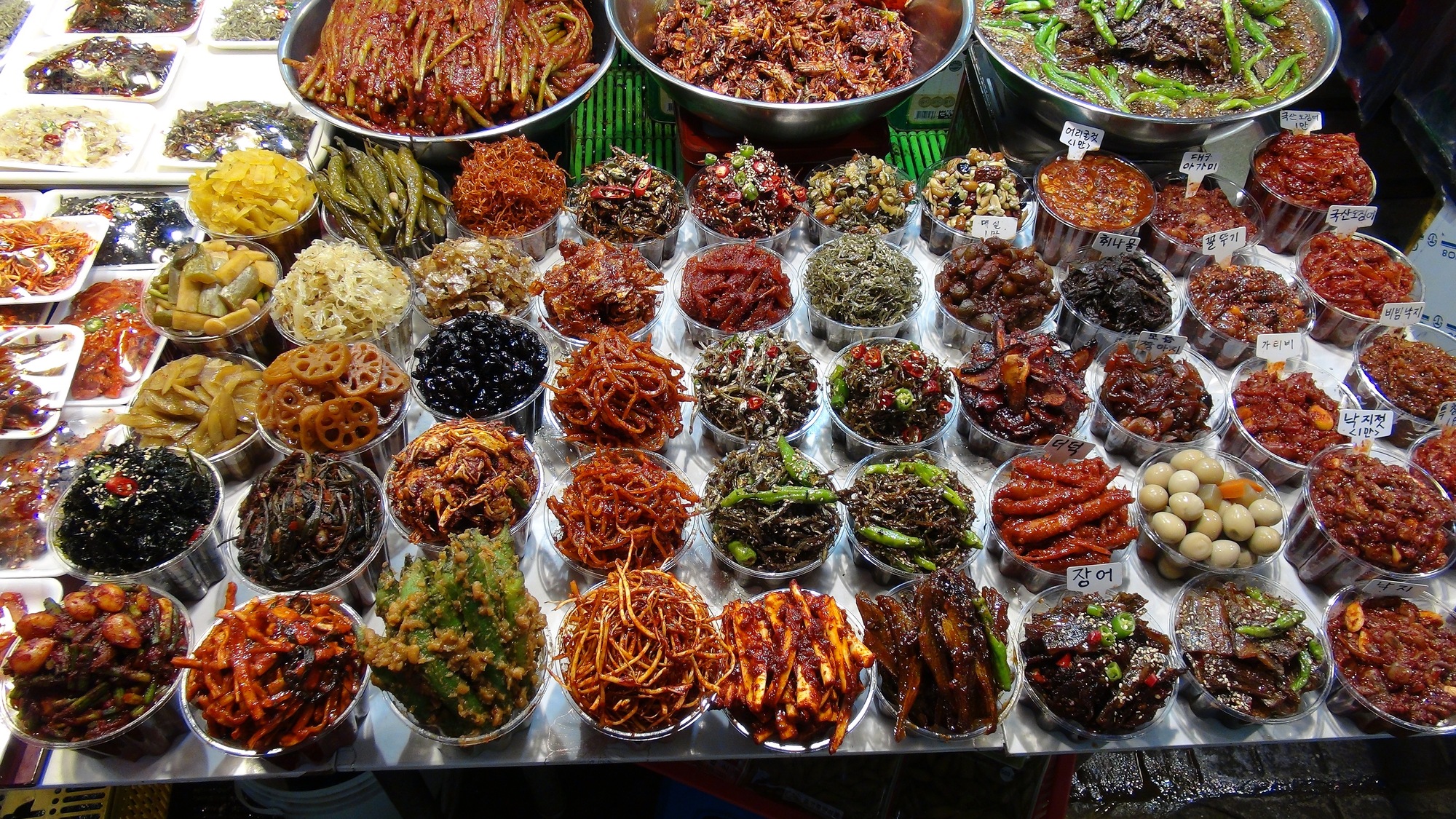
At markets with banchan stalls, shoppers can buy small amounts of several dishes to make a meal. Ask the name, selling unit and price before choosing a quantity, and check storage instructions for takeaway.
Rows of market-counter bowls holding kimchi, braised lotus root, beans and other side dishesSources & context
Kimchi, vegetables and other banchan arranged in small white dishes. This 2005 archive photograph is not a current restaurant menu. ijs, Banchan 2.jpg, 2005-12-22, CC0 1.0. https://creativecommons.org/publicdomain/zero/1.0/ Original JPEG unchanged.
Banchan including kimchi, braised dishes and salted seafood on a traditional-market counter. This is a 2014 archive image; visible prices and products are not current sales information. Ulrich Walder, Banchan in a traditional market.jpg, 2014-10-26, CC0 1.0. https://creativecommons.org/publicdomain/zero/1.0/ Resized proportionally to 2000px wide and saved as JPEG.
Busan Biennale 2026, “Dissident Chorus,” an exhibition built around sound and the body, closes on November 1. A free shuttle links the Museum of Contemporary Art Busan on Eulsukdo Island with two venues on Yeongdo. With October 26 a closed day, the final week runs October 27 to November 1.
Theme and artists
This year’s theme is “Dissident Chorus.” Co-artistic directors Evelyn Simons and Amal Khalaf present 46 artists and collectives from 22 countries exploring sound, the body, labor, migration and voices of resistance. They include Julien Creuzet, who represented France at the 2024 Venice Biennale; Filipino performance artist Joshua Serafin; and Korean artists Suki Seokyeong Kang, Dew Kim, Sungsil Ryu and Minouk Lim.
The Biennale opened August 29 and runs 65 days through November 1. It is closed Monday, October 26.
Venues and admission
MoCA Busan stands on Eulsukdo Island, where the river meets the sea. On Yeongdo, Space Wonji is a 100-year-old warehouse that once rented out ship equipment, and the former Busan Nam High School building was vacated when the school relocated in early 2026.
Hours are 10 a.m. to 6 p.m., Tuesday through Sunday. Last entry is 5 p.m. at MoCA Busan and the former high school and 5:30 p.m. at Space Wonji. MoCA Busan tickets cost 16,000 won for adults, 8,000 won for ages 13–18 and military or police, and 5,000 won for ages 4–12. Space Wonji and the former high school are free.
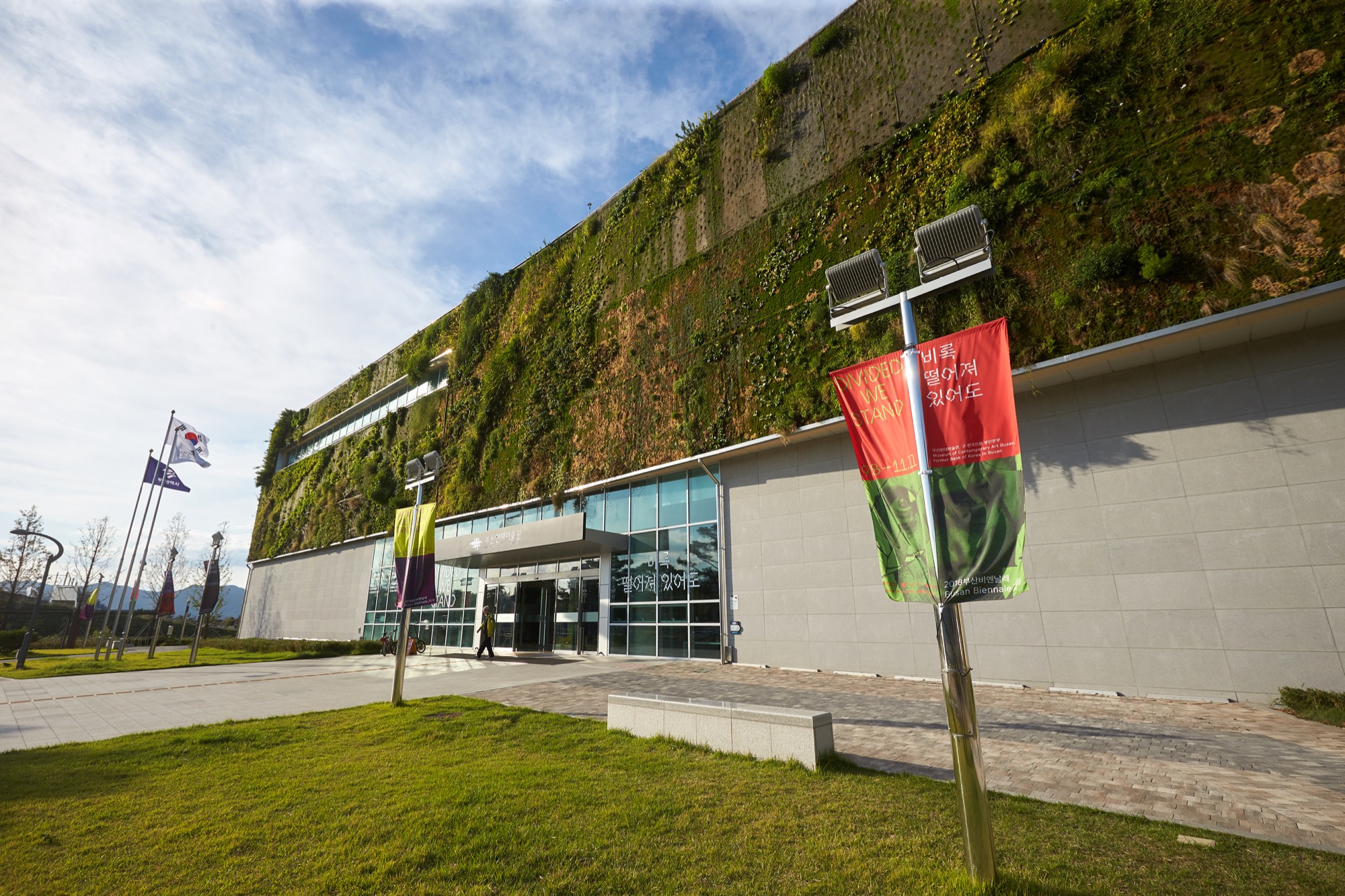
A glass entrance under a planted wall, with red banners outside the museum
Shuttle and guided tours
The free shuttle leaves MoCA Busan at 11 a.m., 2 p.m. and 4:30 p.m., stopping at Space Wonji and the former high school before returning. The 11 a.m. departure leaves the most time for seeing all three venues in a day.
Busan City says multilingual audio guides are available via QR codes. Walk-in guided tours start on the hour from 11 a.m. to 5 p.m. at MoCA Busan, except 1 p.m., and at 11:30 a.m., 1:30 p.m. and 3:30 p.m. at the former high school, first come, first served for ticket holders.
Getting there
For MoCA Busan (1191 Nakdongnam-ro, Saha-gu), take Metro Line 1 to Hadan Station, Exit 3, and transfer to a bus toward Eulsukdo. For Space Wonji (214 Bongnaenaru-ro, Yeongdo-gu) and the former Busan Nam High School (5 Jungnibuk-ro, Yeongdo-gu), take Line 1 to Nampo Station, Exit 6, then a bus to Yeongdo.
Parking is limited at the Yeongdo venues, and public transport is recommended. Inquiries: +82-51-503-6111.
A plant-covered museum and a wide lawn under a blue sky
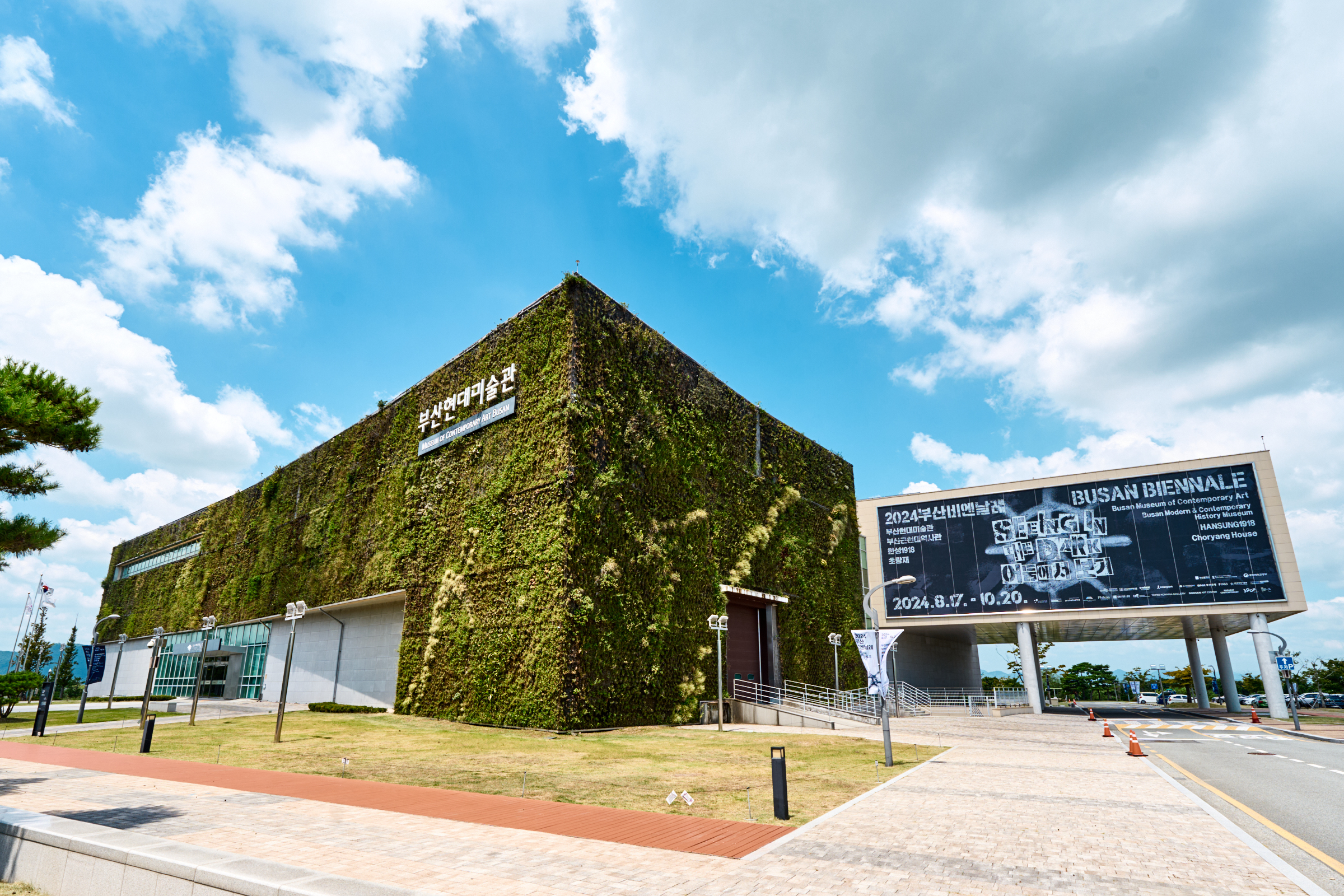
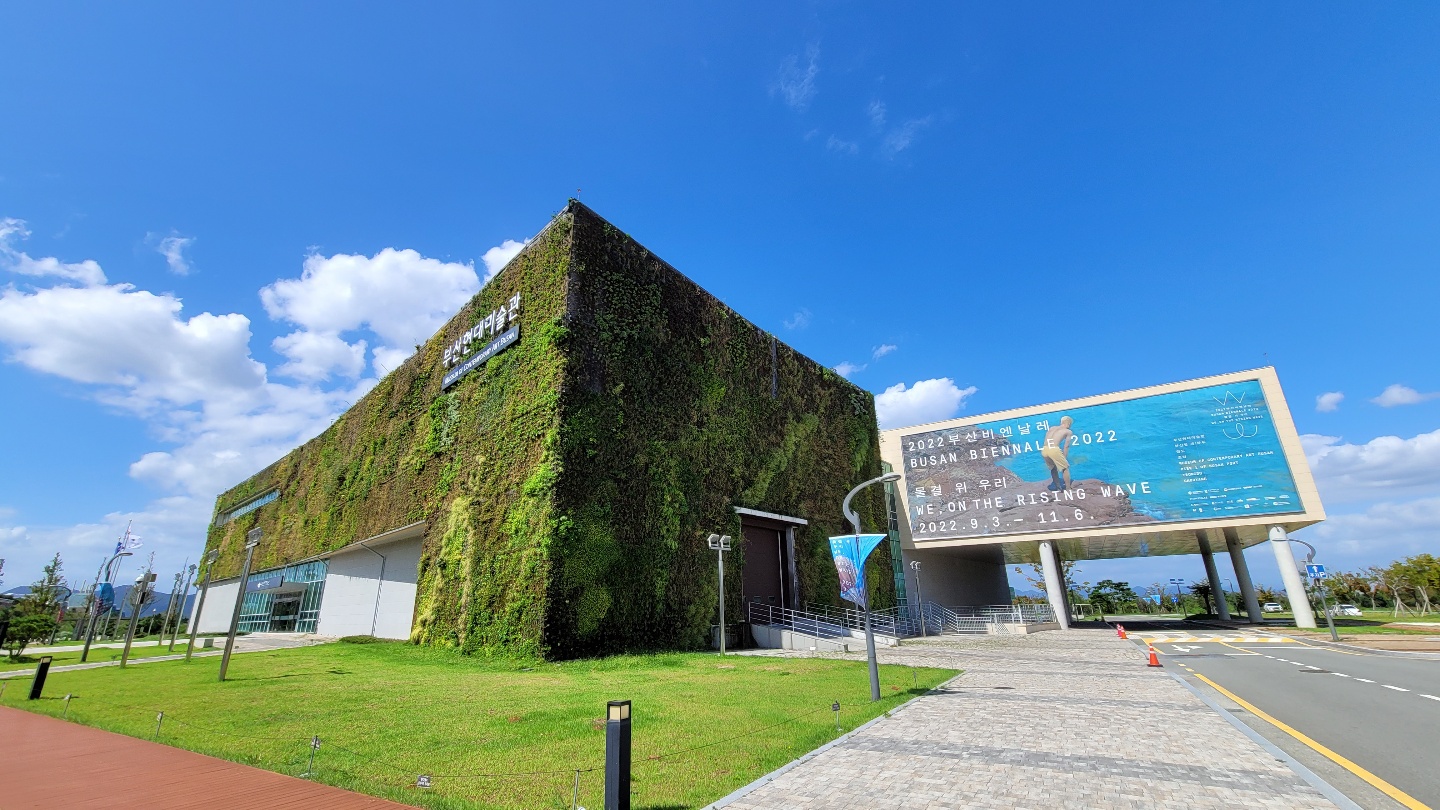
A large Busan Biennale sign stands beside the plant-covered façade of MoCA Busan. Uploaded by Busan Biennale as a view of the 2024 edition’s venue, taken on 13 August 2024; it does not show this year’s exhibition. Photo: Busan Biennale / Wikimedia Commons / CC BY-SA 4.0.
Biennale banners hang outside the entrance of MoCA Busan. Taken on 25 September 2018 during the 2018 Busan Biennale; unrelated to this year’s exhibition. Photo: Jiihyun0313 / Wikimedia Commons / CC BY-SA 4.0. Resized proportionally from the 5336×3558 original to 2000px wide.
MoCA Busan and its lawn on a clear day. Uploaded by Busan Biennale as a view of the 2022 edition’s main venue (file dated 29 November 2022); not this year’s exhibition. Photo: Busan Biennale / Wikimedia Commons / CC BY-SA 4.0.
The Busan Museum of Art reopened on September 17 after about two years of renovation. Four free reopening exhibitions, including the international show Future Museology, are on view, most through March 2027.
The renovation
Busan City said the museum in Haeundae’s Centum City reopened on September 17, 2026, after about two years of renovation. The main entrance has been turned to face a different direction, and a climate-control system installed.
The galleries were merged and reorganized, storage was expanded, a café and other visitor facilities were added, and the outdoor sculpture park was rebuilt. Press reports put the cost at about 46.9 billion won.
Reopening exhibitions
Future Museology, the first international show since the reopening, is organized with a consortium of nine museums in Korea and abroad and examines how museums relate to society. It runs through March 14, 2027. Dear All The Yesterdays traces the museum’s history from its opening to its reopening through institutional and architectural records, also through March 14.
‘그러나 우리는 아직도 이 바다 높은 물결 위에 있다: 1945-1953’ (roughly, “Yet We Are Still on the High Waves of This Sea”) covers the period from liberation to the Korean War with about 260 works and 460 documents and closes February 14, 2027. ‘안전기지’ (“Safe Base”), in the basement children’s gallery, runs through May 30, 2027.
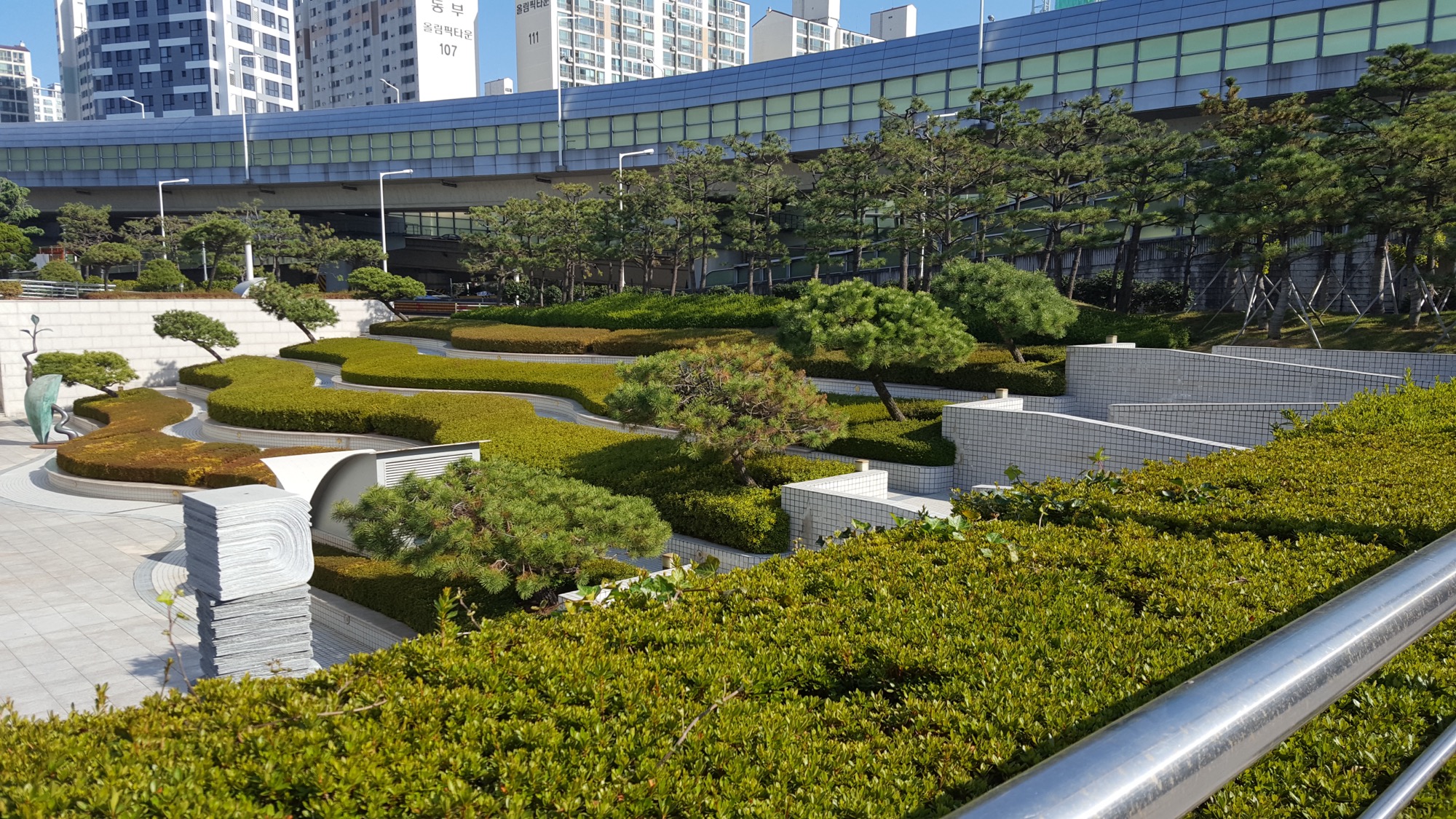
A terraced garden of low shrubs and pines with buildings behind
Hours and admission
According to Busan City’s event listings, the museum is open 10 a.m. to 6 p.m., Tuesday through Sunday, and closed Mondays and January 1. Last entry is one hour before closing.
All special exhibitions are free. Event listings are also published in English. Inquiries: +82-51-740-2602.
Getting there
The museum is at 58 APEC-ro, Haeundae-gu, Busan. Busan City’s English facility guide puts it about 200 m from Exit 5 of Busan Museum of Art Station on Metro Line 2. The guide predates the renovation and does not reflect the relocated entrance; signs on site show the way.
BEXCO is nearby, so the museum can be combined with a visit to G-STAR in November.
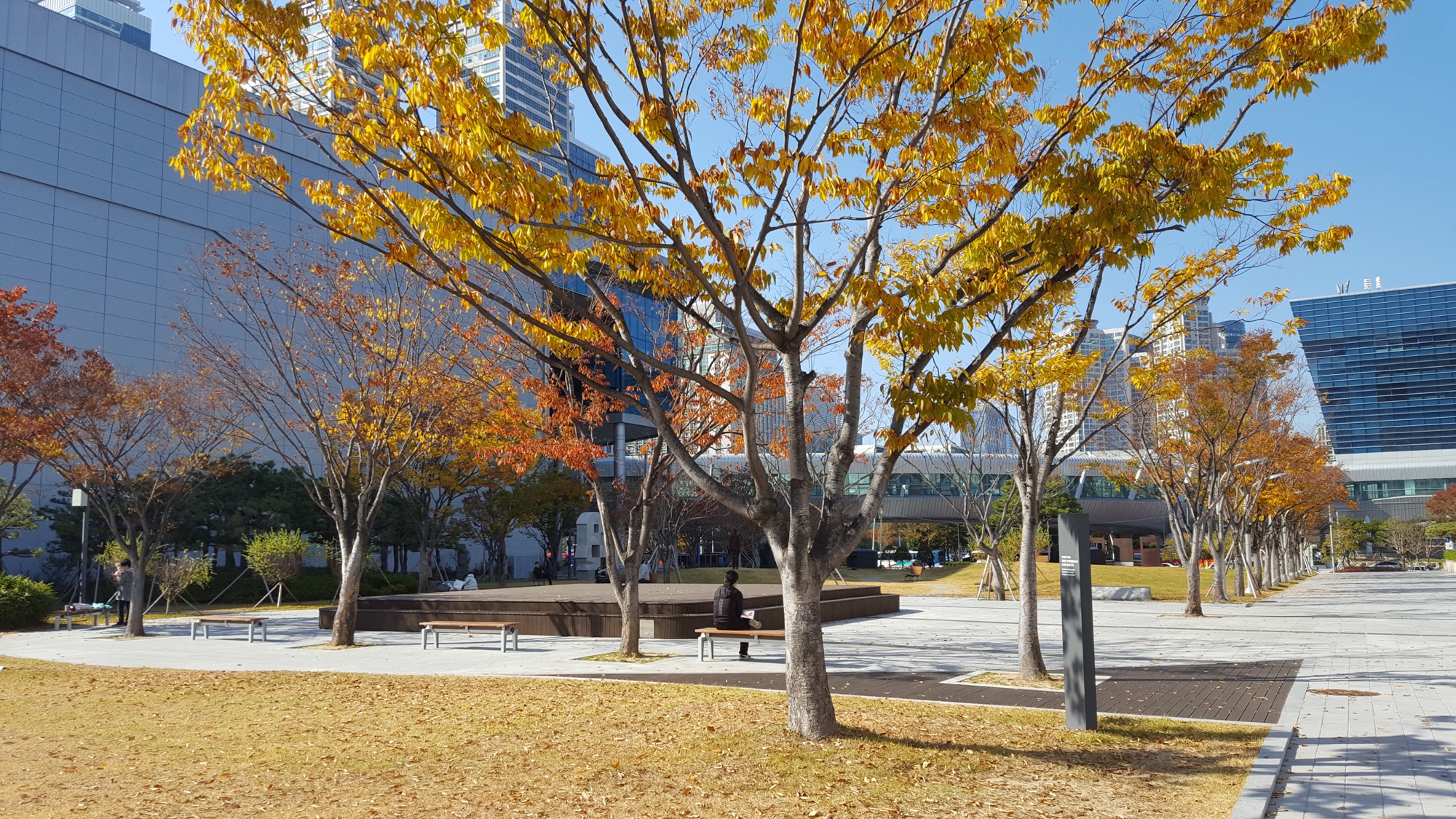
Trees in autumn colour along a walkway outside the Busan Museum of Art. Taken on 4 November 2018, before the renovation; the outdoor sculpture park has since been rebuilt. Photo: Bubbahotepblues / Wikimedia Commons / CC BY-SA 4.0. Resized proportionally from the 5312×2988 original to 2000px wide.
The tiered garden at the Busan Museum of Art, photographed on 4 November 2018 before the renovation; today’s landscaping may differ. Photo: Bubbahotepblues / Wikimedia Commons / CC BY-SA 4.0. Resized proportionally from the 5312×2988 original to 2000px wide.
Oil Tank Culture Park in Seoul’s Mapo district turns a former petroleum depot into a cultural park. The outdoor grounds are open around the clock, but the tank interiors are not open for regular visits.
Three tanks
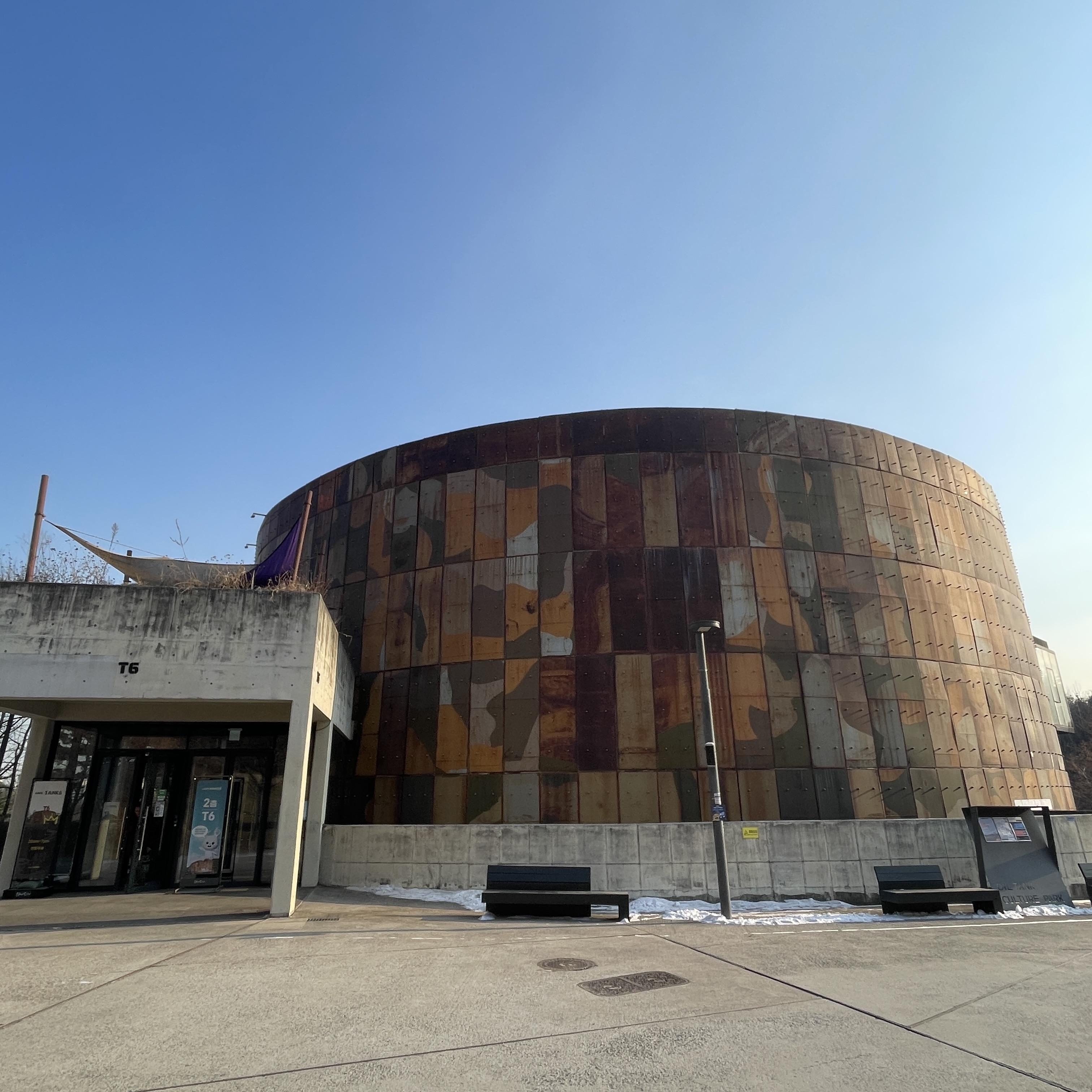
A walk here centres on materials and shapes rather than a performance. T6’s patchwork steel exterior, the preserved T3 tank and the approach to T1 show different ways of reusing one industrial site.
T6’s steel skin
T6 is a new building assembled from steel plates removed from T1 and T2. Plates of different colours and seams form its curved wall.
Cafe Tank6 operates on basement level 2 of T6. Using the café does not give access to every floor or facility.
T3 preserved, T1 reused
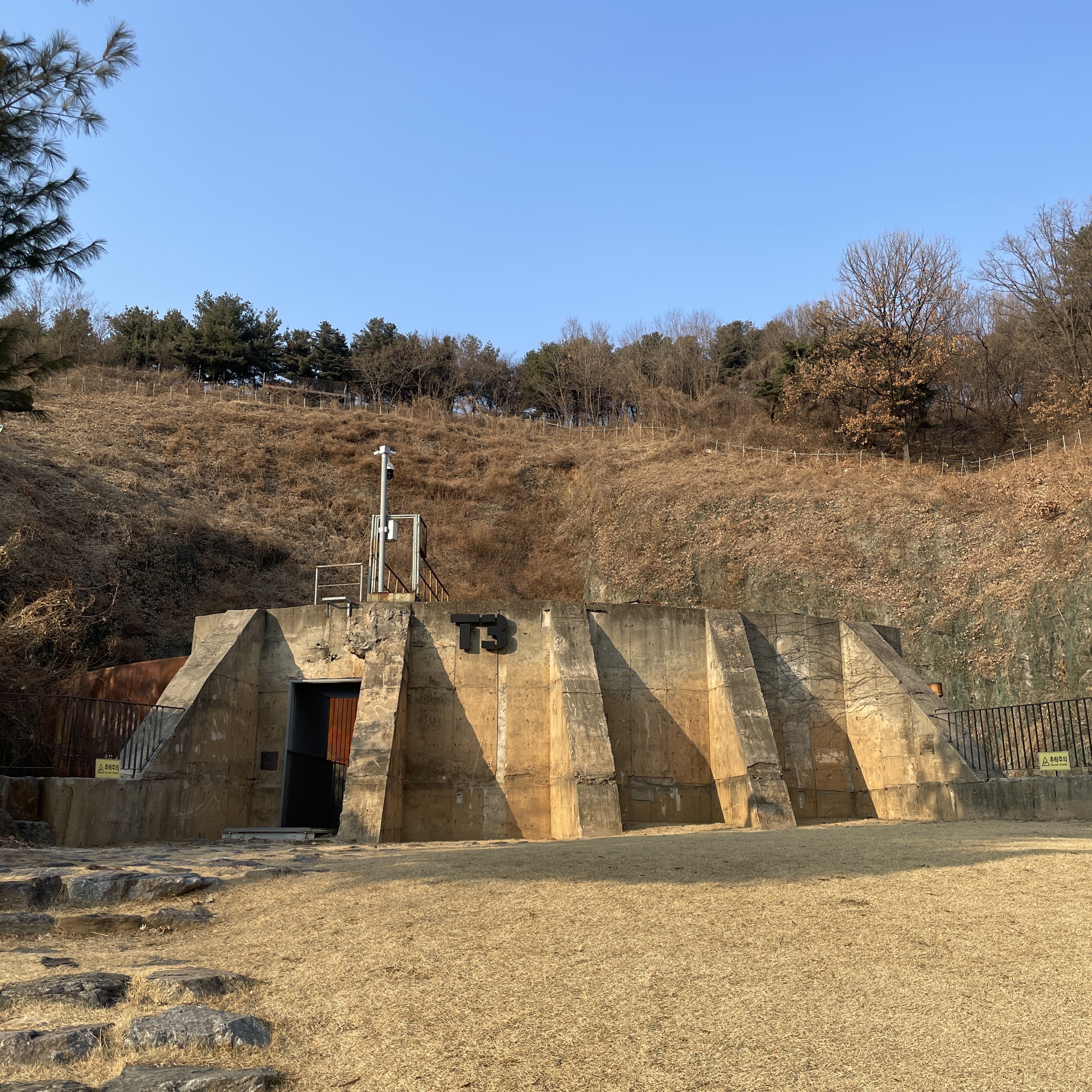
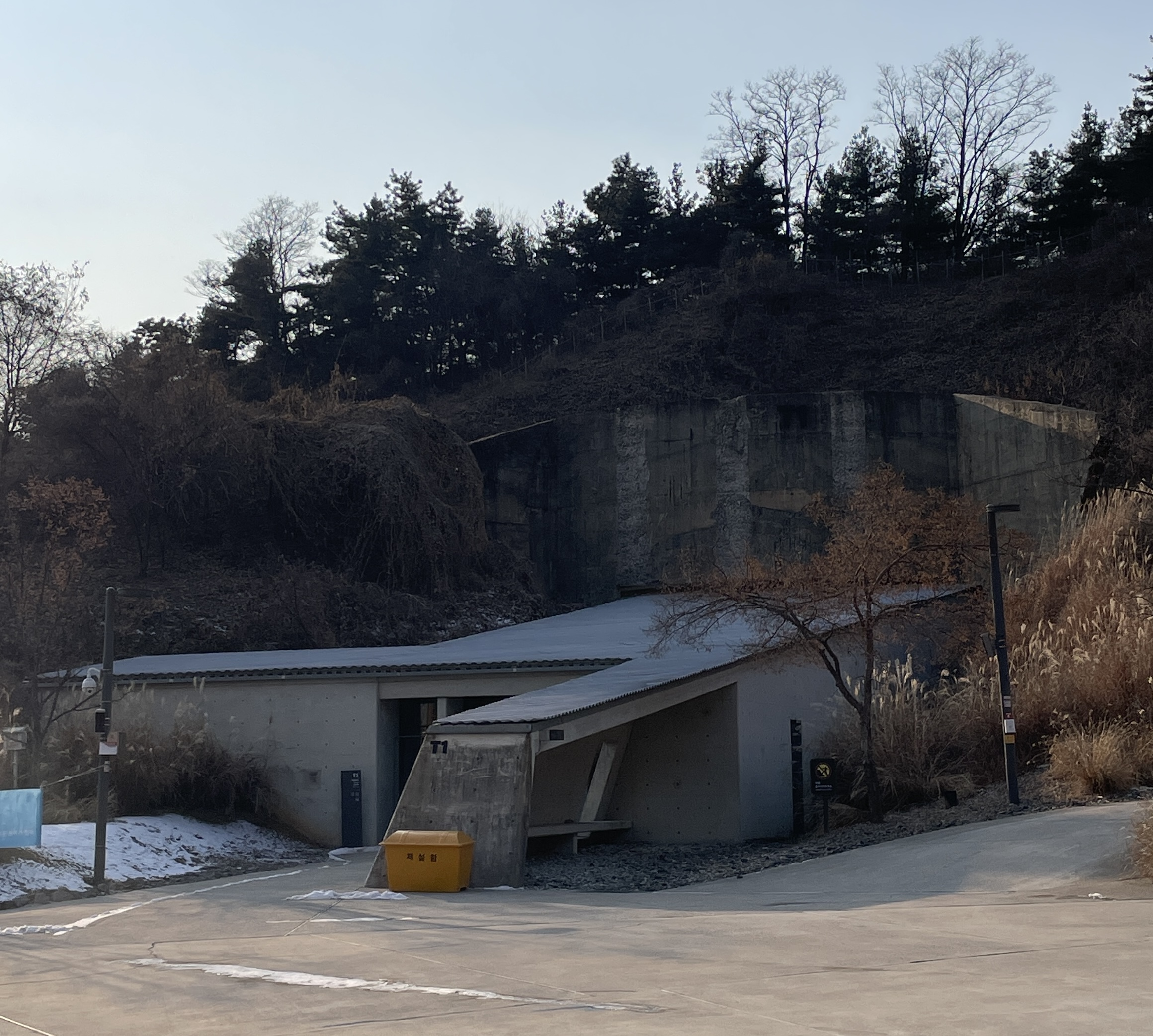
T3 preserves an original storage tank. T1 adds glass walls and a roof where its tank was dismantled.
Open outdoor paths show the contrast between rock, concrete and metal; barriers are off-limits.
T3 entrance and concrete structure below the hillside at Oil Tank Culture Park
Outdoor and indoor access
The outdoor park is open 24 hours, year-round, and is free. Since April 2025, T1–T6 have operated under a separate use permit, and their interiors are not continuously open to the public.
Indoor events set their own hours and possible charges. Event boundaries and on-site notices apply. Indoor access enquiries: +82-2-508-2205.
The approach to T1 beneath rock and retaining walls at Oil Tank Culture ParkTrees and fallen leaves in Pyeonghwa Park
October docent tours
The city’s 18 August notice describes a free docent tour of about 60 minutes for up to 20 people, cancelled if fewer than five join. The current form requires advance booking for everyone, including individuals. Applications close five days before the visit, and confirmation follows internal review three days beforehand.
Checked on 14 October, the October calendar marked 16–28 October unavailable and listed 29 and 30 October at 10:00 and 15:00 KST. Listed sessions do not guarantee seats, and the form accepts October dates only. Where an older overview page gives different times, the form’s calendar applies.
Tours leave from outside the information building. Rain, extreme heat or cold, and events may cancel tours or close some tank interiors. Application enquiries: +82-2-376-8420. English or Japanese live commentary is unconfirmed.
Time needed and Peace Park
The editors suggest 45–60 minutes in daylight, when the exterior materials and hillside are easiest to see.
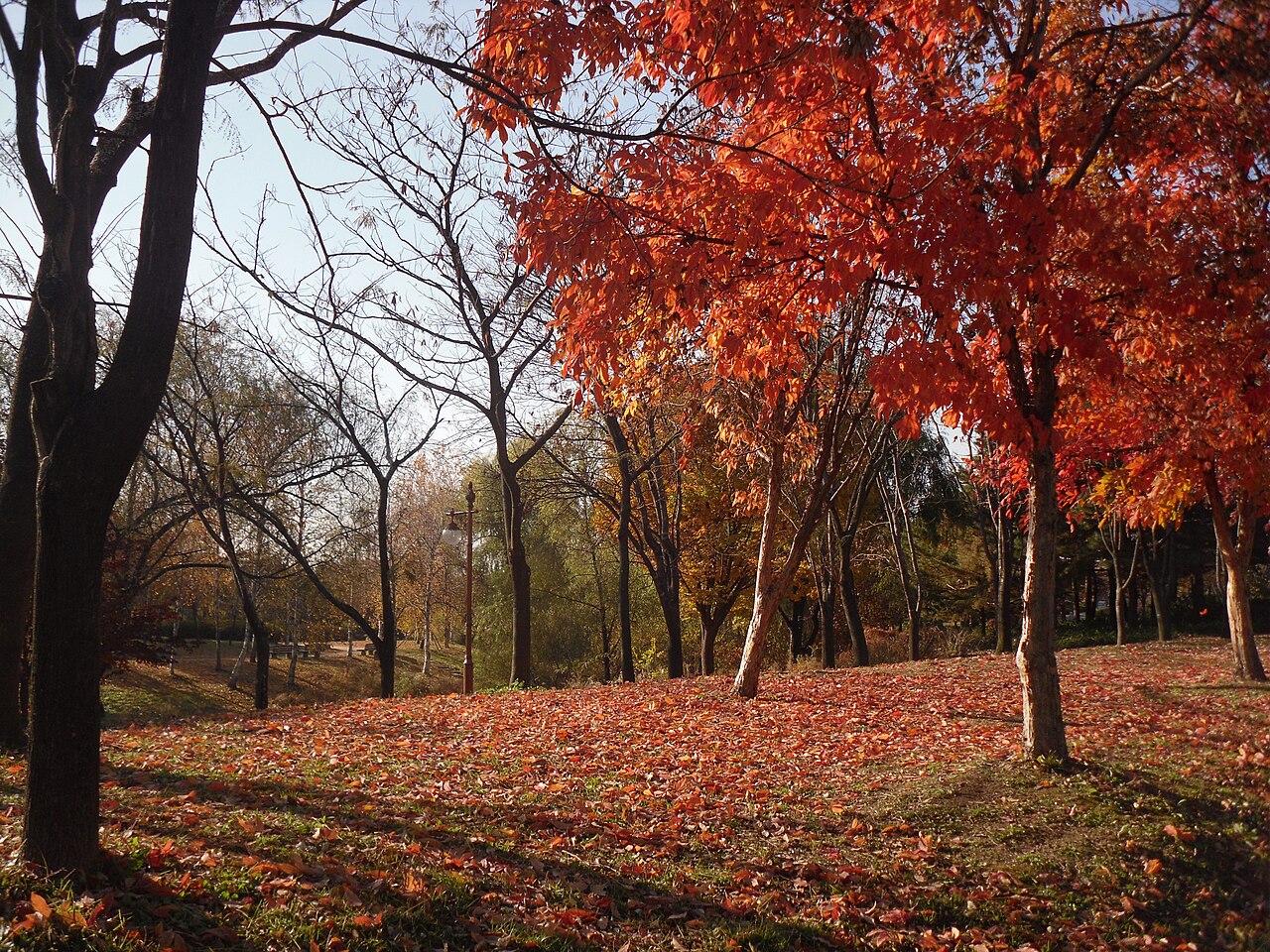
For a longer walk, nearby Pyeonghwa (Peace) Park, a separate part of World Cup Park, has Nanji Pond and walking paths, a waterside contrast to the curved tanks.
Getting there on Line 6
The address is 87 Jeungsan-ro, Mapo-gu, Seoul. The park is about a 10-minute walk from exits 2 or 3 of World Cup Stadium Station on Line 6. Taxi drivers can be shown “문화비축기지, 마포구 증산로 87로 가 주세요”.
The car park is open 24 hours, with charges from 09:00 to 22:00 at KRW150 per five minutes for a standard car. The city recommends public transport because weekends can be busy.
PLACE INFO
Outdoor park24 hours, year-round · free
Tank interiorsNot continuously open; check each programme
SubwayLine 6, World Cup Stadium, exits 2/3, about 10 min walk
Parking24 hours; charged 09:00–22:00; standard car KRW 150/5 min
Visitor/tour enquiries+82-2-376-8420
Indoor access enquiries+82-2-508-2205
Tour bookingEveryone: apply ≥5 days ahead; confirmation 3 days ahead
Dates16–28 unavailable; 29/30 listed at 10:00/15:00 KST; confirmation required
LOCATION
Oil Tank Culture Park · 문화비축기지87 Jeungsan-ro, Mapo-gu, Seoul
6Line 6 World Cup Stadium, exits 2/3exits 2/3🚶➡️about 10 min walk
Pyeonghwa (Peace) ParkA walking area within World Cup Park. Archive photo from autumn 2013, not current foliage. Vanessaliam · CC BY-SA 3.0. Wikimedia 1280px proportional thumbnail; full frame retained. https://creativecommons.org/licenses/by-sa/3.0/
T6 at Oil Tank Culture Park, clad in differently coloured steel plates. Archive photograph dated 2026-01-23; not a guarantee of today’s appearance. Photo: 베르니사주 · CC BY 4.0. Original file unchanged. https://creativecommons.org/licenses/by/4.0/
T3 entrance and concrete structure below the hillside at Oil Tank Culture Park. Archive photograph dated 2026-01-23; not a guarantee of today’s appearance. Photo: 베르니사주 · CC BY 4.0. Original file unchanged. https://creativecommons.org/licenses/by/4.0/
The approach to T1 beneath rock and retaining walls at Oil Tank Culture Park. Archive photograph dated 2026-01-23; not a guarantee of today’s appearance. Photo: 베르니사주 · CC BY 4.0. Original file unchanged. https://creativecommons.org/licenses/by/4.0/
The Gyeonggi Museum of Modern Art in Ansan marks its 20th anniversary with Index Asia (《사랑노동아시아하기》), running October 29 to February 14, 2027. Fourteen artists and collectives from eight Asian countries address labor, migration and memories of disaster.
The exhibition
The show runs in Galleries 1–4 from October 29, 2026, to February 14, 2027. The museum describes Ansan as a city where people from more than 100 countries live together, and says Gyeonggi carries layered histories of industrial labor, migration and disaster.
The title borrows the stance of poet Kim Hyesoon’s I Do Woman Animal Asia. The exhibition treats Asia not as fixed borders on a map but as a name for the marks modernity, capital and state power have left on bodies and land.
The artists
Participants include Rieko Shiga, Marcos Kueh, Bagus Pandega, Wang Tuo, Chu Hao-Pei, Kei Imazu, Tuan Andrew Nguyen, Ho Rui An and Hira Nabi, alongside Korean artists and groups listed on the museum’s page as 김영은, 노원희, 야광, 이끼바위쿠르르 and 장보윤. Their work spans politics, ecology, labor, gender and disaster, tracing legacies of empire and colonialism, the labor and migration driven by capital, and the love and conflict within them.
The show is curated by museum curators 유채린 and 이채영, with support from the Mondriaan Fund, the Embassy of the Netherlands and the Japan Foundation Seoul. Exhibition texts are in Korean and English.
Hours and admission
The museum is open 10 a.m. to 6 p.m., Tuesday through Sunday, with last entry at 5 p.m. General admission is free, but the museum says special exhibitions may charge depending on the show; this exhibition’s fee is listed on its page.
Free walk-in docent tours take up to 15 people; the tour schedule for this show has not been posted. On opening day, October 29, the museum is taking sign-ups for the opening event and a shuttle bus.
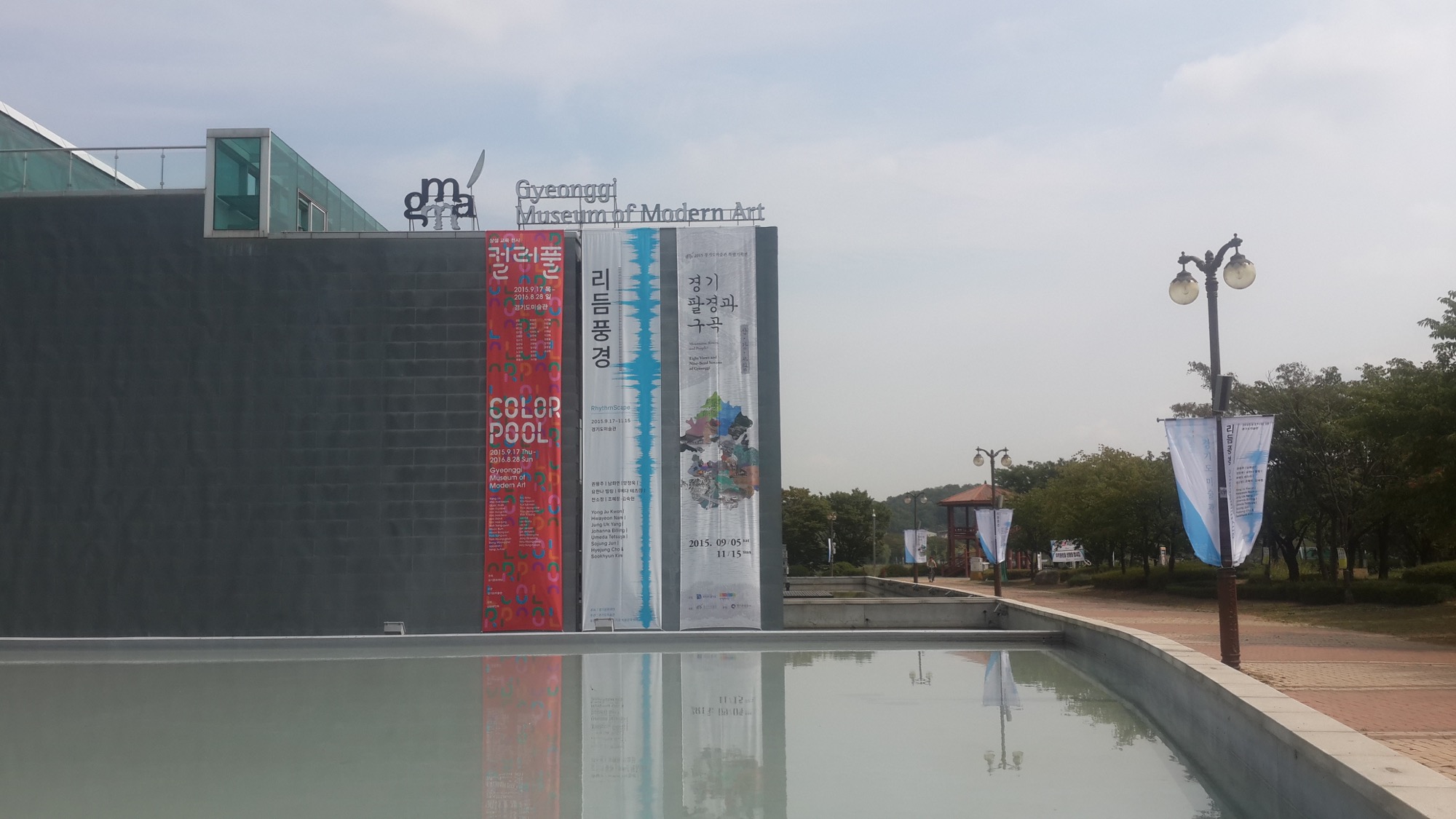
A grey museum wall and vertical banners reflected in a pool
Getting there
The museum is at 268 Dongsan-ro, Danwon-gu, Ansan, inside Hwarang Park, about a 10-minute walk from Exit 4 of Choji Station on the Seohae Line or 15 minutes from Exit 1 of Choji Station on Line 4.
Parking at Hwarang Park is free. Inquiries: +82-31-481-7000.
EXHIBITION INFO
Dates29 Oct 2026–14 Feb 2027 · Tue–Sun 10:00–18:00
Contact+82-31-481-7000
LOCATION
Gyeonggi Museum of Modern Art, Galleries 1–4268 Dongsan-ro, Danwon-gu, Ansan
4Seohae Line Choji Stn Exit 4, ~10 min walkExit 4🚶➡️10 min walk
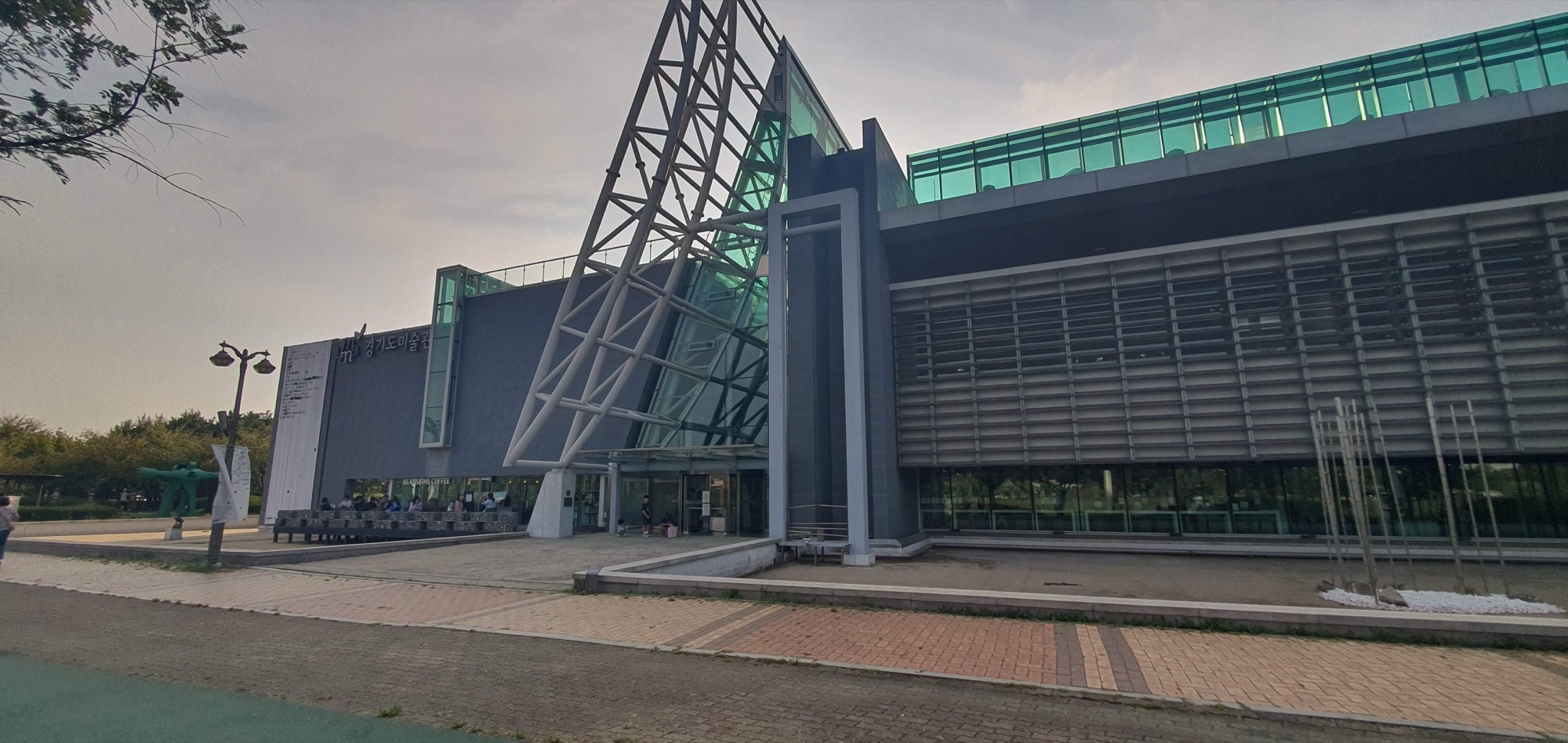
The steel-and-glass front of the Gyeonggi Museum of Modern Art, photographed on 9 September 2023; unrelated to this exhibition. Photo: Aspere / Wikimedia Commons / CC0. Resized proportionally from the 4608×2184 original to 2000px wide.
The museum’s façade and banners for earlier exhibitions seen across the water feature, photographed on 25 September 2015; the banners are not for this show. Photo: Ji-soo Seo / Wikimedia Commons / CC BY-SA 4.0. Resized proportionally from the 4128×2322 original to 2000px wide.
AGF 2026, a subculture festival covering anime, games, webtoons and virtual YouTubers, runs December 4–6 at KINTEX Exhibition Center 1 in Goyang, Gyeonggi Province. Early-bird tickets are on sale through November 11, and international visitors can also buy tickets on Trip.com.
Dates and venue
AGF (Anime X Game Festival) 2026 runs from Friday, December 4, to Sunday, December 6, from 9:30 a.m. to 6 p.m. daily in Halls 1–5 of KINTEX Exhibition Center 1. It is co-hosted by ANIPLUS, Daewon Media, Sony Music Solutions and D&C Media.
The official website says the 2025 edition drew a record 100,518 visitors. Besides anime and games, the festival features webtoons, light novels, anisong and virtual YouTubers.
Tickets
Early-bird tickets are sold from October 14 to November 11 at 24,000 won for one day and 55,000 won for three days. From November 12 to December 6, regular tickets cost 29,000 won and 65,000 won. Fast tickets, which allow entry through a dedicated gate from 9:30 a.m., cost 50,000 won and are limited to 1,000 a day and one per person.
Melon Ticket sells to both domestic and overseas buyers, and Trip.com sells to international visitors only. Tickets are also sold on site, but sales may be halted, and the organizers recommend booking online.
Wristbands and re-entry
Ticket checks begin at 8 a.m. One-day tickets are exchanged for a wristband valid only on the chosen date. Three-day pass holders receive a fabric wristband once and can re-enter on all three days, using a dedicated re-entry gate from 11 a.m. starting on the second day. Wristbands are not reissued.
The organizers said some content and merchandise at the venue may be unsuitable for children 12 and under.
Getting there
KINTEX is at 217-60 Kintex-ro, Ilsanseo-gu, Goyang. Its transport page lists the GTX-A line among public transport options.
Queues can be long from early morning on the first day and on the weekend. Visitors without fast tickets should arrive early.
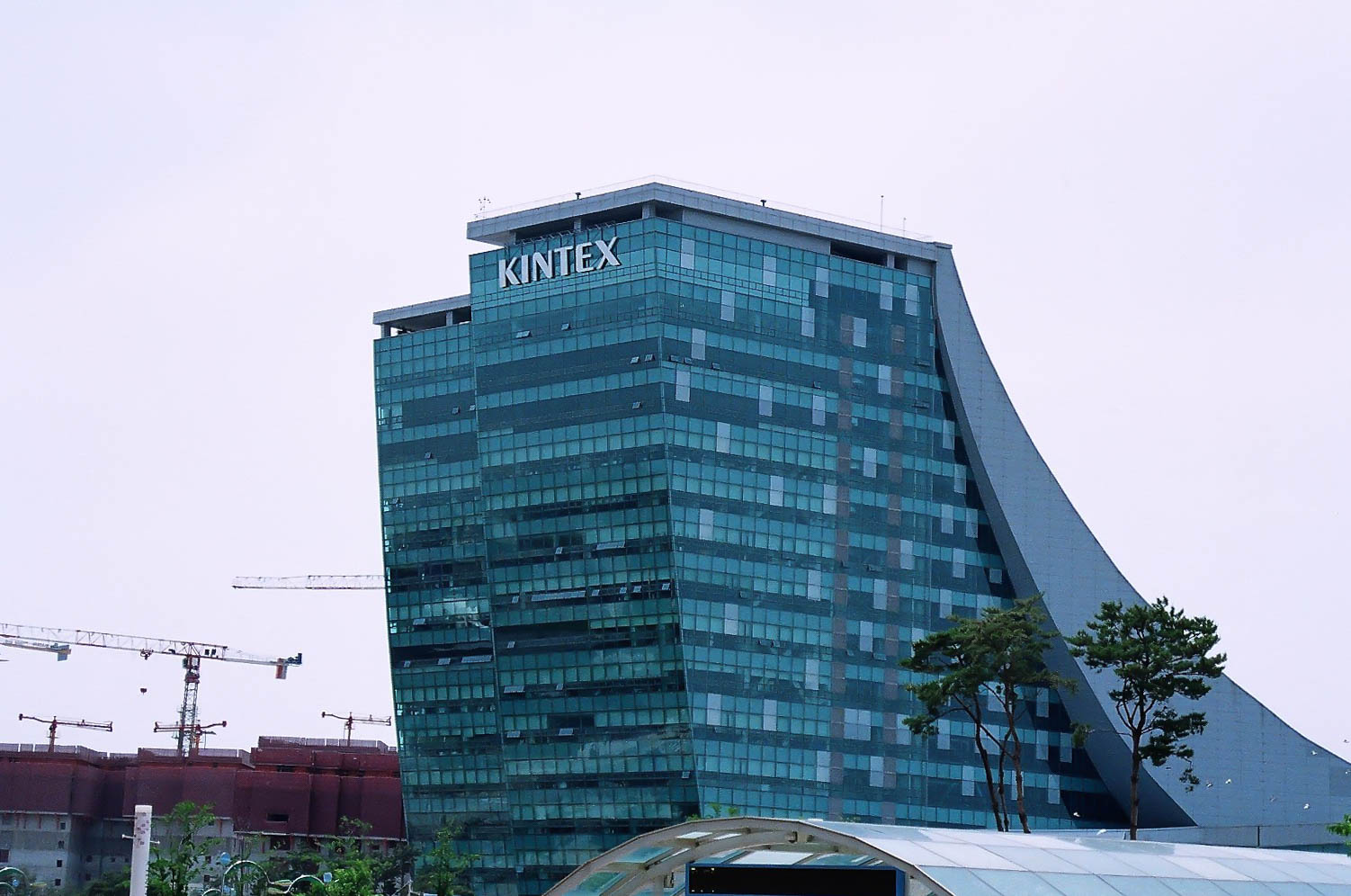
A glass-clad KINTEX building bearing the ‘KINTEX’ name. Uploaded to Wikimedia Commons as a view of KINTEX, dated 2 July 2017. It does not show AGF, and the description does not say whether this is Exhibition Center 1. Photo: 뭘로할까 / Wikimedia Commons / CC BY-SA 4.0.
Seoul will add early-morning Line 9 express trains and pilot four express-bus routes linking outer districts with major stations from November 16.
More early Line 9 expresses
Between 05:40 and 07:00 KST, trains toward VHS Medical Center will shift from a 1:1 express-to-local ratio to 2:1. Total morning service rises by eight trains.
Four express-bus routes
Express 150, 370, 470 and 605 will each run three trips using some existing buses. They follow their current paths but skip intermediate stops, then revert to regular service after the morning commute.
Announced bus departures
The plan lists these depot departures, all KST: Express 150, Dobong depot to City Hall Station, 04:30, 07:00 and 07:30; Express 370, Gangdong depot to Chungjeongno Station, 04:20, 07:00 and 07:30; Express 470, Sangam depot to City Hall Station, 04:10, 07:00 and 07:30; Express 605, Gangseo depot to Yeongdeungpo Station, 04:00, 07:00 and 07:30.
They are not arrival times at intermediate stops.
Before boarding
The changes take effect next month; current timetables still apply until then. Riders using intermediate stops should check that the express calls there. Enquiries: Dasan Call Center, 02-120.
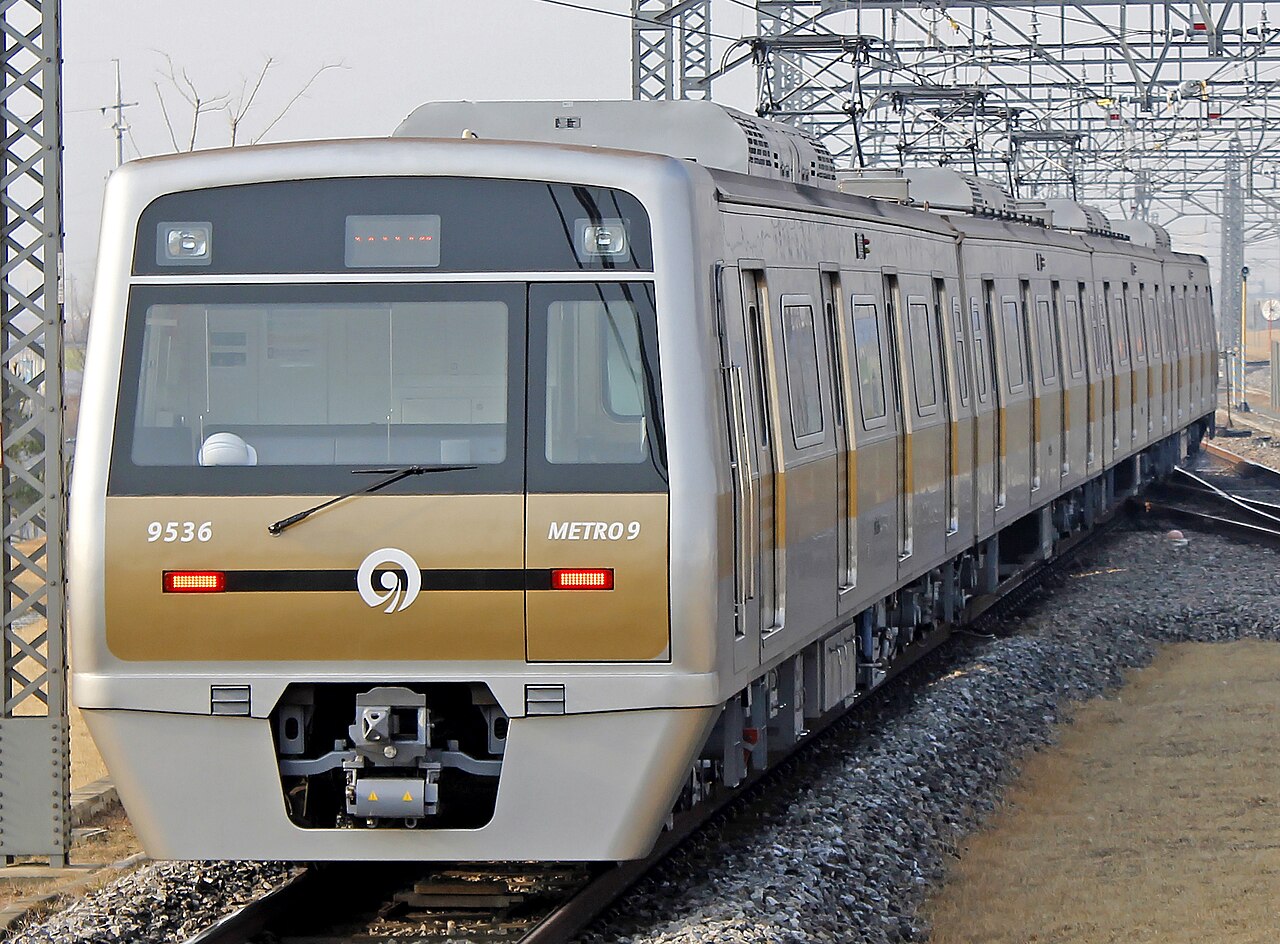
A 2014 archive photograph of a Seoul Line 9 Class 9000 train, not the 2026 service change. Minseong Kim (IMKSv), Metro 9 Class 9000 EMU.jpg, 2014-12-24, CC BY-SA 4.0. https://creativecommons.org/licenses/by-sa/4.0/ Wikimedia’s 1280px rendition used unchanged.
The 21st Busan Fireworks Festival takes place on the night of Saturday, November 7, around Gwangalli Beach, Igidae and Dongbaekseom Island. International visitors can buy paid seats through an English booking page. The program and traffic plan have not been released.
Date and venue
According to the Busan Festival Organizing Committee’s website, the 21st Busan Fireworks Festival will be held on Saturday, November 7, 2026, around Gwangalli Beach, Igidae and Dongbaekseom Island. It is hosted by Busan Metropolitan City and organized by the committee.
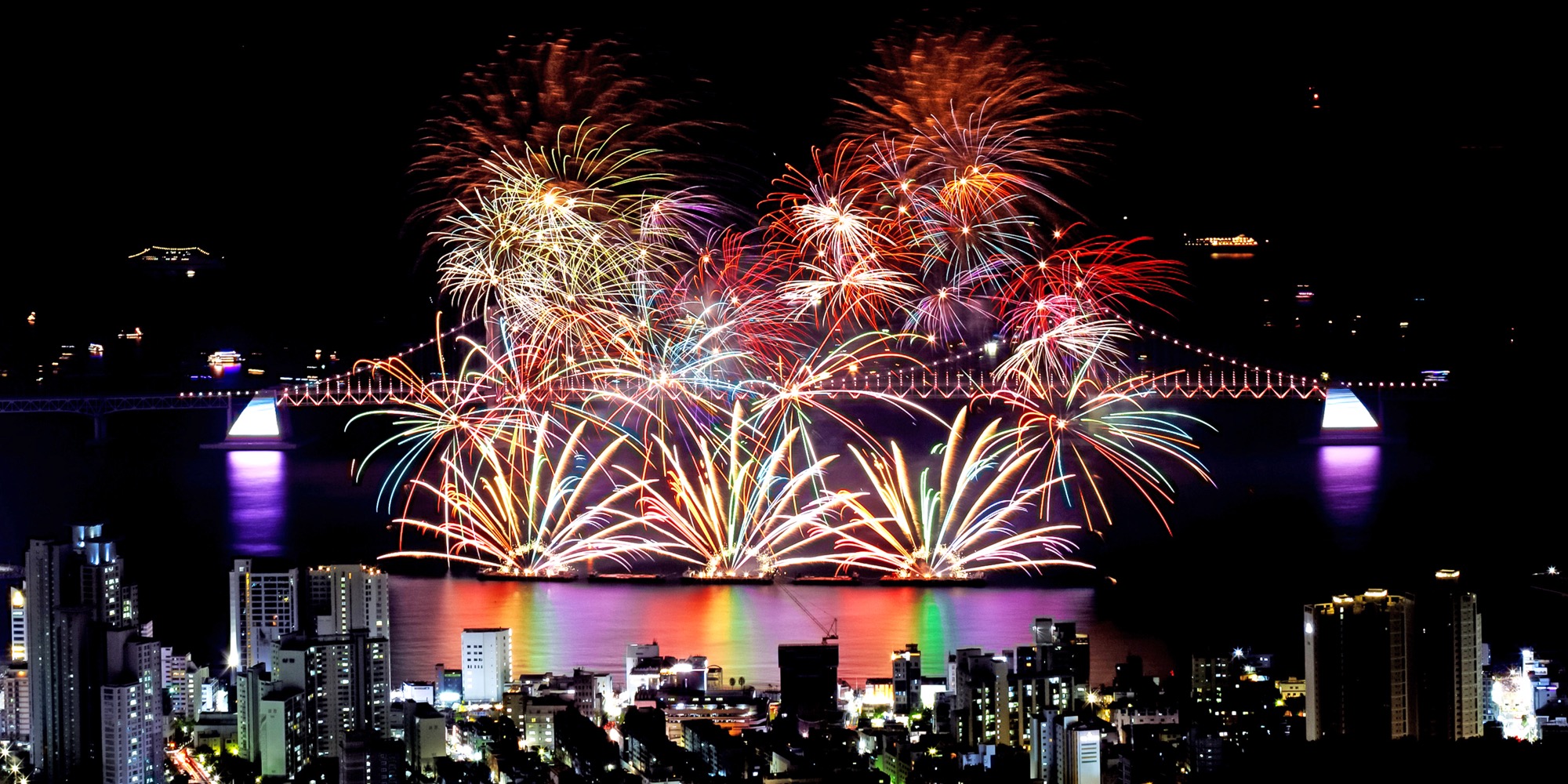
Fireworks over the sea against the backdrop of Gwangan Bridge are the festival’s signature. As of October 14, the website’s program, seat map, traffic-control and leaflet pages were marked “update pending,” and the start time and running order had not been released.
Paid seats
Regular tickets are sold on NOL Ticket from 2 p.m. on September 4 to 5 p.m. on November 6 KST. According to the official listing, seats at Gwangalli Beach cost 100,000 won for R seats (table and chair) and 70,000 won for S seats (chair). Residents with a verified Busan address get 10% off.
International visitors can book through NOL World, the English sales page, and must show a passport on site. The limit is four tickets per person, and tickets booked from October 12 are collected at the venue. Entry opens at 3 p.m.; anyone not seated by 6 p.m. is refused both entry and a refund.
White and red fireworks over a bridge beyond a dark crowd
Getting there
The organizers ask visitors to use public transport and will not provide parking near the venues. Gwangalli Beach is closest to Exit 3 of Gwangan Station on Metro Line 2, and Dongbaekseom to Exit 1 of Dongbaek Station on Line 2. Igidae requires a bus transfer from Kyungsung Univ.·Pukyong Nat’l Univ. Station.
Road closures and late-night transport have not been announced. Accommodation within walking distance of the venue is the safest choice.
A dense night-time crowd on Gwangalli Beach with the illuminated Gwangan Bridge
Year-end bell at Yongdusan Park
The committee’s annual calendar lists the 2026 Busan Citizen’s Bell-tolling Ceremony at Yongdusan Park from December 31 to January 1, 2027. Details have not been released. Inquiries: +82-51-713-5000.
Fireworks burst over the sea in front of Gwangan Bridge, above the lights of the shoreline. The Wikimedia Commons description identifies it as the Busan fireworks festival; the file metadata dates it 7 August 2018. Not a 2026 photo. Photo: Busan Metropolitan City / Wikimedia Commons / CC BY-SA 4.0. Resized proportionally from the 6600×3300 original to 2000px wide.
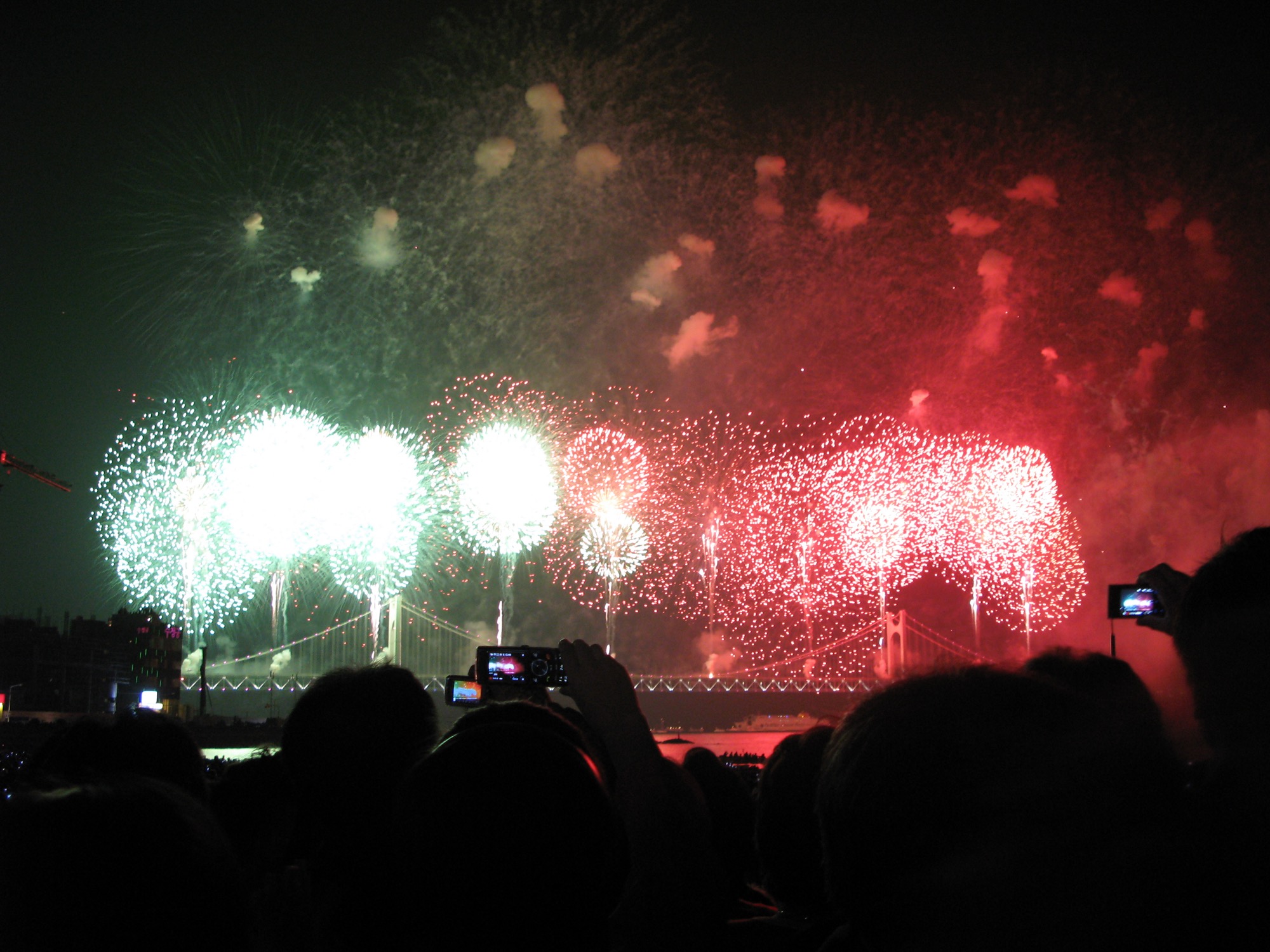
Spectators raise phones and cameras towards fireworks over Gwangan Bridge. Taken at the Busan fireworks festival on 18 October 2008, not at this year’s event. Photo: RedMosQ / Wikimedia Commons / public domain. Resized proportionally from the 3648×2736 original to 2000px wide.
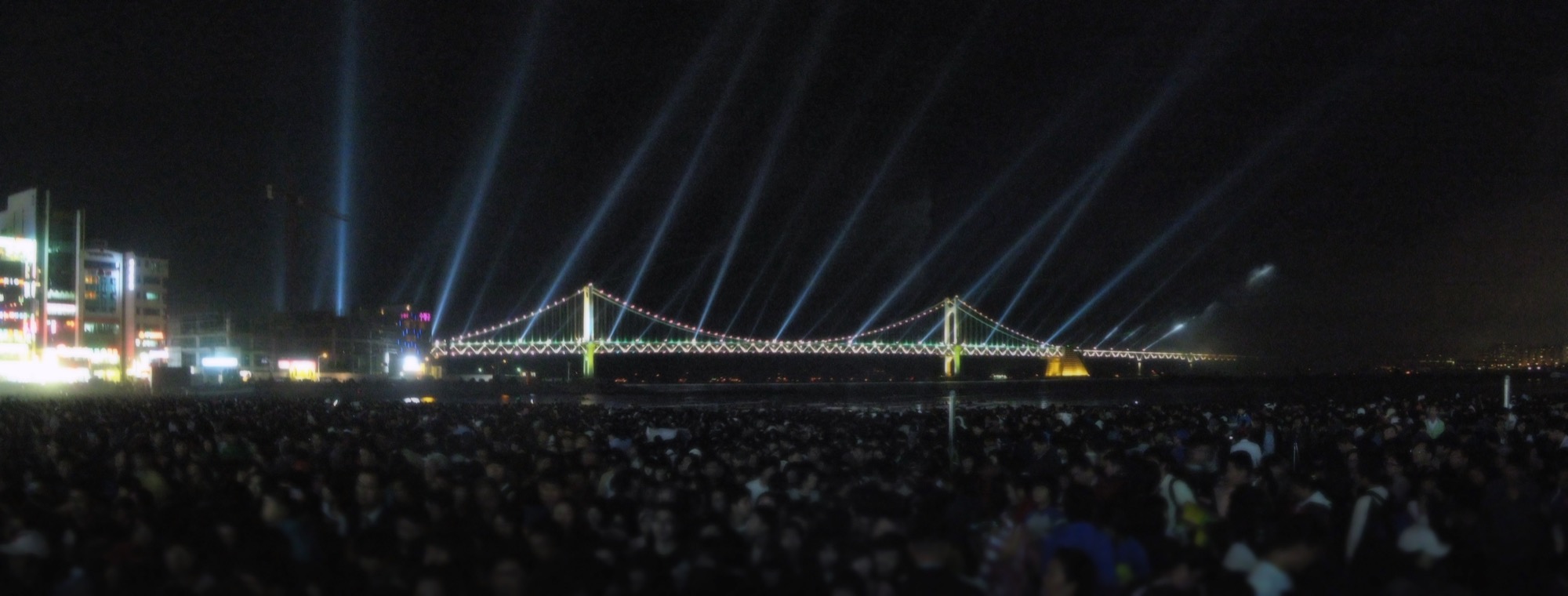
Crowds fill Gwangalli Beach under the lit Gwangan Bridge after the show. According to its Commons description, it is a stitched panorama taken just after the 2008 festival. A reference for the size of the homeward crowd, not a 2026 photo. Photo: RedMosQ / Wikimedia Commons / CC BY-SA 2.0 KR. Resized proportionally from the 6175×2347 original to 2000px wide.
G-STAR 2026, South Korea’s largest game show, returns to BEXCO in Busan. The public halls are open November 19–22, and tickets are sold only online in advance, with no sales at the door.
Dates and venue
G-STAR 2026 is held at BEXCO in Haeundae-gu, Busan. The official overview lists the full event as November 18–22. The public BTC hall is open from Thursday, November 19, to Sunday, November 22, and the trade-only BTB hall from November 19 to 21. This year’s slogan is “Expand Your Horizons.”
The show is organized by K-GAMES (the Korea Association of Game Industry) and managed by the G-STAR Organizing Committee and the Busan IT Industry Promotion Agency. The official schedule includes the Korea Game Awards, the BTC and BTB exhibitions, the “Galaxy” indie showcase and the G-CON game conference.
Tickets
BTC tickets cost 18,000 won for adults and 8,000 won for youths born on or after January 1, 2008. They are sold through Ticketlink from September 29 until 11:59 p.m. on November 21. The organizers say sales are 100% online in advance, with no on-site sales.
Tickets can be bought until midnight the day before a visit, up to two per person per day, and are valid only on the date booked. Youth-ticket holders may be asked for proof of age, such as a passport or student ID.
Entry times
On the first day, November 19, doors open at 11 a.m. Ticket checks close at 5 p.m. and last admission is at 5:30 p.m. Opening times for other days are posted on the official website.
The G-CON conference, which consists mainly of talks, requires a separate pass. The official website’s English section carries the schedule and ticket information.
Getting there
BEXCO is at 55 APEC-ro, Haeundae-gu, Busan, near Exit 1 of Centum City Station on Metro Line 2, according to Busan City. Entry queues can be long on the weekend. Ticket inquiries: ticket@gstar.or.kr.
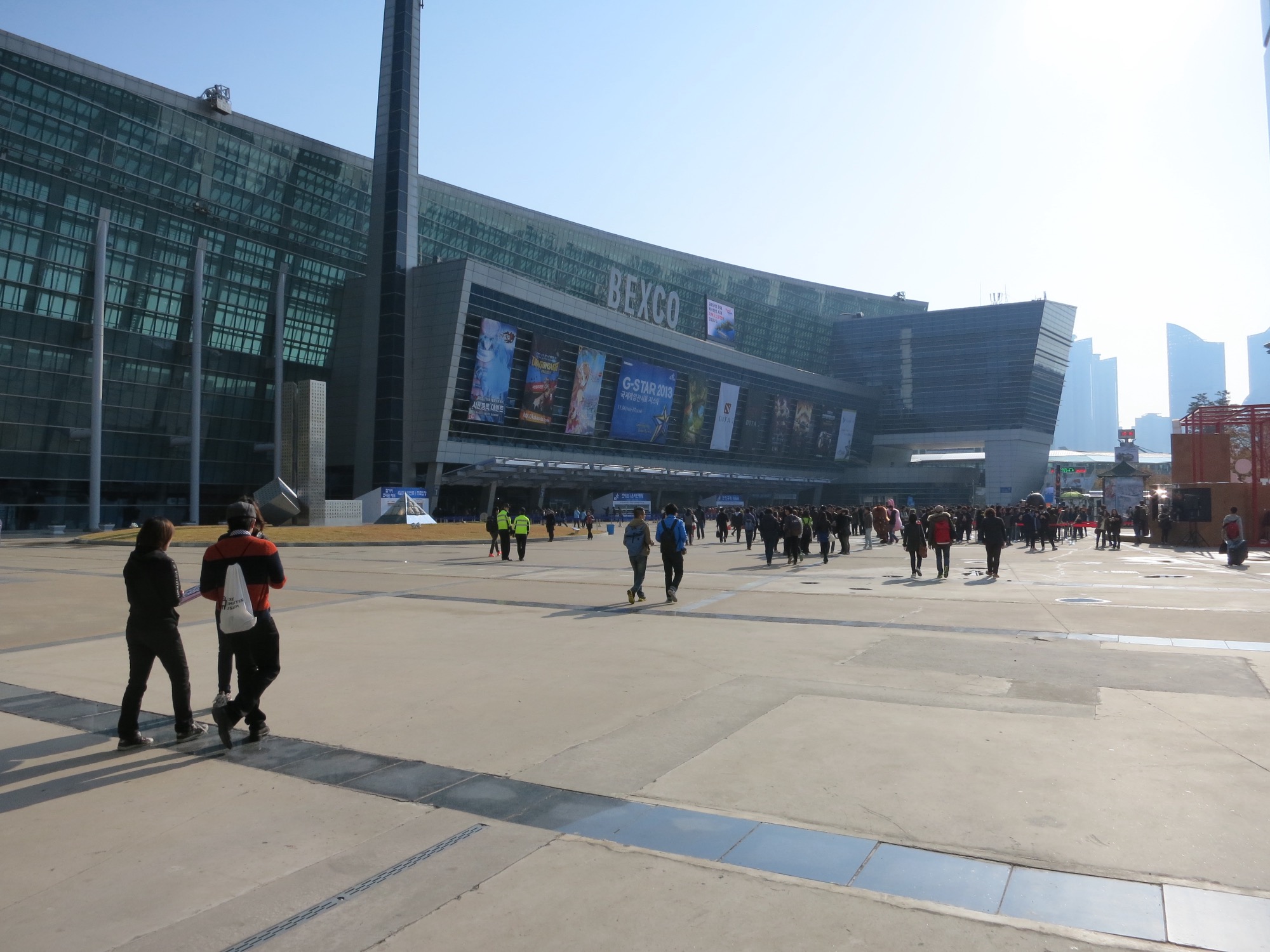
Visitors crossing the wide plaza in front of BEXCO’s glass façade
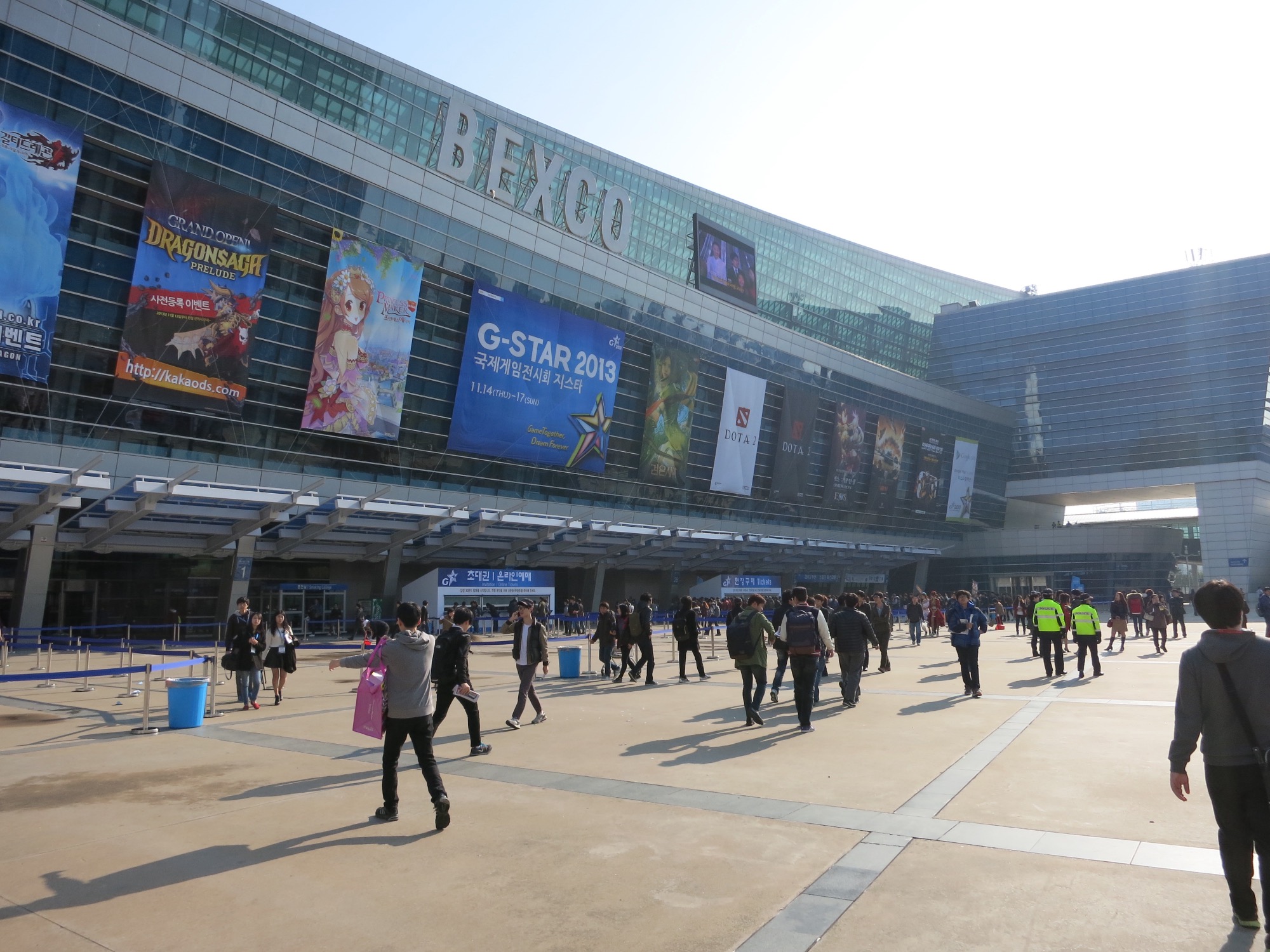
Visitors walk past BEXCO, hung with a ‘G-STAR 2013’ banner and game posters. Taken on 14 November 2013; it does not show this year’s event. Photo: Chris Yunker / Wikimedia Commons / CC BY-SA 2.0. Resized proportionally from the 4000×3000 original to 2000px wide.
The BEXCO exhibition centre and its plaza, photographed on 14 November 2013 during G-STAR 2013; not this year’s event. Photo: Chris Yunker / Wikimedia Commons / CC BY-SA 2.0. Resized proportionally from the 4000×3000 original to 2000px wide.
Booking for Taste of Seoul experiences opens at 10 a.m. KST on October 15, ahead of the October 23–29 festival. A home-cooking market, a free awards ceremony and an English-language rice workshop each have their own conditions.
Separate booking routes
According to Seoul’s October 14 notice, awards applicants use the Naver form posted on the @tasteofseoul_official Instagram account, while classes, tours and workshops are booked on the official website. Both open October 15 at 10 a.m. KST.
The awards ceremony runs October 25, 3–5 p.m., in DDP Art Hall 2, with 100 free places for citizens on a first-come basis.
Market at DDP
The market runs October 24–25, noon–5 p.m., at DDP Oullim Square and Art Hall 1. Chefs reinterpret everyday home meals, and producers bring seasonal ingredients.
Free awards admission does not cover food purchases or paid experiences. The festival’s programs are spread across different dates and venues.
Korean rice in English
Writer Baek Woong-jae’s native-rice workshop takes place October 25, 3–4:30 p.m., in English. It has 25 places and costs KRW 20,000; Seoul’s table lists the venue as the DDP Art Hall customer service centre. Participants learn about Korea’s native rice varieties and cook rice themselves.
Whether overseas cards or foreign phone numbers can be used to book is unconfirmed.
Venues and meeting points
DDP is at 281 Eulji-ro, Jung-gu, Seoul. Exit 1 of Dongdaemun History & Culture Park Station, on Lines 2, 4 and 5, is closest to Oullim Square.
The Seochon tour runs October 26, 2–6 p.m., from Gyeongbokgung Station; the Namyeong-dong tour runs October 27, 6–10 p.m., from Samgakji Station. Fees, eligibility and meeting points are listed on each program’s official booking page.
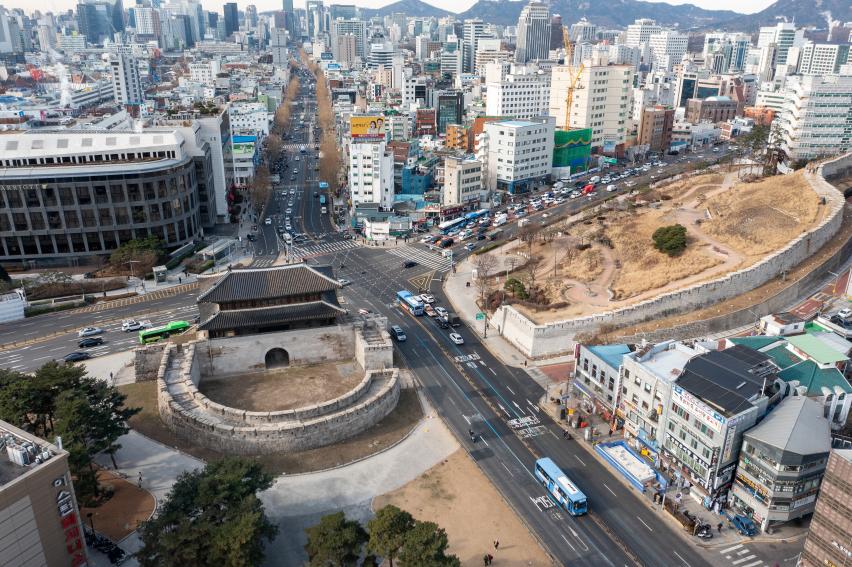
Heunginjimun Gate, at 288 Jong-ro near DDP, can be viewed from outside on the same trip.
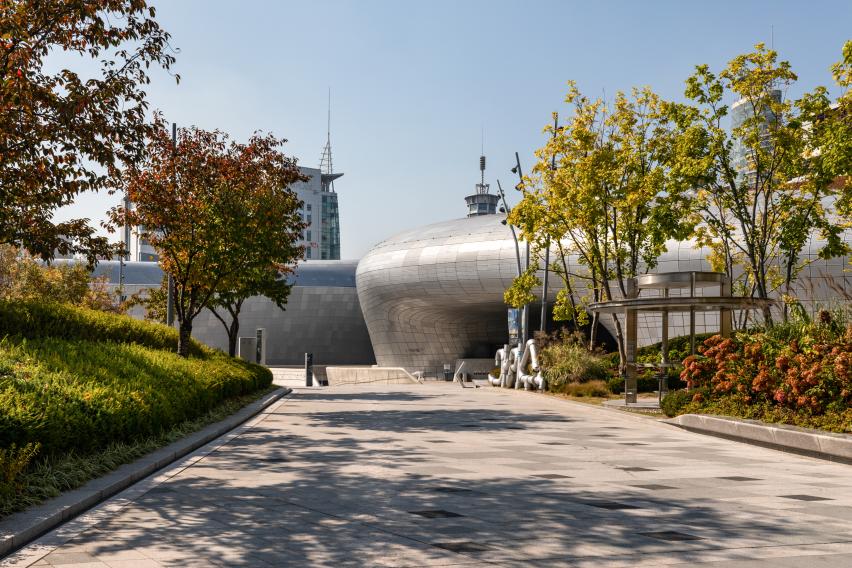
An exterior walkway and silver building at DDP, the venue for the market and awards. Archival venue photograph, not a scene from the 2026 festival. Capture date unspecified. Seoul Tourism Organization ARP004ip1 · KOGL Type 1 · public JPEG unchanged. https://archive.visitseoul.net/ko/contents/ARP004ip1