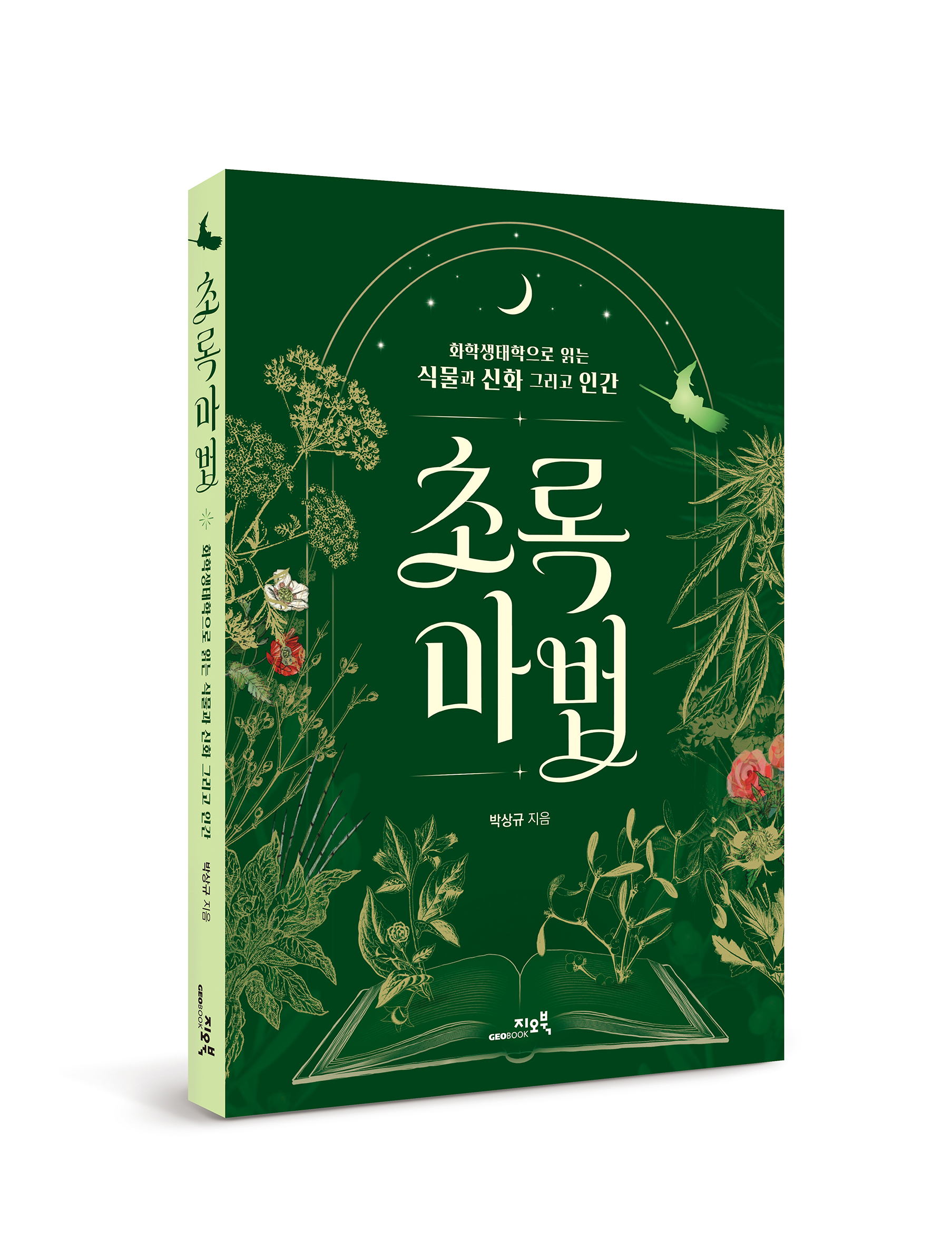
Park Sangkyu’s new Korean-language book 초록마법, published by Geobook, uses chemical ecology to trace mandrake, mistletoe and roses through myth, literature and science.
01
Mandrake is familiar from fantasy scenes, the rose from love stories. 초록마법 sets those associations beside another question: how do plants survive? Its subtitle links plants, mythology and people through chemical ecology.
The publisher says the book moves between plant science and the cultural stories surrounding mandrake, mistletoe, roses and other plants. Classics, cinema and music appear alongside plant metabolomics and chemical ecology, and each chapter includes a mind map. The author’s bookseller biography lists food-web ecology and chemical ecology as his main research areas.
02
The book pairs each plant’s role in stories with its biology as a living organism, starting from familiar symbols and moving into less familiar scientific terms.
Published in Korean by Geobook, it runs 248 pages and lists at KRW 22,000. The bookseller records October 2 as the publication date; the publisher’s announcement followed on October 8. The ISBN is 9788994242576.
Hanbat Arboretum, a free city arboretum between the Government Complex Daejeon and Expo Science Park, hosts its 2026 autumn-flower display October 2–18 around the East and West Garden entrance plazas.
01
Hanbat Arboretum sits between the Government Complex Daejeon and Expo Science Park, with Daejeon Museum of Art and Lee Ungno Museum nearby, making it easy to pair a walk with an exhibition. Visitors can also choose just one side of the arboretum.
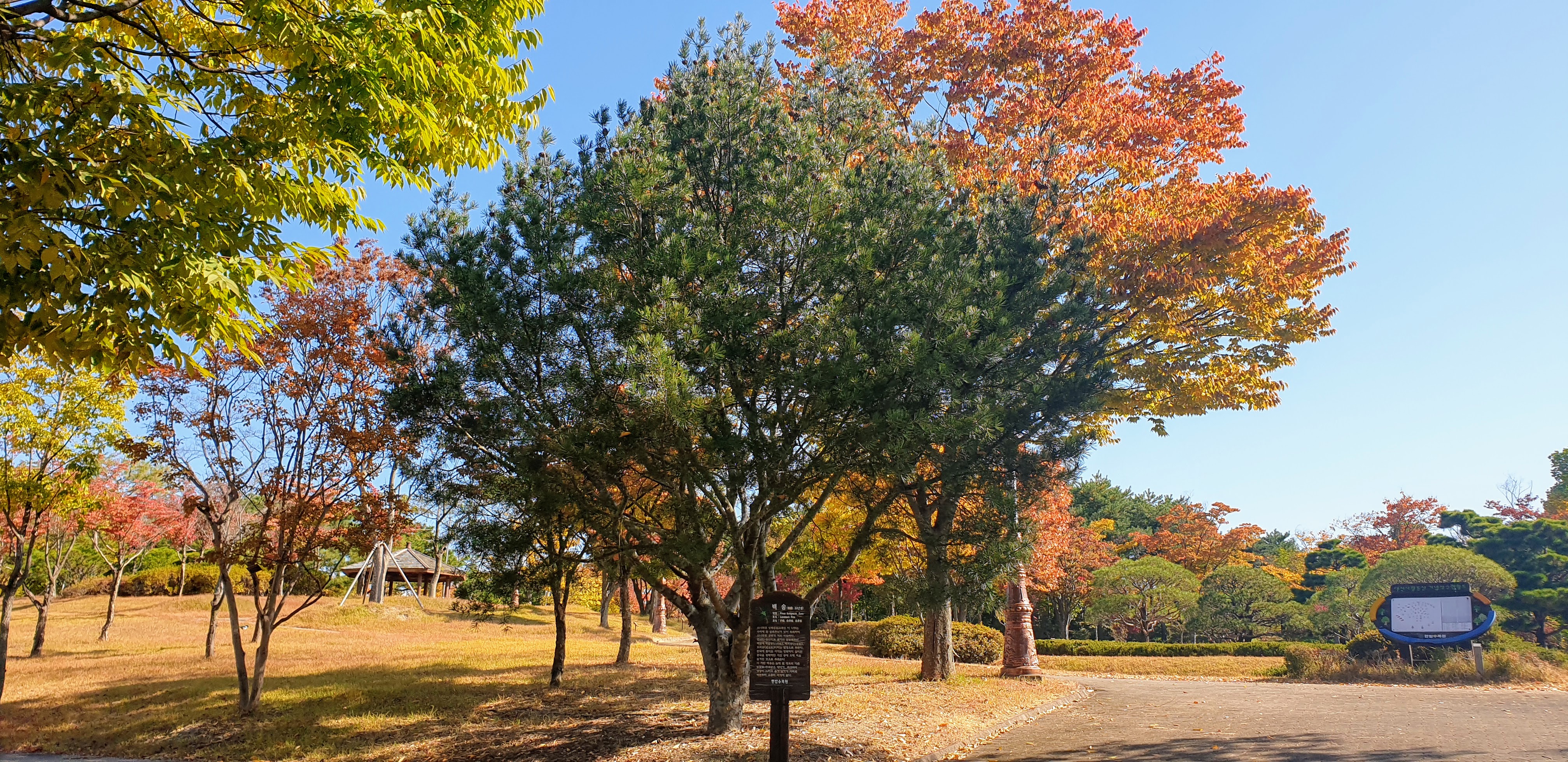
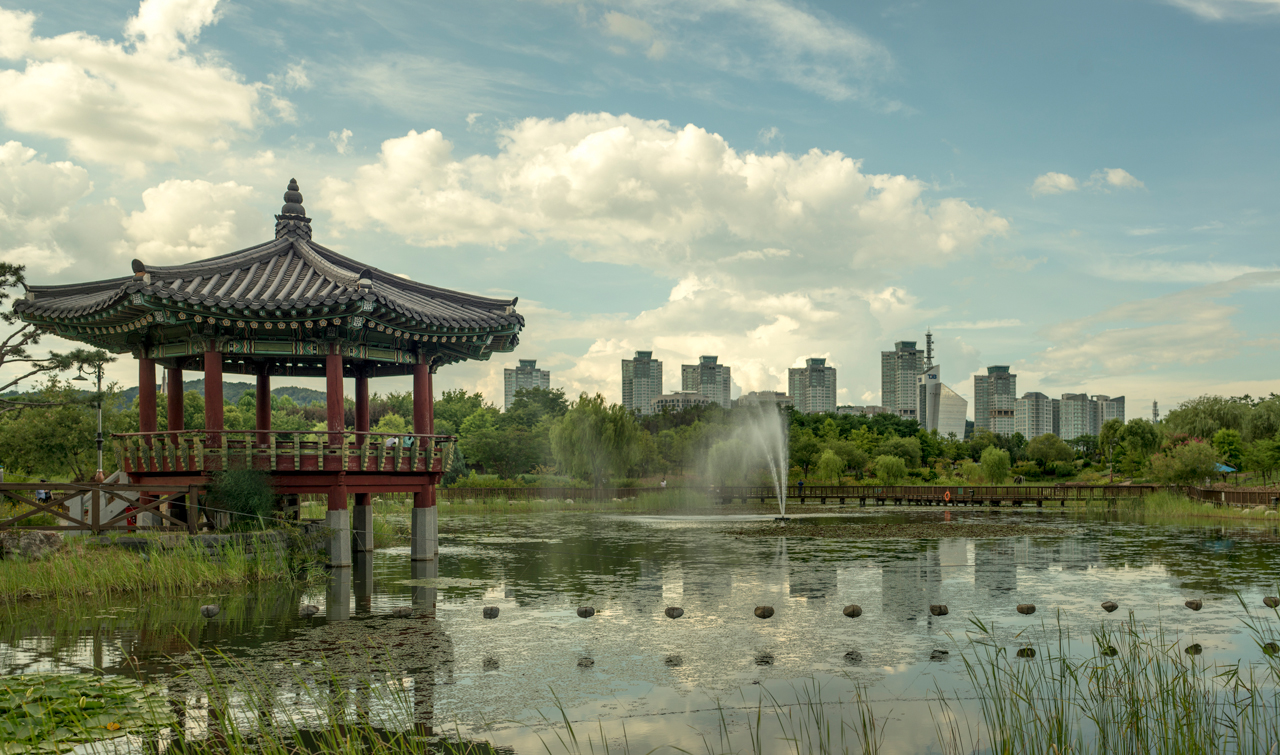
The East Garden has themed areas including pines, rocks and medicinal plants. The West Garden’s official plan marks a pine grove, a sensory garden and a wetland garden. The walk alternates close details such as bark and branching with wider views and reflections.
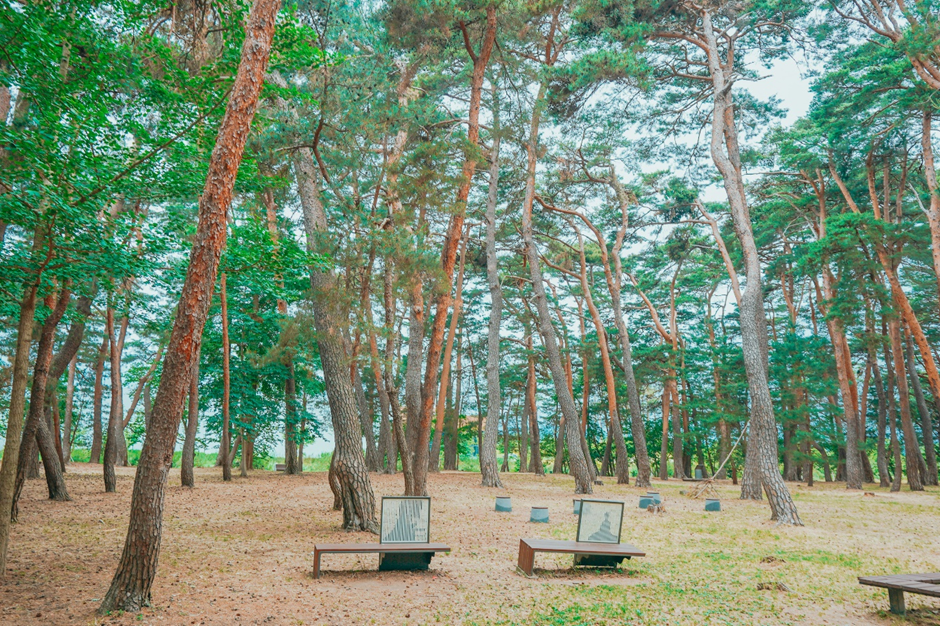
Both pine photographs were taken on October 24, 2020; the East Garden waterside photograph dates to July 18, 2021. Their foliage and fountain are archival and do not show today’s colors, flowers or fountain operation.
Only Here
1. Build a short route from the East Garden’s themed areas or the West Garden’s woodland.
2. Move from a broad landscape to the texture and shape of a single tree.
3. Pair the gardens with the nearby museums; check museum schedules separately.
Best Time
Morning or late afternoon suits a look at the trees and paths. To include the Tropical Botanical Garden, arrive after 09:00 and enter by 17:30. The operator schedules its 2026 autumn-flower display for October 2–18 around the East and West entrance plazas; actual flower conditions have not been checked on site.
How Long
Allow 60–90 minutes for an unhurried visit to one side, or at least two hours for both. The Tropical Botanical Garden and museums need extra time. These are estimates, not measured walking times.
Getting There
Address: 169 Dunsan-daero, Seo-gu, Daejeon. The operator gives a 15–20-minute walk from Government Complex Daejeon Station, Exit 3, heading toward Dunsan Police Station and turning right. City buses 606, 618 and 911 stop at Hanbat Arboretum. Check current transport information and the official location map before setting out.
Before You Go
The official notice waives regular East and West Garden closing days during the October 2–18, 2026, autumn-flower display. However, the entire West Garden closes on Saturday, October 17, from 16:00 to 21:00 for safety during a drone event, ending West Garden visits at 16:00 that day. The Tropical Botanical Garden’s Monday closure is unchanged.
LOCATION
Hanbat Arboretum: a free walk among trees in central Daejeon대전광역시 서구 둔산대로 169
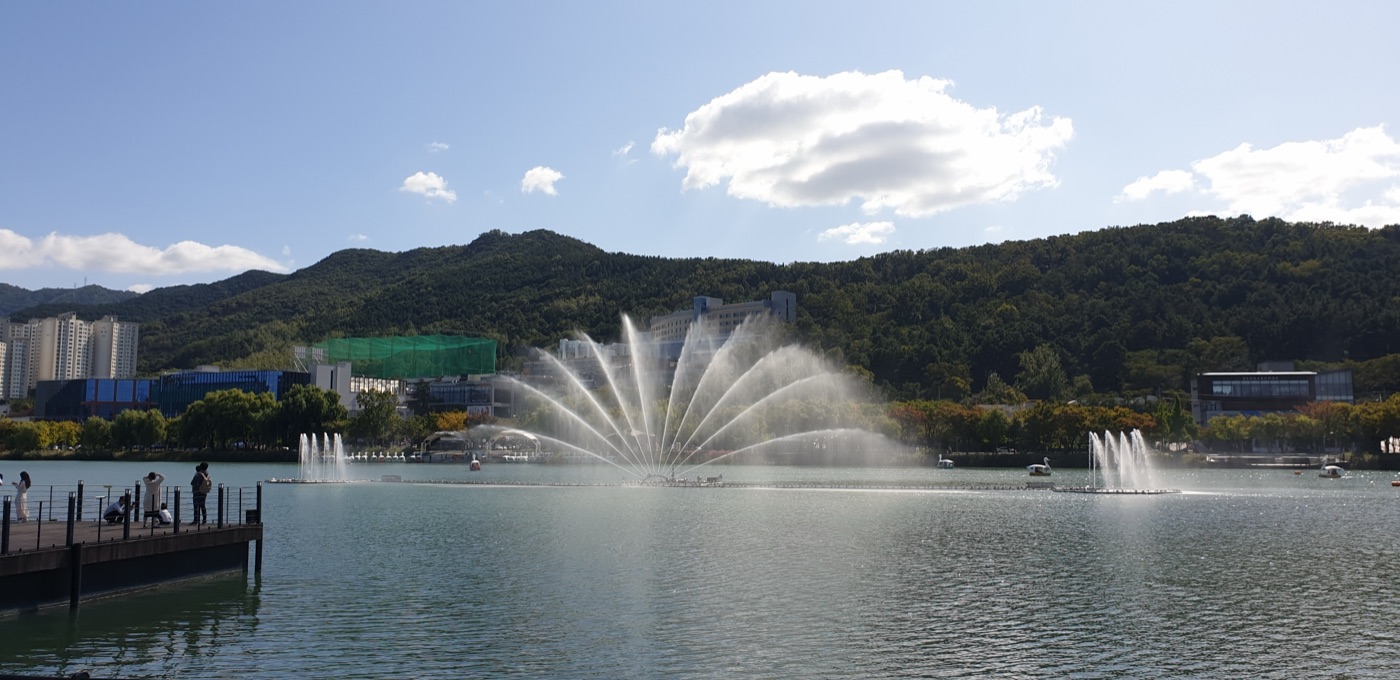
East Garden waterside, archive photograph taken July 18, 2021. The fountain shown does not confirm present operation. Patrick M. Lydon (Pmlydon) / Wikimedia Commons · CC BY-SA 4.0 · Unchanged.
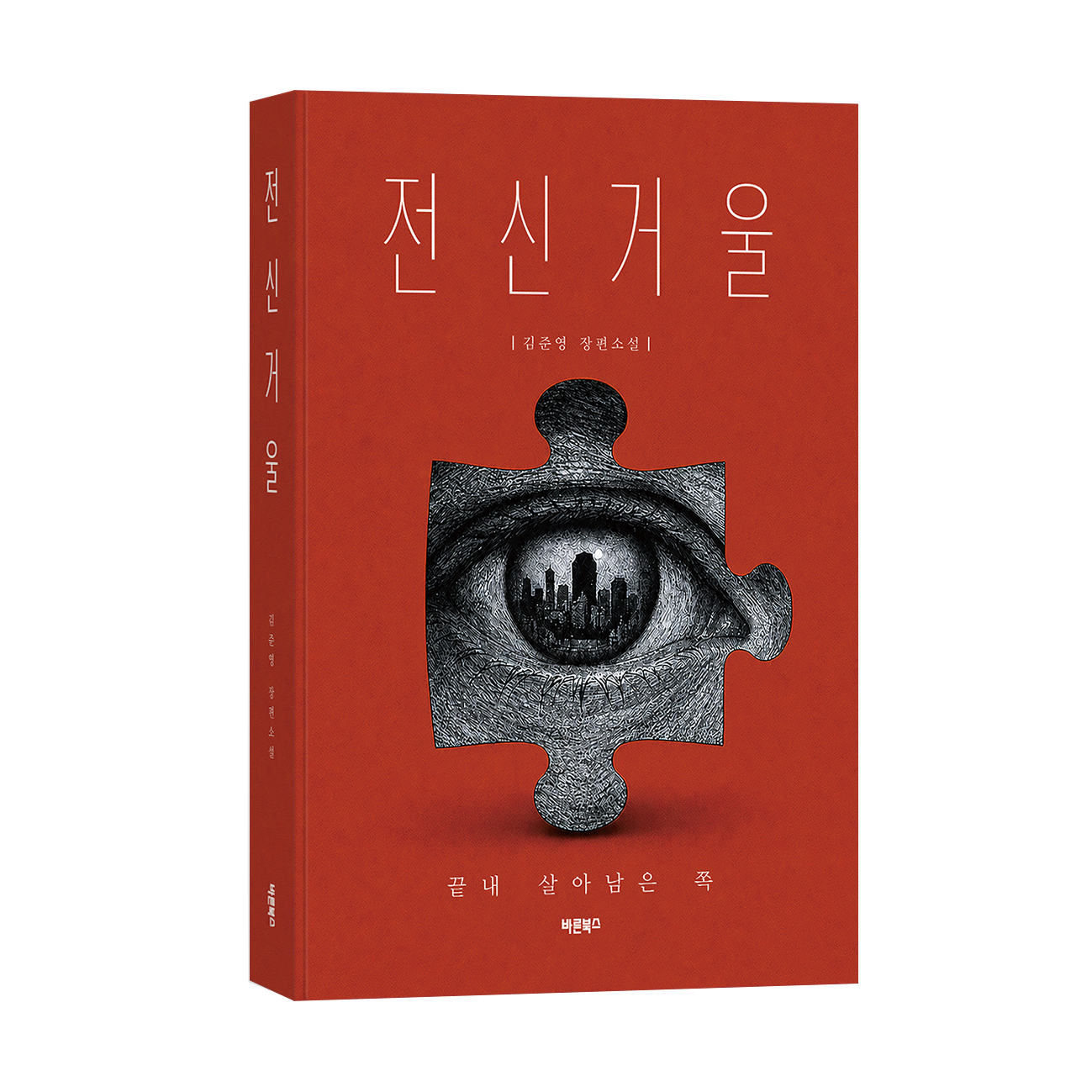
Jeonsin Geoul (literally “Full-Length Mirror”), Kim Jun-young’s debut novel, follows a man who has suppressed his memories until unexplained events make him doubt his own life. Barun Books published it on June 24, 2026.
The story
In the publisher’s synopsis, Noah Walker suppresses memories of his past until a series of unexplained events unsettles his account of his own life.
The mirror links past and present. Alongside the mystery runs a question about how far a person can trust their own choices. The red cover shows a puzzle piece holding an eye that reflects a city.
The author
Kim was born in Sokcho in 1993. The publisher says he is drawn to stories held in old objects and to unexpected emotions. This is his first novel.
Book details
Barun Books published the Korean-language novel on June 24, 2026: 416 pages, list price ₩16,800, ISBN 9791176213035. The publisher issued a new introduction on October 8. Shop prices and stock vary.
Kim Yun-deok’s 역사의 흔적 왜성(倭城)을 찾아서 is a study and field survey of more than 30 fortress sites built by Japanese forces between Ulsan and Suncheon. Places known today as parks, such as Busan’s Jeungsan Park and Ulsan’s Hakseong Park, appear alongside fortress records.
What waeseong means
Waeseong refers to fortresses built by Japanese forces in southern Korea during the invasions of the 1590s. Good Land Publishing presents the book as a study and field survey of more than 30 sites between Ulsan and Suncheon, covering their architecture as traces of an invasion.
The contents
After the war’s background and the history of Japanese castle building, the published contents move through regional groups including Busan, Gimhae, Geoje and Suncheon, pairing present-day place names with historical ones.
The publisher says the author visited the sites, took measurements and made drawings. The research and the sites’ condition have not been independently assessed.
Publication date and details
The publisher issued its announcement on October 8, but its catalog dates the Korean-language book to August 15, 2026. It runs 452 pages, with a ₩33,000 cover price and ISBN 9791138867061. No translated edition has been announced.
Addresses in the book do not establish current public access; check up-to-date site information before a visit.
The entrance and Ulsan fortress information board at Hakseong Park, a place discussed in the book. Korea Tourism Organization archive photograph from 2016, used for site context; it is not the author’s fieldwork photograph or an image from the book.
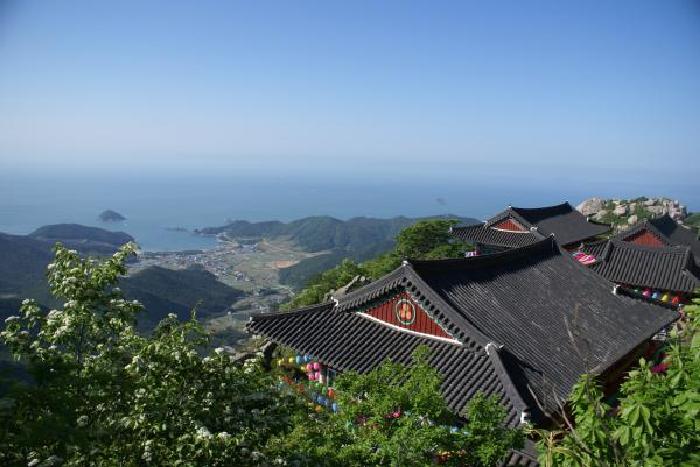
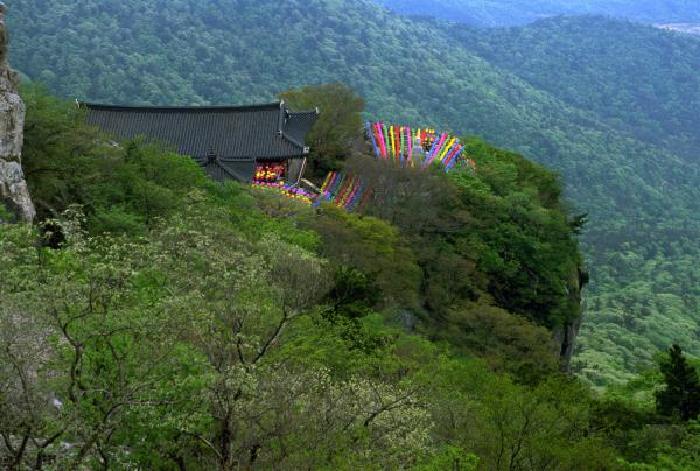
Boriam, a hermitage set among the rock peaks of Geumsan in Namhae, looks out over tiled roofs to the sea off Sangju. It is an active place of prayer, so visitors who come for the view should walk quietly.
01
At Boriam the sea opens beyond the temple roofs. Wooded ridges, bare rock, a settlement below and the coastline fit into a single view. Having looked up at the mountain from the shore, visitors here look back down at the sea.
02
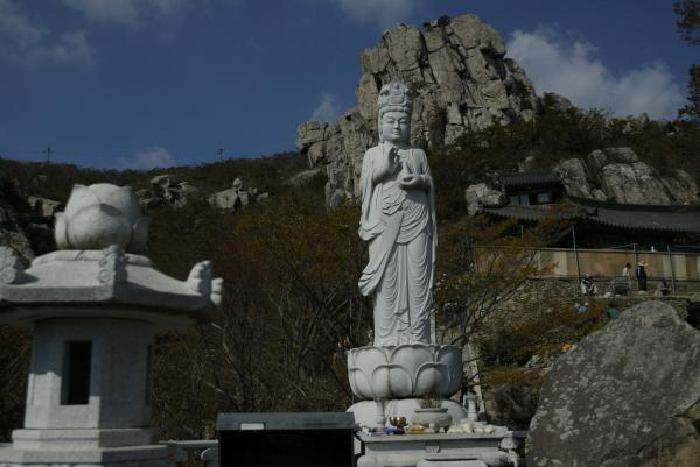
The hermitage is known as a place of prayer to Gwaneum, the Buddhist bodhisattva of compassion. Some come for the view; others come to pray. Around the halls and the Gwaneum statue, keep voices low and leave room for worshippers.
03
A foundation legend links the site to the monk Wonhyo. A documented reference to Boriam appears in the Dongguk yeoji seungnam, compiled in 1481. The founding year is uncertain, but the site’s long history as a place of prayer above the sea is not.
04
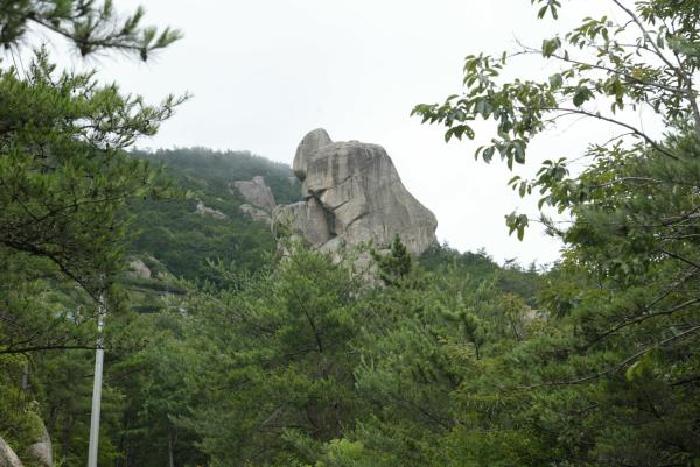
The Korea National Park Service says the 0.12 km Boriam–Hwaeombong–Dangunseongjeon junction section reopened on September 12, 2026, after deck-stair work. The Namhae County archive photographs are undated and do not show the new stairs or today’s weather.
LOCATION
Namhae’s Boriam, a temple among Geumsan’s rocks with sea views경상남도 남해군 상주면 보리암로 665
The 10th Yeonsu Book Festival takes place October 31 at Songdo Central Park in Incheon. Ahead of it, organizers are running a bookshop receipt draw, a reading-slogan contest and a bookseller talk.
01
The 10th Yeonsu Book Festival runs from 11 a.m. to 5:30 p.m. on October 31, 2026, on the lawn at Songdo Central Park. Its advance programs center on buying books at local shops, writing a line about reading and hearing from a bookseller.
Receipts for books bought at participating shops between September 29 and October 28 can be submitted at a designated municipal library desk, with one draw entry per receipt. The draw follows the opening ceremony on October 31, and 20 winners present in person receive coffee vouchers. Each person can win only once.
02
The reading-slogan contest closes October 20. Entrants may submit one original line of up to 25 characters, including spaces, about books and Yeonsu’s future. Twenty shortlisted entries will be displayed for voting at the festival.
On October 28, from 10 to 11:30 a.m., Kim Eun-cheol of Yeolda Bookshop (열다책방) gives the talk “How a Bookseller Lives with Books” at Songdo International Library’s International Art Hall. He will discuss running a bookshop, choosing books, reading groups and Incheon’s independent shops. Registration runs from 10 a.m. October 15 to noon October 26 and may close earlier if full. Online booking requires a Yeonsu public-library account.
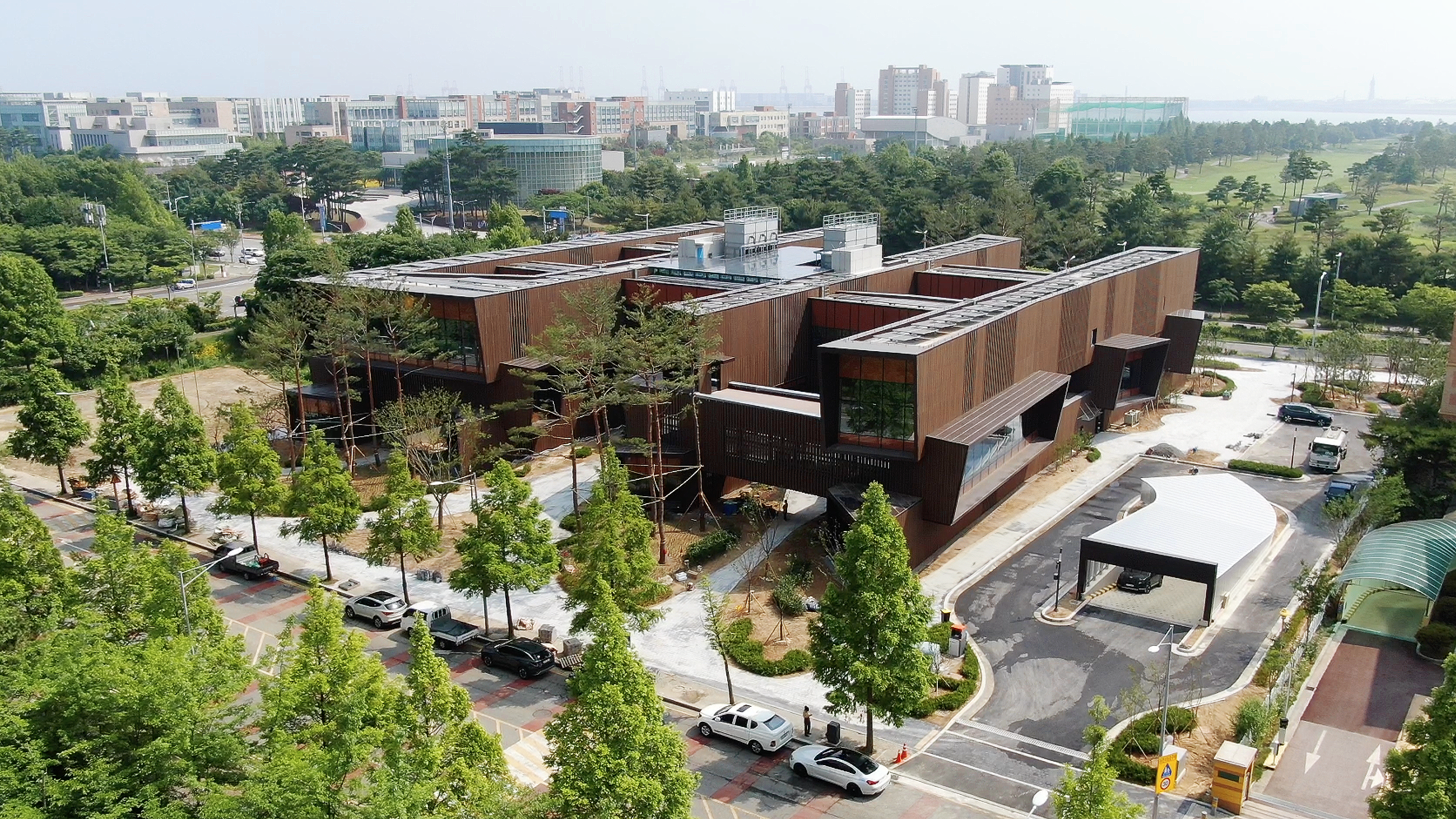
Songdo International Library, 166 Academy-ro, venue for the October 28 bookseller talk. A venue-context photograph supplied in Yeonsu-gu’s October 1, 2026 architecture-award release, not a photograph of the talk.
Los Angeles-based filmmaker Daeil Kim’s roughly 63-second reel moves from a face at a blackboard to a piano by a window and a view through an interior railing, with the light and frame width changing shot to shot.
01
The reel plays with the distance between people and the space around them. Close views of faces give way to wider rooms. Window light and wooden railings divide the image and show the camera’s choices.
Meet the Creator
Kim is a South Korean-born filmmaker based in Los Angeles. On Vimeo he describes the reel as a collection of film, commercial and music-video work he directed or shot.
Watch in Its Frame
Wide and narrower compositions alternate inside the same player. The black margins are part of the original and preserve each shot’s shape. Viewed uncropped, the arrangement of people, light and space stays intact.
Source Note
Vimeo currently titles it “2026 REEL - DAEIL KIM”; his website labels the same video “2025 Reel.” Vimeo’s initial upload record dates to January 2024. The revision date and the production year of each shot are unverified.
Daeil Kim’s approximately 63-second reel. Vimeo currently labels it 2026; the artist site labels the same video 2025. Original Daeil Kim / Vimeo embed.
Yoochae Hwang’s “Edge Dance,” a roughly three-minute stop-motion music video for Naojusung, sets a small figure against red flames in the dark to turn feelings after loss into dance.
Why Watch
Alongside the figure’s movement, the materials stand out: the fibers of the flames, folds in the clothes and drawings on hanging fabric. The work translates emotion after loss into brief movement and animation.
The People Behind It
Hwang directed the official video for Naojusung, with choreography by Yuna Kim and costumes by KwangKyeong Kim. The festival record lists drawing, clay and puppets among its techniques.
Where It Fits
The song appears on Naojusung’s album Sayang, released April 22, 2025. The 2025 work is presented here through Hwang’s own Vimeo upload; it is not a new release or a current screening.
Yoochae Hwang’s official music video for Naojusung’s “Edge Dance,” 2025. Embedded from the creator’s Vimeo upload.
Chodang-dong in Gangneung, known for tofu set with seawater, puts tofu restaurants within walking distance of the Heo Gyun and Heo Nanseolheon Memorial Park and its pine grove, with Gyeongpoho Lake nearby.
South of Gyeongpoho Lake, Chodang-dong’s tofu restaurants share the neighborhood with the Heo Gyun and Heo Nanseolheon Memorial Park and its pine grove. A bowl of soft tofu can lead into a walk through the area’s literary history.
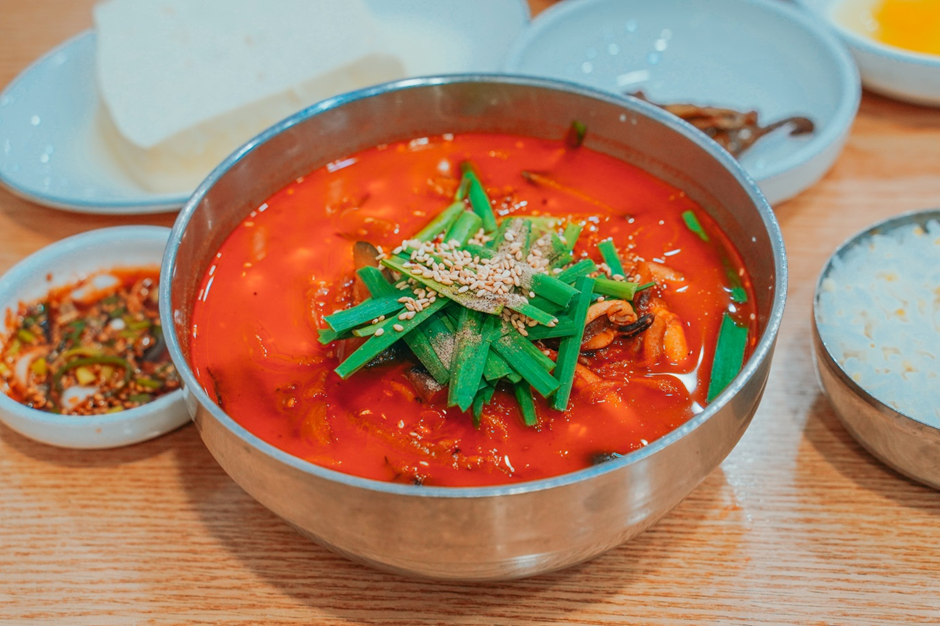
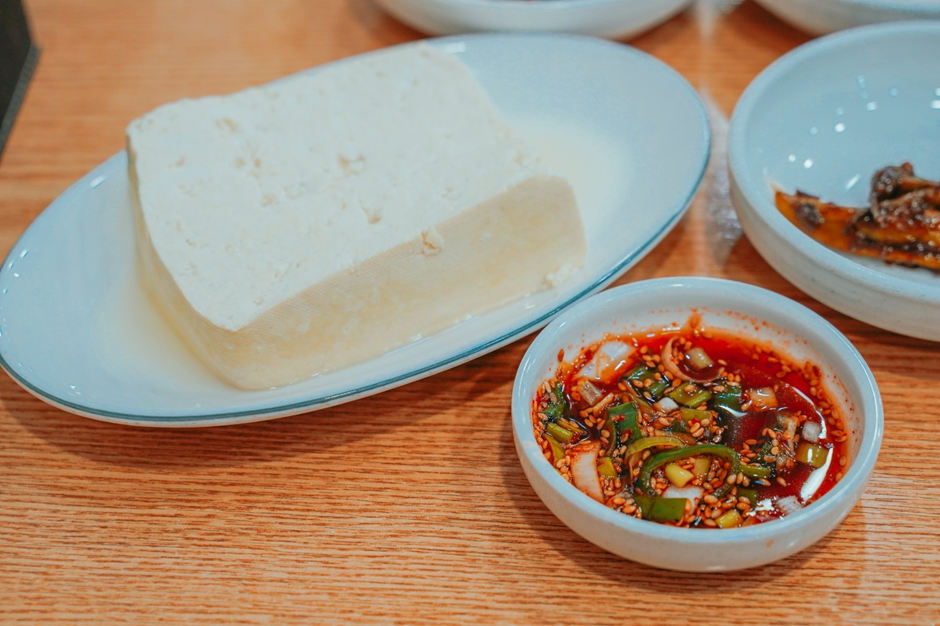
The local tofu is traditionally set with seawater. Soft curds scooped out become sundubu; pressing out the moisture produces firmer tofu. Menus run from a mild set meal to red, spicy jjamppong sundubu, and recipes vary between restaurants.
The name Chodang comes from the pen name of the scholar Heo Yeop. A story credits him with first making the tofu, but the Encyclopedia of Korean Culture notes that no documentary evidence supports it.
The memorial park honors Heo Yeop’s children, the poet Heo Nanseolheon and the writer Heo Gyun. Past the hanok buildings and literary monuments, the path continues into the pine grove.
Only Here
One neighborhood, different tofu
Sundubu set meals, spicy jjamppong sundubu and pressed tofu differ in flavor and texture. Choosing the style first makes ordering easier.
A park for the Heo siblings
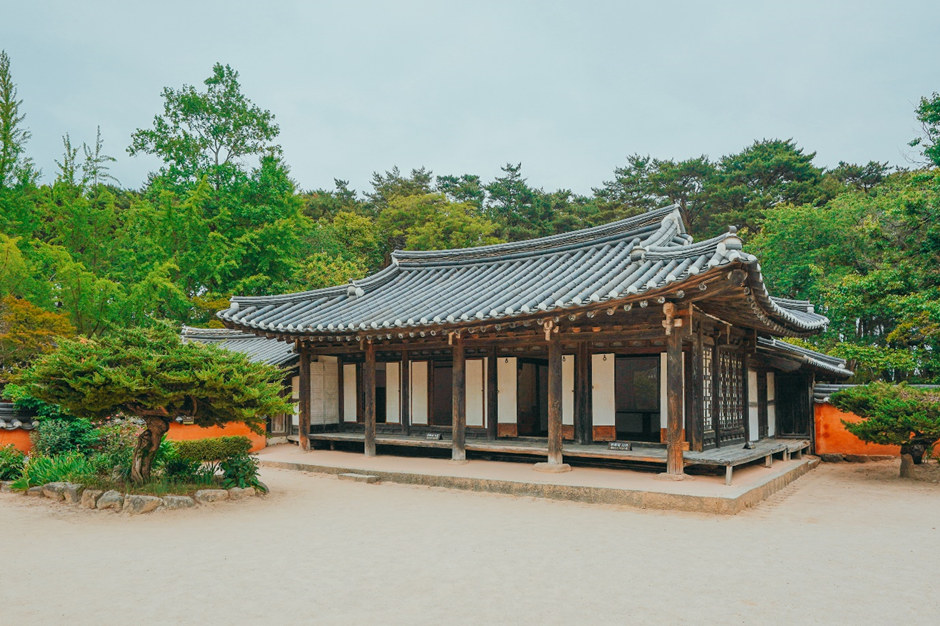
The memorial hall and outdoor spaces introduce Heo Gyun and Heo Nanseolheon. The hanok photograph shows the current commemorative setting.
From lunch to pine shade
The walk runs from the food streets to the park’s pine grove, with the lakeside as an option if time allows.
To include the memorial hall, visit Tuesday through Sunday. Published hours are 09:00–18:00, with a 12:00–13:00 lunch break. It is closed Mondays, January 1, Seollal day and Chuseok day.
Allow 2–3 hours for a meal and the park, plus extra time for restaurant queues or a lakeside walk.
Getting There
From Gangneung KTX Station, take local transport to Chodang-dong. The walk starts at Heo Gyun and Heo Nanseolheon Memorial Park, 1-29 Nanseolheon-ro 193beon-gil, Gangneung. Showing a taxi driver the park’s Korean name helps.
Park admission and parking are free. Restaurant hours, prices and queuing vary. Facility inquiries: +82-33-640-4798.
LOCATION
Continue from Gangneung KTX Station to Chodang-dong by local transport. Start at Heo Gyun and Heo Nanseolheon Memorial Park, 1-29 Nanseolheon-ro 193beon-gil, Gangneung. Show the park’s Korean name to a taxi driver.강원특별자치도 강릉시 난설헌로193번길 1-29
Continue from Gangneung KTX Station to Chodang-dong by local transport. Start at Heo Gyun and Heo Nanseolheon Memorial Park, 1-29 Nanseolheon-ro 193beon-gil, Gangneung. Show the park’s Korean name to a taxi driver.
The roughly 65-second trailer for Jeong Dahee’s 2016 animation The Empty shows a grey room with a dark door and a small framed picture, ordinary objects that hold traces of someone’s presence.
01
The trailer lingers on the objects in the room. A closed door opens; a figure carries a rounded case and a picture past it. As things move, the space they leave becomes visible, and in the grey, charcoal-like texture even a small change of position alters the scene.
Korean animation director Jeong Dahee says her films grow out of questions from everyday life. She worked in advertising, studied animation in Paris and has worked independently as a director and producer since 2013. Here she approaches presence and loss through the door, walls and objects of a room.
Watch For
The door and the picture, more than the figure, drive the scenes. The trailer turns on how a room changes once an object leaves the frame.
About the Work
The player contains the director’s roughly 65-second trailer for the 2016 film. The full work runs 9 minutes 27 seconds and combines painting on paper with 2D computer animation. It was produced by Sacrebleu productions and Between the pictures. The director’s project page has a separate full-film link.
Archive Note
The trailer was uploaded to Vimeo in March 2016. This is a fresh introduction to an earlier work, not a 2026 release or a current screening. The embedded video is the trailer, not the complete film.
Jeong Dahee’s official trailer for The Empty (2016), approximately 65 seconds. Director’s original / Vimeo. Full film: 9 minutes 27 seconds.
Jinjoon Lee’s 2026 video installation Cosmic Garden uses AI to reinterpret bodily data such as eye and iris patterns as a cosmic landscape. Blue forms and points of light fill a broad screen and continue onto the stage floor.
01
The roughly 118-second recording shows the front display and the floor screen working together. As the small points meet the physical space, a flat image takes on the depth of a stage.
Creator Note
In an interview with SBS, Lee said he used AI to reinterpret eye and iris patterns and bodily signals, including a pulse, and expand them into cosmic forms. The imagery is AI-assisted media art.
Work Context
The studio describes Cosmic Garden as a 2026 two-channel video installation. Its April 2026 Vimeo upload documents the stage work.
The piece was prepared for the opening of the SBS X Space forum on April 2 at SBS Prism Tower in Seoul. It is a record of that event, not a current exhibition.
Original Jinjoon Lee Studio upload. Cosmic Garden (2026), AI-assisted media-art stage documentation, approximately 118 seconds.
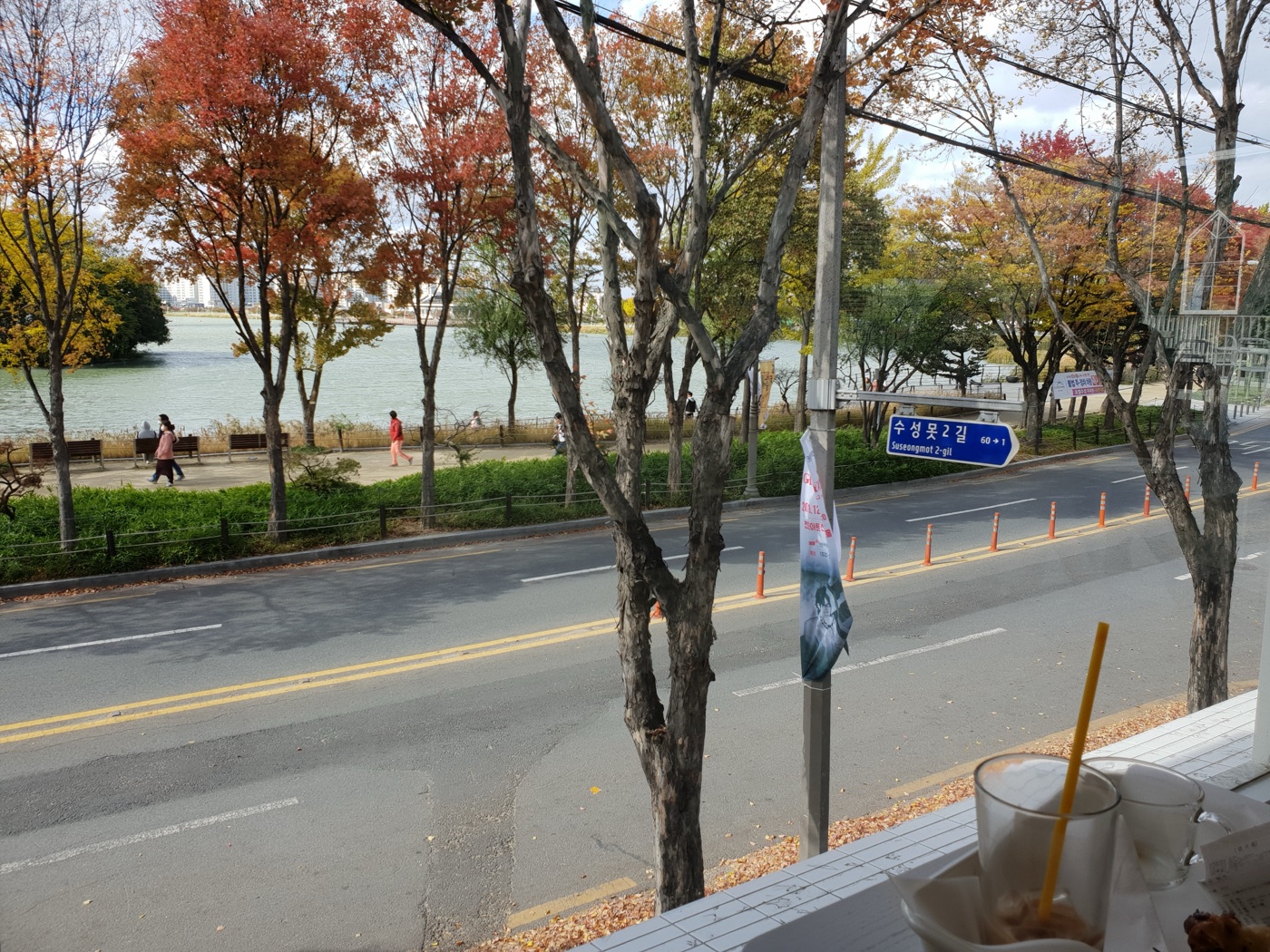
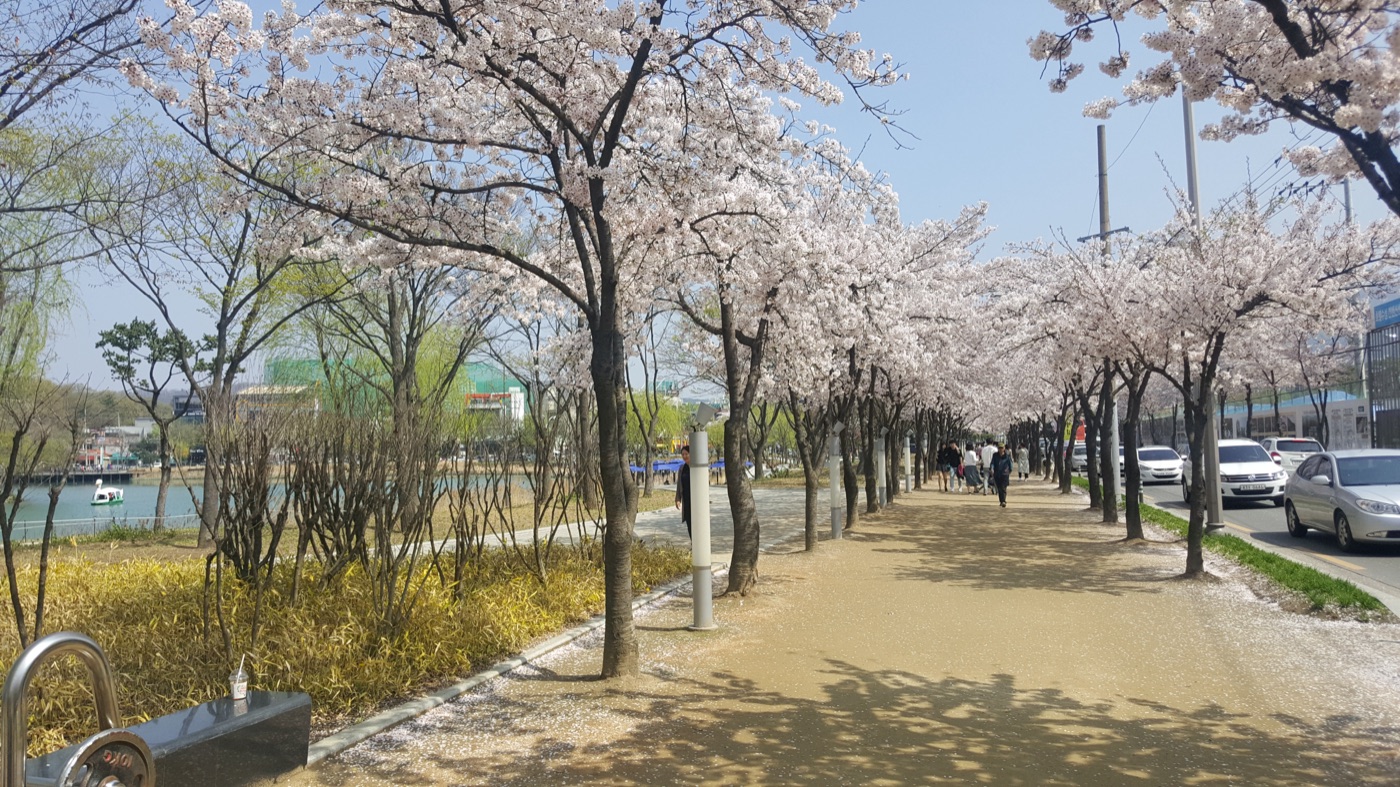
Suseongmot in Daegu’s Suseong district is a city lake ringed by a 2,020-meter walking path, with buildings and low hills on the far shore and benches and trees along the near one.
The Korea Tourism Organization lists the lake’s circumference as 2,020 meters. The loop alternates between open water and tree-lined stretches, and Suseong-gu’s official guide describes a waterfront deck. Benches and the deck offer views of the lake from different distances.
A road runs beside the walking path, keeping the city close. Walkers can do a short section and turn back rather than complete the loop.
The photographs date from spring 2017 and autumn 2018 and 2019; their blossoms, foliage and fountain displays do not reflect current conditions.
Only Here
1. Follow a roughly two-kilometer urban lake loop as the distance between city and water shifts.
2. Compare views from the deck and the tree-lined paths.
3. Take a bench break before continuing into the surrounding streets.
Daytime or late afternoon shows the lake and paths best. Current autumn color has not been verified. Check the day’s operating notice if the fountain is the goal.
How Long
Allow 45–60 minutes for a loop, or 60–90 minutes with breaks. Walking pace and route will change this estimate.
Getting There
Suseong-gu gives a 10-minute walk from Suseongmot Station on Daegu Metro Line 3 to the tourist information center at 37 Suseongmot-gil, beside the eastern entrance to Sanghwa Park. A map is on the official tourism page.
LOCATION
Suseong-gu gives a ten-minute walk from Suseongmot Station on Daegu Metro Line 3 to the tourist information center. The center is at 37 Suseongmot-gil, beside the eastern entrance to Sanghwa Park. Consult the official tourism map before setting out.
3Suseong-gu gives a ten-minute walk from Suseongmot Station on Daegu Metro Line 3 to the tourist information center. The center is at 37 Suseongmot-gil, beside the eastern entrance to Sanghwa Park. Consult the official tourism map before setting out.