A roughly 32-second vertical clip from New York-based artist Kakyoung Lee shows a wall-sized drawing animation in a gallery, where a walking body moves alongside the marks it leaves behind.
01
A railing and the outlines of people come into view first. Marks then collect around a body, feet and shoulders shift, and what looked like a still drawing becomes a moving wall. The ceiling and wooden floor in the shot show the scale of the installation.
Born in South Korea and based in New York, Lee works across printmaking, drawing, animation and installation. Her work centers on what accumulates in a drawing when a gesture repeats.
Watch For
The clip moves between one figure’s feet and the space it has crossed, and between clear outlines and fainter overlapping marks that give the scene different speeds. Because it documents the gallery, the room stays part of the view.
About the Work
The artist’s upload is titled Traveler_Palgongsan Series (part) and runs about 32 seconds. Her description identifies Traveler (2026) as a 10-minute, two-channel stop-motion work made up of nine short animations. The clip shows part of its installation.
Archive Note
Vimeo records the upload as September 9, 2026. In Transit, In Formation, the Korean Cultural Center New York exhibition that included Lee, ran March 5–April 18, 2026, and has closed.
Kakyoung Lee, Traveler_Palgongsan Series (part). 2026 installation documentation, approximately 32 seconds. Original upload by the artist on Vimeo.
The roughly 93-second trailer for A thread left, Minhyung Lee’s first short film, lingers on two people talking by a park pond. The 25-minute film follows cousins reunited after twenty years.
01
The 4:3 frame holds the pond, the trees and the distance between the two characters. A later shot lets passing figures fall out of focus. The camera stays with each image rather than moving much.
Creator Note
Jeonju’s official archive identifies A thread left as Minhyung Lee’s first short film, made in 2026. He also wrote and edited it. The 25-minute film was selected for the 27th festival’s Korean Competition for Shorts.
The Story
According to the director’s synopsis, cousins Kiyoung and Hyunwoo spend an ordinary day walking together after twenty years apart. The player contains his Vimeo trailer; a full-film online release or current screening has not been verified.
Trailer for Minhyung Lee’s 2026 film A thread left. The film is 25 minutes; this preview is about 93 seconds. Original director upload.
Jeondeungsa, in Onsu-ri, Gilsang-myeon, Ganghwa, is a temple reached by a woodland path inside Samrangseong Fortress. Its main hall dates to 1621 and its iron bell to 1097, and admission is free.
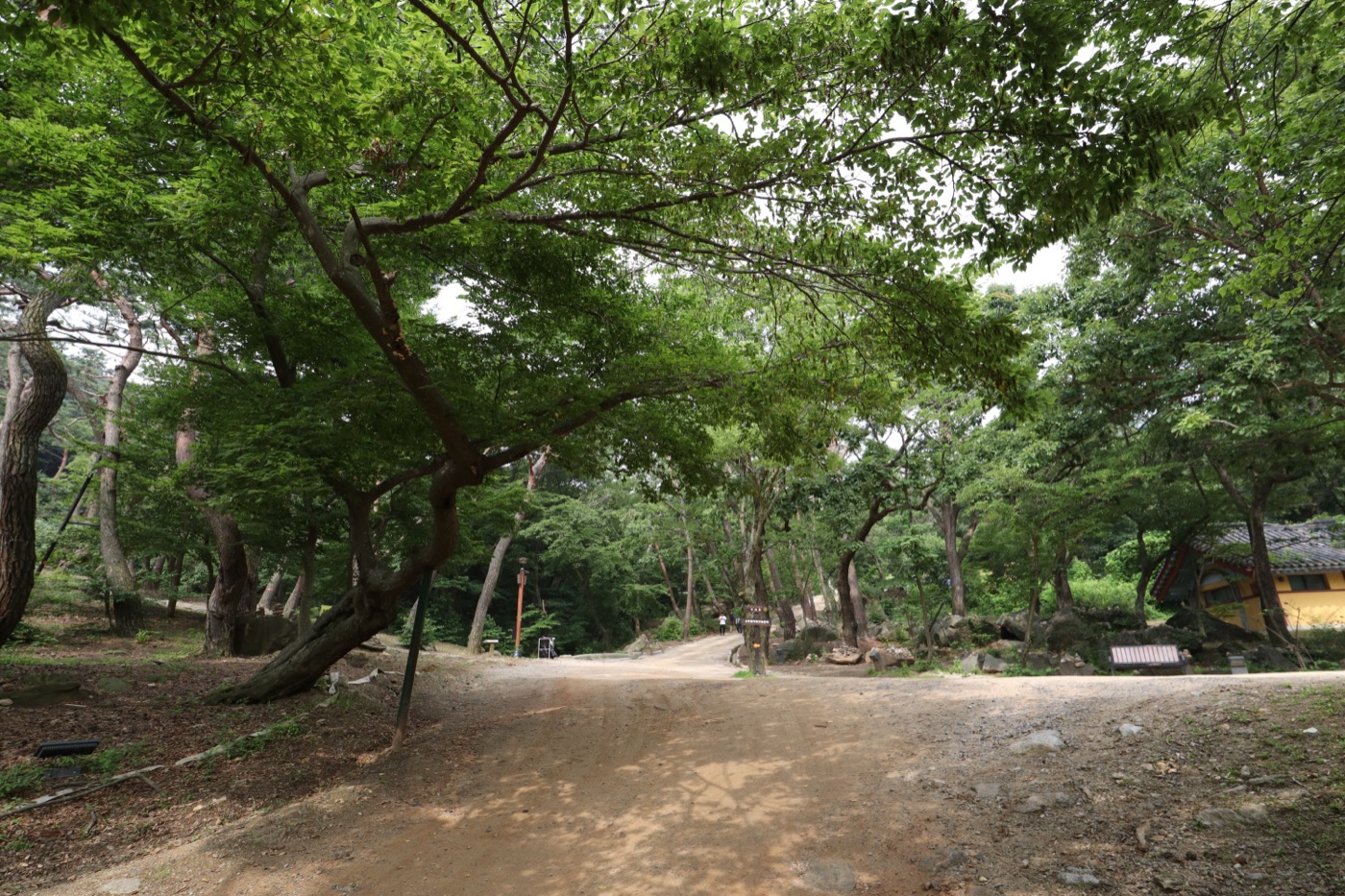
Jeondeungsa sits within Samrangseong Fortress in Onsu-ri, Gilsang-myeon, Ganghwa. The approach passes under overlapping branches before the shade gives way to tiled roofs. The walk from woodland to courtyard is part of the visit, not time to rush through.
A tree-shaded approach at Jeondeungsa. Archive photograph, 2020-07-18; present conditions may differ. Mobius6 / Wikimedia Commons · CC BY-SA 4.0 · Wikimedia resized rendition; no editorial changes. Mobius6 / Wikimedia Commons · CC BY-SA 4.0 · CC BY-SA 4.0
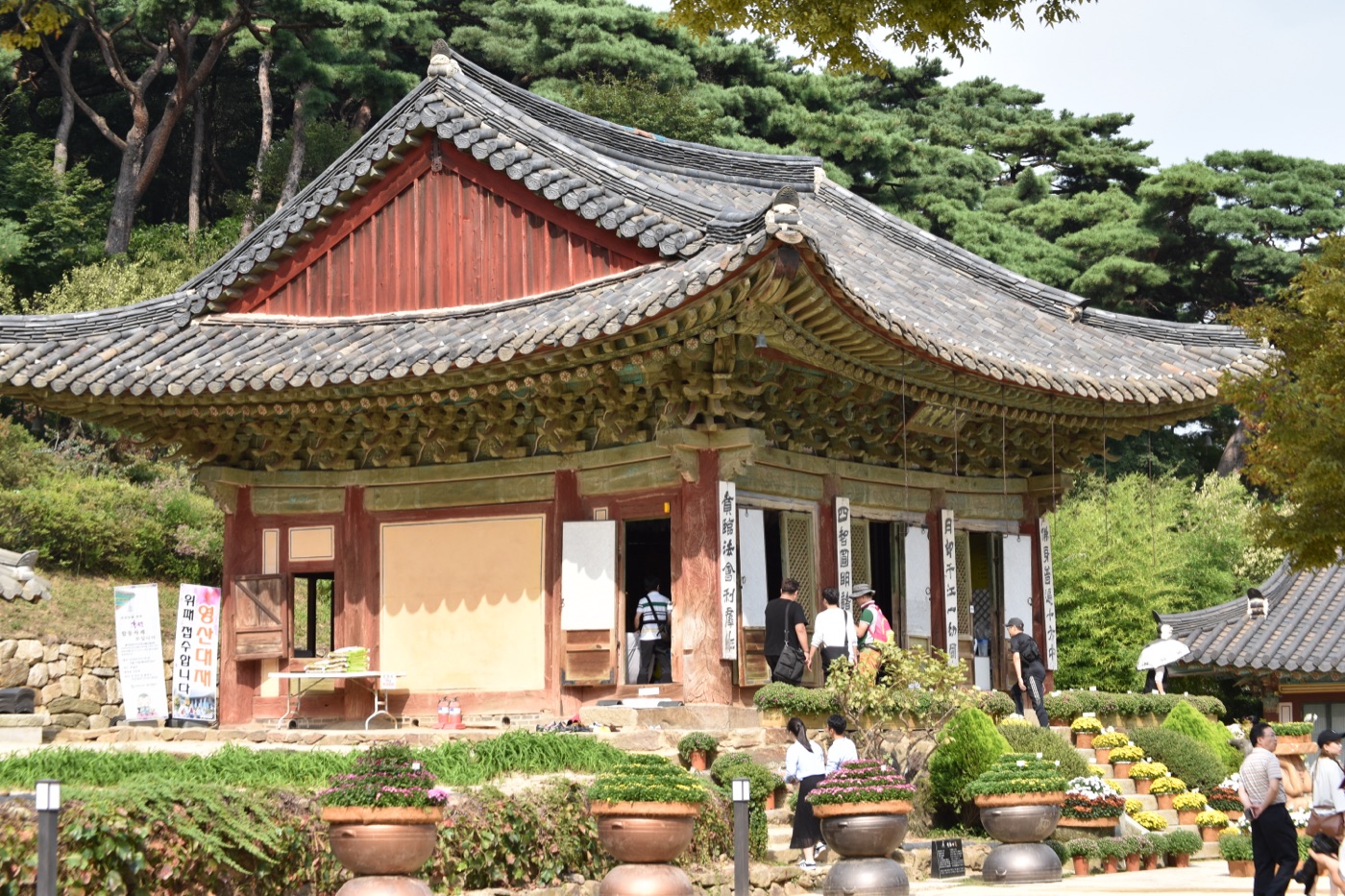
The temple dates the present Daeungbojeon hall to 1621. Its appeal lies less in scale than in its lifted eaves and intricate wooden supports, which contrast with the weight of the grey tiled roof.
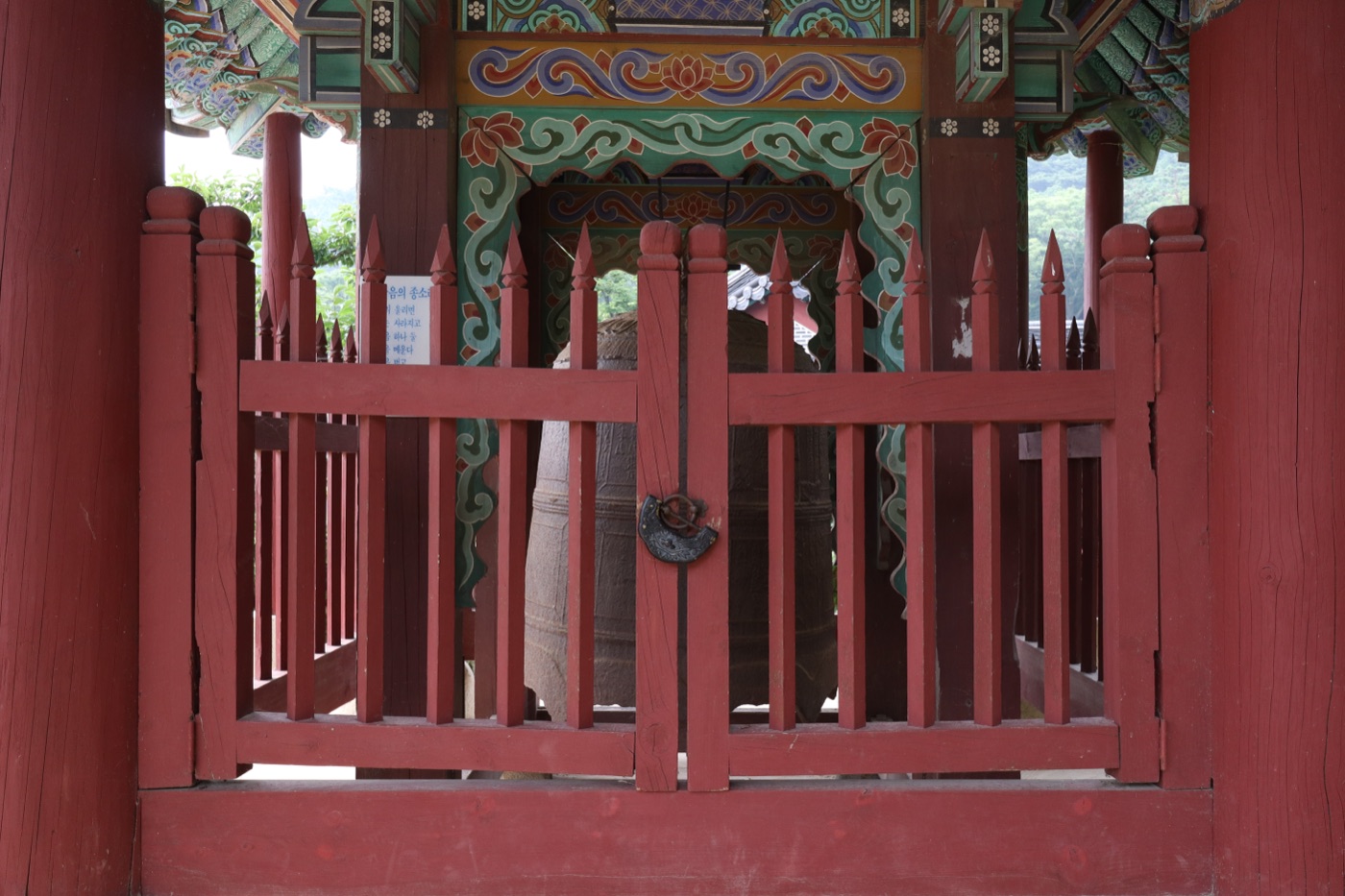
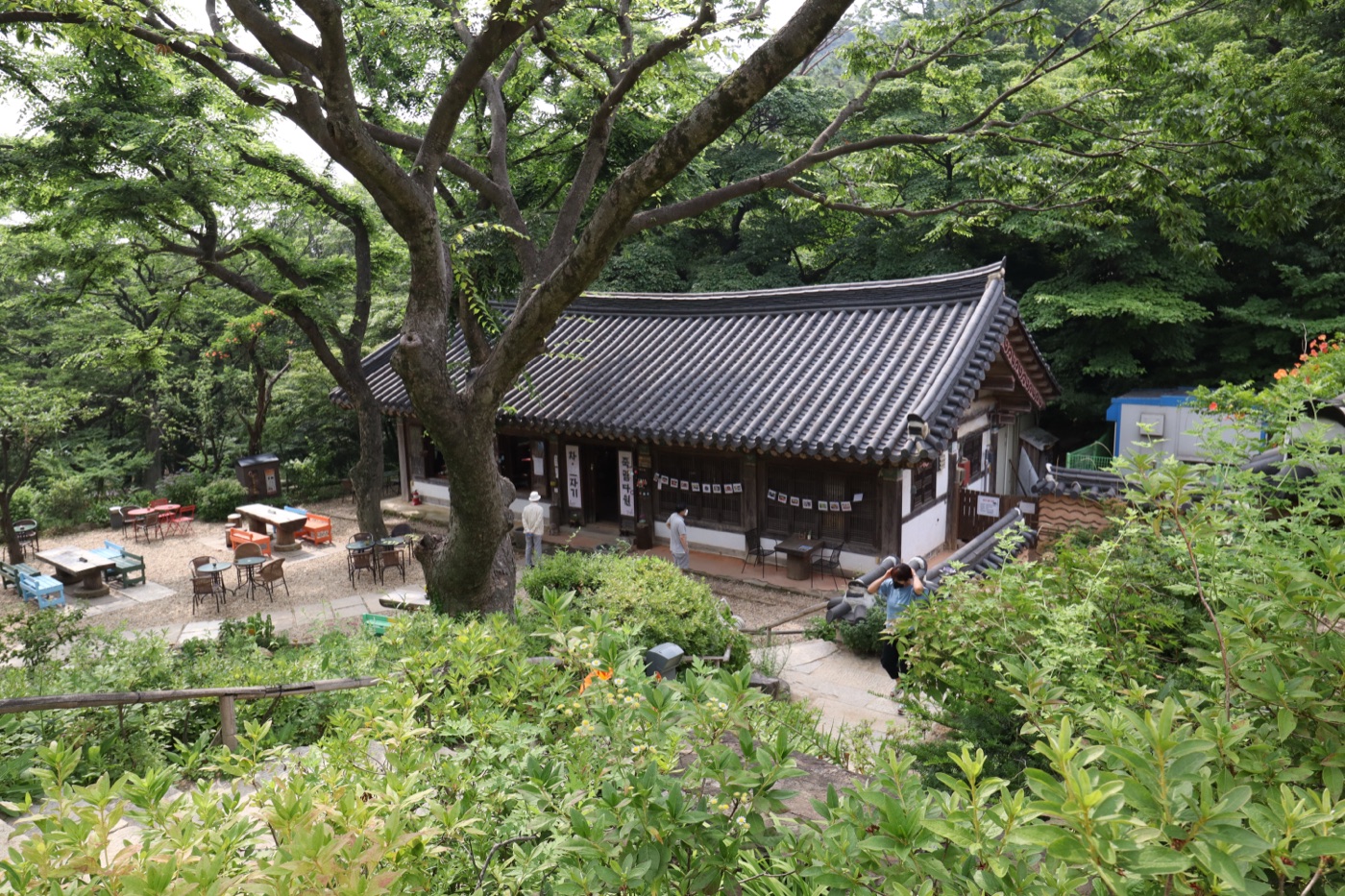
The temple identifies its iron bell as one made in China in 1097. Jeondeungsa is a working Buddhist temple where worshippers and services take priority, so visitors should leave paths clear. Jukrimdawon, a teahouse on the grounds, offers a place to sit afterward.
Jeondeungsa’s iron bell behind its red protective enclosure. Archive photograph, 2020-07-18; present conditions may differ. Mobius6 / Wikimedia Commons · CC BY-SA 4.0 · Wikimedia resized rendition; no editorial changes. Mobius6 / Wikimedia Commons · CC BY-SA 4.0 · CC BY-SA 4.0
Only Here
1. The approach through woodland inside Samrangseong: a forest path and a temple courtyard make up one visit.
2. The timber of Daeungbojeon and the weight of the iron bell: different materials and periods share the grounds.
3. Jukrimdawon, the traditional teahouse within the temple: if open, it offers a seated break. Orders cost extra.
Outside Jukrimdawon, the traditional teahouse in Jeondeungsa’s grounds. Archive photograph, 2020-07-18; present conditions may differ. Mobius6 / Wikimedia Commons · CC BY-SA 4.0 · Wikimedia resized rendition; no editorial changes. Mobius6 / Wikimedia Commons · CC BY-SA 4.0 · CC BY-SA 4.0
Best Time
Daylight is best for seeing the eaves and the changing levels of the path. Arriving in the morning and finishing around lunchtime works well. The Samrangseong History and Culture Festival runs October 3–11, 2026, so expect crowds and allow extra travel time on those dates. Peak foliage and weather are not guaranteed.
How Long
Allow 60–90 minutes for the approach and main courtyards, plus 20–30 minutes for tea. Performances and queues are extra. This is a short temple visit, not a circuit of the fortress wall.
Getting There
The destination is Jeondeungsa, 37-41 Jeondeungsa-ro, Gilsang-myeon, Ganghwa-gun, Incheon. The map button opens the location linked from the temple’s directions page. Drivers should follow signs to the east-gate or south-gate parking areas.
The temple estimates about 10 minutes on foot from the east/south-gate bus stops, or 15 minutes from Onsu-ri. The bus timetables on its website are outdated, so confirm stops, transfers and return services with a current journey planner. The route has slopes and changes in level and is not step-free.
Before You Go
Admission is free. The temple’s visitor page lists hours of 09:00–17:30, while Ganghwa’s tourism listing gives 09:00–18:00; late visitors should check with the temple.
For the October 3–11, 2026, festival, the Ministry of Culture’s listing gives parking as KRW 4,000 for ordinary vehicles and KRW 8,000 for large buses, different from the temple’s standard small-vehicle rate of KRW 3,000. Check the charge at the entrance during the festival. Tea is a separate purchase, and the teahouse’s opening should be confirmed on site.
Keep voices low around worshippers and follow access, photography and temporary-control notices. Sloping paths and stone steps can be slippery after rain. Visitors needing mobility assistance can ask ahead about suitable gates and routes. Temple office: +82-32-937-0125. Photographs date from 2016 and 2020 and do not show current foliage, layout or festival conditions.
PLACE INFO
visitAdmission is free. For planning, stay within the 09:00–17:30 operating window shown on the temple’s visitor page. Ganghwa’s tourism listing gives 09:00–18:00, so confirm with the temple if arriving late.
For the October 3–11, 2026 festival, the Ministry of Culture’s listing gives parking as KRW 4,000 for ordinary vehicles and KRW 8,000 for large buses. The temple’s standard small-vehicle rate is KRW 3,000, so check the date-specific charge at the entrance during the festival. Tea is a separate purchase; confirm that the teahouse is operating when you visit.
Keep voices low around worshippers, leave entrances clear and follow current access, photography and temporary-control notices. Take care on sloping paths and stone steps after rain. If you need mobility assistance, ask ahead about the suitable gate and route. Temple office: +82-32-937-0125. Photographs date from 2016 and 2020; they do not show today’s foliage, layout or festival conditions.
LOCATION
Set your destination to Jeondeungsa, 37-41 Jeondeungsa-ro, Gilsang-myeon, Ganghwa-gun, Incheon. The map button opens the location linked by the temple’s own directions page. Drivers should follow signs to the east-gate or south-gate parking areas. The temple estimates about 10 minutes on foot from the east/south-gate bus stops, or 15 minutes from Onsu-ri. Its website also retains old bus timetables: use a current journey planner to confirm stops, transfers and your return service on the day. There are slopes and changes in level; this is not presented as a flat or step-free route.
Set your destination to Jeondeungsa, 37-41 Jeondeungsa-ro, Gilsang-myeon, Ganghwa-gun, Incheon. The map button opens the location linked by the temple’s own directions page. Drivers should follow signs to the east-gate or south-gate parking areas. The temple estimates about 10 minutes on foot from the east/south-gate bus stops, or 15 minutes from Onsu-ri. Its website also retains old bus timetables: use a current journey planner to confirm stops, transfers and your return service on the day. There are slopes and changes in level; this is not presented as a flat or step-free route.
The eaves and timber details of Jeondeungsa’s Daeungbojeon. Archive photograph, 2016-09-17; present conditions may differ. Jjw / Wikimedia Commons · CC BY-SA 4.0 · Wikimedia resized rendition; no editorial changes.
Lee Seoyeon’s 78-second 3D film moves from a bowl to a pond, a small pavilion and a miniature landscape, turning a ceramic surface into scenery.
01
The original preview shows mountains, trees and a pavilion rising from a scroll. During playback, a bowl appears on water among lotus leaves. It is a 3D exploration of surfaces, light and animated space, not footage of a pottery workshop.
Creator Note
The creator lists Cinema4D, Octane Render and After Effects and calls the film a personal, self-directed study. The brand name is its subject; no commission or endorsement by Kwangjuyo has been established.
Archive Pick
The original Vimeo upload is dated November 6, 2025. It is presented here through the creator’s original player.
Personal 3D study by Lee Seoyeon, 2025. A brand commission or endorsement is not established. Embedded from the creator’s Vimeo upload.
Shon Kim’s 2026 experimental animation The Artist’s Body, 3 minutes 55 seconds long, creates movement by traveling in extreme close-up across still images from print. Up close, the small dots of a printed body stand out as much as its outline.
01
The camera follows the boundary between light and dark and the grain that gathers into forms before dissolving into texture again. Magnified halftone dots fill the screen, turning a single picture into an unfamiliar surface.
How It Moves
Kim describes using extreme close-ups to explore a printed image, following its lines and shapes. The subject stays still; the moving camera supplies rhythm and duration, bringing the physical structure of print onto the screen.
Work Context
The artist identifies the film as a 2026 experimental animation lasting 3 minutes 55 seconds, uploaded to Vimeo in September. The description credits Tracey Warr’s The Artist’s Body as source material and Korean Shamanic Rituals for sound. No current exhibition or screening is scheduled.
Shon Kim, The Artist’s Body (2026). Official preview paired with the artist’s original Vimeo player.
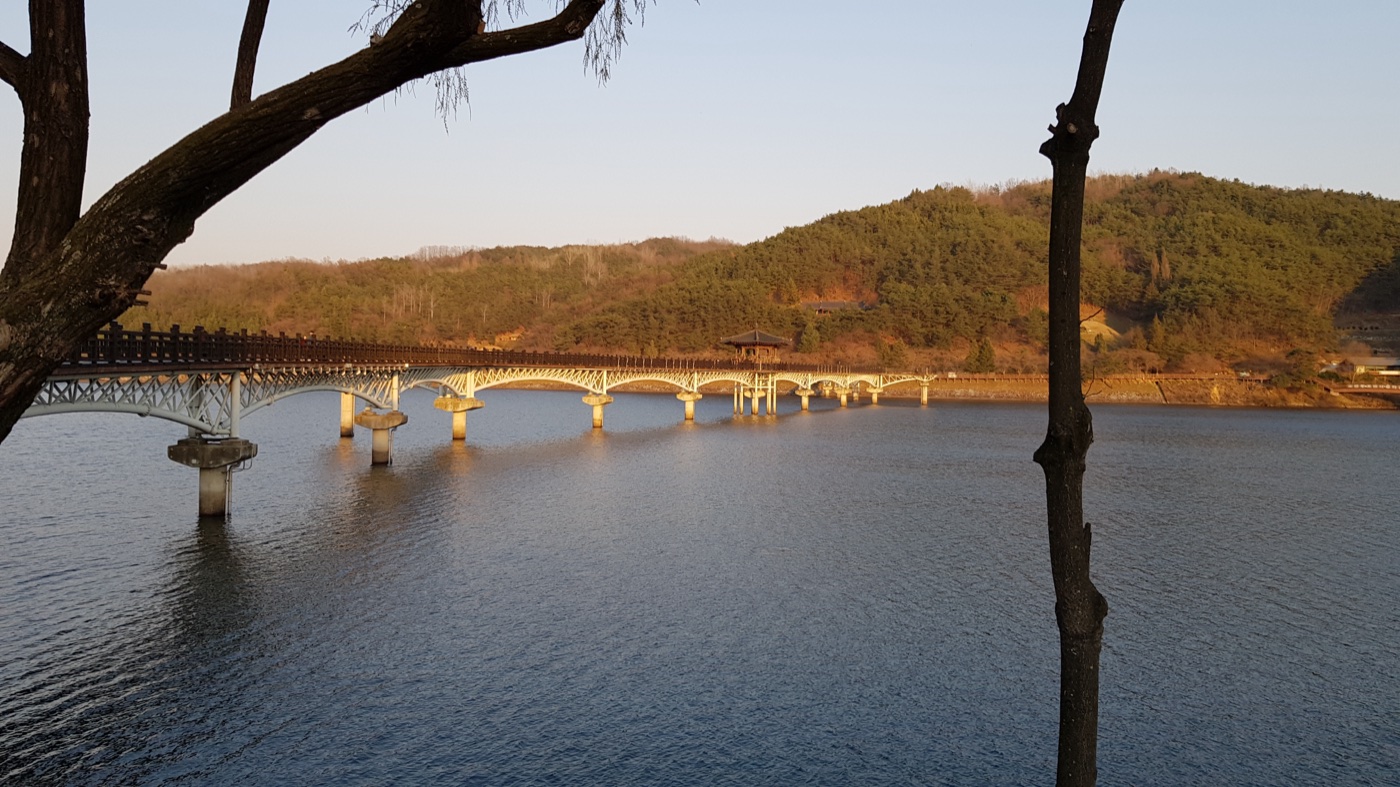
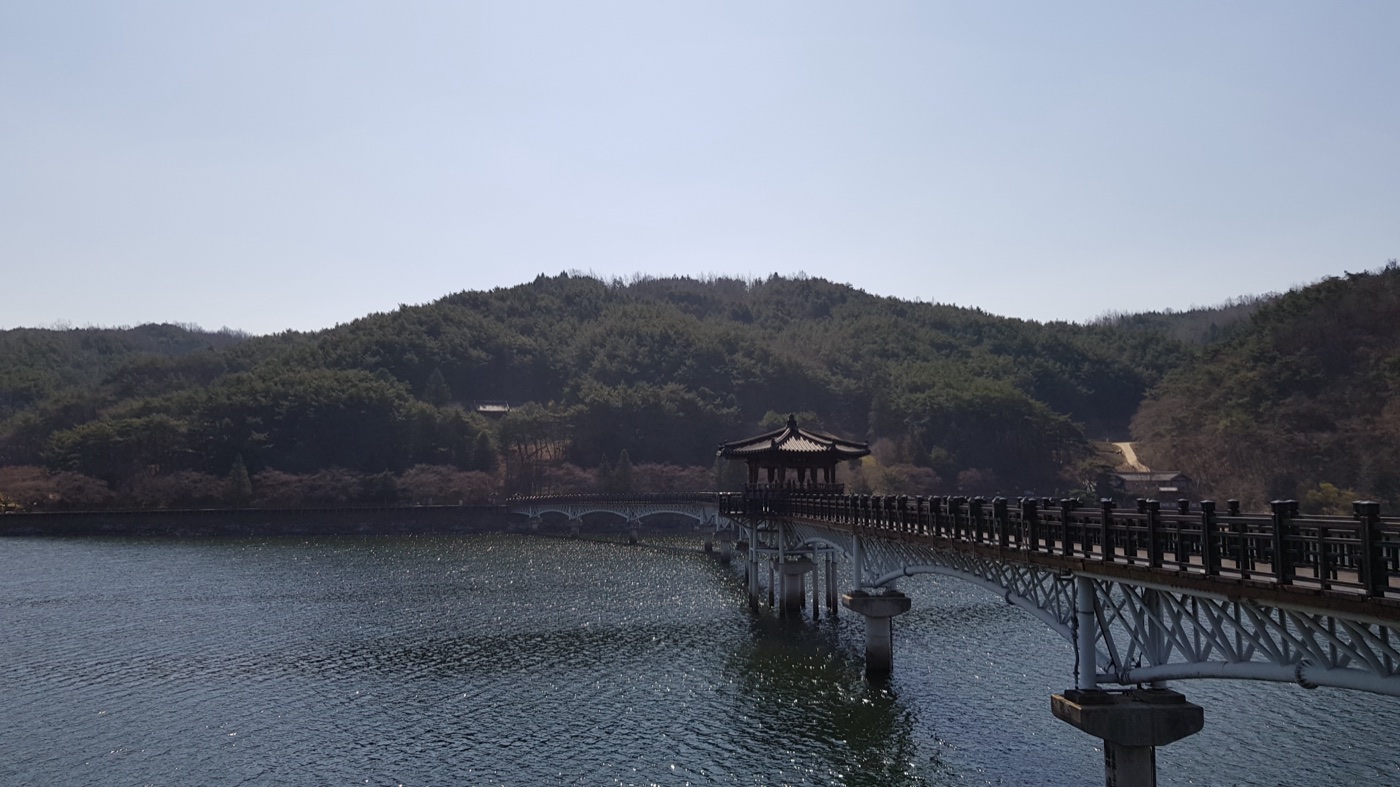
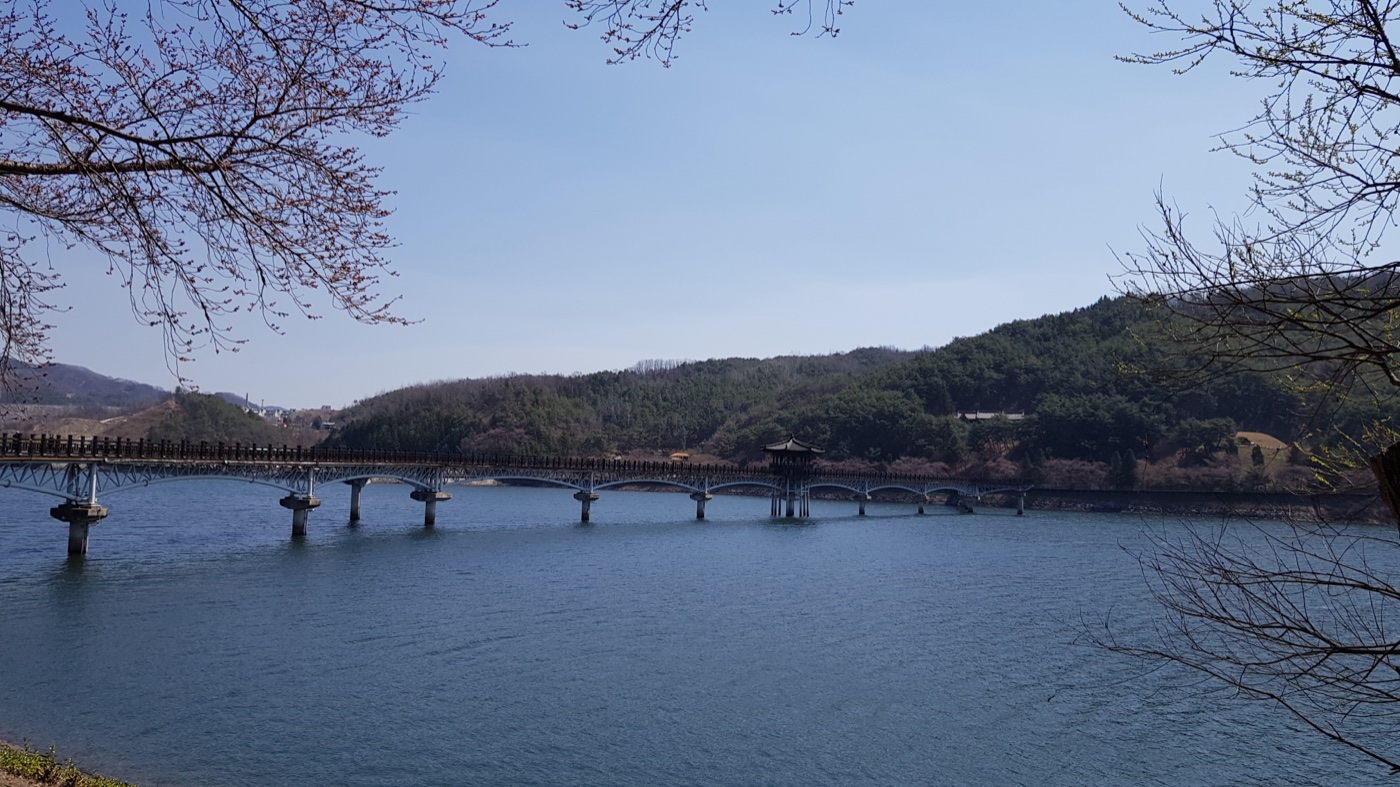
Woryeonggyo in Andong, North Gyeongsang Province, is a long bridge laid low across the river. From the bank it reads as a single line against the hills; up close, its repeating rails and pavilion roof take over.
Seen from the water’s edge, the bridge runs low in front of the hills, its long line broken by a pavilion midway. Closer in, the outline gives way to repeated railings and the structure beneath the deck.
Andong’s tourism guide gives the bridge’s length as 387 meters. The guide says its design draws on mituri, traditional woven shoes, in memory of Yi Eung-tae and his wife.
A walk can take in the whole bridge from the bank, the rails and pavilion up close, then a look back from the far side. The photographs are archive images taken April 3–4, 2019, and may not reflect autumn foliage or facility conditions in 2026.
1. Find the long horizontal composition where bridge and hills overlap.
2. Look between the repeated railings and the octagonal pavilion roof.
3. Compare the bridge from different angles before and after crossing.
Daylight is best for seeing the structure and both banks. Dusk brings changing light, but whether lighting or fountains operate has not been confirmed. Visitors can ask the site manager about evening features.
How Long
Allow 45–60 minutes for an out-and-back crossing and a pause by the water. The estimate is not based on a measured route; photography or nearby facilities add time.
Getting There
The address is 569 Sanga-dong, Andong-si, Gyeongsangbuk-do; the map marker follows the official tourism map. Andong’s municipal bus system lists a 112 branch via Kyobo Life–Woryeonggyo–Culture and Tourism Complex.
Several routes share the number 112, so check that the bus calls at Woryeonggyo and confirm the return service. Parking is available; fees and space have not been confirmed.
Before You Go
The Korea Tourism Organization lists the bridge as free and open 24 hours, though local safety restrictions and weather notices take priority. Nearby facilities keep their own hours.
Stay inside the railings and watch for wet surfaces. Inquiries: Andong Municipal Folk Museum, +82-54-821-0649.
PLACE INFO
visitKorea Tourism Organization describes the bridge as free and open 24 hours, but local safety restrictions and weather notices take priority. Stay inside the railings and take care on wet surfaces. Bridge access does not establish the opening hours of nearby facilities. Inquiries: Andong Municipal Folk Museum, +82-54-821-0649.
LOCATION
Use Woryeonggyo, 569 Sanga-dong, Andong-si, Gyeongsangbuk-do, as your destination. The linked marker uses the official tourism map’s location. Andong’s municipal bus system lists a 112 branch via Kyobo Life–Woryeonggyo–Culture and Tourism Complex. Several routes share the number: check that your service calls at Woryeonggyo and check the return journey. Parking is available; fees and spaces are not guaranteed here.
Use Woryeonggyo, 569 Sanga-dong, Andong-si, Gyeongsangbuk-do, as your destination. The linked marker uses the official tourism map’s location. Andong’s municipal bus system lists a 112 branch via Kyobo Life–Woryeonggyo–Culture and Tourism Complex. Several routes share the number: check that your service calls at Woryeonggyo and check the return journey. Parking is available; fees and spaces are not guaranteed here.
Woryeonggyo seen between trees on the riverbank. Archive photograph, 2019-04-03; present conditions may differ. Christian Bolz / Wikimedia Commons · CC BY-SA 4.0 · Unchanged.
Han So-hee, Kang You-seok and Sung Joon have joined Netflix’s live-action Solo Leveling. Netflix announced the additions on October 6, along with special appearances by Lee Sung-min and Jung Ji-hoon and a new co-director, Han Dong-wook.
New cast
According to the October 6 announcement, Han So-hee plays sword-wielding S-rank Hunter Cha Hae-in, Kang You-seok plays Yoo Jinho, who befriends Sung Jin-woo on a dungeon quest, and Sung Joon plays Hunters Association inspector Woo Jinchul. Byeon Woo-seok was previously announced as Jin-woo.
New cast · 2
Lee Sung-min makes a special appearance as association chairman Go Gunhee, and Jung Ji-hoon appears as White Tiger Guild leader Baek Yoonho. The announcement covers Jin-woo’s companion, the organization watching him and a rival guild.
New cast · 3
Han Dong-wook, director of The Worst of Evil, joins as co-director. The story began as a web novel and has since been adapted as a webtoon, animation and games.
New cast · 4
The announcement did not include a premiere date. The accompanying photograph shows Han So-hee at a 2024 event; it is an archival portrait, not a still or production photograph from the series.
SEVENTEEN member Hoshi’s “BOYFRIEND” is scheduled for release on online music services at 6 p.m. KST on October 10, according to his agency, PLEDIS Entertainment.
Release time
The release is set for 6 p.m. in both Korea and Japan, or 9 a.m. UTC. The notice does not link individual streaming services.
Release time · 2
Actual availability can be confirmed only after the scheduled time.
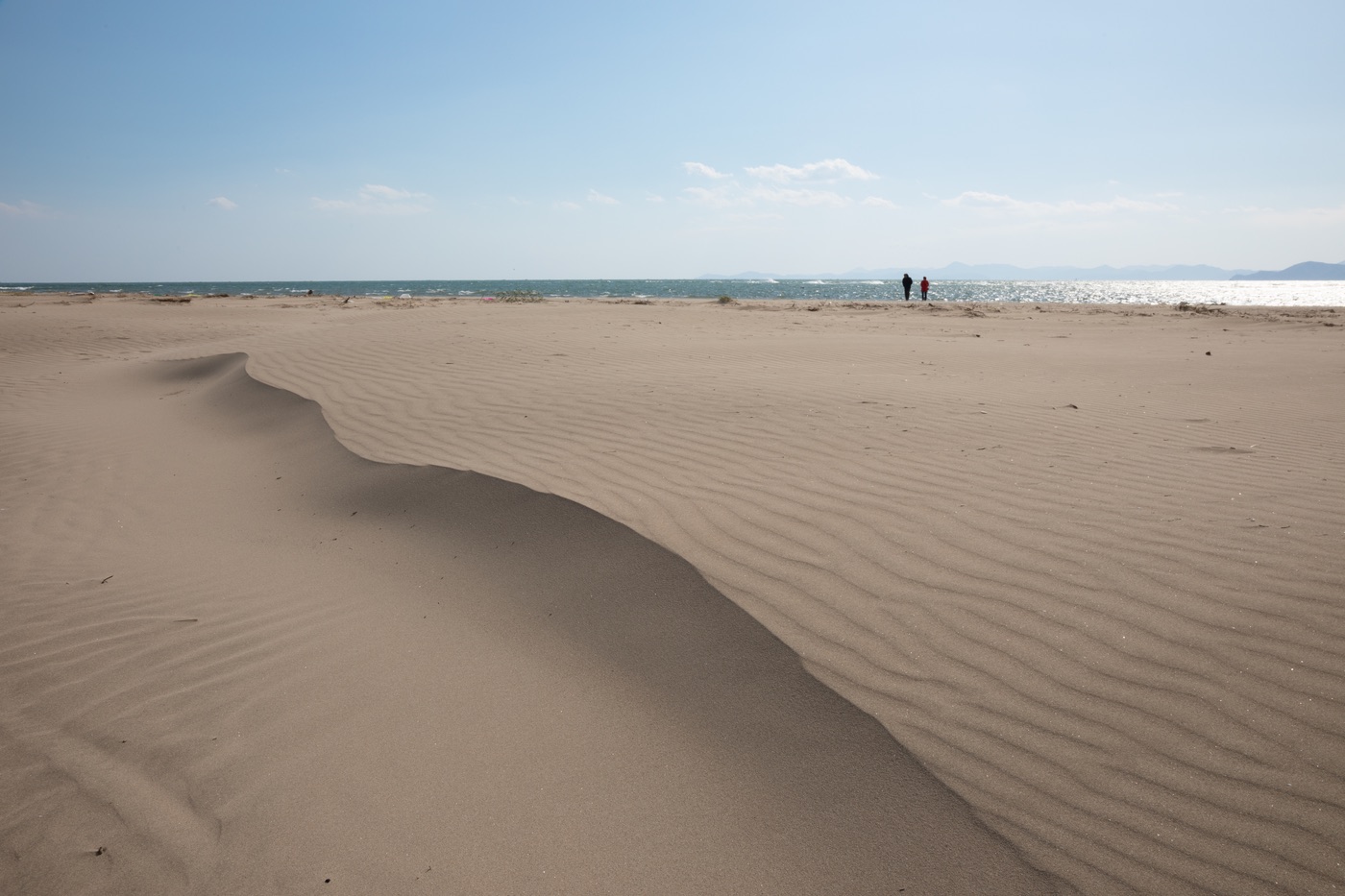
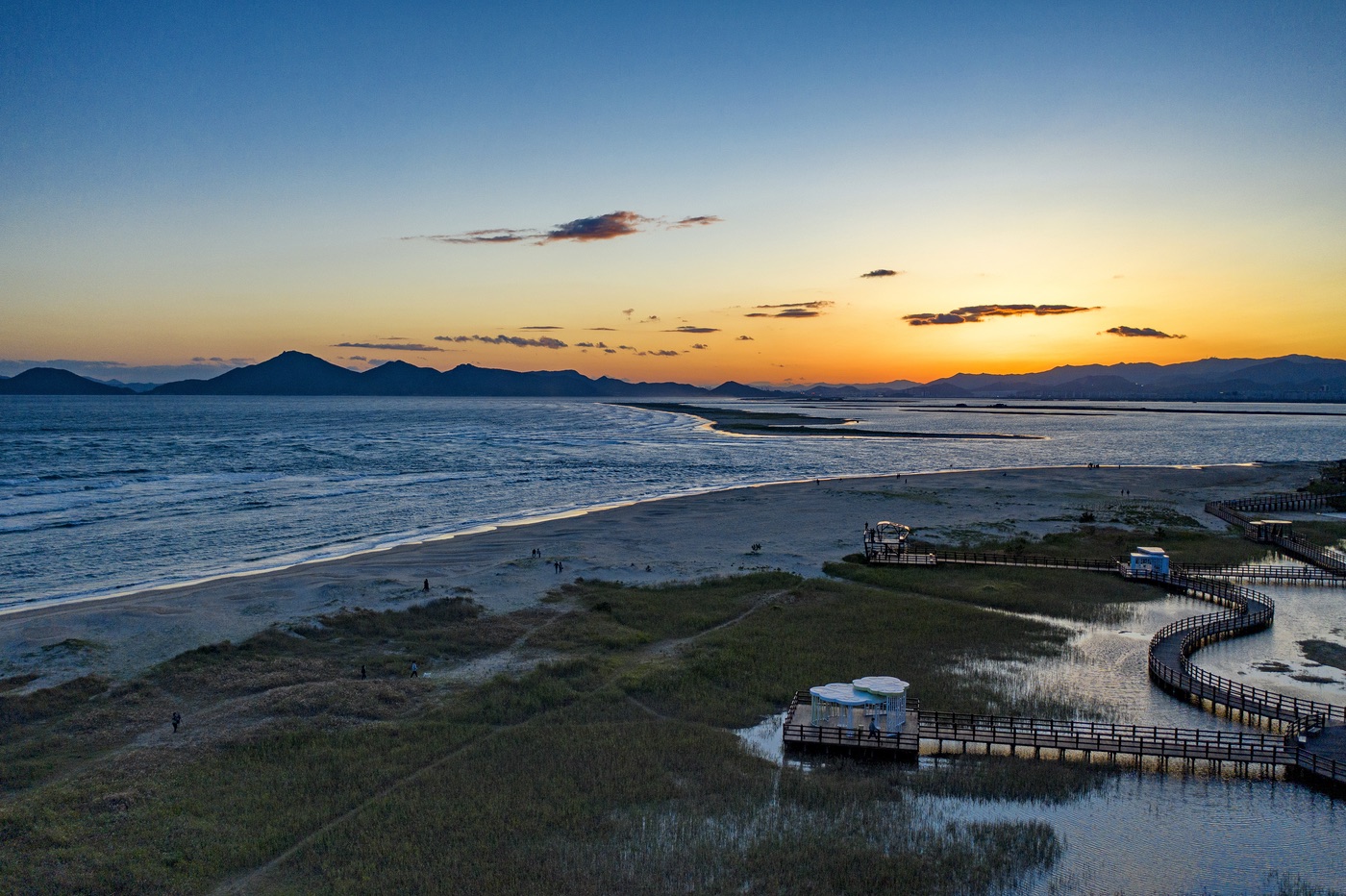
At Dadaepo in Busan’s Saha district, a broad sandy beach sits beside a boardwalk through reeds. The beach, built up by sediment from the Nakdong River, is flanked by a beach park created in 2015 and the Gouni Ecological Trail.
Dadaepo’s beach was formed by sediment carried down the Nakdong River. Its wide sand and gently sloping shoreline mark the meeting of river and sea.
The shore was also a workplace. Saha District describes Dadaepo Hurisori as songs sung by people hauling a large fishing net onto land together. No fishing scene or performance is staged on today’s beach.
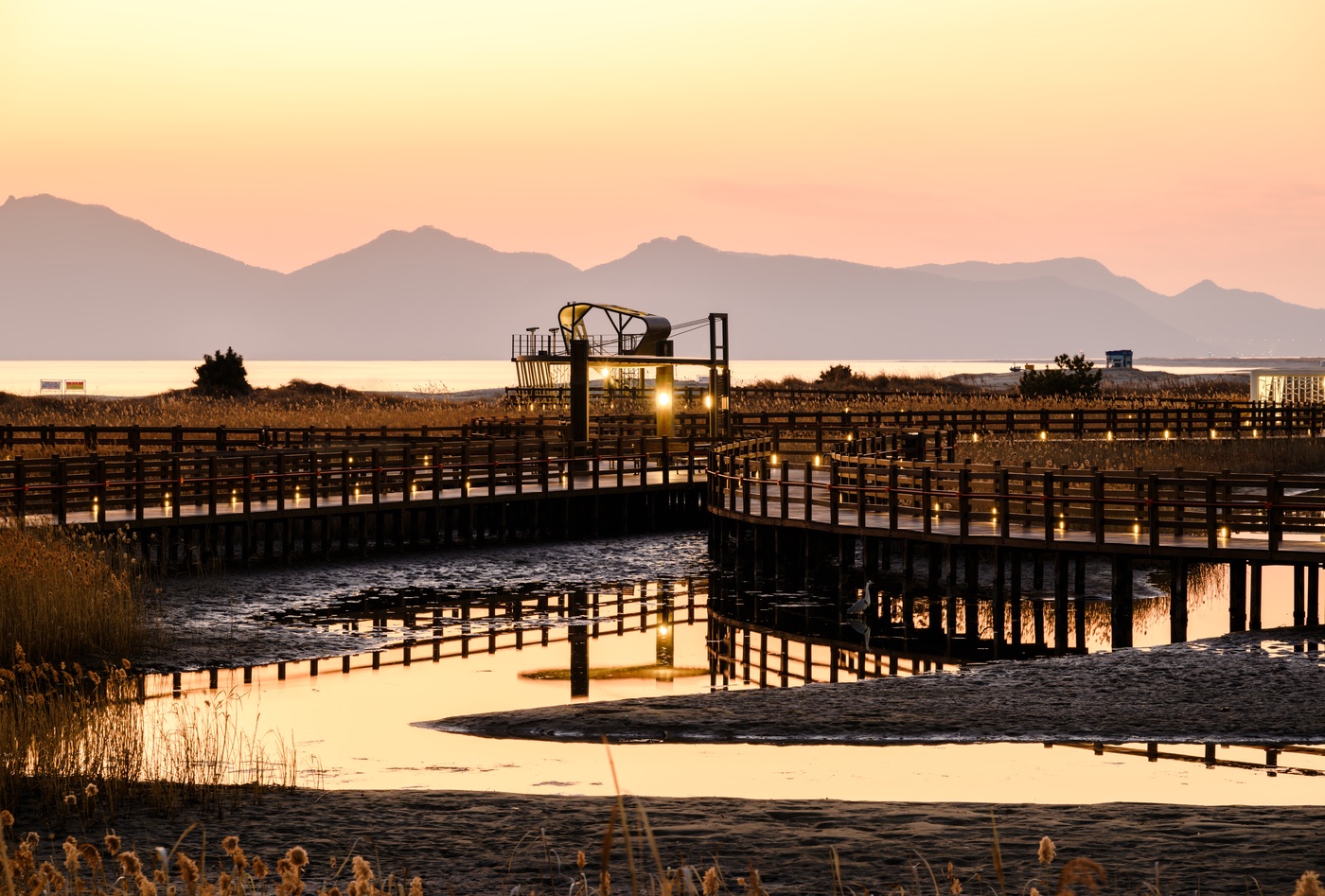
The beach park, created in 2015, has lawns, a seawater channel and ecological paths, giving walkers a break from the sand. Nearby, Gouni Ecological Trail follows a railed boardwalk through wetland and reeds.
Only Here
1. A beach shaped by a river: Dadaepo’s broad sand records the meeting of Nakdong sediment and the coast.
2. The memory of collective fishing: Dadaepo Hurisori preserves the rhythm of people hauling nets together.
3. Sand and wetland in one outing: Gouni Ecological Trail offers a view of the same coast from a raised deck.
Best Time
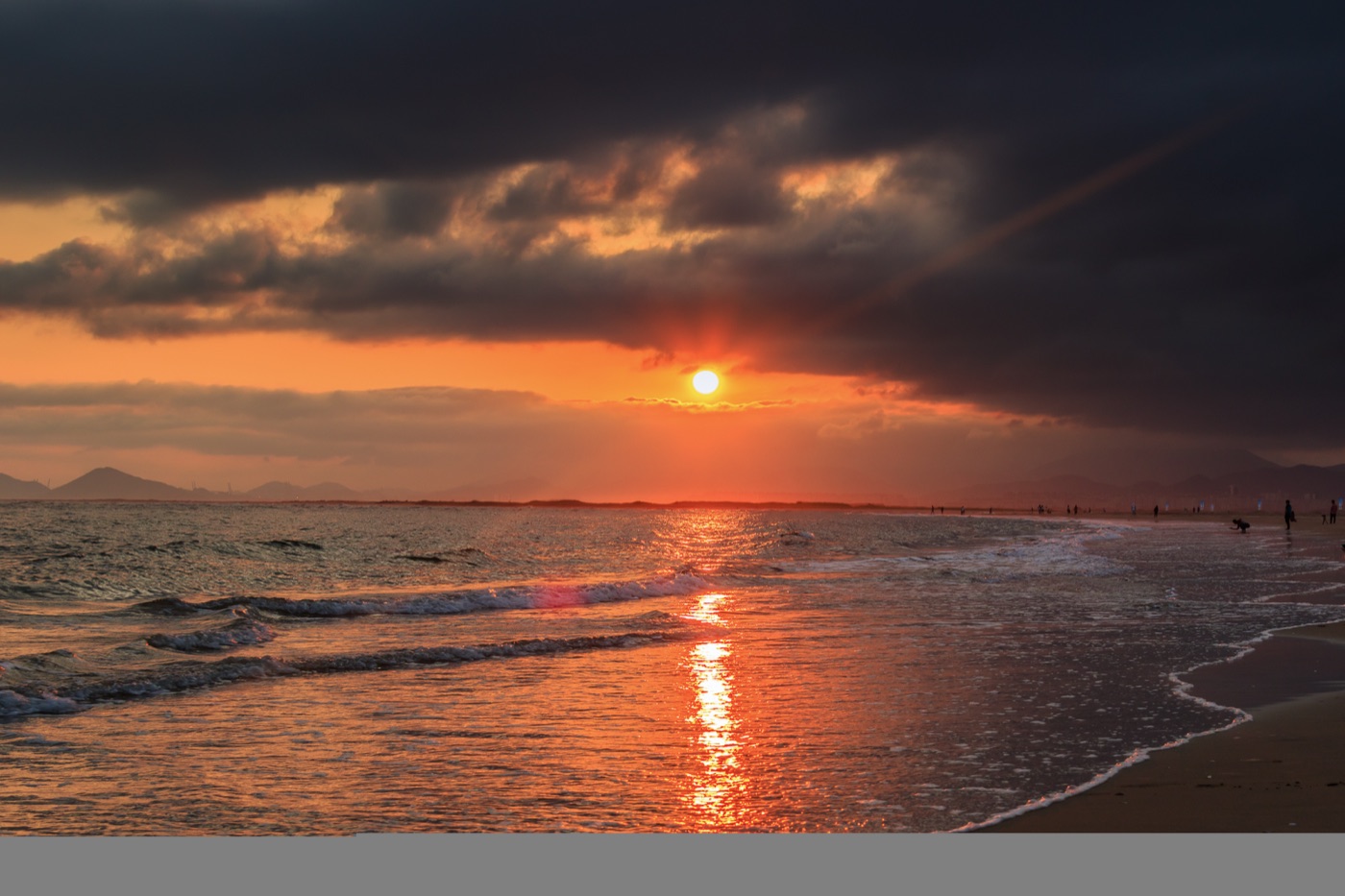
Late afternoon leaves daylight to find the route before sunset. Arriving 60–90 minutes before sundown is a suggestion, not a forecast of sunset time or a red sky. A daytime walk also works; shorten the outing in strong wind or rain.
How Long
The estimate is 45–60 minutes for the beach and park, plus 20–30 minutes for Gouni, or about 65–90 minutes in all. Walking speed on sand and rest stops will vary. Swimming and tidal-flat activities are not included.
Getting There
The destination is Dadaepo Beach, around 14 Morundae 1-gil, Saha-gu, Busan (부산광역시 사하구 몰운대1길 14). Take Busan Metro Line 1, the orange line, to Dadaepo Beach Station. Visit Busan puts the beach about 8 minutes on foot from Exit 2 and Gouni Ecological Trail about 5 minutes from the same exit.
Drivers can use paid lots, including Dadaepo Beach public parking; rates are posted on site.
Before You Go
Official tourism information lists the beach and Gouni as free and open year-round; parking is charged separately. Year-round access does not mean swimming is permitted or that every facility runs around the clock. Follow tide, wave and access notices, watch for slippery sand and decking, and stay on the designated wetland path.
Beach inquiries: +82-51-220-4912. Images are archive material released in 2017 or recorded in 2019, 2020 and 2025, and may not show current tides, reed color or lighting.
PLACE INFO
visitOfficial tourism information lists the beach and Gouni as free to visit year-round, with parking charged separately. General outdoor access does not imply permission to swim, round-the-clock operation of every facility or the absence of temporary closures. Follow local tide, wave and access notices. Wet sand and decking can be slippery; stay on the designated wetland path.
Beach enquiries: +82-51-220-4912. Images are archive material released in 2017 or recorded in 2019, 2020 and 2025. They do not show today’s tide, reed color or lighting operation.
LOCATION
Set your destination to Dadaepo Beach, around 14 Morundae 1-gil, Saha-gu, Busan (부산광역시 사하구 몰운대1길 14). Take Busan Metro Line 1, the orange line, to Dadaepo Beach Station. Visit Busan gives about 8 minutes on foot from Exit 2 to the beach, and about 5 minutes from the same exit to Gouni Ecological Trail. Paid parking is available at Dadaepo Beach public parking facilities; check the rate posted at the lot you use.
1Set your destination to Dadaepo Beach, around 14 Morundae 1-gil, Saha-gu, Busan (부산광역시 사하구 몰운대1길 14). Take Busan Metro Line 1, the orange line, to Dadaepo Beach Station. Visit Busan gives about 8 minutes on foot from Exit 2 to the beach, and about 5 minutes from the same exit to Gouni Ecological Trail. Paid parking is available at Dadaepo Beach public parking facilities; check the rate posted at the lot you use.Exit 2
A wide view of Dadaepo’s beach and wetland boardwalk. Archive production year 2020. Summertree / Busan Metropolitan City, Busan Tourism Organization, Busan Tourism Archive · KOGL Type 1.
Boardwalk and water channel at Gouni Ecological Trail. Archive production date 2025-02-11. Summertree, Im Seong-hwan / Busan Tourism Policy Division, Busan Tourism Archive · KOGL Type 1.
The second season of MBC’s “인생도 각본이 필요해,” hosted by Song Il-kook, opens with the 2007 drama White Tower. The first episode was scheduled for 8:10 a.m. KST on October 10, 2026.
About the show
The program revisits performances, memorable scenes and production stories from MBC dramas and links the characters’ lives to discussions of health. It first aired through MBC’s Docuprime in June and now returns for a second season.
Opening with White Tower
The 20-episode drama follows surgeon Jang Jun-hyeok, played by Kim Myung-min, whose ambition draws him into a hospital power struggle. Song, who starred in Jumong, hosts and introduces past MBC works. Program and episode information is on MBC’s official page.
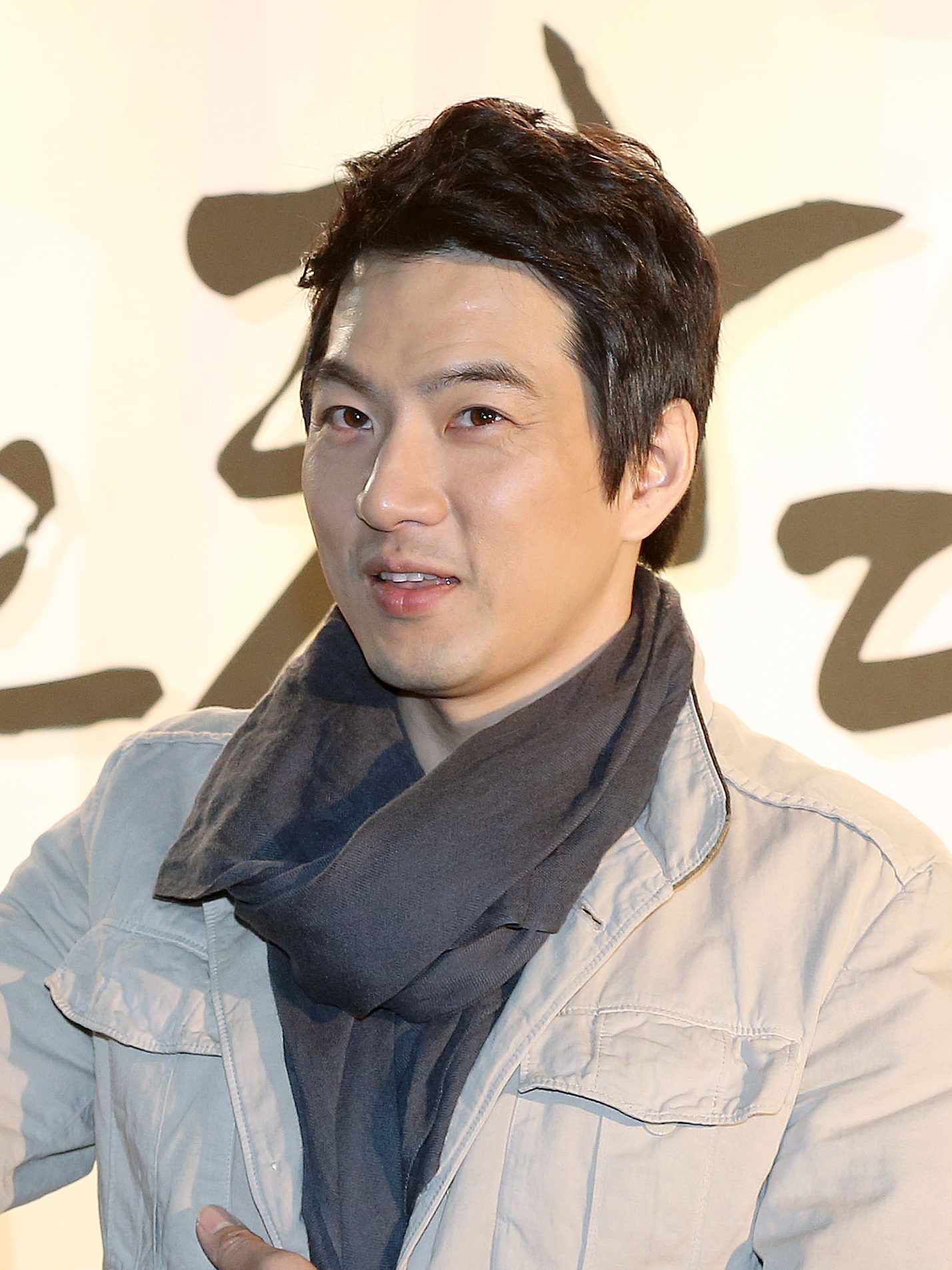
Archival portrait of Song Il-kook, photographed April 10, 2014. Jeon Han / Korea.net / Korean Culture and Information Service, via Wikimedia Commons, CC BY-SA 2.0. The Commons portrait crop is used without further edits.
Running Needs Nothing: Seoul, an Adidas advertisement, packs a night run through Seoul and friends laughing over snacks into 15 seconds.
01
The film cuts from runners seen from above to close-up faces. Road markings, red shoes and blue-green light give the short sequence its pace and color. The people, not the cityscape, stay at the center.
Credits
The source credits director Joanna Nordahl, production company Anorak Film and agency TBWA Amsterdam. The Vimeo original is linked from editor Joey Henshaw’s portfolio.
Archive Note
Uploaded in July 2023, this is an archival Adidas advertisement in its original horizontal 16:9 frame. It is not a current campaign or club sign-up, and the locations shown are not verified running routes.
Adidas, Running Needs Nothing: Seoul. Approximately 15-second advertisement uploaded July 2023. Director Joanna Nordahl; production Anorak Film; agency TBWA Amsterdam. Source: Joey Henshaw / Vimeo.
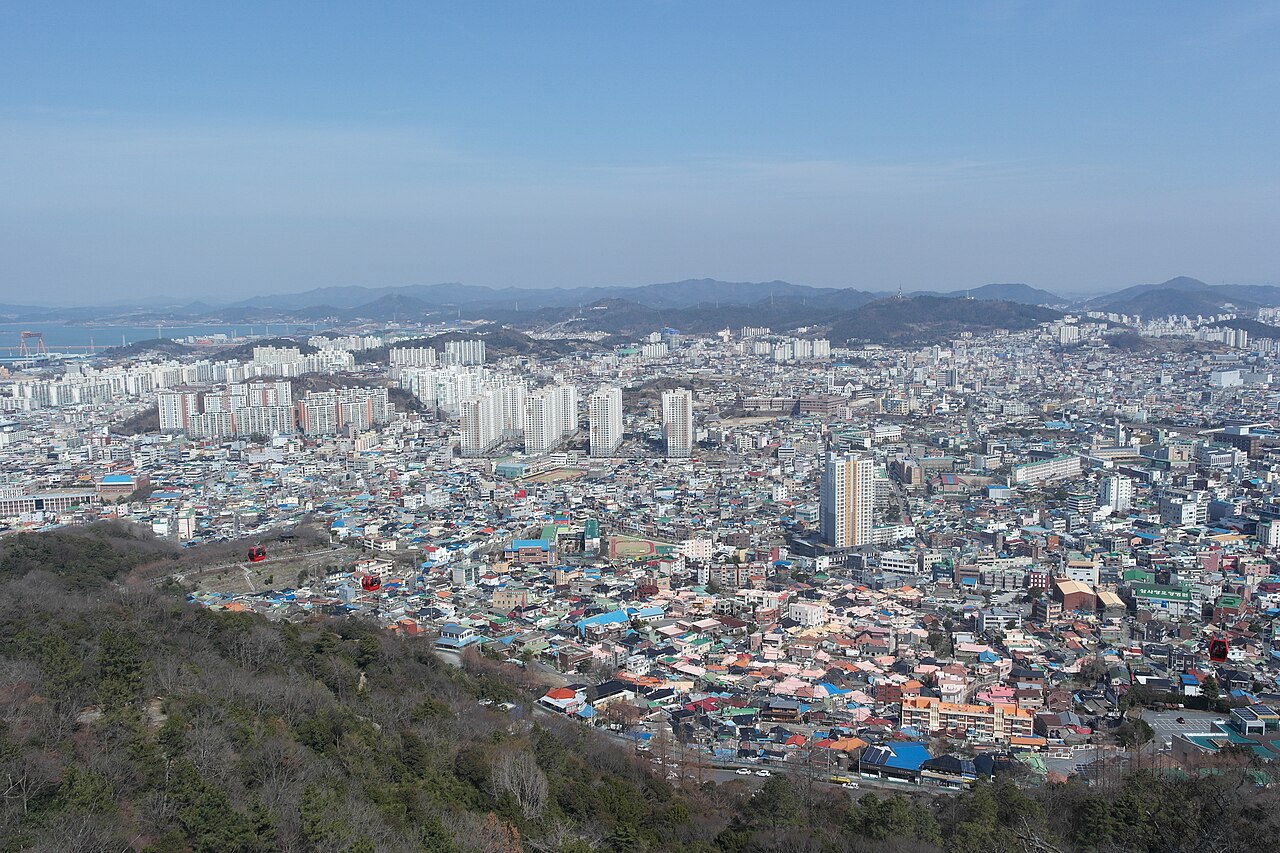
Yudalsan, a 228.3-metre peak on the edge of Mokpo’s old town, offers a walk from Nojeokbong up past pavilions to a rocky ridge, with the city’s rooftops in view the whole way.
Photographs of Yudalsan show more than the peak: closely packed roofs, streets and layers of buildings fill the ground below. The mountain and the city share one view. At street level the walk passes homes and workplaces; from above, they form the shape of Mokpo.
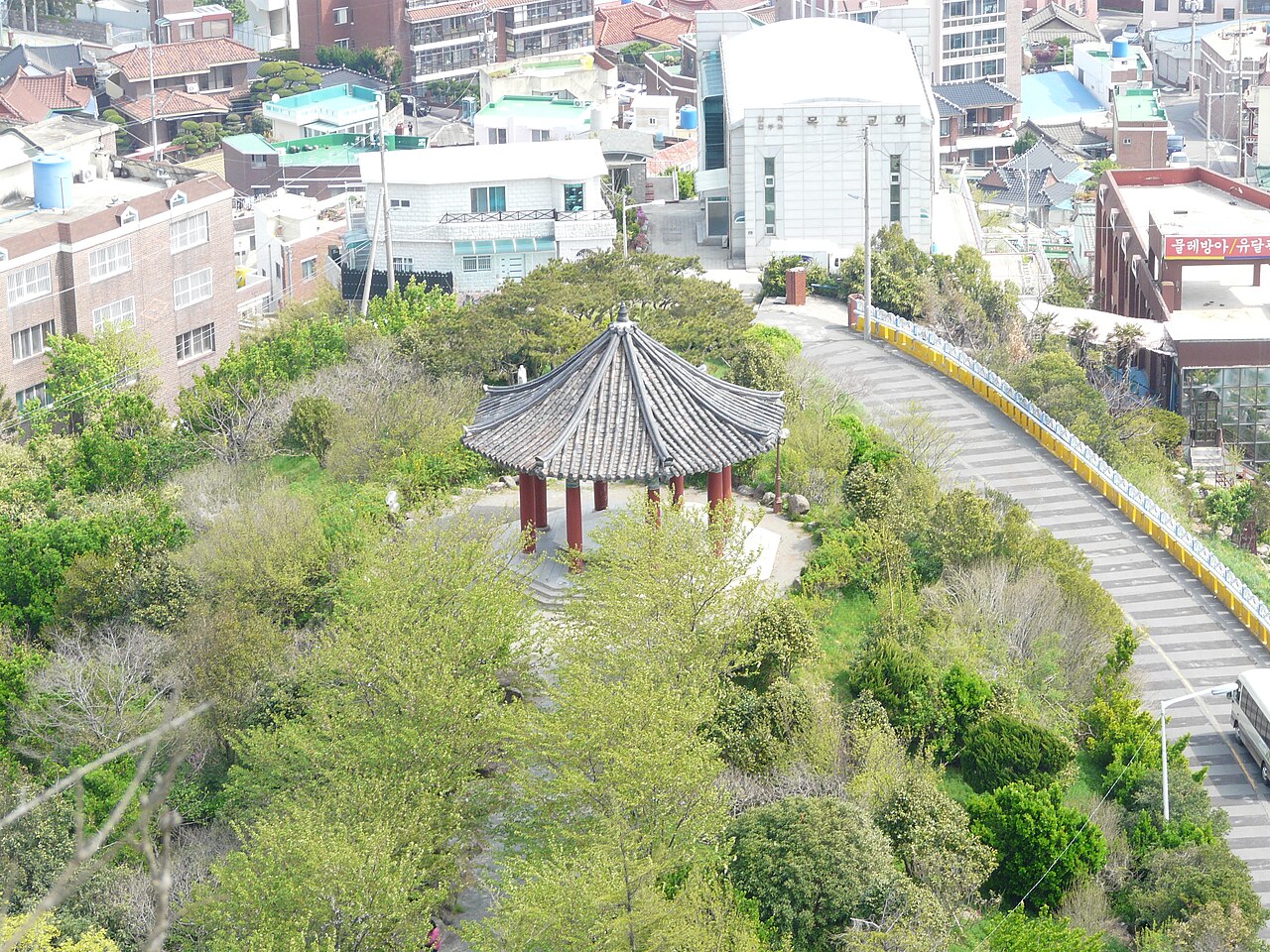
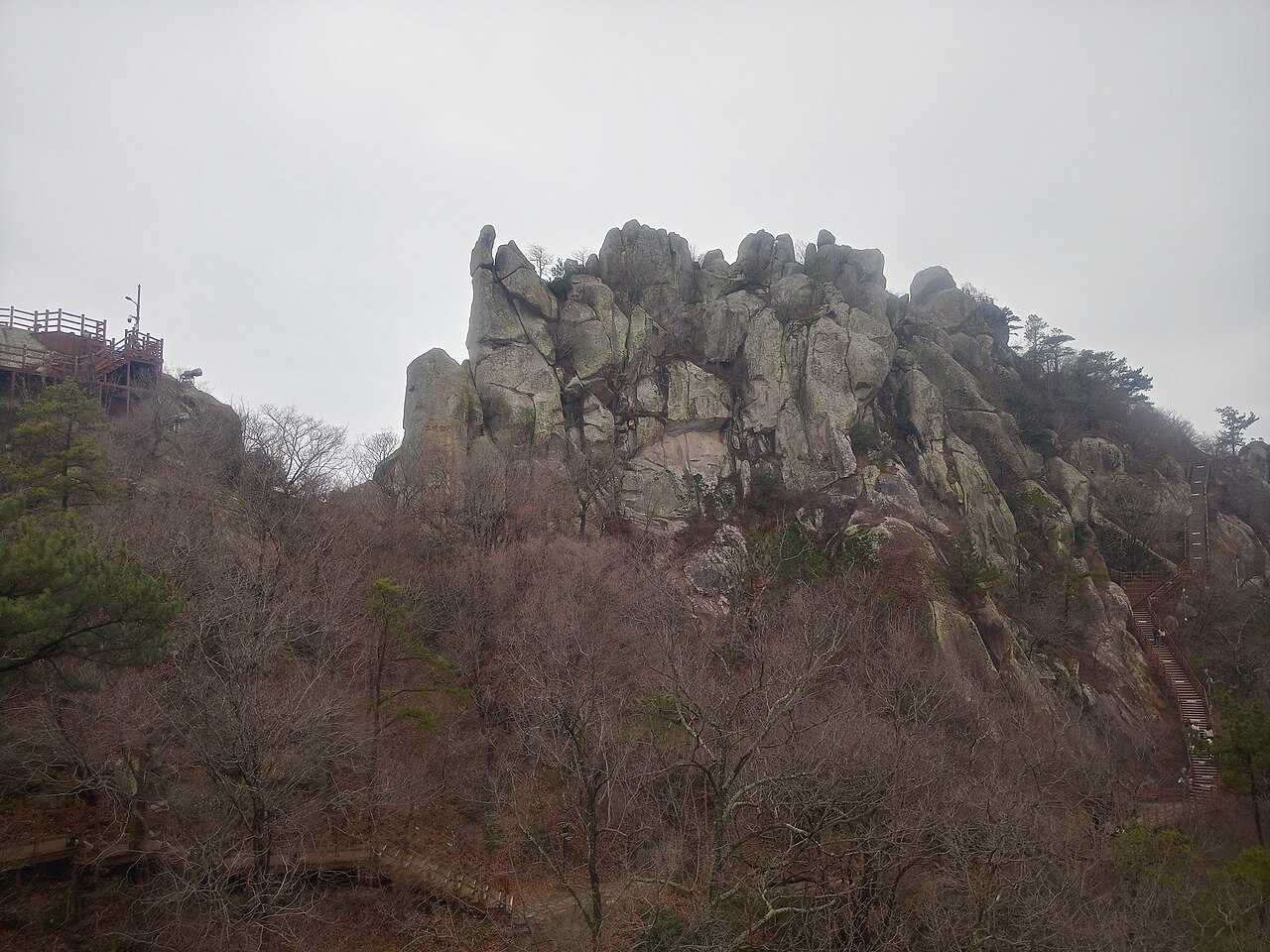
At 228.3 metres the mountain is not high, but this is not a flat park stroll. Exposed rock, uphill paths and pavilions set the pace. Mokpo’s first listed hiking course runs from the entrance past Dalseongak and Yuseongak to Madangbawi and Ildeungbawi.
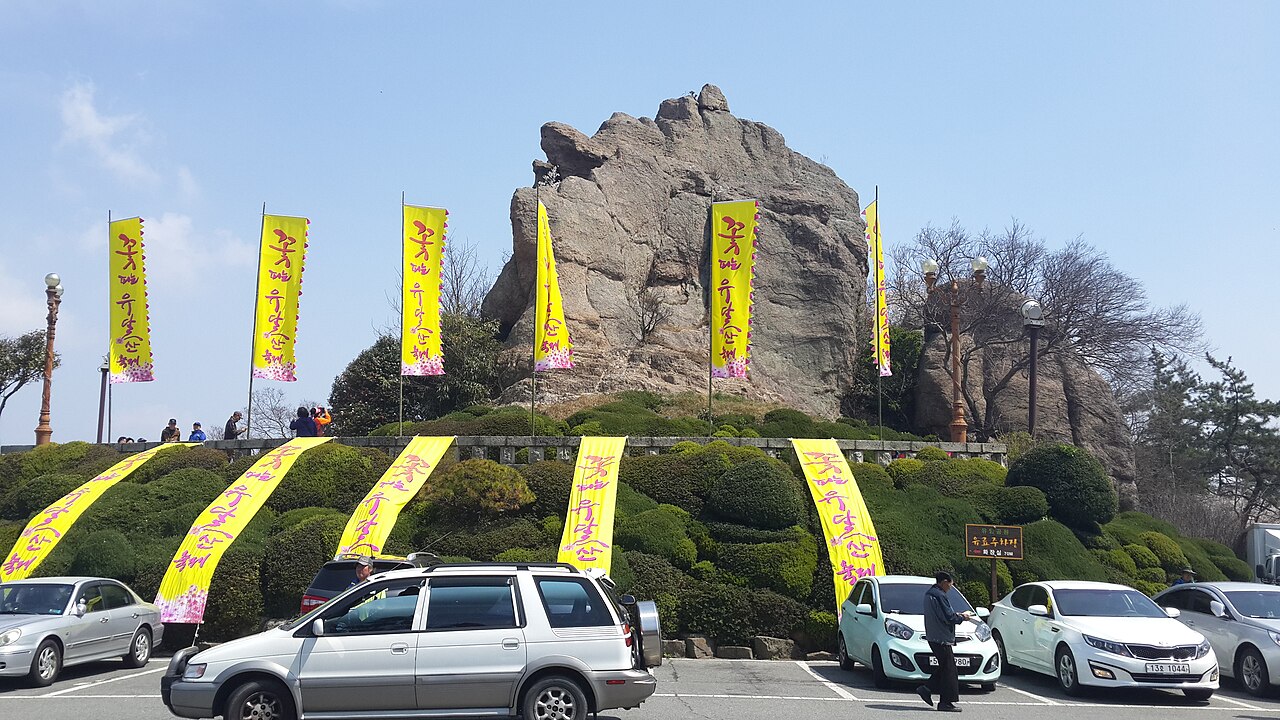
Near the entrance, Nojeokbong carries a legend. The Mokpo Cultural Center recounts that Admiral Yi Sun-sin covered the rock with thatch to make it look like a great store of military grain. It is a local story attached to a landmark, not a verified battle record.
Nojeokbong with spring-festival decorations on 8 April 2015. An archival photograph, not a current event notice. Reduced-size web rendition. Mar del Este / Wikimedia Commons · CC BY-SA 4.0
Walkers can turn back at a pavilion depending on energy and daylight. The photographs were taken in different years and seasons; their foliage and festival decorations do not reflect current conditions.
Only Here
1. Roofscape beside a ridge. The city and its rocky mountain share one view, and the city looks different at each height.
2. A landmark with a local legend. Nojeokbong’s grain-store story attaches local memory to the rock.
3. Pauses built into the ascent. The route through Dalseongak and Yuseongak alternates rock viewpoints with pavilion rest stops.
A clear morning or early afternoon is best. The Korea Tourism Organization lists year-round, 24-hour access, but the route’s rock and steps make it a daytime walk, with enough light left for the descent. On wet surfaces, follow any on-site restrictions.
How Long
Mokpo lists the entrance→Dalseongak→Yuseongak→Madangbawi→Ildeungbawi course as 2 km and about 40 minutes. That figure excludes the return and rest stops. Allow 90–120 minutes including the walk back and pauses at viewpoints; some walkers will need longer. The approach from Mokpo Station is extra.
The Yudalsan entrance is within walking distance of Mokpo Station, about 20 minutes according to the city’s visitor guide. Nojeokbong is a convenient starting landmark. Visit Mokpo lists the hiking address as 45 Nojeokbong-gil, Mokpo-si (Cheukhudong). The two map links mark the mountain and Nojeokbong. The summit’s cadastral address is not a trail entrance.
Visit information
Yudalsan admission is free. Inquiries: +82-61-270-8359. Parking charges vary by lot and are posted on site. The route includes steps and rocky sections and is not step-free. Bring water and shoes with a secure grip.
PLACE INFO
AdmissionFree
HoursKTO: year-round, 24 hours; daytime recommended for this route.