
What did Koreans keep in a bandaji?
The bandaji, a front-opening wooden chest of the Joseon period, held folded clothes and important documents, with bedding stacked on top. Its role depended on the household, and its form varied by region.
What it held
Bandaji held clothing, books and rolled documents, as well as vessels for ancestral rites. Not every chest held all of these; its role depended on who used it and in which room.
Households that could not afford larger storage furniture used a bandaji instead, and it was an important part of a bride’s furnishings. Bedding placed on top made use of the space above the chest as well.
Regional styles
Wood, metal fittings, proportions and construction varied by region. Ganghwa, Pyongyang, Pakchon, Miryang and Jeju name regional traditions, while “sungsungi” refers to pierced metal ornament. The names overlap and do not form a list of separate types.
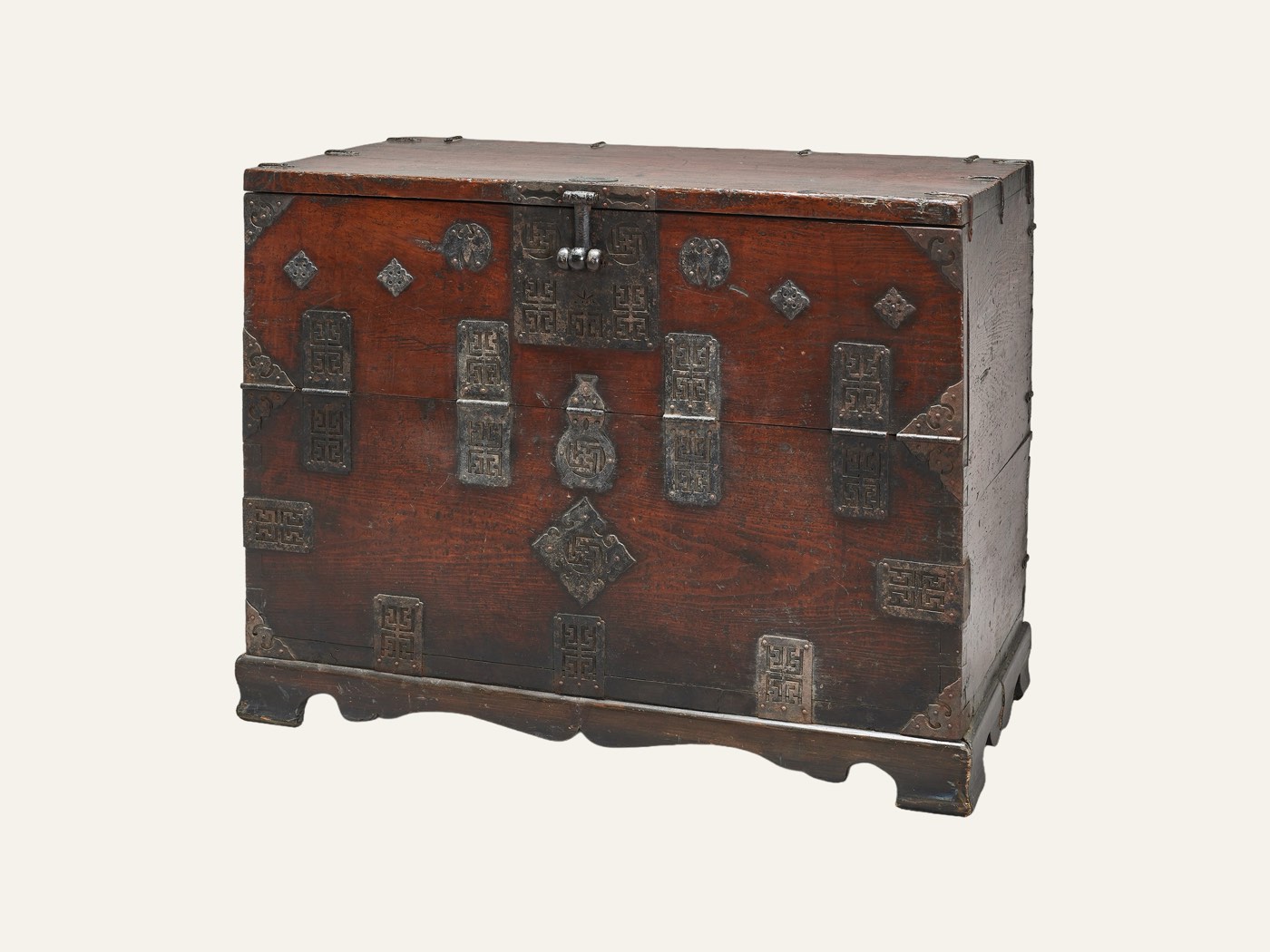
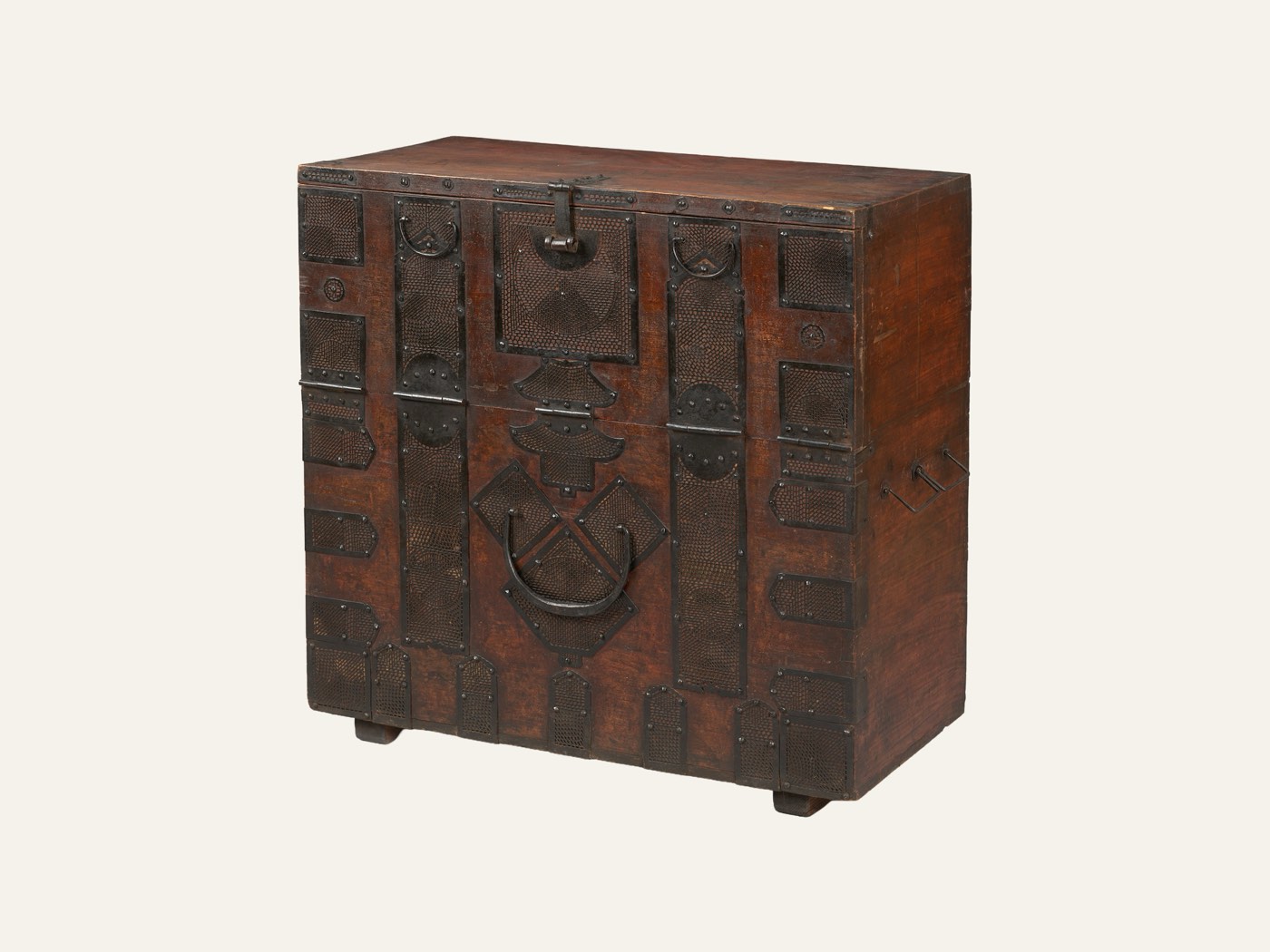
Ganghwa chests stored clothing, textiles and ritual vessels; some had shelves or small drawers, and their fittings include gourd, bat and taeguk shapes. Pyongyang chests are described as large and tall with abundant metal fittings, used for clothes with thick bedding on top; some have three small drawers inside the upper part. Pakchon chests are known for elaborately pierced ironwork, so even these two northern traditions differ.
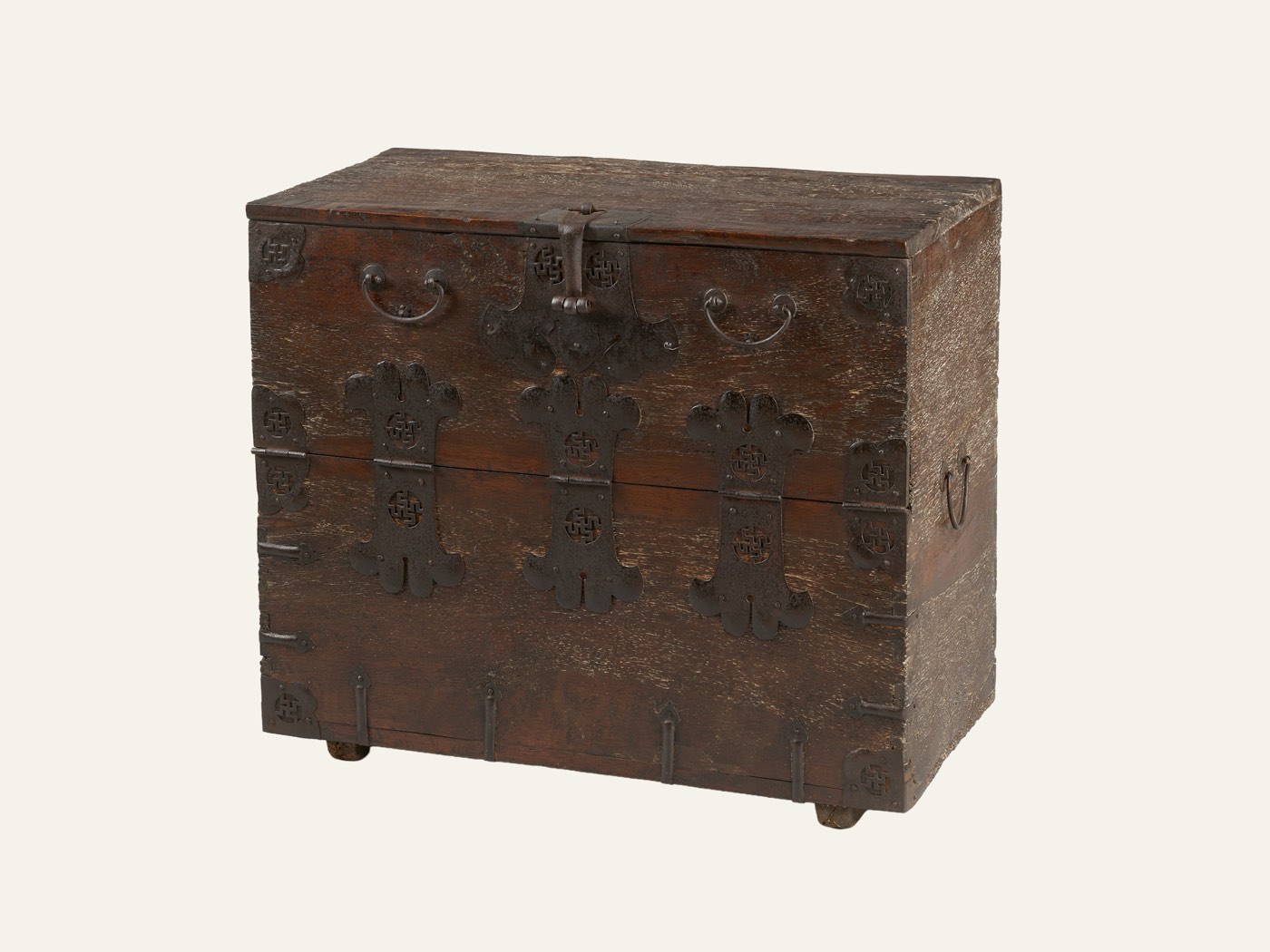
Miryang chests are relatively low and wide. Gyeongsang-region furniture often shows more wood grain, but Miryang examples can carry comparatively plentiful iron fittings, including chrysanthemum-shaped nailheads and crescent-shaped handles, and records describe them holding clothes in the main room with bedding on top. Jeju chests stored books, writing materials and brass or ritual vessels. Researchers note similarities between some Jeju fittings and those of Jangheung and Haenam on the southwestern mainland.
Working metalwork
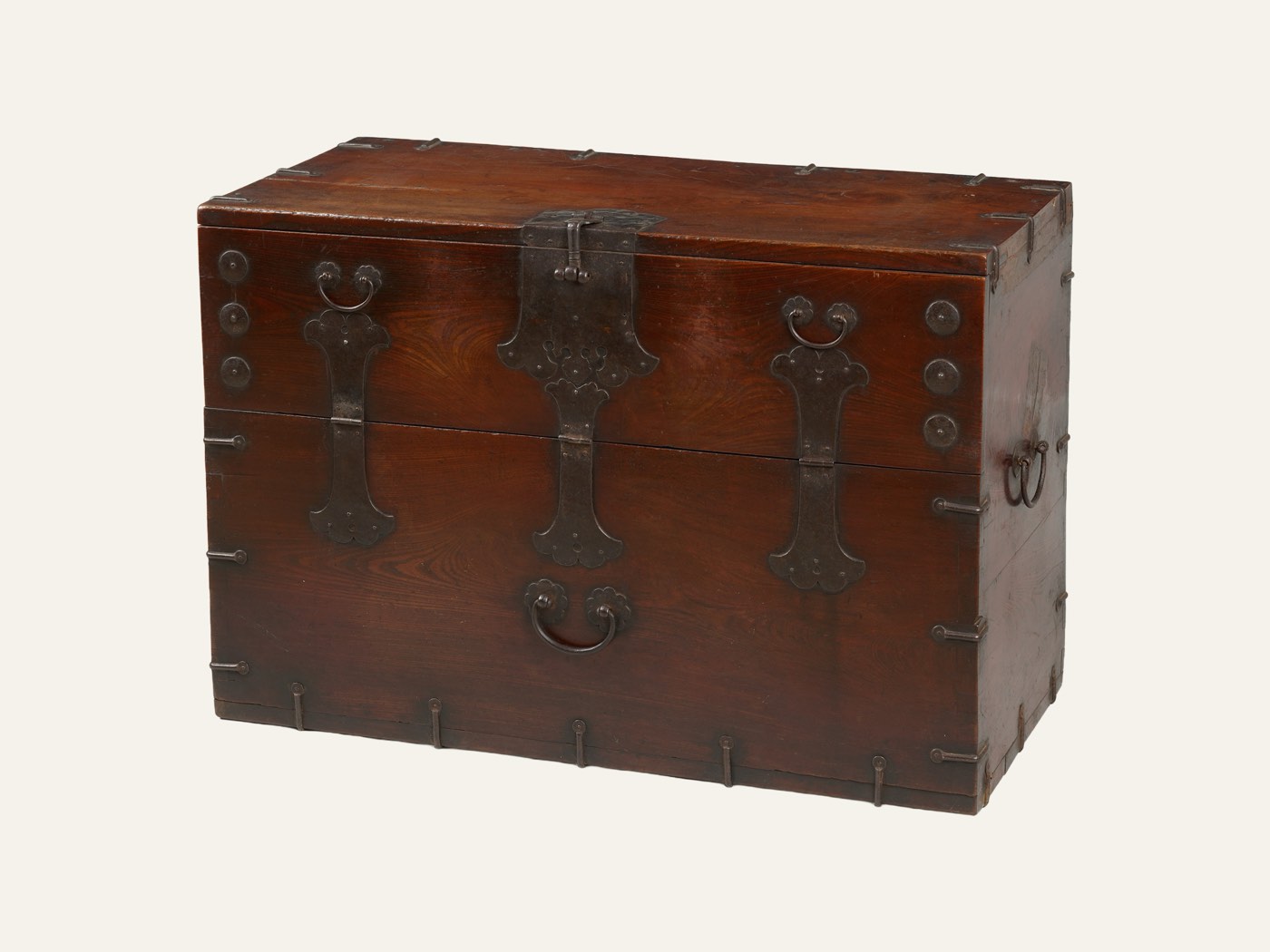
The metal fittings were functional as well as decorative. Hinges let the upper panel open, corner pieces reinforced joints and plates around the lock protected the wood from wear. Floral and geometric shapes gave each chest its own look.
The photos show four different museum objects: a Ganghwa bandaji (Seoul Museum of History, Seoul History 021990), a Jeju-gwe chest (National Museum of Korea, Geonhui 4556), a Jeolla bandaji (Geonhui 4539) and a Pyeongan-do sungsungi bandaji (Geonhui 4630). The name Jeju-gwe follows the museum catalog.
The furniture, fittings and patterns are unaltered; only the photo backgrounds have been standardized to light ivory. Individual examples should not be taken as representative of whole regional traditions.
Sources & context
2026-10-09T22:20:00+09:00
National Museum of Korea ↗KOGL ↗National Museum of Korea ↗Encyclopedia of Korean Culture ↗Seoul Museum of History ↗Seoul Museum of History ↗National Museum of Korea ↗National Museum of Korea ↗National Museum of Korea ↗Ganghwa bandaji (Seoul History 021990). Original museum object; photograph background standardized to ivory. Source: 서울역사박물관.
Photo credit
국립중앙박물관 · 제주궤(건희4556) · 공공누리 제1유형 · KOGL Type 1Jeju-gwe chest (Geonhui 4556). Original museum object; photograph background standardized to ivory. Source: 국립중앙박물관.
Jeolla bandaji (Geonhui 4539). Original museum object; photograph background standardized to ivory. Source: 국립중앙박물관.
Pyeongan-do sungsungi bandaji (Geonhui 4630). Original museum object; photograph background standardized to ivory. Source: 국립중앙박물관.