
A pollack by the door, a wish for a peaceful home
Dried pollack, a staple food in Korea, was also used in house-building rituals. Today, fish-shaped ornaments carry the same wish for a peaceful home.
Pollack at the ridge-beam ceremony
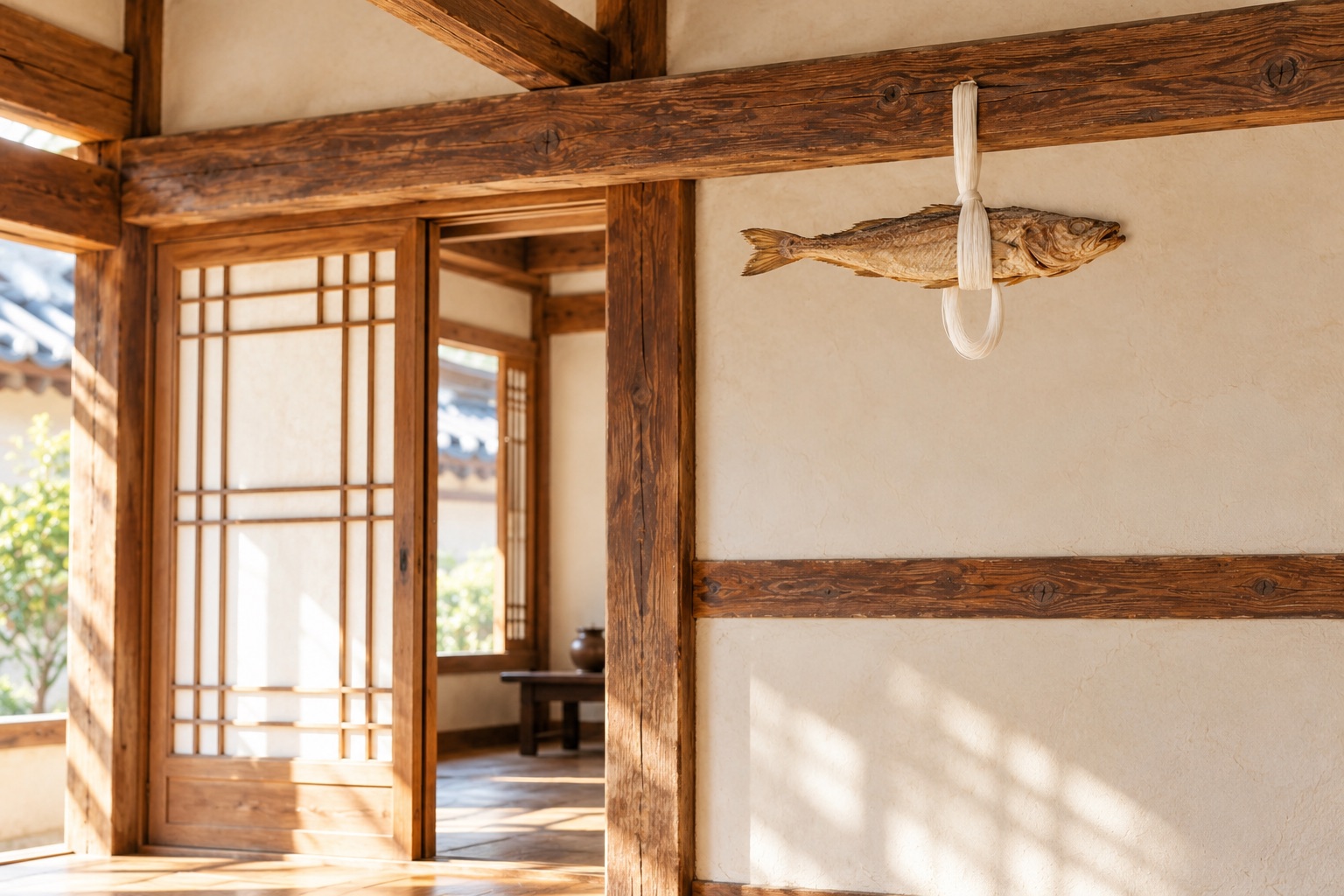
Bugeo is dried pollack. Accounts of sangnyang-gosa, a ceremony held when a house’s ridge beam was raised, describe hanging bugeo along with thread and money. The ceremony marked a major stage of construction and asked for good fortune.
A modern craft
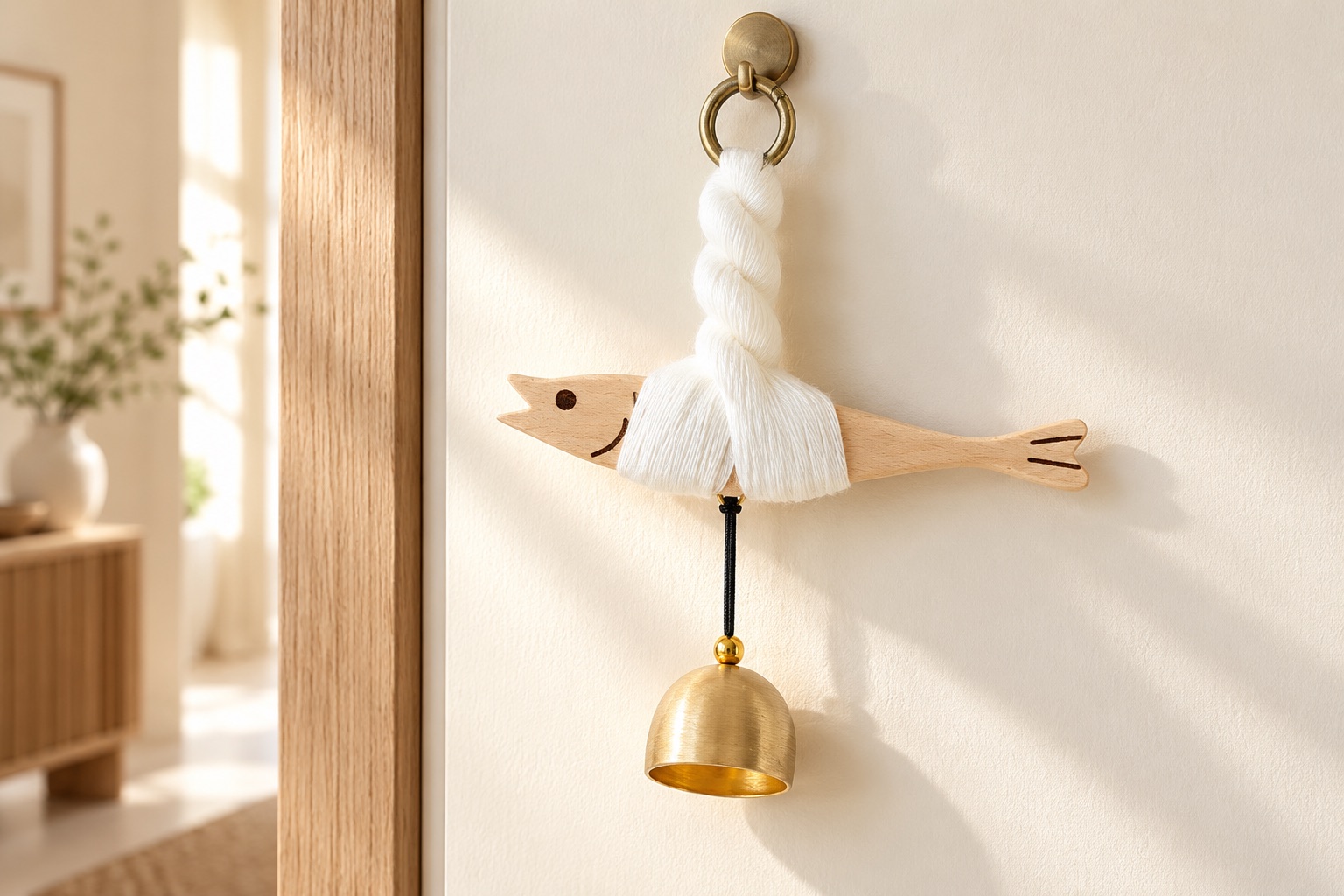
Aekmagi means warding off misfortune. In a 2025 craft class, the Gumi Public Health Center had participants make a door ornament from a fabric fish, cord and a bell.
The images here are not photos from that class. They are AI-generated reconstructions of a dried pollack tied with thread and of a wooden fish ornament.
Ritual and ornament
The old ritual and the modern doorbell are different uses of the same motif. Both show how an everyday food found a place in expressions of care for a home. The ornament expresses a wish for well-being, not a promise of protection.
AI recreation of a dried pollack tied with silk thread above a hanok doorway, not a documentary photograph.
AI-styled concept of a wooden fish with silk thread and a bell, not an actual product photograph.
AI-created concept images, not actual ritual or product photographs.