
Everyday life on Korea’s 1990s PC networks, down the phone line
Users of Korea’s 1990s PC networks dialled an access number, greeted familiar usernames and waited for the next instalment of novels posted on message boards. Services such as HiTEL, Chollian, Nownuri and UniTEL became part of daily life through their login routines, phone bills, interest clubs and serialised fiction.
Getting connected
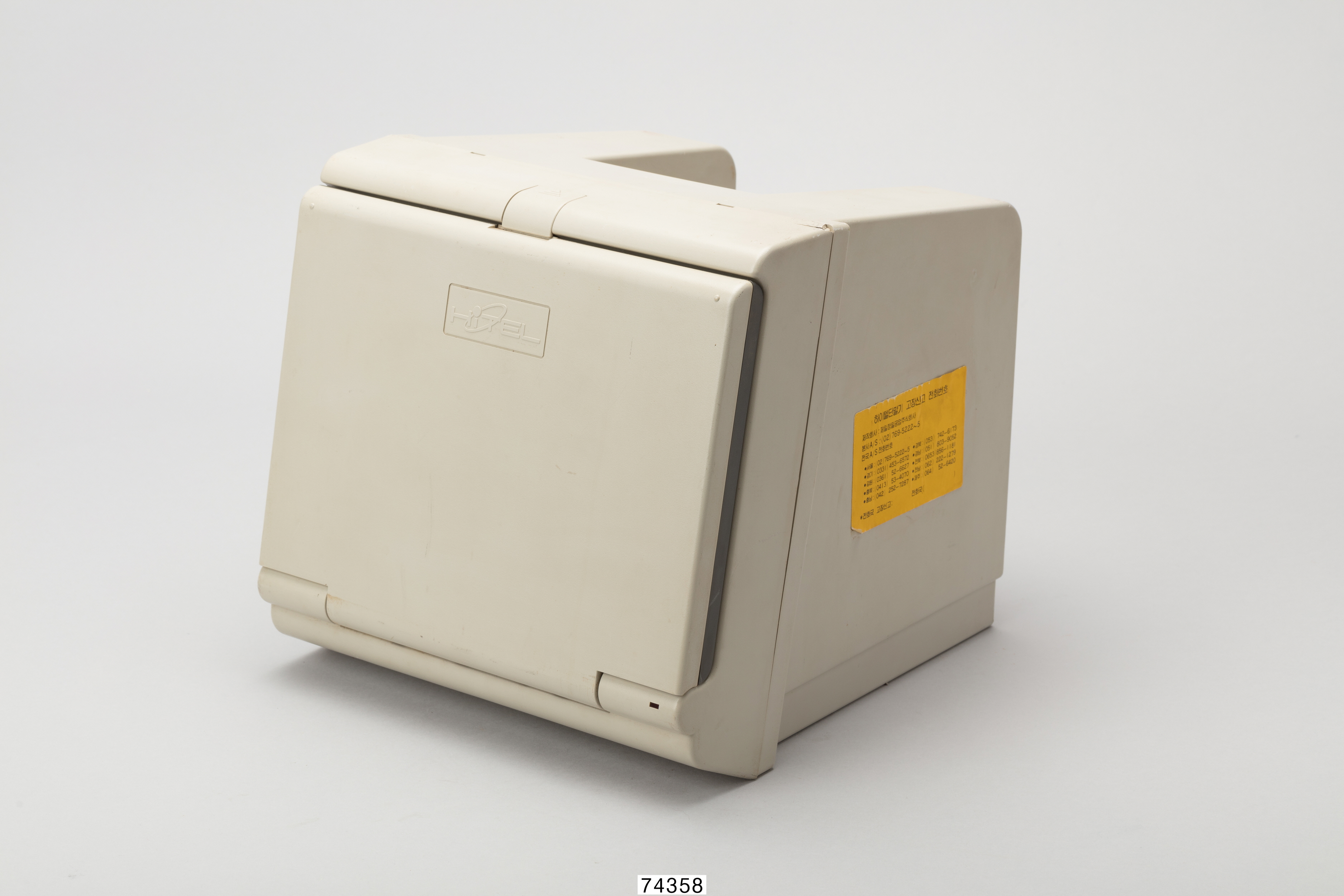
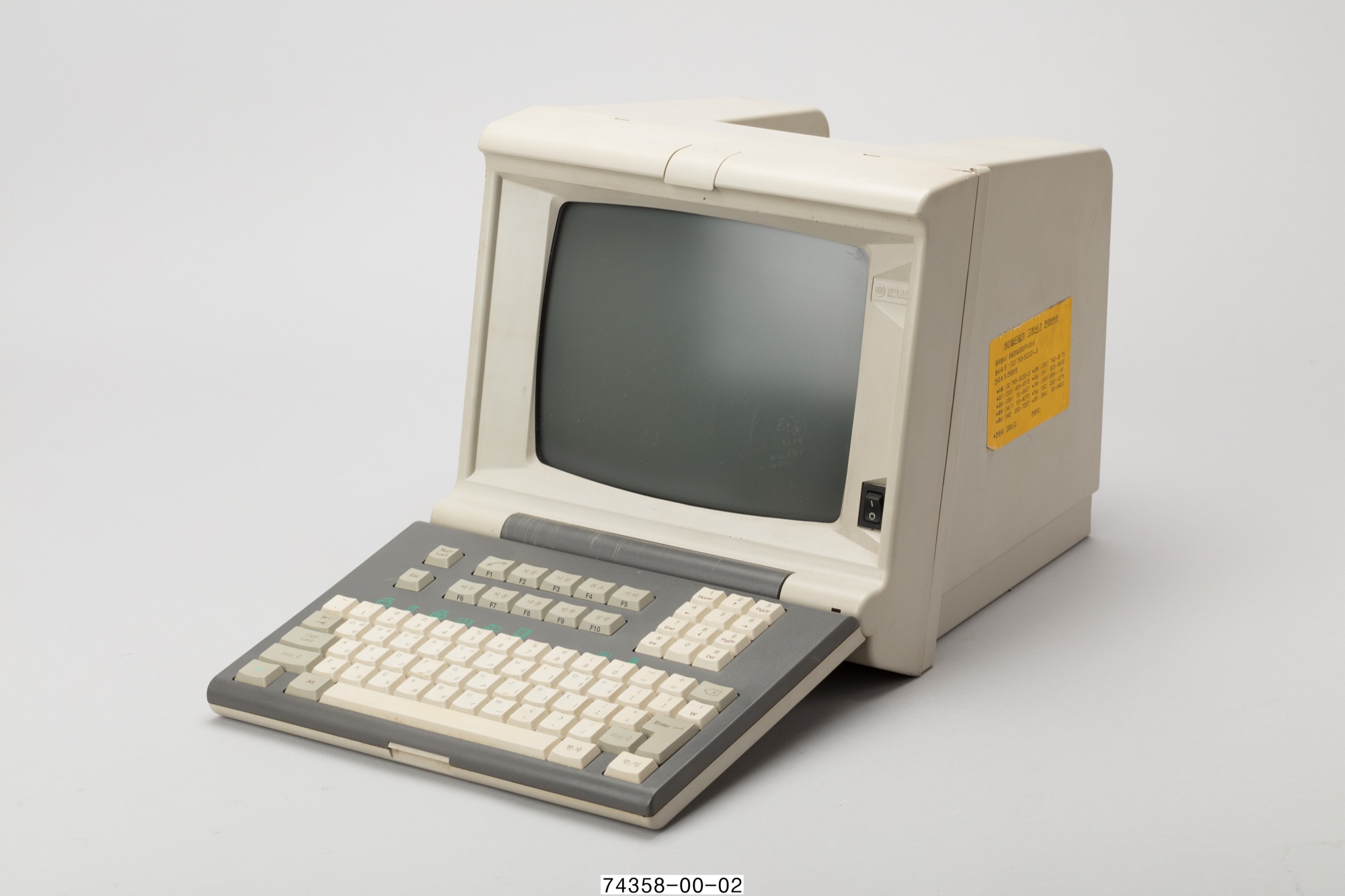
A typical 1990s dial-up session began by opening communications software on a PC and using a modem to call an access number. Once the link connected, users entered their service ID and password before reaching boards and chat rooms. Dedicated terminals offered another route, so not every user owned a PC or a separate modem.
KETEL, HiTEL’s predecessor, began at the Korea Economic Daily in September 1988. KT alpha’s corporate history dates the start of the HiTEL service to July 1992. Chollian, Nownuri and UniTEL were other leading services, each with its own menus and member spaces.
The modem’s noise
A modem converted digital computer data into signals that could travel over a voice telephone line and turned incoming signals back into data. The tones heard while connecting came from the “handshake,” in which the two ends agreed on a compatible method and speed.
ATDT, a command seen in communications software, told a modem to tone-dial a number. Software often issued it automatically. The modem, line, program and service account each did a different job.
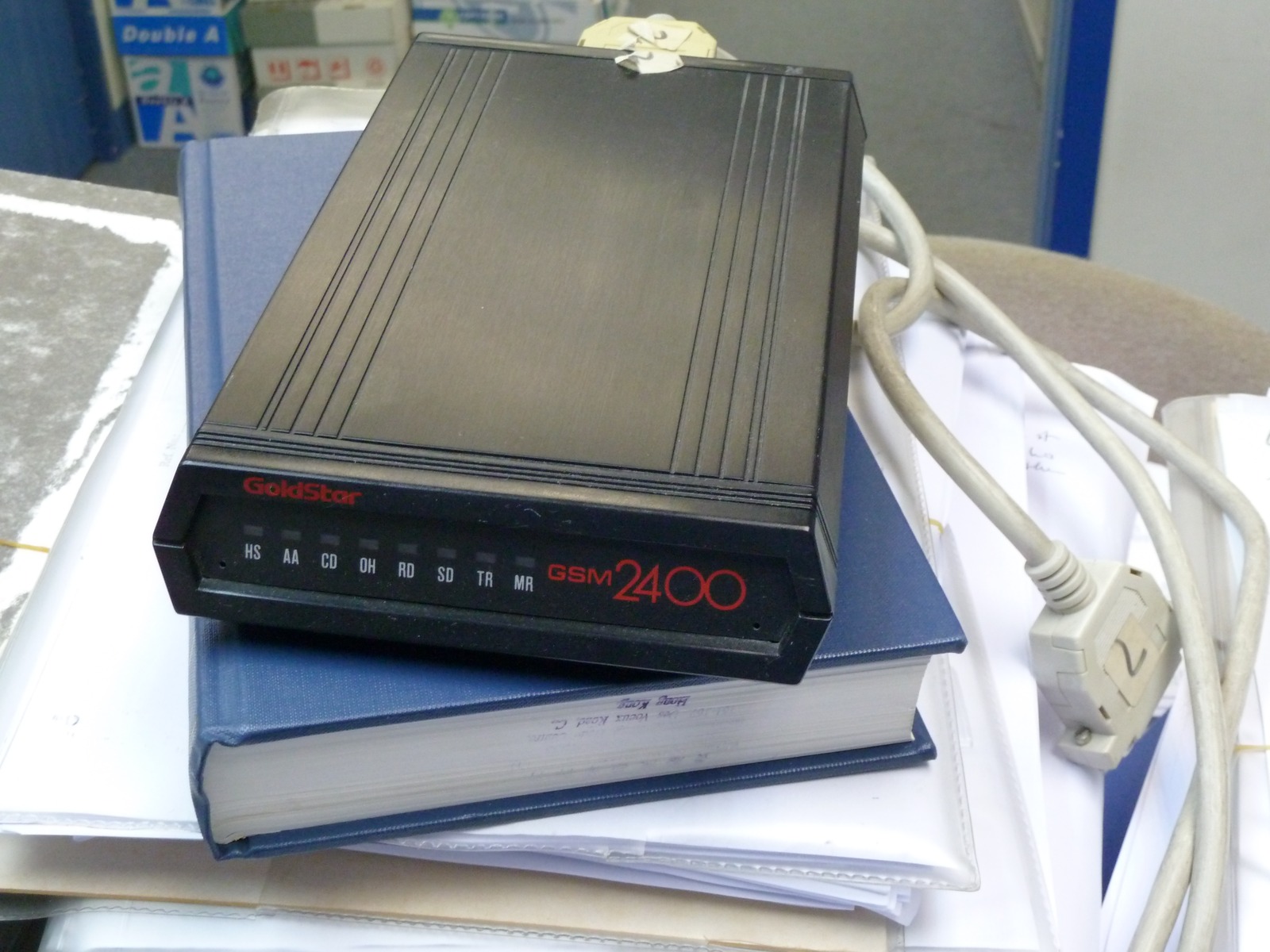
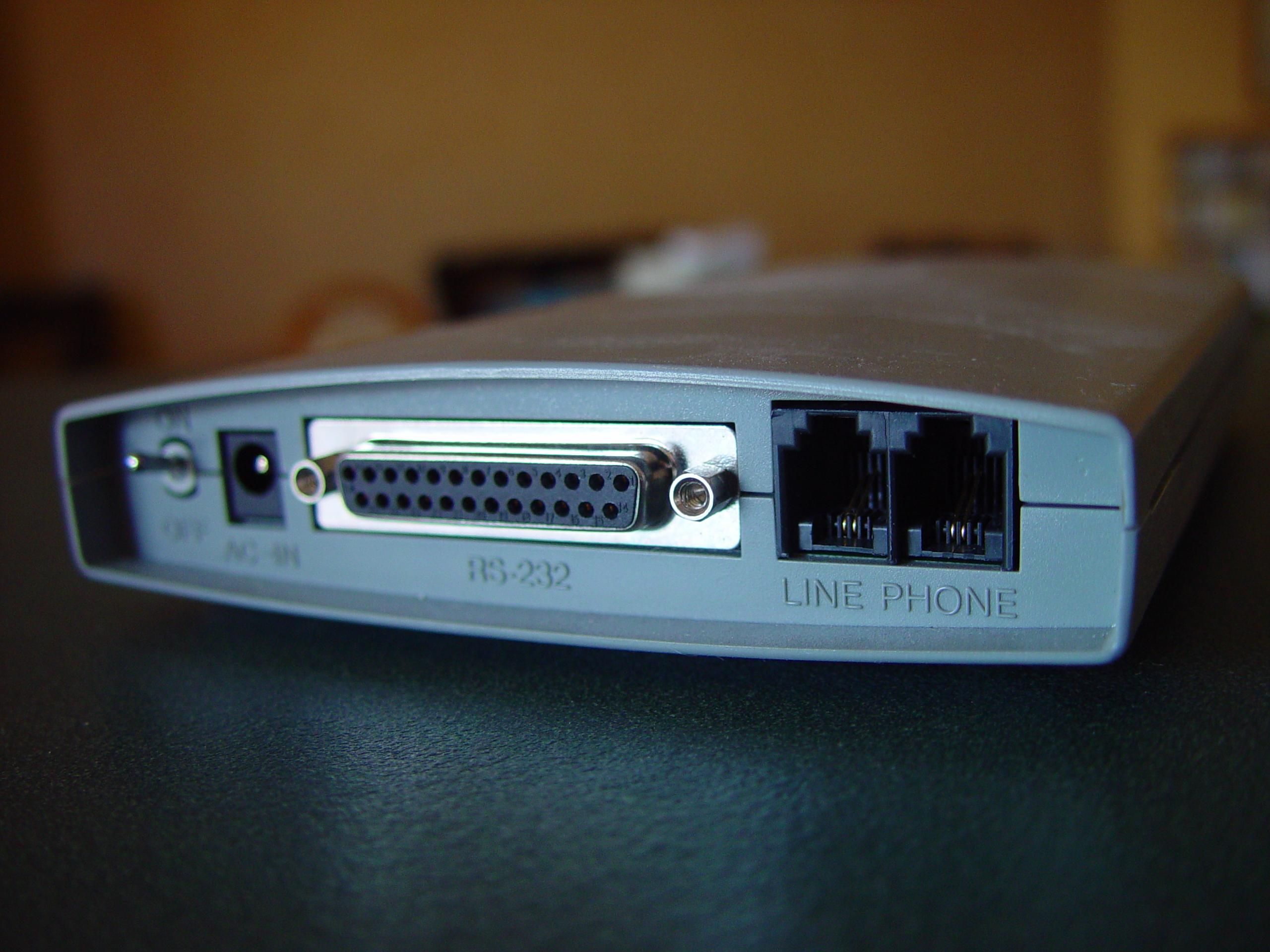
On the rear-panel photograph, RS-232 connects to the computer, LINE to the telephone line and PHONE to the telephone. A PHONE socket did not allow voice and data calls at the same time. As the GoldStar GSM-2400 photograph shows, external modems used front-panel lights to show their status.
The home phone and the bill
With ordinary dial-up on the same line as the household telephone, the line could not carry a voice call while connected. If someone needed the phone, the session had to end; households with a separate line faced different constraints.
Service subscriptions and telephone charges were separate, and costs varied by period, provider and plan. A KISDI historical study identifies phone costs and unstable connections as constraints on early online communities. That is why users chose carefully what to read and send rather than staying online indefinitely.
Boards, chat and file libraries
In text-based interfaces, users navigated with menu numbers and commands; HiTEL offered shortcuts such as “go culture” for cultural and leisure information. The familiar blue background and white lettering did not appear in every program and period, and graphical and web functions later changed the experience.
Bulletin boards held posts for later readers, chat rooms connected people online at the same time, mail went to a particular recipient and file libraries distributed downloads. A computer textbook’s Chollian 98 chapter, catalogued by the National Library of Korea, treats these as separate functions.
Clubs and sysops
Interest clubs, or donghohoe, devoted to music, games or fiction gave members a reason to return. Through repeated posts and replies, an unfamiliar ID could become a familiar person.
Moderators known as sysops maintained rules and could sanction disruptive members. Bae Young’s 2005 study describes lasting, partly pseudonymous relationships in these clubs while noting paid membership and other barriers. The communities were close-knit but not open to everyone.
Online fiction and viewer feedback
Lee Woohyeok’s Toemarok, listed in English by LTI Korea as A Record of Exorcism, was serialised on HiTEL in 1993 and published as a book in 1994. Lee Young-do’s Dragon Raja began its HiTEL serialisation in October 1997. Readers waited for each instalment and posted responses, and authors saw that feedback quickly, a defining feature of PC-network literature.
Broadcasters used the channel too. The April 1996 issue of SBS Magazine reported that the company had consolidated its PC-network viewer-contact operations into one department that March, giving viewers a route to send opinions to producers.
PC networks and the internet
The two eras overlapped. HiTEL introduced web services and dedicated multimedia software in 1996, and provider-hosted boards, internet access and web interfaces evolved alongside one another.
The old equipment may look analogue, but the computers were exchanging digital information. The modem bridged that data and the voice telephone line.
A present-day reading: how relationships work
Today’s interest communities face the same questions. Who organises the conversation and enforces its rules? How does a regular contributor earn trust? How does a reader waiting for the next instalment reach its creator? Equipment and speeds have changed; the questions have not.
Phone bills and connection limits were real burdens, and easier access today creates more choices. The history of PC networks is less a story of better times than of how people built connections and turned them into relationships.
Sources & context
2026-10-13T23:37:28.396Z
encykorea.aks.ac.kr ↗m.ktalpha.com ↗Computer History Museum, Networking & The Web: modem function ↗USRobotics, Courier modem guide: handshaking and link negotiation ↗USRobotics, modem command reference: ATDT and connection commands ↗kisdi.re.kr ↗kisdi.re.kr ↗library.ltikorea.or.kr ↗encykorea.aks.ac.kr ↗img.sbs.co.kr ↗nl.go.kr ↗commons.wikimedia.org ↗Korea Open Government License Type 1 (Attribution) ↗Photo: alanine; 古董 (Flickr original title); GoldStar modem, 2400bps top.jpg (Commons file title); 2010-11-04; Creative Commons Attribution-ShareAlike 2.0 Generic. Changes: primary MPO frame resized to 1600×1200 and converted to JPEG; no file crop or AI editing. Gallery display uses an 8:5 center crop. Derivative remains CC BY-SA 2.0. ↗Creative Commons Attribution-ShareAlike 2.0 Generic ↗Photo: Leon Brooks; External dialup modem back panel; capture date unknown; Released into the public domain by Leon Brooks (PD-author). Changes: original file unedited; 8:5 center crop in the gallery display. ↗Released into the public domain by Leon Brooks (PD-author) ↗A HiTEL PC-communications terminal with its cover closed. This is a 2018 collection photograph of historic hardware, not a 1990s scene of use. Photo: 국립민속박물관 (National Folk Museum of Korea); photographic EXIF credit: Kim Joo Wan, “Hitel computer terminal.jpg”, 2018-07-03. Source: https://commons.wikimedia.org/wiki/File:Hitel_computer_terminal.jpg. Reuse terms: Korea Open Government License Type 1 (Attribution), https://www.kogl.or.kr/info/licenseType1.do. Changes: original file unedited; 8:5 center crop in the gallery display. Original collection source: https://www.nfm.go.kr/common/data/home/relic/detailPopup.do?seq=PS0100200100107435800000.
A GoldStar GSM-2400 external modem photographed in 2010, showing its front status indicators. This is a later photograph of older hardware; the manufacturing year is unverified. Photo: alanine, “古董 (Flickr original title); GoldStar modem, 2400bps top.jpg (Commons file title)”, 2010-11-04. Source: https://commons.wikimedia.org/wiki/File:GoldStar_modem,_2400bps_top.jpg. Reuse terms: Creative Commons Attribution-ShareAlike 2.0 Generic, https://creativecommons.org/licenses/by-sa/2.0/. Changes: primary MPO frame resized to 1600×1200 and converted to JPEG; no file crop or AI editing. Gallery display uses an 8:5 center crop. Derivative remains CC BY-SA 2.0.
Rear-panel RS-232, LINE and PHONE connections on an external dial-up modem. This technical reference has no confirmed model or capture date and is not verified as a 1990s photograph. Photo: Leon Brooks, “External dialup modem back panel”, capture date unknown (Commons transfer: 2013-03-01). Source: https://commons.wikimedia.org/wiki/File:External_dialup_modem_back_panel.jpg. Reuse terms: Released into the public domain by Leon Brooks (PD-author), https://commons.wikimedia.org/wiki/Template:PD-author. Changes: original file unedited; 8:5 center crop in the gallery display.
A dedicated terminal for the Hitel PC communication service, supplied by Korea Telecom and made by Jeil Precision; the keyboard is built into the front lid, which opens to reveal the screen. Photo: National Folk Museum of Korea / Hitel terminal (074358) / NFM collection / KOGL Type 1
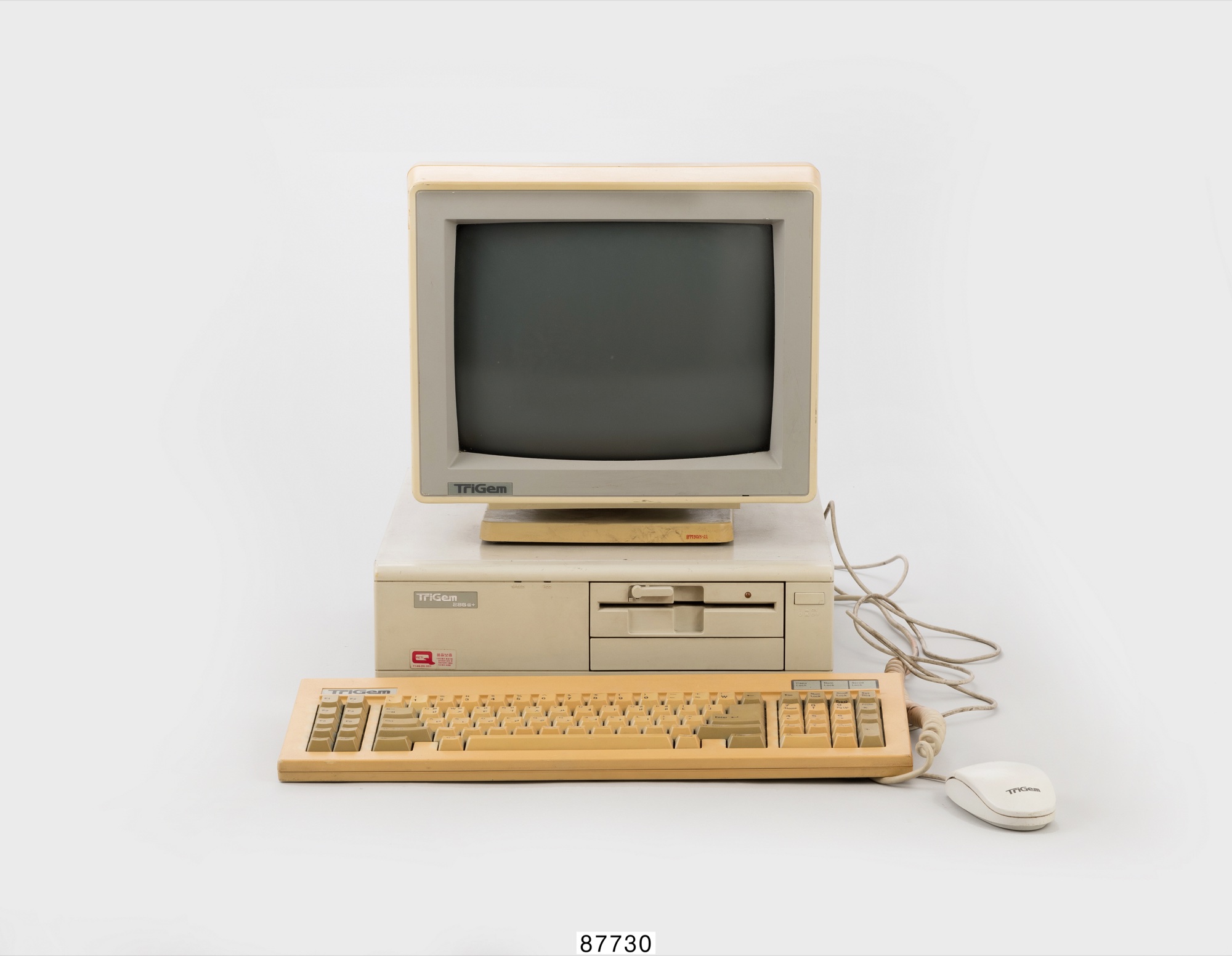
A 286 computer made in the early 1990s, with the TriGem mark below the monitor and a floppy-disk slot in the system unit. Photo: National Folk Museum of Korea / Computer (087730) / NFM collection / KOGL Type 1
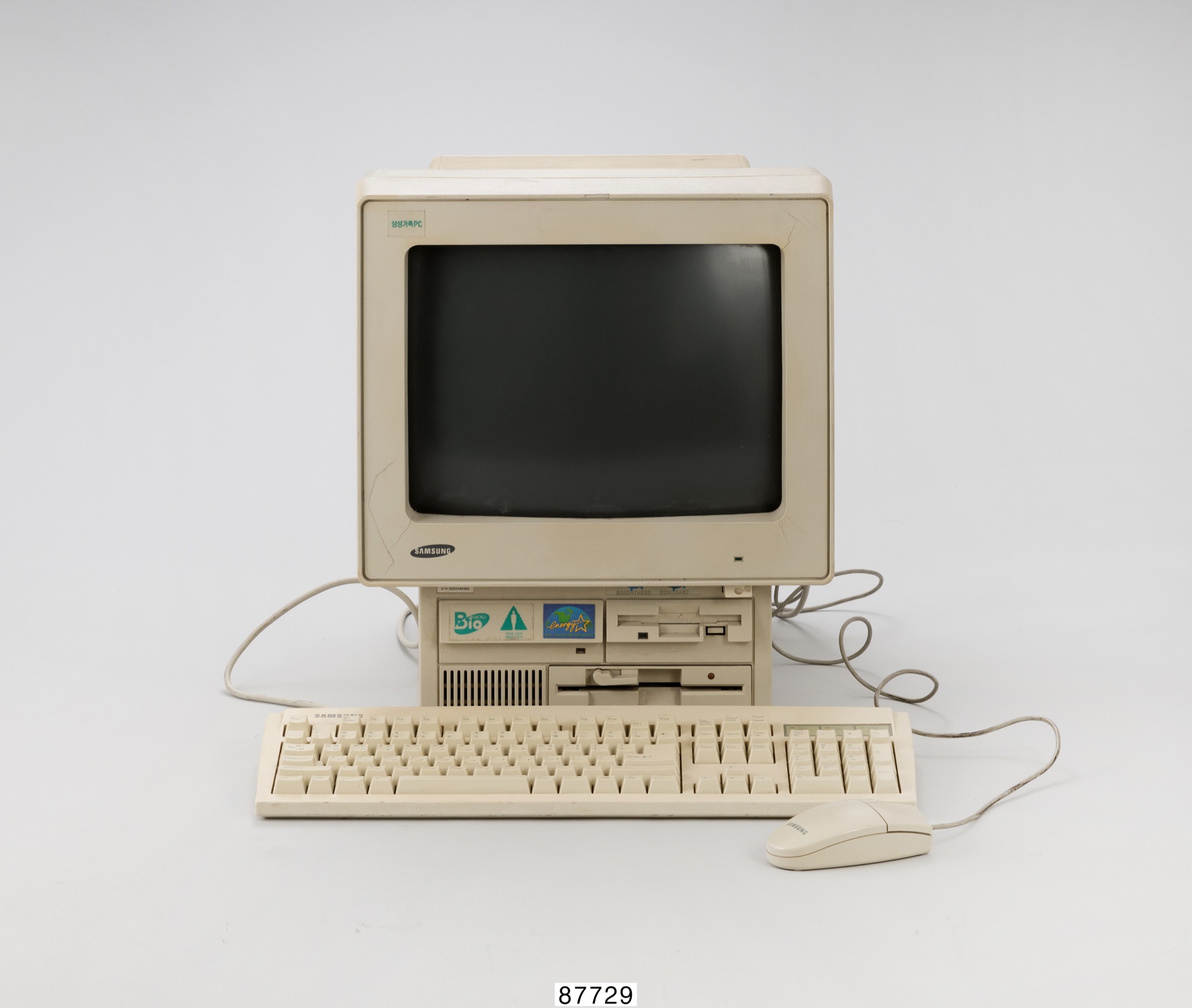
An all-in-one computer made in 1994, with a Samsung “family PC” sticker on the monitor and both 5.25-inch and 3.5-inch floppy-disk slots. Photo: National Folk Museum of Korea / Computer (087729) / NFM collection / KOGL Type 1