Eighty-five paintings and sculptures from Switzerland’s Kunsthaus Zürich go on view at the National Museum of Korea in Seoul’s Yongsan district on November 27, including works by Monet, Picasso, Kandinsky and Giacometti. Early-bird tickets are on sale for 12,000 won.
The exhibition
The National Museum of Korea is co-organizing “The Birth of Modern Art – Masterpieces from the Kunsthaus Zürich” with Kunsthaus Zürich and the Seoul Shinmun. It runs 143 days, from Friday, November 27, 2026, to Sunday, April 18, 2027, in Special Exhibition Gallery 1.
The 85 paintings and sculptures trace European art from the 18th to the 20th century. The museum said the show includes Monet, Chagall, Matisse, Picasso, Brancusi, Kandinsky, Magritte and Dalí, along with Swiss-born artists such as Hodler, Klee, Taeuber-Arp and Giacometti. A list of works has not been released.
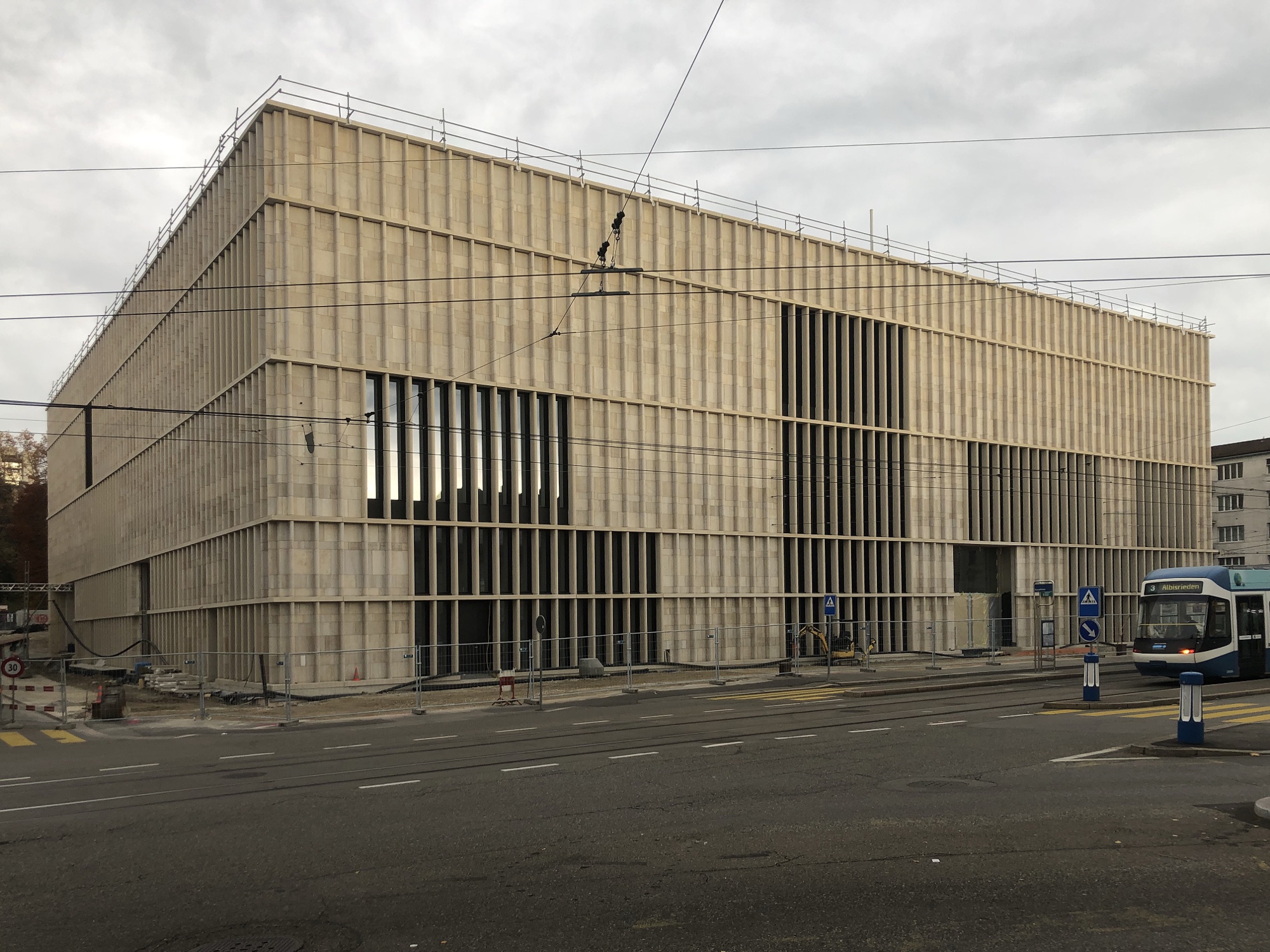
Kunsthaus Zürich’s new building near completion, with a tram passing
Early-bird tickets
Early-bird tickets went on sale at 10 a.m. KST on October 13 through Ticketlink and Naver Booking as a single 12,000-won ticket type. They cover visits from opening day through Thursday, December 17. The museum’s notice gives the end year as 2025, apparently a typo for 2026. Wednesday sessions after 6 p.m. and December 7 are excluded.
Up to four tickets can be booked per order, and bookings can be canceled until 11:59 p.m. the day before the visit. Mobile tickets will be sent by KakaoTalk on November 25. Regular prices have not been announced; the museum said children and seniors may pay less with individually discounted regular tickets.
Hours and opening talk
Entry is by 30-minute timed sessions. Hours are 9:30 a.m. to 5:30 p.m. (last entry 4:50 p.m.) on Monday, Tuesday, Thursday, Friday and Sunday, and 9:30 a.m. to 9 p.m. (last entry 8:20 p.m.) on Wednesday and Saturday. The exhibition is closed December 7, 2026, and January 1, February 7 (Seollal) and March 1, 2027.
On opening day, November 27, from 2 p.m. to 4 p.m., Maja Wismer of Kunsthaus Zürich will speak on Swiss art and European modernism in the museum’s lecture room. No booking is required; seating is first come, first served.
Getting there
The museum is at 137 Seobinggo-ro, Yongsan-gu. From Ichon Station (Line 4 and the Gyeongui–Jungang Line), the “Museum Nadeulgil” underpass toward Exit 2 leads to the museum’s west gate and is open from 7 a.m. to 11 p.m.
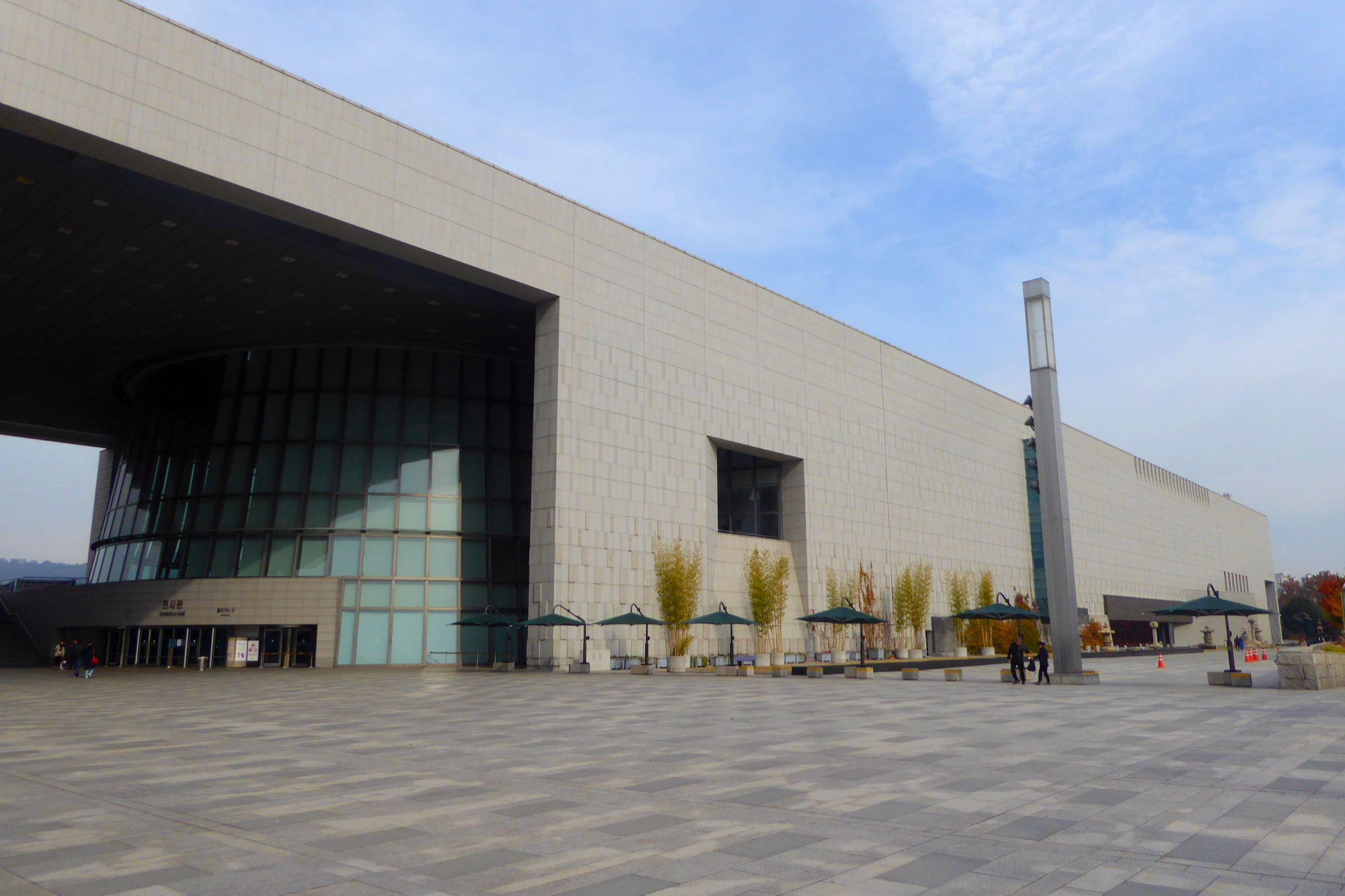
The permanent galleries are free, but this special exhibition requires a ticket. The lead photo shows the museum building in 2019, not the exhibition or its works. The second photo shows Kunsthaus Zürich’s new building, the lending museum, near completion in 2019.
Exterior of the National Museum of Korea, photographed by Ethan Doyle White in November 2019. Archival photo; it does not show this exhibition or its works. Photo: Ethan Doyle White / Wikimedia Commons / CC BY-SA 4.0. Proportionally resized to 2000px wide and re-saved as JPEG; no crop or retouching.
The new building of Kunsthaus Zürich in Switzerland, shortly before completion in November 2019. Archival photo; not the Seoul exhibition or its works. Photo: Albinfo / Wikimedia Commons / CC0. Resized to 2000px wide.
The National Museum of Korea opens “Marie Antoinette Style,” co-organized with London’s Victoria and Albert Museum, on December 18. About 190 objects, including relics and fashion, examine the conflicting images of the French queen.
The exhibition
The exhibition, organized jointly by the National Museum of Korea and the V&A, runs from December 18, 2026, to March 31, 2027, in Special Exhibition Gallery 2.
It begins with how the 18th-century queen presented herself through fashion, interiors and taste, shaping the aesthetics of her time. It then traces how her contrasting images — symbol of luxury and pleasure, object of admiration, victim of the Revolution, fashion icon — have been repeated and reinvented in art, fashion and popular culture.
What is on show
According to the museum, the show includes about 190 items: objects associated with Marie Antoinette and later fashion, decorative arts, crafts and installations influenced by her. The list of works, ticket prices and booking date have not been announced.
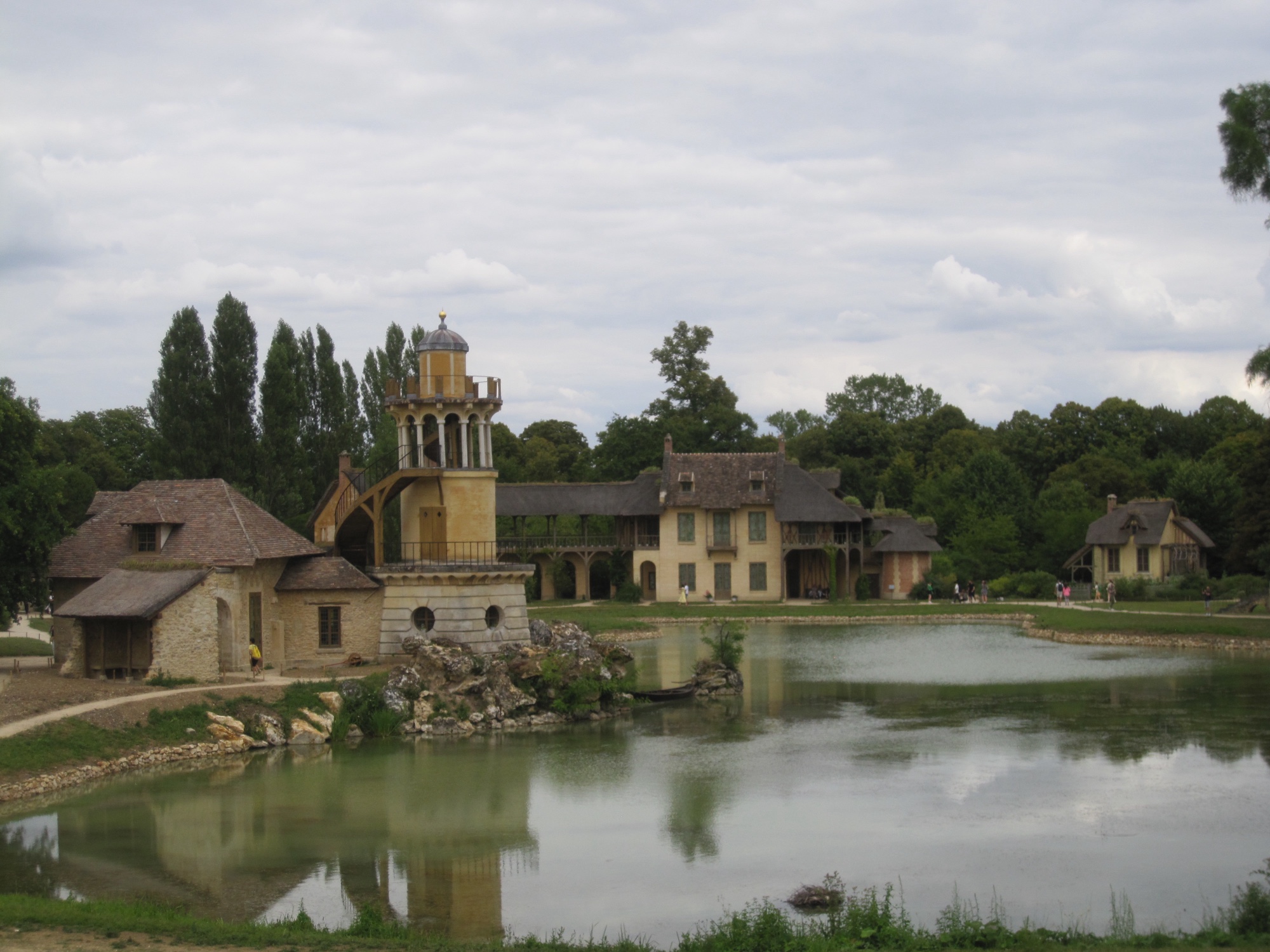
The second photo shows the Hameau de la Reine (the Queen’s Hamlet) at Versailles in 2022. It is not an object in the exhibition.
Cottages and a tower beyond a pond at the Queen’s Hamlet, Versailles
Visitor information
The museum’s general hours are 9:30 a.m. to 5:30 p.m. on Monday, Tuesday, Thursday, Friday and Sunday, and 9:30 a.m. to 9 p.m. on Wednesday and Saturday. Hours specific to this exhibition have not been announced. The museum said tickets for Special Exhibition Gallery 2 can also be bought at the gallery entrance.
From Ichon Station (Line 4 and the Gyeongui–Jungang Line), the “Museum Nadeulgil” underpass toward Exit 2 leads to the west gate. “The Birth of Modern Art” (Nov 27–Apr 18) runs in Special Exhibition Gallery 1 during the same period. The lead photo shows the museum building in 2019.
EXHIBITION INFO
DatesDec 18, 2026 – Mar 31, 2027
PartnerVictoria and Albert Museum, London
TicketsNot yet announced
LOCATION
National Museum of Korea, Special Exhibition Gallery 2
4GJIchon Station (Line 4 / Gyeongui–Jungang), towards Exit 2Exit 2
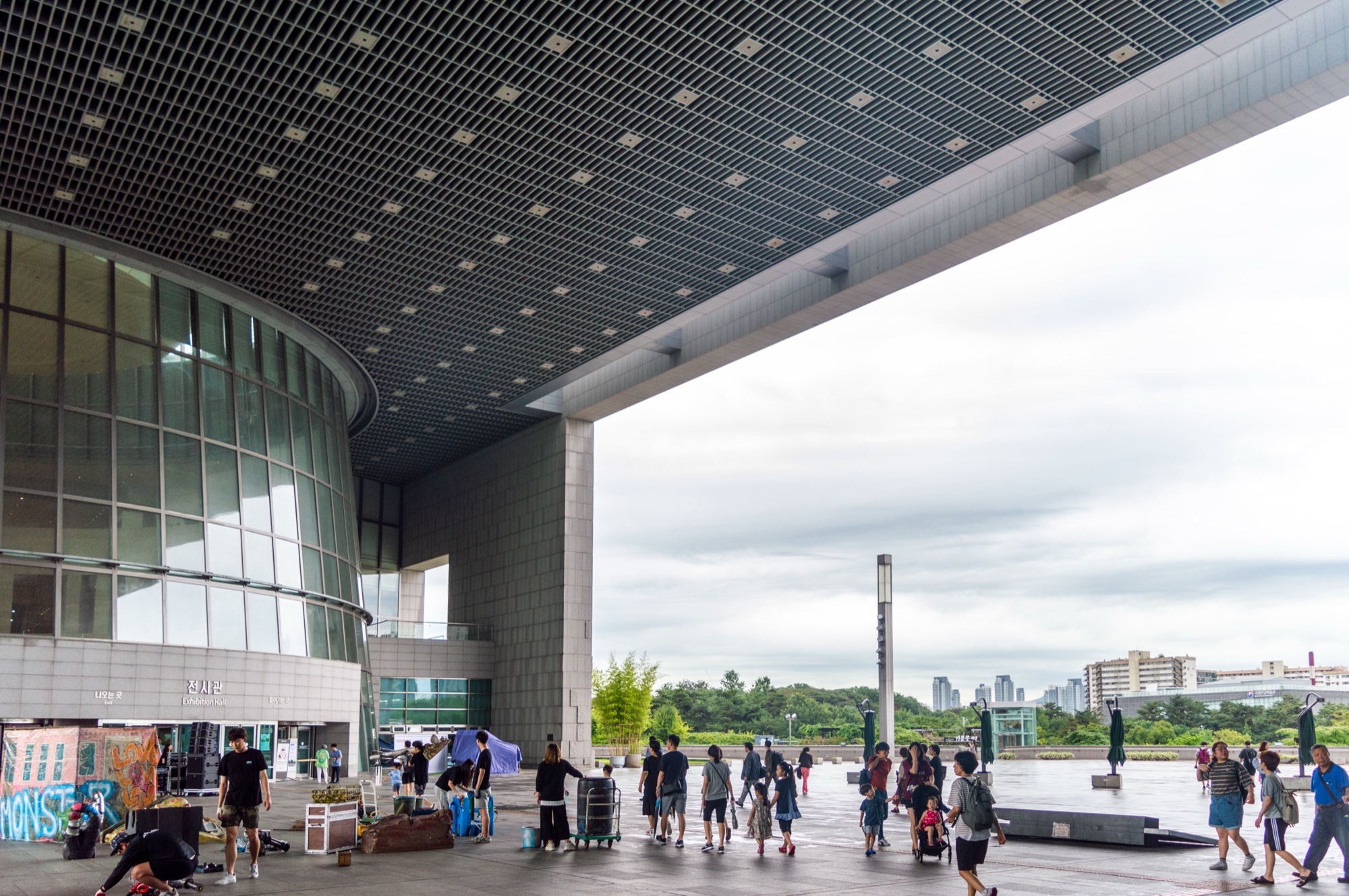
Visitors under the canopy of the National Museum of Korea’s open court, photographed by Tristan Surtel in July 2019. Archival photo; it does not show this exhibition. Photo: Tristan Surtel / Wikimedia Commons / CC BY-SA 4.0. Resized to 2000px wide and re-saved as JPEG; no crop or retouching.
The pond and cottages of the Hameau de la Reine at Versailles, photographed by DiscoA340 in July 2022. Archival context; not an exhibited object. Photo: DiscoA340 / Wikimedia Commons / CC BY-SA 4.0. Resized to 2000px wide.
Ulsan Art Museum opens an exhibition of Lee Jungseop’s paintings, illustrated letters and archives on October 15, including the original of his red Bull, which measures just 26.5 × 36.7 cm. Standard adult admission is KRW 1,000, with tickets sold on arrival.
The original Bull
“Unfinished Stories: Lee Jungseop” runs in Gallery 2 at Ulsan Art Museum from October 15, 2026, through January 17, 2027. Organized jointly with MMCA, it brings together about 140 paintings, foil drawings, postcards, illustrated letters and archive items.
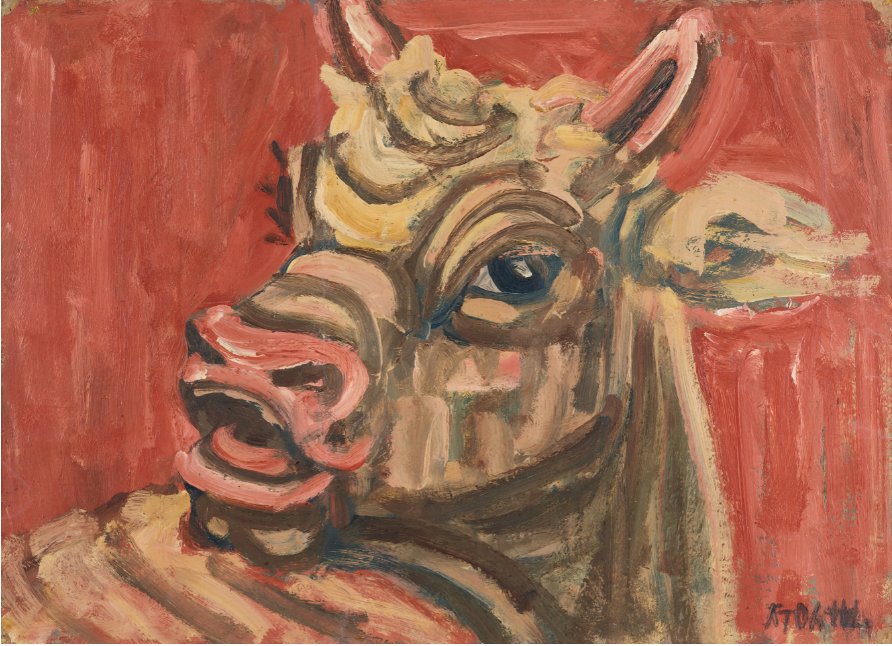
Bull, a 1950s oil on paper from MMCA’s Lee Kun-hee Collection, is only 36.7 cm wide, though its red ground and enlarged head often feel monumental in reproduction. The original shows the lines around the eye and the brushwork up close.
The full composition of Lee Jungseop’s 1950s Bull: a bull’s head in thick dark lines against a red ground
Landscapes and letters
The exhibition follows the places and periods of Lee’s life. Alongside MMCA’s Three People are Tongyeong Landscape from Leeum, Landscape with Seopseom from the Lee Jung Seop Art Museum in Jeju, and illustrated letters held by his family.
Docent tours begin October 16, the day after opening, in Gallery 2 at 11:00, Tuesday through Friday, lasting about 40 minutes. The schedule can change, and English or Japanese interpretation has not been confirmed.
Admission and hours
Adult entry is KRW 1,000; college students, military personnel and artists pay KRW 700, and Ulsan residents KRW 500. Visitors under 19 or aged 65 and over enter free, with documentation where required. No reservation is needed, so visitors can buy tickets on site without Korean mobile authentication. Acceptance of overseas-issued cards has not been verified.
Regular hours are 10:00–18:00, with free admission and a 20:00 close every Wednesday; last entry is 30 minutes before closing. The museum is closed Mondays and January 1, moving to Tuesday when Monday is a public holiday. A temporary fee waiver that ended October 14 does not apply to the whole run. The first free Wednesday is October 21.
Transport and the old town
The address is 72 Misulgwan-gil, Jung-gu, Ulsan. Ulsan Art Museum bus stop 21008 is 172 metres away, served by routes 115, 118, 246, 462, 713, 718 and 1115. The B3 car park has 87 spaces, four of them accessible. Posted parking hours end at 19:00, before the Wednesday evening close.
The museum sits between Ulsan Dongheon and Naea, the former local government office and residence, and the old guesthouse, making an old-town stop easy to add. Enquiries: +82-52-211-3800. An English visitor guide is available, but on-site interpreting is not guaranteed.
EXHIBITION INFO
DatesOct 15, 2026–Jan 17, 2027
Hours10:00–18:00; Wed to 20:00; last entry 30 min before close
ClosedMon and Jan 1; Tue if Mon is a public holiday
AdmissionAdult KRW 1,000; Wednesdays free
EntryWalk-in tickets; advance reservation not required
Contact+82-52-211-3800
LOCATION
Ulsan Art Museum, Gallery 272 Misulgwan-gil, Jung-gu, Ulsan
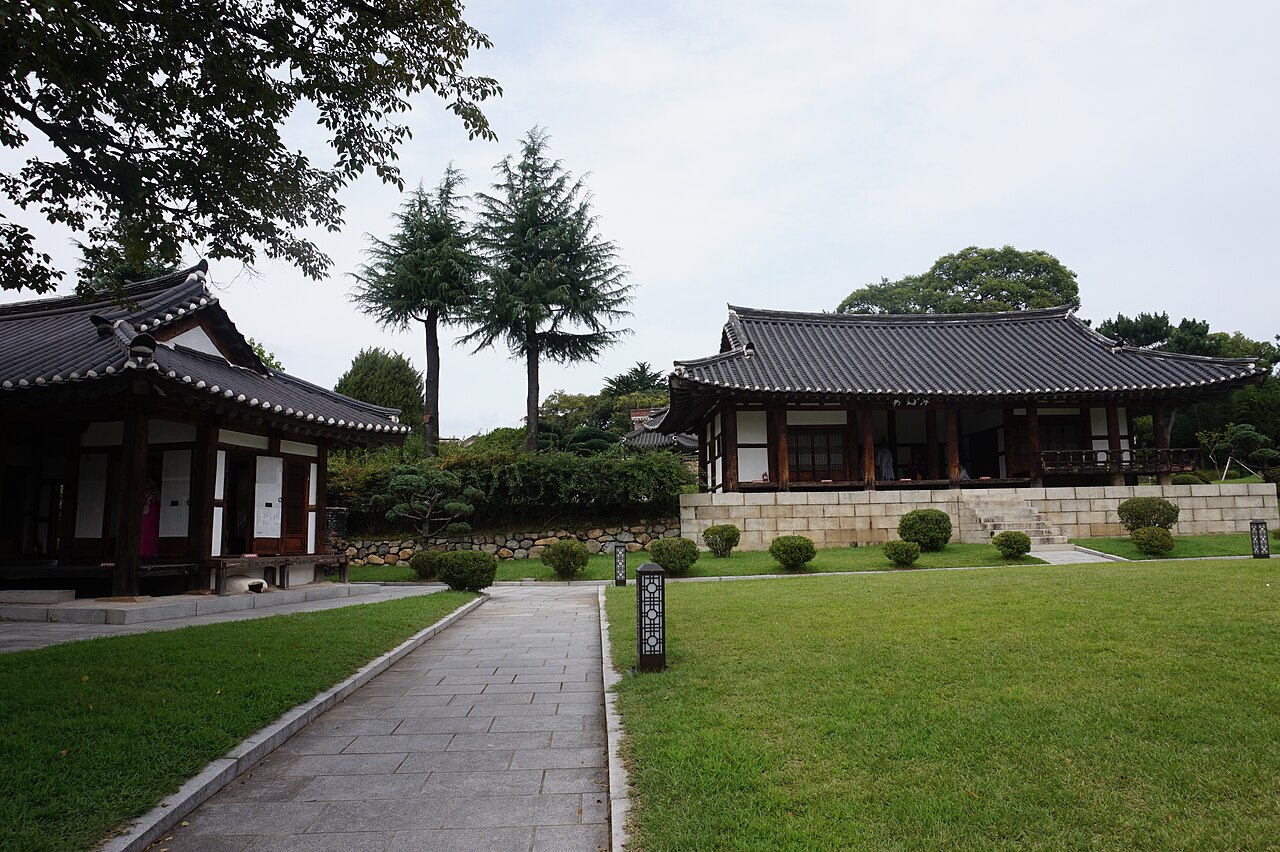
Ulsan Dongheon and NaeaBuildings and courtyard at Ulsan Dongheon and Naea. Archival image published by Kim Jaemin in September 2016. Photo: Kim Jaemin / Wikimedia Commons, CC BY-SA 4.0. Wikimedia’s 1280px downscaled version used unchanged; no crop. https://commons.wikimedia.org/wiki/File:%EC%9A%B8%EC%82%B0%EB%8F%99%ED%97%8C_%EB%B0%8F_%EB%82%B4%EC%95%84.jpg · https://creativecommons.org/licenses/by-sa/4.0/
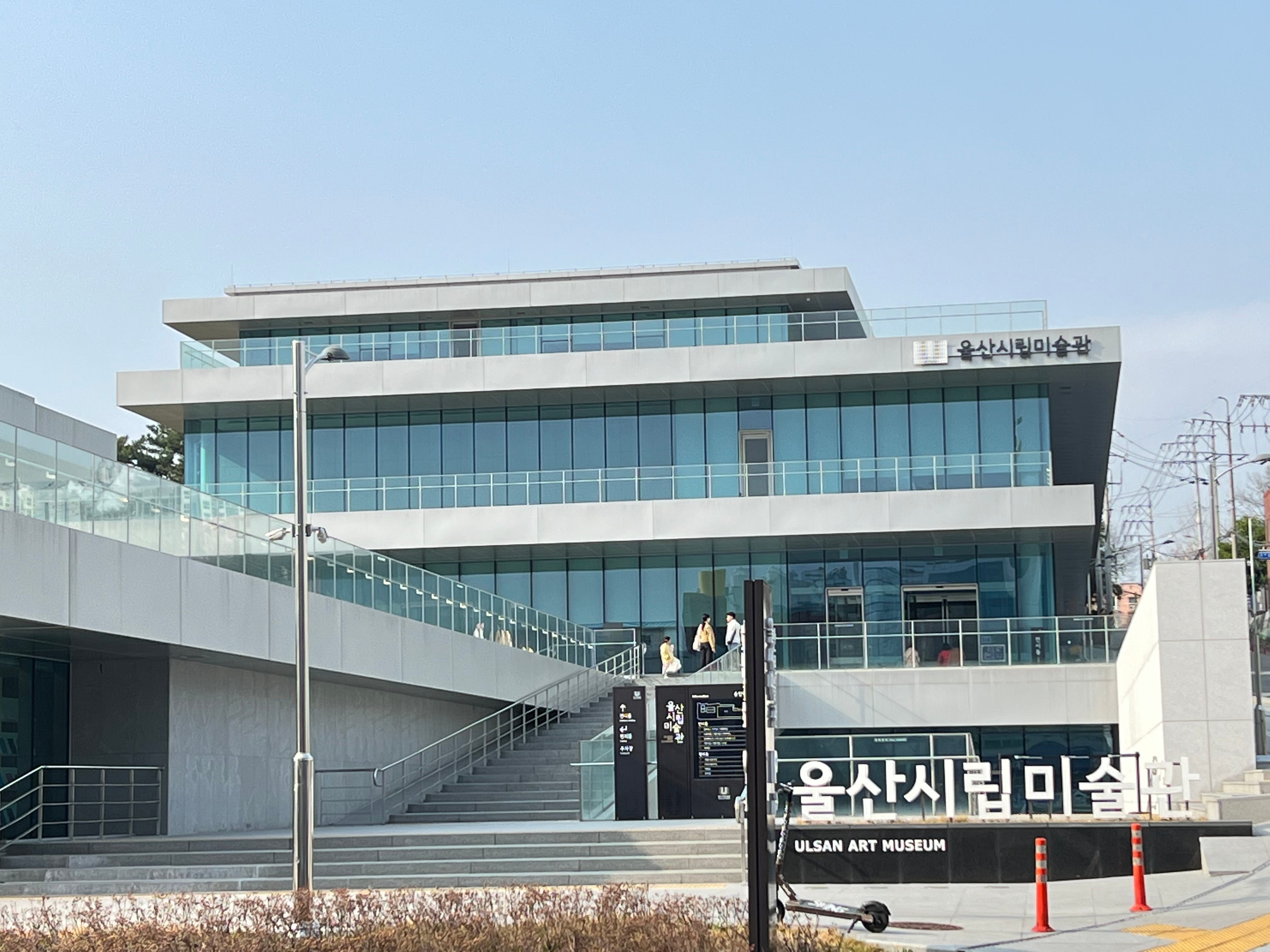
Ulsan Art Museum exterior, photographed March 30, 2024. Photo: Jjw / Wikimedia Commons, CC BY 4.0. Unmodified. Archival venue view, not the 2026 exhibition installation. https://commons.wikimedia.org/wiki/File:20240330_Ulsan_art_museum.jpg · https://creativecommons.org/licenses/by/4.0/
Lee Jungseop, Bull, 1950s, oil on paper, 26.5 × 36.7 cm. MMCA Lee Kun-hee Collection. Image of a work announced for the Ulsan exhibition, not an installation photograph. Image: MMCA, attachment to its May 7, 2021 press release, KOGL Type 1. Lossless BMP-to-PNG conversion; no cropping or colour changes. https://m.mmca.go.kr/pr/newsDetail.do?bdCId=202105070007676&menuId=01H000801000000 · https://www.kogl.or.kr/info/licenseType1.do
Jeongdong Culture Night returns to Seoul’s Jeongdong district on October 30–31, pairing late-opening cultural venues with guided walks in English and Japanese past a red-brick school, a church and the streets beside Deoksugung. Advance applications for the tours close at 18:00 on October 16.
A district of schools and churches
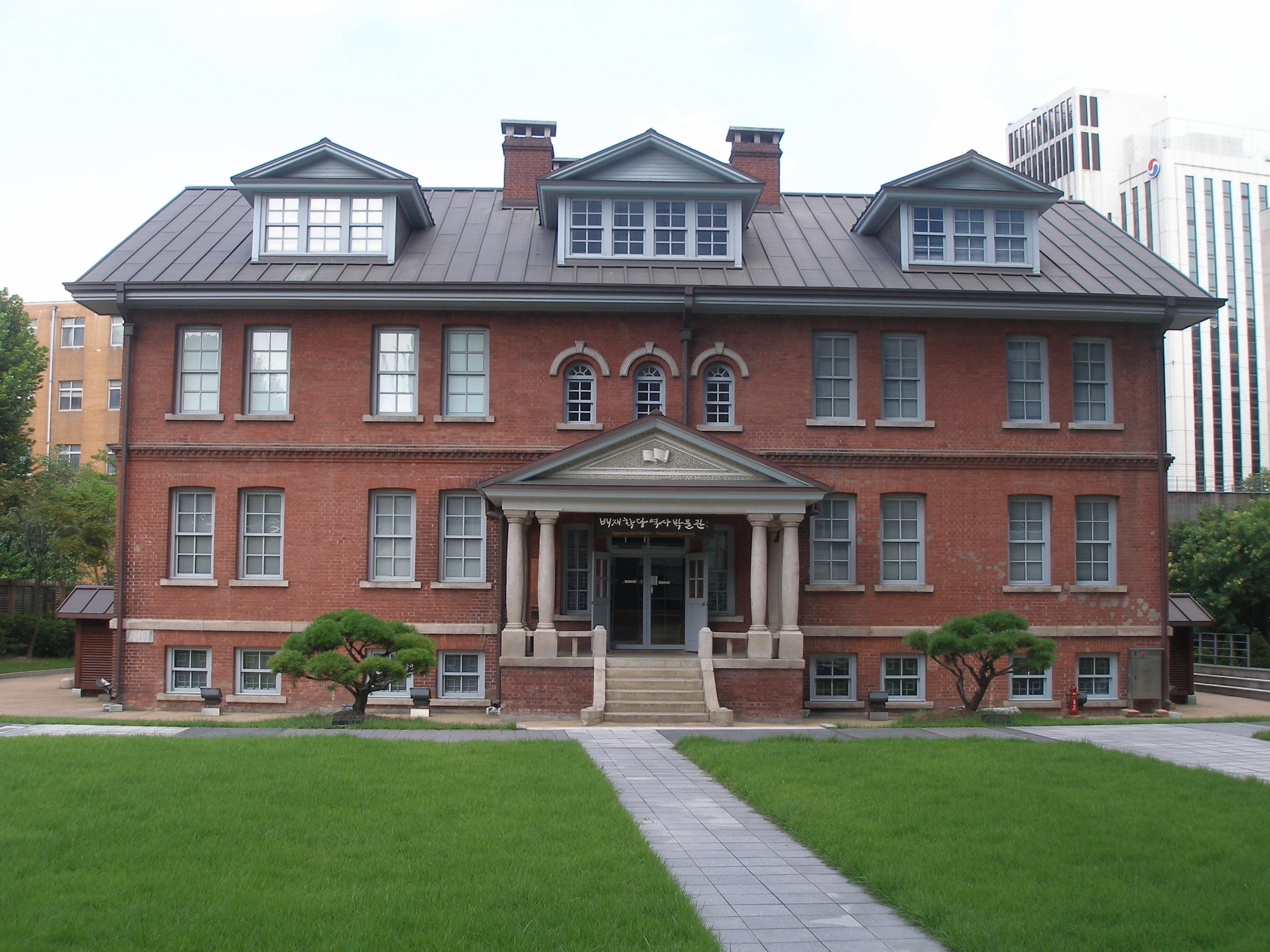
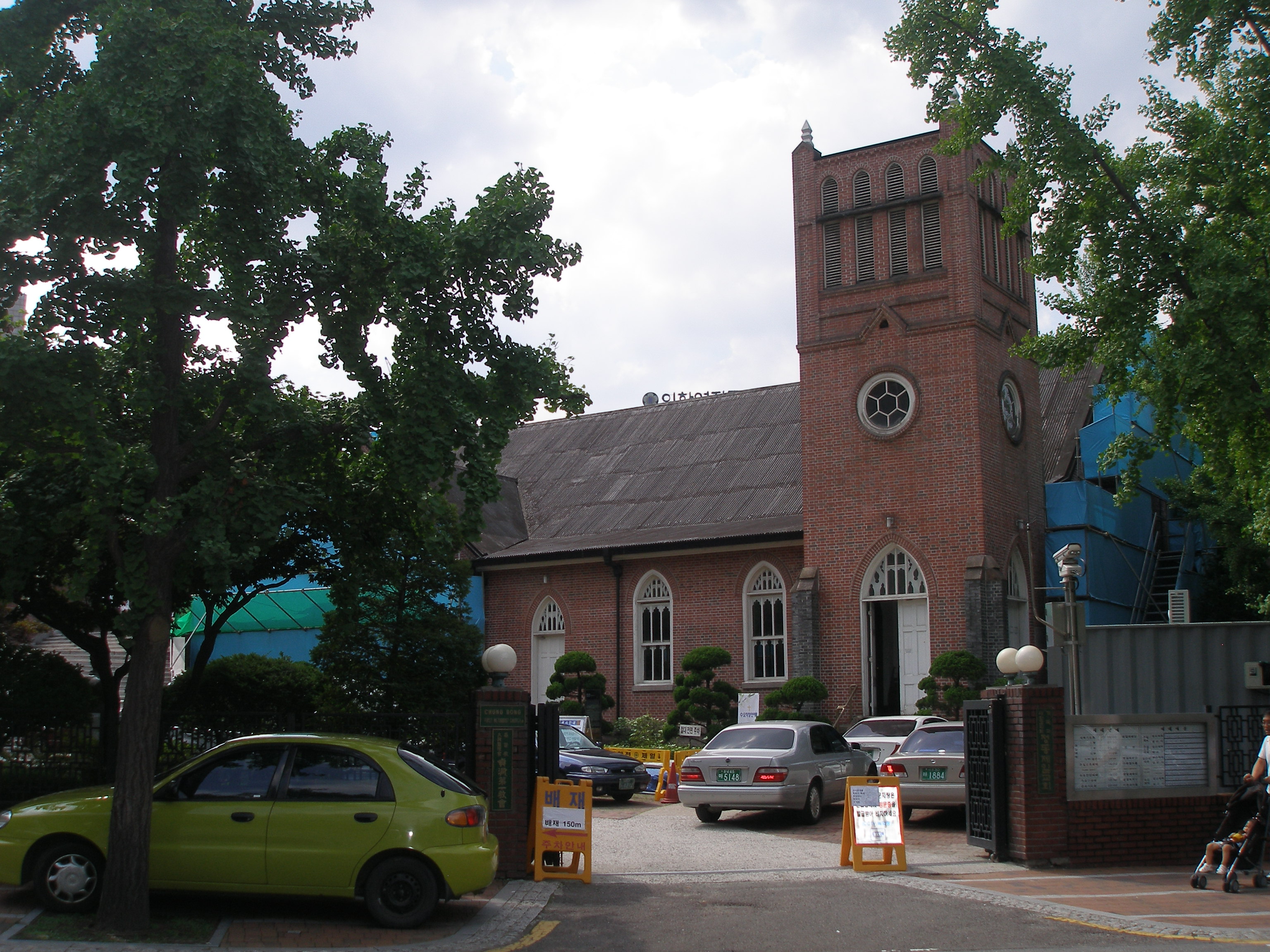
Visit Seoul presents Jeongdong, where a school, churches, former legations and Deoksugung Palace stand close together, as a walk through Korea’s encounter with modern institutions. Landmarks include the brick facade of the Appenzeller Noble Memorial Museum, housed in Paichai School’s east building, and the windows and tower of Chungdong First Methodist Church.
The main 2026 festival runs Friday, October 30, 18:00–22:00, and Saturday, October 31, 14:00–22:00. All times are Korean Standard Time (KST). The photographs show the buildings in 2010, not this year’s lighting or installations.
Guided walks in English and Japanese
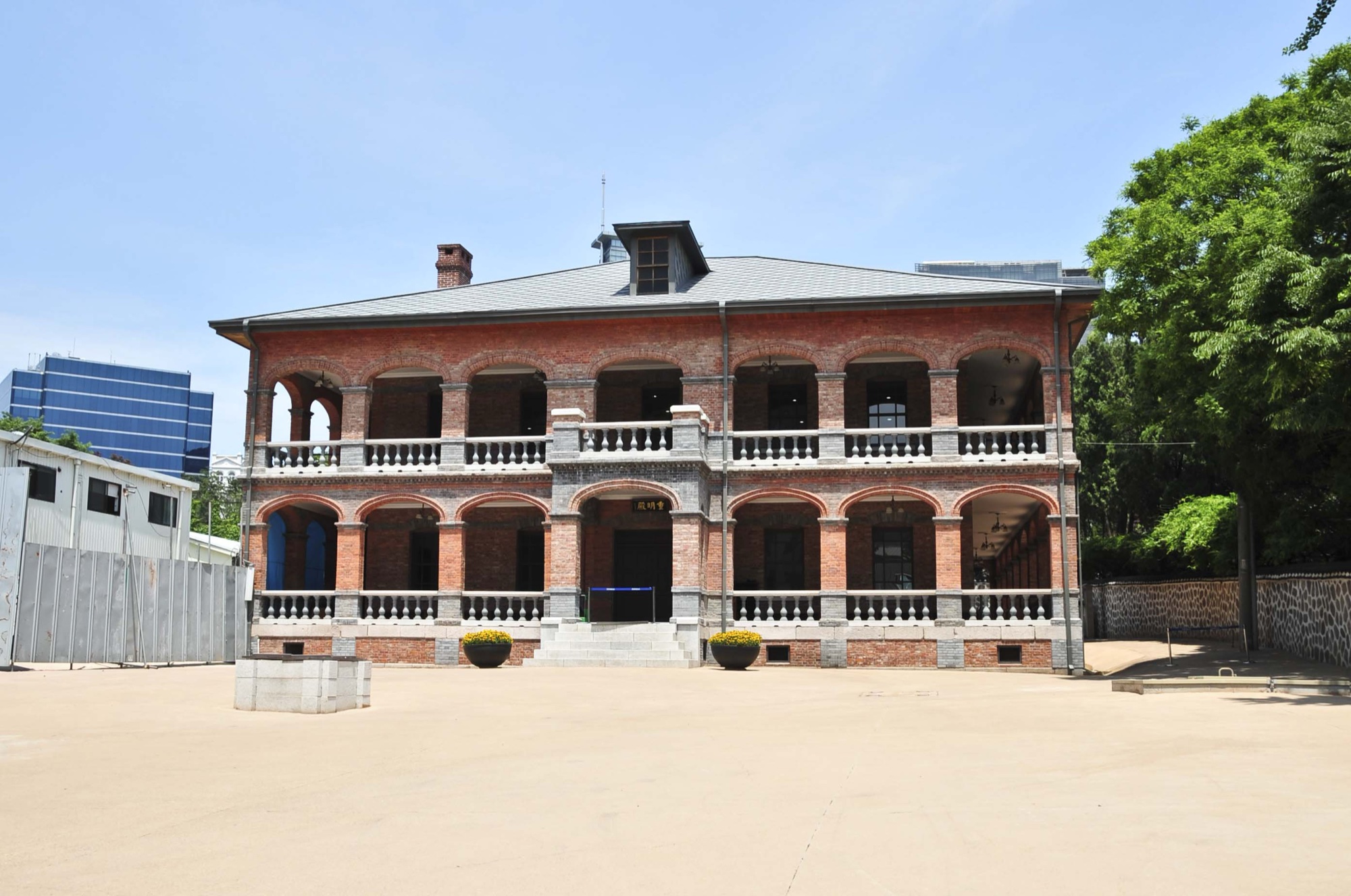
The official A Walk Around Jeongdong route links the Appenzeller Noble Memorial Museum, Seoul Museum of Art, Chungdong First Methodist Church, Ewha Museum and Jungmyeongjeon. Tours last about 60 minutes for 10–15 people. English and Japanese sessions are listed for October 30 at 19:00 and October 31 at 16:00.
General departures leave on the hour and half hour within Friday’s 18:00–20:30 and Saturday’s 14:00–20:30 windows, but foreign-language guides are available only at the listed times. The organizer lists both advance applications and on-site registration at the guides’ headquarters in Paichai Children’s Park (배재어린이공원). Remaining on-site places have not been confirmed.
Jungmyeongjeon, a two-storey red-brick building with arched verandas
Applications close Oct 16, 18:00
Advance applications run from October 7 at 09:00 to October 16 at 18:00. Anyone may apply with one companion; 30% of places go first to Jung-gu residents. Selected applicants will be announced on the website and contacted individually on October 19. Applicants may miss out if demand exceeds capacity, and unsuccessful applicants are not notified.
English information and an application form are available, but acceptance of overseas mobile numbers has not been verified. Submitting a form does not guarantee a place.
Venue hours and last entry
Venue admission deadlines differ from the festival’s closing time. The official guide lists the Appenzeller Noble Memorial Museum and Chungdong church’s history memorial hall as open until 22:00, with last entry at 21:30. Ewha Museum closes at 21:00, with last entry at 20:30.
Deoksugung is listed as closing at 21:00, with last entry at 20:00 and admission of KRW 1,000. Concessions and separate exhibition tickets follow each venue’s rules; there is no single free admission across all venues.
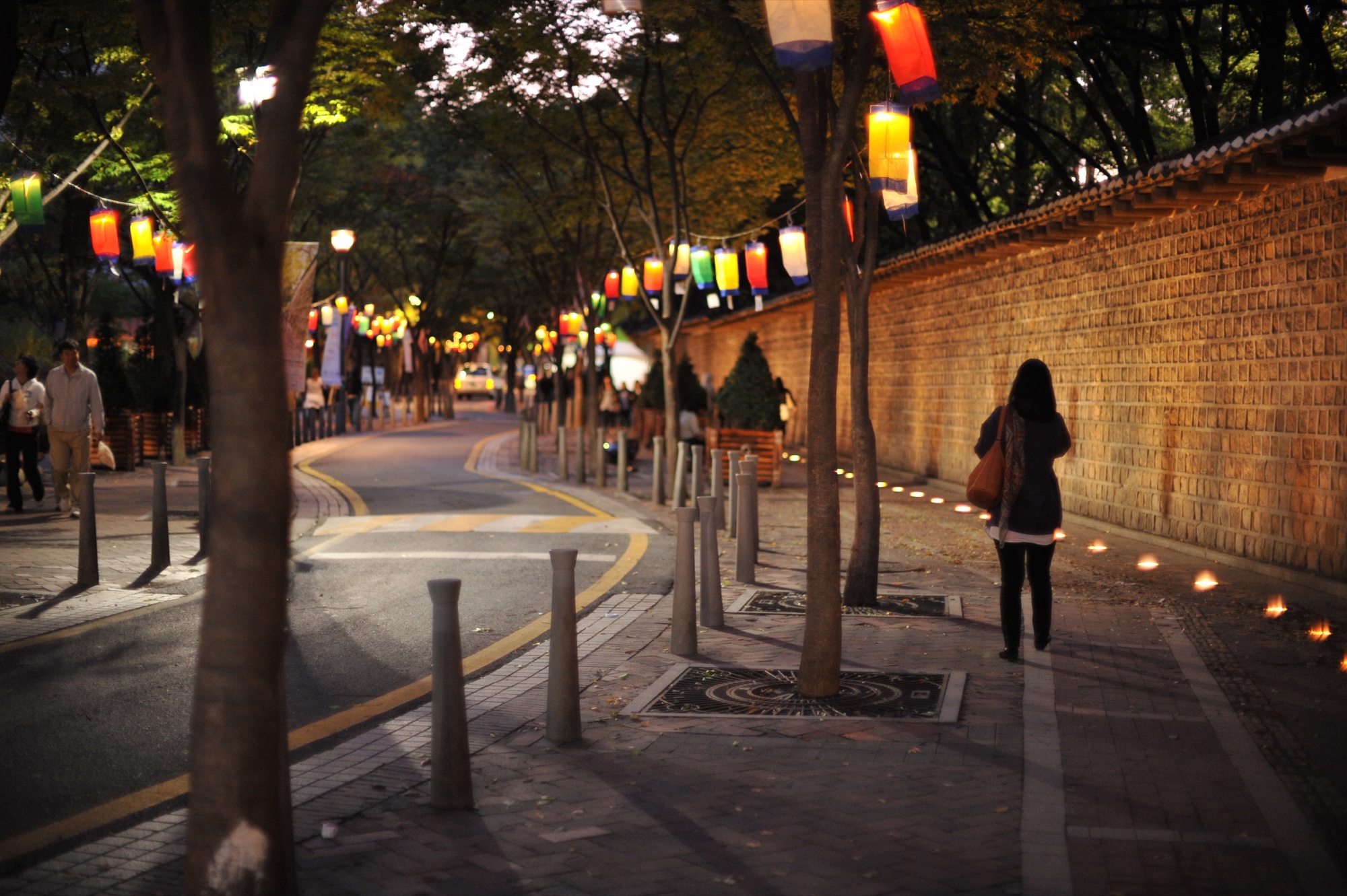
People walking along Deoksugung’s stone-wall road at night under lanterns
Saturday tightrope and taekkyeon
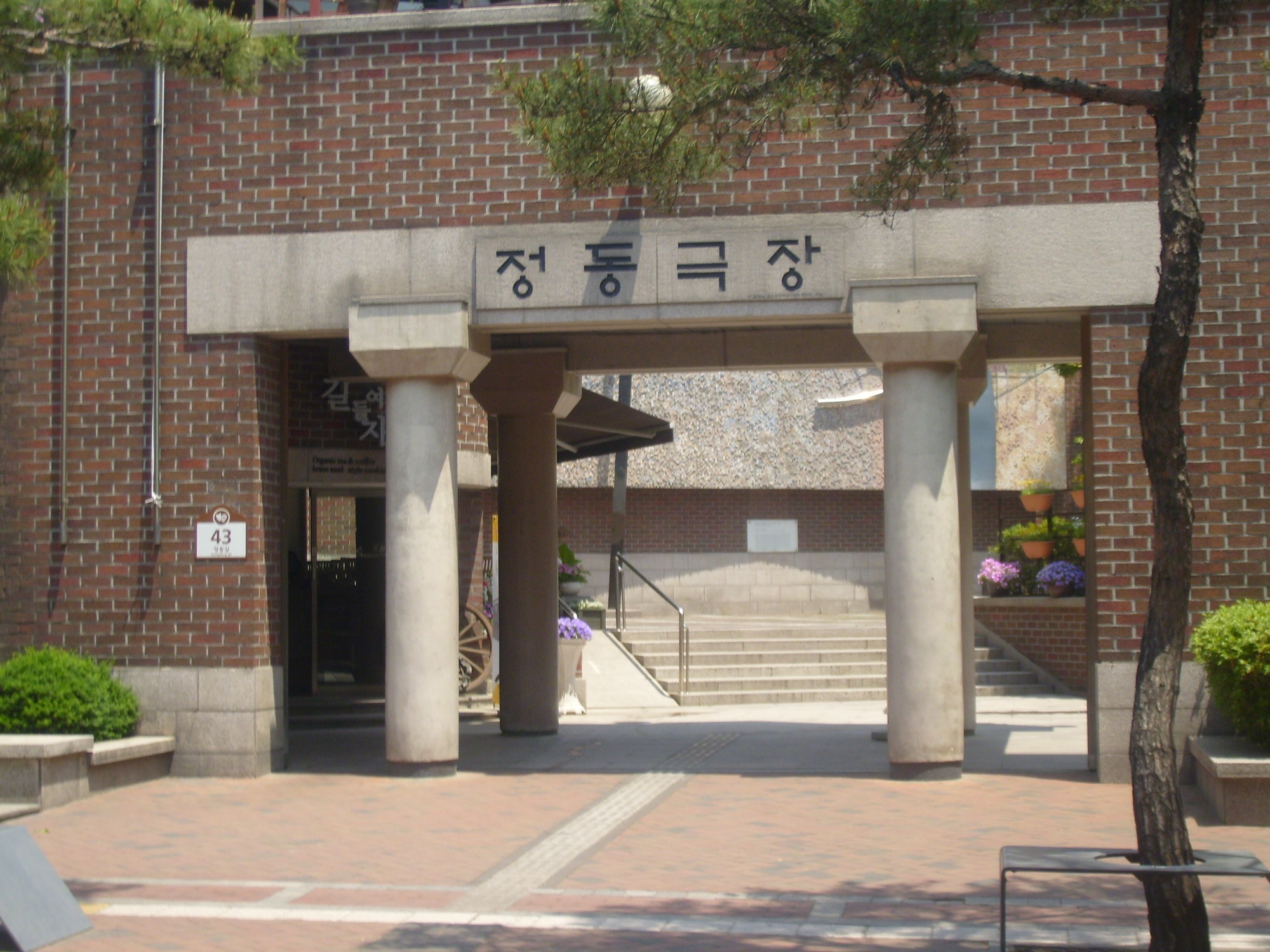
On October 31, the National Jeongdong Theater’s outdoor courtyard hosts a special Jeong-o-ui Hanmadang performance from 16:10 to 17:00, featuring Namsadang tightrope walking and taekkyeon. The theater lists free, unreserved viewing with no age restriction.
The show overlaps with the 16:00 English and Japanese walks. It is cancelled in rain, and schedules can change. The theater notes that some sessions may be filmed, including the audience, for documentation and promotion.
Stone-pillared gate signed “Jeongdong Theater” before a brick entrance
Transport and etiquette
Official directions list City Hall Station on Lines 1 and 2, Euljiro 1-ga on Line 2 and Gwanghwamun on Line 5. Roads from Daehanmun to the Jeongdong fountain and Yewon School will be closed on event days, and there is no festival parking. Guided walks gather at the guides’ headquarters in Paichai Children’s Park.
Chungdong First Methodist Church, a stop on the route, is at 46 Jeongdong-gil, Jung-gu, Seoul. Each venue’s photography and worship-space rules apply. Official information on languages for other programs, overseas-card payment and accessibility details is limited.
The brick tower and windows of Chungdong First Methodist Church behind trees and parked cars
EVENT INFO
DatesOct 30, 18:00–22:00; Oct 31, 14:00–22:00 KST
ApplyDeadline Oct 16, 18:00 KST · results Oct 19
LanguagesEnglish/Japanese: Oct 30 at 19:00; Oct 31 at 16:00
CostVenue-specific · Deoksugung listed at KRW 1,000
ParkingNo dedicated festival parking
LOCATION
Jeongdong and Deoksugung-gil · tour registration at Paichai Children’s Park
The front facade and lawn of Paichai School’s east building. Archival photograph by Ryuch, August 8, 2010. It does not depict the 2026 festival or current conditions. Photo: Ryuch / Wikimedia Commons, “East hall of Pai Chai school.JPG”, CC BY-SA 3.0. Source: https://commons.wikimedia.org/wiki/File:East_hall_of_Pai_Chai_school.JPG · License: https://creativecommons.org/licenses/by-sa/3.0/ Original JPEG supplied unchanged, without cropping, retouching, generated content or padding.
The brick tower and windows of Chungdong First Methodist Church behind trees and parked cars. Archival photograph by Ryuch, August 8, 2010 (church date from camera metadata). It does not depict the 2026 festival or current conditions. Photo: Ryuch / Wikimedia Commons, “Jeongdong First Church.JPG”, CC BY-SA 3.0. Source: https://commons.wikimedia.org/wiki/File:Jeongdong_First_Church.JPG · License: https://creativecommons.org/licenses/by-sa/3.0/ Original JPEG supplied unchanged, without cropping, retouching, generated content or padding.
A red-brick building with arched verandas on both floors, and its forecourt. Jungmyeongjeon (41-11 Jeongdong-gil, Jung-gu, Seoul), photographed in May 2011; it is one of the stops on the guided walk. It does not show this year’s Jeongdong Night lighting or installations. Photo: Gapo / Joongmyungjun / Wikimedia Commons / CC BY-SA 3.0
People walk along the stone-wall road, with coloured lanterns hung in the trees and lights along the base of the wall. Titled “Deoksugung stone-wall road on an autumn night”, taken on the evening of 17 October 2009. It does not show this year’s Jeongdong Night lighting or Deoksugung’s evening opening. Photo: Sungslim / 밤의 덕수궁 돌담길 / Wikimedia Commons / CC BY-SA 4.0
Beyond a stone-pillared gate inscribed “Jeongdong Theater” are a brick entrance, steps and a forecourt. Taken in May 2011 during the “Wikipedia takes Jeongdong” event and categorised on Commons under the National Jeongdong Theater of Korea. It does not show this year’s special performance. Photo: KSH1015 / KSH Jeongdong (56) / Wikimedia Commons / CC BY-SA 3.0
Seoul’s Jamwon Hangang Park hosts workouts, a cooking session and a free open-air musical stage on October 17–18. The hands-on activities are paid, and advance applications close at 5 p.m. on October 14.
Free musical stage at 5:30 PM
Jamwon Hangang Park’s Multi-Purpose Sports Field, also called the rugby field, hosts Hangang festival programs on Saturday and Sunday, October 17–18. ON Stage: When Stars Rise Above Hangang River runs 17:30–19:00 both days, free and without advance reservation. Musical-theater students from Dankook University perform with Seo Beom-seok on October 17 and Lisa on October 18.
The wider autumn festival continues at other parks until October 25. All times are Korean Standard Time (KST).
Daily Workout at Hangang
The workout program offers Rhythm Training at 10:00–11:00, Pound Fit at 12:00–13:00 and Sliding Board at 14:00–15:00, involving steps across floor markings, rhythmic drumstick movements and sliding on a board. Each activity costs KRW 5,000 per person; the fee is not a day pass.
Rhythm Training and Pound Fit admit ages six and up, Sliding Board ages 12 and up, and participants aged 12 or younger need a guardian. Check-in opens one hour before each session, and tickets are non-transferable. There are no changing rooms or lockers.
Hangang One Meal
Hangang One Meal runs 16:00–17:30. Participants watch a demonstration by cooking creator Recipe-Reading Woman (레읽녀), choose ingredients with provided coins from 16:20 and eat from 17:00. Preparation is flame-free, with basic utensils, a sink, a microwave and a hot-water dispenser; only ingredients supplied on site may be used.
The fee is KRW 5,000 per person. There is no minimum age, but children aged 12 or younger need a guardian.
Applications close Oct 14, 5 PM
Advance applications for the workouts and cooking close on October 14 at 17:00 and may fill earlier. The official routes are Urban Sports and Seoul Public Service Reservation. On October 13, the public reservation page showed “Open,” but remaining places for individual sessions were not verified.
Walk-ins are limited to no-shows and unsold places. The organizer plans to post remaining numbers in an Urban Sports popup on October 15 at 17:00 and to take first-come registrations at the information desk from one hour before each session. On-site payment is by bank transfer only.
Payment, refunds and language
Seoul’s public booking system requires first-time users to create an integrated account and complete mobile-phone identity verification. Applications are cancelled automatically if payment by bank transfer is not made within 24 hours. Overseas phone numbers and foreign cards are unverified. English and Japanese festival information is available, but interpretation in the sessions is not guaranteed.
Participants who cancel before October 14 at 17:00 receive a full refund; later cancellations are non-refundable. Organizer cancellations are fully refunded. Weather or site conditions may change activities and performances. The office is on 070-4705-8860, weekdays 10:00–17:00, excluding 12:30–13:30 and public holidays.
Getting there and access
The address is 2395 Olympic-daero, Gangnam-gu, Seoul. Official directions give a 20-minute walk from Exit 2 of Apgujeong Station on Line 3, or 23 minutes from Exit 8 of Sinsa Station. Hangang Bus Apgujeong Pier A bus stop (23451) is a two-minute walk away. Parking is not subsidized, and public transport is recommended.
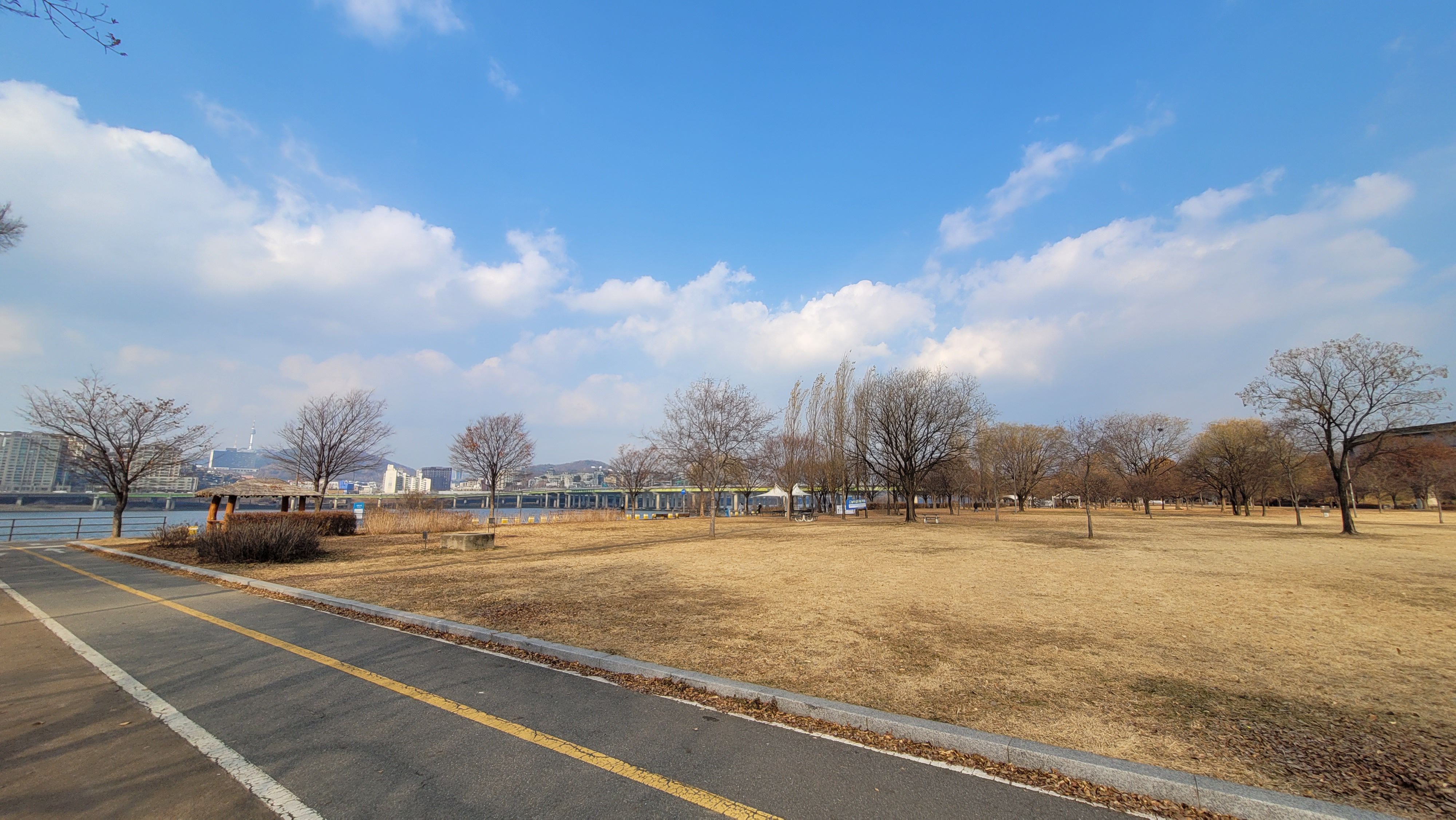
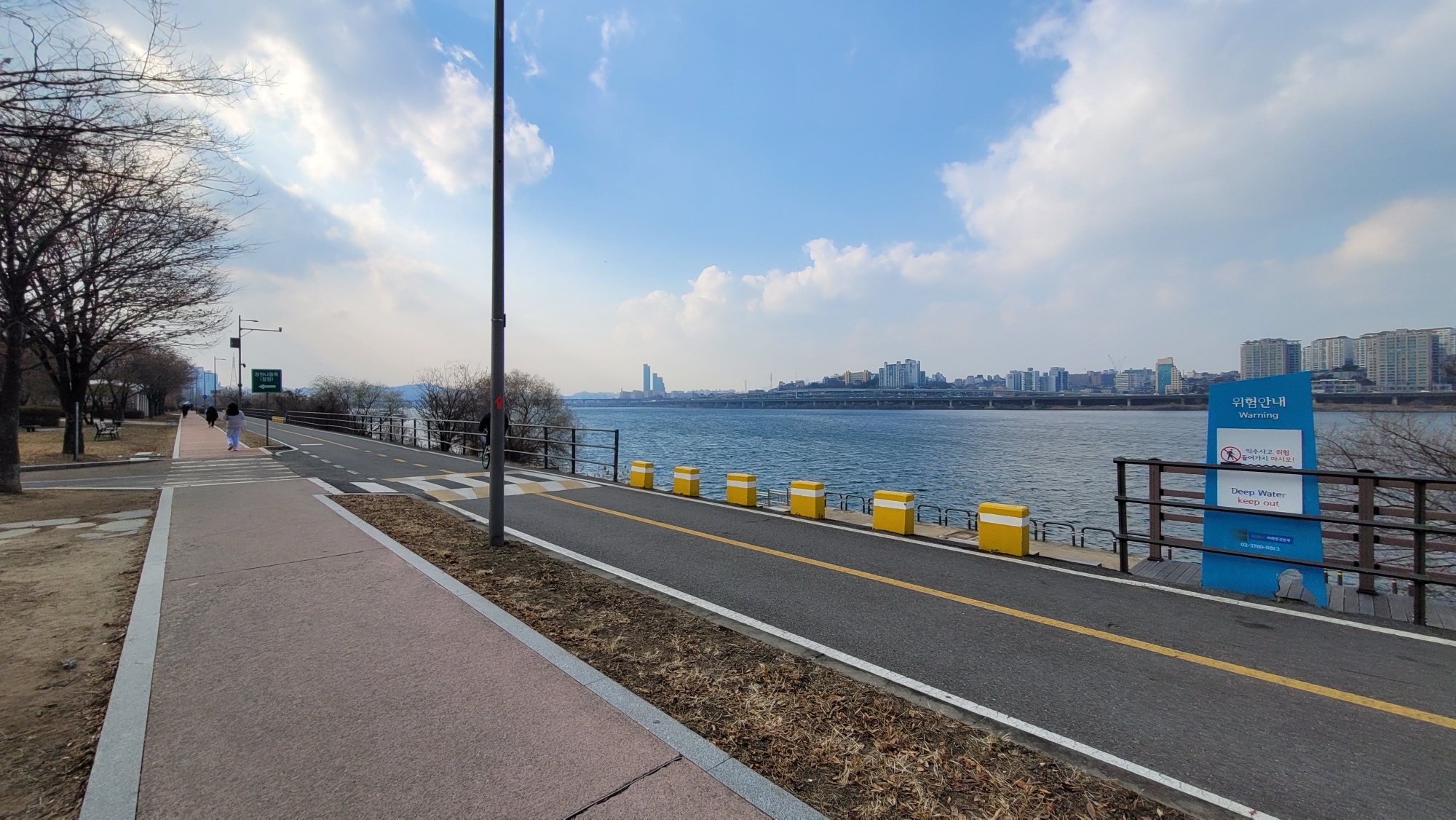
An October 13 access notice shows a route using the elevator and ramp at Apgujeong Exit 2 and the Sinsa underpass. Another route uses the elevator at Sinsa Exit 8, then bus 240 or 441 from the Sinsa Station Exit 6 stop (23109) for two stops. The office can advise on activity adaptations and accessible toilets. The photograph is an archival view of Jamwon Hangang Park from December 2024.
Footpath and bike lane along the Han River in Jamwon Hangang Park
EVENT INFO
DatesOct 17–18 · program-specific hours (KST)
CostEach workout/cooking: KRW 5,000; 17:30 show free
ApplyActivities: Oct 14, 17:00 deadline; check availability
Contact070-4705-8860
LOCATION
Jamwon Hangang Park Multi-Purpose Sports Field (rugby field)2395 Olympic-daero, Gangnam-gu, Seoul
Lawn and riverside path at Jamwon Hangang Park. Winter archival photograph by Aspere, December 30, 2024; it does not show the rugby field or the 2026 event installation. Photo: Aspere / Wikimedia Commons, “잠원한강공원 02.jpg”, CC0 1.0. Original JPEG unchanged; 4:3 center-cover display may crop the left and right edges. Source: https://commons.wikimedia.org/wiki/File:%EC%9E%A0%EC%9B%90%ED%95%9C%EA%B0%95%EA%B3%B5%EC%9B%90_02.jpg · Terms: https://creativecommons.org/publicdomain/zero/1.0/
A red footpath and a bike lane run side by side along the riverbank, with the Han River and a signboard on the right. Taken in Jamwon Hangang Park on 30 December 2024; it does not show the route from Apgujeong or Sinsa stations or this year’s venue. Photo: Aspere / 잠원한강공원 05 / Wikimedia Commons / CC0
In Andong’s Hahoe Village, a free performance of Hahoe Byeolsingut Tallori, the village’s mask dance drama, starts at 2 p.m. Tuesday through Sunday. Behind the familiar smile of the Hahoe mask is a sharp comedy about aristocratic power, pretence and ordinary lives.
Masks that change with movement
Andong’s official account of Hahoe masks says that lifting or lowering the face changes the emotion a viewer perceives, while separately made jaws help the performer animate speech. The angle of the head matters as much as the carved lines.
The performance combines movement, music, dialogue and the watching crowd. A dignified figure can become ridiculous without changing masks.
Clan village and satire
UNESCO describes Hahoe and Yangdong as clan villages shaped by Joseon-period Confucian culture, where the arrangement of leading families’ houses, smaller dwellings, pavilions and places of study makes the community’s social order visible.
The drama’s aristocrat and scholar hold respected positions, yet their vanity is open to ridicule. Linking the village layout with the stage satire is an interpretation, not evidence that every joke refers to a particular household.
The two UNESCO listings are separate. The historic villages of Hahoe and Yangdong were inscribed on the World Heritage List in 2010. Talchum, the broader Korean mask dance drama tradition that includes Hahoe, entered the Representative List of the Intangible Cultural Heritage of Humanity in 2022. One recognizes a place, the other a living practice.
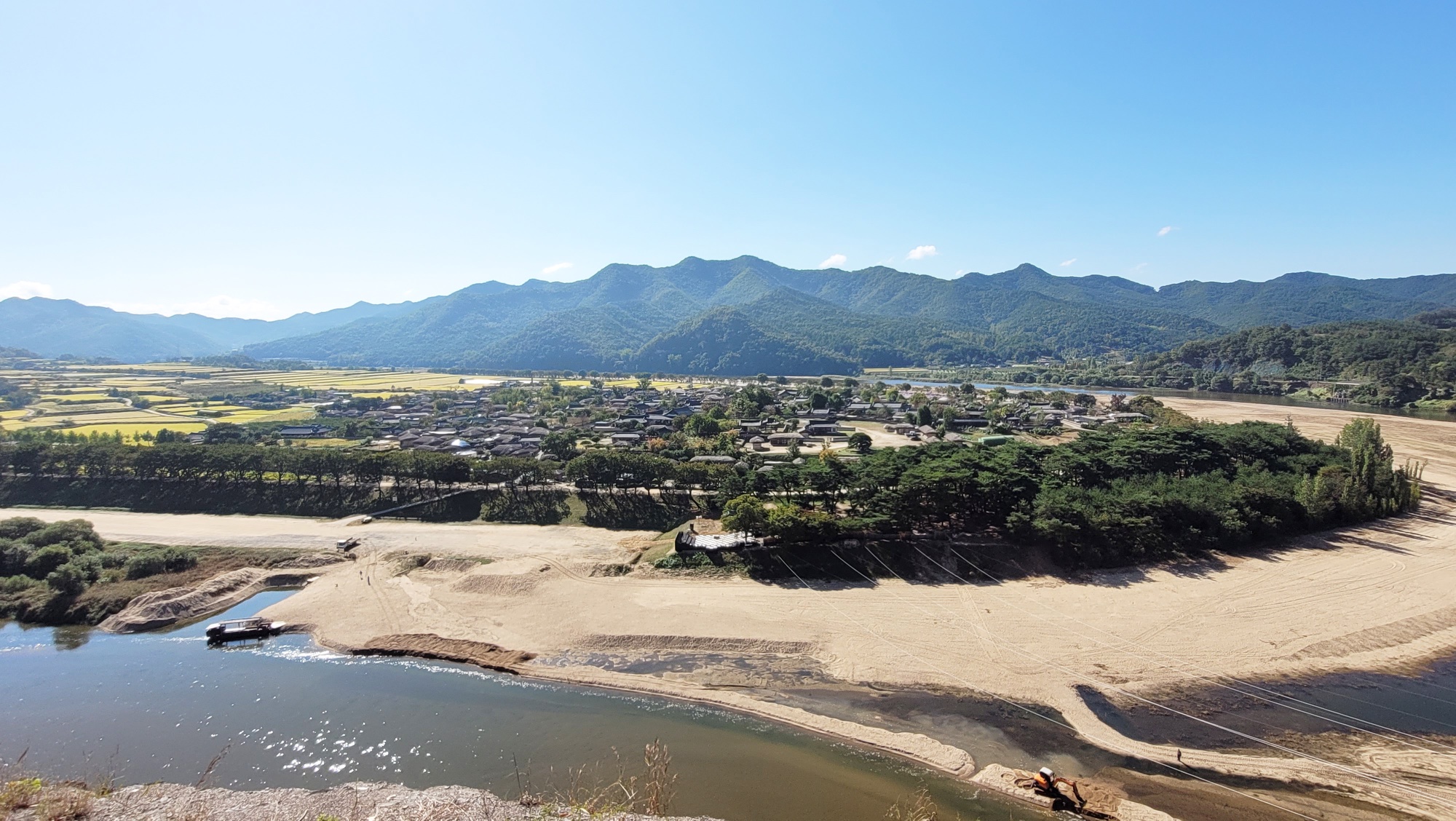
Hahoe Folk Village seen across the river sandbank, Andong
Five characters
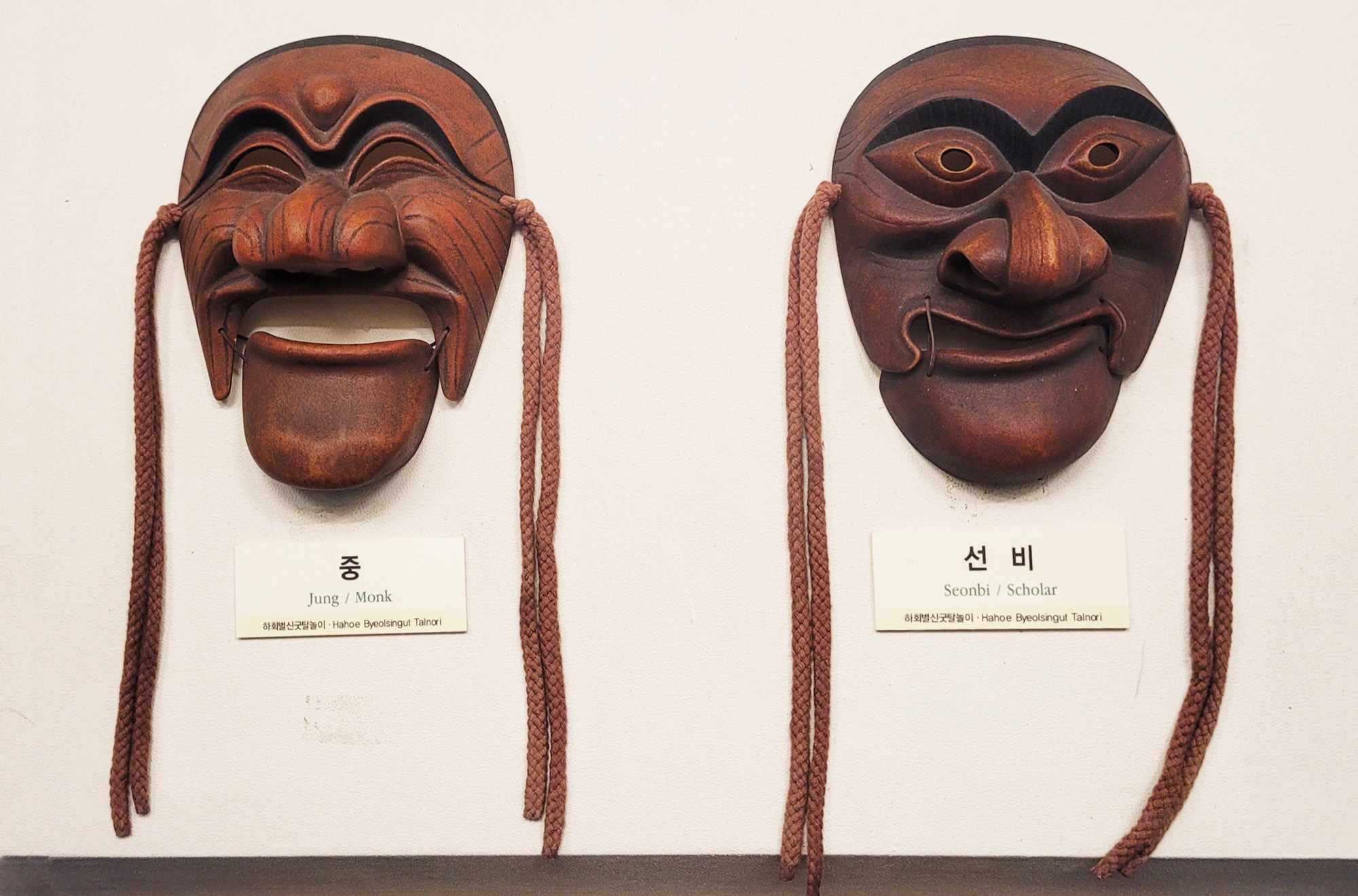
Yangban, the aristocrat, wears a broad smile, but his actions expose the weakness behind his status. Seonbi, the scholar, claims respect through learning. The aristocrat–scholar scene mocks the boasting and hypocrisy of both.
Choraengi, the aristocrat’s servant, interrupts and unsettles the dignity around him. Jung, the monk, fails to keep the discipline his position demands, and the wayward-monk scene turns that into comedy. Halmi, an elderly widow, sings a weaving song about hunger and the hardships of married life.
These five are the principal figures, not the full cast. The relationships of master and servant, rival men of standing, a cleric and his desires, and an older woman recounting hardship drive the scenes.
Monk (Jung) and Scholar (Seonbi) masks on display
Dialogue and rhythm
Who addresses whom, who waits or interrupts and whose posture shifts reveal the relationships in each scene. The gestures are not a fixed code but the performers’ way of making social relations visible.
The official programme for the annual presentation lists musicians on gongs, drums and the taepyeongso, a wind instrument. Gestures lock into the rhythm, and dialogue gives way to dance.
According to Andong Tourism, the regular performance presents six scenes in its main hour, with an introduction at 13:50, the show from 14:00 and an audience finale at 15:00–15:10. It does not reproduce the full ritual, and audience participation follows the performers’ and venue’s directions.
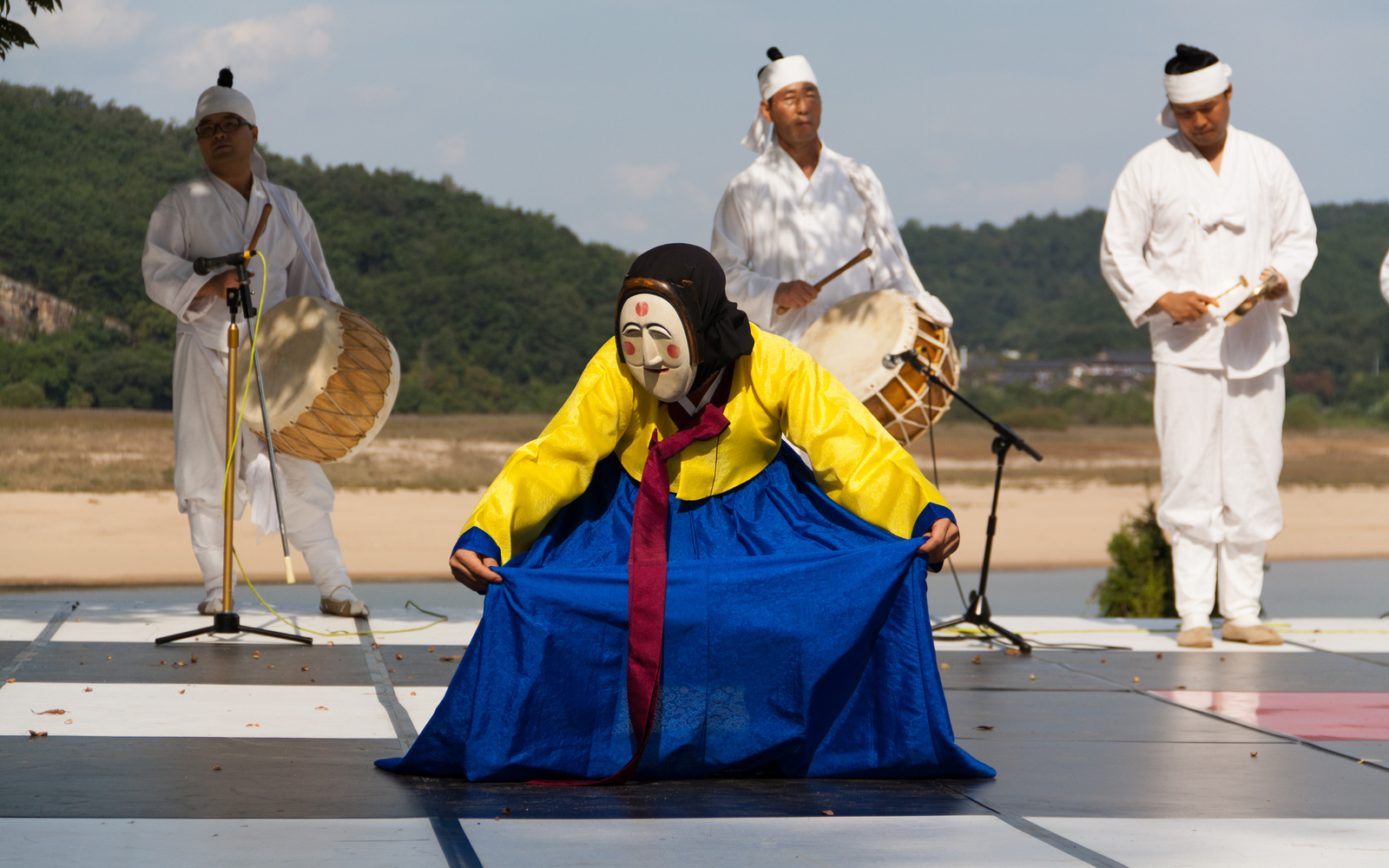
Archival 2012 Hahoe mask-dance photograph: a masked performer in yellow and blue bends forward, with white-clad percussionists behind.
A tradition revived
The Korean Studies Institute’s historical account says transmission stopped after the 1928 performance. A research group formed in 1973 began reconstruction from a recorded script and sought people who remembered the earlier event. Meeting Yi Chang-hui, who had performed as a young man, helped recover details the text alone could not supply.
Research in the mid-1970s led to revival performances and to designation as an important intangible cultural property in 1980. The same account dates the regular visitor performances to 1997; the older timetable it gives no longer applies.
A mask can survive in storage, but movement, costume, dialogue and scene order continue only if people learn and teach them. Calling the drama “unchanged for 800 years” obscures that work of recovery and transmission.
Without Korean
Without Korean, some dialect, wordplay and social references will be lost. The five characters, along with changes in pace, distance, gesture and gaze, still make the scenes readable.
UNESCO describes audience response as an essential part of talchum. Spectators are not expected to force a reaction or join in.
Current English or Japanese subtitles and live interpretation have not been confirmed. The preservation society can advise on language support.
Schedule and transport
The published regular schedule is Tuesday–Sunday, 14:00–15:00, from March through December, and Saturday and Sunday, 14:00–15:00, in January and February. The operator’s October 2026 calendar lists shows on October 13–18, 20–25 and 27–31; the Mondays, October 19 and 26, are blank.
Saturday, October 24 differs. The National Intangible Heritage Center lists the annual presentation from 13:00 to 16:00, with an invited performance and opening proceedings followed by the main Hahoe presentation of nine scenes at 14:00–15:30 and a finale until 16:00.
Andong Tourism lists bus 210 from Andong Station or the bus terminal to the Hahoe area; downtown, it stops opposite Kyobo Life. Departures and return services are on Andong’s live bus information system.
Venue and admission
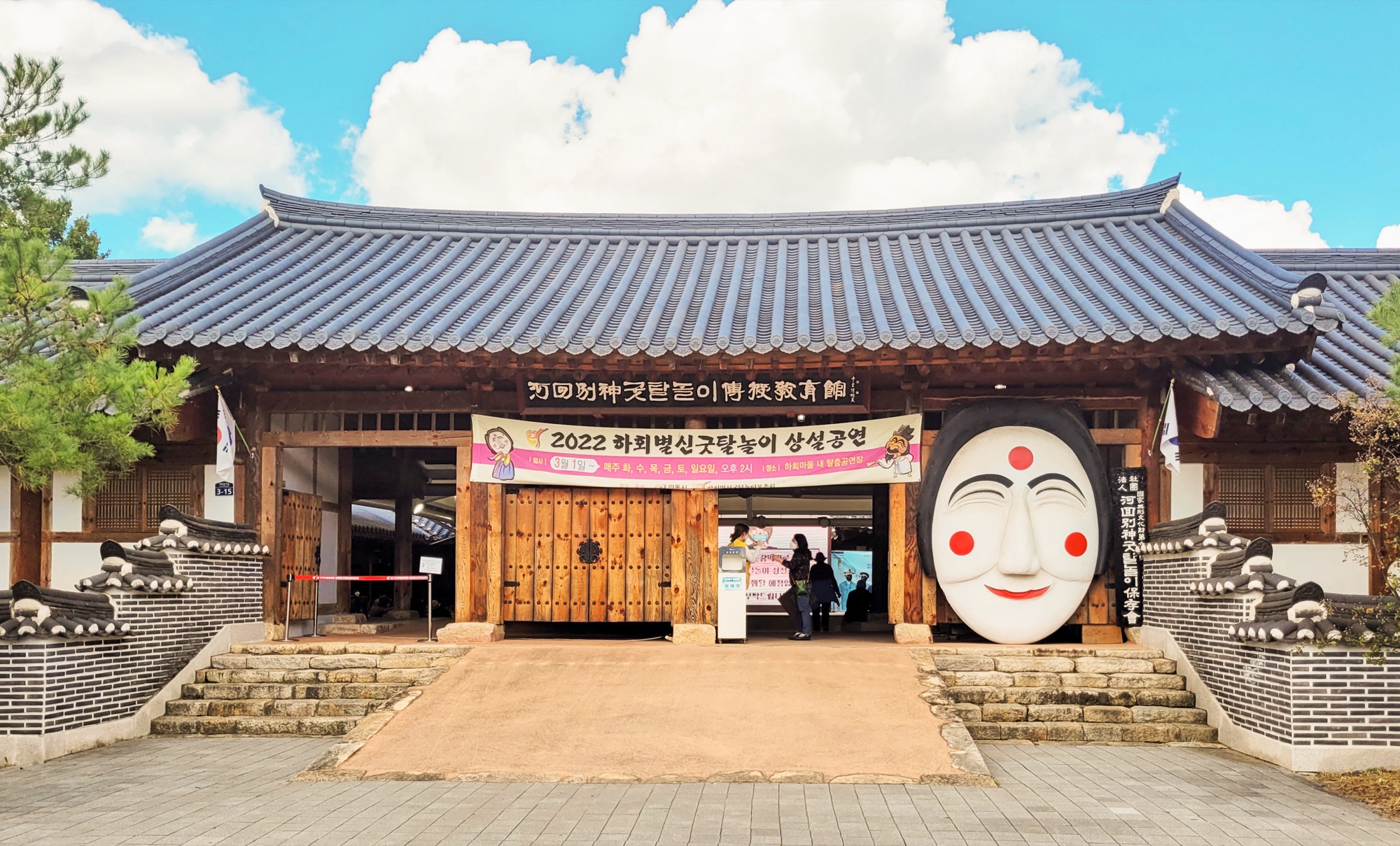
The performances take place at the Hahoe Byeolsingut Tallori Training Center, 하회별신굿탈놀이 전수교육관, at 3-15 Hahoejongga-gil, Pungcheon-myeon, Andong, opposite the village-entrance management office. Visitors buy village admission at the parking area and take a free shuttle to the village entrance.
The show is free; village admission is ₩5,000 for adults, ₩2,500 for teenagers and ₩1,500 for children. Public parking and the Hahoe World Mask Museum are free. From October to March, admission closes at 16:30, though not every building stays open until then. The village is inhabited, and private courtyards are off-limits.
Information was checked on October 12, 2026, KST. The regular show requires no advance booking, but seats are not guaranteed. For groups, seating, subtitles or step-free access, contact the preservation society at +82-54-854-3664.
Entrance of the Hahoe Byeolsingut Tallori Training CenterSources & context
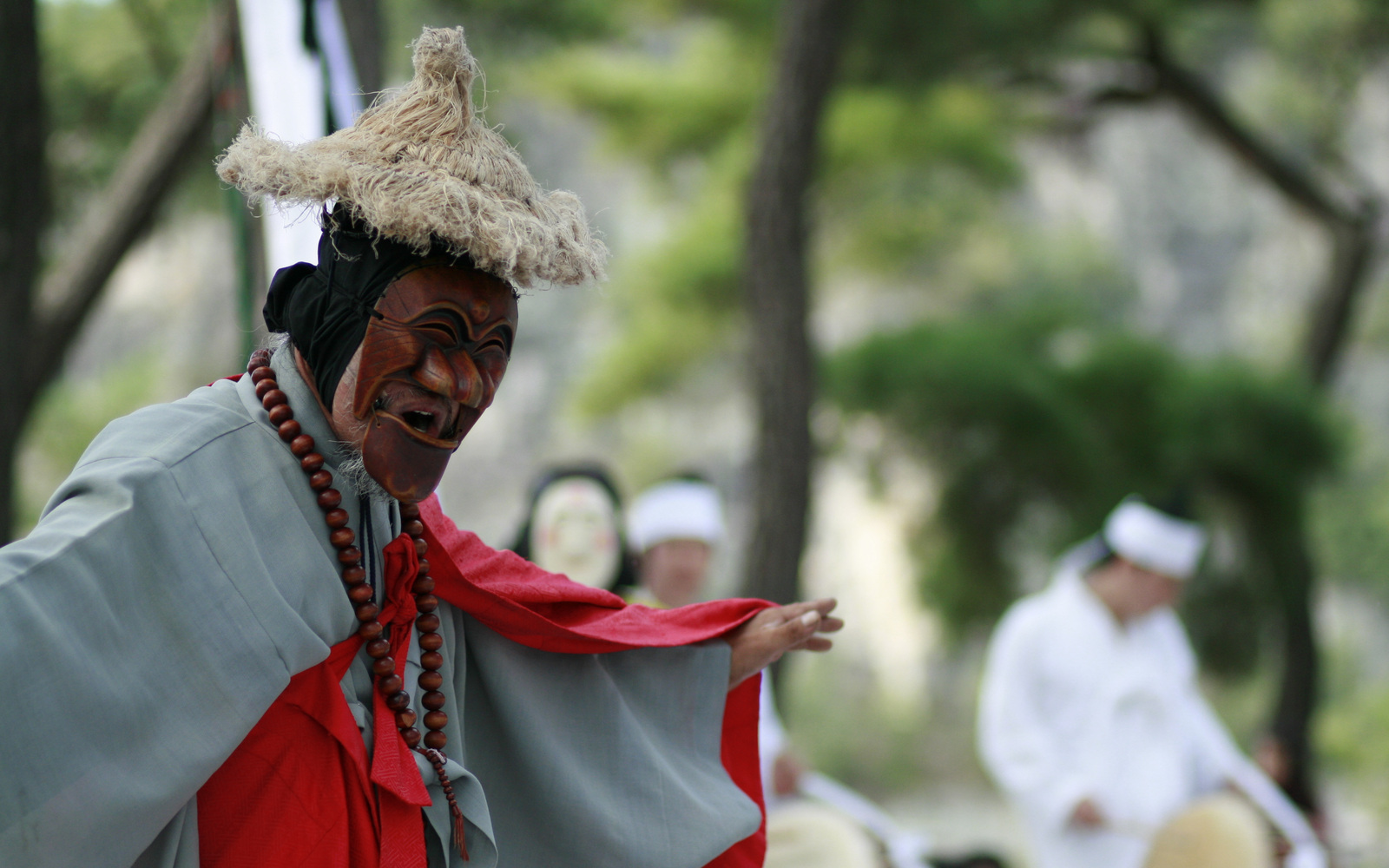
Archival Hahoe mask-dance photograph of a masked performer in grey and red robes. Captured 2008-09-28. Author/credit: Korea.net / Korean Culture and Information Service; photo: Andong Festival Tourism Foundation. Title: “Mask dance in Hahoe village (4459428890).jpg”. Source: https://commons.wikimedia.org/wiki/File:Mask_dance_in_Hahoe_village_(4459428890).jpg. License: CC BY-SA 2.0 (https://creativecommons.org/licenses/by-sa/2.0/). Modification: 8:5 crop removes 162 pixels from the lower edge, preserving the hat, mask and extended hand; proportionally reduced to 1600×1000 and recompressed as JPEG. No padding, stretching, retouching, generated content or text overlay. The original full frame is available at the source link. This adapted image remains under the same license. An archival image, not a view of the current venue.
Archival Hahoe mask-dance photograph showing a performer in yellow and blue with percussionists behind. Captured 2012-09-28. Author/credit: Idobi. Title: “Hahoe 8747.jpg”. Source: https://commons.wikimedia.org/wiki/File:Hahoe_8747.jpg. License: CC BY-SA 3.0 (https://creativecommons.org/licenses/by-sa/3.0/). Modification: 8:5 crop removes 89 pixels from both the upper and lower edges, preserving the performer and the musicians; proportionally reduced to 1600×1000 and recompressed as JPEG. No padding, stretching, retouching, generated content or text overlay. The original full frame is available at the source link. This adapted image remains under the same license. An archival image, not a view of the current venue.
The houses and trees of Hahoe Folk Village, Andong, with mountains behind, seen across the river and its sandbank. Photo: Bernard Gagnon / Hahoe Folk Village 01 / Wikimedia Commons / CC0 1.0
The Monk (Jung, left) and Scholar (Seonbi, right) Hahoe masks hanging side by side at the Hahoe World Mask Museum, Andong. Photo: Bernard Gagnon / Hahoe World Mask Museum 06 / Wikimedia Commons / CC0 1.0
The entrance of the Hahoe Byeolsingut Tallori Training Center in Andong, with a banner for the regular performances and a giant mask sculpture beside it (photographed in 2022). Photo: Bernard Gagnon / Hahoe Byeolsingut Tallori Training Center 01 / Wikimedia Commons / CC0 1.0
Seoul’s 2026 Namsan Night Festival runs on selected dates from 23 October to 14 November across Namsan. It comprises Campnic, a picnic with music and films at Baekbeom Square; autumn foliage walks from Yejang Park; and Palgak Club, a silent DJ party by Palgakjeong Pavilion. Campnic advance bookings have closed early, and Palgak Club reservations open on 2 November.
The festival
The 2026 Namsan Night Festival links different parts of the mountain through a camp-style picnic, autumn walks and a silent DJ party. Visitors can spend an evening watching performances and films at Baekbeom Square or walk from Yejang Park through the woods to another neighbourhood.
Programmes take place only on designated dates between 23 October and 14 November, each with its own meeting point and booking schedule. All times are Korea Standard Time.
Namsan Campnic
Namsan Campnic runs from 17:00 to 22:00 on 23, 24, 30 and 31 October and 6 and 7 November at Baekbeom Square. Visitors use a tent zone or a picnic-mat zone, with Namsan Sunset FM sharing stories and song requests, Moonlight Live music and Starlight Cinema films. Planned capacity is 100 teams a day of up to four people each, 600 teams in total.
The official website, checked on 12 October, carries a notice that advance reservations have closed early. The general guidelines mention on-site registration, but only if space remains.
Outside food and deliveries are allowed. Delivery riders cannot enter the event area, so participants collect orders at a designated pickup zone. Personal open flames and cooking equipment are restricted.
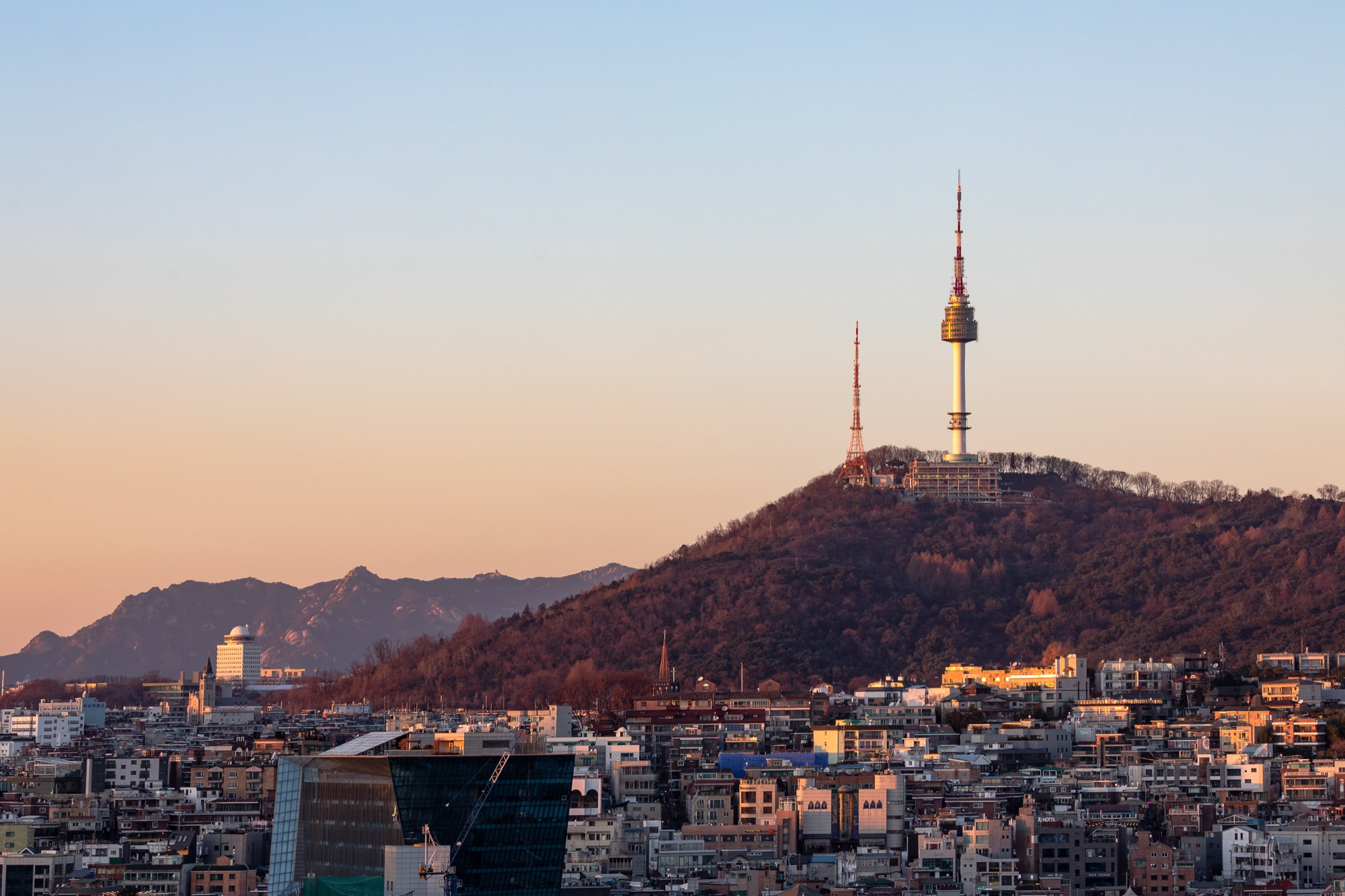
Namsan and N Seoul Tower above the city at dusk
Autumn Foliage Walk
The walk starts at Namsan Yejang Park. On 23 and 24 October, the 3.8km first route follows the northern circuit and Haneul Forest Trail to the entrance of Namsan Library; the official estimate is about 90 minutes. On 6 and 7 November, the 4.2km second route passes through Namsan’s northern forest trail to Namsangol Hanok Village.
Capacity is 700 people a day, 2,800 in total, with programme hours of 16:00–21:00. Participants must register for their booked departure group. Under the official guidelines, arrivals after 18:00 are treated as no-shows, with no participation or refund. Availability by date has not been verified.
The first route has steps as well as a barrier-free deck section, and the second has a long run of descending steps. Children and participants who need help walking must be accompanied. The routes finish away from the start, and there is no baggage storage.
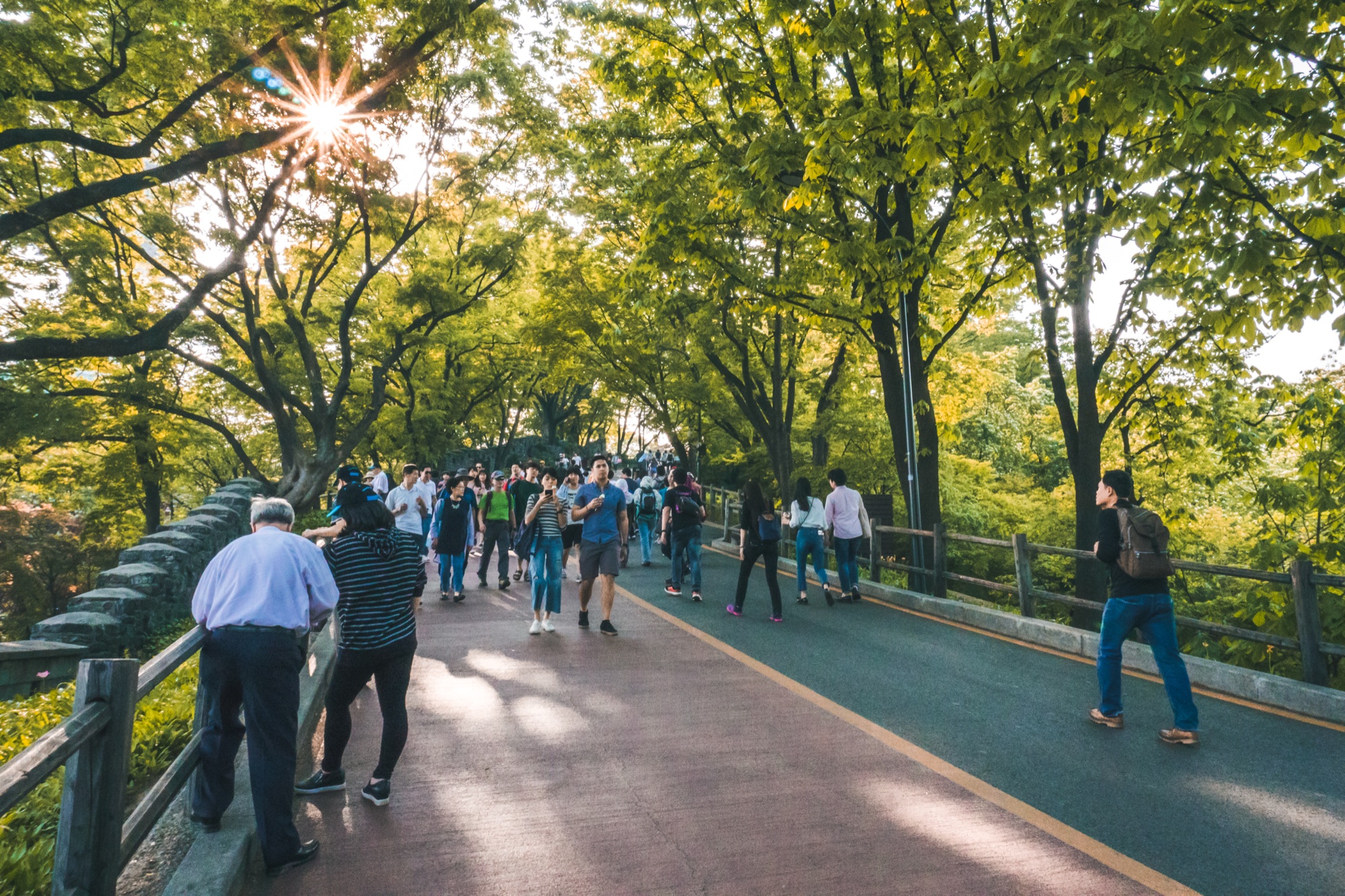
People walking a tree-lined path on Namsan
Palgak Club
On 14 November, Palgak Club takes place in front of Palgakjeong Pavilion near N Seoul Tower: a silent DJ programme set against Seoul’s night skyline. There are two sessions, 17:30–19:00 and 19:30–21:00, each for 300 people.
Reservations open at 10:00 on 2 November. Programme details, including DJs, will be posted on the official website later.
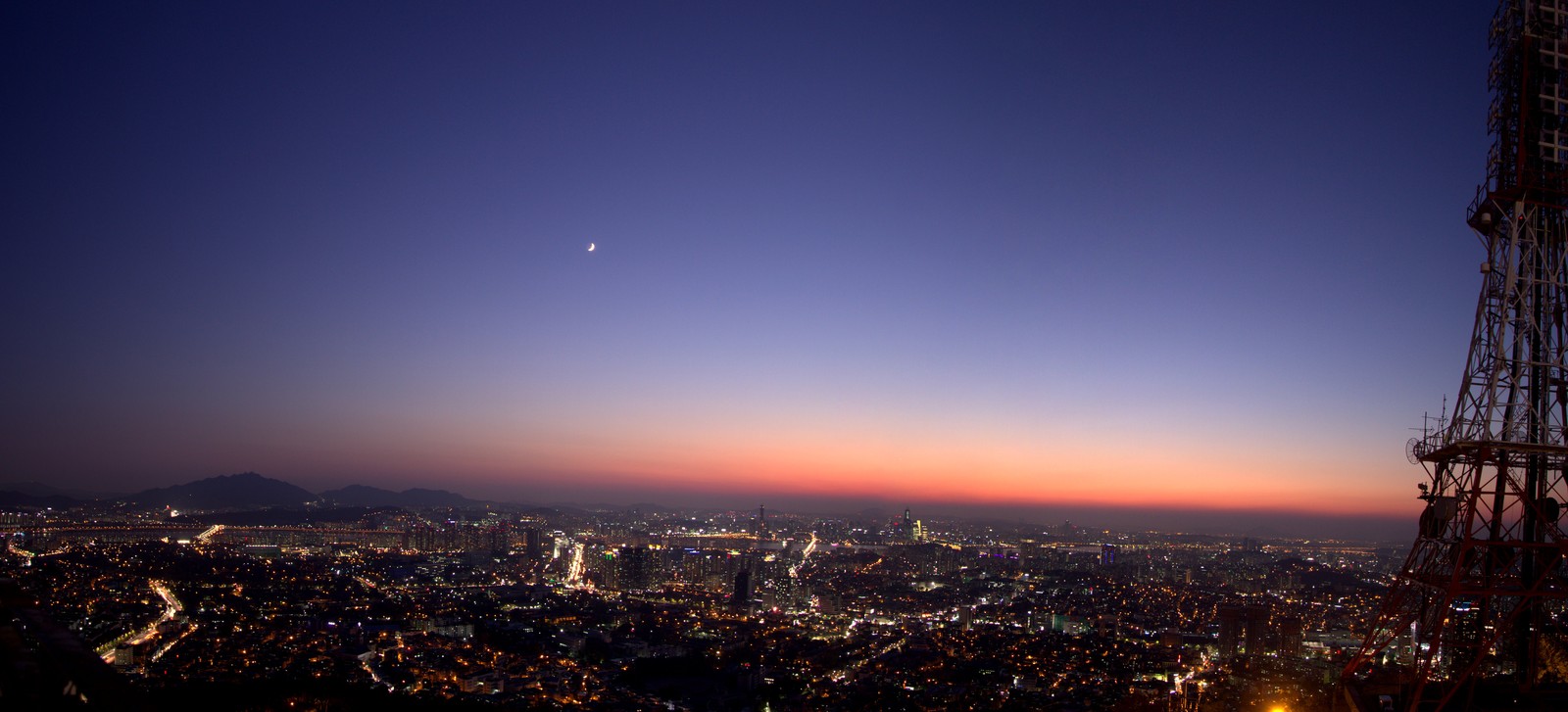
Seoul’s city lights beneath a crescent moon and orange dusk horizon, viewed from Namsan in 2011
Deposits and refunds
The deposit is KRW 10,000 per team for Campnic and KRW 5,000 per person for the walk and Palgak Club, refunded in full once attendance is confirmed. On 12 October the organisers reported a payment-system error: people who booked that day had to have their deposit confirmed by 11:00 on 13 October for the reservation to stand, or it would be cancelled. Payment instructions are in the 12 October deposit notice on the official website.
Refunds are scheduled for 26–31 October for attendance on 23–24 October; 2–6 November for 30–31 October; 9–13 November for 6–7 November; and 16–20 November for 14 November.
Under the cancellation terms on Naver Booking, cancelling on the day of booking or at least seven days before use brings a full refund; 10% is deducted six to three days before and 30% two to one days before.
Bookings for foreign visitors
The festival website has English guidance and an English deposit notice. The foreign-participant reservation route is for foreign participants only; an official popup warns that Korean participants who use it may have their bookings cancelled.
The public guidance does not confirm support for overseas phone numbers, bookings without membership or foreign-issued cards. The organising office can be reached at 070-5226-0759 or namsannightfestival@gmail.com from 10:00 to 18:00, with a lunch break from 12:30 to 13:30.
Locations and what to bring
The official addresses are 100-115, Hoehyeon-dong 1-ga, Jung-gu, Seoul, for Campnic; 5-22, Juja-dong, Jung-gu, for the walk’s meeting point; and 8-1, Yejang-dong, Jung-gu, for Palgak Club. The representative address on Naver Booking is not the meeting point for every programme. The organisers recommend public transport and do not provide parking passes or cover parking.
The walks call for footwear with good grip and warm outerwear. Rain, snow, strong winds or severe cold may change hours or routes or cancel events; the official website posts updates.
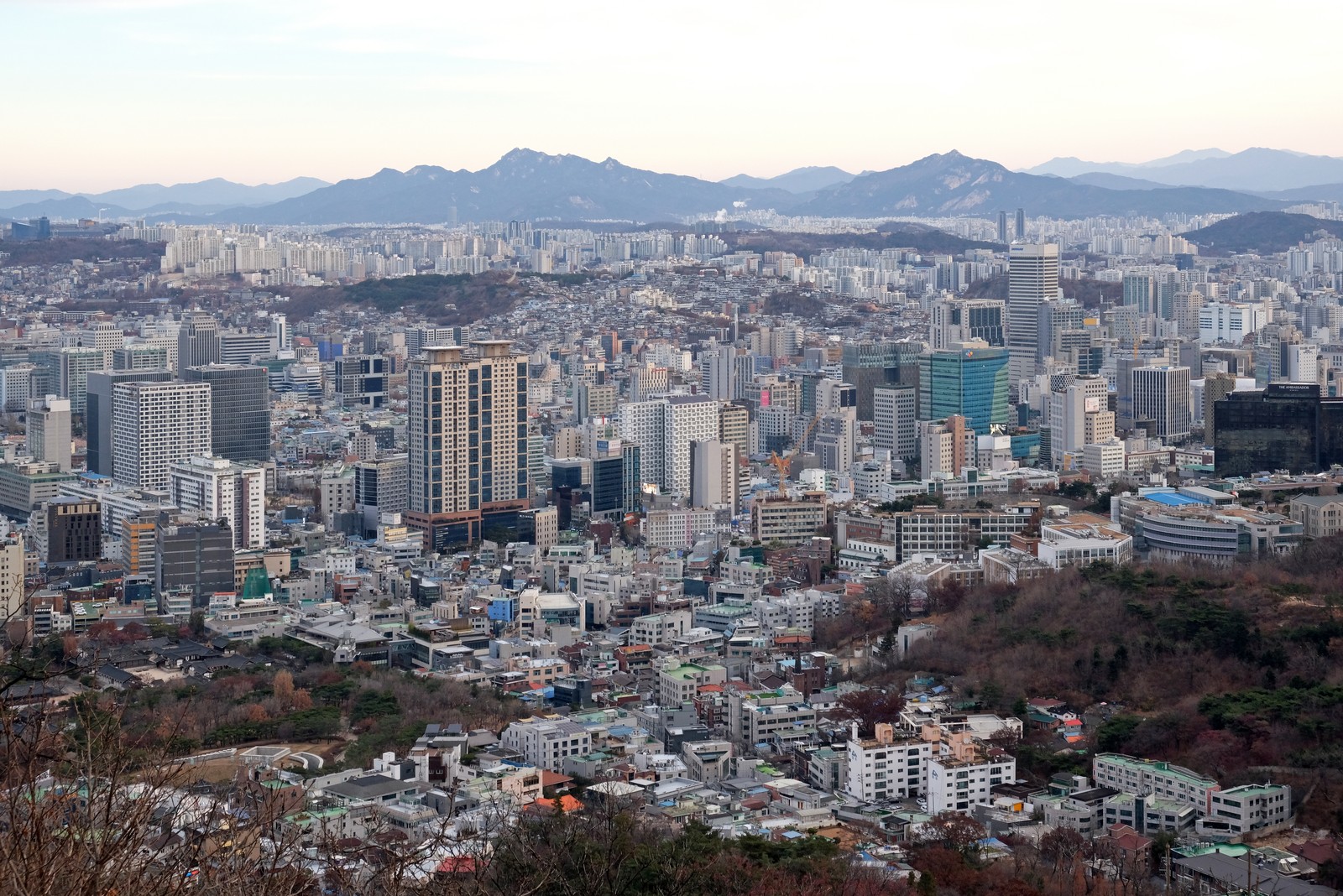
Seoul’s dense city centre and mountain ridges seen northward from Namsan in December 2022Sources & context
Autumn foliage in Namsan Park, Seoul, photographed on 28 October 2018. Archival place context; not the 2026 festival, a confirmed event route, or this year’s foliage conditions. Photo: Ken Eckert / “Namsan Park Orange Leaves, Seoul.jpg” / Wikimedia Commons / CC BY-SA 4.0. Proportionally resized and JPEG-encoded. The card uses an 8:5 centred crop; open the image for the complete frame. The same license applies to the adapted image.
Seoul at dusk from Namsan Park, photographed on 30 October 2011. An archival panorama stitched by the photographer from nine real photographs; not a scene from the 2026 festival or a confirmed event route. Photo: Markrosenrosen / “Seoul at Dusk.jpg” / Wikimedia Commons / CC BY-SA 3.0. Proportionally resized and JPEG-encoded. The card uses an 8:5 centred crop; open the image for the complete frame. The same license applies to the adapted image.
Looking north across Seoul from Namsan on 4 December 2022. Archival city context; not the 2026 festival or a confirmed event route. Photo: kallerna / “Seoul from Namsan 1.jpg” / Wikimedia Commons / CC BY-SA 4.0. Proportionally resized and JPEG-encoded. The card uses an 8:5 centred crop; open the image for the complete frame. The same license applies to the adapted image.
Namsan and N Seoul Tower rise above city buildings at dusk. Archive photo; the date is not recorded. Photo: Seoul Tourism Archive / Namsan and Namsan Tour at Dusk / Wikimedia Commons / KOGL Type 1
People walking a shaded path in the N Seoul Tower area on the afternoon of May 3, 2017. Archive photo, not of the autumn-walk route itself. Photo: Science Shrestha / Namsan Afternoon Stroll / Wikimedia Commons / CC BY-SA 3.0
Hannam University Central Museum in Daejeon holds a Hanbok Culture Week programme from 19 to 25 October 2026, with an exhibition of dangui, a Joseon-era women’s ceremonial jacket, specialist talks, hanbok try-ons and knotted-keyring workshops. Its generative-AI design contest closes earlier, on 15 October.
The programme
The programme, titled ‘한복, 선(線)을 넘다’, a play on the lines of hanbok and the idea of crossing a line, runs from 19 to 25 October 2026 at Hannam University Central Museum. It looks beyond colour and silhouette to details such as hem length, cuffs and side openings that reveal how a garment was used.
Exhibitions, talks, a workshop and a design contest are linked as looking, reading, knotting and drawing. The university says the programme is open to everyone, including Daejeon residents and international students.
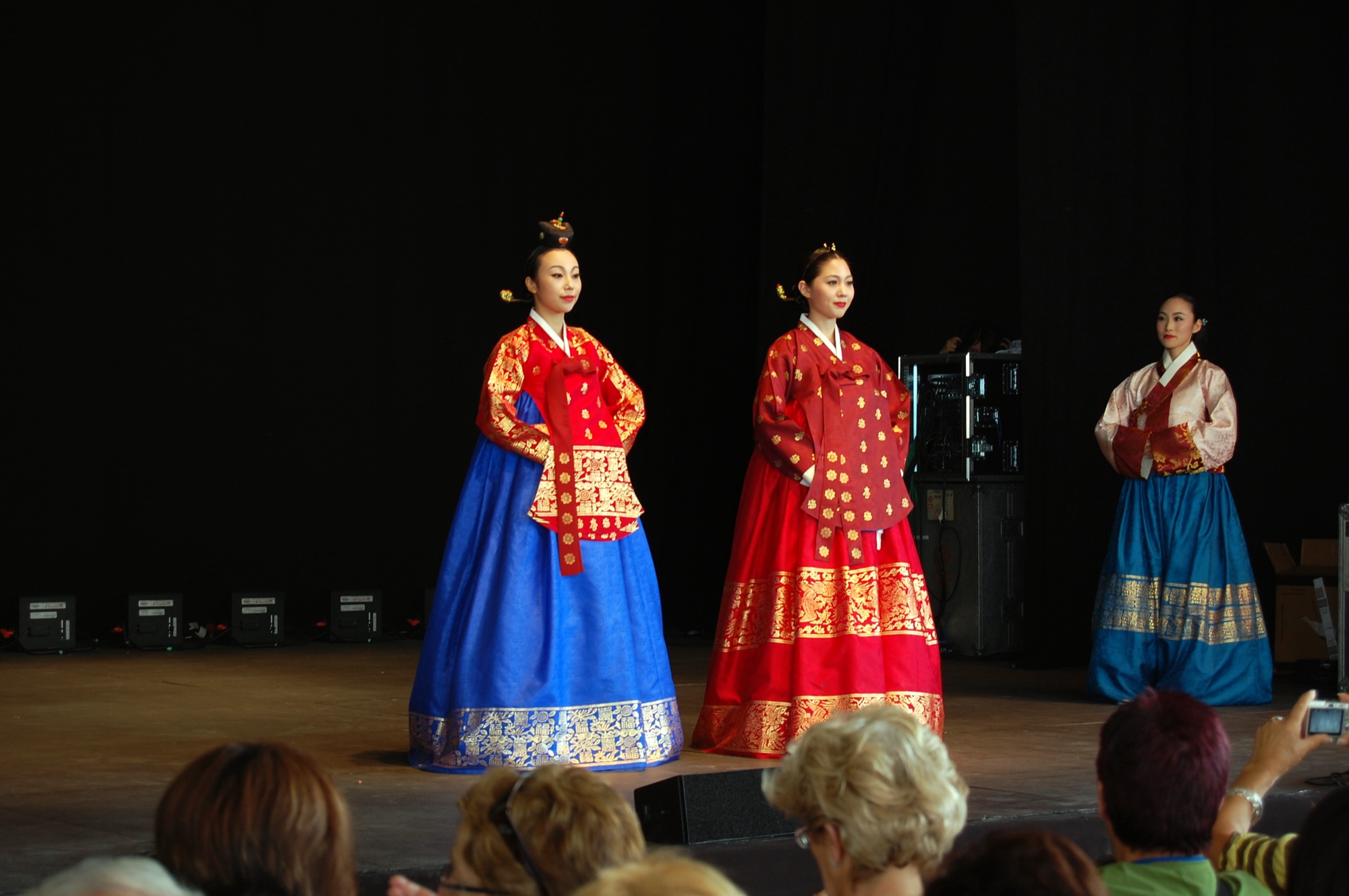
Models on stage wearing dangui jackets and long skirts
The dangui exhibition
The exhibition focuses on dangui. The National Folk Museum of Korea describes it as a ceremonial upper garment worn by Joseon-period women on less elaborate formal occasions, including court ceremonies. It is longer than an ordinary jeogori jacket, with open sides, a rounded hem and white trim at the cuffs.
The exhibition shows how materials and construction varied by season and how those choices affect line and colour. The archival photographs accompanying this article illustrate dress traditions and are not objects in the exhibition.
Exhibition and talks
The exhibition is in the Traditional Life Room of the Central Museum, on the fourth floor of Insarye Liberal Arts Building (campus building 11), 70 Hannam-ro, Daedeok-gu, Daejeon. The Korea Craft & Design Foundation’s daily schedule lists 14:00–18:00 on 19 October and 09:00–18:00 from 20 to 25 October.
Specialist talks on the garments’ form and design take place in the third-floor experience education room on 20 October, 14:00–15:00; 22 October, 15:00–16:00; and 24 October, 14:00–15:00. The wider programme also includes trying on hanbok and having an instant photograph taken.
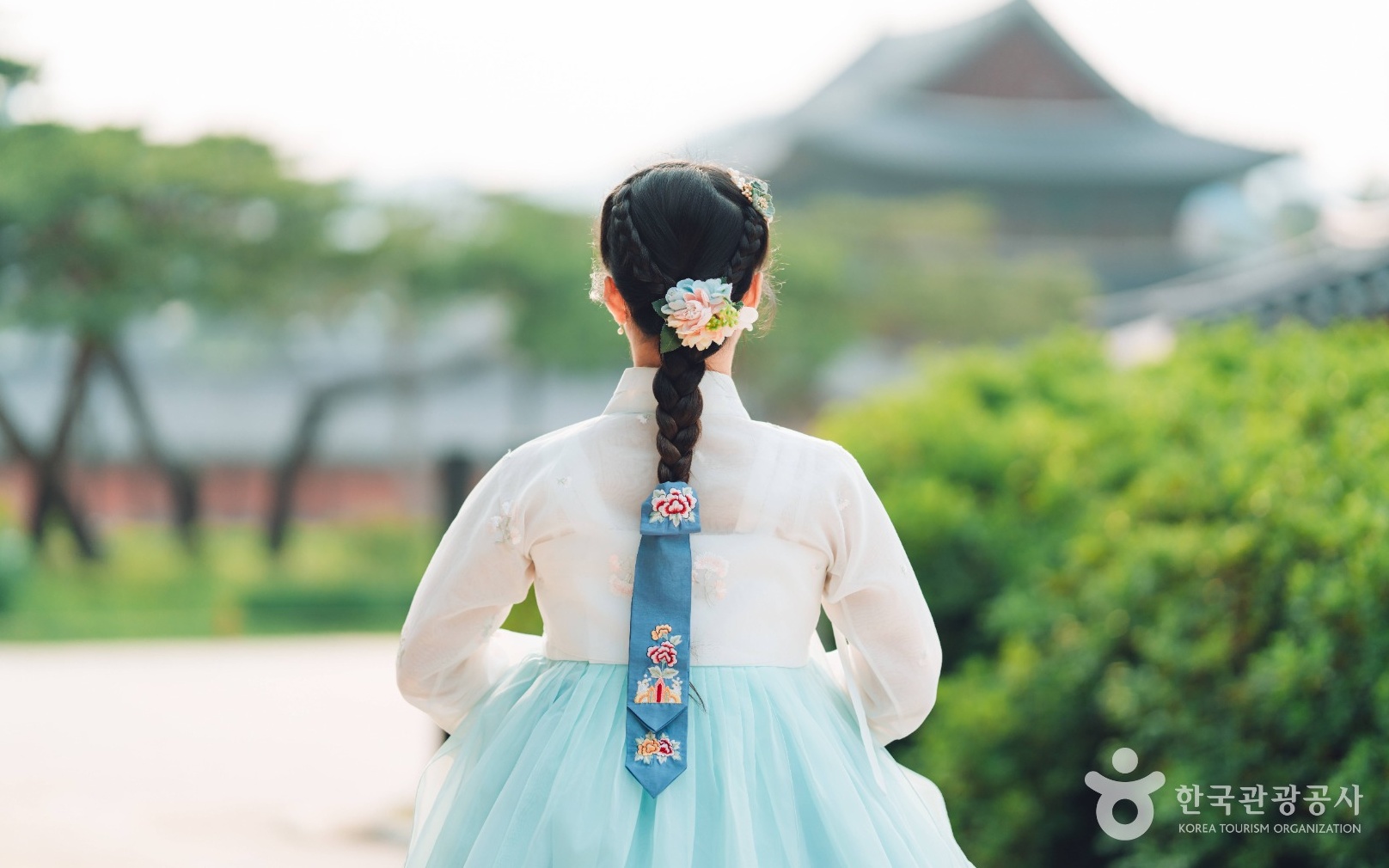
A braided hairstyle with floral decoration and a long embroidered daenggi ribbon, above a hanbok jacket.
Keyring workshop and registration
A keyring-making workshop using traditional knots runs from 14:00 to 15:00 on 21, 22 and 23 October in the third-floor experience education room.
Weekday exhibition visits need no application. Weekend exhibition visits, talks and workshops require registration by the day before the chosen session. The museum’s official form asks for a name, affiliation, contact number and programme choice. Visitors may join more than one programme but must register for each session separately.
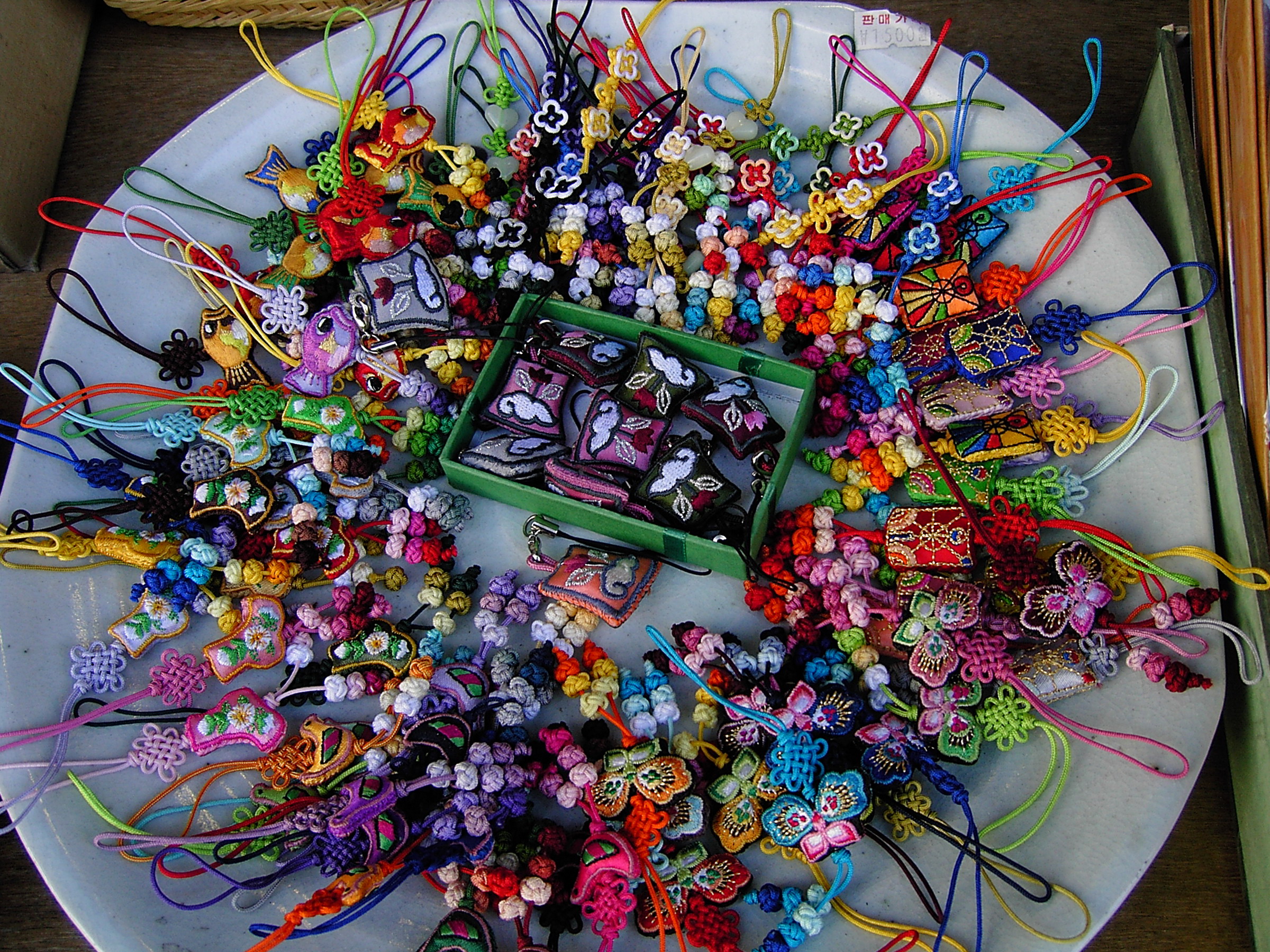
Colourful maedeup knot ornaments on a round tray
AI design contest
The generative-AI design contest, ‘내일의 선을 그리다’ (‘Drawing Tomorrow’s Lines’), closes on 15 October, before the culture week begins. The notice does not give a closing hour.
Anyone able to use generative AI may enter individually or as a team, with one work per person or team. Entries can reinterpret dangui as everyday hanbok or use traditional dress, accessories and motifs in cultural products.
Entry requirements and prizes
Entries must be printable JPG or PNG files in a vertical 3:1 ratio, corresponding to 180 cm high by 60 cm wide. Entrants submit the image, title and explanation, the name of the generative AI model and the main prompts, with their name, affiliation and contact details in the email. Entries go to bakmul@hnu.kr with the subject ‘디자인콘테스트 지원_’ followed by the entrant’s name.
First-round results will be sent individually on 17 October, and ten selected works will be printed and exhibited. Experts and visitors will judge the final awards, with winners notified individually after 25 October. Prizes are one KRW 200,000 top award, two KRW 100,000 awards and two KRW 50,000 awards.
Enquiries and international visitors
International students are explicitly welcome, but the published information does not say whether interpretation is available or whether the Korean application form accepts overseas phone numbers. The notices also do not list class fees, material costs, capacities or remaining places.
Enquiries: 042-629-7696 or 042-629-7697; from outside Korea, +82-42-629-7696 or +82-42-629-7697; email bakmul@hnu.kr. Enquiry hours are weekdays 09:00–18:00, excluding 12:00–13:00. All times are Korea Standard Time.
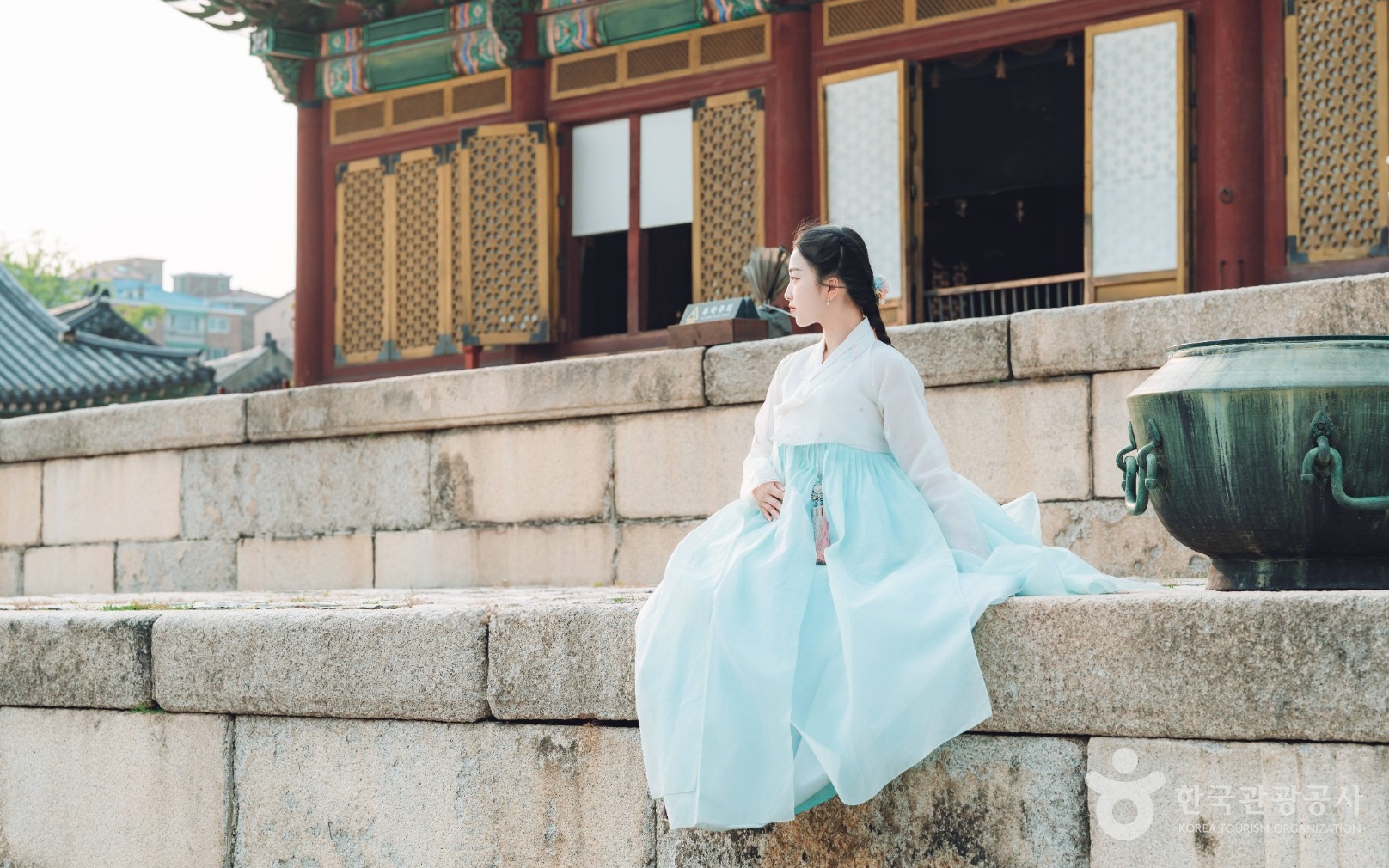
Hanbok photographed at Changdeokgung Palace, Seoul, in May 2025. An archival example of hanbok, not a dangui confirmed for Hannam’s exhibition or a scene from the 2026 event. ⓒKorea Tourism Organization - Seo Munkyo, “Changdeokgung Palace” (2025-05), KOGL Type 1 / 공공누리 제1유형. 8:5 crop mainly removes upper background; principal subjects and watermark retained; JPEG re-encoded. Original: https://phoko.visitkorea.or.kr/media/mediaList.kto?searchGbn=cntntsId&cntntsId=NaUOTz
Hanbok and a daenggi hair ribbon seen from behind at Changdeokgung Palace in May 2025. Archival dress-and-accessory context, not an exhibit or workshop result from Hannam University. ⓒKorea Tourism Organization - Seo Munkyo, “Changdeokgung Palace” (2025-05), KOGL Type 1 / 공공누리 제1유형. 8:5 crop mainly removes upper background; principal subjects and watermark retained; JPEG re-encoded. Original: https://phoko.visitkorea.or.kr/media/mediaList.kto?searchGbn=cntntsId&cntntsId=51WJaw
A stage photo taken on July 16, 2008: models in gold-patterned dangui jackets and long skirts. Archive photo, not an item from the Hannam University exhibition. Photo: Sergio / Korean royal costumes-01 / Wikimedia Commons / CC BY 2.0
Taken on March 13, 2005: colourful cord ornaments made with maedeup, traditional Korean knotting, laid out on a round tray. Photo: SJ Yang / Korean knotting-Maedeup-01 / Wikimedia Commons / CC BY-SA 2.0
The 26th Hanseong Baekje Festival runs from 23 to 25 October 2026 around the 88 Grass Field at Seoul’s Olympic Park. The programme includes Songpa Sandae Nori mask performances, a musical based on the Domi ferry legend, opening and closing concerts with Loco, Davichi, Kep1er and Dynamic Duo, and a craft village built around Baekje motifs.
The festival
The 26th Hanseong Baekje Festival runs from 23 to 25 October 2026 around the 88 Grass Field at Olympic Park in Seoul. Its theme, ‘찬란한 문화, 깊은 울림, 하나된 우리’, refers to radiant culture, deep resonance and a united community. The programme draws on Hanseong Baekje history and culture, combining traditional performance, contemporary music and local participation. Seoul’s event listing says participation is open to all.
The archival park photographs accompanying this article show the location, not the 2026 festival or this year’s stage layout.
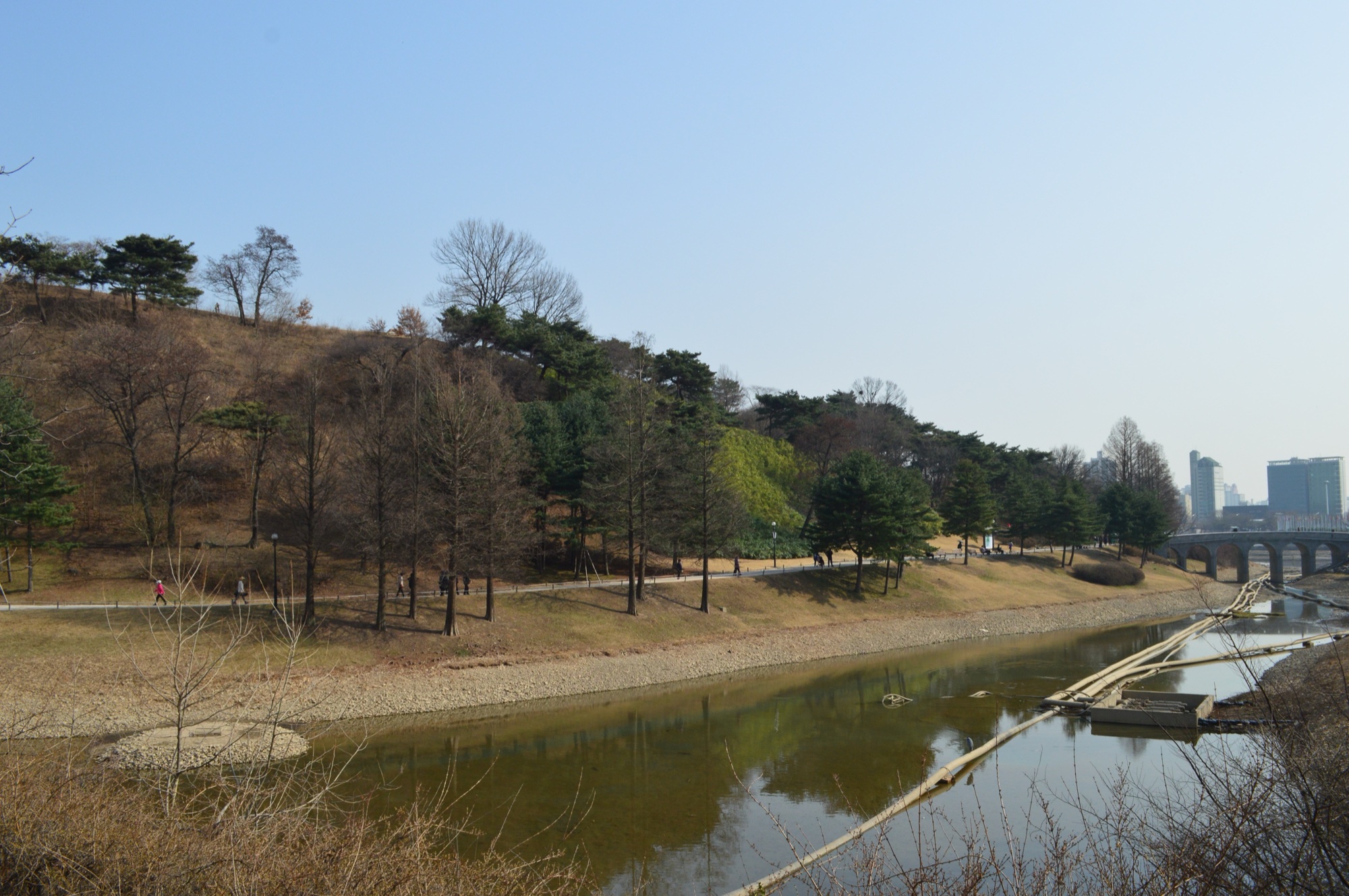
The earthen rampart of Mongchon Toseong and the water before it
Mask performance and musical gala
Special Songpa Sandae Nori performances are scheduled for 17:30 on 23 and 25 October. The 2026 leaflet lists a procession, the mask performance itself and a session in which audiences learn the movements.
At 11:00 on 24 October, the main stage hosts the Songpa Cultural Foundation’s musical gala ‘강가에 서서’, roughly ‘Standing by the River’. It reinterprets the Domi ferry legend associated with the Hanseong Baekje period as a story of love and forgiveness.
Opening night
The opening programme begins at 19:00 on Friday 23 October with a drone welcome ceremony, media art and contemporary dance, an orchestral collaboration and live band music. Loco and Davichi are scheduled to perform, and a drone light show is planned.
The official programme lists the running order and any weather-related changes.
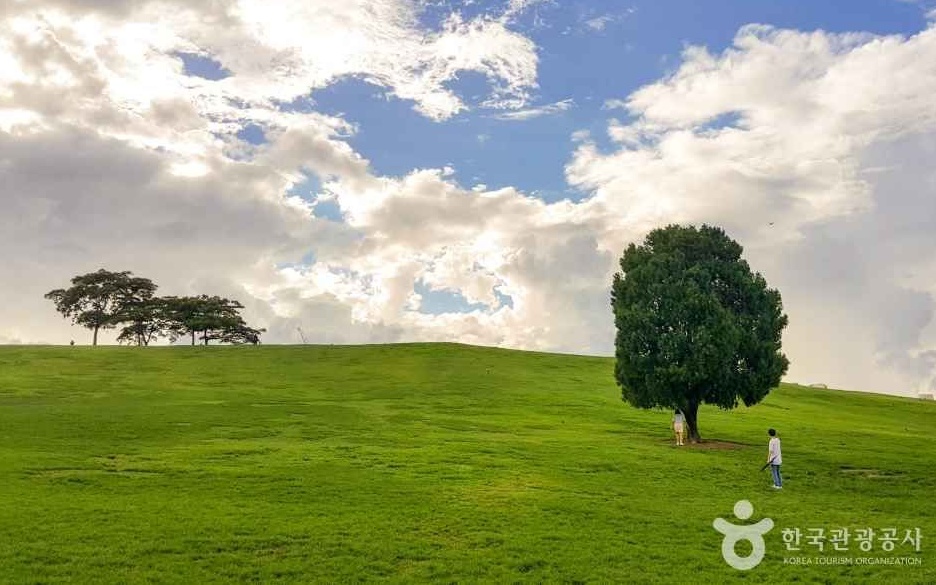
A grassy hill, a large tree and two people in Olympic Park.
Closing concert and Saturday
The closing ‘Hanseong Culture Concert’ begins at 19:00 on Sunday 25 October, with large-drum percussion, geomungo zither with a band, an ensemble presentation of pansori and fusion Korean traditional music featuring Lee Bong-geun. Kep1er and Dynamic Duo are also scheduled to perform.
On Saturday 24 October, the community programme ‘한마음 어울마당’ begins at 16:50. The 19:00 start of the opening and closing programmes is not the stage time of any particular act.
Experience village
The experience village is open daily from 10:00 to 19:00. The official leaflet lists T-shirt decorating with traditional patterns, creative building blocks, Baekje crown-making, crafts inspired by a gilt-bronze incense burner and traditional-design shrink-plastic keyrings.
Only two leaflet entries are marked free: the Baekje costume-rental and ‘horse riding’ entry, and drawing Hanseong Baekje in sand. Material charges, capacity and registration for other activities are set by each operator, and a free label does not guarantee a place.
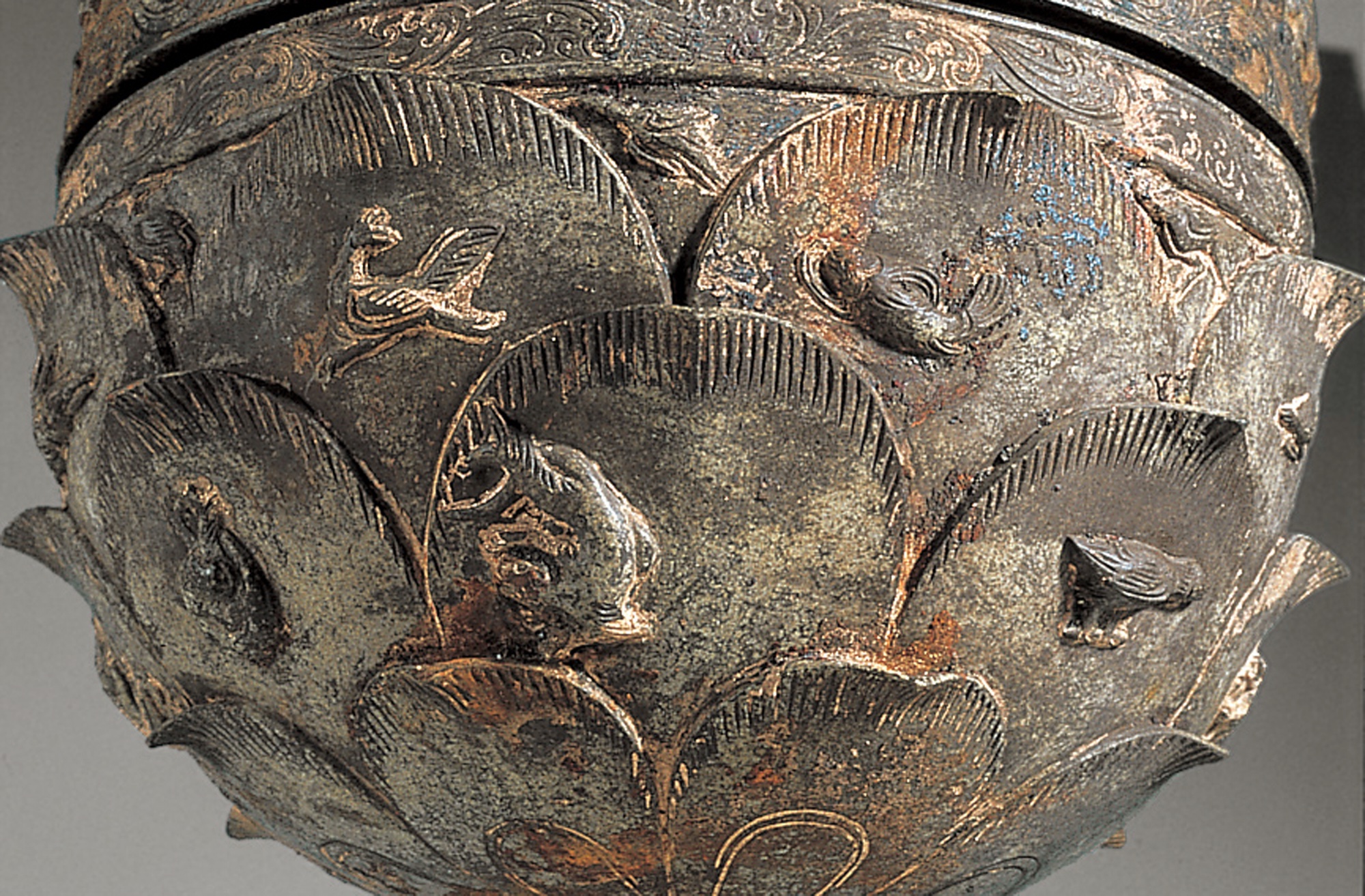
Close-up of lotus-petal decoration on the Baekje incense burner
Food market and getting there
The food market runs daily from 11:00 to 21:00. Because the experience village closes at 19:00, visitors who want both daytime activities and an evening concert should start with the experience area.
The 2026 leaflet gives an approximately five-minute walk from exits 3 or 4 of Olympic Park Station on subway lines 5 and 9, or about ten minutes from exit 2 of Hanseong Baekje Station on line 9. The festival is centred on the 88 Grass Field area within the park. Walking times may vary with crowds.
For international visitors
The published 2026 information does not confirm foreign-language interpretation, walk-in entry to every programme or free access to every activity. Visitors who need language support, accessibility information or a workshop booking should ask in advance.
The official website posts the latest running order and weather notices. Enquiries go to Songpa-gu’s Culture and Arts Division: 02-2147-2800, or +82-2-2147-2800 from outside Korea. All times are Korea Standard Time.
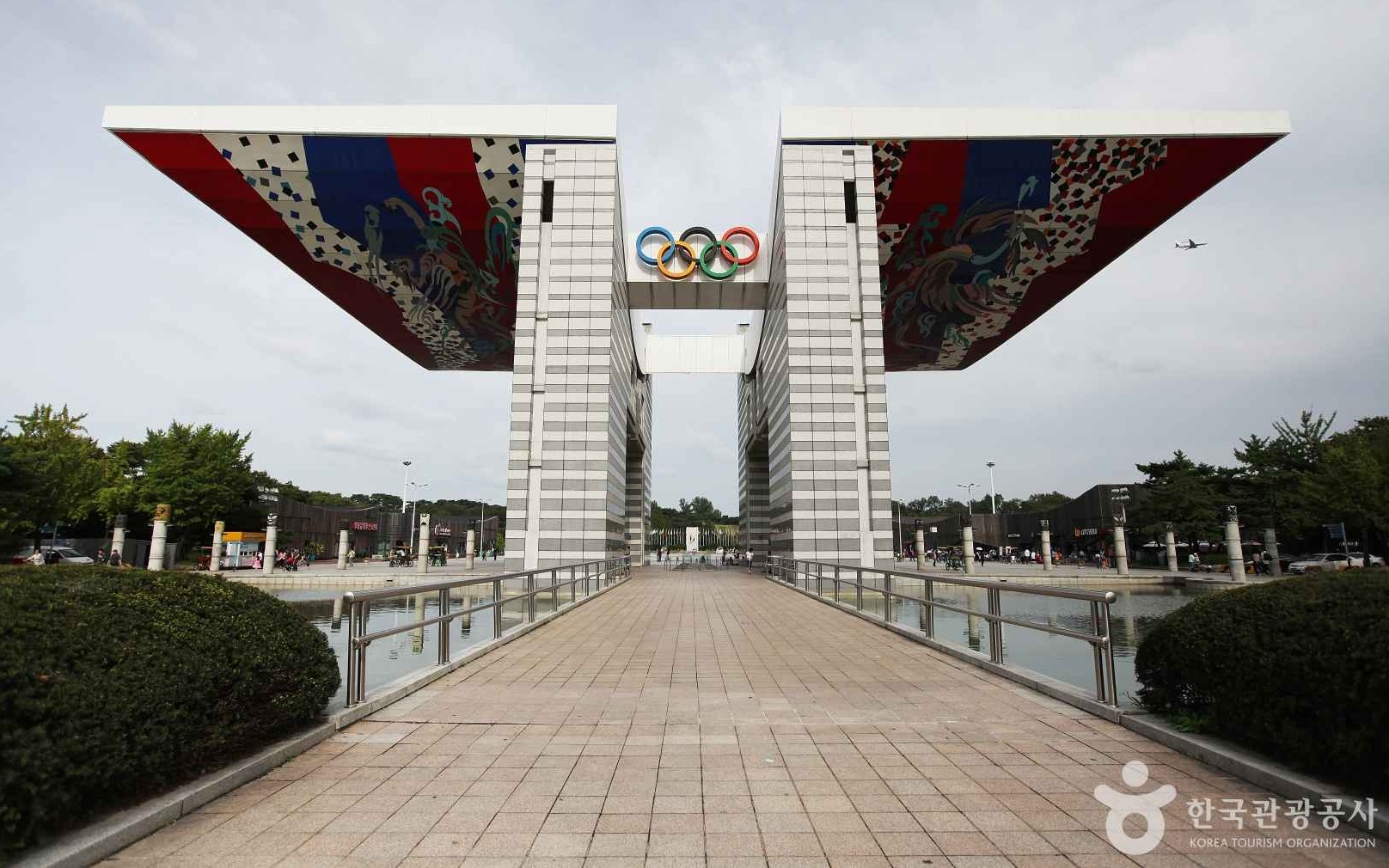
The Peace Gate at Seoul’s Olympic Park, photographed in September 2012. Archival park context, not the 2026 festival stage or event scene at the 88 Grass Field. ⓒKorea Tourism Organization - Park Eun Kyoung, “Olympic Park” (2012-09), KOGL Type 1 / 공공누리 제1유형. 8:5 crop mainly removes upper background; principal subjects and watermark retained; JPEG re-encoded. Original: https://phoko.visitkorea.or.kr/media/mediaList.kto?searchGbn=cntntsId&cntntsId=5n1MIa
A Couple’s Memory of Summer, photographed in Olympic Park in 2021. An archival view of the park’s grassy landscape; it does not document the 2026 festival or identify the 88 Grass Field. ⓒKorea Tourism Organization - Park Kyoung-sik, “A Couple’s Memory of Summer” (2021), KOGL Type 1 / 공공누리 제1유형. 8:5 crop mainly removes upper background; principal subjects and watermark retained; JPEG re-encoded. Original: https://english1.visitkorea.or.kr/enu/nphotogallery/photo.kto?func_name=photo_view&newphotoDTO.photo_code=3820150202100121k&newphotoDTO.sub_menu=main
Mongchon Toseong in Seoul on March 19, 2015: the tree-covered earthen rampart with water in front. Photo: Saigen Jiro / Seoul Mongchon Toseong-1 / Wikimedia Commons / CC0 1.0
A close-up of the lower part of the Gilt-bronze Incense Burner of Baekje, showing lotus-petal decoration and small figures between the petals. Photo: National Museum of Korea e-museum / 백제금동대향로 하부 확대 / Wikimedia Commons / KOGL Type 1
Gwangalli Beach Book Fair runs October 23–28 around Mannam Square on Busan’s Gwangalli Beach. Author talks on a book comparing Busan and Daegu and a critique of Korean trends are scheduled, along with sessions on the printed book.
A third beachside fair
The 2026 Gwangalli Beach Book Fair runs from Friday, October 23, to Wednesday, October 28, around Mannam Square, with overall hours of 13:00–21:00 KST. Suyeong-gu hosts and organizes it, with the Busan Publishing Culture Industry Association as co-planner. The program includes a book market, reading lounge, author talks and curated exhibitions.
Participating publisher Sanzini says the fair began in 2024 and is now in its third year. Fifty participants, including publishers, bookshops, writers, reading communities and creators from Busan and across Korea, are taking part.
Busan publisher Sanzini
Sanzini was founded in Busan in February 2005. Its introduction states an aim of supporting cultural decentralization and cultural democracy through publishing.
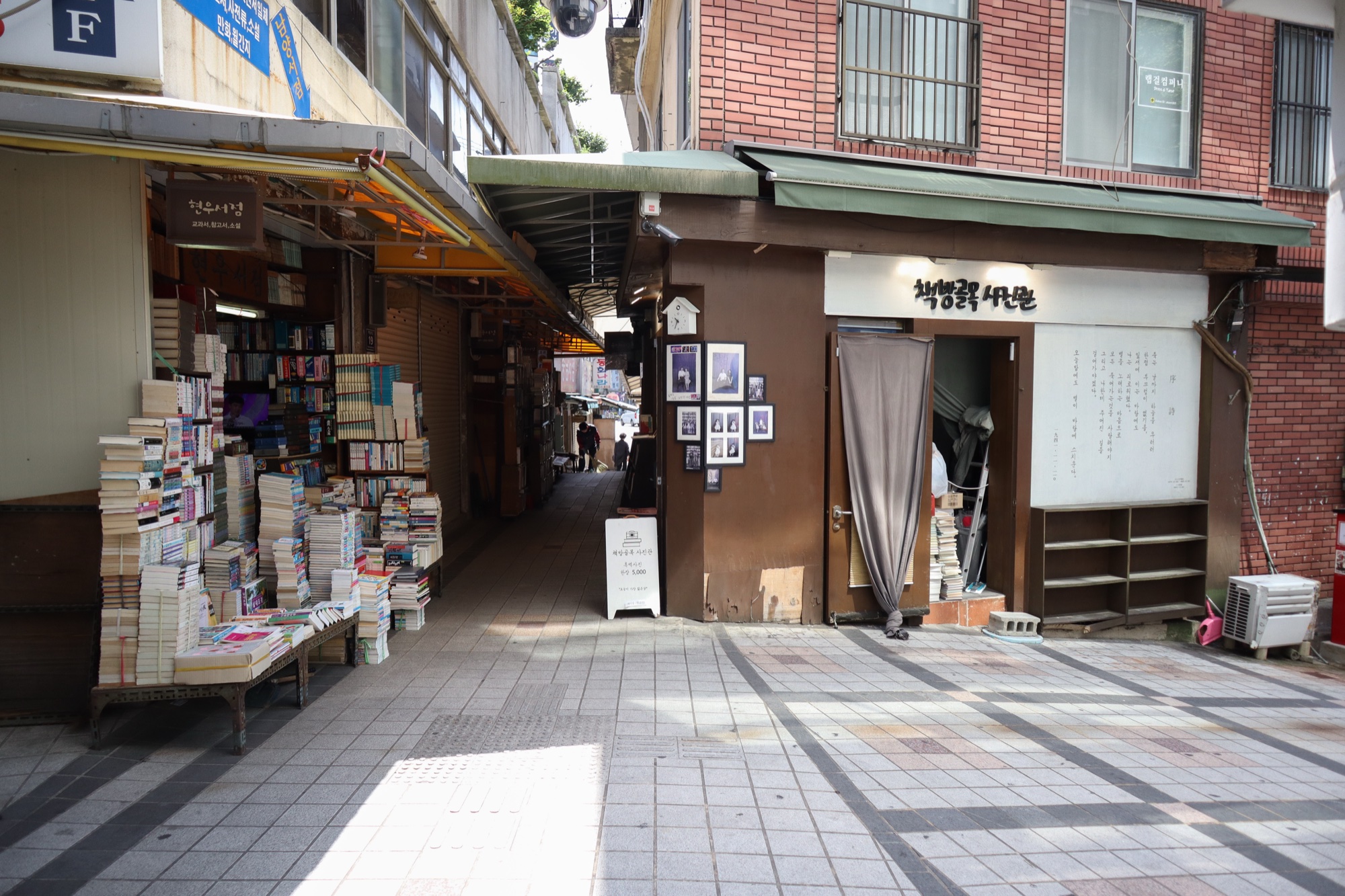
Books stacked outside shops in Busan's Bosu-dong Bookstore Alley
“Daegu vs Busan” talk
At 17:00 on Friday, October 23, Park Chang-hee (박창희) and Lee Min-hye (이민혜) discuss “대구 vs 부산” (“Daegu vs Busan”). The publisher’s latest announcement describes the book as forthcoming. It compares the two cities’ history, food, language and culture through family experience and dialogue between generations.
“Uncomfortable Trends” talk
Do Woori (도우리) discusses “불편한 유행,” descriptively “Uncomfortable Trends,” at 16:00 on Sunday, October 25. Published by Sanzini on June 8, 2026, the 232-page work of pop-culture criticism examines the conflicts and exclusions within light entertainment such as MBTI culture and fast-moving consumer trends.
At an earlier Seoul International Book Fair conversation, the author said the book collects columns written from late 2022 to October 2025, with topics chosen for their social significance as well as their popularity.
Talks on the printed book
The paper-themed talks list Kim Hwa-jin (김화진) at 17:00 on Saturday, October 24, on making room within fiction, and Kim Ae-hyun (김애현) at 17:00 on Sunday, October 25, on paper books navigating a digital sea. These English phrases describe the Korean session titles.
Handling display copies depends on each stall, and books and displays should not be photographed without permission.
Registration and perks
The author and paper-themed talks fall on October 23–25. The official form accepts advance applications through October 20, first come, first served per session. Sessions run about 50 minutes, and the first 15 registrants per author talk and 30 per paper-themed talk receive a KRW 1,000 book-market discount. Companions must apply individually.
The editors suggest one to two hours to browse and attend one talk.
Getting there and enquiries
Map searches should use “광안리 만남의광장” (Gwangalli Mannam Square); the event address is 29 Millak-ro 6beon-gil, Suyeong-gu, Busan. The Korea Tourism Organization gives a walk of about ten minutes from Exit 3 or 5 of Gwangan Station on Busan Metro Line 2 to the beach.
The official listing does not give general admission charges or stall operating dates, and books cost extra. Programs are in Korean, and English or Japanese interpretation has not been confirmed. Enquiries go through the official links or +82-70-7309-1947. The registration form’s introductory date and weekday line contains errors, so individual session times apply. Rain or strong wind may change plans.
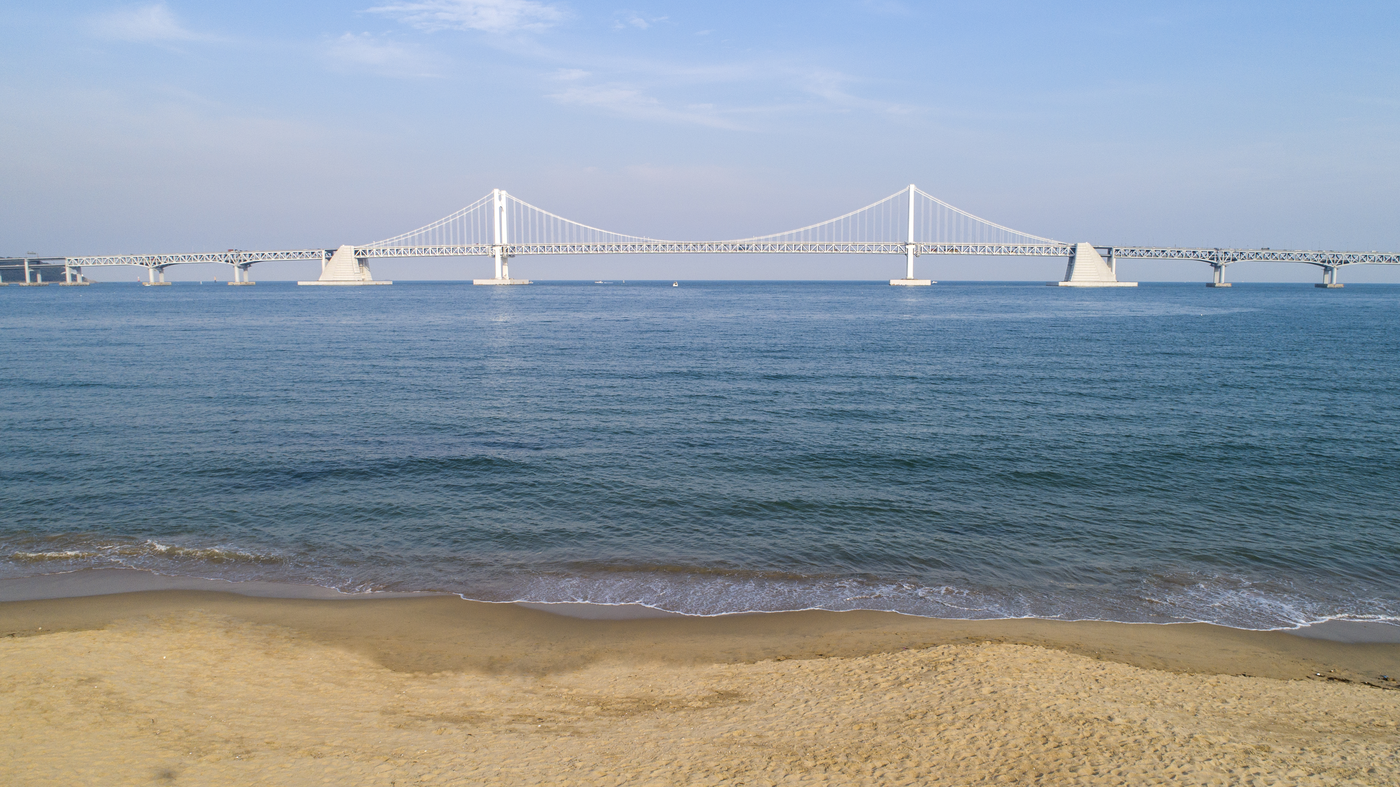
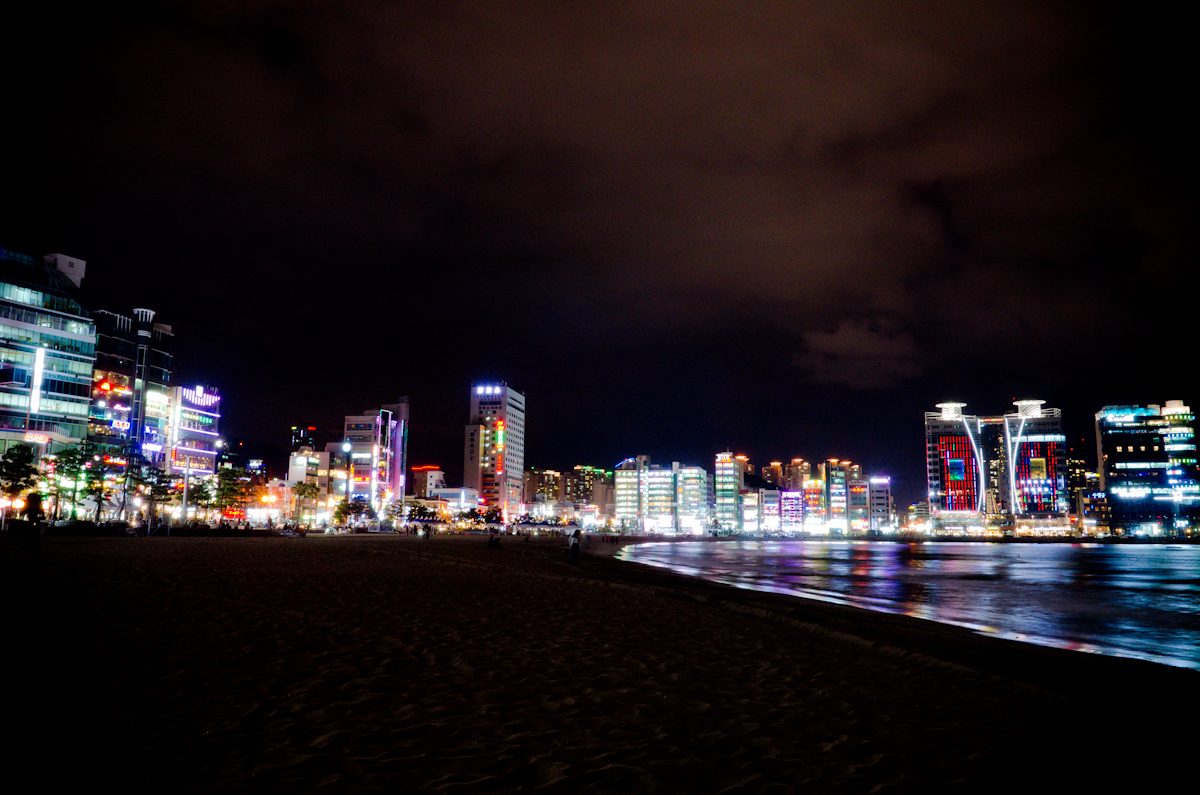
The photographs are archival day and night views of Gwangalli and do not show this year’s fair or the current state of its shops and lighting.
EVENT INFO
DatesOctober 23–28 · overall 13:00–21:00 KST
ApplicationsThrough October 20, by program
CostGeneral admission not stated; purchases separate
Archival view of Gwangalli Beach and Gwangan Bridge. The source entry does not state an exact capture date. This is not a photograph of the 2026 book fair. Photo: 부산광역시 시민사진기자 정을호 / 부산광역시 / 부산관광아카이브. Original title: “광안리해수욕장 · METADATA006340”. Source: https://archive.visitbusan.net/dataSearch/view.nm?dataSid=METADATA006340&menuCd=36 · KOGL Type 1: https://www.kogl.or.kr/info/licenseType1.do. Supplied file is byte-for-byte identical to the public source file. No retouching, generated content, padding or stretching. An 8:5 display may trim edges; opening the image shows the full supplied frame.
Gwangalli at night, photographed October 19, 2011. This archival shoreline view does not show today’s shops or lighting, or this year’s book-fair installation. Photo: Carey Ciuro / Flickr / Wikimedia Commons. Original title: “Busan Gwangalli Night.jpg”. Source: https://commons.wikimedia.org/wiki/File:Busan_Gwangalli_Night.jpg · CC BY 2.0: https://creativecommons.org/licenses/by/2.0/. Supplied file is byte-for-byte identical to the public source file. No retouching, generated content, padding or stretching. An 8:5 display may trim edges; opening the image shows the full supplied frame.
Bosu-dong Bookstore Alley in Busan on May 23, 2020, with books stacked outside the shops. Archive photo of a Busan bookshop street, not the Gwangalli fair. Photo: Mobius6 / Bosu-dong Bookstore Alley 20200523 014 / Wikimedia Commons / CC BY-SA 4.0
The 31st Namdo Food Culture Festival runs October 23–25 at Yeongsangang Garden in Naju, South Jeolla. It brings together food traditions from 22 cities and counties in Jeonnam and five Gwangju districts, with temple cuisine, chef demonstrations and classes by local culinary masters.
Food from 27 localities
According to the official introduction, the festival features displays from 27 cities, counties and districts, food stalls, cooking competitions and hands-on activities, showing how ingredients and methods differ even between neighbouring places.
The official schedule groups parts of “Flavors of Namdo” under geographical themes such as forests and mountain ranges, and the islands and southwestern coast.
Temple cuisine and chefs
The special dining program features Ahn Yu-seong and French MCF chefs on October 23, followed by Buddhist nun Jeong Kwan’s temple cuisine and chef Cheon Sang-hyeon on October 24. Temple cuisine refers to the food culture of Buddhist monasteries.
The official description gives Muan-onion jjajang, noodles in black-bean sauce, and Yeongam-fig tangsuyuk, a sweet-and-sour dish, as examples for Cheon’s program. These are announced menu examples, and the actual selection may change.
Classes by culinary masters
The current schedule includes cooking classes by Namdo culinary masters including Kim Bong-hwa and Im Hwa-ja. Jeonnam’s 2016 appointment announcement identifies Kim as a master of fermented foods in Jangseong and Im as a master of traditional rice cakes in Hampyeong.
The festival’s profiles list each cook’s region and career. Their specialties are background information, not the confirmed menus for this year’s classes.
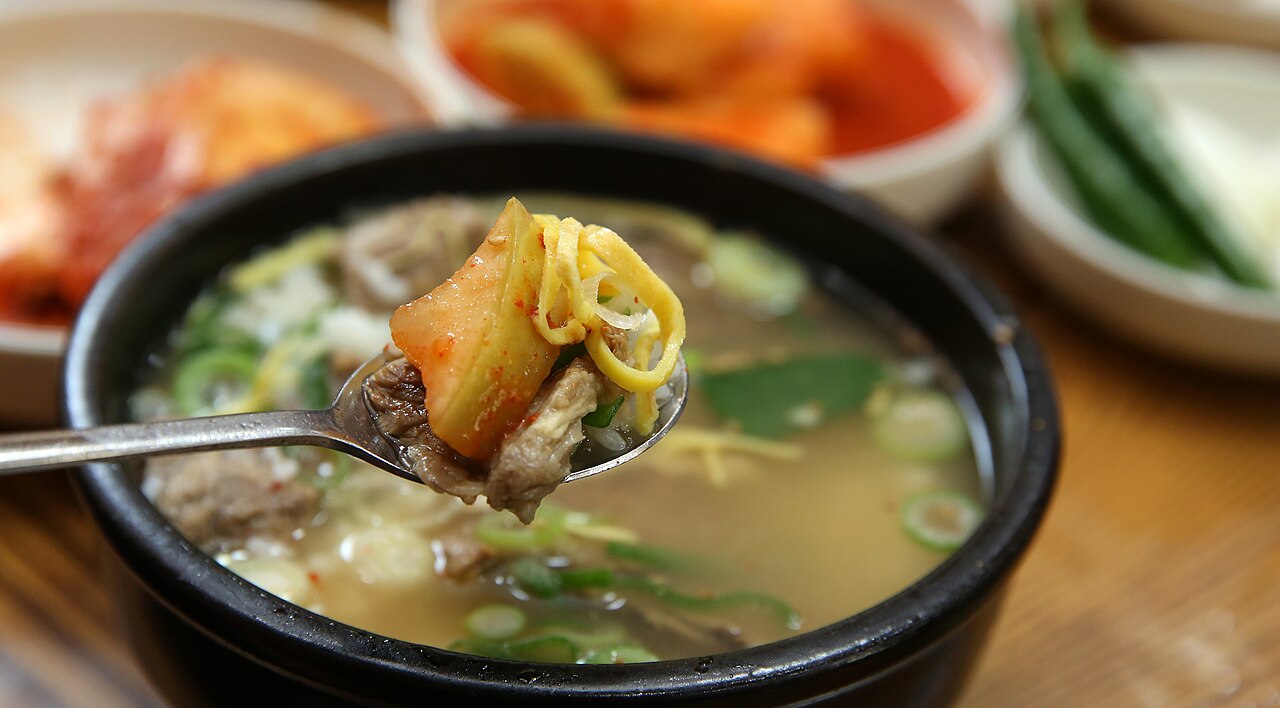
Naju gomtang
The archival photograph shows gomtang, rice and meat in a clear broth, in Naju in 2015. It represents the host city’s food culture, not a dish or portion served at this year’s festival.
Paid sessions and enquiries
The official Ticketlink notice lists ten paid sessions across October 23–25 at KRW 10,000 each, open to all ages. The price is not a general festival admission fee. Content and times for the special dining show, masters’ table and “Flavors of Namdo” sessions are on the official booking page.
The venue is Yeongsangang Garden, 757-1 Yeongsan-dong, Naju. Festival enquiries: +82-70-7703-1238; the ticket notice lists +82-10-7286-4700. Booking with an overseas phone number, foreign-card payment and on-site English or Japanese assistance have not been verified.
“Naju City 23,” an archive photograph of gomtang taken in Naju on 24 April 2015. Photo: Korea.net / Korean Culture and Information Service (Jeon Han), via Wikimedia Commons, CC BY-SA 2.0. Wikimedia 1280px reduction; cards display a centered 4:3 crop under the same license. This is not a 2026 festival scene or a confirmed tasting menu. Original title: Naju City 23. Source: https://commons.wikimedia.org/wiki/File:Naju_City_23_(17098849719).jpg. License: https://creativecommons.org/licenses/by-sa/2.0/
The Seoul Tourism Organization is running MY “VISIT SEOUL” STARTER PACK for foreign travelers from October 12 to 31. Participants browse four Seoul travel themes and comment on where they want to go and why. The Incheon Airport activity is closed on October 28.
Four themes
The event page groups destinations under ICONIC SEOUL, NIGHT SEOUL, TRENDY SEOUL and TASTE SEOUL. They include Gyeongbokgung, Banpo Hangang Park and Lotte World Tower; Namsan Seoul Tower, Naksan Park and DDP; Seongsu’s Yeonmujang-gil, The Hyundai Seoul and Hannam-dong; and Ikseon-dong Hanok Street, Sindang-dong Tteokbokki Town and Gwangjang Market.
Gyeongbokgung and Sindang-dong
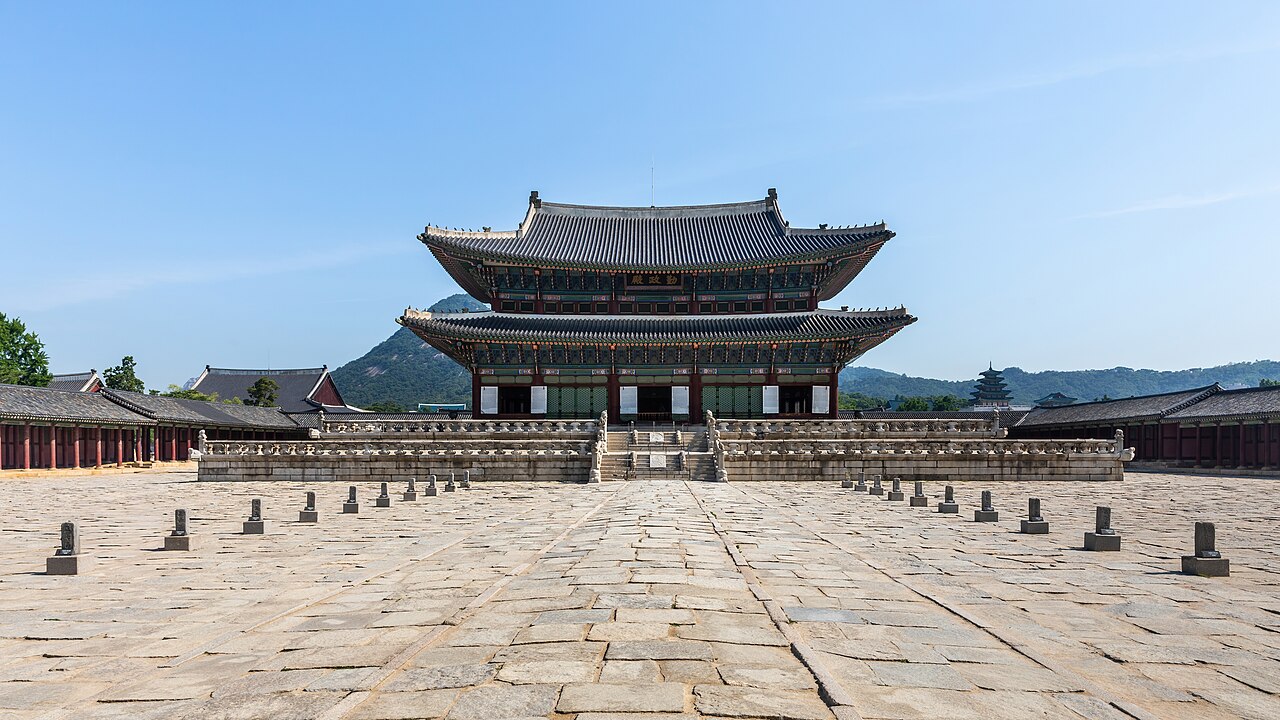
Founded in 1395, Gyeongbokgung was the main palace of the Joseon dynasty. The archival photograph of Geunjeongjeon shows one of the destinations featured in the event, not the airport venue.
Visit Seoul presents Sindang-dong Tteokbokki Town as a place to try jeukseok tteokbokki, rice cakes cooked at the table in a shared pot with sauce and other ingredients.
Comment online, verify at the airport
Online entry does not require an airport visit. Participants browse the English, Japanese, Simplified Chinese or Traditional Chinese page and comment during the event period with their preferred destination and a reason. The English and Japanese rules allow one entry per person; additional comments do not count as extra entries.
At HiKR Station in Incheon Airport, foreign visitors who show proof of participation receive a coin for an on-site prize draw. Prizes include travel multi-adapters and toothbrush sterilizers, determined by the draw. The official announcement does not give remaining quantities.
Online prize terms
The English page offers US$10 Amazon e-gift cards to ten winners, and the Japanese page JPY 1,500 Amazon gift cards to ten winners, usable only on Amazon.co.jp. Winners on both pages are scheduled to be announced on November 6, KST, on the Visit Seoul event page.
Winners must provide the requested information by the deadline. Prizes cannot be transferred or exchanged for cash and may be replaced with items of equal value depending on availability. The online lottery is separate from the airport draw.
HiKR Station
HiKR Station is on the west side of B1 in the Terminal 1 Transportation Center at Incheon Airport. It opens 10:00–19:00 KST, with admission ending 20 minutes before closing, and general admission is free. The airport event runs on 19 days, excluding the regular closure on October 28.
The address is 271 Gonghang-ro, Yeongjong-gu, Incheon, inside the Transportation Center connected to Incheon Airport Terminal 1 Station on the airport railroad. Facility enquiries: +82-2-729-9499 or hikrstation@knto.or.kr.
Geunjeongjeon Hall at Gyeongbokgung, Seoul, in an archive photograph taken on 5 June 2024. Photo: Basile Morin / Wikimedia Commons, CC BY-SA 4.0. Wikimedia 1280px reduction; cards display a centered 4:3 crop under the same license. This is not a photograph of the 2026 event. Original title: Front view of the Imperial Throne Hall Geunjeongjeon at Gyeongbokgung Palace with blue sky in Seoul. Source: https://commons.wikimedia.org/wiki/File:Front_view_of_the_Imperial_Throne_Hall_Geunjeongjeon_at_Gyeongbokgung_Palace_with_blue_sky_in_Seoul.jpg. License: https://creativecommons.org/licenses/by-sa/4.0/