The Cloudsolo Hiker, a new collaboration between LOEWE and On, launches October 15. The shoe brings hiking details to an everyday sneaker, and On’s Korean online store lists the men’s black version at 1.2 million won for members only.
The design
On announced on October 12 that the collaboration collection would launch on October 15. The Cloudsolo Hiker has a lugged outsole, lace hooks and a metal buckle bearing both brands’ logos.
Korean listing
On’s Korean store lists the men’s black model (3MG30910553) at 1,200,000 won as a members-only limited edition. The Korean sales start time and stock by size have not been confirmed.
The store offers free returns within 30 days. Limited editions can be refunded but not exchanged.
Busan Biennale 2026, “Dissident Chorus,” an exhibition built around sound and the body, closes on November 1. A free shuttle links the Museum of Contemporary Art Busan on Eulsukdo Island with two venues on Yeongdo. With October 26 a closed day, the final week runs October 27 to November 1.
Theme and artists
This year’s theme is “Dissident Chorus.” Co-artistic directors Evelyn Simons and Amal Khalaf present 46 artists and collectives from 22 countries exploring sound, the body, labor, migration and voices of resistance. They include Julien Creuzet, who represented France at the 2024 Venice Biennale; Filipino performance artist Joshua Serafin; and Korean artists Suki Seokyeong Kang, Dew Kim, Sungsil Ryu and Minouk Lim.
The Biennale opened August 29 and runs 65 days through November 1. It is closed Monday, October 26.
Venues and admission
MoCA Busan stands on Eulsukdo Island, where the river meets the sea. On Yeongdo, Space Wonji is a 100-year-old warehouse that once rented out ship equipment, and the former Busan Nam High School building was vacated when the school relocated in early 2026.
Hours are 10 a.m. to 6 p.m., Tuesday through Sunday. Last entry is 5 p.m. at MoCA Busan and the former high school and 5:30 p.m. at Space Wonji. MoCA Busan tickets cost 16,000 won for adults, 8,000 won for ages 13–18 and military or police, and 5,000 won for ages 4–12. Space Wonji and the former high school are free.
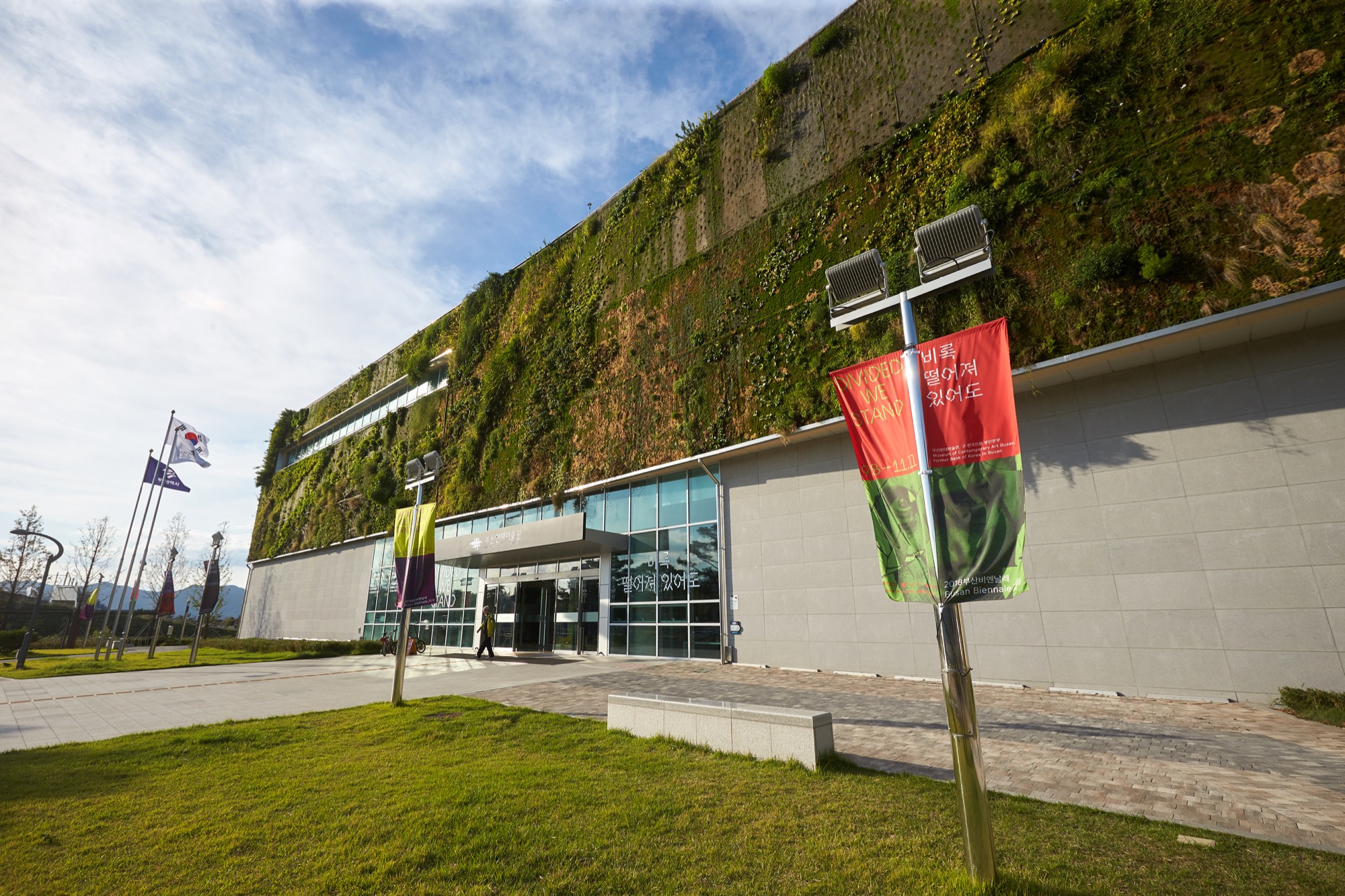
A glass entrance under a planted wall, with red banners outside the museum
Shuttle and guided tours
The free shuttle leaves MoCA Busan at 11 a.m., 2 p.m. and 4:30 p.m., stopping at Space Wonji and the former high school before returning. The 11 a.m. departure leaves the most time for seeing all three venues in a day.
Busan City says multilingual audio guides are available via QR codes. Walk-in guided tours start on the hour from 11 a.m. to 5 p.m. at MoCA Busan, except 1 p.m., and at 11:30 a.m., 1:30 p.m. and 3:30 p.m. at the former high school, first come, first served for ticket holders.
Getting there
For MoCA Busan (1191 Nakdongnam-ro, Saha-gu), take Metro Line 1 to Hadan Station, Exit 3, and transfer to a bus toward Eulsukdo. For Space Wonji (214 Bongnaenaru-ro, Yeongdo-gu) and the former Busan Nam High School (5 Jungnibuk-ro, Yeongdo-gu), take Line 1 to Nampo Station, Exit 6, then a bus to Yeongdo.
Parking is limited at the Yeongdo venues, and public transport is recommended. Inquiries: +82-51-503-6111.
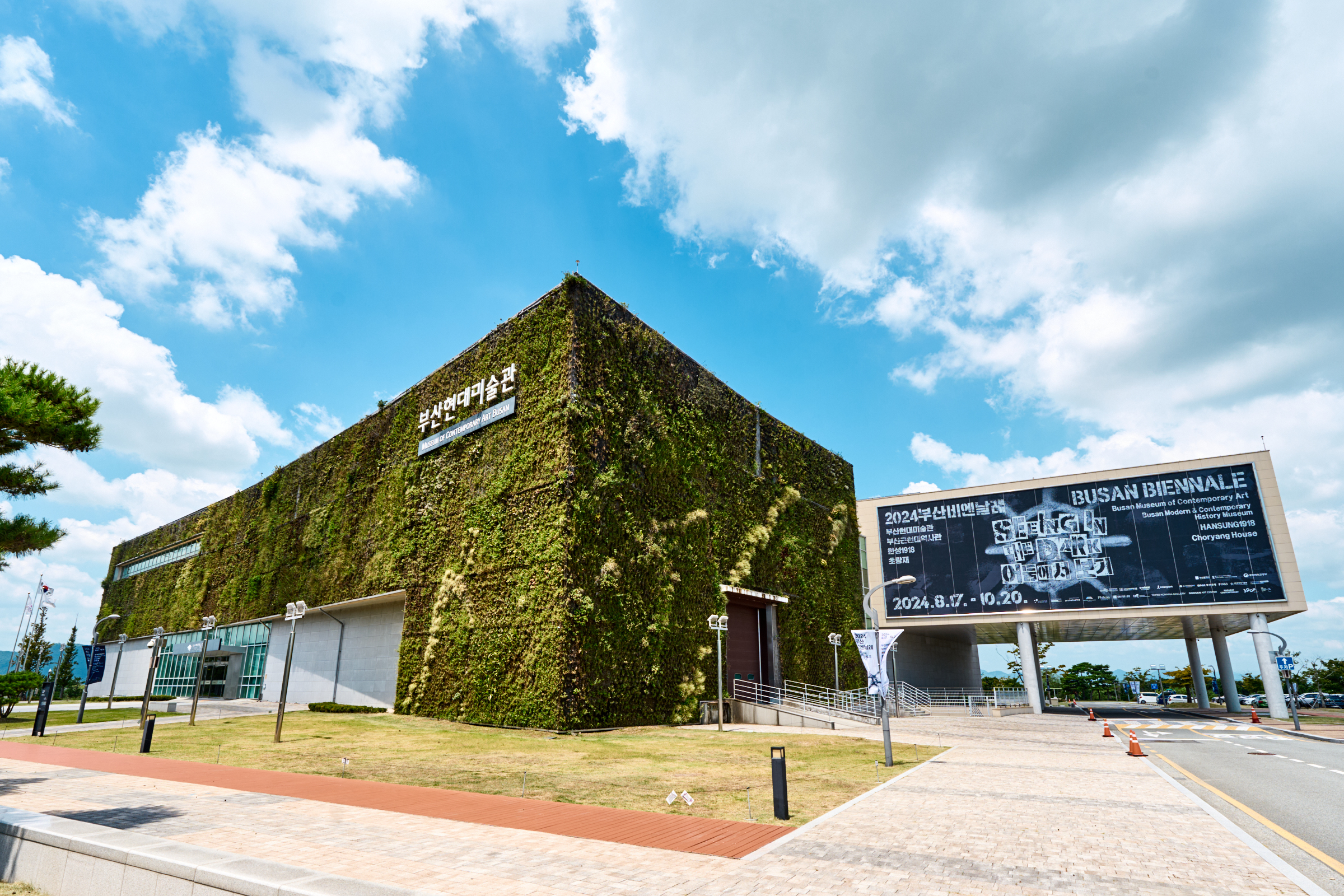
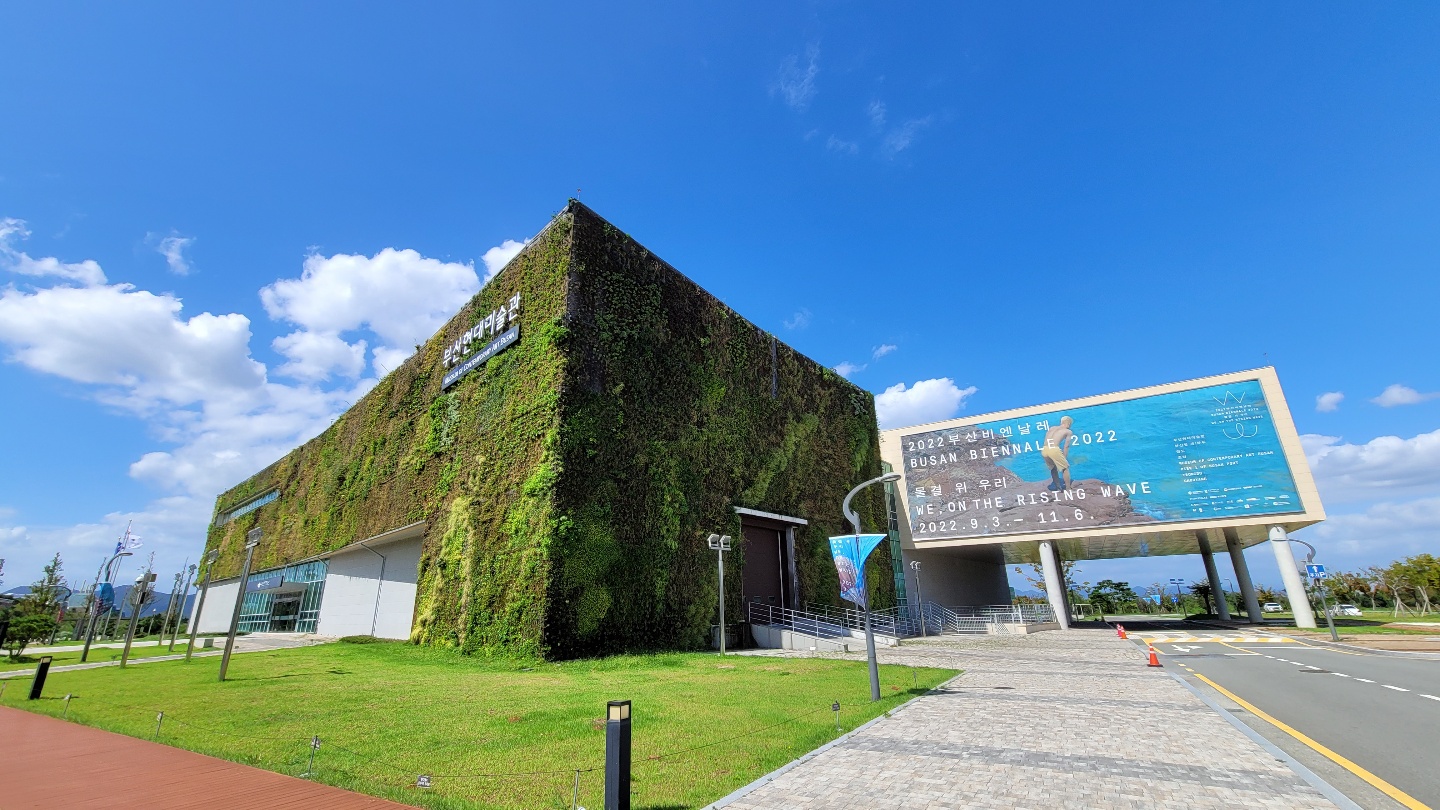
A plant-covered museum and a wide lawn under a blue sky
A large Busan Biennale sign stands beside the plant-covered façade of MoCA Busan. Uploaded by Busan Biennale as a view of the 2024 edition’s venue, taken on 13 August 2024; it does not show this year’s exhibition. Photo: Busan Biennale / Wikimedia Commons / CC BY-SA 4.0.
Biennale banners hang outside the entrance of MoCA Busan. Taken on 25 September 2018 during the 2018 Busan Biennale; unrelated to this year’s exhibition. Photo: Jiihyun0313 / Wikimedia Commons / CC BY-SA 4.0. Resized proportionally from the 5336×3558 original to 2000px wide.
MoCA Busan and its lawn on a clear day. Uploaded by Busan Biennale as a view of the 2022 edition’s main venue (file dated 29 November 2022); not this year’s exhibition. Photo: Busan Biennale / Wikimedia Commons / CC BY-SA 4.0.
The Busan Museum of Art reopened on September 17 after about two years of renovation. Four free reopening exhibitions, including the international show Future Museology, are on view, most through March 2027.
The renovation
Busan City said the museum in Haeundae’s Centum City reopened on September 17, 2026, after about two years of renovation. The main entrance has been turned to face a different direction, and a climate-control system installed.
The galleries were merged and reorganized, storage was expanded, a café and other visitor facilities were added, and the outdoor sculpture park was rebuilt. Press reports put the cost at about 46.9 billion won.
Reopening exhibitions
Future Museology, the first international show since the reopening, is organized with a consortium of nine museums in Korea and abroad and examines how museums relate to society. It runs through March 14, 2027. Dear All The Yesterdays traces the museum’s history from its opening to its reopening through institutional and architectural records, also through March 14.
‘그러나 우리는 아직도 이 바다 높은 물결 위에 있다: 1945-1953’ (roughly, “Yet We Are Still on the High Waves of This Sea”) covers the period from liberation to the Korean War with about 260 works and 460 documents and closes February 14, 2027. ‘안전기지’ (“Safe Base”), in the basement children’s gallery, runs through May 30, 2027.
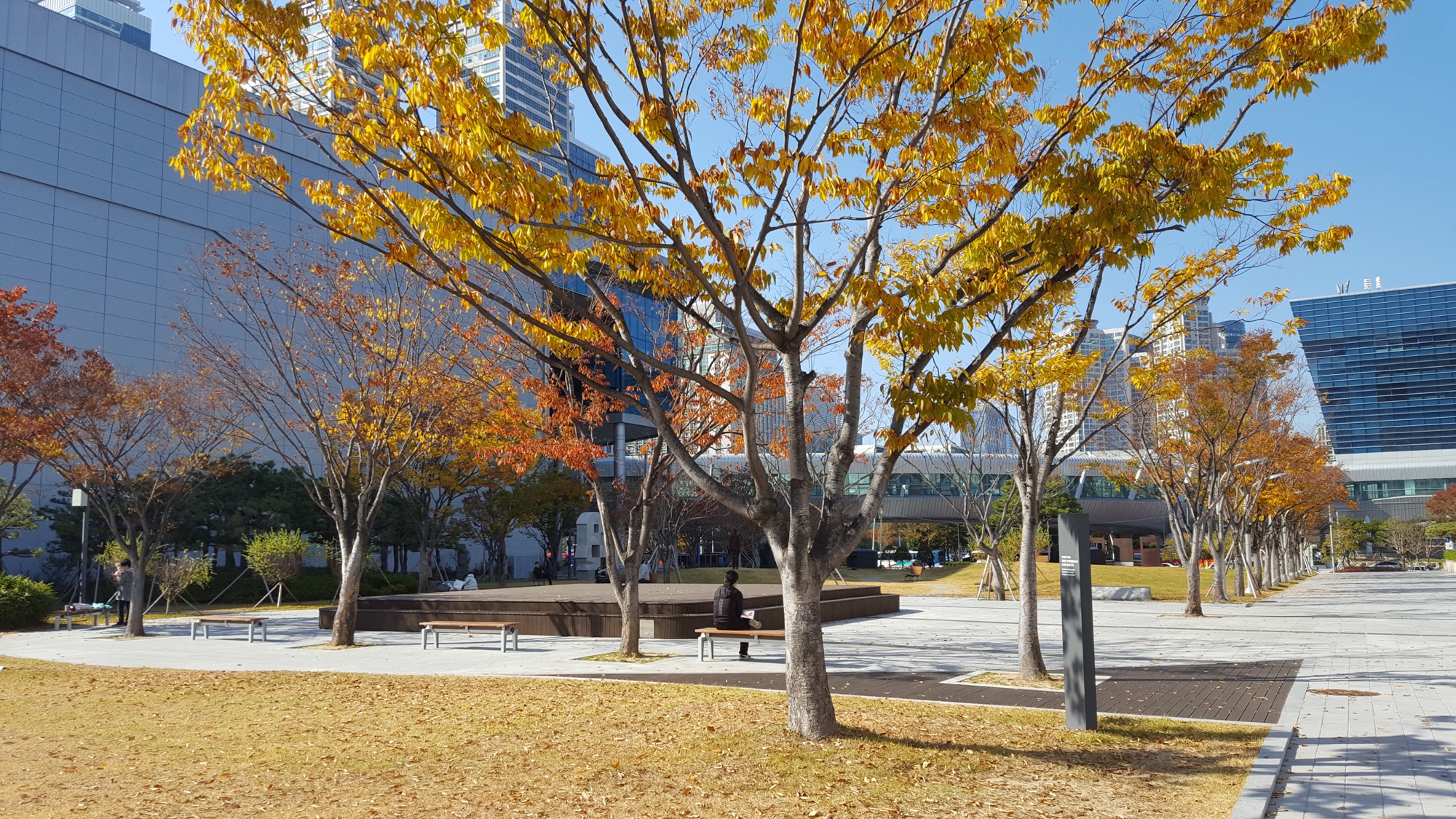
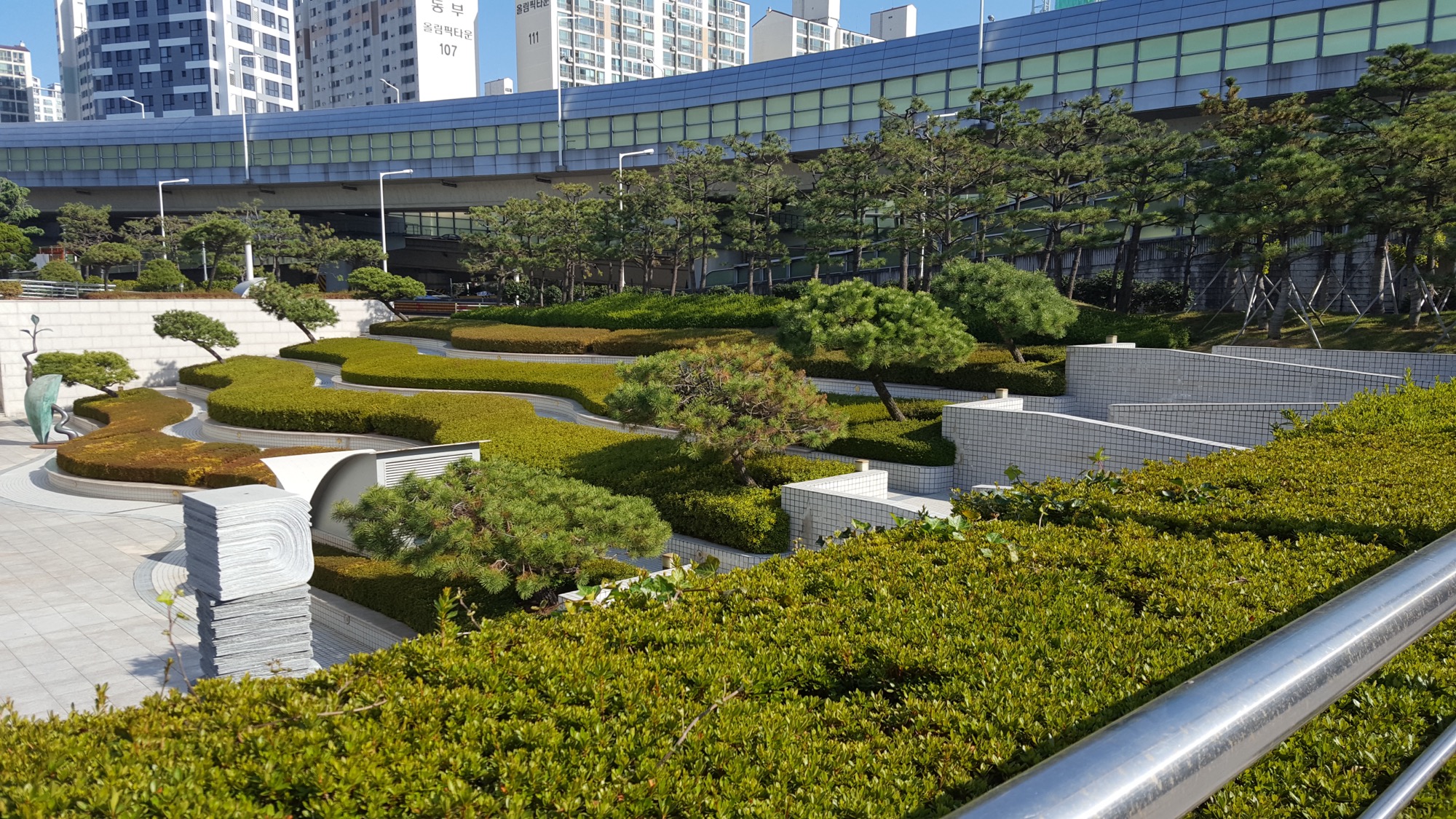
A terraced garden of low shrubs and pines with buildings behind
Hours and admission
According to Busan City’s event listings, the museum is open 10 a.m. to 6 p.m., Tuesday through Sunday, and closed Mondays and January 1. Last entry is one hour before closing.
All special exhibitions are free. Event listings are also published in English. Inquiries: +82-51-740-2602.
Getting there
The museum is at 58 APEC-ro, Haeundae-gu, Busan. Busan City’s English facility guide puts it about 200 m from Exit 5 of Busan Museum of Art Station on Metro Line 2. The guide predates the renovation and does not reflect the relocated entrance; signs on site show the way.
BEXCO is nearby, so the museum can be combined with a visit to G-STAR in November.
Trees in autumn colour along a walkway outside the Busan Museum of Art. Taken on 4 November 2018, before the renovation; the outdoor sculpture park has since been rebuilt. Photo: Bubbahotepblues / Wikimedia Commons / CC BY-SA 4.0. Resized proportionally from the 5312×2988 original to 2000px wide.
The tiered garden at the Busan Museum of Art, photographed on 4 November 2018 before the renovation; today’s landscaping may differ. Photo: Bubbahotepblues / Wikimedia Commons / CC BY-SA 4.0. Resized proportionally from the 5312×2988 original to 2000px wide.
The Gyeonggi Museum of Modern Art in Ansan marks its 20th anniversary with Index Asia (《사랑노동아시아하기》), running October 29 to February 14, 2027. Fourteen artists and collectives from eight Asian countries address labor, migration and memories of disaster.
The exhibition
The show runs in Galleries 1–4 from October 29, 2026, to February 14, 2027. The museum describes Ansan as a city where people from more than 100 countries live together, and says Gyeonggi carries layered histories of industrial labor, migration and disaster.
The title borrows the stance of poet Kim Hyesoon’s I Do Woman Animal Asia. The exhibition treats Asia not as fixed borders on a map but as a name for the marks modernity, capital and state power have left on bodies and land.
The artists
Participants include Rieko Shiga, Marcos Kueh, Bagus Pandega, Wang Tuo, Chu Hao-Pei, Kei Imazu, Tuan Andrew Nguyen, Ho Rui An and Hira Nabi, alongside Korean artists and groups listed on the museum’s page as 김영은, 노원희, 야광, 이끼바위쿠르르 and 장보윤. Their work spans politics, ecology, labor, gender and disaster, tracing legacies of empire and colonialism, the labor and migration driven by capital, and the love and conflict within them.
The show is curated by museum curators 유채린 and 이채영, with support from the Mondriaan Fund, the Embassy of the Netherlands and the Japan Foundation Seoul. Exhibition texts are in Korean and English.
Hours and admission
The museum is open 10 a.m. to 6 p.m., Tuesday through Sunday, with last entry at 5 p.m. General admission is free, but the museum says special exhibitions may charge depending on the show; this exhibition’s fee is listed on its page.
Free walk-in docent tours take up to 15 people; the tour schedule for this show has not been posted. On opening day, October 29, the museum is taking sign-ups for the opening event and a shuttle bus.
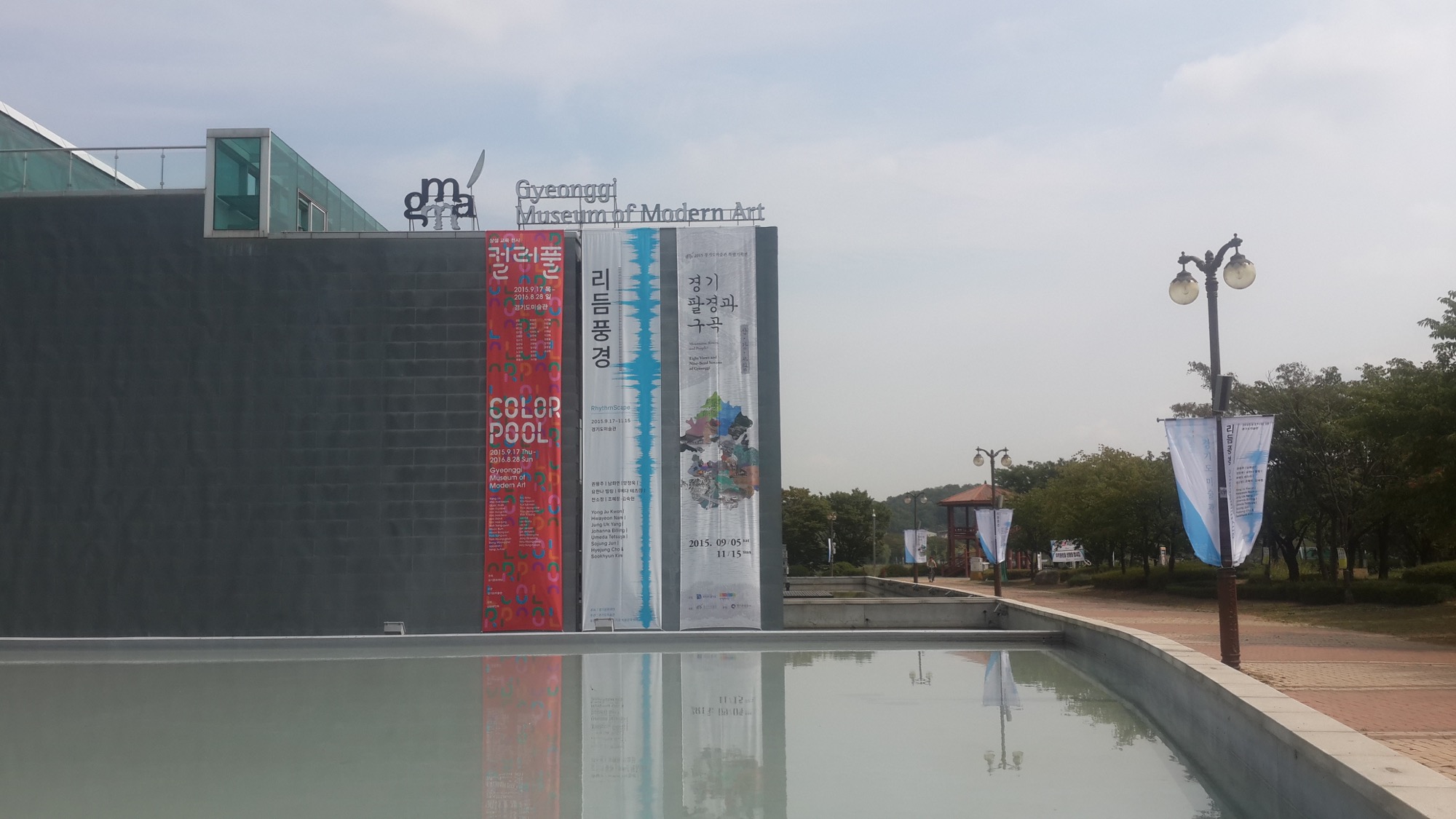
A grey museum wall and vertical banners reflected in a pool
Getting there
The museum is at 268 Dongsan-ro, Danwon-gu, Ansan, inside Hwarang Park, about a 10-minute walk from Exit 4 of Choji Station on the Seohae Line or 15 minutes from Exit 1 of Choji Station on Line 4.
Parking at Hwarang Park is free. Inquiries: +82-31-481-7000.
EXHIBITION INFO
Dates29 Oct 2026–14 Feb 2027 · Tue–Sun 10:00–18:00
Contact+82-31-481-7000
LOCATION
Gyeonggi Museum of Modern Art, Galleries 1–4268 Dongsan-ro, Danwon-gu, Ansan
4Seohae Line Choji Stn Exit 4, ~10 min walkExit 4🚶➡️10 min walk
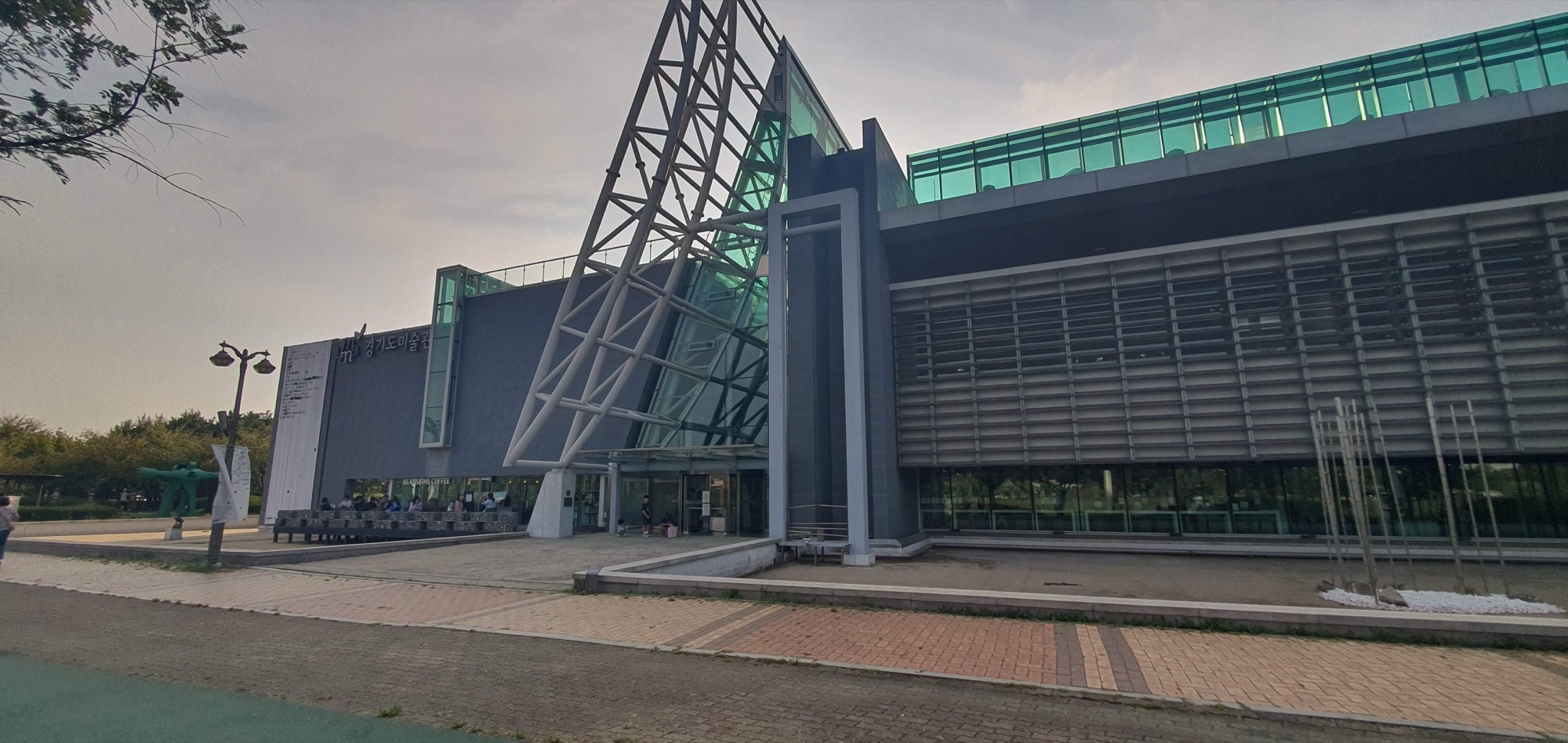
The steel-and-glass front of the Gyeonggi Museum of Modern Art, photographed on 9 September 2023; unrelated to this exhibition. Photo: Aspere / Wikimedia Commons / CC0. Resized proportionally from the 4608×2184 original to 2000px wide.
The museum’s façade and banners for earlier exhibitions seen across the water feature, photographed on 25 September 2015; the banners are not for this show. Photo: Ji-soo Seo / Wikimedia Commons / CC BY-SA 4.0. Resized proportionally from the 4128×2322 original to 2000px wide.
AGF 2026, a subculture festival covering anime, games, webtoons and virtual YouTubers, runs December 4–6 at KINTEX Exhibition Center 1 in Goyang, Gyeonggi Province. Early-bird tickets are on sale through November 11, and international visitors can also buy tickets on Trip.com.
Dates and venue
AGF (Anime X Game Festival) 2026 runs from Friday, December 4, to Sunday, December 6, from 9:30 a.m. to 6 p.m. daily in Halls 1–5 of KINTEX Exhibition Center 1. It is co-hosted by ANIPLUS, Daewon Media, Sony Music Solutions and D&C Media.
The official website says the 2025 edition drew a record 100,518 visitors. Besides anime and games, the festival features webtoons, light novels, anisong and virtual YouTubers.
Tickets
Early-bird tickets are sold from October 14 to November 11 at 24,000 won for one day and 55,000 won for three days. From November 12 to December 6, regular tickets cost 29,000 won and 65,000 won. Fast tickets, which allow entry through a dedicated gate from 9:30 a.m., cost 50,000 won and are limited to 1,000 a day and one per person.
Melon Ticket sells to both domestic and overseas buyers, and Trip.com sells to international visitors only. Tickets are also sold on site, but sales may be halted, and the organizers recommend booking online.
Wristbands and re-entry
Ticket checks begin at 8 a.m. One-day tickets are exchanged for a wristband valid only on the chosen date. Three-day pass holders receive a fabric wristband once and can re-enter on all three days, using a dedicated re-entry gate from 11 a.m. starting on the second day. Wristbands are not reissued.
The organizers said some content and merchandise at the venue may be unsuitable for children 12 and under.
Getting there
KINTEX is at 217-60 Kintex-ro, Ilsanseo-gu, Goyang. Its transport page lists the GTX-A line among public transport options.
Queues can be long from early morning on the first day and on the weekend. Visitors without fast tickets should arrive early.
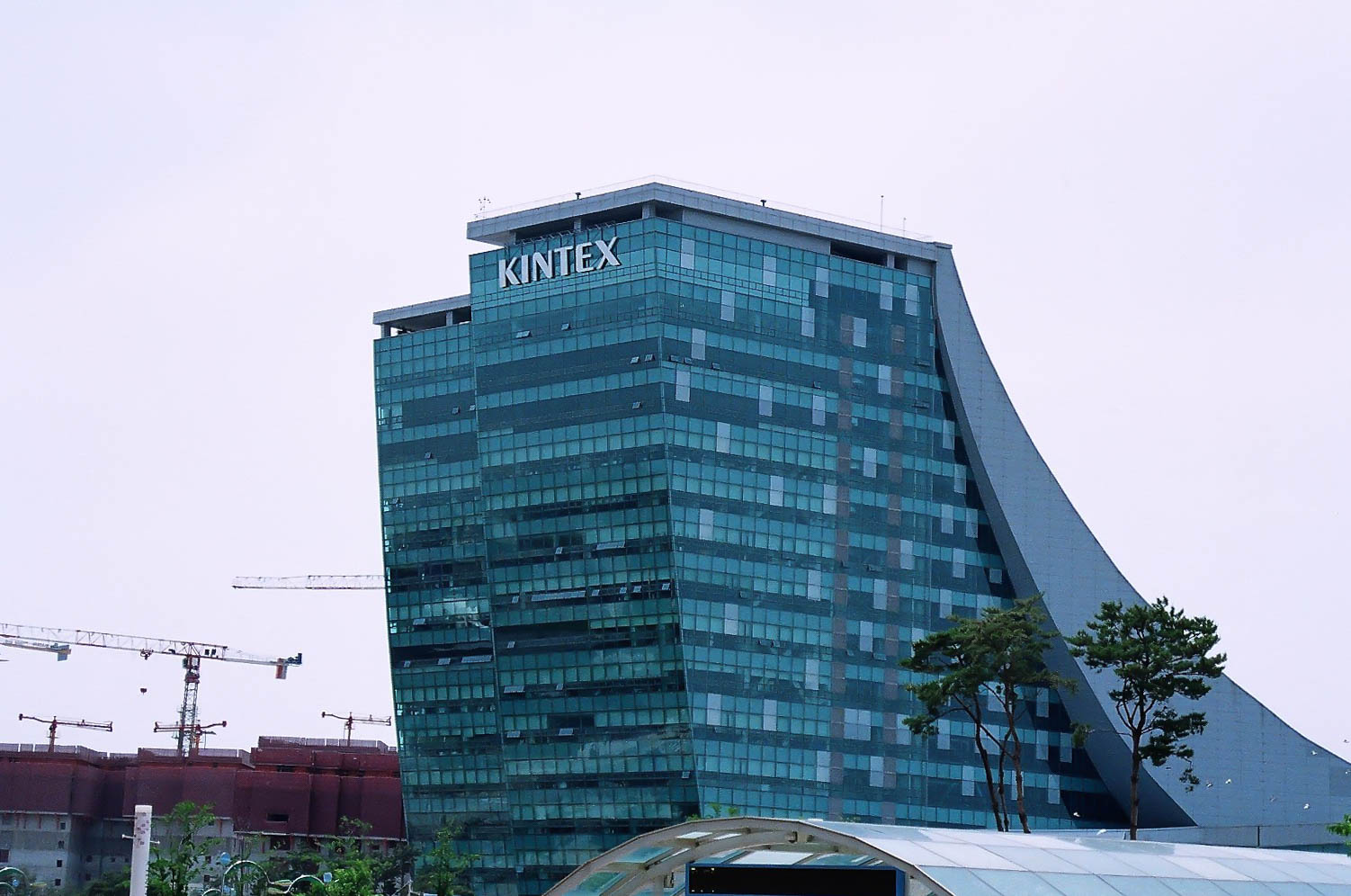
A glass-clad KINTEX building bearing the ‘KINTEX’ name. Uploaded to Wikimedia Commons as a view of KINTEX, dated 2 July 2017. It does not show AGF, and the description does not say whether this is Exhibition Center 1. Photo: 뭘로할까 / Wikimedia Commons / CC BY-SA 4.0.
The 21st Busan Fireworks Festival takes place on the night of Saturday, November 7, around Gwangalli Beach, Igidae and Dongbaekseom Island. International visitors can buy paid seats through an English booking page. The program and traffic plan have not been released.
Date and venue
According to the Busan Festival Organizing Committee’s website, the 21st Busan Fireworks Festival will be held on Saturday, November 7, 2026, around Gwangalli Beach, Igidae and Dongbaekseom Island. It is hosted by Busan Metropolitan City and organized by the committee.
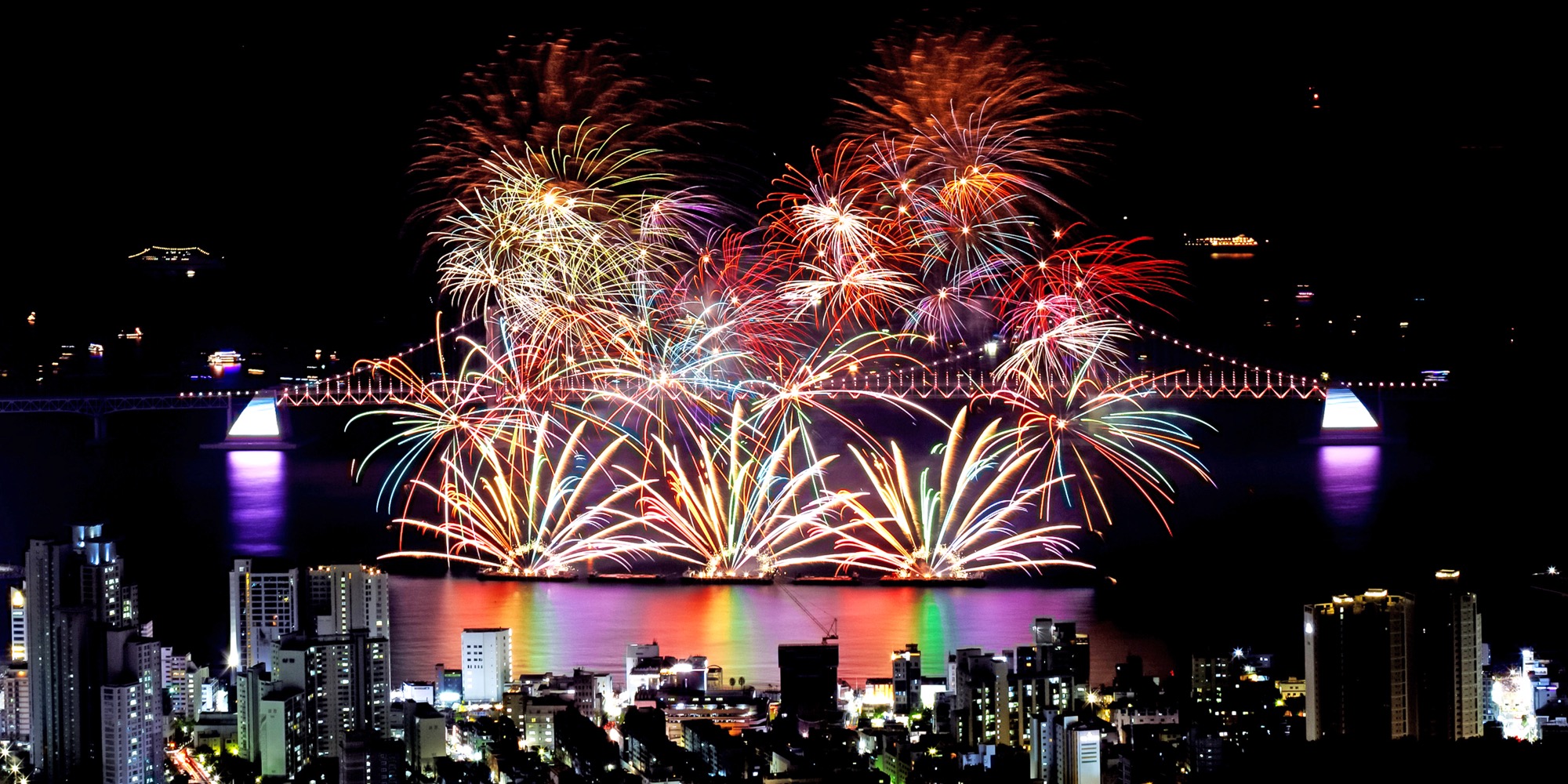
Fireworks over the sea against the backdrop of Gwangan Bridge are the festival’s signature. As of October 14, the website’s program, seat map, traffic-control and leaflet pages were marked “update pending,” and the start time and running order had not been released.
Paid seats
Regular tickets are sold on NOL Ticket from 2 p.m. on September 4 to 5 p.m. on November 6 KST. According to the official listing, seats at Gwangalli Beach cost 100,000 won for R seats (table and chair) and 70,000 won for S seats (chair). Residents with a verified Busan address get 10% off.
International visitors can book through NOL World, the English sales page, and must show a passport on site. The limit is four tickets per person, and tickets booked from October 12 are collected at the venue. Entry opens at 3 p.m.; anyone not seated by 6 p.m. is refused both entry and a refund.
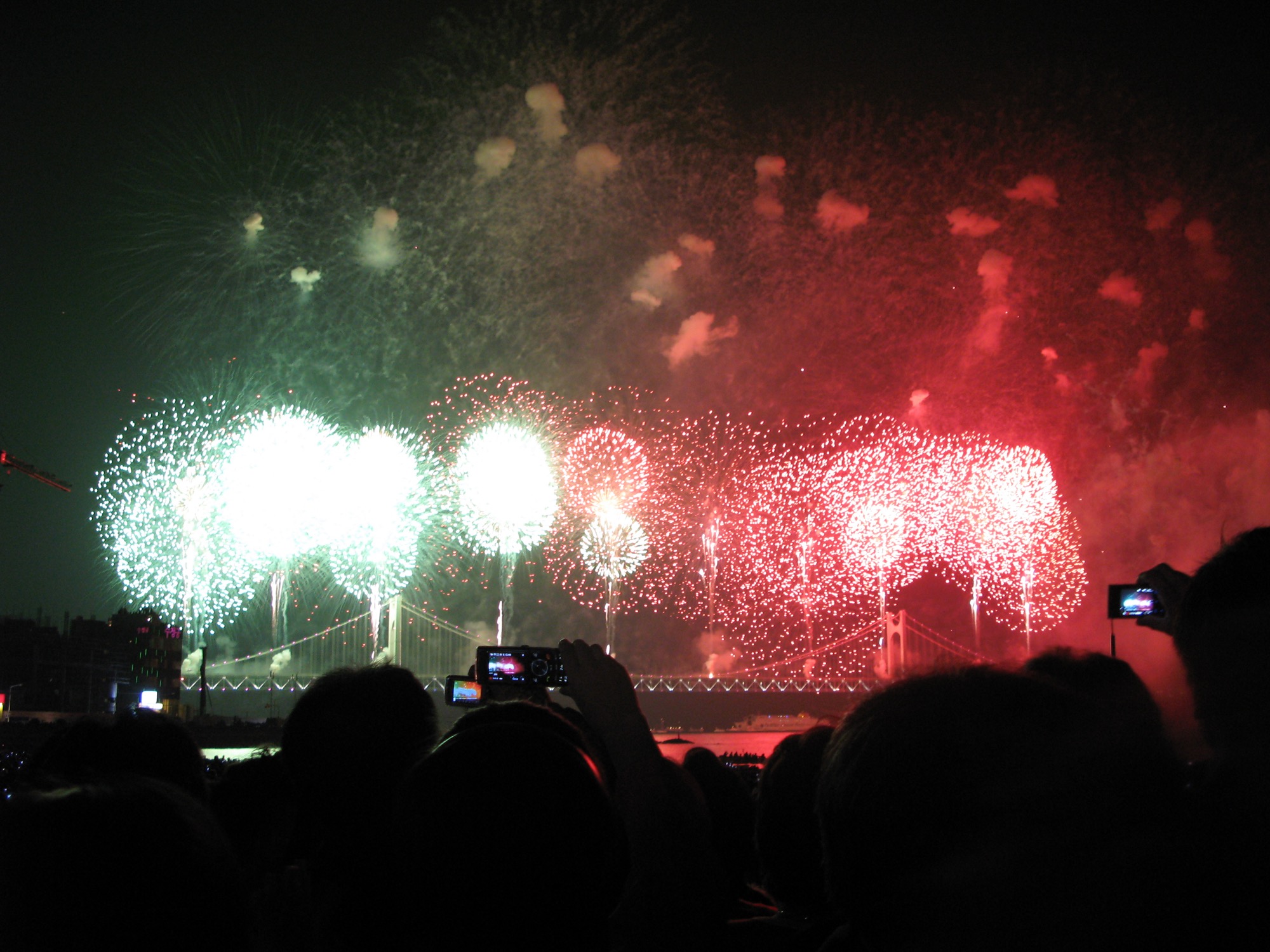
White and red fireworks over a bridge beyond a dark crowd
Getting there
The organizers ask visitors to use public transport and will not provide parking near the venues. Gwangalli Beach is closest to Exit 3 of Gwangan Station on Metro Line 2, and Dongbaekseom to Exit 1 of Dongbaek Station on Line 2. Igidae requires a bus transfer from Kyungsung Univ.·Pukyong Nat’l Univ. Station.
Road closures and late-night transport have not been announced. Accommodation within walking distance of the venue is the safest choice.
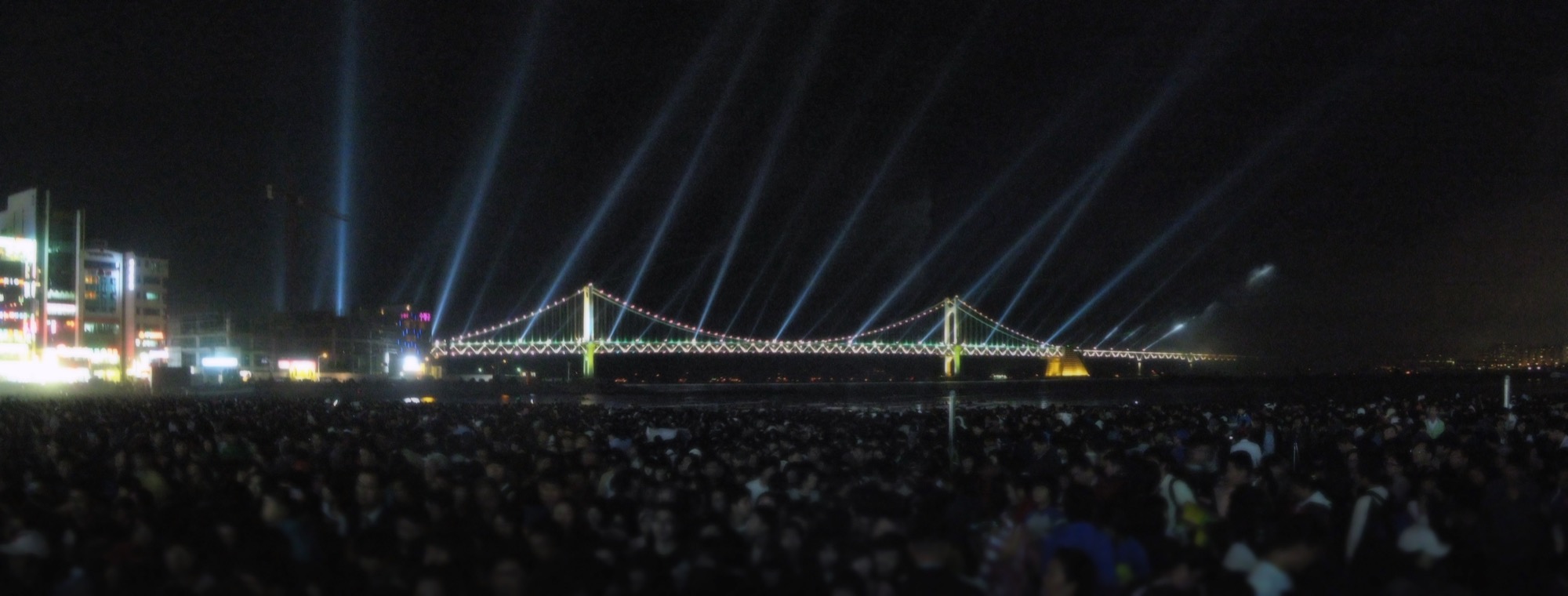
A dense night-time crowd on Gwangalli Beach with the illuminated Gwangan Bridge
Year-end bell at Yongdusan Park
The committee’s annual calendar lists the 2026 Busan Citizen’s Bell-tolling Ceremony at Yongdusan Park from December 31 to January 1, 2027. Details have not been released. Inquiries: +82-51-713-5000.
Fireworks burst over the sea in front of Gwangan Bridge, above the lights of the shoreline. The Wikimedia Commons description identifies it as the Busan fireworks festival; the file metadata dates it 7 August 2018. Not a 2026 photo. Photo: Busan Metropolitan City / Wikimedia Commons / CC BY-SA 4.0. Resized proportionally from the 6600×3300 original to 2000px wide.
Spectators raise phones and cameras towards fireworks over Gwangan Bridge. Taken at the Busan fireworks festival on 18 October 2008, not at this year’s event. Photo: RedMosQ / Wikimedia Commons / public domain. Resized proportionally from the 3648×2736 original to 2000px wide.
Crowds fill Gwangalli Beach under the lit Gwangan Bridge after the show. According to its Commons description, it is a stitched panorama taken just after the 2008 festival. A reference for the size of the homeward crowd, not a 2026 photo. Photo: RedMosQ / Wikimedia Commons / CC BY-SA 2.0 KR. Resized proportionally from the 6175×2347 original to 2000px wide.
G-STAR 2026, South Korea’s largest game show, returns to BEXCO in Busan. The public halls are open November 19–22, and tickets are sold only online in advance, with no sales at the door.
Dates and venue
G-STAR 2026 is held at BEXCO in Haeundae-gu, Busan. The official overview lists the full event as November 18–22. The public BTC hall is open from Thursday, November 19, to Sunday, November 22, and the trade-only BTB hall from November 19 to 21. This year’s slogan is “Expand Your Horizons.”
The show is organized by K-GAMES (the Korea Association of Game Industry) and managed by the G-STAR Organizing Committee and the Busan IT Industry Promotion Agency. The official schedule includes the Korea Game Awards, the BTC and BTB exhibitions, the “Galaxy” indie showcase and the G-CON game conference.
Tickets
BTC tickets cost 18,000 won for adults and 8,000 won for youths born on or after January 1, 2008. They are sold through Ticketlink from September 29 until 11:59 p.m. on November 21. The organizers say sales are 100% online in advance, with no on-site sales.
Tickets can be bought until midnight the day before a visit, up to two per person per day, and are valid only on the date booked. Youth-ticket holders may be asked for proof of age, such as a passport or student ID.
Entry times
On the first day, November 19, doors open at 11 a.m. Ticket checks close at 5 p.m. and last admission is at 5:30 p.m. Opening times for other days are posted on the official website.
The G-CON conference, which consists mainly of talks, requires a separate pass. The official website’s English section carries the schedule and ticket information.
Getting there
BEXCO is at 55 APEC-ro, Haeundae-gu, Busan, near Exit 1 of Centum City Station on Metro Line 2, according to Busan City. Entry queues can be long on the weekend. Ticket inquiries: ticket@gstar.or.kr.
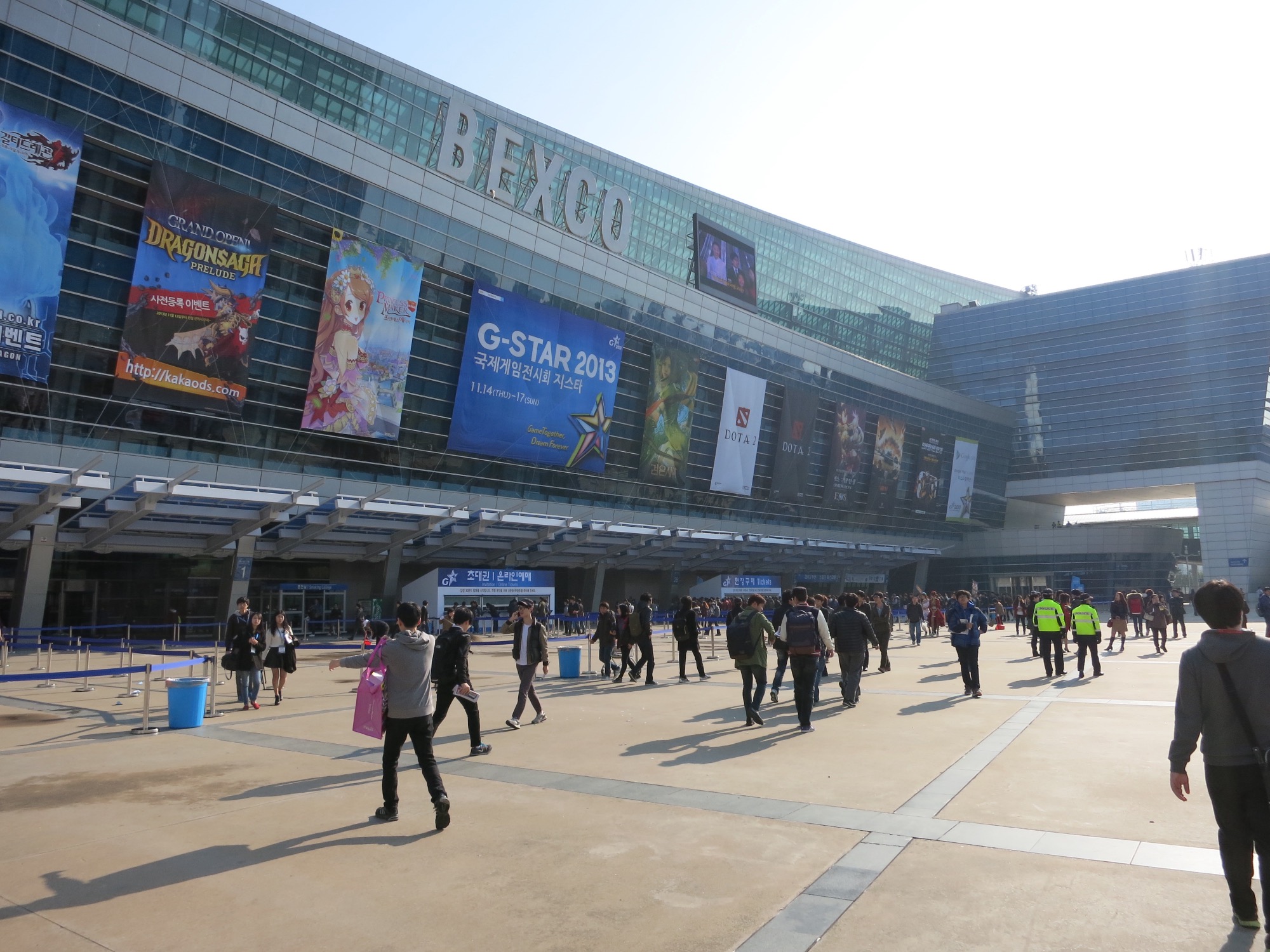
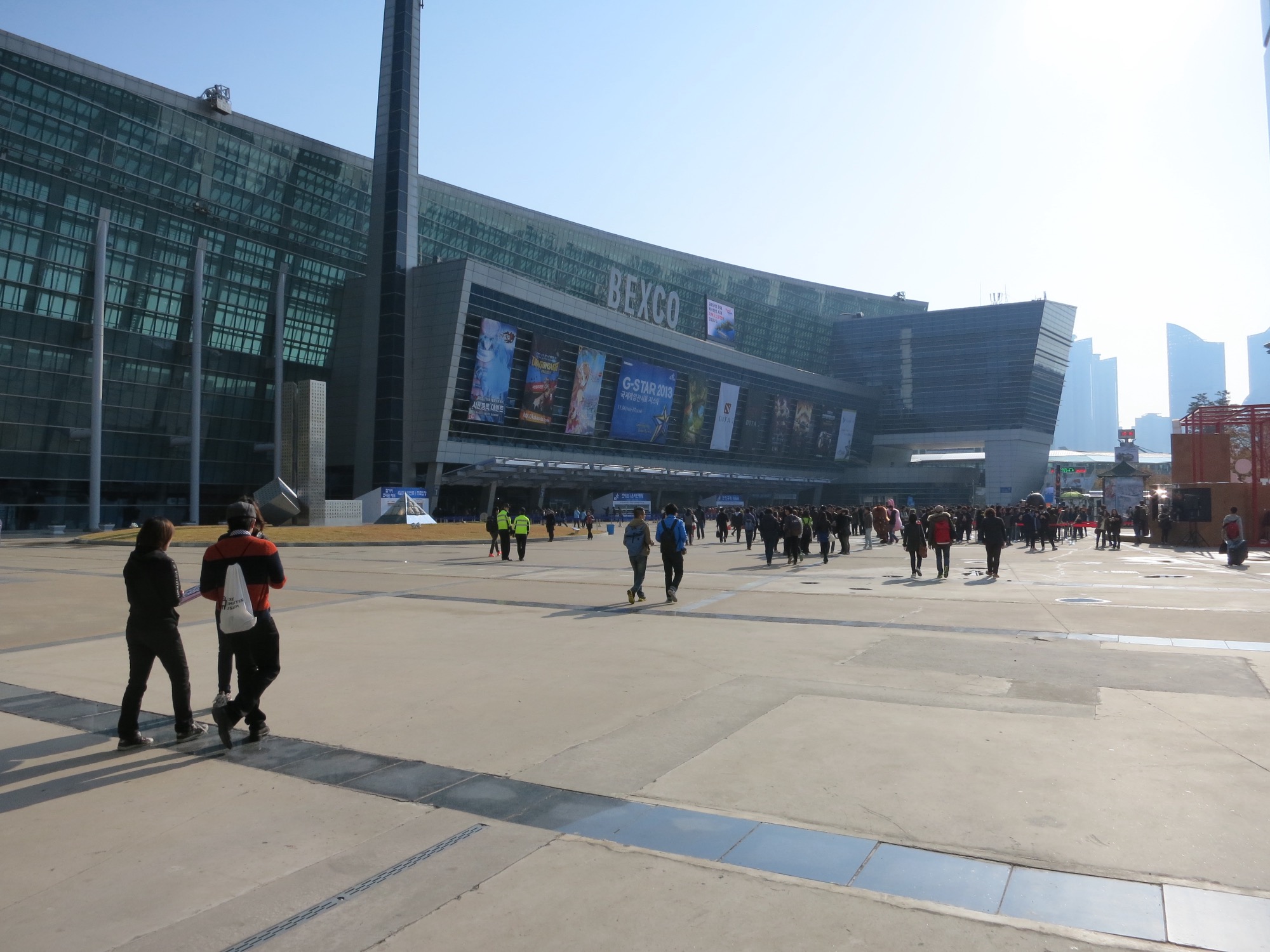
Visitors crossing the wide plaza in front of BEXCO’s glass façade
Visitors walk past BEXCO, hung with a ‘G-STAR 2013’ banner and game posters. Taken on 14 November 2013; it does not show this year’s event. Photo: Chris Yunker / Wikimedia Commons / CC BY-SA 2.0. Resized proportionally from the 4000×3000 original to 2000px wide.
The BEXCO exhibition centre and its plaza, photographed on 14 November 2013 during G-STAR 2013; not this year’s event. Photo: Chris Yunker / Wikimedia Commons / CC BY-SA 2.0. Resized proportionally from the 4000×3000 original to 2000px wide.
Seoul’s New Year’s Eve bell-ringing ceremony will be held at Bosingak Pavilion in Jongno on the night of December 31. The city said the program will include pre-ceremony performances, the bell ringing and artwork. Bell ringers and performance times have not been announced.
The ceremony
Seoul’s Fun Seoul festival portal lists the bell-ringing at Bosingak from Thursday, December 31, 2026, into Friday, January 1, 2027. The program consists of pre-ceremony performances, the bell ringing and artwork.
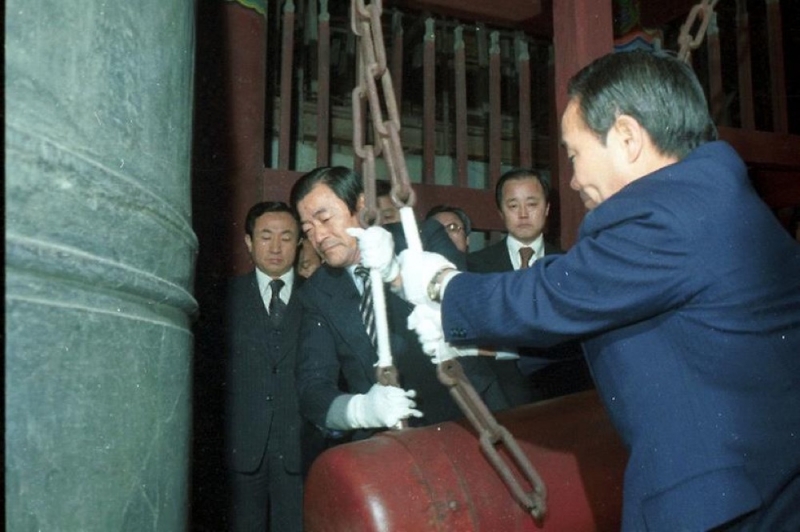
The ceremony is a long-standing Seoul tradition. A caption in the city’s photo archive records that on the last night of 1981 the mayor struck the bell at Bosingak 33 times. This year’s bell ringers and performance times have not been released.
Men pulling the striker rope of the Bosingak bell in 1978
Getting there
Bosingak is at 54 Jong-ro, Jongno-gu. Visit Seoul puts it 63 m from Exit 4 of Jonggak Station on Line 1.
Large crowds gather every year on this night and nearby roads close, so station exits and train times may change. The city announces road closures, extended late-night service and safety guidance shortly before the event. Groups should agree on a meeting point in advance.
Photo credits
The lead photo is a daytime view of Bosingak from the Seoul Tourism Archive, taken around 2021, and does not show this year’s event. The second photo, from the Seoul city archive, shows the bell-ringing at Bosingak on December 31, 1978. Both are used under KOGL Type 1 with attribution.
CULTURE INFO
WhenNight of Dec 31, 2026 into Jan 1, 2027
ProgrammePre-show performances · bell ringing · artwork
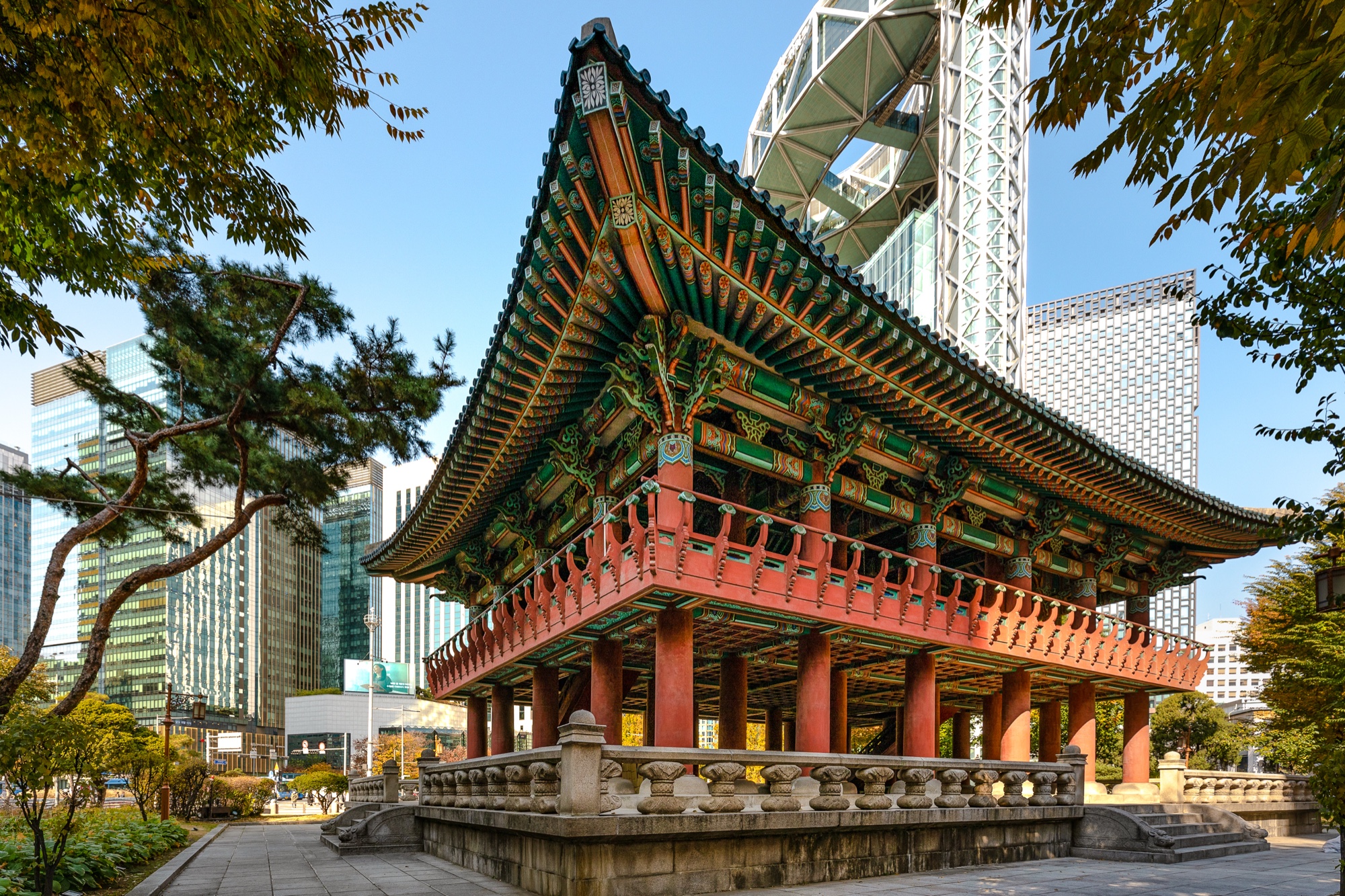
Bosingak Pavilion seen from behind, with Jongno Tower. Seoul Tourism Archive photo by the Seoul Tourism Organization (around 2021); it does not show the New Year’s Eve event. Source: Seoul Tourism Organization, KOGL Type 1. Resized to 2000px wide, re-saved as JPEG.
Ringing the New Year bell at Bosingak on December 31, 1978. Seoul city archive photograph, not this year’s event. Source: Seoul Metropolitan Government, KOGL Type 1. Original file unchanged.
Seoul Light Gwanghwamun 2026, the city’s media-art event, runs on and around Gwanghwamun Square from December 11 to January 3, 2027. A media facade will light Gwanghwamun gate daily from 5:30 p.m. to 10 p.m., and a New Year countdown is planned.
The event
Seoul Light Gwanghwamun is a media-art exhibition of light and music on Gwanghwamun Square. According to the city’s Fun Seoul festival portal, this year’s edition runs from Friday, December 11, 2026, to Sunday, January 3, 2027, from 5:30 p.m. to 10 p.m. KST.
The program includes a media facade exhibition on Gwanghwamun, citizen participation programs and a New Year countdown. Participating artists, the show timetable and countdown details have not been announced.
Getting there
Gwanghwamun Square is a public square open 24 hours with free entry. Visit Seoul puts it about 235 m from Exit 2 of Gwanghwamun Station on Line 5. The facade shows run after dark, so the square fits an evening stop after a daytime visit to Gyeongbokgung or Cheonggyecheon.
Large crowds are expected on the night of the December 31 countdown. The city will announce road closures and routes home shortly before the event.
Photo credit
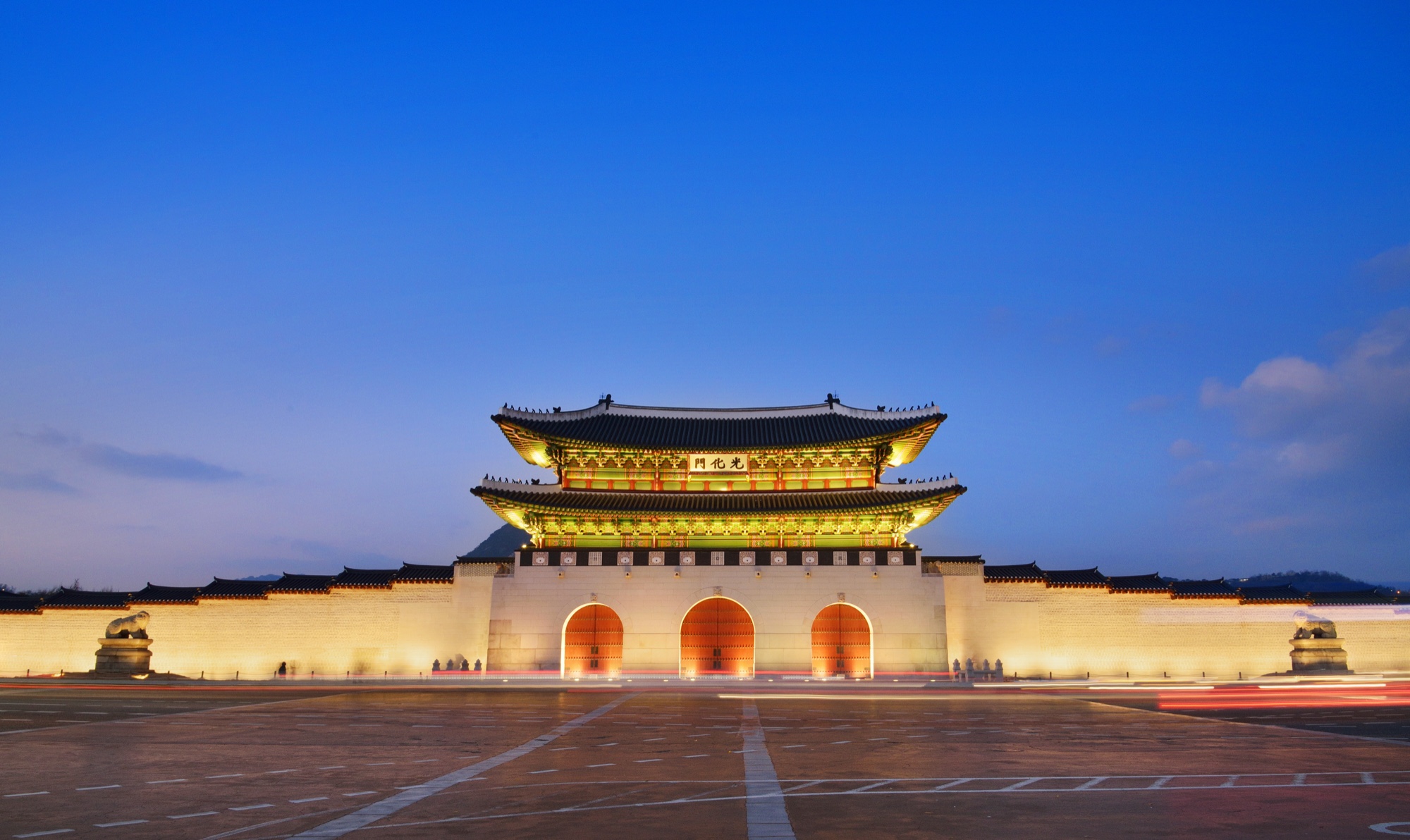
The photo shows Gwanghwamun gate at dusk in November 2012, taken by the Korea Heritage Service. It is not Seoul Light’s media facade. The festival listing does not state an admission fee for the event.
CULTURE INFO
DatesDec 11, 2026 – Jan 3, 2027
HoursDaily 17:30–22:00 KST
ProgrammeMedia facade · participation · New Year countdown
LOCATION
Gwanghwamun Square area
5Gwanghwamun Station (Line 5), Exit 2, about 235 mExit 2
Gwanghwamun, the main gate of Gyeongbokgung, lit at dusk. Archival photograph by the Korea Heritage Service (then Cultural Heritage Administration), November 20, 2012; it does not show Seoul Light Gwanghwamun. Source: Korea Heritage Service, KOGL Type 1. Resized to 2000px wide, re-saved as JPEG.
Outdoor exhibitions of the 3rd Seoul Sculpture Festival continue through November 30 at Open Songhyeon Green Plaza, next to Gyeongbokgung, and at Ttukseom Hangang Park. Visitors can see contemporary sculpture in both parks free of charge.
The exhibitions
The 3rd Seoul Sculpture Festival, part of the city’s “Sculpture City Seoul” project, opened on August 29 at Open Songhyeon Green Plaza and Ttukseom Hangang Park. The opening ceremony, busking and outdoor cinema ended on September 4, while the outdoor exhibitions remain open at all hours through Monday, November 30.
There are three shows: works by the 2026 Seoul Sculpture Award selected artists (“City of Art, on a Gentle Breeze”), the art director’s invited exhibition (“Flow and Memory, Narratives of Being”) and the new Sculpture Village (“A Village Where the Wind Dwells”). The city’s festival portal lists admission as free.
Getting there
Open Songhyeon Green Plaza sits between Gyeongbokgung and Bukchon at 48-9 Songhyeon-dong, Jongno-gu. Visit Seoul puts it about 499 m from Exit 1 of Anguk Station on Line 3, close to Bukchon, Samcheong-dong and the palace.
The Ttukseom works line a riverside walk. Because the exhibitions are outdoors, rain or strong wind can make viewing difficult. Inquiries: 02-550-2561.
Photo credit
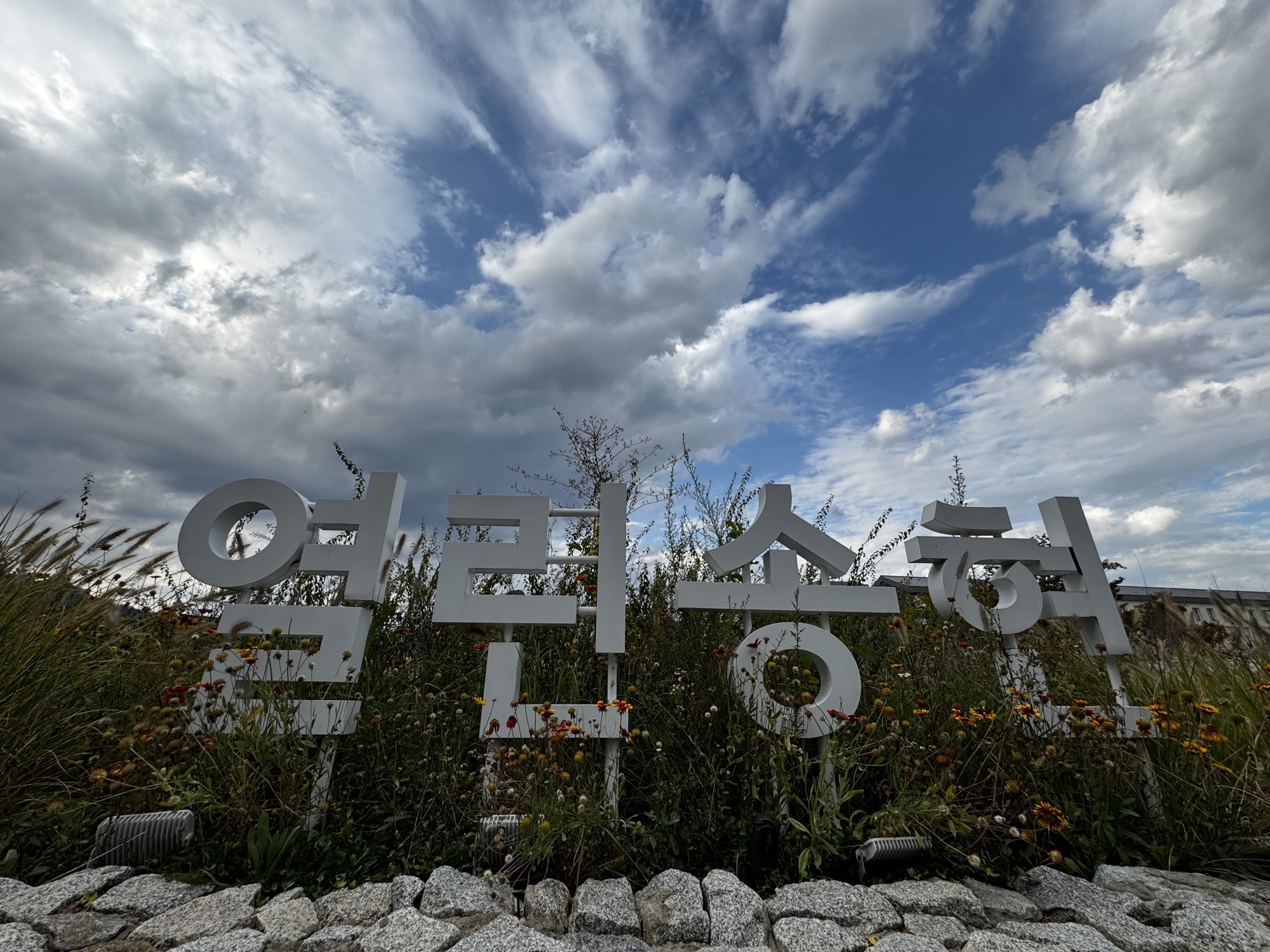
The photo, taken on October 4, 2026, shows the “열린송현” (Open Songhyeon) letter sculpture in the plaza’s garden. It is not a festival artwork; images of the works are on the official Sculpture City Seoul website.
CULTURE INFO
VenuesOpen Songhyeon Green Plaza · Ttukseom Hangang Park
UntilNov 30, 2026 (open at all times)
AdmissionFree
Contact02-550-2561
LOCATION
Seoul Sculpture Festival, outdoors and free, to Nov. 30
3Anguk Station (Line 3), Exit 1, about 499 mExit 1
The white “열린송현” (Open Songhyeon) letter sign among grasses under a cloudy sky, photographed by 슐라 on October 4, 2026. Not a festival artwork. Photo: 슐라 / Wikimedia Commons / CC BY-SA 4.0. Resized to 2000px wide, re-saved as JPEG.
SeoulCon, the global creator festival run by the Seoul Business Agency (SBA), holds its main event at Dongdaemun Design Plaza (DDP) in Seoul from December 29 to January 1, 2027. The detailed program and admission arrangements have not been announced.
The event
The official SeoulCon website lists the 2026 main event at DDP from December 29, 2026, to January 1, 2027, organized by the SBA. Zanmang Loopy has been announced as one of this year’s ambassadors; the others have not been revealed.
The 2026 program and how to attend have not been published, and the website says the influencer lineup, schedule and programs may change.
Last year’s festival
According to 2025 details on Seoul’s festival portal, last year’s SeoulCon drew about 3,600 global influencers and visitors from 50 countries. It featured K-pop performances with a New Year countdown, content awards, a networking party, influencer talk shows and fan meetings, a K-fashion and beauty expo, an e-sports zone and live commerce.
This year’s format, participating creators and any registration requirements for shows or the countdown will be posted on the website and on Instagram (@seoulcon_official).
Getting there and contacts
DDP is at 281 Eulji-ro, Jung-gu, Seoul. Visit Seoul puts it 37 m from Exit 1 of Dongdaemun History & Culture Park Station on Lines 2, 4 and 5.
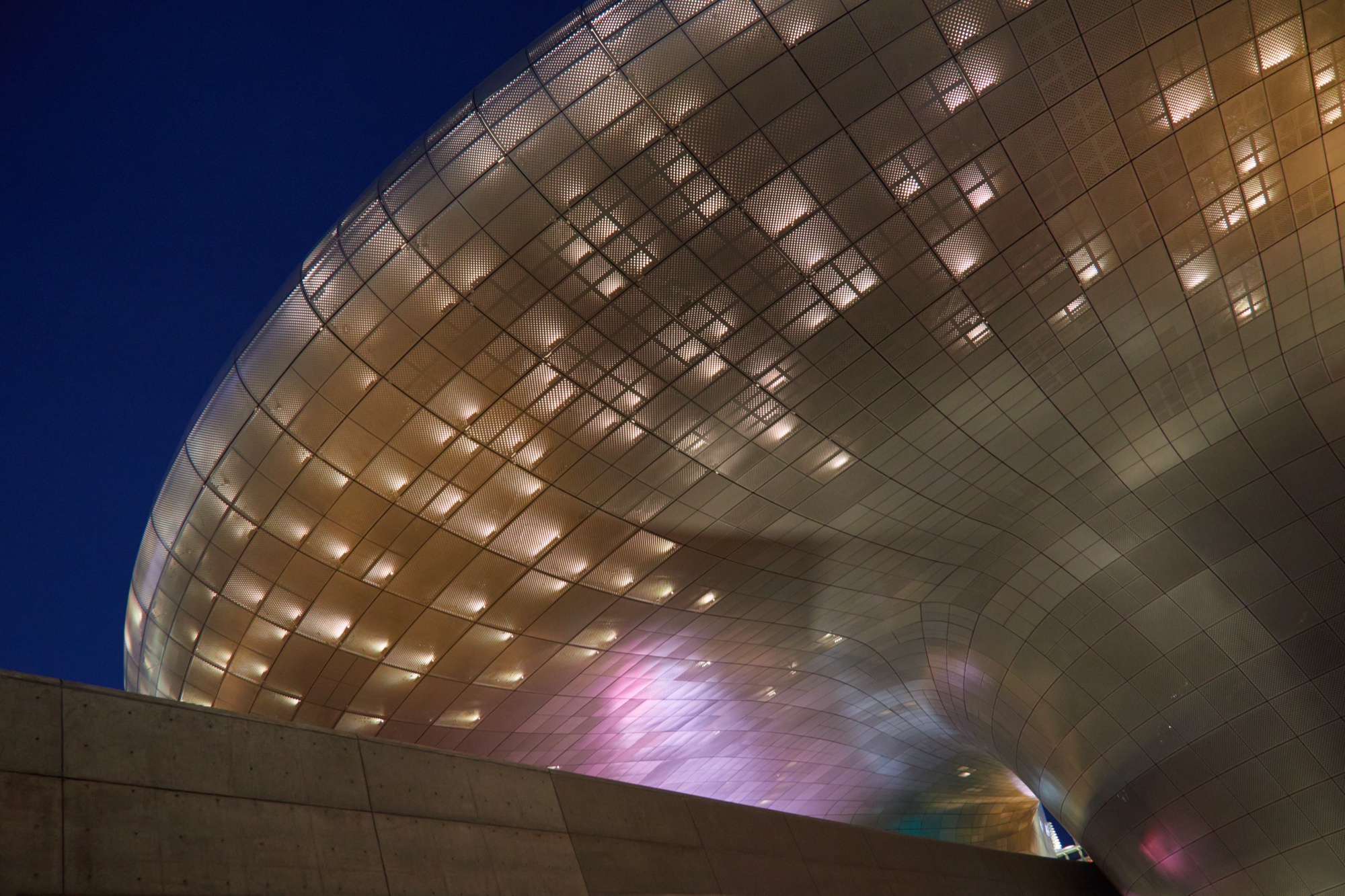
The photo is a night view of DDP’s facade taken before 2024 and does not show SeoulCon. Contact: SeoulCon secretariat, 070-5237-1009, seoulcon@sba.kr.
CULTURE INFO
DatesDec 29, 2026 – Jan 1, 2027
OrganiserSeoul Business Agency (SBA)
ProgrammeTBA (2025: K-pop shows, countdown and more)
LOCATION
DDP, Dongdaemun Design Plaza
245Dongdaemun History & Culture Park (Lines 2/4/5), Exit 1, 37 mExit 1, 37
DDP’s curved facade illuminated at night, photographed by lumoplank before October 2024; it does not show SeoulCon. Photo: lumoplank / Wikimedia Commons / CC0. 16 MB original resized to 2000px wide, re-saved as JPEG.
Four Dunhuang Buddhist sutra scrolls held by the National Museum of Korea go on public display for the first time on October 23. The scriptures were sealed for nearly a thousand years in a cave at Dunhuang, a Silk Road oasis city. The display is in the museum’s free permanent galleries.
The Library Cave
Dunhuang, an oasis city in Jiuquan, Gansu Province, China, was a gateway on the Silk Road. Cave 17 of its Mogao cave temples, known as the Library Cave, held tens of thousands of objects sealed for nearly a thousand years. Its chance discovery in 1900 gave rise to the field of Dunhuang studies.
In 2025 the National Museum of Korea published a report on four Dunhuang Buddhist sutra scrolls bought by the Yi Royal Household Museum during the Japanese colonial period. The display, “Unsealing a Thousand Years: Dunhuang Buddhist Sutras,” presents that research.
What is on view
The display runs from October 23, 2026, to January 24, 2027, in the Central Asia gallery of the World Culture galleries on the third floor of the permanent exhibition hall. It comprises three entries, eight pieces in all, including the Dazhidu lun, the Great Prajñāpāramitā Sutra, the Śūraṅgama Sutra, the Sutra of Buddha Names and “Meditating Monk.” The museum’s four Dunhuang sutras are shown publicly for the first time.
The small display presents Buddhist scriptures that traveled the Silk Road. Other World Culture galleries are on the same floor.
Hours and directions
Admission to the permanent galleries is free. Hours are 9:30 a.m. to 5:30 p.m. (last entry 5 p.m.) on Monday, Tuesday, Thursday, Friday and Sunday, and 9:30 a.m. to 9 p.m. (last entry 8:30 p.m.) on Wednesday and Saturday. The permanent galleries close on Monday, December 7, for a regular closure day, and the museum is closed January 1, 2027.
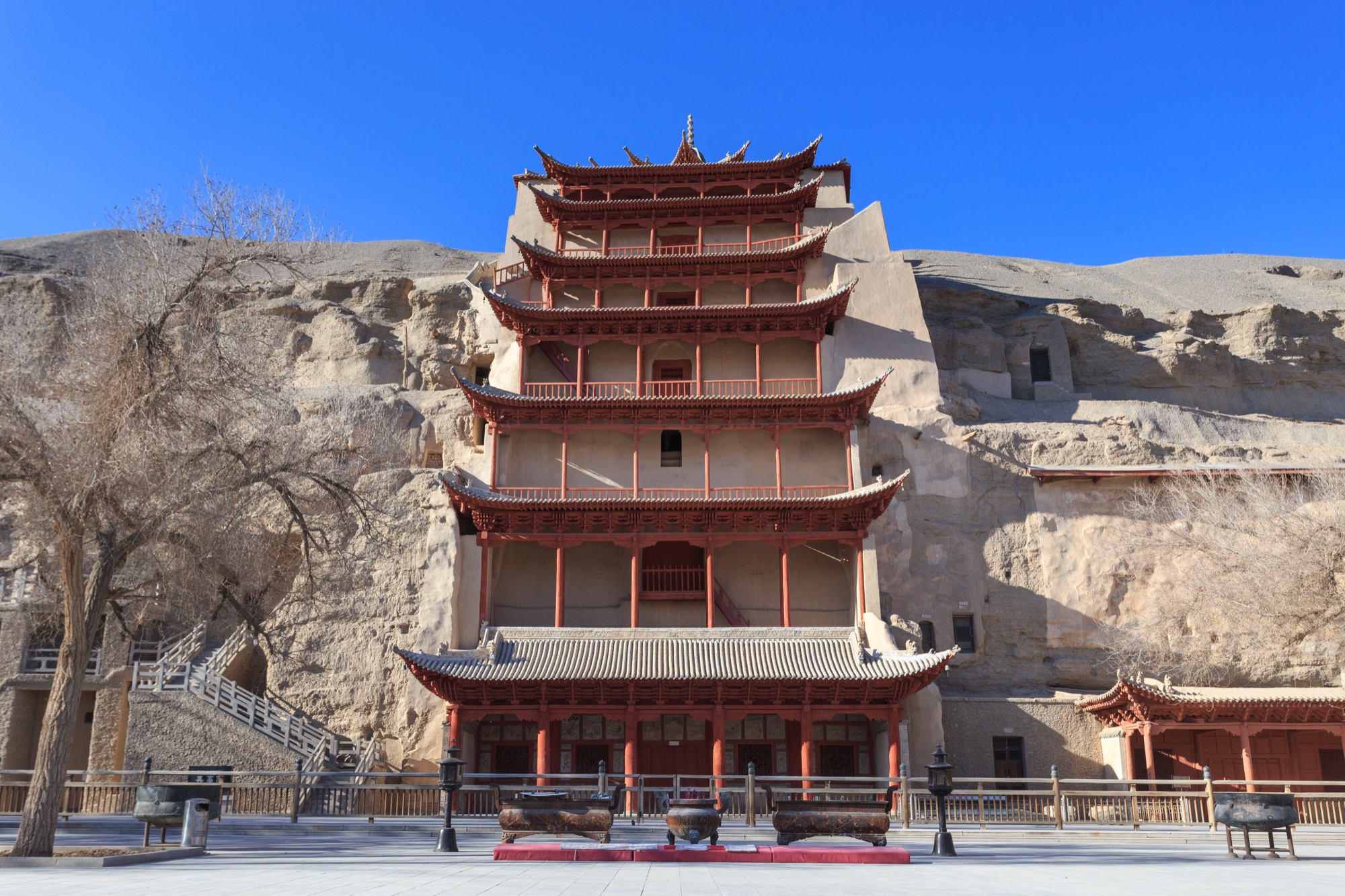
From Ichon Station (Line 4 and the Gyeongui–Jungang Line), the “Museum Nadeulgil” underpass toward Exit 2 leads to the museum’s west gate. The photo shows the Mogao Caves in China in 2013, not the objects on display.
EXHIBITION INFO
DatesOct 23, 2026 – Jan 24, 2027
AdmissionFree (permanent galleries)
LOCATION
Permanent hall 3F, World Culture – Central Asia gallery
4GJIchon Station (Line 4 / Gyeongui–Jungang), towards Exit 2Exit 2
The nine-storey pavilion and cliff of the Mogao Caves at Dunhuang, China, photographed by Zhangzhugang on December 31, 2013. Archival context; not the sutras or objects shown in Seoul. Photo: Zhangzhugang / Wikimedia Commons / CC BY-SA 4.0. Resized to 2000px wide, re-saved as JPEG.