She has lost exactly once this year, in the All England final back in March. Since then An Se-young has won 43 straight, and on Oct. 18 she faces Japan's Akane Yamaguchi in the Denmark Open final. A win means back-to-back titles here and a ninth trophy this season.
35 minutes was plenty
In Saturday's semi-final An beat Japan's Nozomi Okuhara (world No. 11) 21-16, 21-8 in about 35 minutes.
Every match from the round of 32 on has finished inside 40 minutes, and her season record now stands at 60 wins and 1 loss (98.4%).
Yamaguchi awaits
World No. 3 Yamaguchi beat No. 2 Wang Zhiyi 21-10, 21-19 in the other semi-final. An leads their head-to-head 23-15.
She has won the last nine meetings, including the Aichi-Nagoya Asian Games final earlier this month, where she became the first women's singles player to win two straight Asian Games golds.
Denmark has history
An lost the Denmark Open final to Yamaguchi in 2021 and to Wang in 2024 before finally winning it last year against Wang.
Beating Yamaguchi would make it 20 straight wins over Japanese opponents and add a ninth title to a year that already includes the Malaysia, India, Singapore and Indonesia Opens and the Asian Games.
A rough day for the doubles
Men's doubles world No. 1 Seo Seung-jae and Kim Won-ho lost their semi-final 14-21, 18-21 to Malaysia's Aaron Chia and Soh Wooi Yik in 38 minutes.
Watch it again
The video above is the full An vs Okuhara semi-final from BWF TV's official channel. The final result will be posted by the BWF and the Badminton Korea Association.
AI, not a human, now plots the routes a robot takes across 1,700-plus weld points. Hyundai Motor and Kia are showing about 200 manufacturing technologies at their Uiwang R&D center from Oct. 19 for three days, aiming for an 'autonomously run' factory by 2032.
The factory now has an AI assistant
Its name is 'Polaris'. It reads and interprets production data, searches manufacturing know-how and even drafts equipment manuals.
At the Oct. 16 media event, asked for the status of this week's trial work in the virtual factory, Polaris put per-process progress up on a monitor and talked it through.
Test it in a virtual plant first
A physical-AI 'virtual factory' being built with Nvidia recreates the shop floor so robots and equipment can be trained in advance. The aim is to cut costly real-world trial runs.
Systems that each plant ran on its own are being merged into one standard manufacturing platform. The concept is called the software-defined factory (SDF).
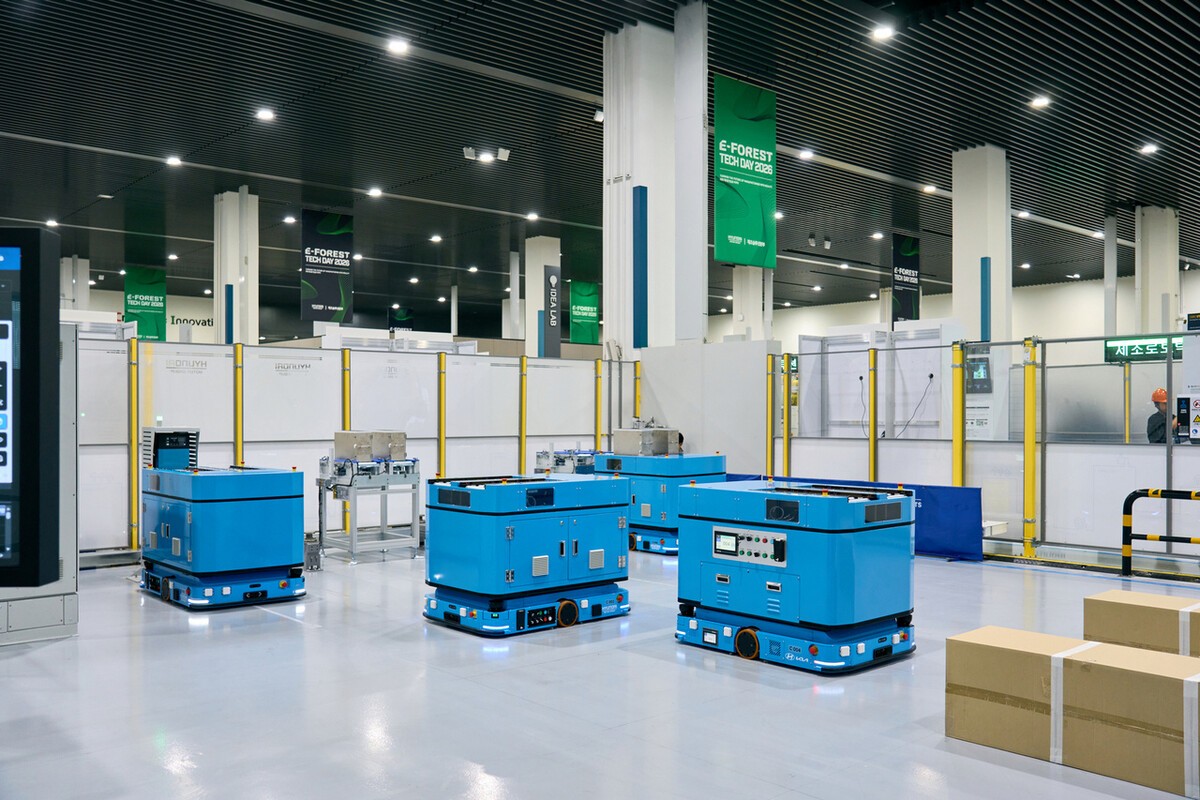
Three blue logistics robots under E-FOREST TECH DAY banners
Drive through the tunnel, get inspected
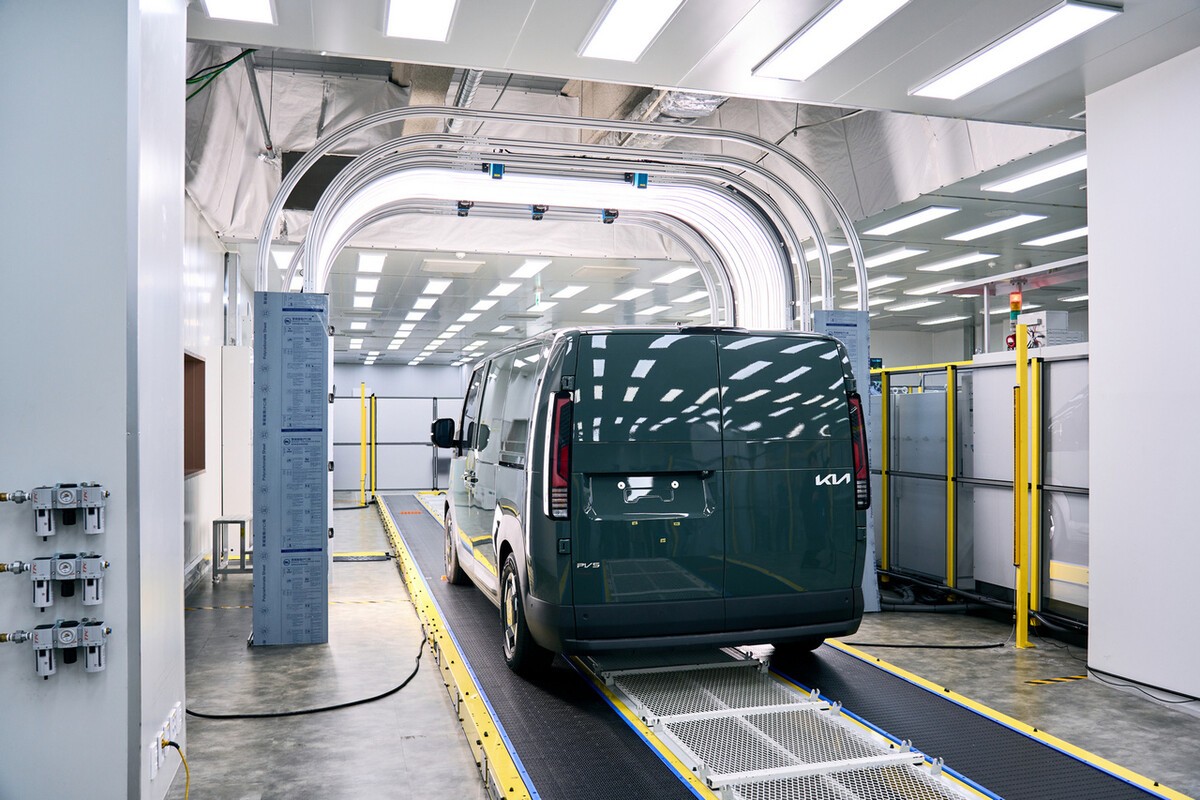
The 'tunnel-type exterior inspection vision' scans a vehicle's body with 3D simulation as it passes through a tunnel-shaped rig. The carmakers used outside vendors' systems until now; this one is in-house.
A 'robot teaching' technology automatically analyses and sets travel paths for more than 1,700 weld points.
A Kia PV5 van on a conveyor beneath an arched inspection frame
When does it reach the line?
The technologies will be validated at the Singapore innovation centre, then applied to mass production in sequence from as early as next year. The new Ulsan EV plant, starting production this month, is the first stage; the target year is 2032.
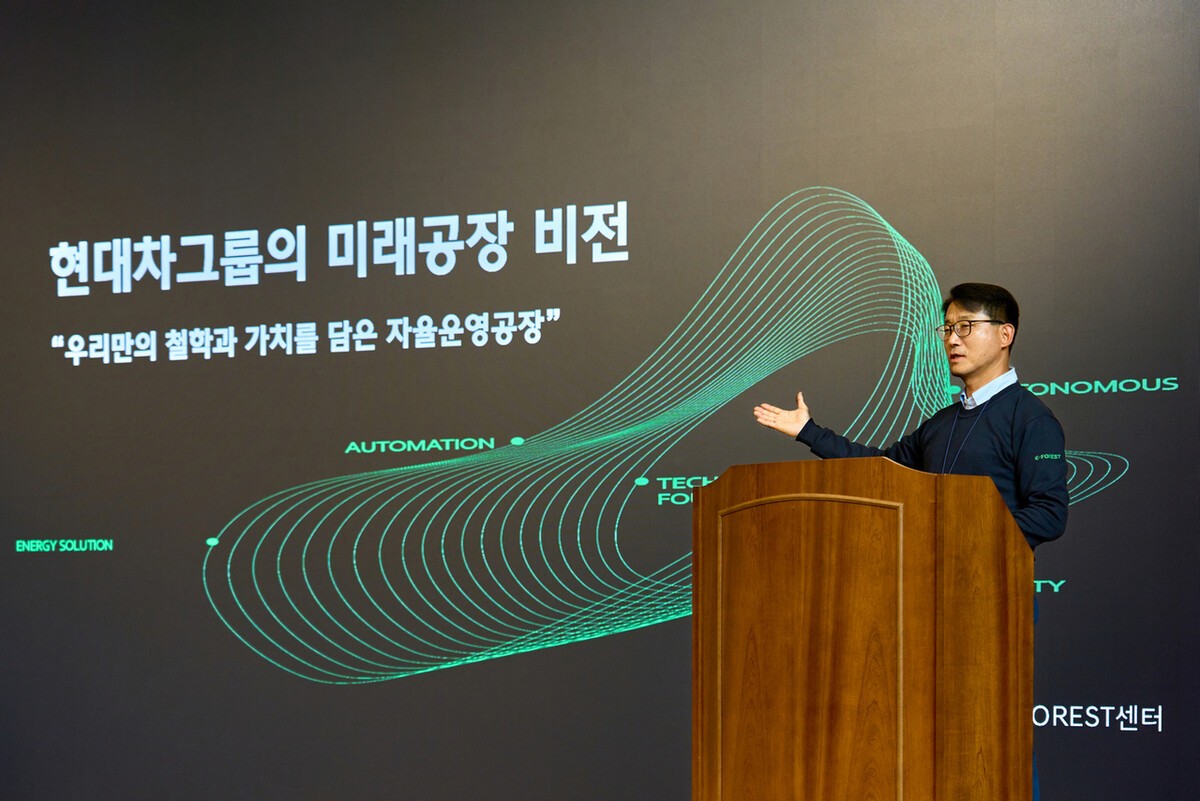
"Our goal is an autonomous factory that judges, learns and evolves on its own," said E-FOREST Center head Choi Young-tae, adding that workers should be freed for higher-value work.
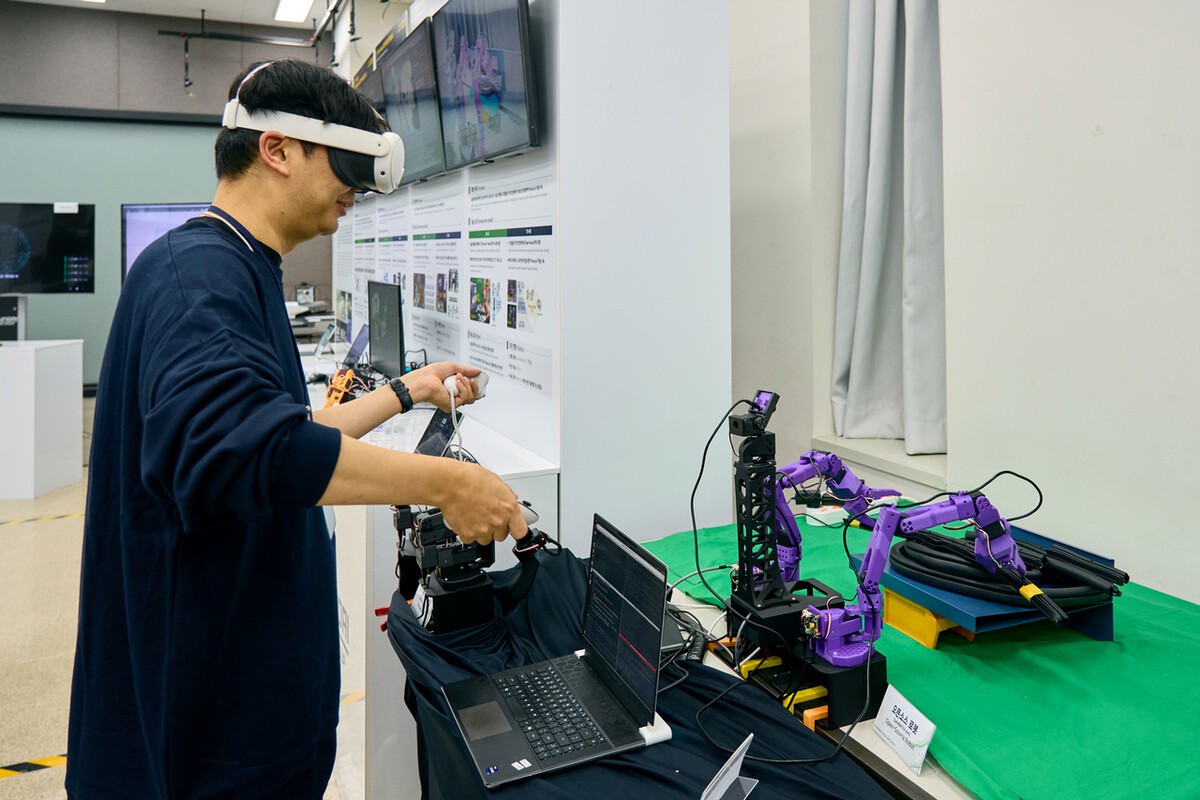
A staff member in a VR headset holding controllers in front of a laptop and purple robot arms
Good to know
E-FOREST TECH DAY is an annual exhibition where Hyundai and Kia present technology to industry peers and partner firms, alternating between the Uiwang R&D center and production plants. This seventh edition is at Uiwang and runs Oct. 19-21 at the Uiwang R&D center, with a new-manufacturing-technology contest and partner seminars on physical AI and manufacturing AI.
E-FOREST Center head Choi Young-tae presents the 'autonomously run factory' vision at the Oct. 16 media event at the Uiwang R&D center. Photo: Hyundai Motor & Kia
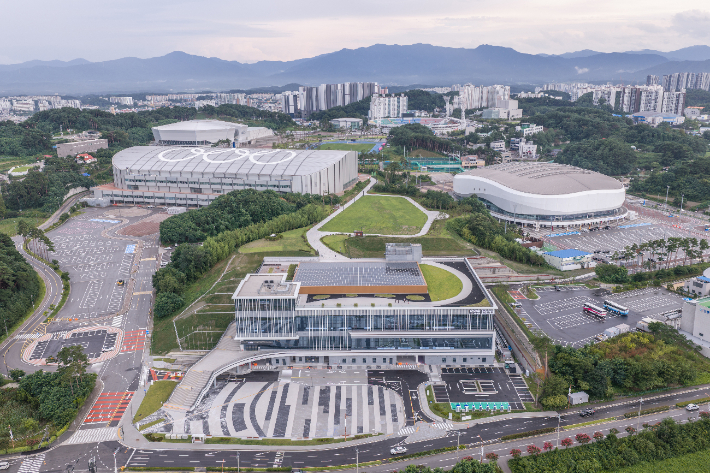
At 8 p.m. on Oct. 19, 4,000 drones take to the sky above Gangneung Olympic Park, and it costs nothing. The 'Olympics of transport' opens with 90 countries in town, and locals and travelers get a party of their own.
The transport Olympics comes to Gangneung
The 32nd ITS World Congress runs Oct. 19-23 in and around Gangneung Olympic Park. It is billed as the world's largest gathering on intelligent transport systems, with about 90 countries taking part.
Gangneung Convention Center, which opened in late August, hosts the ceremonies and academic sessions. All 434 exhibition booths are sold, and 449 papers and 193 sessions are confirmed.
4,000 drones, then stars on the ice
On opening night at 8 p.m., a drone light show of about 4,000 drones fills the sky over Olympic Park. On Oct. 22 at 7 p.m. an ice show follows at the Hockey Center, with national figure skaters Cha Jun-hwan and Lee Hae-in, the city says.
All side events for citizens and tourists are free.
What to do in the daytime
The outdoor plaza at Olympic Park gets a hanbok experience, kids' and teens' booths and a tech zone where you can try AI and self-driving. Local acts busk on the outdoor stage.
A local market, food trucks, a convenience store and a rest zone mean you can eat while you wander. Live demos of advanced transport tech run around the Hockey Center parking lot.
Getting into the exhibition
The technology exhibition is at the Speed Skating Oval. It is free if you register in advance on the congress's official website. Technology-tour and ITS-experience slots closed early.
The Gangneung Coffee Festival runs the same week, so you can pair the global event with a local one.
Before you go
The drone show happens on opening day only, and the ice show on Oct. 22 only. Programs and times can change, so check the congress's official notices once more.
When crowds and event vehicles peak at Olympic Park, public transport is the easier way in.
A laptop built to run AI on the machine itself, with no cloud meter ticking, made its Korean debut at COEX. Nvidia's RTX Spark notebooks went on sale on Oct. 16, and the cheapest model costs KRW 5,799,000.
The 'AI PC' arrives at COEX
Nvidia held the RTX Spark launch event at COEX in Samseong-dong on Oct. 16. Asus, Dell, HP, Lenovo, Microsoft and MSI are shipping notebooks with the chip.
It is a Windows PC chip that puts CPU and GPU in one package. Nvidia first unveiled it at Computex in June; Korean sales followed about four months later.
The spec that matters: memory
A 20-core Grace CPU and a Blackwell GPU with 6,144 CUDA cores share up to 128GB of memory. AI throughput is 1 petaflops at FP4.
Nvidia says that design lets 70B-class open AI models and agents run directly on the laptop.
Why is it so pricey?
The cheapest in Korea is the MSI Prestige N16 at KRW 5,799,000. The US starting price is $2,599 (about KRW 3.46 million), and top models climb into the KRW 9 million range.
An Nvidia official admitted that 128GB looked affordable at the design stage, but "we did not expect memory prices to rise this much."
The 'no token anxiety' pitch
Nvidia VP Keita Ida pitched on-device AI with no limit on token usage. Sensitive data stays on the machine; heavy jobs go to the cloud.
The company also says creative apps such as Photoshop and Premiere finish jobs faster.
Before you buy
Laptops are sold through each maker's official site and major retailers. Samsung and LG were not on the first list; Inews24 reports talks are said to be under way.
Price and how well existing software runs on Arm are the hurdles. More models at different price points are expected from next year.
Book a car on an app and it shows up with nobody in the driver's seat. Kia launched a remote-driving car-sharing pilot in Pangyo on the 15th.
The car that arrives empty
Once you book, an operator at a control center drives the car to your requested spot remotely. There is no one inside.
From there you drive yourself. Park it anywhere when you are done and a remote operator takes it back to the depot.
Who gets to try it
This round is a business pilot open only to employees of companies in Pangyo Second Techno Valley. It runs for about three months, through year-end.
The car is Kia's mid-size purpose-built vehicle, the PV5 Passenger. Booking is through an app; pricing and fleet size were not disclosed.
What if the signal drops?
Remote driving means a control center operates a vehicle with nobody on board over 4G and 5G networks, so connectivity is the obvious worry.
Kia says it built a triple communication network, trains its operators and has an emergency dispatch system.
How it got here
Kia received a remote-driving regulatory-sandbox exemption from the transport ministry in April 2025. In November 2025, after about 70 hours and 1,000 km of testing in Jeju, it said it became the first domestic automaker to pull off a remote-driving demo on public roads.
Kia calls the Pangyo pilot the first domestic case of testing the business case for remote driving in a real service environment.
What to watch
Kia plans to widen the service in 2027 and push toward commercializing PV5-based remote-driving service.
It is not open to the general public yet. Questions go to Kia's PR team at +82-2-3464-2105.
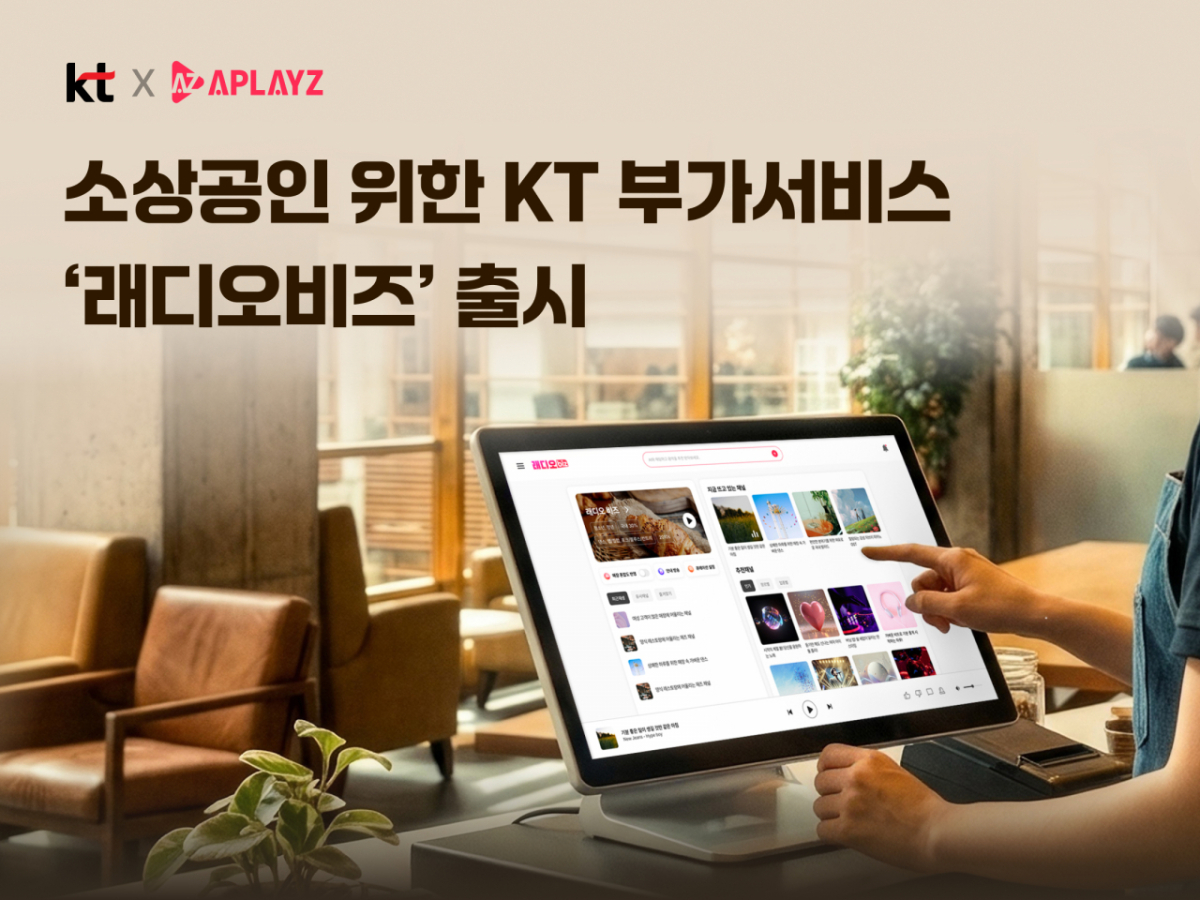
Owners who lose hours to playlist-building now have an AI option. On Oct. 16 KT launched RaiDIO Biz, an AI in-store music service for small businesses, at 9,900 won a month.
The mood shifts with the clock
The AI looks at business type, time of day, season and weather, then picks and plays music to suit the shop. Playlists change automatically to follow morning, lunch and evening crowds.
It is aimed at cafés, restaurants, hair salons, clinics and academies. KT says no extra equipment or music know-how is needed.
Announcements on a schedule
It does more than play songs. Owners can run announcement and scheduled broadcasts for opening hours, events and promotions.
No more walking over to press play on the closing-time notice.
Promotion and a guestbook, too
Register your shop on RaiDIO Biz and it shows up for users of the music app Raidio. That is one more way for new customers to find the door.
Sign-up also brings a QR sticker. Stick it up and visitors can leave a quick guestbook entry, handy for keeping regulars.
The price: 9,900 won a month
The fee is 9,900 won a month including VAT, added to your KT mobile bill. There is no separate music licensing contract or complicated payment step.
New subscribers get up to three months free as a launch promotion.
Before you sign up
Sign up through KT.com or the My KT app. A text message then sends a dedicated URL; register your account there and you can start, using the RaiDIO Biz app or web.
KT's Son Jung-yeop, head of the Device Business Division, said the service "pairs an AI music service with store-promotion tools and should help small businesses run more efficiently."
Even with a bad knee, the gold medal went to Heo Mi-mi again. In the women's 57kg final of the 107th National Sports Festival at Namnyeong High School in Jeju on Saturday, Heo (Gyeongbuk Sports Council) beat Kim Ju-hee (Ulsan) by hold-down ippon for a fifth straight title.
No signature move needed
She finished both the quarter-final and the final with hold-downs. The reason she kept her trademark uchimata in the bag is her knee.
The same knee limited her throws at the Asian Games too, yet smart match management delivered her first Asian Games gold, and she carried it into the National Sports Festival.
Not at full strength
After silver at the Paris Olympics she had shoulder surgery and missed many international events. More recently the knee has been the problem.
A check-up after the Asian Games brought no good news. She will skip surgery and rehabilitate instead, and this event ends her season.
A gold every year
Heo was born in Japan to a Korean father and a Japanese mother. In 2021 she took Korean nationality, following her grandmother's last wish to see her compete for Korea, and she has won National Sports Festival gold every year since the next one.
"When I first competed here, hardly anyone was cheering," she said. "Today I heard a lot of cheers, and that was nice."
Next stop: Namyangju City Hall
After this event she leaves Gyeongbuk Sports Council for her new club, Namyangju City Hall. Her targets are the Asian and World Championships next year and gold at the 2028 Los Angeles Olympics.
She missed this year's World Championships because they overlapped with the Asian Games team event. Her younger sister Heo Mi-o took bronze in the women's 48kg at the same Festival.
A first-pitch go-ahead homer, a sacrifice fly, a two-run clincher. KIA beat LG 5-1 in Gwangju on Saturday, and every time the Tigers pushed a run across, Kim Do-young was at the plate.
He hit the first pitch out
LG struck first: Song Chan-ui took James Naylor deep to left in the 2nd. KIA answered at once, with Harold Castro tying it 1-1 over the right-field wall in the bottom half.
The game turned in the 4th. With one out, Kim Do-young jumped on LG starter Anders Tolhurst's first pitch and put it in the left-field seats for a 2-1 lead.
The runs LG gave away
LG had runners on first and second with none out in the 6th and grounded into a double play. The bottom of the inning went the other way: left fielder Song Chan-ui dropped a fly ball, third baseman Moon Bo-gyeong booted a grounder, and KIA had first and third with nobody out.
Kim cashed it in with a sacrifice fly to right.
The KBO's official Game 1 highlights, including both Kim Do-young home runs. YouTube · KBO ↗
The 8th-inning clincher
Two out, runner on first in the 8th. LG's fifth pitcher, Jang Hyun-sik, threw a splitter and Kim sent it over the center-field wall. 5-1.
Kim finished 2-for-3 with two homers and four RBIs; two home runs ties the record for a single semi-playoff game.
Naylor goes seven
Naylor allowed one run on four hits over seven innings with six strikeouts; the only homer he gave up came in the 2nd. Closer Jeon Sang-hyeon locked down the 9th for the save.
Tolhurst took the loss, giving up three runs (two earned) in five innings. Park Hae-min went 3-for-4 for LG.
Game 2 is Sunday at 2 p.m.
The best-of-five semi-playoff has been played 17 times, and the Game 1 winner has reached the playoffs 12 times, or 70.6%.
Game 2 is at 2 p.m. on Oct. 18 at the same Gwangju park, with Lim Chan-kyu (LG) and Adam Oller (KIA) listed as probable starters.
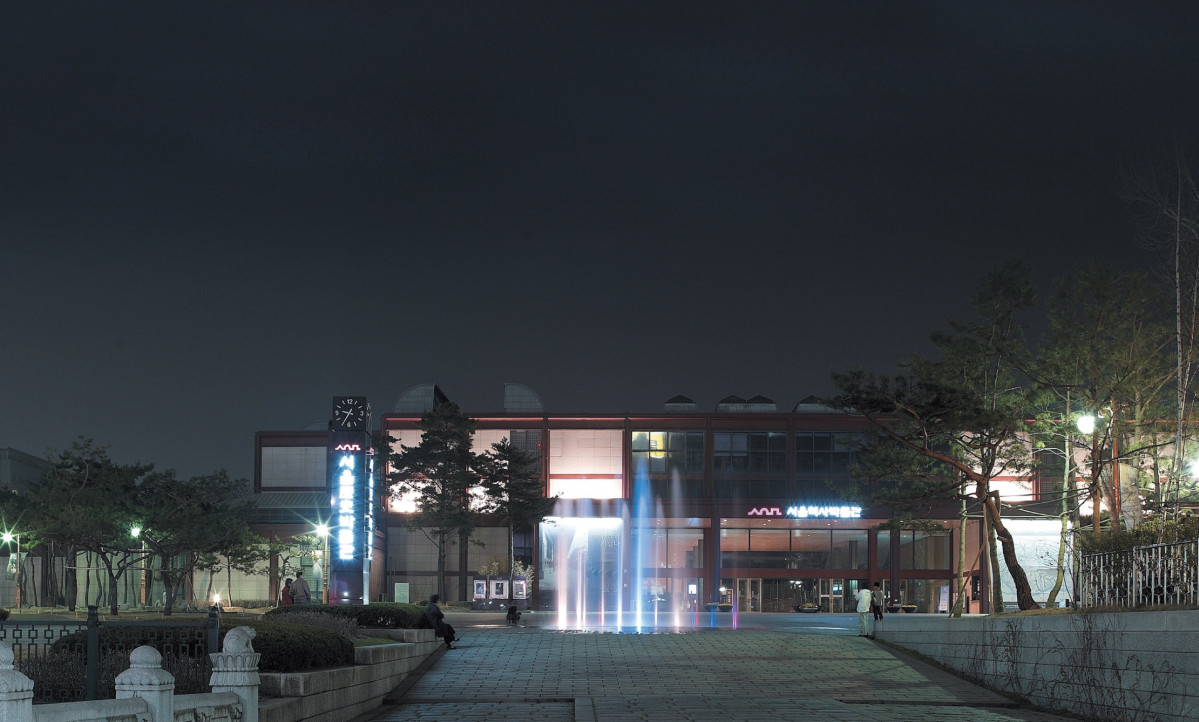
You can finish work and still catch the exhibition. Seoul is keeping its city-run museums, libraries and other cultural venues open until 9 pm five days a week, under the name 'Seoul Culture Night'.
Where and until when
It runs from Sept. 15 to Nov. 30, Tuesday, Wednesday, Friday, Saturday and Sunday, until 9 pm.
Participating venues include the Museum of Seoul History, Seoul Craft Museum, Hanseong Baekje Museum, Unhyeongung, the Sejong and Admiral Yi stories exhibit under Gwanghwamun Square, and the Seoul Library. The Museum of Seoul History closes at 6 pm on Thursdays, and last entry on night-opening days is 8:30 pm.
Programmes that only happen at night
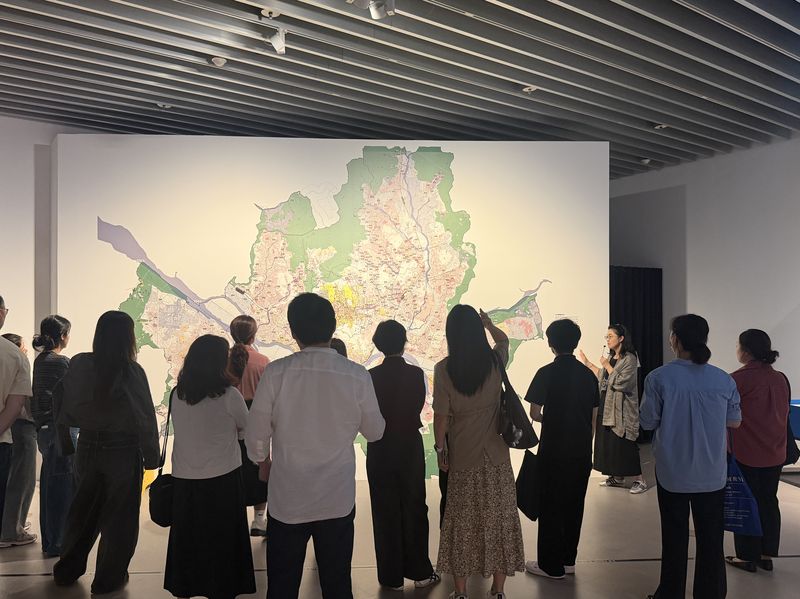
At the Museum of Seoul History, curators share the stories behind the exhibits in 'Jeonsi Yahwa' talks at 7 pm. The Seoul Craft Museum runs yoga, meditation and running sessions in its outdoor spaces.
Exhibition talks and the night education programmes and performances are free.
Visitors listening to a curator's talk in an exhibition hall
Making something on the way home
A workshop for young adults on Oct. 23 and 30 turns Gyeonghuigung Palace's dancheong patterns into ornaments. One for office workers on Oct. 27 and Nov. 3 uses bojagi wrapping-cloth colors and knots to make magnets. Both run from 5:30 to 7:30 pm.
Sign-ups for the office-worker workshop open on Oct. 19 at 11 am.
Before you go
- Workshops and family programmes are first-come through the Seoul Public Service Reservation system.
- Closing days and operations differ by venue, so check each venue's website first.
- The Museum of Seoul History closes early on Thursdays. Plan your Thursday night elsewhere.
Show a coupon, get a free bag of almond pretzels. Shinsegae Simon's Yeoju Premium Outlet has rolled out a batch of upgrades for foreign visitors: a snack pop-up through the 22nd and a dedicated tourist desk opening on the 23rd.
The catch on the free pretzels
From Oct. 16 to 22, nut brand HBAF has a pop-up on the bridge linking the EAST and WEST zones of the outlet, with 15 almond and popcorn products.
Foreign visitors who show a dedicated coupon get a free 40 g bag of cheddar cheese almond pretzel. Anyone, of any nationality, who spends KRW 10,000 or more gets a 25 g bag of anchovy almonds.
From twice a week to every day
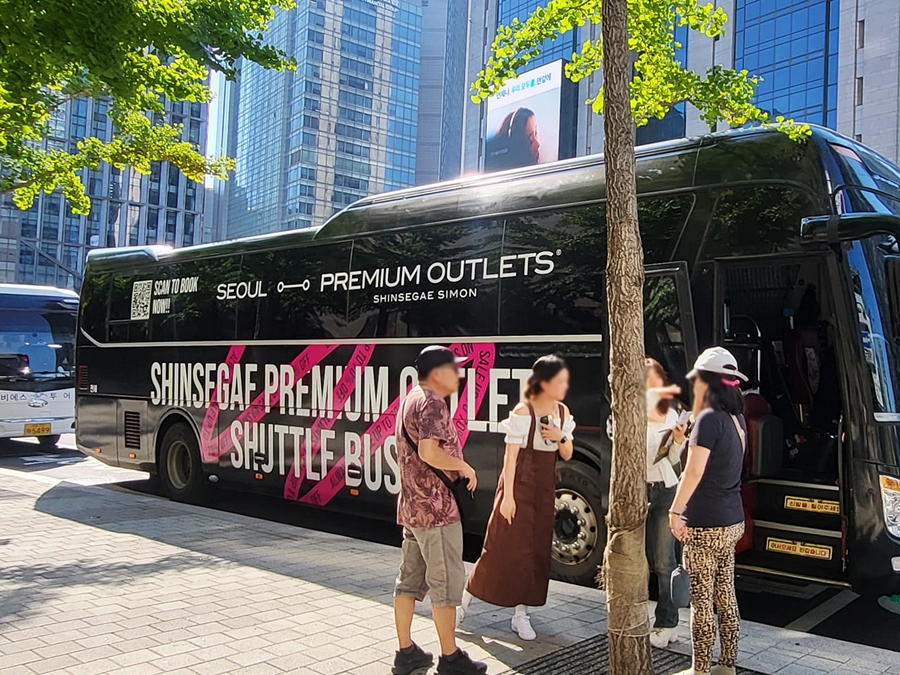
The outlet's foreigner-only one-day tour shuttle started last April at two trips a week. Ridership grew, the schedule was raised step by step, and from this month it runs seven days a week.
Fitting an outlet day into a Seoul itinerary just got easier.
A tourist desk from the 23rd
On Oct. 23, a Tourist Information desk opens at the EAST zone guide center, with foreign-language maps plus tax-refund and shopping information in one place.
An unmanned currency-exchange kiosk is due later this month.
The pop-up moves on to Siheung
The same pop-up relocates to Siheung Premium Outlet from Oct. 23 to Nov. 2. Miss Yeoju and you get a second shot in the capital region.
Before you go
The free pretzels need the foreigner coupon, and the Yeoju pop-up ends on the 22nd.
The desk opens on the 23rd, so visit after that if you want tax-refund guidance. A Shinsegae Simon official said it has "strengthened convenience services and content together" as foreign visitors keep rising.
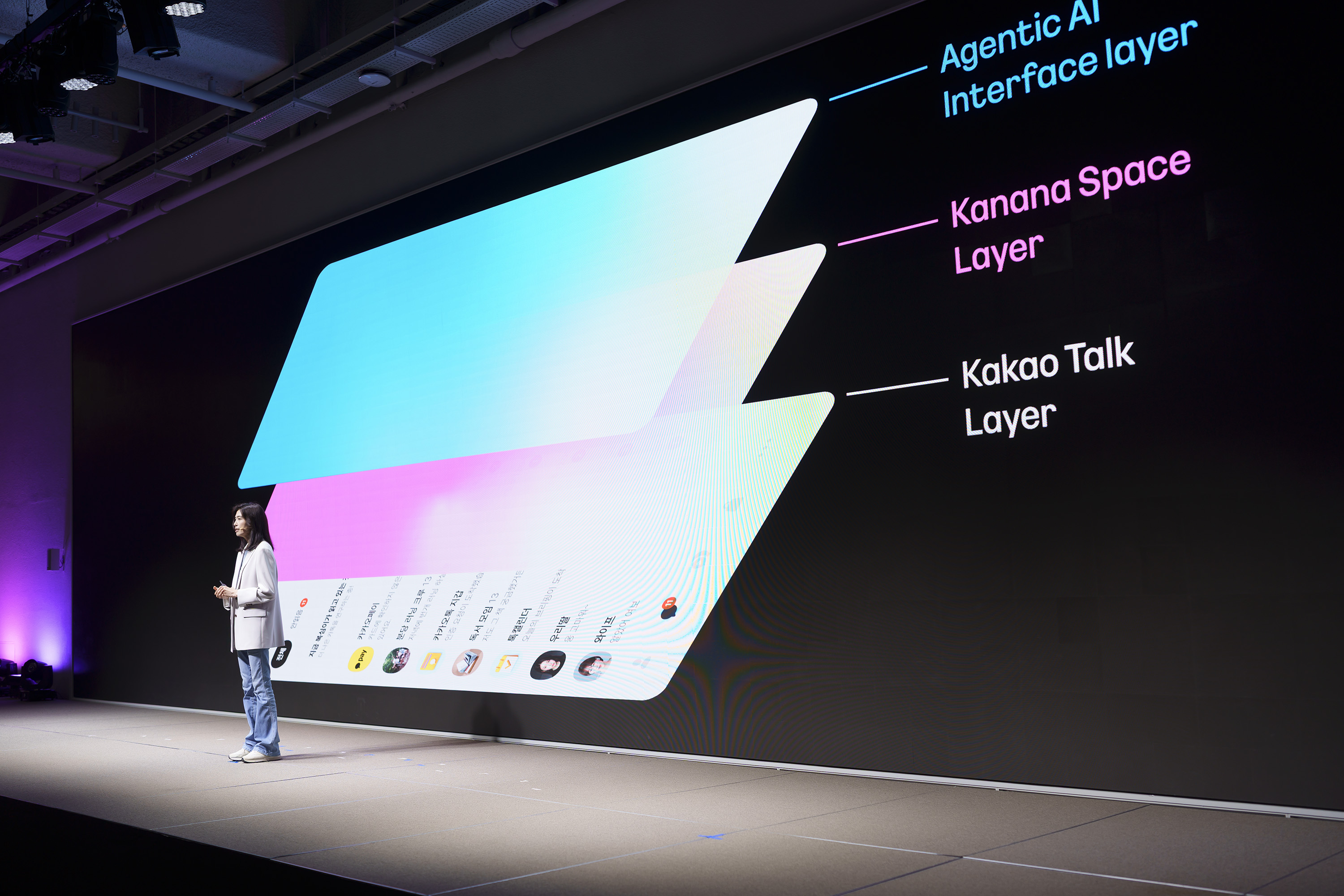
Swipe the KakaoTalk screen with two fingers and the cartoon lion Ryan appears. That is Kanana Space, the AI assistant Kakao unveiled on Oct. 13. Pre-registration is already open, and a first group of applicants gets in this December.
How to summon Ryan
Summoning him is simple: two fingers across the KakaoTalk screen. No separate app needed.
For now you can ask for sending messages, managing your schedule, web searches and changing KakaoTalk settings, by voice or text. You can also just chat. Kakao says characters from other IPs will follow.
"Order me some water" and done
The next step Kakao is drawing up is ordering, gifting, booking and money transfers. Its own example: mid-chat you say "order water" and the assistant picks the water you bought before and applies any usable coupon.
Kakao says agents act only inside the scope you allow, and it is building checks around how they plan and carry out tasks. No price has been announced.
Kanvas on PC, inside KakaoTalk next year
Shown alongside it, Kanvas lets you build and run your own agents on a PC. You describe the agent you need and it wires up the tools and skills. A small closed test could start as early as this year.
In the first half of next year Kakao plans a new space inside KakaoTalk where agents gather, including ones built on other frameworks.
How to try it
Pre-registration has been open since Oct. 13 on the Kanana Space website. The December closed beta (CBT) takes a selection of applicants.
Behind it sits Kakao's Kanana model family: simple requests run on an on-device model on your phone, harder jobs go to a larger one.
Call a car on an app and it shows up with nobody in the driver's seat. That is Kia's remote-driving car-sharing pilot, which began on the 15th in Second Pangyo Techno Valley. The person at the wheel is in a control center.
It comes to you, driven by someone far away
The car is a Kia PV5 Passenger. When a user books through the dedicated app, a remote operator in a control center drives the empty vehicle over 4G/5G networks to the pickup spot.
From there the user drives. After parking at the destination and returning the car, the operator drives it back to the depot.
Only Pangyo office workers can ride
The pilot is B2B. Only employees of companies based in Second Pangyo Techno Valley can use it, and it runs to the end of the year, about three months.
Kia supplies the vehicles and leads the project, SUM builds the remote-driving solution and Mobius runs operations. The Korea Road Traffic Authority reviews traffic rules, with support from Gyeonggi-do, KT and others.
What if the signal drops?
Connectivity is the big worry with remote driving. Kia says it has a triple communication backup for weak or lost signals, remote-driver training, a multi-layer safety system and an emergency dispatch system.
A year and a half to get here
Kia received a regulatory sandbox exemption from the transport ministry in April last year and demonstrated PV5 remote driving on public roads in Jeju in November. In July it signed an MOU with KT and SUM to commercialize the technology, promising a service within the year.
The use cases floated then: send a car to your door, then let it move to another lot after you get out, easing urban parking crunches.
Kia says the pilot will test reliability and operational feasibility and gather data, with an expansion toward commercialization planned for 2027.