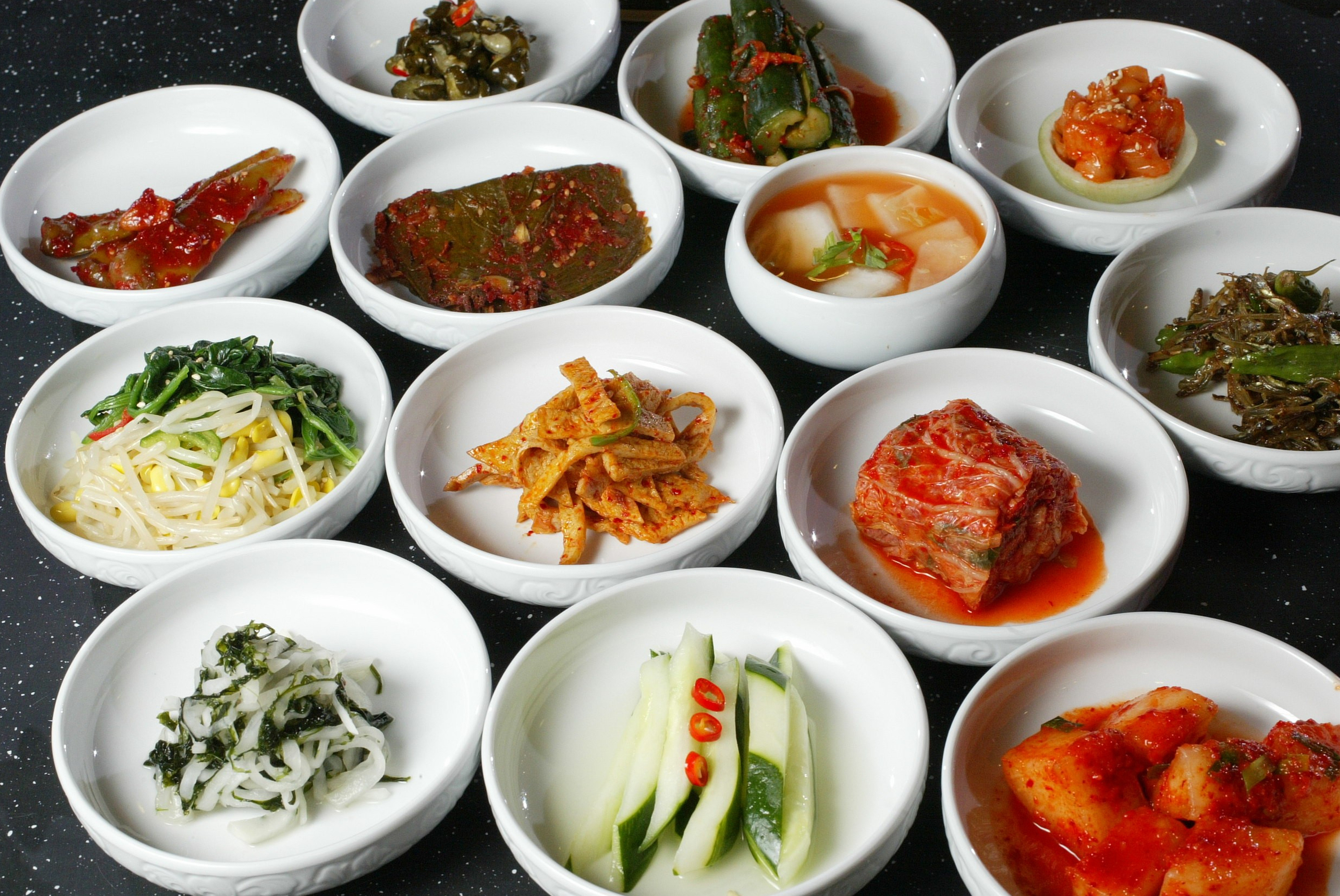
Korean restaurants serve rice with an array of small side dishes called banchan. Here are a few common dishes, including seasoned spinach and stir-fried anchovies, and how to order banchan at restaurants and markets.
Bansang and banchan
Bansang is a table setting of rice and side dishes. Soup or stew is served alongside dishes made in different ways, such as raw-seasoned vegetables, grilled foods, braises and pancakes. Banchan are part of the meal, not garnish.
Varies by region, home and season
Korea.net says banchan vary by region, household and seasonal ingredients, so the same restaurant may serve different dishes from day to day. Staff can tell diners the name of an unfamiliar dish.
Spinach and anchovies
Sigeumchi-namul is blanched spinach with seasoning; cook Maangchi’s recipe uses soy sauce, garlic and sesame oil. Myeolchi-bokkeum is dried anchovies stir-fried with seasoning, sometimes with peanuts.
Ingredients and seasonings vary from place to place. Diners who need to avoid an ingredient should ask before ordering.
Asking for more
To ask for more of a side dish, say “이 반찬 조금 더 받을 수 있을까요?” (“Could I have a little more of this side dish?”). Whether refills are offered, and whether they cost extra, depends on the restaurant. Asking for small amounts avoids waste.
Buying banchan at a market
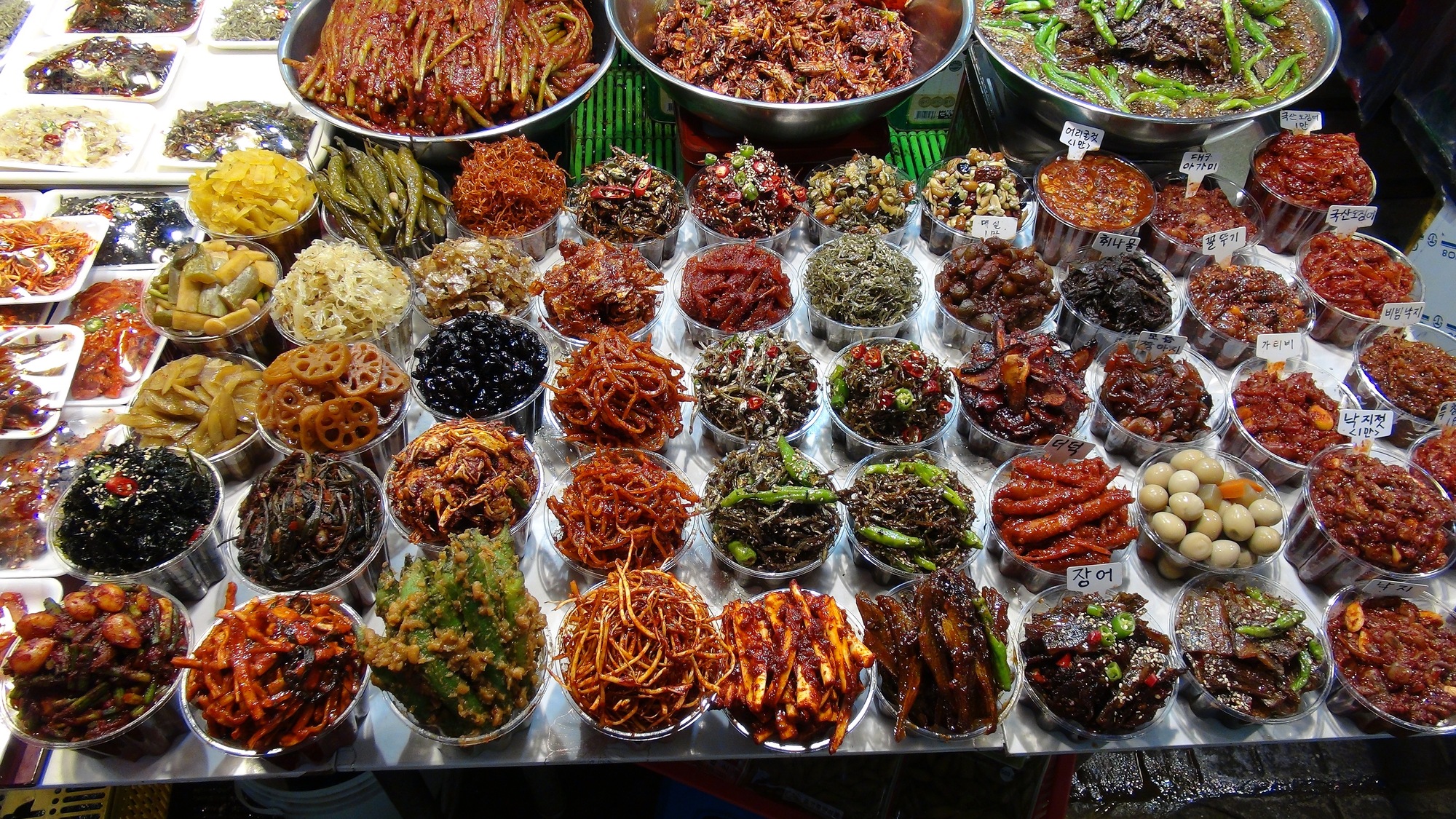
At markets with banchan stalls, shoppers can buy small amounts of several dishes to make a meal. Ask the name, selling unit and price before choosing a quantity, and check storage instructions for takeaway.
Rows of market-counter bowls holding kimchi, braised lotus root, beans and other side dishesSources & context
Kimchi, vegetables and other banchan arranged in small white dishes. This 2005 archive photograph is not a current restaurant menu. ijs, Banchan 2.jpg, 2005-12-22, CC0 1.0. https://creativecommons.org/publicdomain/zero/1.0/ Original JPEG unchanged.
Banchan including kimchi, braised dishes and salted seafood on a traditional-market counter. This is a 2014 archive image; visible prices and products are not current sales information. Ulrich Walder, Banchan in a traditional market.jpg, 2014-10-26, CC0 1.0. https://creativecommons.org/publicdomain/zero/1.0/ Resized proportionally to 2000px wide and saved as JPEG.
Its round eyes and tiny mouth suggest a toy, but this white frog was a writing tool. The National Museum of Korea’s frog-shaped porcelain water dropper held water for grinding an inkstick on an inkstone.
A 4.5cm porcelain piece
Made of white porcelain in the Joseon period, the dropper is 4.5cm high and 3.5cm in diameter. Its collection number is Sujeong 356. The desk accessory, smaller than a palm, carries an animal’s expression.
Two openings control the flow
A water dropper does more than store water. The Encyclopedia of Korean Culture explains that two openings regulate the air flow so the user can release as much water as needed, whether for grinding ink or mixing paint.
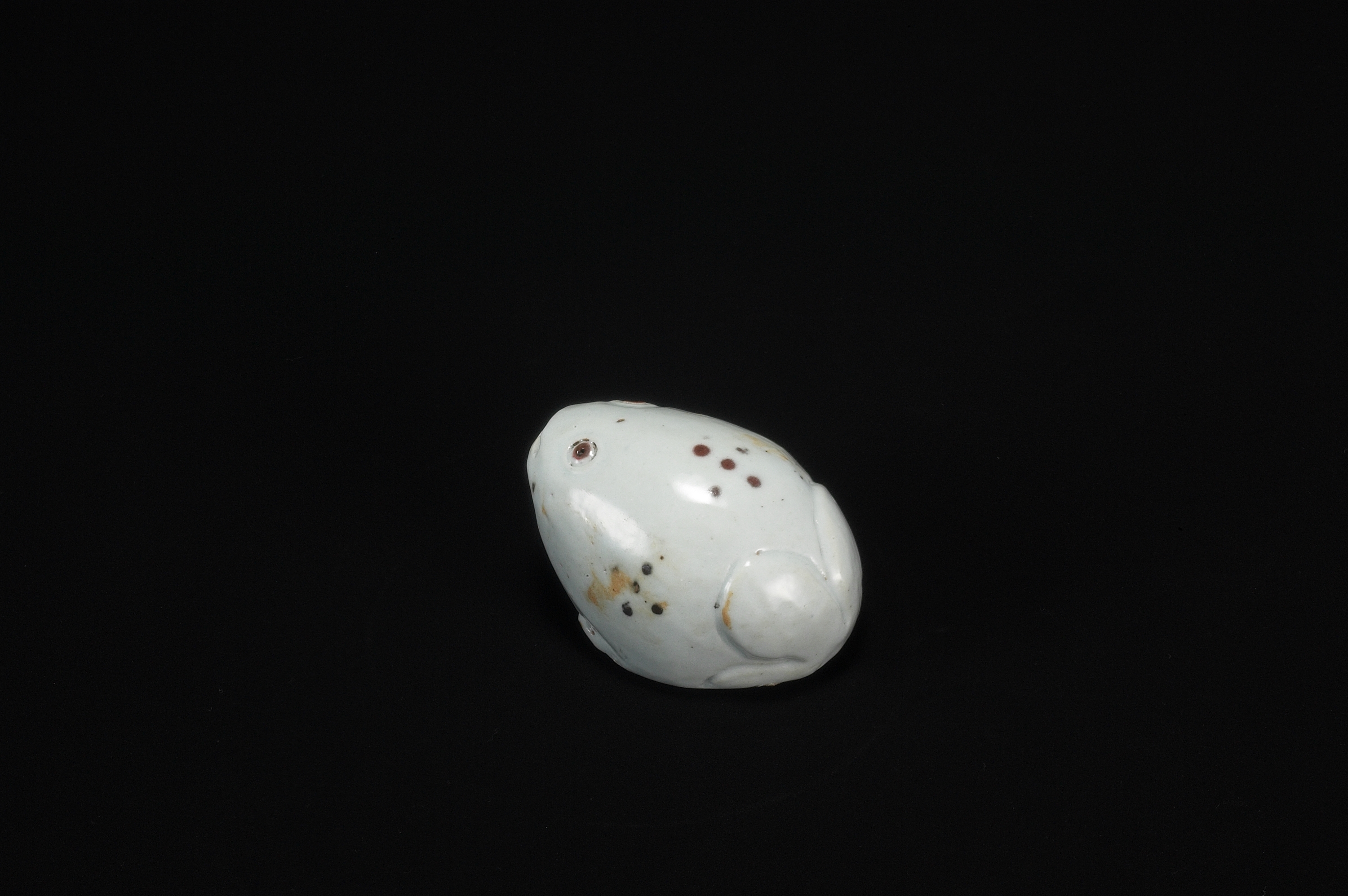
White frog-shaped water dropper with reddish spots and folded legs against a black background
Red spots
Small reddish spots dot the white body. The Korean term donghwa refers here to decoration in copper-red pigment.
Viewed from above, the folded hind legs stand out; from the front, the mouth and eyes read as a face.
Many shapes
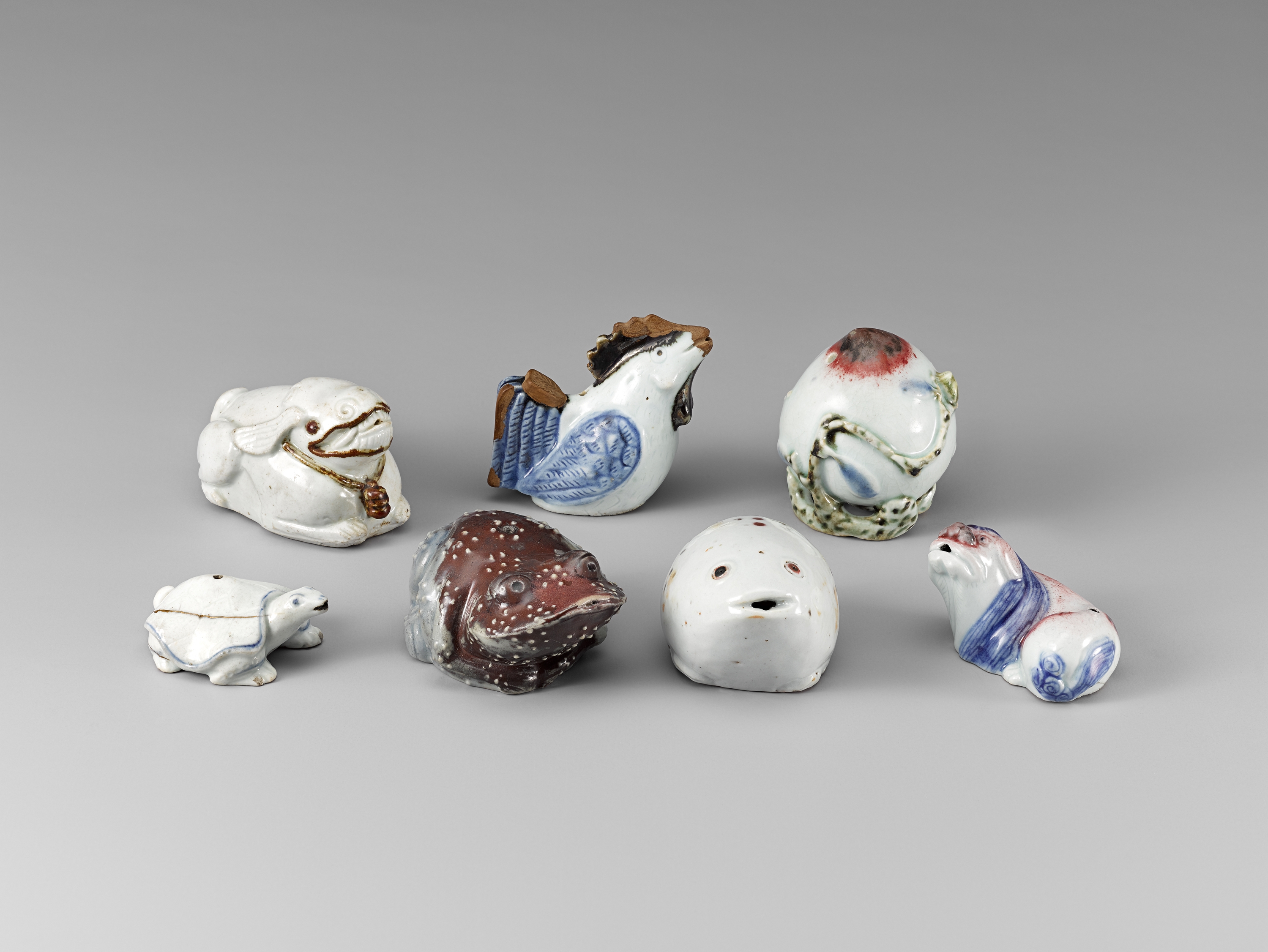
Joseon water droppers came in round and angular forms as well as shapes modelled on animals, plants and houses. In the group photograph, droppers with different outlines surround the white frog. Each was both a practical tool and a small sculpture on the writing desk.
Group photograph of differently shaped water droppers published on the museum’s Sujeong 356 collection page. The white frog just right of centre in the front row is the object discussed here. Capture date unspecified. National Museum of Korea, KOGL Type 1; original unchanged. https://www.museum.go.kr/MUSEUM/contents/M0502000000.do?relicId=8637&schM=view&searchId=search
A view of Sujeong 356 from above shows reddish spots and the folded hind-leg shape. National Museum of Korea, KOGL Type 1. Capture date unspecified; original unchanged. https://www.museum.go.kr/MUSEUM/contents/M0502000000.do?relicId=8637&schM=view&searchId=search
Nongshim will release Gambas Jjapagetti, packet noodles that add roasted-garlic and olive-oil flavours to its familiar Jjapagetti, at Emart first on October 27. The product is based on a consumer’s contest-winning recipe.
A contest winner
The product is based on the recipe of the same name that won Nongshim’s 2025 Jjapagetti cooking contest. In its October 13 announcement, the company said the packet lets people enjoy the combination without preparing the ingredients separately.
Shrimp-flavoured balls and fried garlic
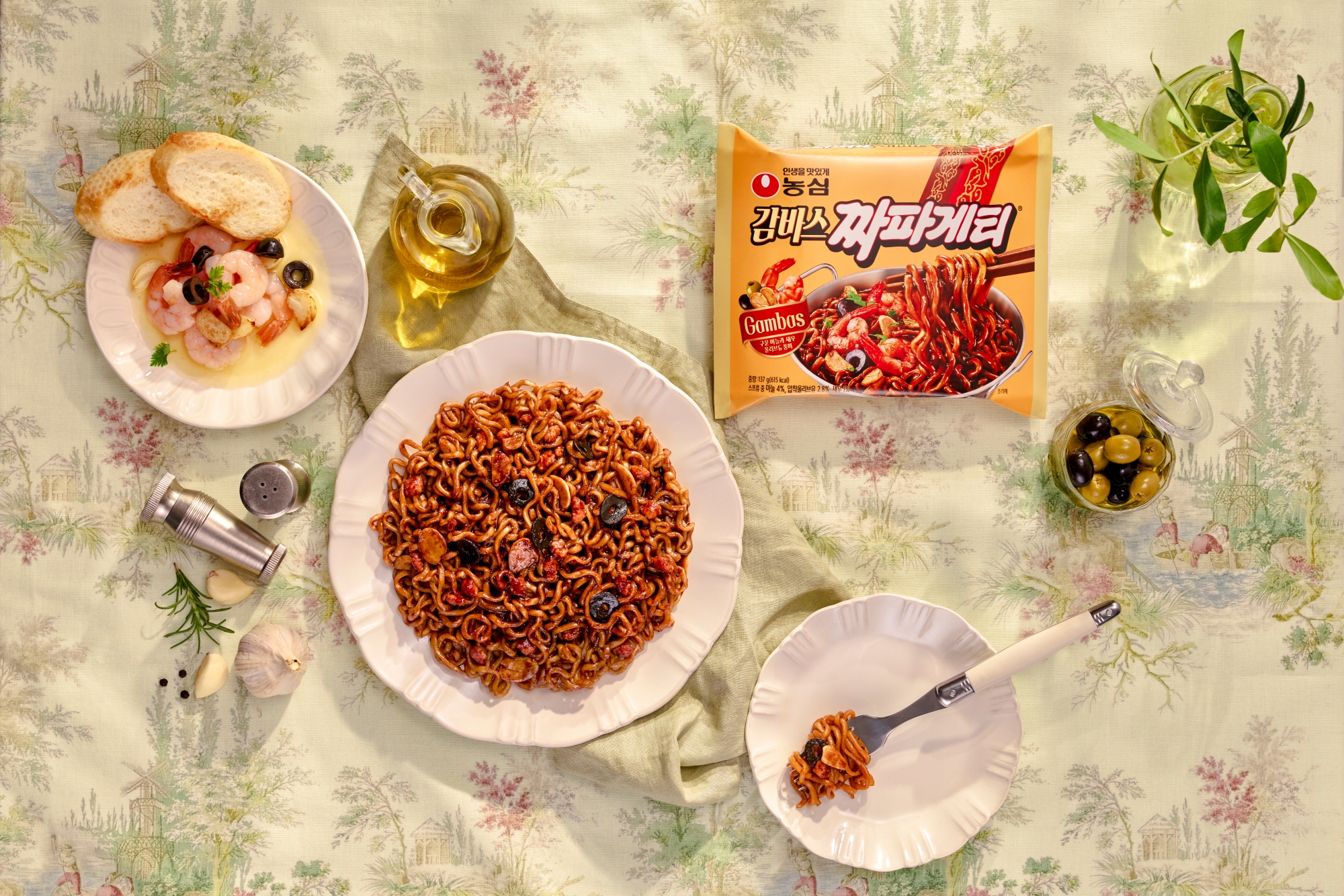
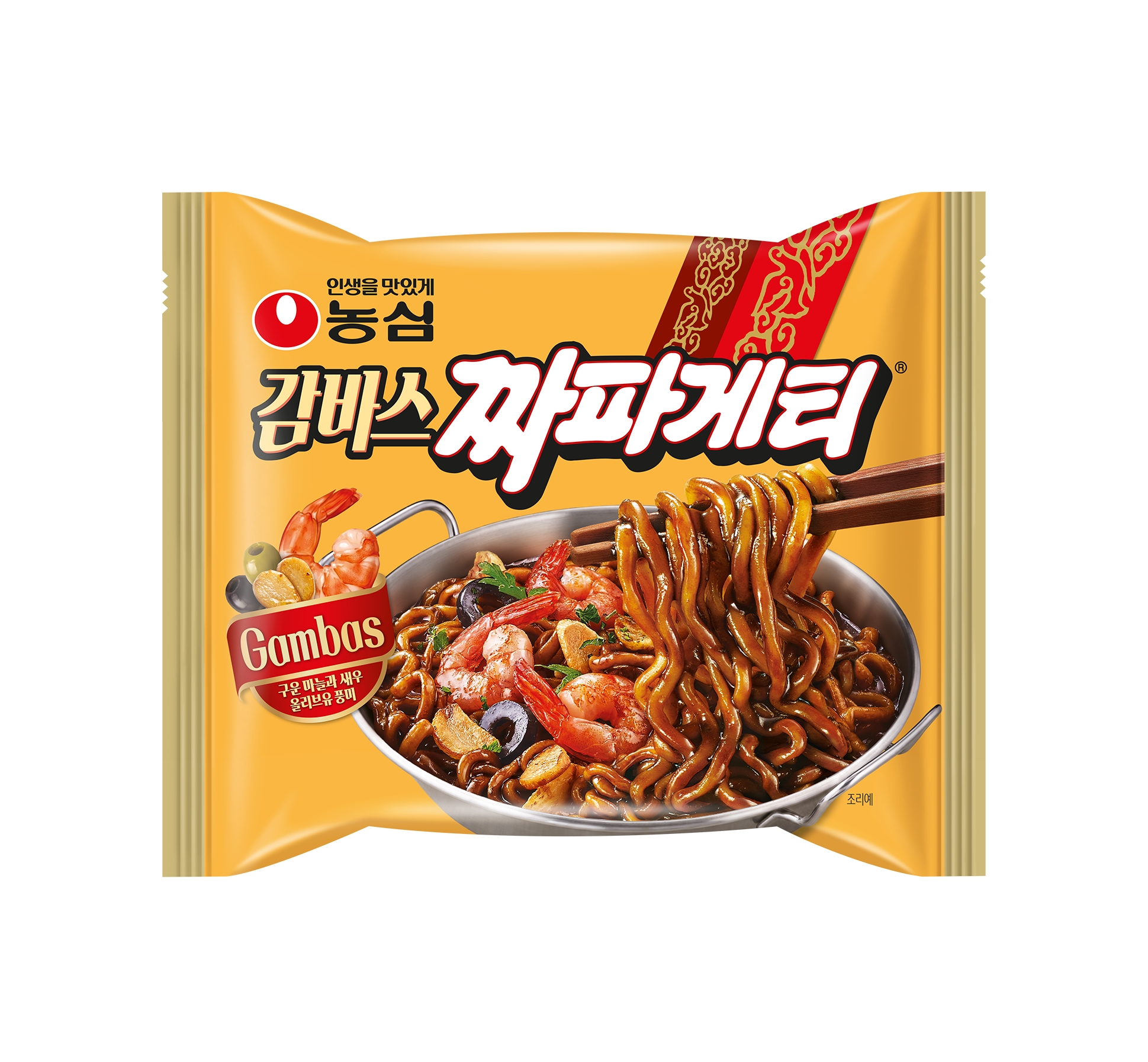
Nongshim names roasted garlic, olive oil, peperoncino and shrimp flavour as the main elements. The thick Jjapagetti noodles come with shrimp-flavoured balls, plus separate sachets of olive-flavoured flakes and fried garlic. The description does not mention whole shrimp.
Full front of the gold Gambas Jjapagetti packet
Emart first
The planned launch date is October 27, 2026. Nongshim plans to sell the noodles at Emart first and expand to other channels later. The Korean product name ‘감바스짜파게티’ distinguishes it from regular Jjapagetti on shelves.
From home kitchen to shelf
A pairing that consumers once made by adding ingredients at home is now sold in a single packet. Flavour descriptions come from the manufacturer.
Official staged photograph of the Gambas Jjapagetti packet and serving presentation, released October 13. The bread and whole shrimp used as styling are not a list of packet contents. Photo: Nongshim Newsroom. Original unchanged. https://www.nongshim.com/newsroom/news/view?category=all&id=217&page=1 · https://www.nongshim.com/newsroom/policy/operation
Official image of the actual Gambas Jjapagetti packet. The serving image printed on the packaging is a serving suggestion. Nongshim Newsroom; original unchanged. https://www.nongshim.com/newsroom/news/view?category=all&id=217&page=1 · https://www.nongshim.com/newsroom/policy/operation
Bokkeum Neoguri, discontinued in 2024, is coming back. Nongshim announced a limited return of packet and cup versions from October 27, with a stronger seafood flavour and microwave preparation for the cup.
Phased release from October 27
Nongshim said on October 14 that the packet and cup versions would roll out in limited quantities through online and offline retailers across Korea from October 27. The company expects the run to last about a month but has not given an end date. It said a permanent return has not yet been considered.
Launched 2017, discontinued 2024
Bokkeum Neoguri pairs Neoguri’s thick, chewy noodles with seafood flavour and spicy seasoning. It launched in 2017 and was discontinued in 2024. Nongshim said it drew the largest share of requests to revive discontinued products over the past two years.
Updated flavour, new cup method
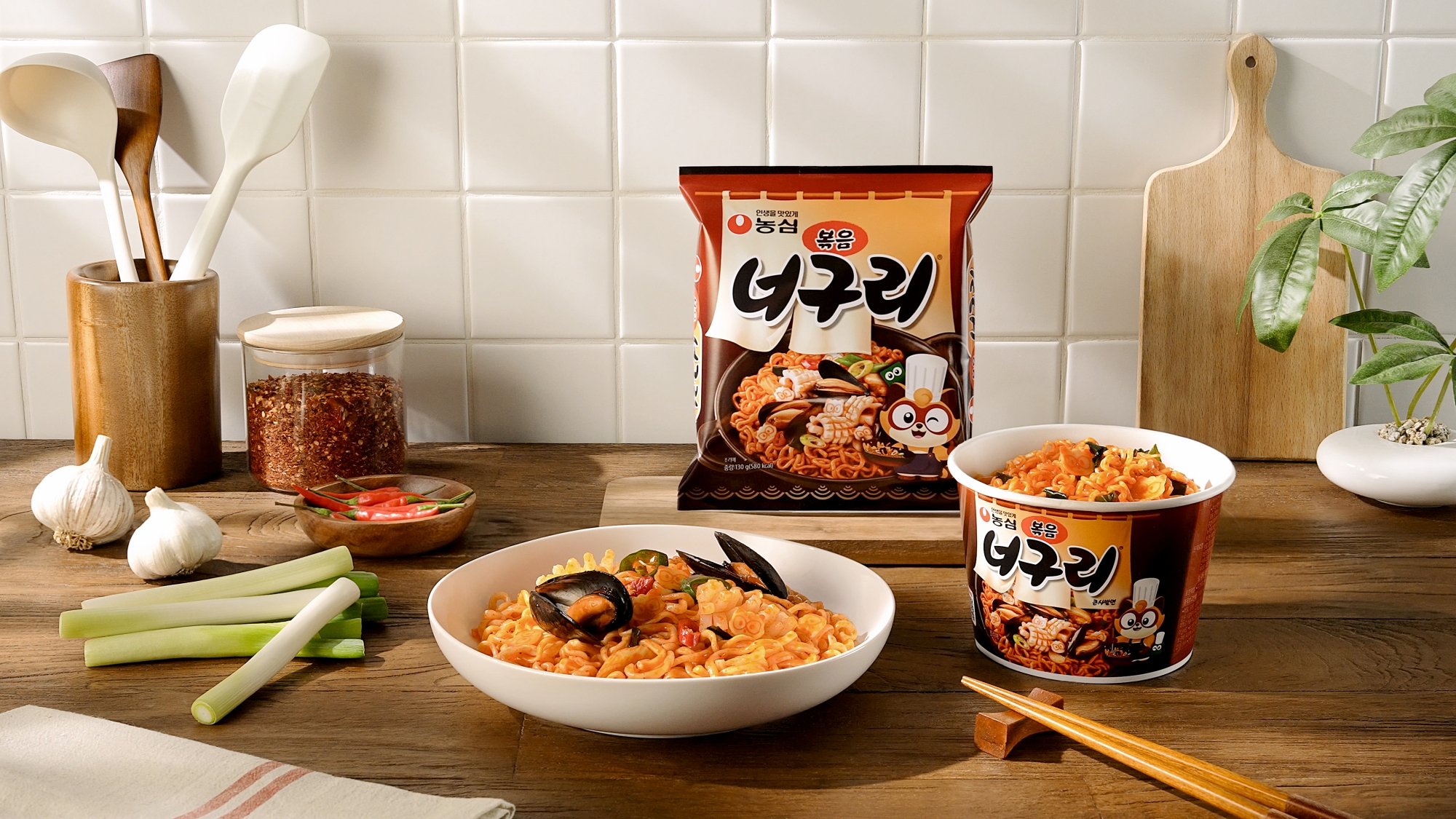
Nongshim says the new version has stronger seafood notes, including mussel and squid, along with its spicy flavour. The cup version now has microwave preparation, so it is cooked differently from the packet.
Preorder sold out
Nongshim announced an October 14 preorder on Nongshim Mall for 3,000 customers, with sixteen packets per set. When checked at 15:28 KST that day, the preorder page showed the item as sold out.
The page listed KRW 20,900 for sixteen 130 g packets, with shipping extra and dispatch on October 26. General retail sales from October 27 follow a separate schedule.
Official staged image supplied for Nongshim’s October 14, 2026 reissue announcement, showing packet and cup products with a serving presentation. The food styling is not an inventory of package contents. Image: Nongshim Newsroom. Original JPEG unchanged. Centered 4:3 display trims side kitchen props while retaining both packages, logos and the plate. Source: https://www.nongshim.com/newsroom/news/view?category=all&id=218&page=1 · Terms: https://www.nongshim.com/newsroom/policy/operation .
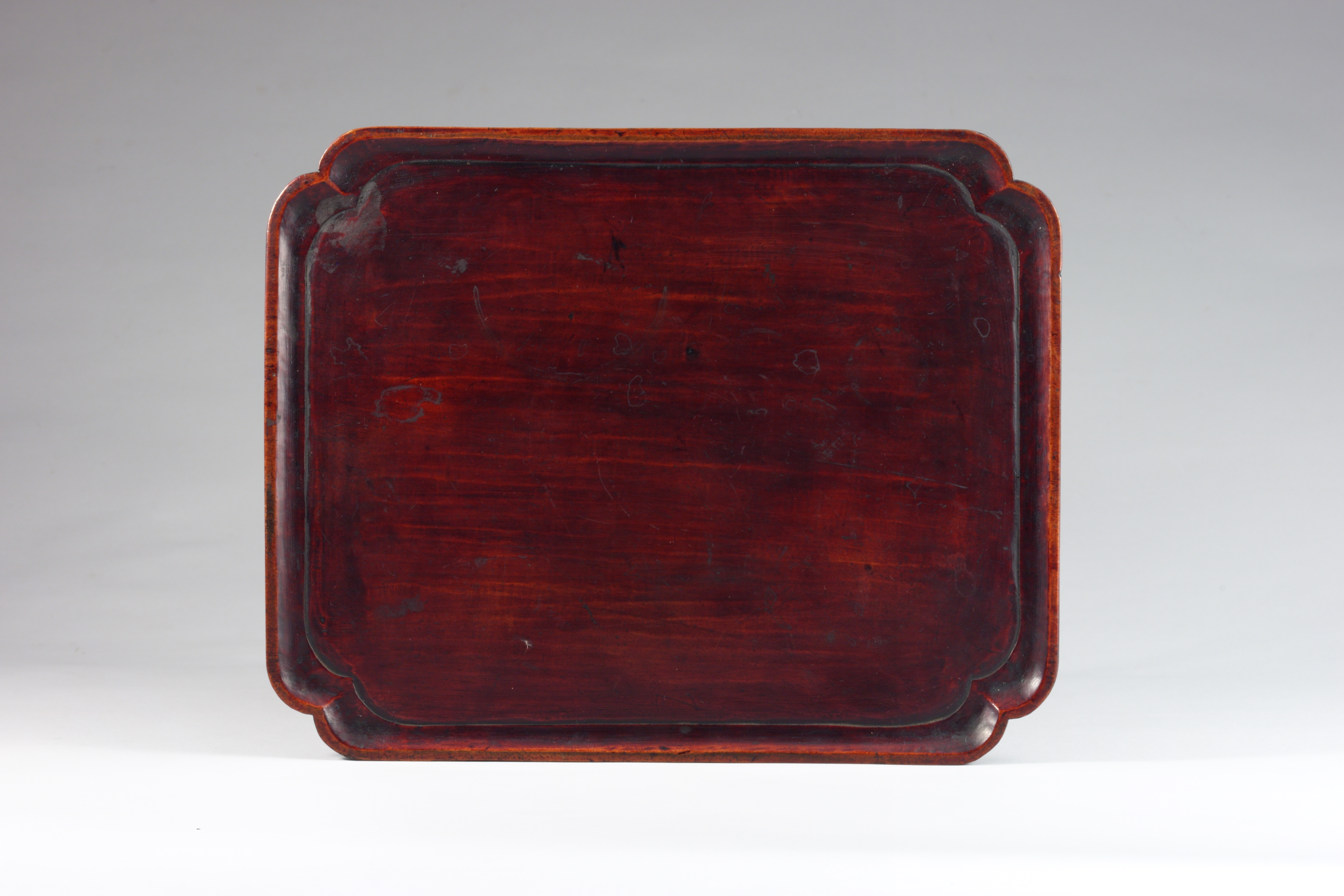
A soban is a small table that carries dishes and becomes a dining table when set down. A Haeju example at the National Museum of Korea shows the decoration and structure built into a piece made to move a meal.
From kitchen to room
In Joseon-period houses, the kitchen was separate from the room where people ate. A soban carried food and dishes between them, then served as the dining table.
It had to be light enough to carry yet strong enough to hold brass or ceramic tableware, so makers used light, sturdy wood. Its compact size reflects the custom of giving each person an individual table.
A 42-centimetre tabletop
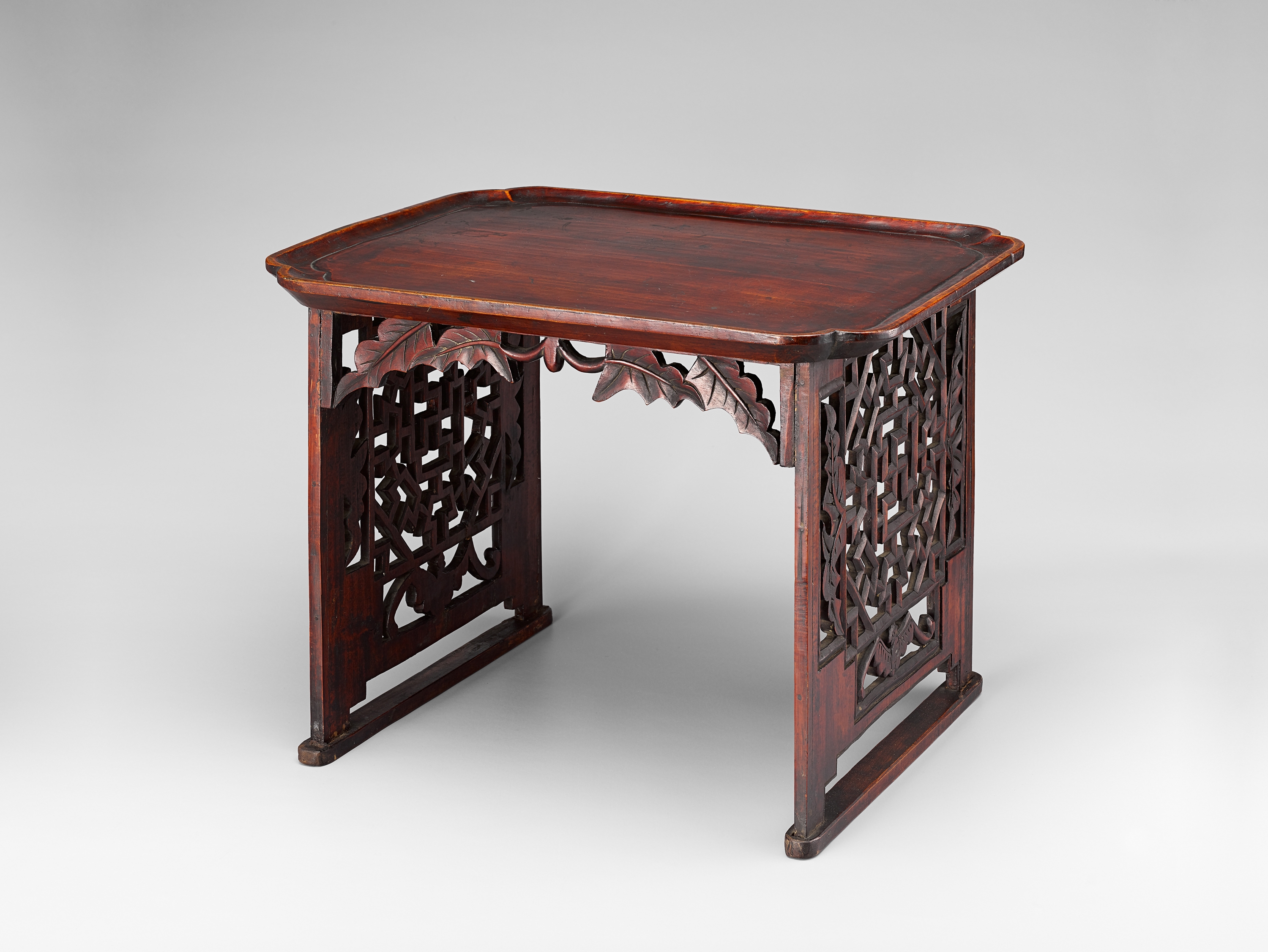
The object shown is the National Museum of Korea’s Haeju tray-table, collection number Namsan 1758. A Joseon-period wooden piece, it measures 42 cm long, 33.7 cm wide and 30.4 cm high.
The second, overhead photograph shows the rounded corners and outline of the top. The angled view shows its low height and two panel-shaped legs.
Openwork legs
Haeju tables were made mainly in Haeju, Hwanghae Province. This example’s two leg panels splay slightly outward and carry symmetrical openwork of the characters 卍 and 囍 and floral designs.
The leaf-shaped apron directly beneath the top is called ungak. The museum says it connects the legs and keeps the tabletop from warping.
Overhead view of the Haeju table, showing the rounded corners and tabletop outline.
Variation by use and region
Jeonju National Museum’s interpretation for its 2013 exhibition Soban of Joseon says the tables’ forms varied with use, region, maker and owner. They served rituals and religious life as well as meals, and floor-seated living and the domestic layouts of the period shaped how they were built.
The craft of soban making
Soban making was designated Important Intangible Cultural Property No. 99 in 1992 and continues today as the National Intangible Heritage Sobanjang. A 2017 National Folk Museum education record documents craftsman Kim Chun-sik demonstrating a Naju table. Regional tables differ in how their tops and legs are joined.
Angled view of the Haeju table, showing its panel legs and openwork. Collection and photo: National Museum of Korea, Haeju tray-table, Namsan 1758. Collection photograph; capture date unspecified. KOGL Type 1 (attribution). Original JPEG unchanged. Source: https://www.museum.go.kr/MUSEUM/contents/M0502000000.do?relicId=907&schM=view&searchId=search · Terms: https://www.kogl.or.kr/info/licenseType1.do . Centered 4:3 display retains the entire table and removes only a small amount of surrounding background.
Overhead view of the Haeju table, showing the rounded corners and tabletop outline. Collection and photo: National Museum of Korea, Haeju tray-table, Namsan 1758. Collection photograph; capture date unspecified. KOGL Type 1 (attribution). Original JPEG unchanged. Source: https://www.museum.go.kr/MUSEUM/contents/M0502000000.do?relicId=907&schM=view&searchId=search · Terms: https://www.kogl.or.kr/info/licenseType1.do . Centered 4:3 display retains the entire table and removes only a small amount of surrounding background.
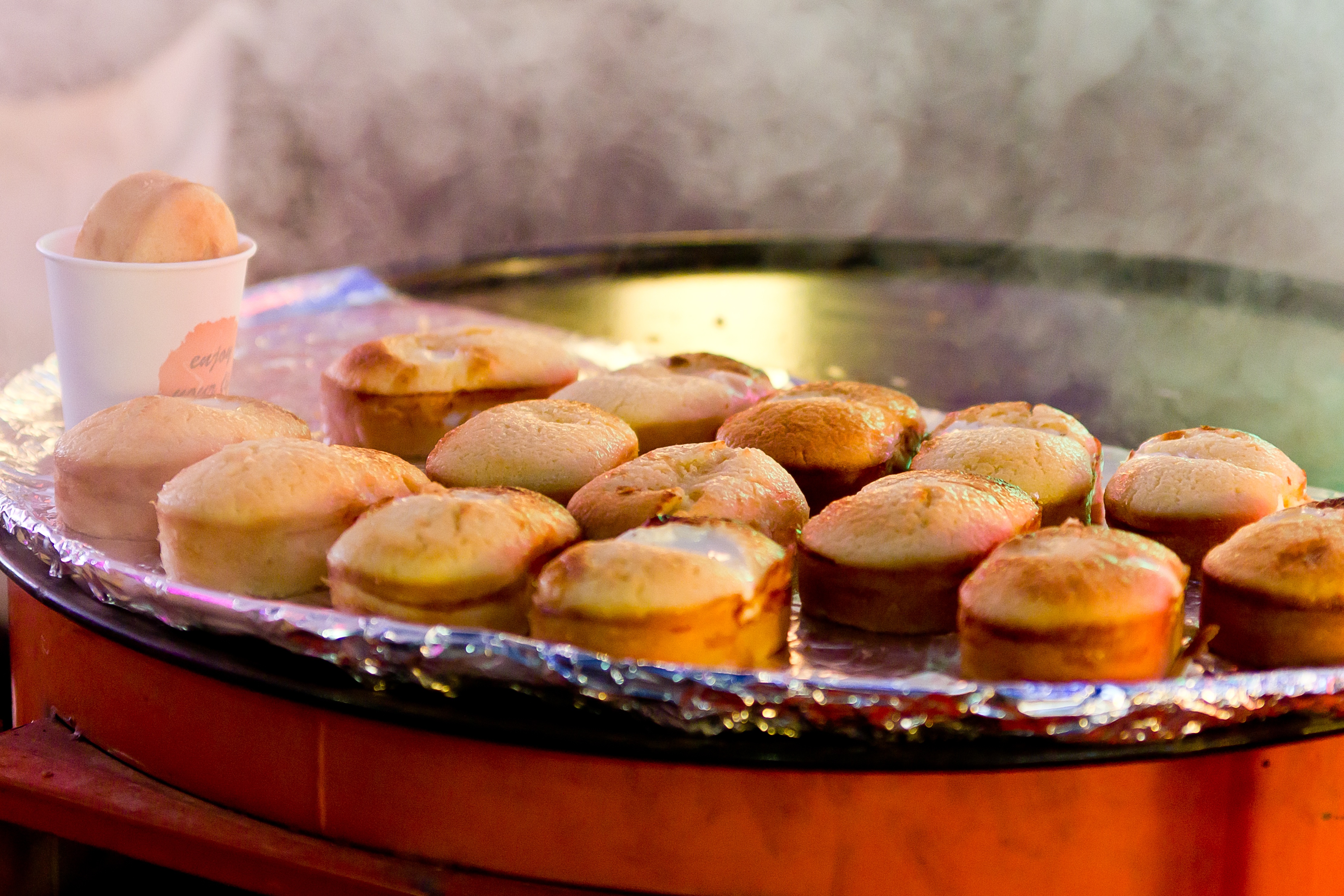
Gyeranppang with a whole egg, fish-shaped bungeoppang, hotteok with a sweet filling and roasted sweet potatoes: four snacks Koreans reach for when the weather turns cold, each with its own shape and texture.
Gyeranppang
Gyeranppang is pancake-like batter cooked with a whole egg. The bread is soft and lightly sweet, and the egg adds richness; the yolk can be moist or firm depending on how long it cooks. The Korea Tourism Organization describes it as a Korean winter street snack.
On CNN’s bread list
According to the Korea Tourism Organization, gyeranppang appeared in a past CNN list of 50 of the world’s best breads.
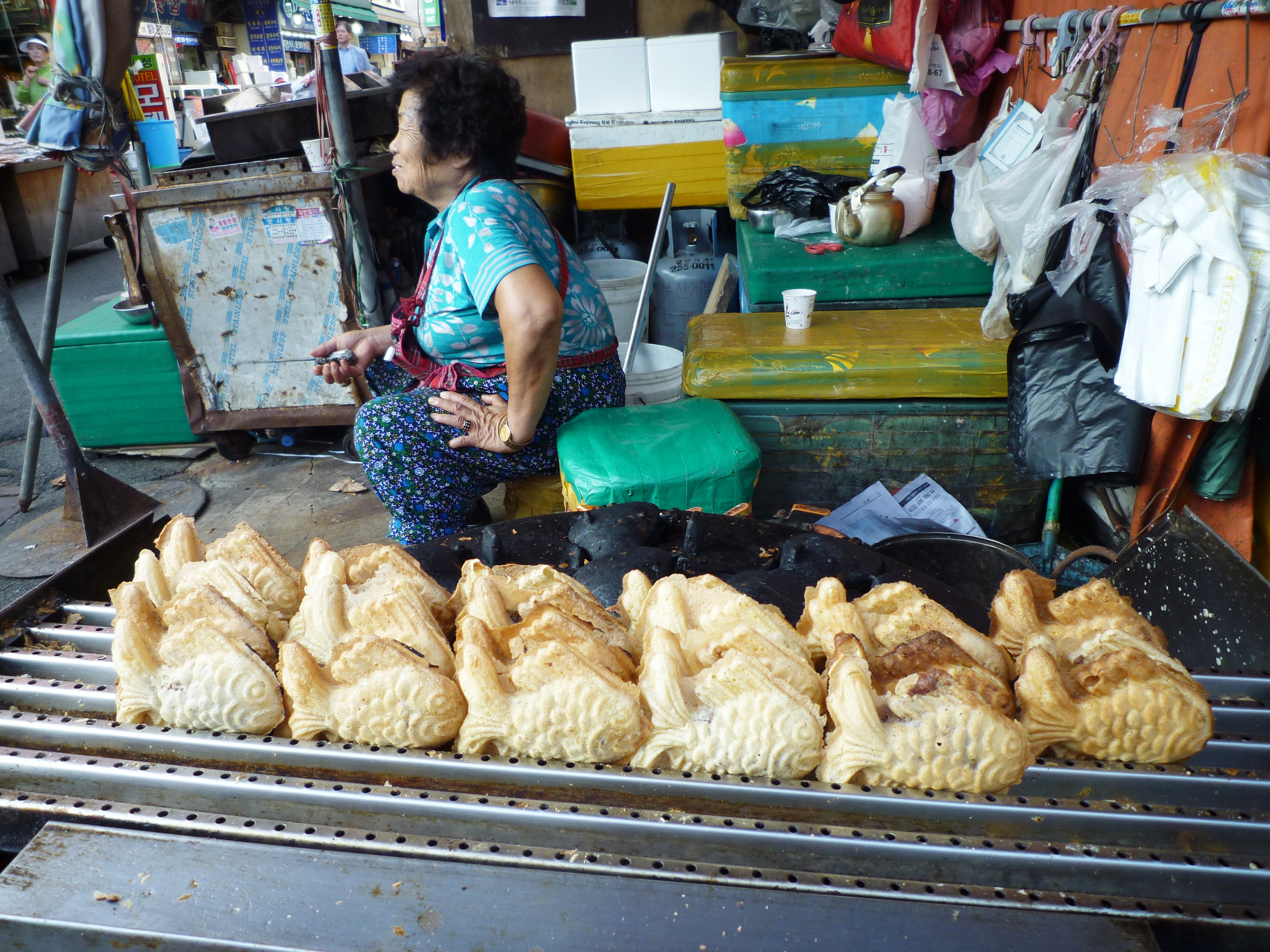
Bungeoppang
Bungeoppang is batter cooked in a fish-shaped mold around sweet red-bean paste or custard, a winter staple.
Fish-shaped pastries line the front of a stall, with a seated vendor behind them.
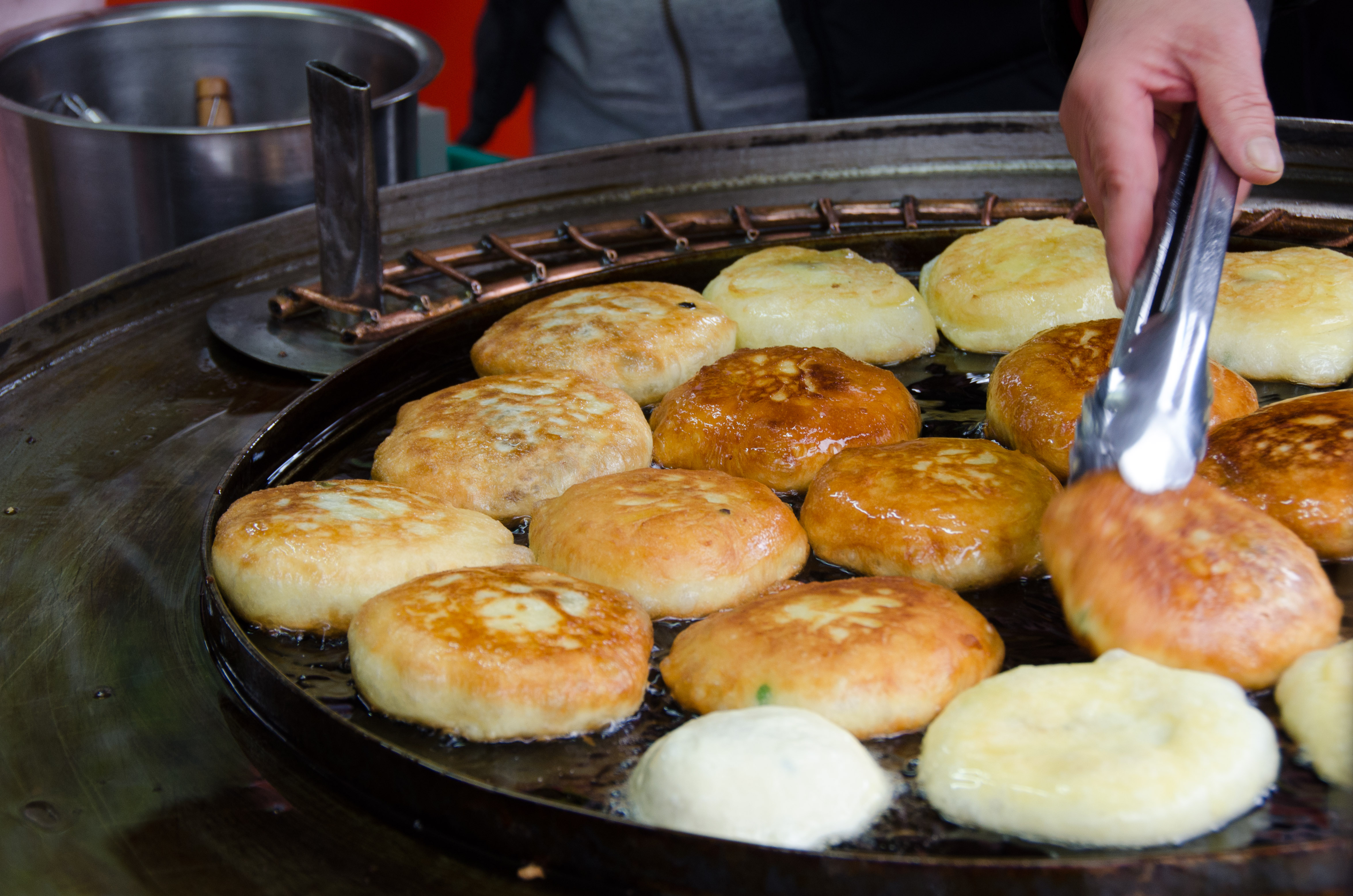
Hotteok
Hotteok is a chewy filled pancake cooked on a hot pan. A common filling combines brown sugar, cinnamon and nuts. As it cooks, the sugar melts into a syrup inside the dough.
Round hotteok cook on an oiled griddle while a hand holds one with tongs.
Roasted sweet potatoes
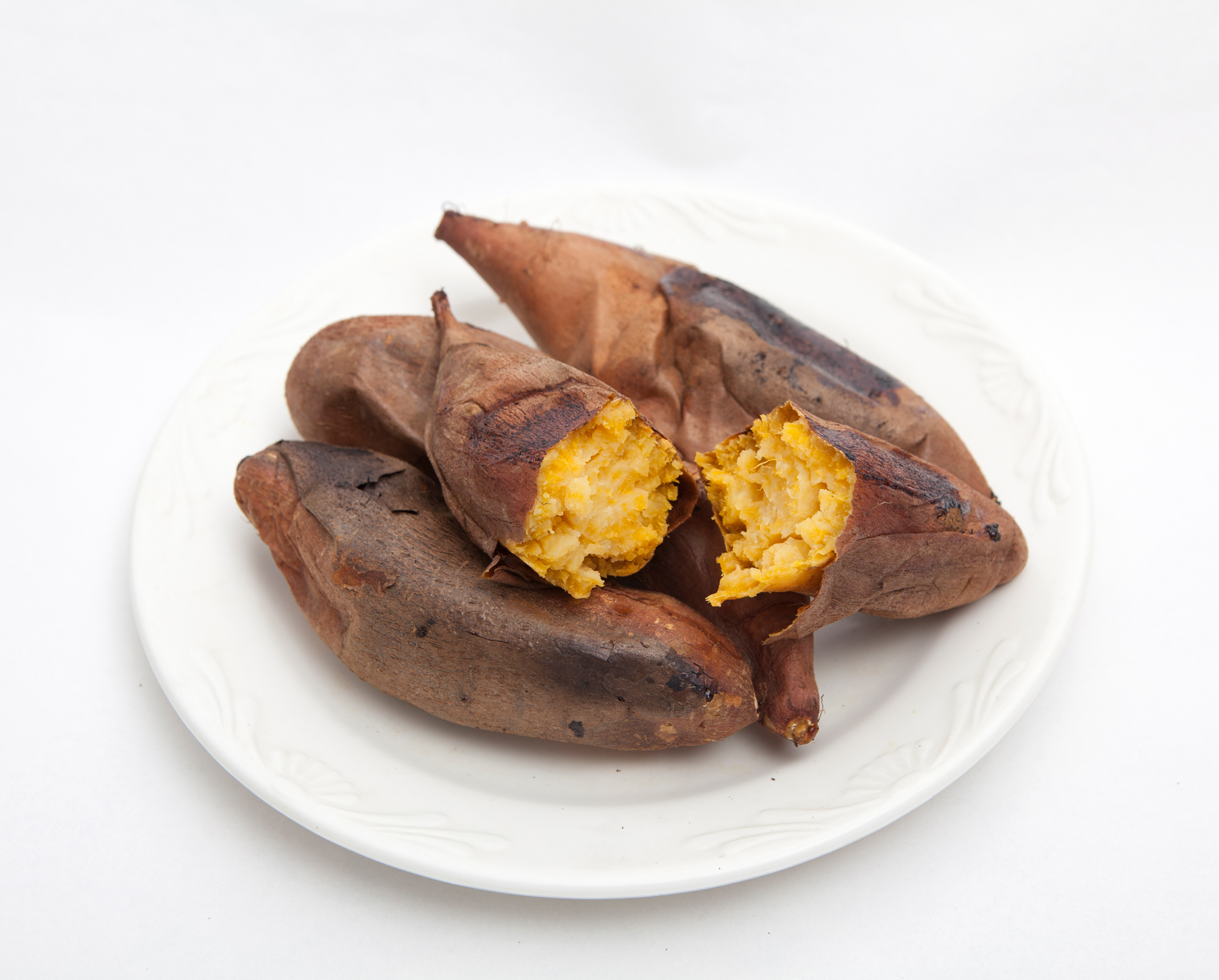
Gun-goguma means roasted sweet potato. A Korea.net winter-food feature published on January 20, 2017 describes sweet potatoes roasted in wood-fired barrels, paper packets that warmed the hands and soft golden flesh split open to share.
Roasted sweet potatoes on a white plate, including two split pieces with yellow flesh.Sources & context
Gyeranppang on a hot tray. Archival photograph taken in Seoul on December 14, 2010. tragrpx / Wikimedia Commons · CC0 1.0. Unmodified. https://creativecommons.org/publicdomain/zero/1.0/
Bungeoppang on a street stall in South Korea. Archival photograph dated September 14, 2011 in EXIF. Joriola / Wikimedia Commons · CC BY-SA 3.0. JPEG recompressed; original framing and 4000×3000 dimensions retained. https://creativecommons.org/licenses/by-sa/3.0/
Hotteok browning on a griddle. Archival photograph taken on November 17, 2013. Sandra Vallaure / Wikimedia Commons · CC BY 2.0. Unmodified. https://creativecommons.org/licenses/by/2.0/
Roasted sweet potatoes, with one split to reveal its yellow interior. National Institute of Korean Language archival photograph; EXIF date December 25, 2013. 국립국어원 (National Institute of Korean Language) / Wikimedia Commons · CC BY-SA 2.0 KR. Unmodified. https://creativecommons.org/licenses/by-sa/2.0/kr/
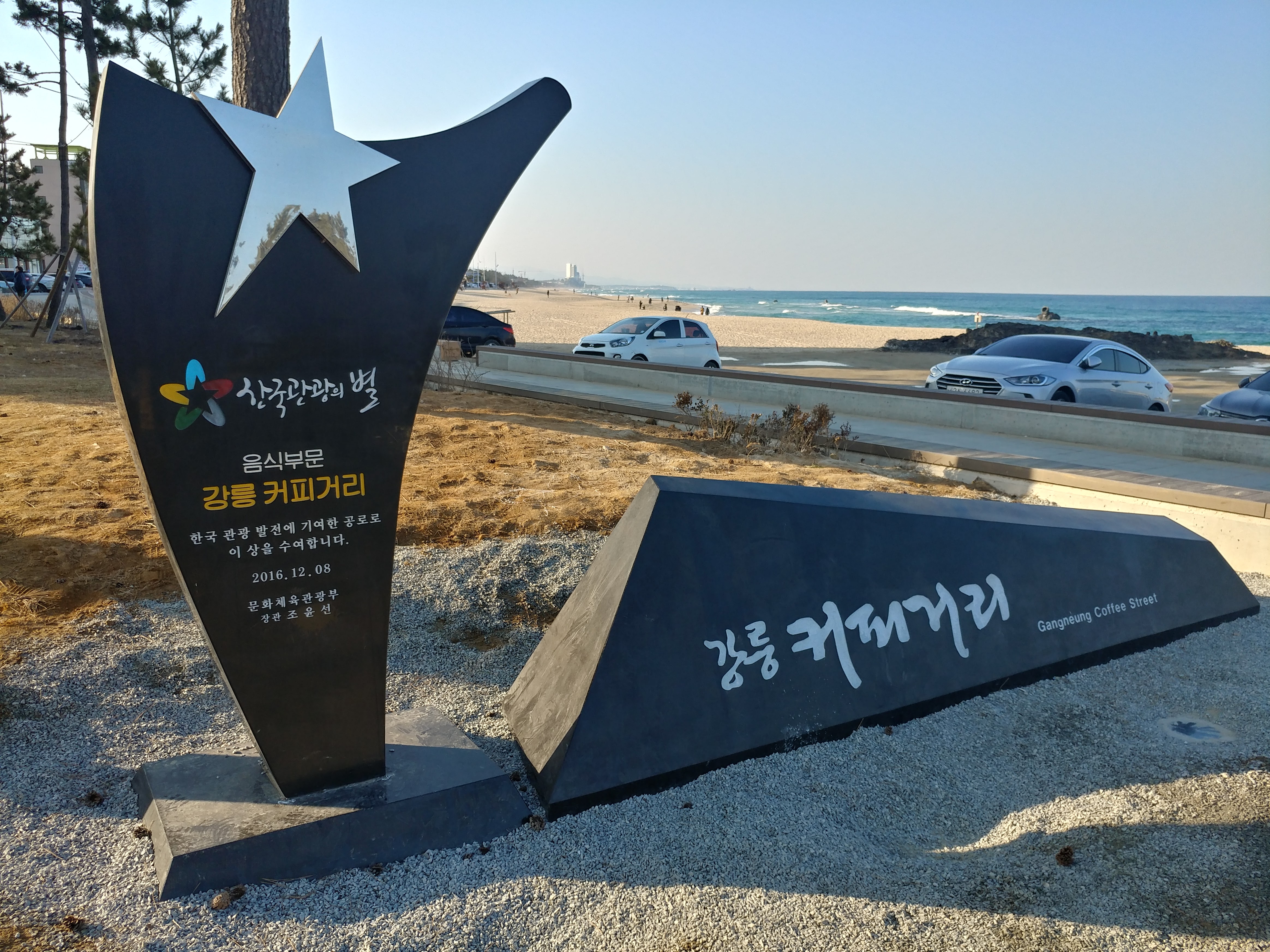
The 18th Gangneung Coffee Festival runs October 21–25 on Gangneung Coffee Street and across the city. A coffee culture that began with beachside vending machines now extends to local-café tastings built on Chodang tofu and pine.
Vending machines at Anmok
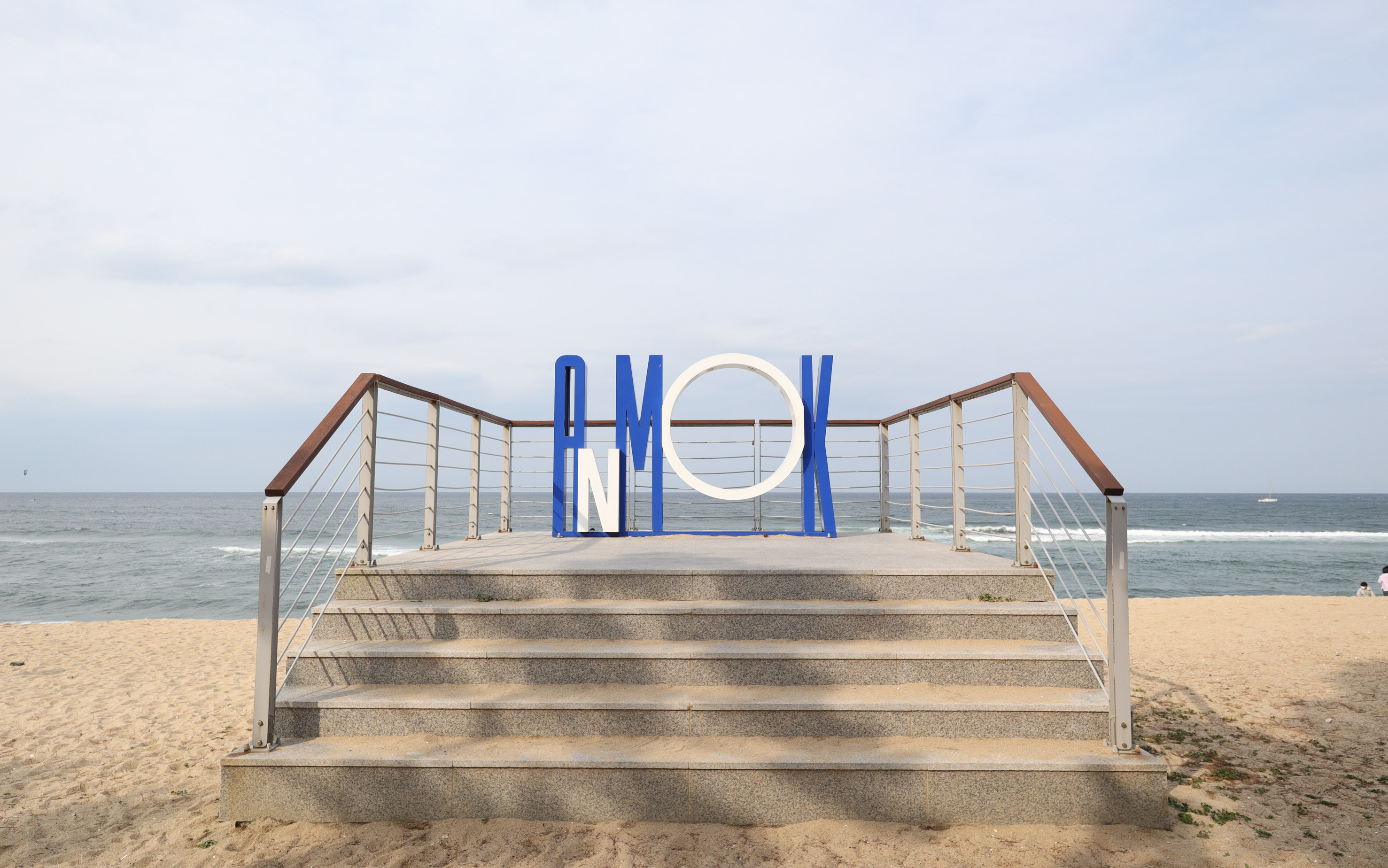
A Korea Tourism Organization retrospective describes coffee vending machines lining Gangneung’s Anmok Beach in the 1980s and 1990s, with people gathering over cups facing the sea. Coffee was a way to spend time together here before large café windows and specialist brewing equipment arrived.
According to the Gangneung Culture Foundation’s coffee history, published in December 2012, customers chose favourite machines, while operators varied blends, sometimes adding grain or soybean powders.
Chodang tofu and pine pollen
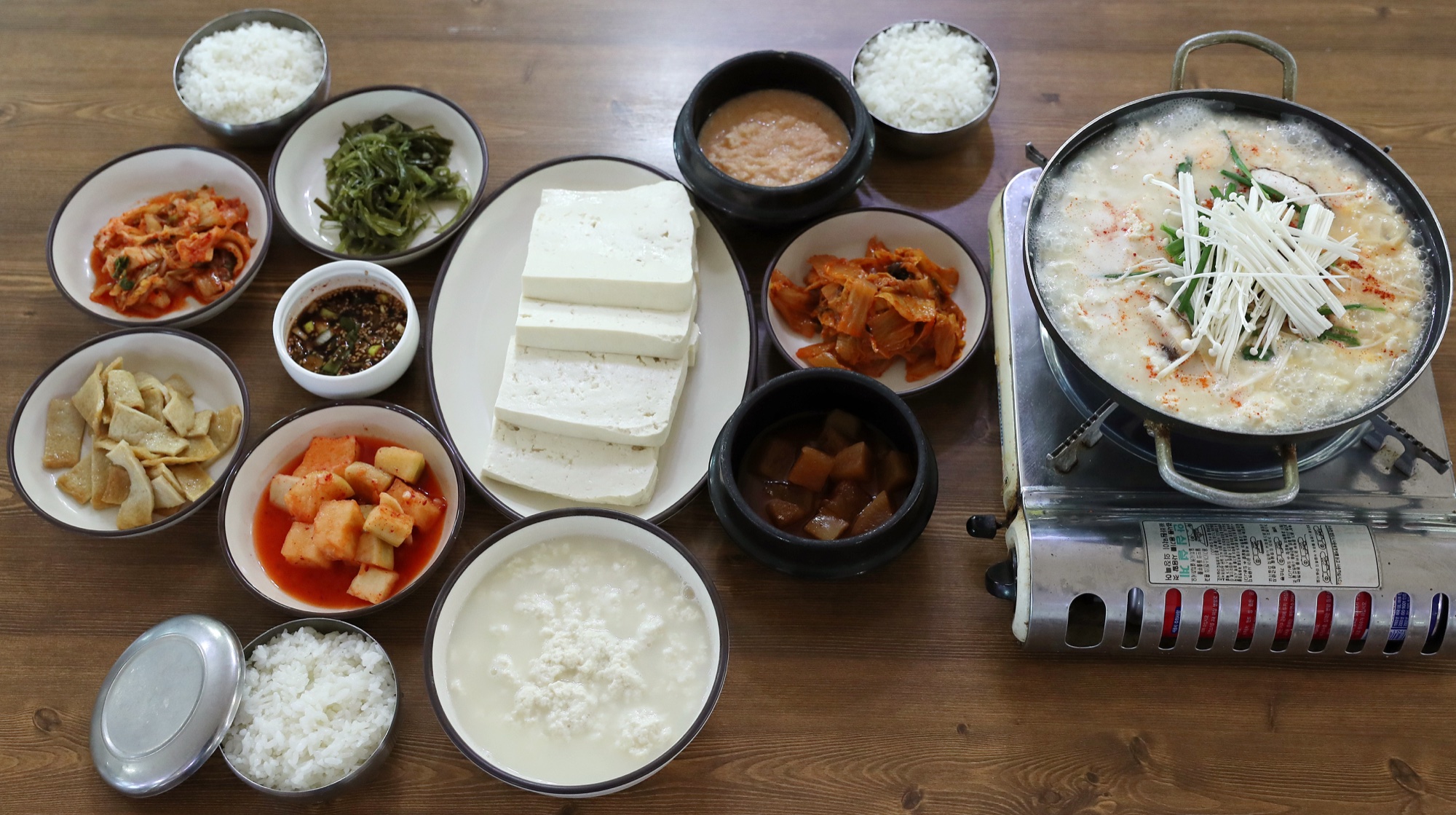
Chodang is a Gangneung neighbourhood known for tofu traditionally set with seawater. The city presents this heritage alongside newer sundubu coffee and gelato.
In a 2025 interview, Fine Pine owner Kim Seong-yong said Gangneung’s pine trees inspired the café’s songhwa coffee and cream. Songhwa powder is pine pollen, not pine needles or pine nuts. KTO’s April 2026 profile also featured the café’s songhwa desserts and coffee.
A Chodang tofu meal with block tofu, soft tofu, stew and side dishes
Schedule and café tastings
The festival runs 21–25 October 2026 on Gangneung Coffee Street and at other city venues, with general hours of 10:00–20:00. The local-café tasting program, Byeorui-byeol Gangneung Coffee, starts daily at 11:00, 13:00, 15:00 and 18:00 near the general information desk, listed in the official program as in front of Pepsi Cola. All times are Korea Standard Time (KST).
Sessions featuring local ingredients are Gabae Chodang’s Sundubu Gabae Latte on 21 October, 15:00–16:00; Chodang Coffee’s Chodang Dubu Latte on 23 October, 15:00–16:00; and Fine Pine’s Songhwa Coffee on 24 October, 13:00–14:00.
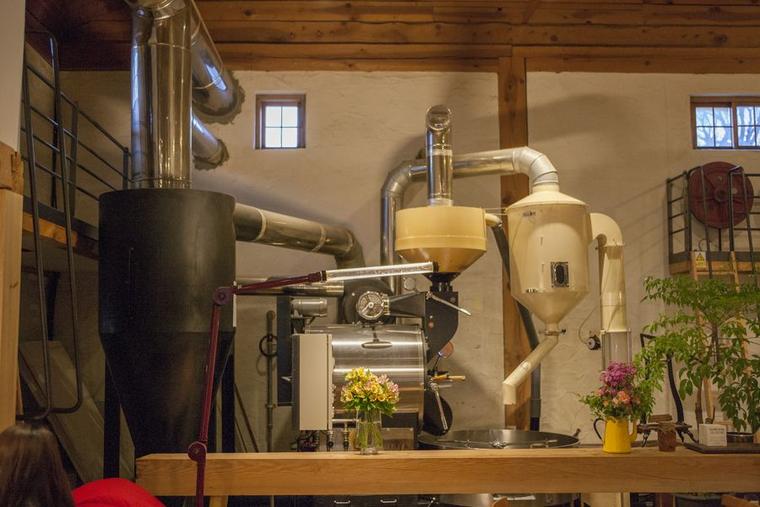
A coffee roaster behind a wooden ledge inside a café
100 citizen baristas, paid table
At 14:00 on 24 October, the Global Coffee Lounge hosts the 100 People, 100 Tastes performance, with 100 Gangneung citizen baristas, selected through a public call, brewing coffee.
The separate paid Barista’s Table pairs signature coffee with Gangneung traditional dessert in the same lounge at 14:00 on 21, 22, 23 and 25 October. It costs KRW 20,000 per person, with 30 places per session and both advance and on-site registration. There is no session on 24 October.
An ANMOK sign above beach steps, facing the sea
Open-air café and pine grove
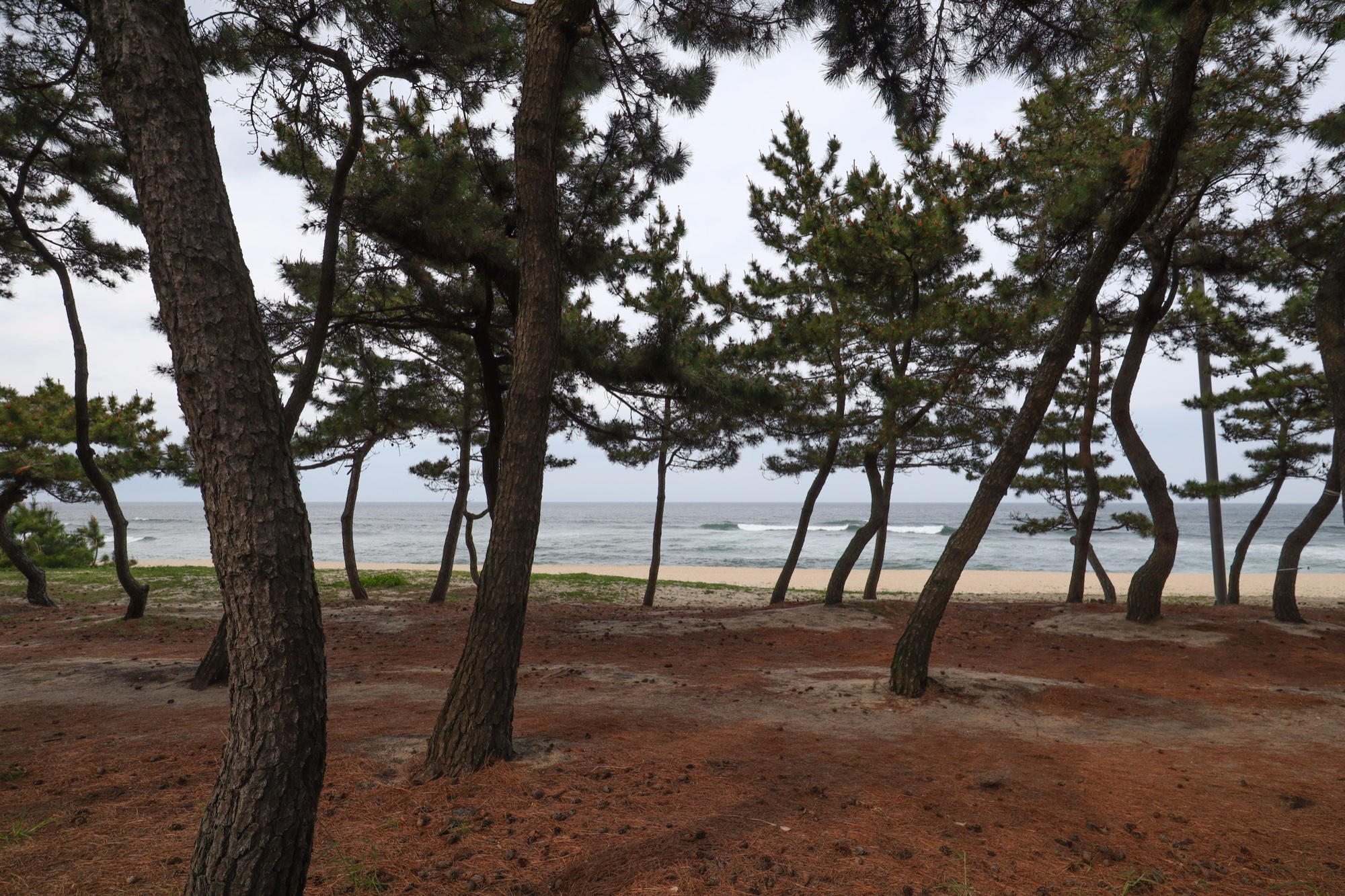
The official program sets out outdoor tables along about 350 metres of the coffee street as the Anmok open-air café. The coffee-picnic area is in the Songjeong pine grove, between Haemaji Park and the Songjeong futsal court.
For a first visit, the editors suggest a half-day built around one tasting, with time for a beach walk or a rest at an outdoor table.
Twisting pine trees on sandy ground with the sea beyond, Songjeong Beach
Transport and enquiries
The main venue is at 20-1 Changhae-ro 14beon-gil, Gangneung Coffee Street. The official free shuttle runs 10:00–20:00 every 15 minutes, circulating from the festival to Gangneung Station, the Sports Complex, the ITS World Congress venue, the Green City Experience Center (e-zen) and back. From Gangneung Station it makes several stops before the festival.
The official program does not give fees or registration methods for the café tastings; the KRW 20,000 fee applies to the Barista’s Table. The organizer, on +82-33-647-6802, can advise on registration, remaining places, foreign-language hosting, interpretation and overseas-card payment.
Visitors avoiding ingredients such as milk or soy should check each drink’s actual recipe on site rather than relying on its name.
The Gangneung Coffee Street marker with the beach beyond. Archival photograph taken 2017-02-14; not the 2026 festival or its tasting drinks. Photo: Altostratus, “Gangneung coffee street entrance.jpg”, Wikimedia Commons / CC BY-SA 4.0. The supplied JPEG is byte-for-byte unchanged. The 8:5 card display may crop its edges; enlarge for the complete supplied photograph. Any display crop retains the same licence.
An ANMOK sign above beach steps, facing the sea. Archival photograph taken 2022-04-30; not the 2026 festival or its tasting drinks. Photo: Mobius6, “Anmok Beach 20220430 001.jpg”, Wikimedia Commons / CC BY-SA 4.0. The supplied JPEG is byte-for-byte unchanged. The 8:5 card display may crop its edges; enlarge for the complete supplied photograph. Any display crop retains the same licence.
Block tofu, white soft tofu, a soft-tofu stew on a burner and side dishes such as kimchi laid out together. A file photo titled “Chodang Sundubu”, taken in Chodang-dong, Gangneung, on 20 March 2017. It does not show tofu coffee or festival tasting menus. Photo: Korea.net (Korean Culture and Information Service) / Chodang Sundubu 05 / Wikimedia Commons / CC BY-SA 2.0
A large coffee roaster and its ducts stand inside a café with a timber ceiling and white walls; vases sit on a wooden ledge in front. An interior shot from the KOGL set “Terarosa” (filed under Gangneung, photographed 2014). It does not show a festival tasting session or participating café. The provided preview file is used unaltered. Photo: Academy of Korean Studies / Terarosa / KOGL / KOGL Type 1
Twisting pine trees stand on sandy ground strewn with fallen needles, with the beach and sea visible between the trunks. Taken at Songjeong Beach, Gangneung, on 30 April 2022. It does not show this year’s festival picnic area. Photo: Mobius6 / Songjeong Beach 20220430 001 / Wikimedia Commons / CC BY-SA 4.0
Listening on a portable cassette player meant choosing a tape, pressing play and rewinding to catch a missed passage. In 1980s–1990s Korea, Sony’s Walkman, Samsung’s mymy and GoldStar’s AH-HA shaped personal listening. This piece traces that history through the players’ buttons, mechanisms and everyday uses.
Before 1979
The Walkman did not invent portable audio. According to the Philips Museum, the battery-powered EL3300 and the Compact Cassette were presented at the Berlin radio exhibition in 1963. The medium, two reels in a small plastic shell, came first, and allowing other manufacturers to adopt the format built compatibility between tapes and machines.
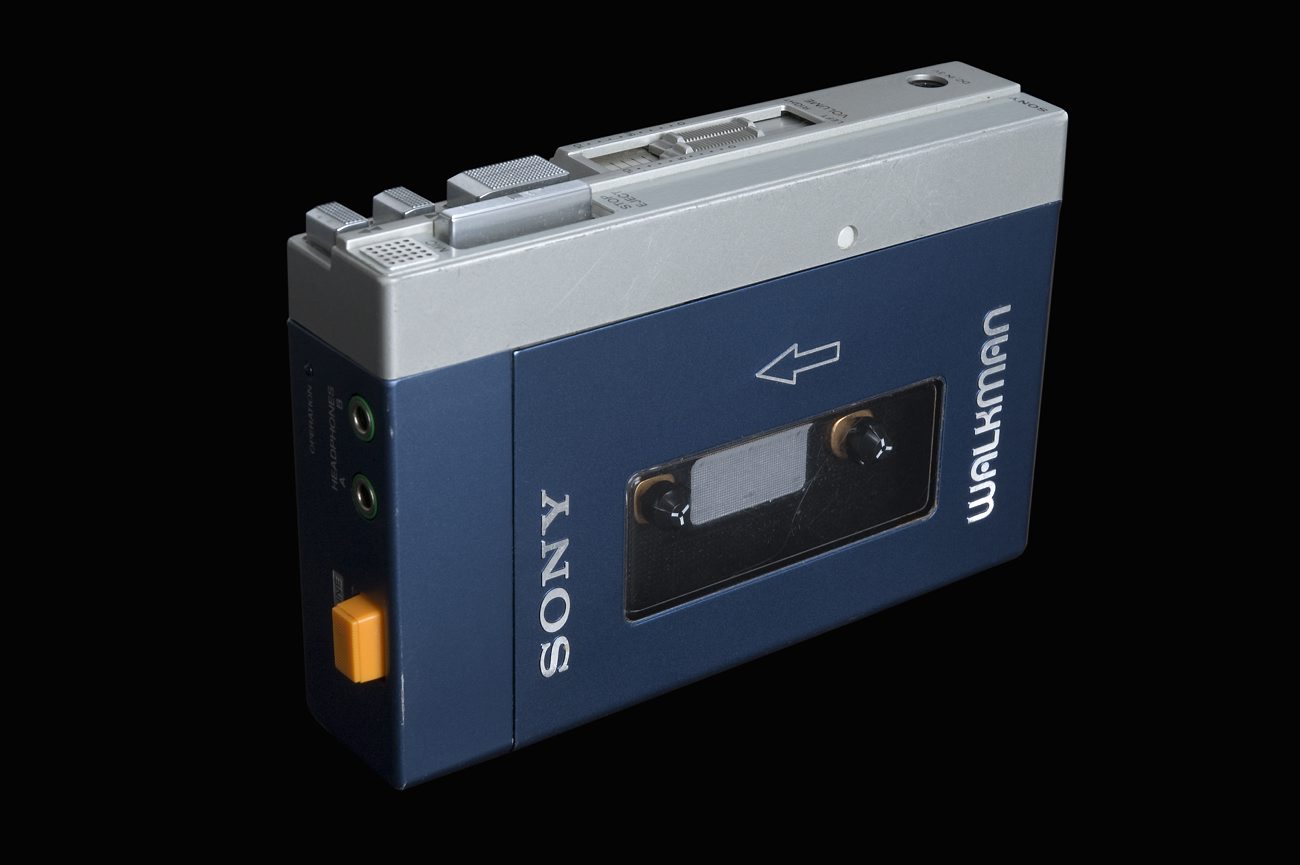
Sony’s first Walkman, the TPS-L2, went on sale in Japan on 1 July 1979. It removed the recording function and speaker from a cassette recorder and added stereo circuitry and headphones. What was new was packaging a way of life — taking favourite recordings on the move through lightweight headphones — as a product.
Sony Walkman TPS-L2, the first Walkman model
mymy and AH-HA
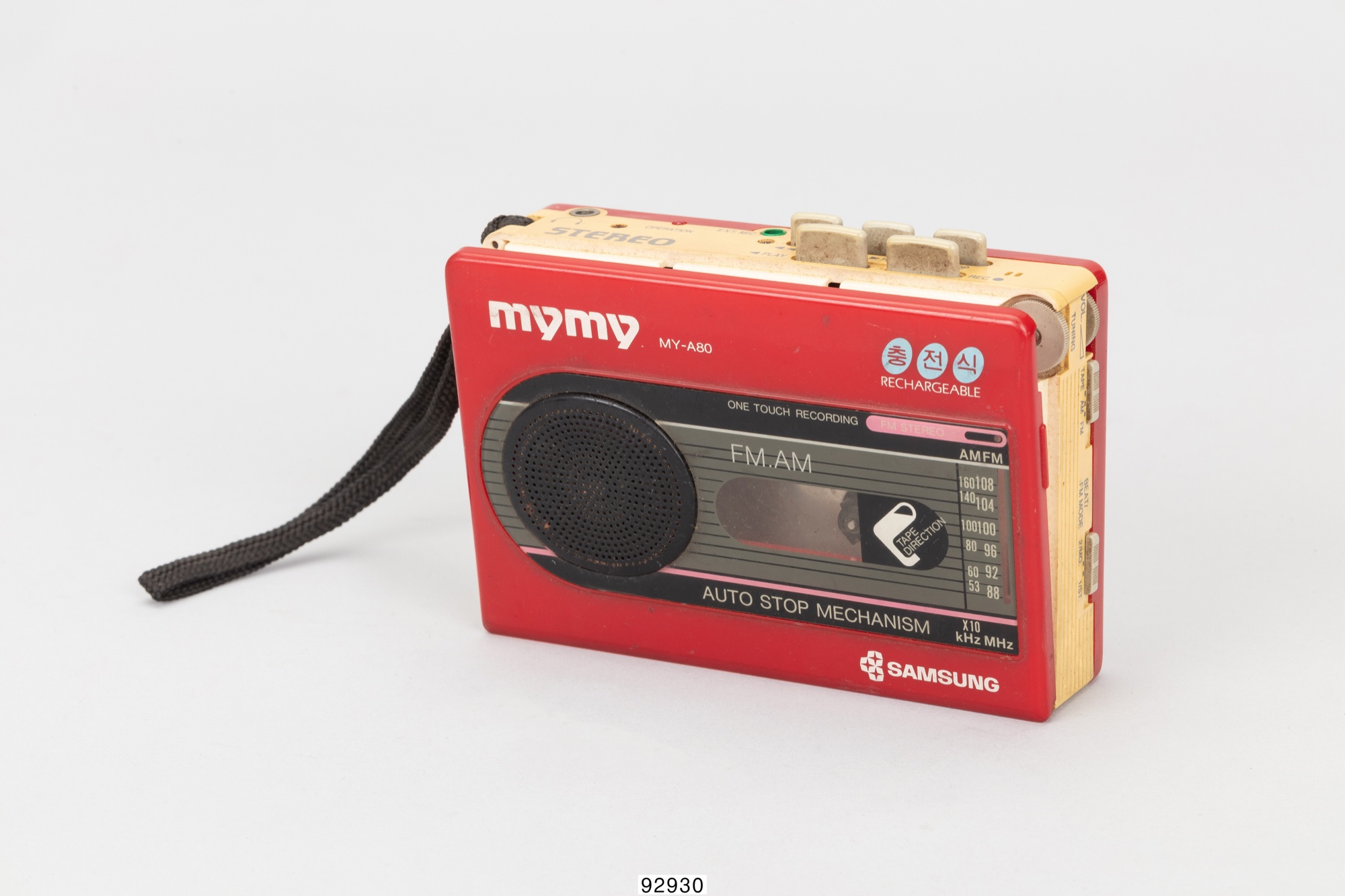
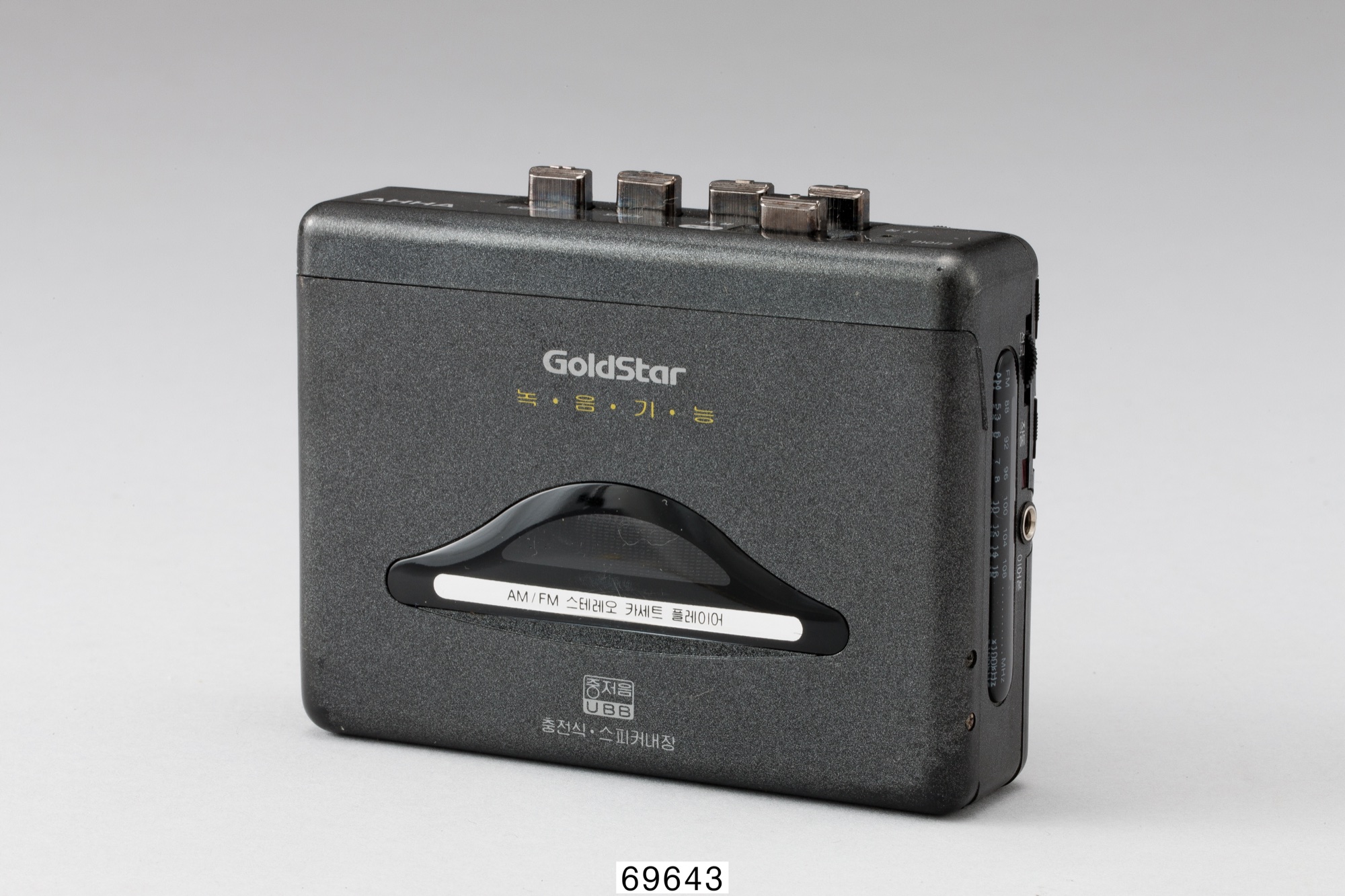
Samsung launched mymy in 1981. LG U+’s company history dates production of GoldStar’s AH-HA to 1987, and an account by the campaign’s creator, Shin Yong-soon, places its advertising launch in the same year. Walkman was Sony’s brand; mymy and AH-HA were separate Korean product families.
Shin recalls moving the AH-HA campaign from an initially lyrical direction to bright colours and a large logo. A youthful image was sold alongside the specifications.
Samsung mymy MY-A80 portable cassette player
Under the play button
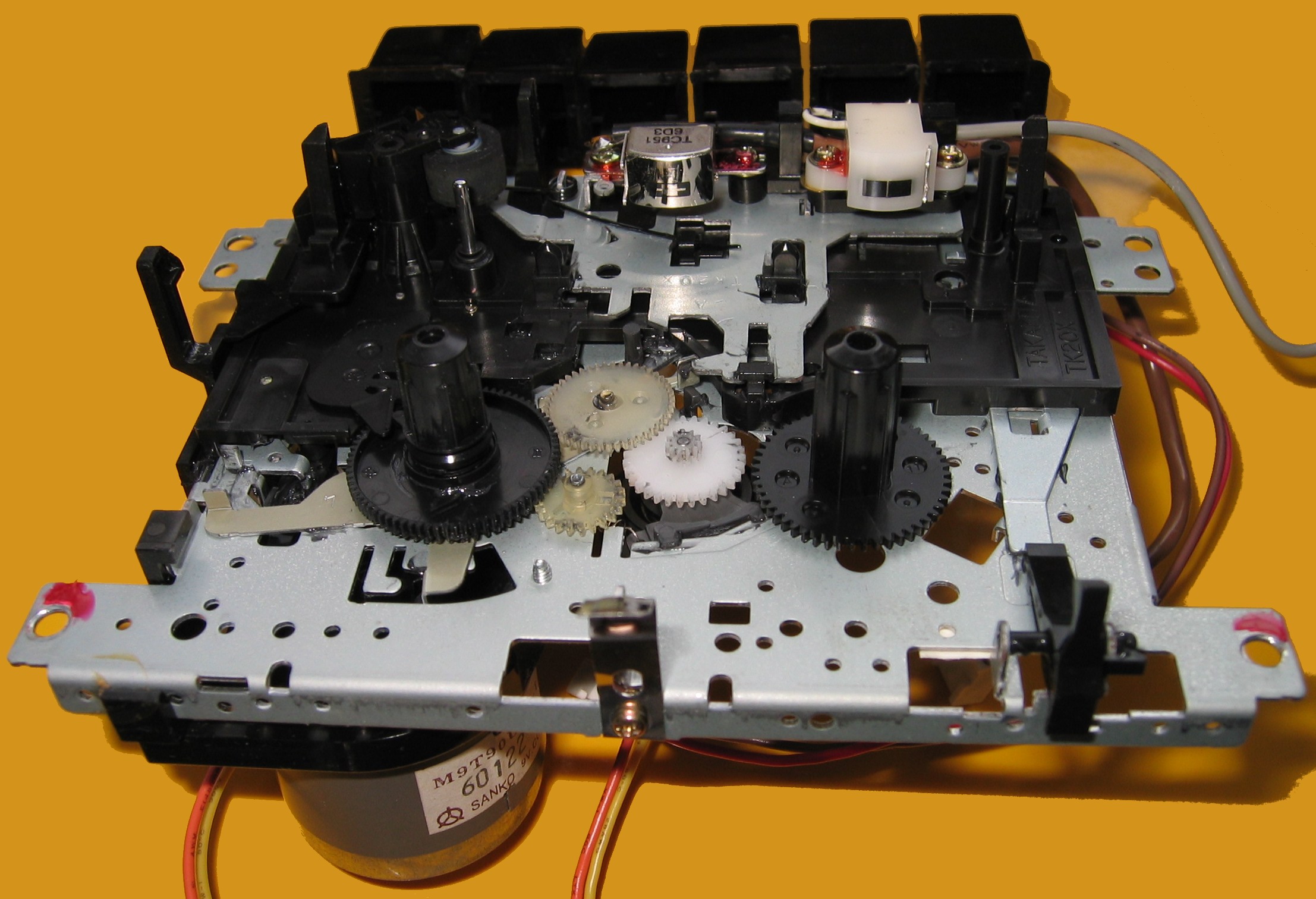
Magnetic tape unwinds from one reel, passes the playback head and winds onto the other. A metal shaft, the capstan, works with a rubber-covered pinch roller to move the tape at a steady speed while the head reads the recording.
Finding a song meant alternating fast-forward, stop and play, and reaching a later track required the tape in between to wind through. Sides A and B divided a tape played in opposite directions; on players without auto-reverse, the cassette had to be taken out and turned over at the end of a side.
Cassette transport with a metal frame, black reel spindles, white gears and playback head on a yellow background
Different models, different features
According to the National Science Museum, the MY-A90 was a mid-to-late-1980s model with Dolby circuitry, auto-reverse and an adapter that allowed use while charging. Its suggested retail price in 1988 was 89,900 won, including the adapter and earphones.
The museum’s entry for the MY-A35N records a built-in speaker and recording capability, whereas the first Walkman focused on playback. Whether a portable cassette player could record radio or play the other side automatically depended on the model.
Radio recording and home-made tapes
Listening to a prerecorded album meant following its sequence; recording onto blank tape meant deciding what to include. Recording from the radio took as long as the broadcast, and playback-only portables could not record at all.
MBC’s 2014 cassette feature revisited recording music from the radio, unwrapping new tapes and turning a reel with a pen. On tape, changing the running order meant recording again, and the length of a side limited the selection.
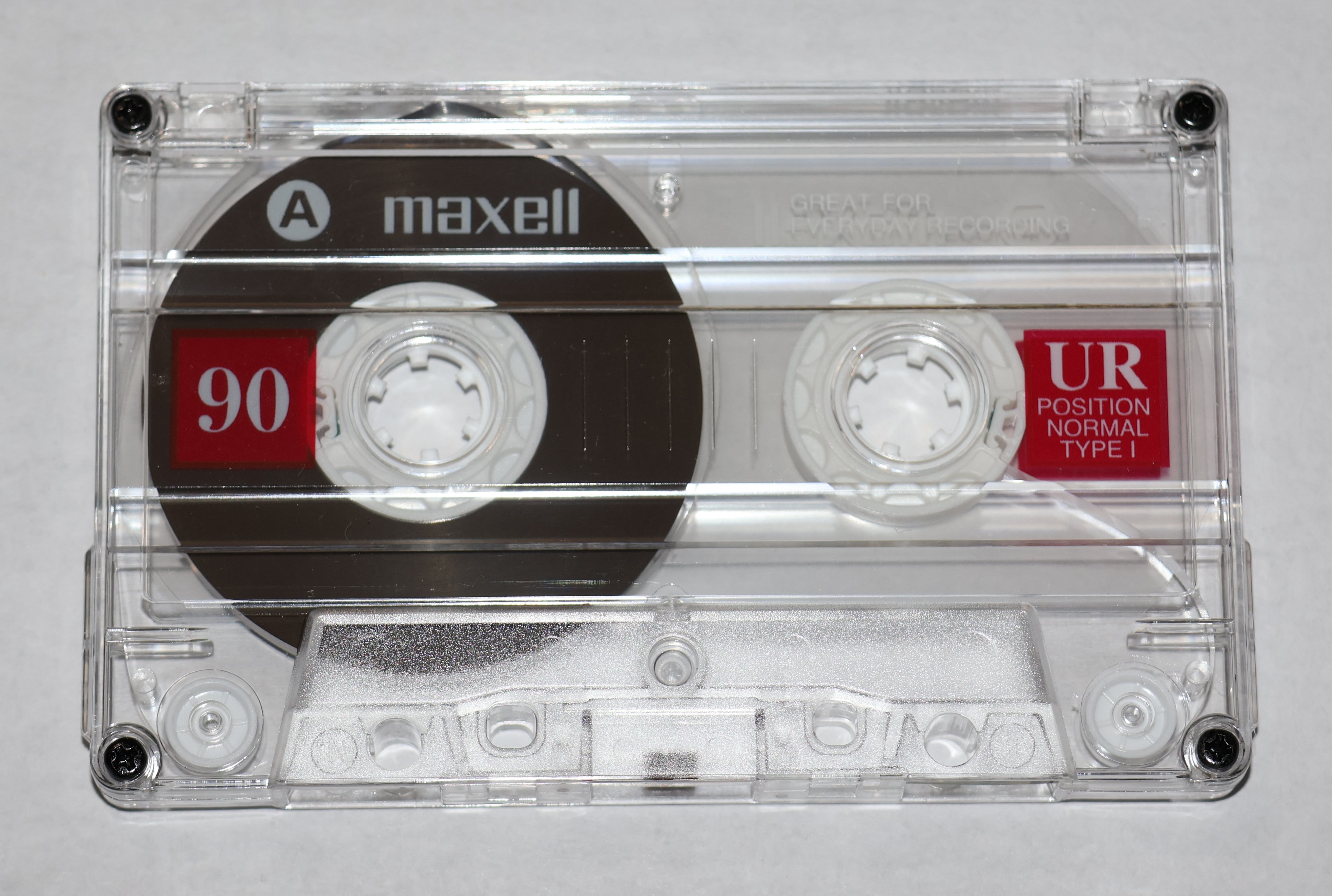
Transparent Maxell UR cassette with two white reels and brown magnetic tape wound mainly around one reel
Listening together
Headphones create a private listening space. Yet the portable cassette was not always sold as a solitary device: a mymy advertisement preserved by Samsung promoted two headphone sockets with separate volume controls so two people could listen together.
Wired listening required people to sit close. Today a song is shared by sending a link; then, sockets, cable length and a tape chosen together shaped how music was shared.
Language learning on cassette
Industrial Design no. 148, published on 31 August 1996, described earphone listening on subways and buses as an everyday scene and noted students and office workers using cassettes for language study in transit. Its featured product, LG’s AHA-C680 caption player, went on sale in December 1995 with an LCD text display, passage repeat and a remote control.
The need to replay a sentence and see its words shaped the controls and added a screen. The portable cassette served commuting study as well as leisure.
A GoldStar portable cassette player sold by LG in 1996
After the cassette
Analog listening also meant maintenance. Sony’s cassette support guidance advises stopping playback when the sound is distorted, removing the tape and taking up slack with a pencil. That does not restore stretched or damaged tape.
Sony’s personal-audio history lists a portable CD player in 1984 and a MiniDisc model in 1992, and Samsung announced its yepp MP3 player in April 1999. New media steadily widened the choices.
Today listeners jump straight to a track and edit lists with ease. In the cassette era, choosing the music was itself part of the experience. The media have changed, but deciding what to listen to on the way somewhere has not.
The Sony Walkman TPS-L2, the first Walkman model, photographed from the collection of Tekniska museet in Sweden. Photo: Anna Gerdén (Tekniska museet) / Walkman TPS-L2 / Wikimedia Commons / CC BY-SA 3.0
A radio-cassette transport photographed in 2014, with its head, reel drives and gears exposed. This mechanical view helps explain how a cassette is played. Photo: Hans Haase · Original title: Radiorekorder Laufwerkmechanik Vorderseite IMG 9016.JPG · Taken: 2014-03-23 · CC BY-SA 3.0 (https://creativecommons.org/licenses/by-sa/3.0/) · Source: https://commons.wikimedia.org/wiki/File:Radiorekorder_Laufwerkmechanik_Vorderseite_IMG_9016.JPG · Original JPEG unchanged. The card shows an 8:5 center crop; open the larger photo for the full frame.
Two reels and wound magnetic tape inside a transparent Maxell UR cassette. Photographed in 2023, this view reveals the physical structure of the recording medium. Photo: DiscoA340 · Original title: Blank Maxell Compact Cassette (Side 2).jpg · Taken: 2023-10-14 · CC0 1.0 (https://creativecommons.org/publicdomain/zero/1.0/) · Source: https://commons.wikimedia.org/wiki/File:Blank_Maxell_Compact_Cassette_(Side_2).jpg · Original JPEG unchanged. The card shows an 8:5 center crop; open the larger photo for the full frame.
The Samsung mymy MY-A80, with a built-in speaker, a radio frequency window and “mymy” and “AUTO STOP MECHANISM” printed on the front. Photo: National Folk Museum of Korea / Cassette player (092930) / NFM collection / KOGL Type 1
A portable cassette player made by Moa Audio in August 1996 and sold by LG Electronics, with a GoldStar logo and “AM/FM stereo cassette player” marked on the front. Photo: National Folk Museum of Korea / Cassette player (069643) / NFM collection / KOGL Type 1
Users of Korea’s 1990s PC networks dialled an access number, greeted familiar usernames and waited for the next instalment of novels posted on message boards. Services such as HiTEL, Chollian, Nownuri and UniTEL became part of daily life through their login routines, phone bills, interest clubs and serialised fiction.
Getting connected
A typical 1990s dial-up session began by opening communications software on a PC and using a modem to call an access number. Once the link connected, users entered their service ID and password before reaching boards and chat rooms. Dedicated terminals offered another route, so not every user owned a PC or a separate modem.
KETEL, HiTEL’s predecessor, began at the Korea Economic Daily in September 1988. KT alpha’s corporate history dates the start of the HiTEL service to July 1992. Chollian, Nownuri and UniTEL were other leading services, each with its own menus and member spaces.
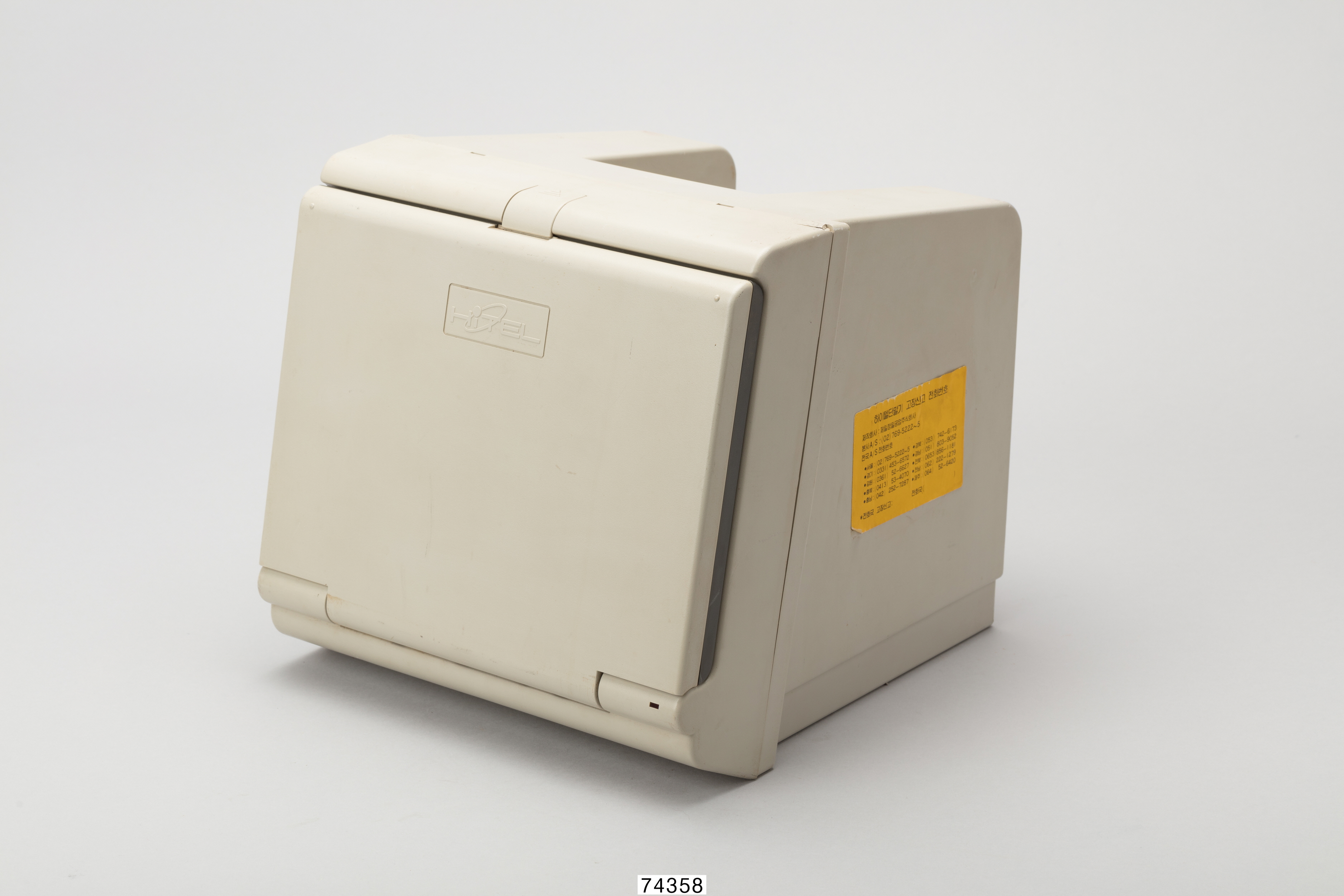
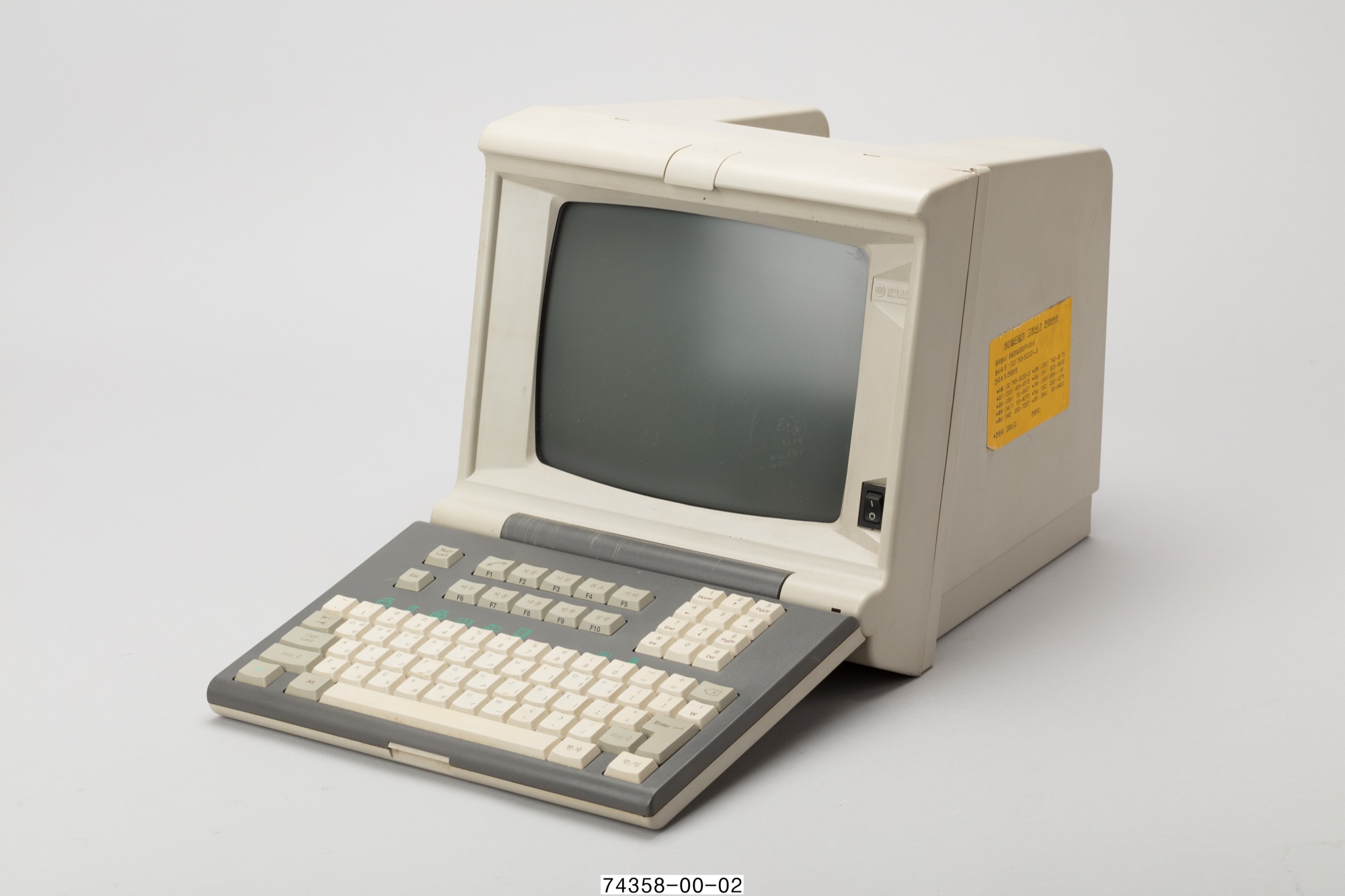
A Hitel terminal with its lid open, showing screen and keyboard
The modem’s noise
A modem converted digital computer data into signals that could travel over a voice telephone line and turned incoming signals back into data. The tones heard while connecting came from the “handshake,” in which the two ends agreed on a compatible method and speed.
ATDT, a command seen in communications software, told a modem to tone-dial a number. Software often issued it automatically. The modem, line, program and service account each did a different job.
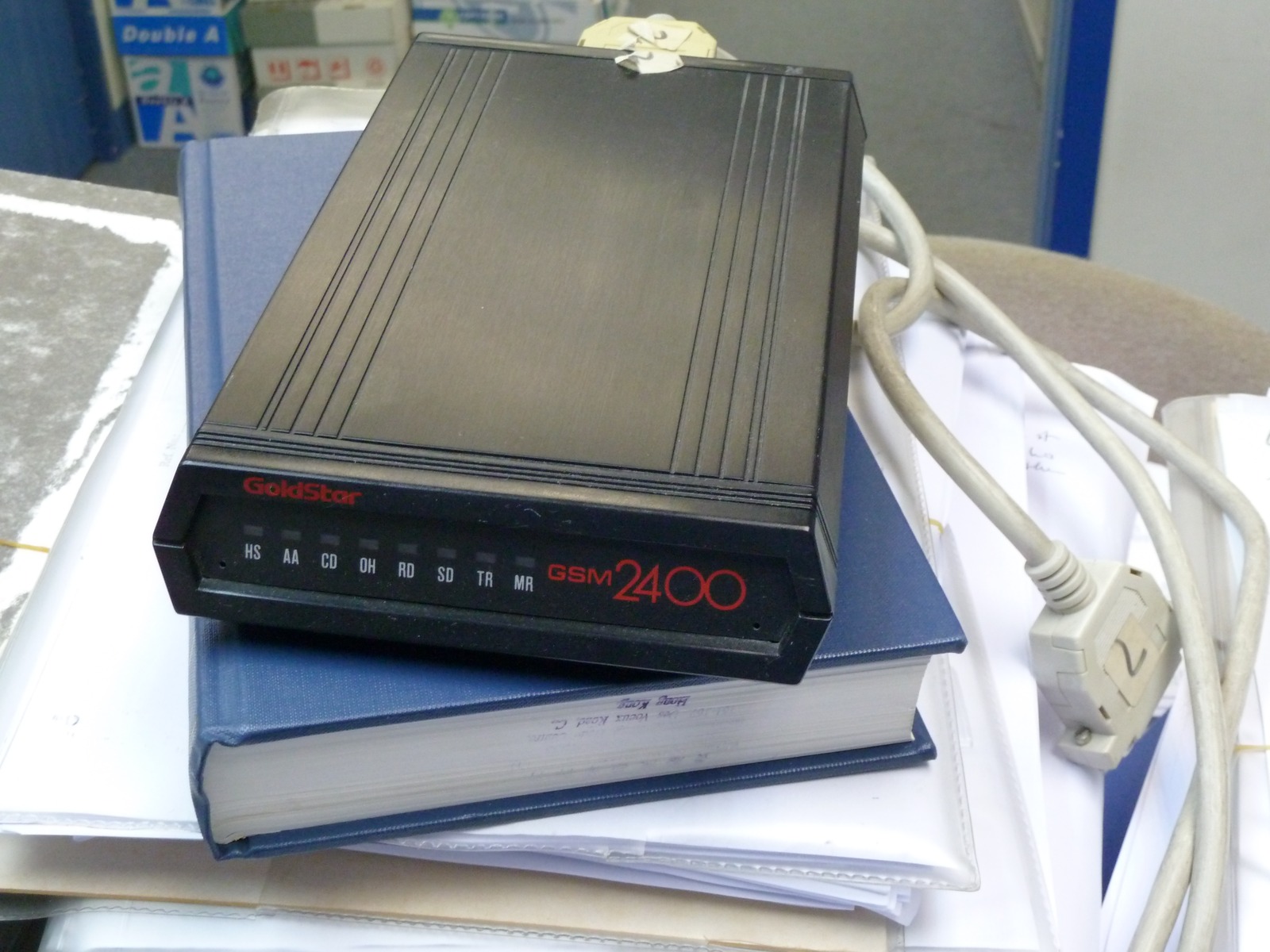
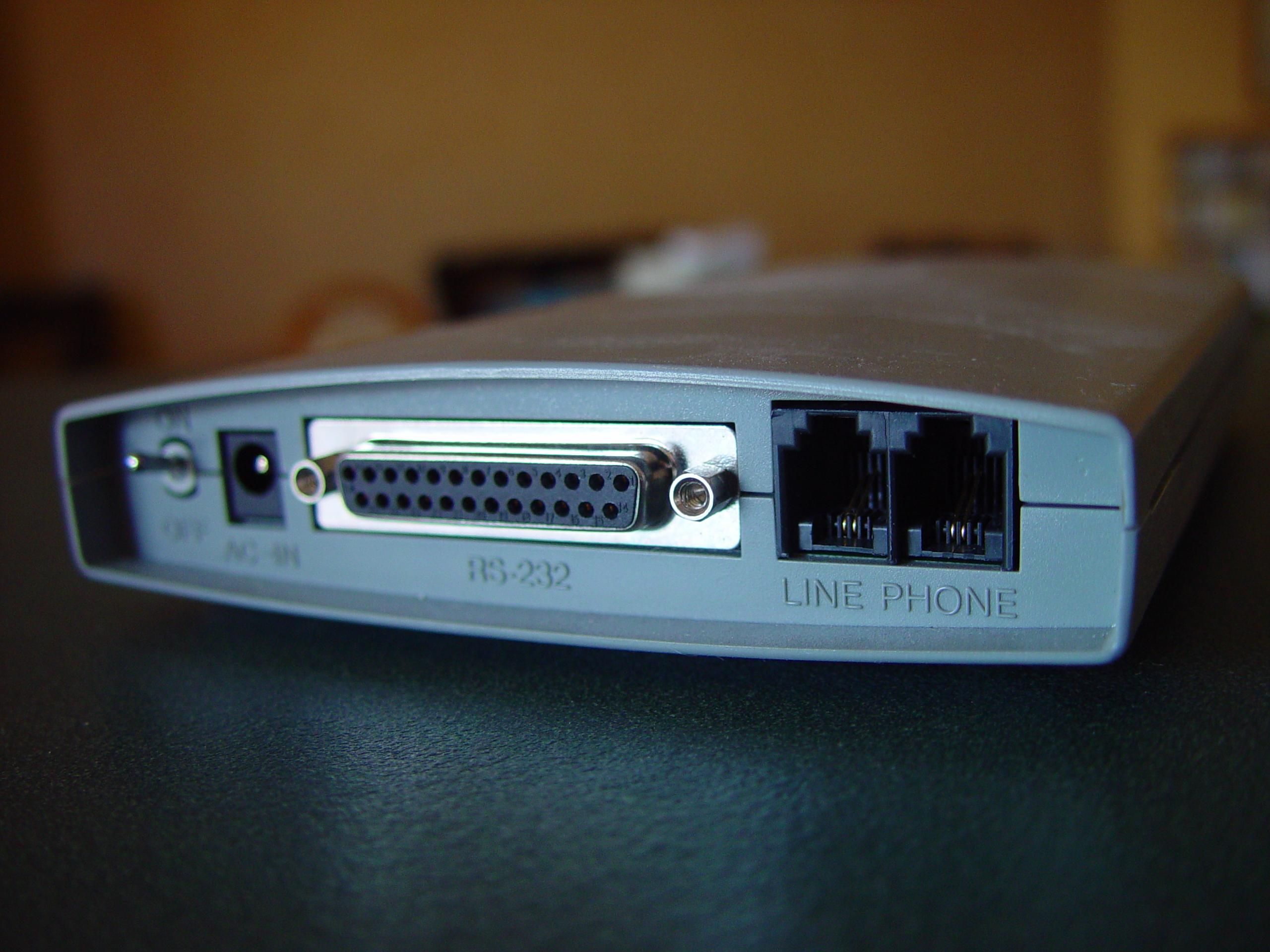
On the rear-panel photograph, RS-232 connects to the computer, LINE to the telephone line and PHONE to the telephone. A PHONE socket did not allow voice and data calls at the same time. As the GoldStar GSM-2400 photograph shows, external modems used front-panel lights to show their status.
Black GoldStar GSM-2400 external modem resting on books, with red model lettering and front status lights labeled HS, AA, CD, OH, RD, SD, TR and MR.
The home phone and the bill
With ordinary dial-up on the same line as the household telephone, the line could not carry a voice call while connected. If someone needed the phone, the session had to end; households with a separate line faced different constraints.
Service subscriptions and telephone charges were separate, and costs varied by period, provider and plan. A KISDI historical study identifies phone costs and unstable connections as constraints on early online communities. That is why users chose carefully what to read and send rather than staying online indefinitely.
Rear panel of a gray external modem with a power switch, power socket, RS-232 serial connector, and adjacent LINE and PHONE jacks.
Boards, chat and file libraries
In text-based interfaces, users navigated with menu numbers and commands; HiTEL offered shortcuts such as “go culture” for cultural and leisure information. The familiar blue background and white lettering did not appear in every program and period, and graphical and web functions later changed the experience.
Bulletin boards held posts for later readers, chat rooms connected people online at the same time, mail went to a particular recipient and file libraries distributed downloads. A computer textbook’s Chollian 98 chapter, catalogued by the National Library of Korea, treats these as separate functions.
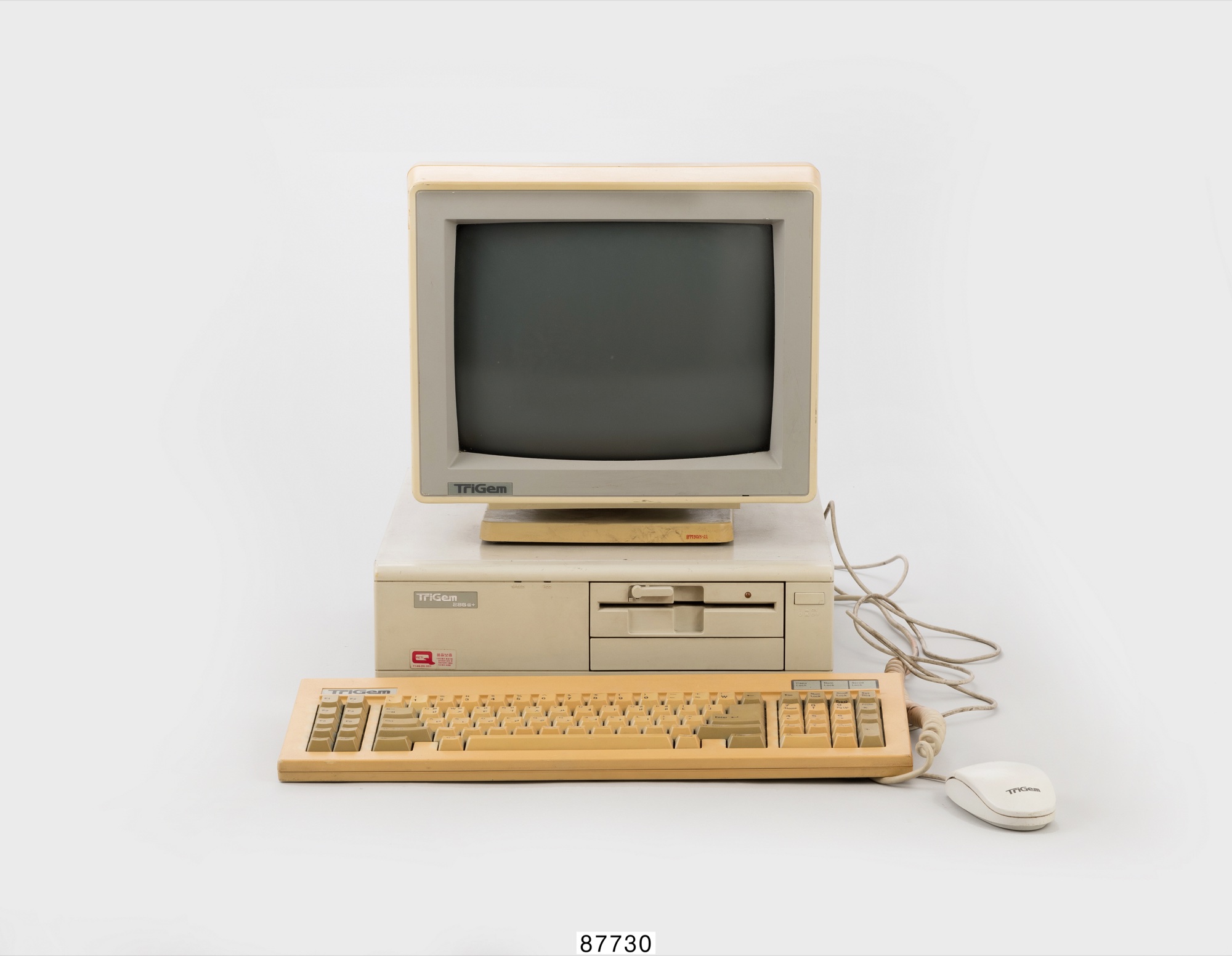
An early-1990s TriGem 286 PC with monitor and keyboard
Clubs and sysops
Interest clubs, or donghohoe, devoted to music, games or fiction gave members a reason to return. Through repeated posts and replies, an unfamiliar ID could become a familiar person.
Moderators known as sysops maintained rules and could sanction disruptive members. Bae Young’s 2005 study describes lasting, partly pseudonymous relationships in these clubs while noting paid membership and other barriers. The communities were close-knit but not open to everyone.
Online fiction and viewer feedback
Lee Woohyeok’s Toemarok, listed in English by LTI Korea as A Record of Exorcism, was serialised on HiTEL in 1993 and published as a book in 1994. Lee Young-do’s Dragon Raja began its HiTEL serialisation in October 1997. Readers waited for each instalment and posted responses, and authors saw that feedback quickly, a defining feature of PC-network literature.
Broadcasters used the channel too. The April 1996 issue of SBS Magazine reported that the company had consolidated its PC-network viewer-contact operations into one department that March, giving viewers a route to send opinions to producers.
PC networks and the internet
The two eras overlapped. HiTEL introduced web services and dedicated multimedia software in 1996, and provider-hosted boards, internet access and web interfaces evolved alongside one another.
The old equipment may look analogue, but the computers were exchanging digital information. The modem bridged that data and the voice telephone line.
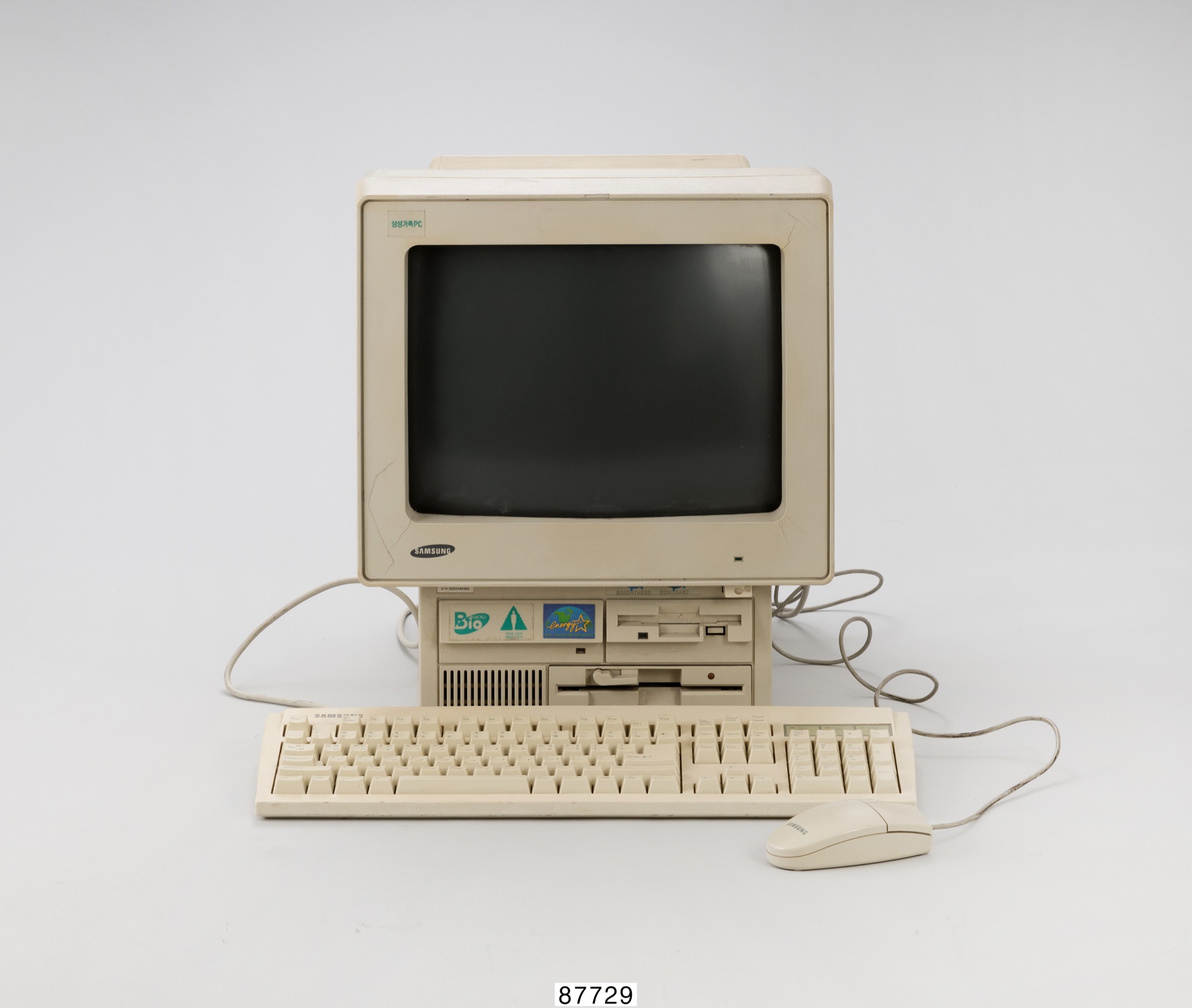
A 1994 Samsung all-in-one home computer
A present-day reading: how relationships work
Today’s interest communities face the same questions. Who organises the conversation and enforces its rules? How does a regular contributor earn trust? How does a reader waiting for the next instalment reach its creator? Equipment and speeds have changed; the questions have not.
Phone bills and connection limits were real burdens, and easier access today creates more choices. The history of PC networks is less a story of better times than of how people built connections and turned them into relationships.
A HiTEL PC-communications terminal with its cover closed. This is a 2018 collection photograph of historic hardware, not a 1990s scene of use. Photo: 국립민속박물관 (National Folk Museum of Korea); photographic EXIF credit: Kim Joo Wan, “Hitel computer terminal.jpg”, 2018-07-03. Source: https://commons.wikimedia.org/wiki/File:Hitel_computer_terminal.jpg. Reuse terms: Korea Open Government License Type 1 (Attribution), https://www.kogl.or.kr/info/licenseType1.do. Changes: original file unedited; 8:5 center crop in the gallery display. Original collection source: https://www.nfm.go.kr/common/data/home/relic/detailPopup.do?seq=PS0100200100107435800000.
A GoldStar GSM-2400 external modem photographed in 2010, showing its front status indicators. This is a later photograph of older hardware; the manufacturing year is unverified. Photo: alanine, “古董 (Flickr original title); GoldStar modem, 2400bps top.jpg (Commons file title)”, 2010-11-04. Source: https://commons.wikimedia.org/wiki/File:GoldStar_modem,_2400bps_top.jpg. Reuse terms: Creative Commons Attribution-ShareAlike 2.0 Generic, https://creativecommons.org/licenses/by-sa/2.0/. Changes: primary MPO frame resized to 1600×1200 and converted to JPEG; no file crop or AI editing. Gallery display uses an 8:5 center crop. Derivative remains CC BY-SA 2.0.
Rear-panel RS-232, LINE and PHONE connections on an external dial-up modem. This technical reference has no confirmed model or capture date and is not verified as a 1990s photograph. Photo: Leon Brooks, “External dialup modem back panel”, capture date unknown (Commons transfer: 2013-03-01). Source: https://commons.wikimedia.org/wiki/File:External_dialup_modem_back_panel.jpg. Reuse terms: Released into the public domain by Leon Brooks (PD-author), https://commons.wikimedia.org/wiki/Template:PD-author. Changes: original file unedited; 8:5 center crop in the gallery display.
A dedicated terminal for the Hitel PC communication service, supplied by Korea Telecom and made by Jeil Precision; the keyboard is built into the front lid, which opens to reveal the screen. Photo: National Folk Museum of Korea / Hitel terminal (074358) / NFM collection / KOGL Type 1
A 286 computer made in the early 1990s, with the TriGem mark below the monitor and a floppy-disk slot in the system unit. Photo: National Folk Museum of Korea / Computer (087730) / NFM collection / KOGL Type 1
An all-in-one computer made in 1994, with a Samsung “family PC” sticker on the monitor and both 5.25-inch and 3.5-inch floppy-disk slots. Photo: National Folk Museum of Korea / Computer (087729) / NFM collection / KOGL Type 1
In a noraebang, a Korean singing room, people find a song, enter its number and wait their turn while someone else sings. The rooms, which spread from Busan across Korea in the 1990s, turned listeners into performers and made operating a machine part of the shared fun.
Busan, 1991
The Royal electronic arcade near Dong-A University in Busan, in April 1991, is often cited as the starting point. A 2018 Kookje Shinmun history noted, however, that no official record establishing the “first” had been confirmed. It is more accurate to treat that period as the moment a new business format appeared in Busan than as a fixed invention date.
A 2016 study by Sangkil Yoon and Il Chang examines how Busan’s existing 1980s karaoke culture related to early-1990s rooms using computer accompaniment. Noraebang combined established singing culture, arcade-style use and separate rooms.
The merchants who wired the rooms
Seoul Museum of History’s 2010 survey of downtown merchants says noraebang spread from Busan and the Yeongnam region to Seoul in late 1991. Synchronising accompaniment with captions and producing adequate sound were early technical challenges, and merchants in Sewoon’s electronics district supplied and installed the equipment.
Customers saw a microphone and screen, but a working room required an accompaniment unit, amplifier and other equipment to be connected. Behind the loosely named “karaoke machine” sat several audio devices and the skill to install them.
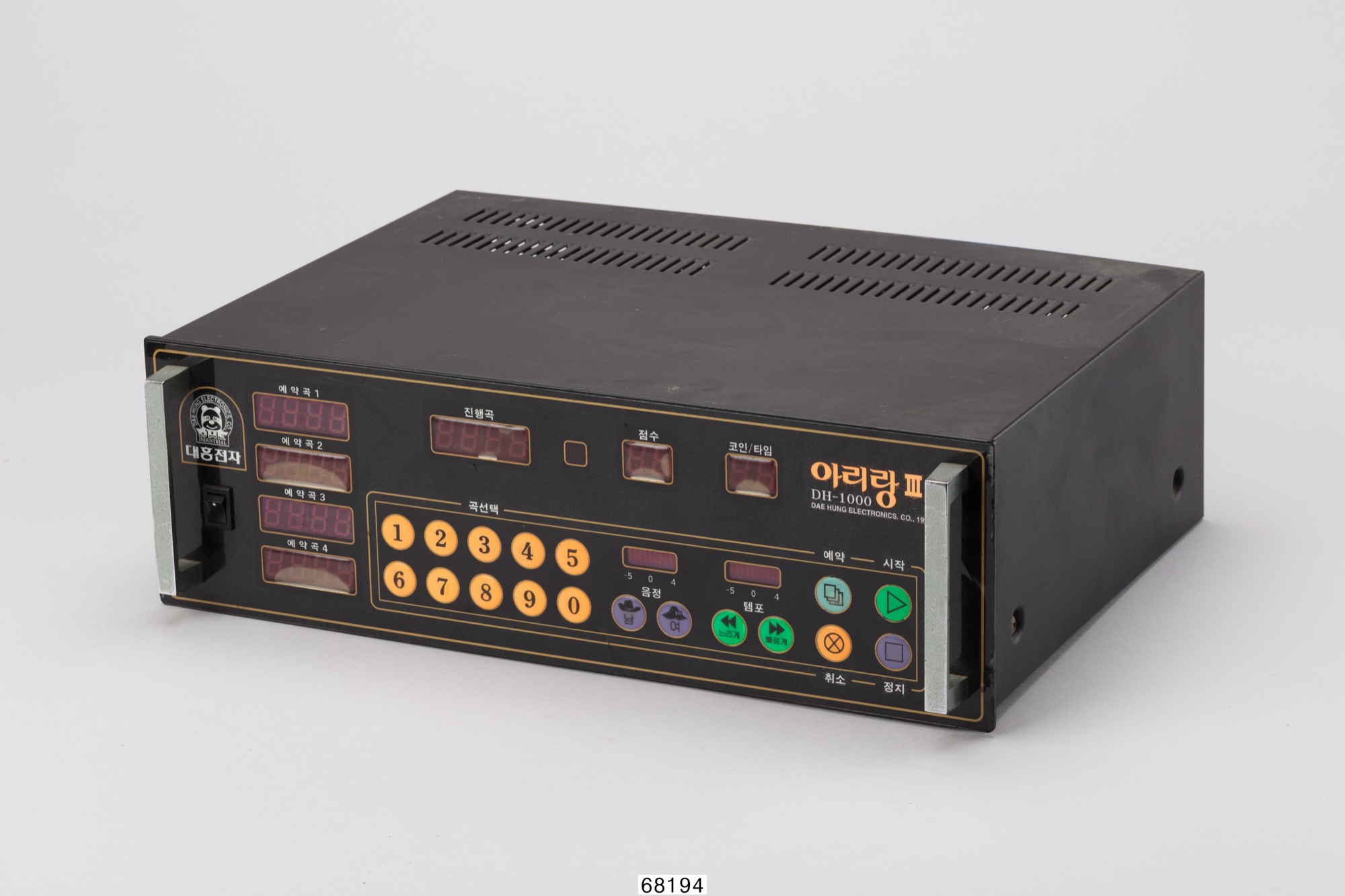
Arirang III karaoke accompaniment unit, Daeheung Electronics, 1994
Songbooks and remotes
Number-based selection meant finding a title in a songbook and entering its number into the machine. A registered patent aimed at improving songbook selection describes this procedure. When the person choosing a song is not the person singing, selection and listening happen at the same time in the same room.
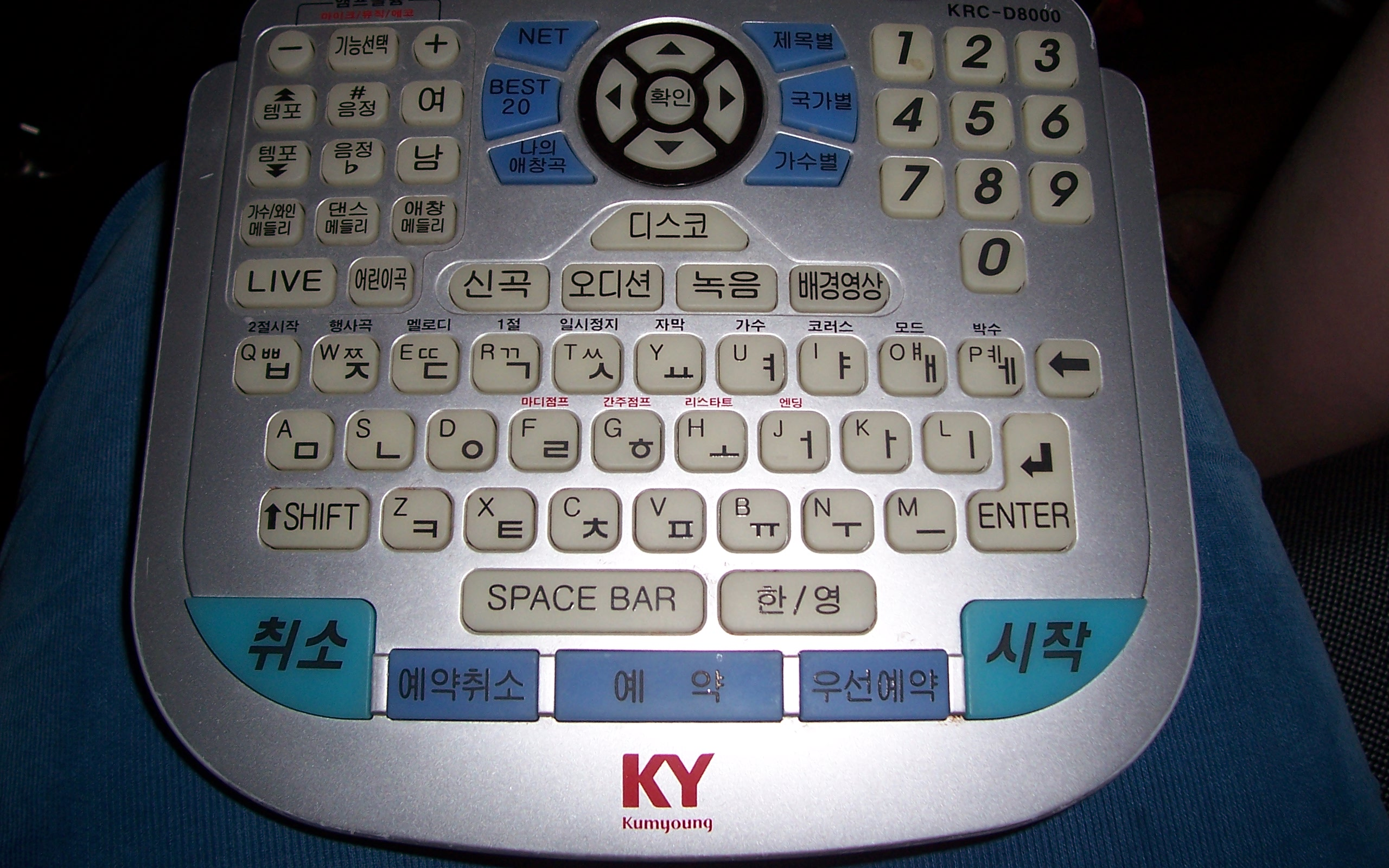
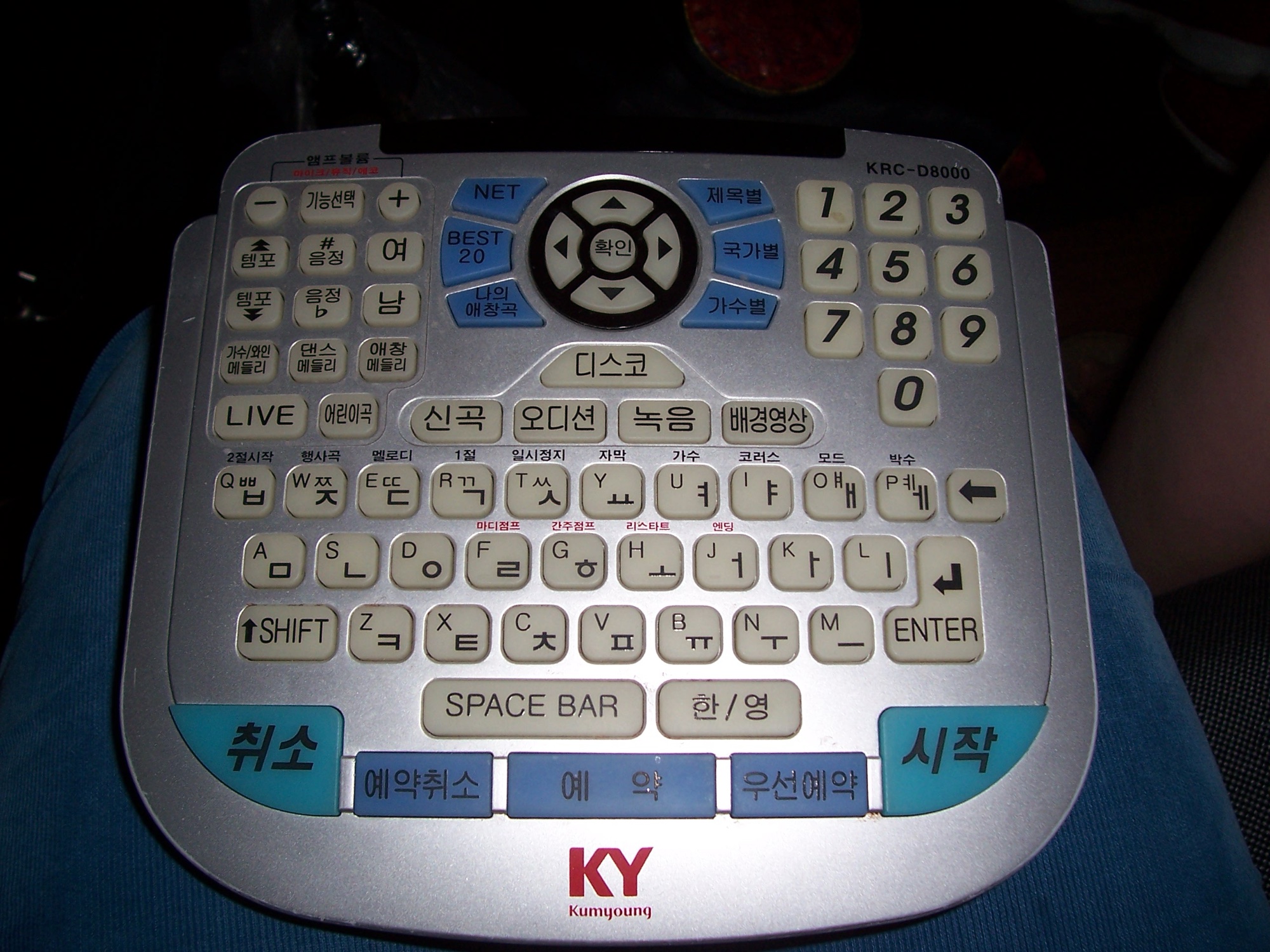
On a remote, reservation queues the next song, key changes pitch and tempo changes speed. The buttons are visible in the accompanying 2008 photograph of a Kumyoung remote, and Kumyoung’s current IPTV service information also lists key and tempo controls and a song queue. The photograph does not show the features of a 1991 machine.
A noraebang remote with number pad and reserve/cancel keys
Changing electronics
Treating noraebang as purely analog because of its books and buttons obscures its technology. TJ’s corporate history records a home computer-accompaniment product in 1989, and hard-disk video accompaniment and an internet-connected system in 2002.
A 1995 Electronic Times report on an Inkel product already described remote control, lighting control and the option to use external laserdisc or videotape footage as a background. The buttons stayed familiar while the electronics behind them kept changing.
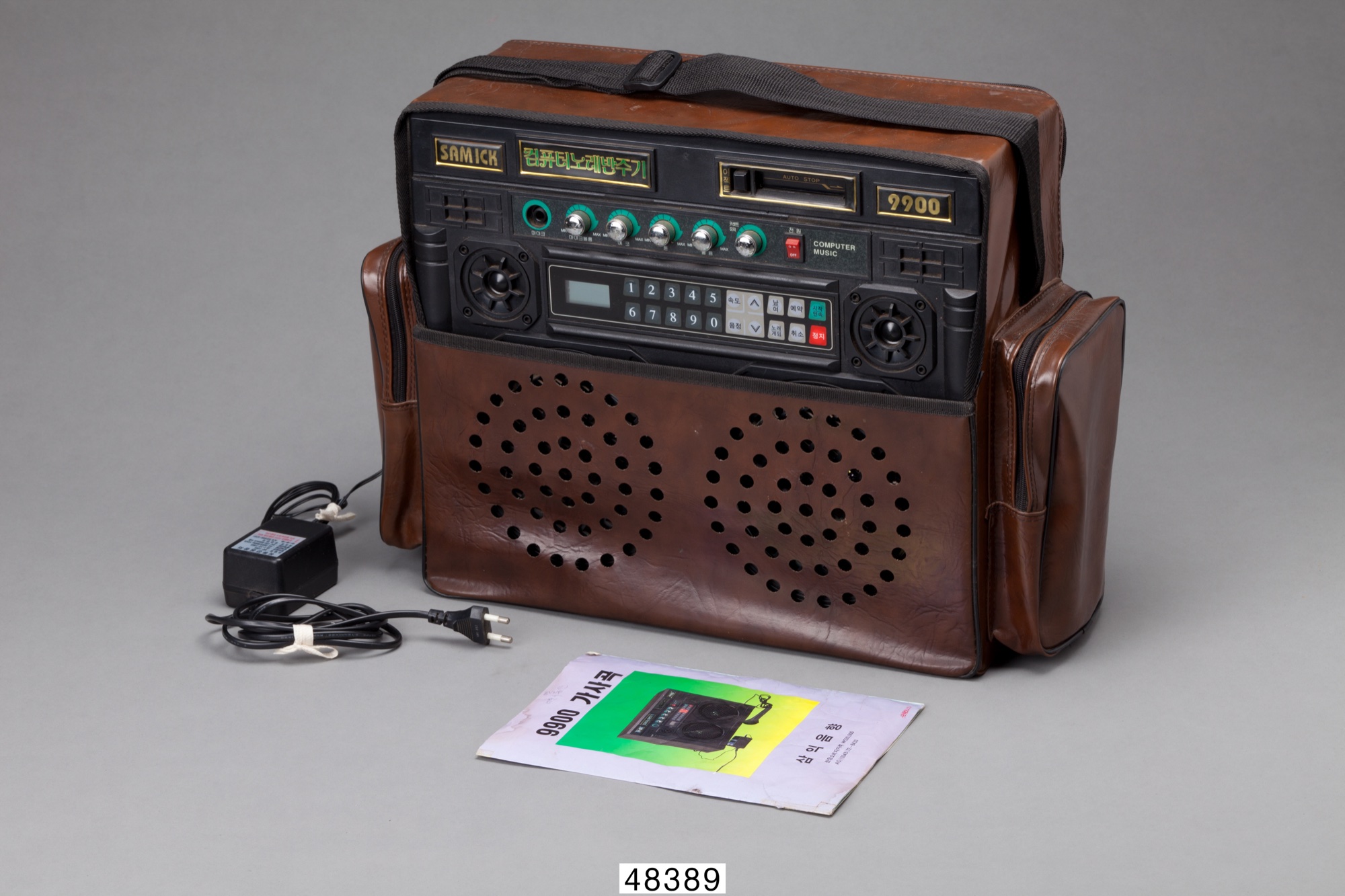
Samick portable computer song accompanist with song-number booklet
The audience in the room
A door and walls matter as much as the microphone. In a separate room, the audience is the people who came in together. Choosing songs, waiting and responding to others are part of the experience alongside singing ability.
The room is not comfortable for everyone. The pleasure of singing together can come with self-consciousness. Who is present and who sets the order explain more than the claim that Koreans simply love to sing.
In the accompanying 2014 Gwangju photograph, people holding a microphone and a remote share a sofa, singing and selecting songs in the same room.
Coin noraebang
Coin karaoke is not simply a smaller version of the old room. Sharing a room by the hour and dropping in for a set number of songs use time differently. Reporting from Suyeong-gu in Busan in 2018, Kookje Shinmun documented customers arriving alone to sing. Solo singing is not a sudden new trend.
Nor has individual use replaced groups. A room for socialising and a room for practising alone meet different needs.
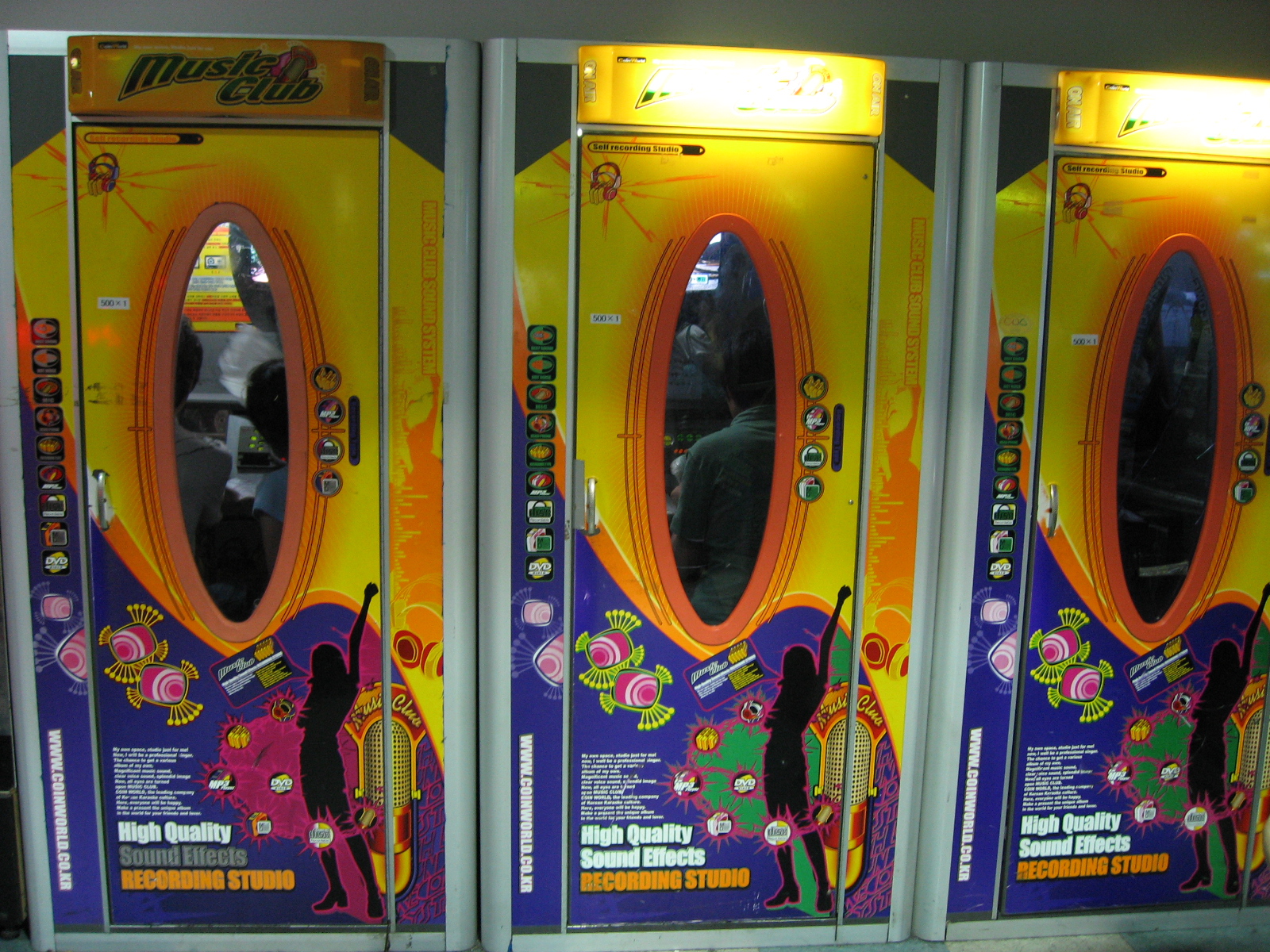
The 2006 photograph shows small singing booths inside a games arcade, a different format from the dedicated coin-noraebang shops of the 2010s.
Three yellow enclosed karaoke booths with oval windows stand side by side, with customers seated inside.
Noraebang today
Official information for TJ’s A3 describes app-based song search and queuing, access to recordings, and coin or time-based management. That shows what the system can do, not what every business has installed. Song selection once done by flipping through songbooks continues through other interfaces.
Rooms vary as well. A 2023 Korea Tourism Organization feature describes a Hongdae venue whose front rooms are visible from the street through full-height windows. Buttons and screens have changed, but choosing the next song is still at the centre of the experience.
A controls detail from a Kumyoung KRC-D8000 remote in a Korean-style karaoke room in Epping, Australia, photographed on 3 October 2008. The keypad, queue, start/cancel, key and tempo controls and lower KY mark remain visible. Photo: Catherine. Original title: “Karaoke”. Taken 2008-10-03; uploaded 2008-10-30. Source: https://www.flickr.com/photos/sailor_coruscant/2986745144/ License: CC BY 2.0 (https://creativecommons.org/licenses/by/2.0/). Cropped 320 pixels from the top to create a 2560×1600 controls detail, then losslessly WebP-encoded; no resizing, colour change or distortion. The card and enlarge link show the same detail; the uncropped original is available at the source. This is not a photograph of a 1991 machine in Korea.
Small singing booths in a games arcade, photographed on 11 July 2006 and tagged “korea” by the photographer; the exact venue is unrecorded. Photo: Kai Hendry. Original title: “Karaoke booths at a games arcade”. Taken 2006-07-11; uploaded 2006-07-13. Source: https://www.flickr.com/photos/hendry/188500849/ License: CC BY 2.0 (https://creativecommons.org/licenses/by/2.0/). Original file unchanged, without resizing. The card uses an 8:5 centered display crop; open the larger photo for the complete file. This is neither a 1990s photograph nor a 2010s dedicated coin-noraebang venue.
The Arirang III (DH-1000) karaoke accompaniment unit made by Daeheung Electronics in 1994, with number buttons for song codes and reservation displays on the front. Photo: National Folk Museum of Korea / Noraebang machine (068194) / NFM collection / KOGL Type 1
A KY (Kumyoung) remote used in a Korean-style noraebang in Epping, Australia, with a number pad, Hangul keyboard and Reserve, Cancel Reservation, Priority Reserve, Start and Cancel buttons. Photo: Catherine from Australia / Karaoke / Wikimedia Commons (Flickr) / CC BY 2.0
A portable “computer song accompanist” by Samick Sound, played by entering a song number; it has number, key and tempo buttons and a cassette slot, and comes with a booklet listing song titles and numbers. Photo: National Folk Museum of Korea / Computer song accompanist (048389) / NFM collection / KOGL Type 1
Sticker photos once divided among friends and pasted into diaries have given way to four-cut prints that come with QR downloads. Newspaper reports from 1997, a 1999 diary and real photographs from Seoul in 2001 and Busan in 2024 trace how Korea’s self-photo culture has changed.
Seoul 2001, Busan 2024
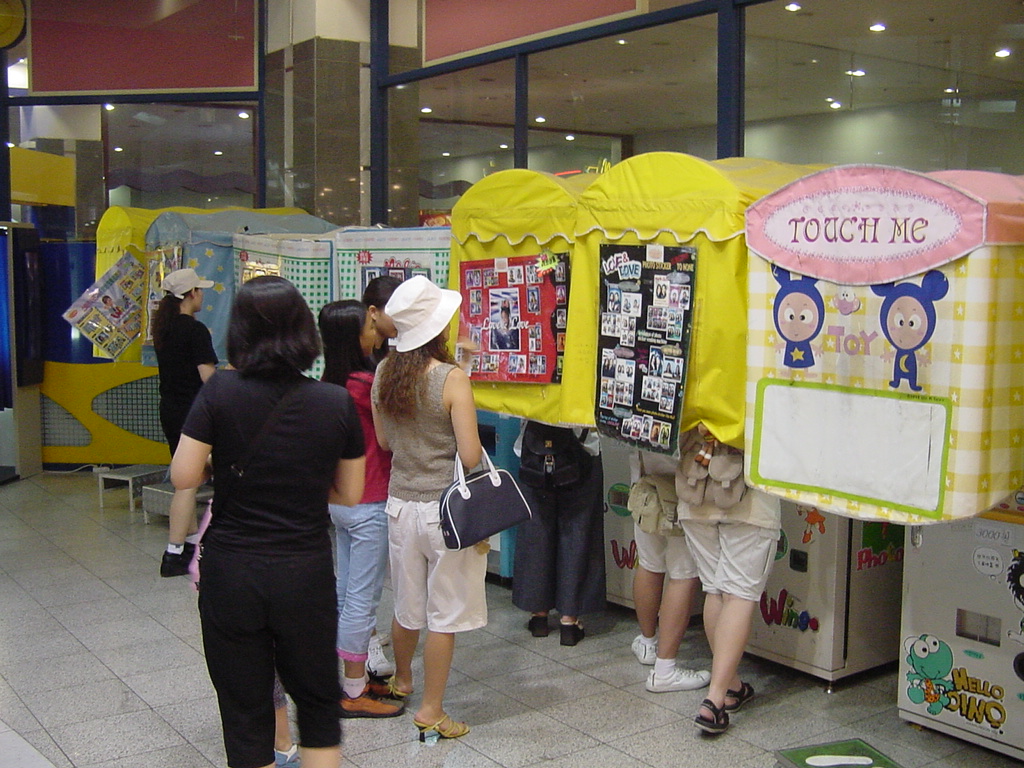
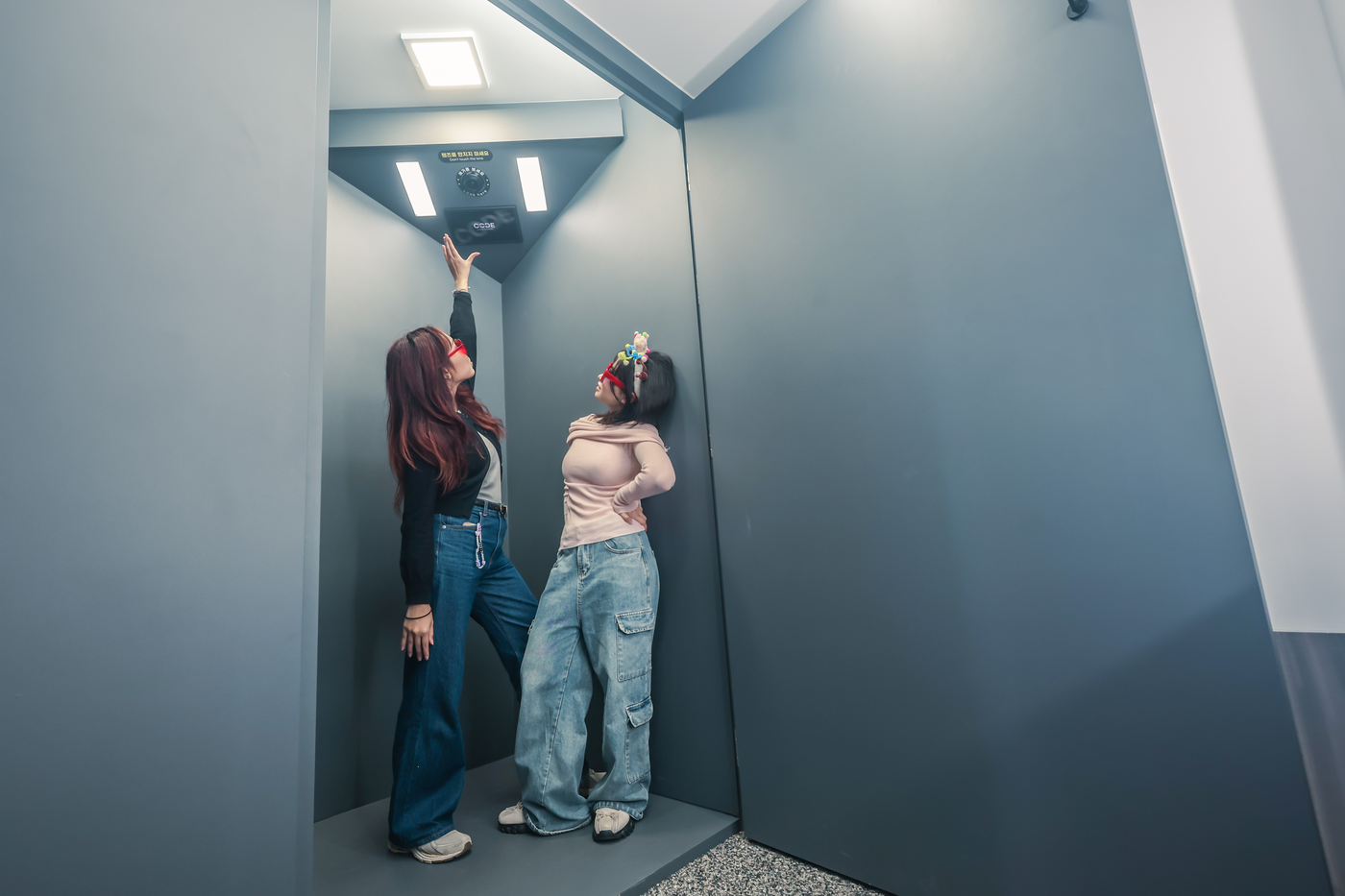
A photograph taken in Seoul in 2001 shows a row of booths with bright yellow curtains. People wait or look over their pictures outside, and sample layouts cover the machines. A Busan archive photograph produced in 2024 shows people standing beneath a high-mounted camera, posing around the room.
The older picture, taken on 19 July 2001, is an actual photograph, not a reconstruction of the 1990s. The Busan archive lists its material as produced in October 2024; it does not show the shop as it is in 2026. The two images come from different locations.
Two people wearing headbands and red glasses pose under an overhead camera in a grey booth
2,000 won in 1997
Electronic Times reported in 1997 that imported Japanese sticker-photo machines arrived in Korea in 1995. Its 22 November article described paying 2,000 won, choosing a celebrity or character background and receiving a sticker in about 30 seconds. Those figures reflect the report at the time.
Friends stepped into a chosen setting together and walked away with something they could hold. Looking at the screen together and waiting for the print were part of the fun.
Pictures in diaries
Seoul’s Museum of Everyday Life holds a 1999 diary, object 001075, donated by Kim Hye-rim. The museum’s description records friends sharing sticker photographs and decorating their diaries with them.
Koreana’s Autumn 2023 issue also recalls cutting adhesive photo sheets into individual pictures, keeping them in wallets and diaries, and scanning some for Cyworld. Paper photos and online sharing overlapped early on.
Stickers and four-cut layouts
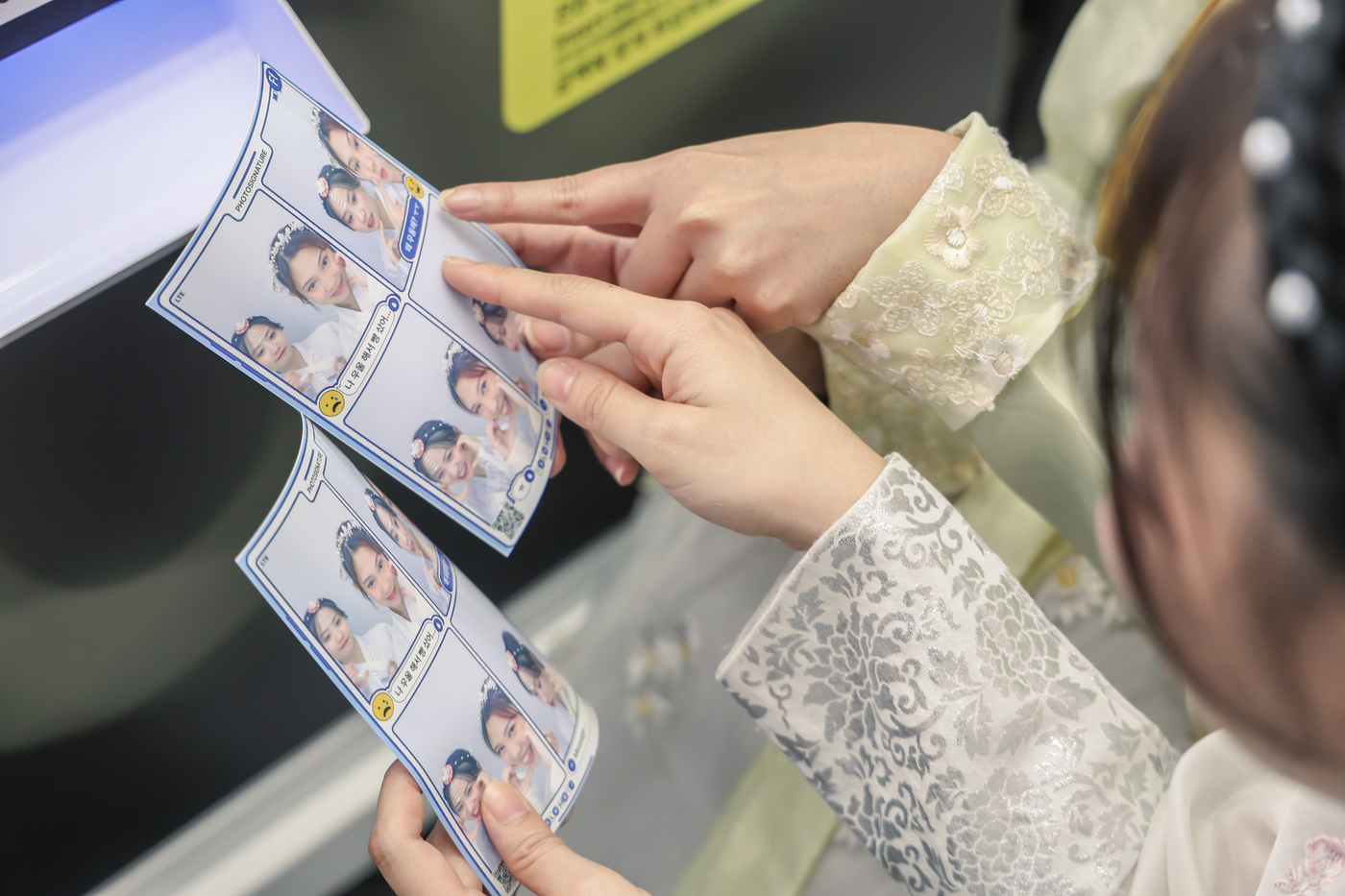
The samples on the 2001 booths gather small pictures in several layouts. A close-up of the modern Cheongsapo print shows two matching sheets, each arranging four pictures in a two-by-two grid. A four-cut photo is not always a narrow vertical strip.
Frame size, the gaps between pictures, border colour and the position of text all shape how the expressions read as a sequence. The modern photograph does not show whether the paper has an adhesive backing. “Sticker” describes a material and “four-cut” a layout, so the terms are not interchangeable.
Hands holding two blue-bordered four-picture sheets after a hanbok photo session
From backgrounds to props and poses
Elaborate backgrounds were a feature of early sticker photos. A Donga report dated 8 February 1999 described movie-poster and magazine-cover backgrounds and machines for upper-body and full-body shots. Varied poses and framing are not new.
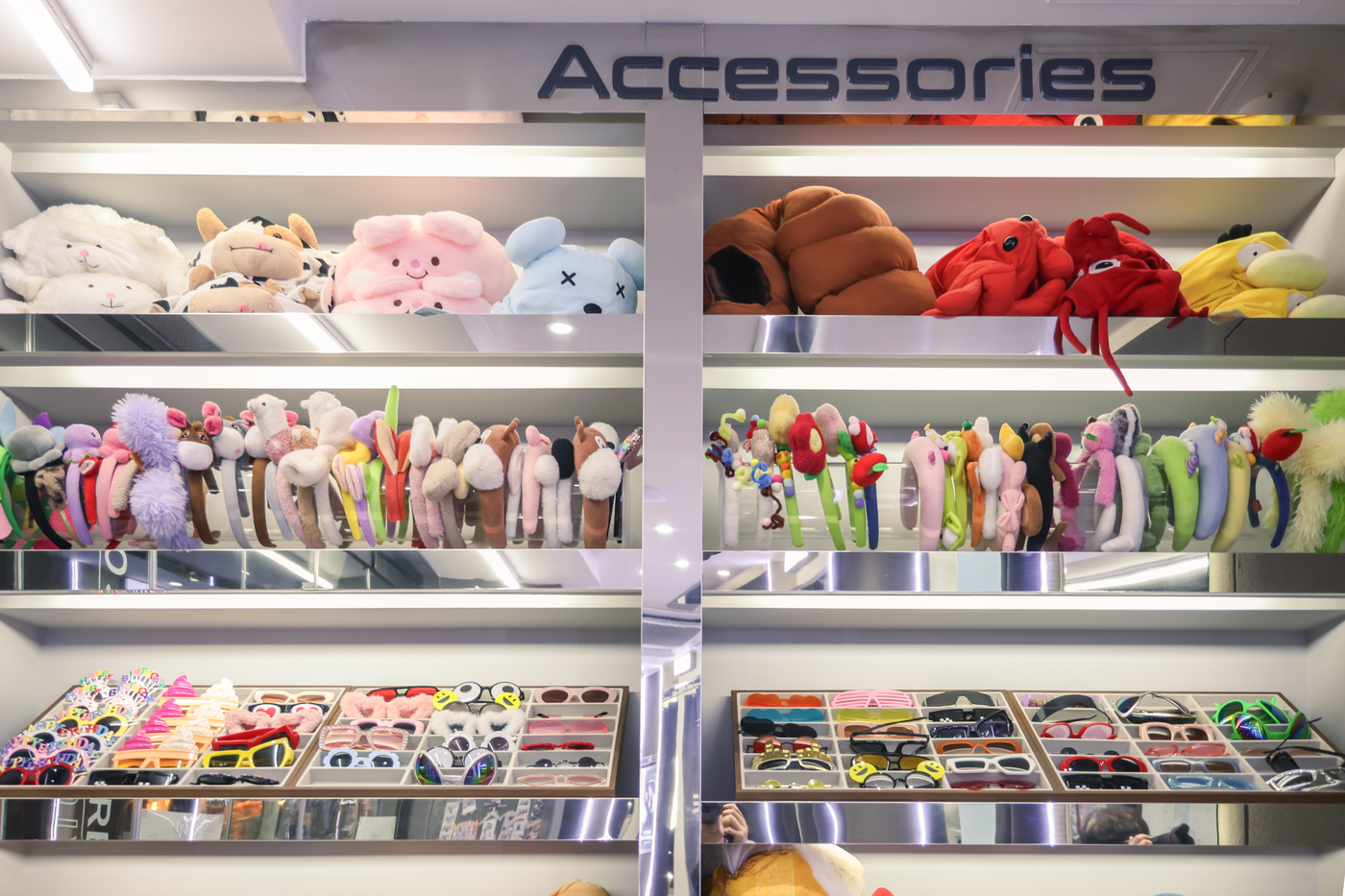
In the Cheongsapo archive, shelves hold headbands, hats and glasses, and another image shows people turning their arms and bodies beneath a high camera. The machine carries CODE lettering and the print PHOTO SIGNATURE branding. The archive’s generic “인생네컷체험” title does not identify either as a Life4Cuts outlet.
Shelves marked Accessories hold novelty headbands, hats and colourful glasses
QR downloads
Life4Cuts’ official site includes app, frame, pose and QR guides. According to its QR instructions, customers select the option when shooting, then scan the printed code to download the image and a video of the session. The posted download window is three days including the shooting date; other operators may set different terms.
A print keeps the chosen expressions; a video keeps the movement in between. Anyone posting faces or video of others should ask those pictured first.
Before the shoot
Planning a simple sequence — an everyday expression first, a glance at each other second, the same hand gesture third and a free choice last — makes the differences between frames easier to see. Props work best when they leave faces visible.
Frames, camera angles, number of copies, prices, QR options and extra prints vary by shop and machine, so the screen in front of you is the reliable guide. Props go back on the shelf afterwards, and nearby customers should be kept out of the frame.
A picture to keep
What links the 2001 booths and the 2024 prints is not a machine or a design but the short time spent looking at a screen together, choosing expressions and dividing the results. A sticker in a diary and a four-cut sheet with its digital file are two ways of returning to that moment.
Every photograph here is real and dated. The sample layouts are part of the original booth scene, not newly scanned personal sticker prints from the 1990s. The 1999 diary is described through the museum’s text because reuse permission for its image could not be established.
Sticker-photo booths and mounted sample layouts in Seoul, 19 July 2001. This was not photographed in the 1990s. Photo: Alex C, “Photo booth in South Korea, 2001.jpg”. CC BY 2.0. Source/terms: https://commons.wikimedia.org/wiki/File:Photo_booth_in_South_Korea,_2001.jpg · https://creativecommons.org/licenses/by/2.0/. Supplied file copied unchanged. The card uses centred cropping; enlarge to see the full photograph.
Posing beneath a high-mounted camera in Cheongsapo, Busan. Archive production date: 1 October 2024; exact capture date unconfirmed. CODE lettering appears on the machine. Photo: 하이픈그룹 / 부산관광공사 글로벌마케팅팀 / 부산관광아카이브, “인생네컷체험 · METADATA013266”. KOGL Type 1. Source/terms: https://archive.visitbusan.net/dataSearch/view.nm?dataSid=METADATA013266 · https://www.kogl.or.kr/info/licenseType1.do. Supplied file copied unchanged. The card uses centred cropping; enlarge to see the full photograph.
Actual PHOTO SIGNATURE-branded prints in Cheongsapo. Two matching sheets each arrange four pictures in a two-by-two grid. Archive production date: 1 October 2024; exact capture date and adhesive backing unconfirmed. Photo: 하이픈그룹 / 부산관광공사 글로벌마케팅팀 / 부산관광아카이브, “인생네컷체험 · METADATA013257”. KOGL Type 1. Source/terms: https://archive.visitbusan.net/dataSearch/view.nm?dataSid=METADATA013257 · https://www.kogl.or.kr/info/licenseType1.do. Supplied file copied unchanged. The card uses centred cropping; enlarge to see the full photograph.
Headbands, hats and glasses for a Cheongsapo self-photo experience. Archive production date: 1 October 2024; exact capture date unconfirmed. Photo: 하이픈그룹 / 부산관광공사 글로벌마케팅팀 / 부산관광아카이브, “인생네컷체험 · METADATA013261”. KOGL Type 1. Source/terms: https://archive.visitbusan.net/dataSearch/view.nm?dataSid=METADATA013261 · https://www.kogl.or.kr/info/licenseType1.do. Supplied file copied unchanged. The card uses centred cropping; enlarge to see the full photograph.
Four real source photographs and two clearly labelled side-by-side editorial layouts. Seoul was photographed in 2001; Busan material was produced in 2024. These are neither 1990s reconstructions nor 2026 site photographs or AI-generated images.
A band of red flowers runs between rows of fine teeth. This 20th-century hwagak chambit in Korea’s National Palace Museum is a bamboo comb decorated with painted ox horn. Just 7.9 cm wide, it shows both carefully aligned teeth and a decoration seen through translucent horn.
A 7.9 cm comb
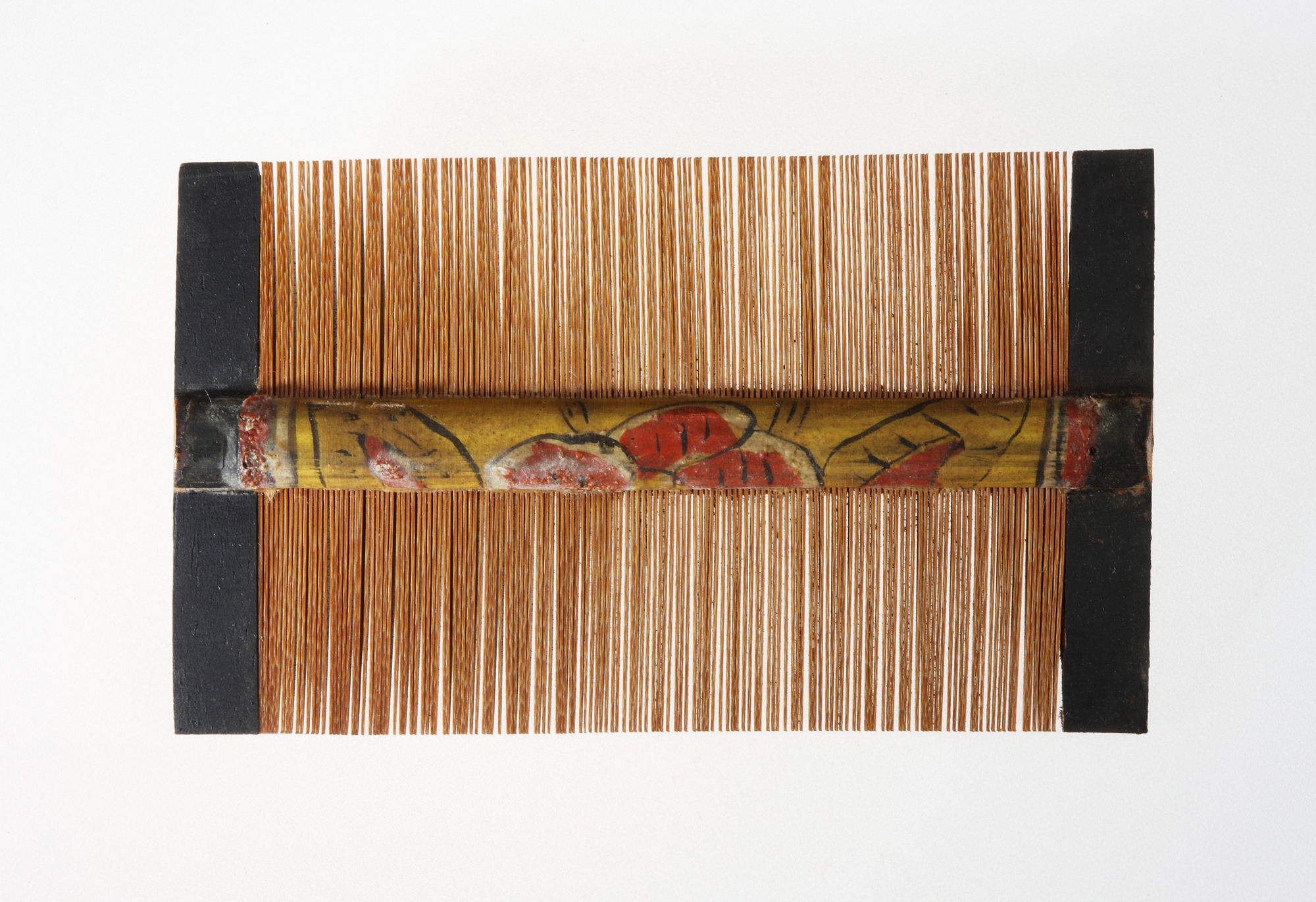
The object is accession Gungjung 267 in the National Palace Museum of Korea. Its catalog records a width of 7.9 cm, a height of 4.6 cm, and materials of wood and ox horn. The closely spaced bamboo teeth smoothed the hair, and flower-painted horn decorates the central spine. The form is traditional, but the museum dates this example to the 20th century.
Teeth set one by one
According to the museum, broad bamboo pieces are fixed to the front and back of the centre, with fine teeth set closely along both sides, a different structure from a comb cut from a solid block.
The Academy of Korean Studies distinguishes the dense bamboo teeth of a chambit from the wider spacing of an eollebit, or coarse comb, and describes roughly 35 operations from cutting bamboo to completion. The even gaps between the teeth show the precision involved.
Flowers under horn
Hwagak decoration combines finely worked ox horn with painting. Describing a different Korean comb in its collection, New York’s Metropolitan Museum of Art explains that the painted face of a thin, translucent horn sheet is attached to wood, so the flowers are viewed through the horn.
On Gungjung 267, red flowers, dark outlines and a yellowish ground fill the central band among the fine teeth.
Two faces
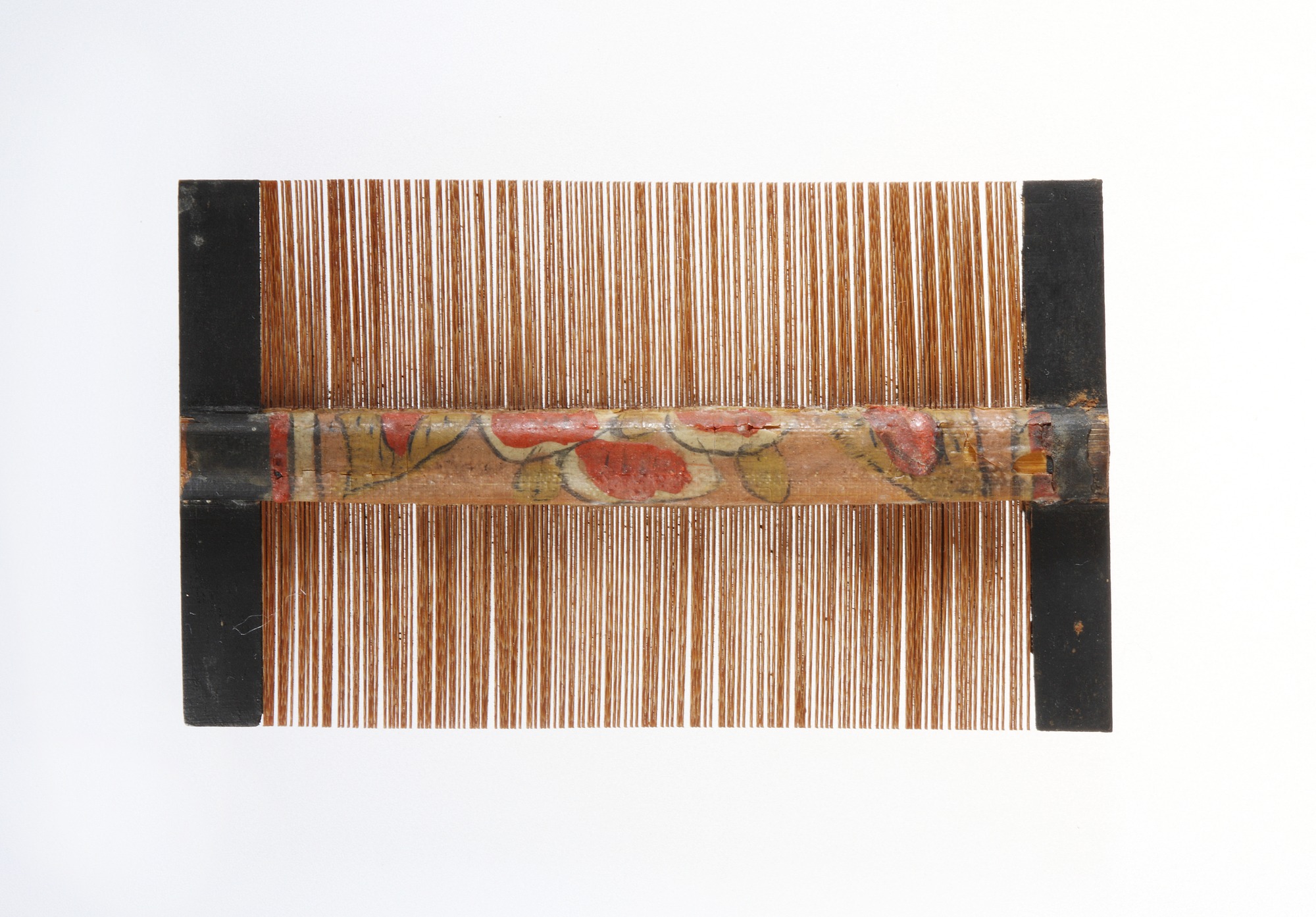
The museum’s two photographs show the two faces of the same comb. One has a central red flower with leaves extending to the right; the other shows a different arrangement along the band. The dark frame and fine teeth are common to both. Together they show the division between the decorated spine and the working teeth.
These are collection photographs; their dates and the comb’s current display status are not given in the public record.
The other face of a fine-toothed Korean comb on a white background, with dark outer supports and a central band of red flowers and dark leaf outlines.
A Damyang maker today
Chambit are still made and sold. Jukhyang Chambit in Damyang, South Jeolla Province, lists eojungso as a traditional chambit, alongside saekdong and ojuk combs. The workshop’s products and Gungjung 267 are separate objects; the photographs show the museum piece and do not represent goods sold by the workshop or a shared lineage.
One face of Hwagak chambit, Gungjung 267. 20th century; 7.9 × 4.6 cm. Collection and photograph: National Palace Museum of Korea. Collection photograph; capture date unspecified. KOGL Type 1, attribution required. Source: https://www.gogung.go.kr/gogung/pgm/psgudMng/view.do?psgudSn=366543&menuNo=800065 . License: https://www.kogl.or.kr/info/license.do#01 . Proportional downsampling and JPEG compression only; the original background and entire object are preserved. The centered 4:3 display trims only white margins.
The other face of Hwagak chambit, Gungjung 267. 20th century; 7.9 × 4.6 cm. Collection and photograph: National Palace Museum of Korea. Collection photograph; capture date unspecified. KOGL Type 1, attribution required. Source: https://www.gogung.go.kr/gogung/pgm/psgudMng/view.do?psgudSn=366543&menuNo=800065 . License: https://www.kogl.or.kr/info/license.do#01 . Proportional downsampling and JPEG compression only; the original background and entire object are preserved. The centered 4:3 display trims only white margins.