
What makes a good night? Looking beyond spending
An October column in Culture+Seoul questions whether a city’s nights should be judged only by sales and visitor numbers, and proposes a quieter measure of a good evening.
An October column in Culture+Seoul questions whether a city’s nights should be judged only by sales and visitor numbers, and proposes a quieter measure of a good evening.
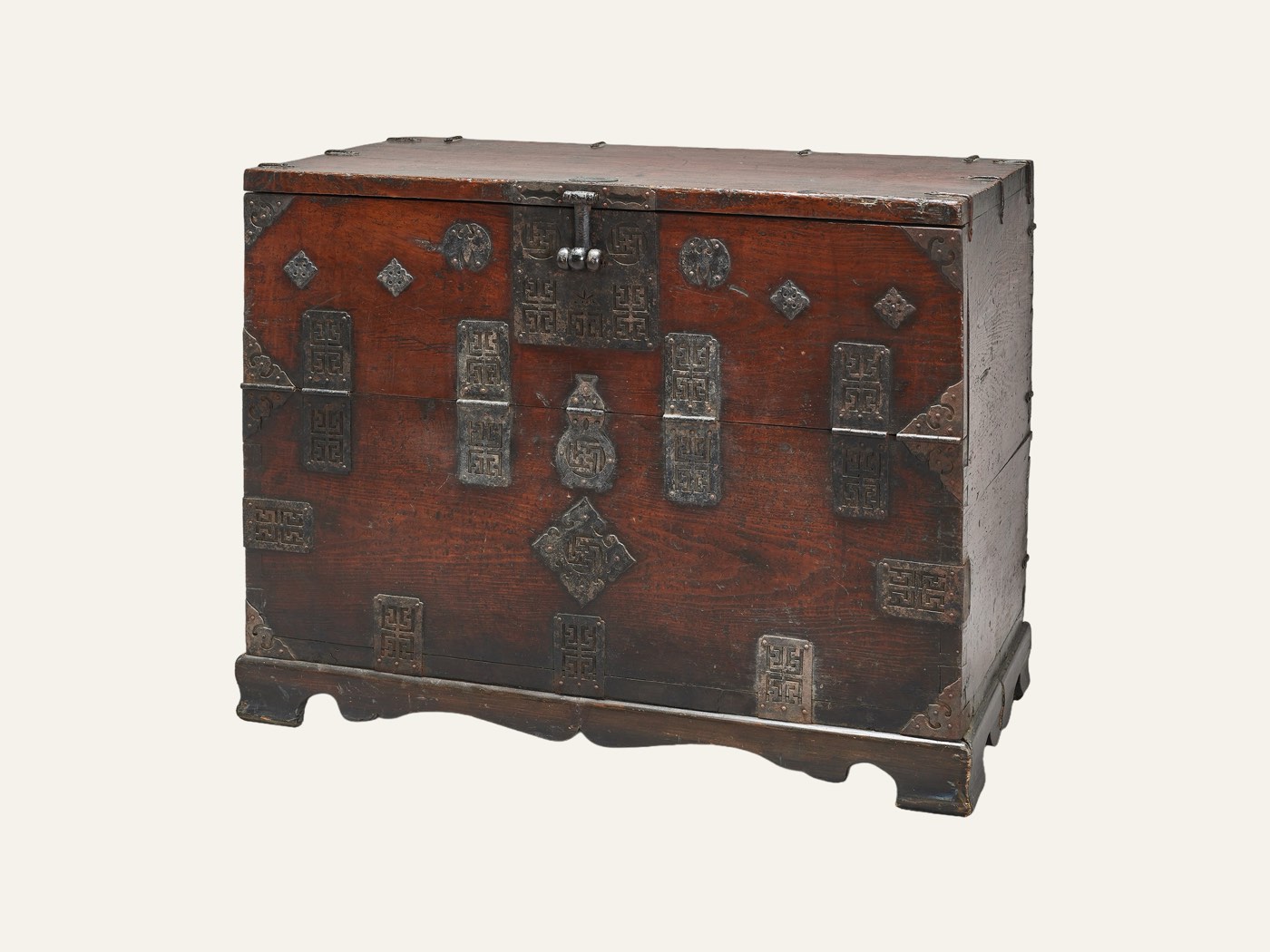
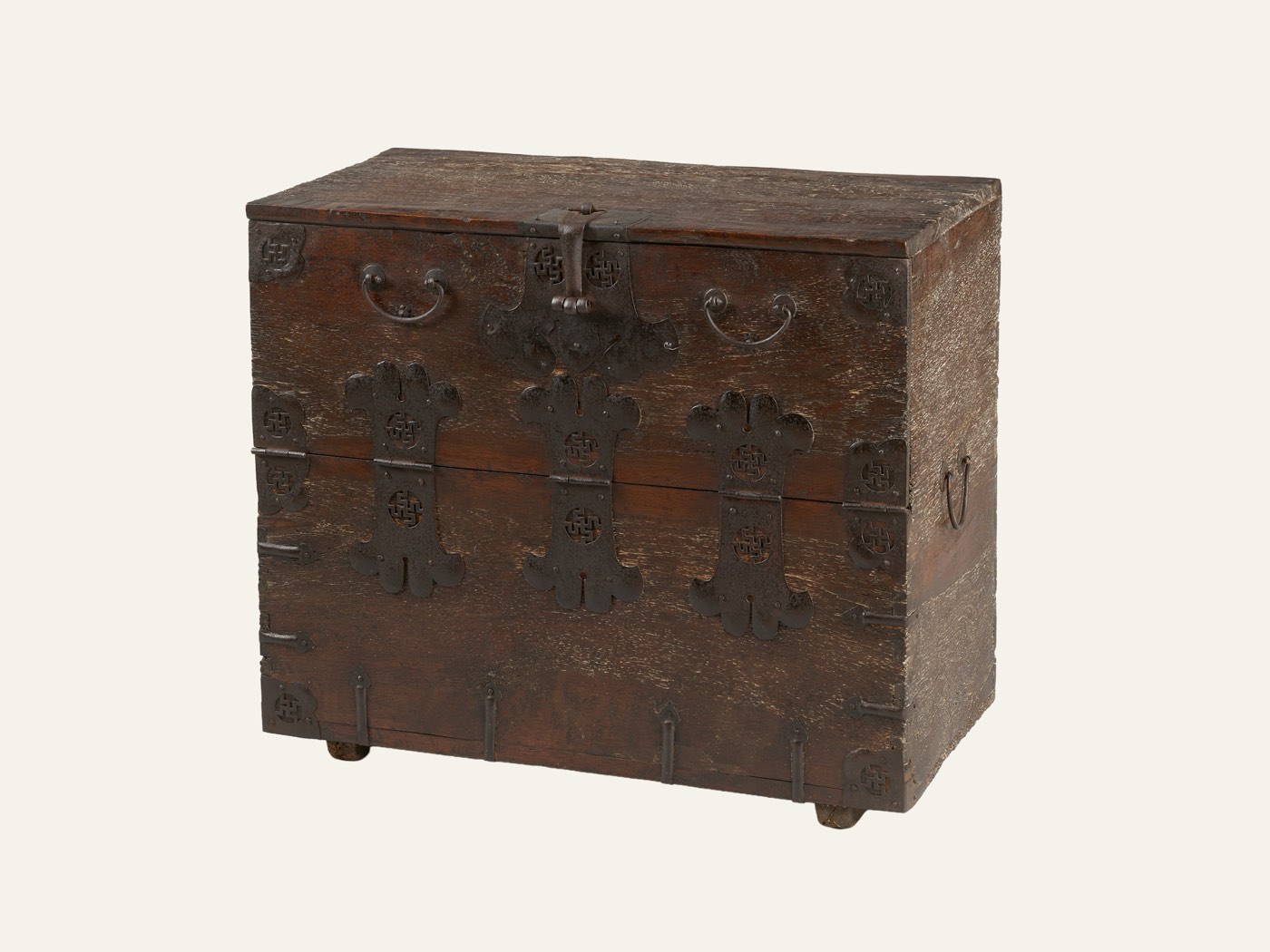
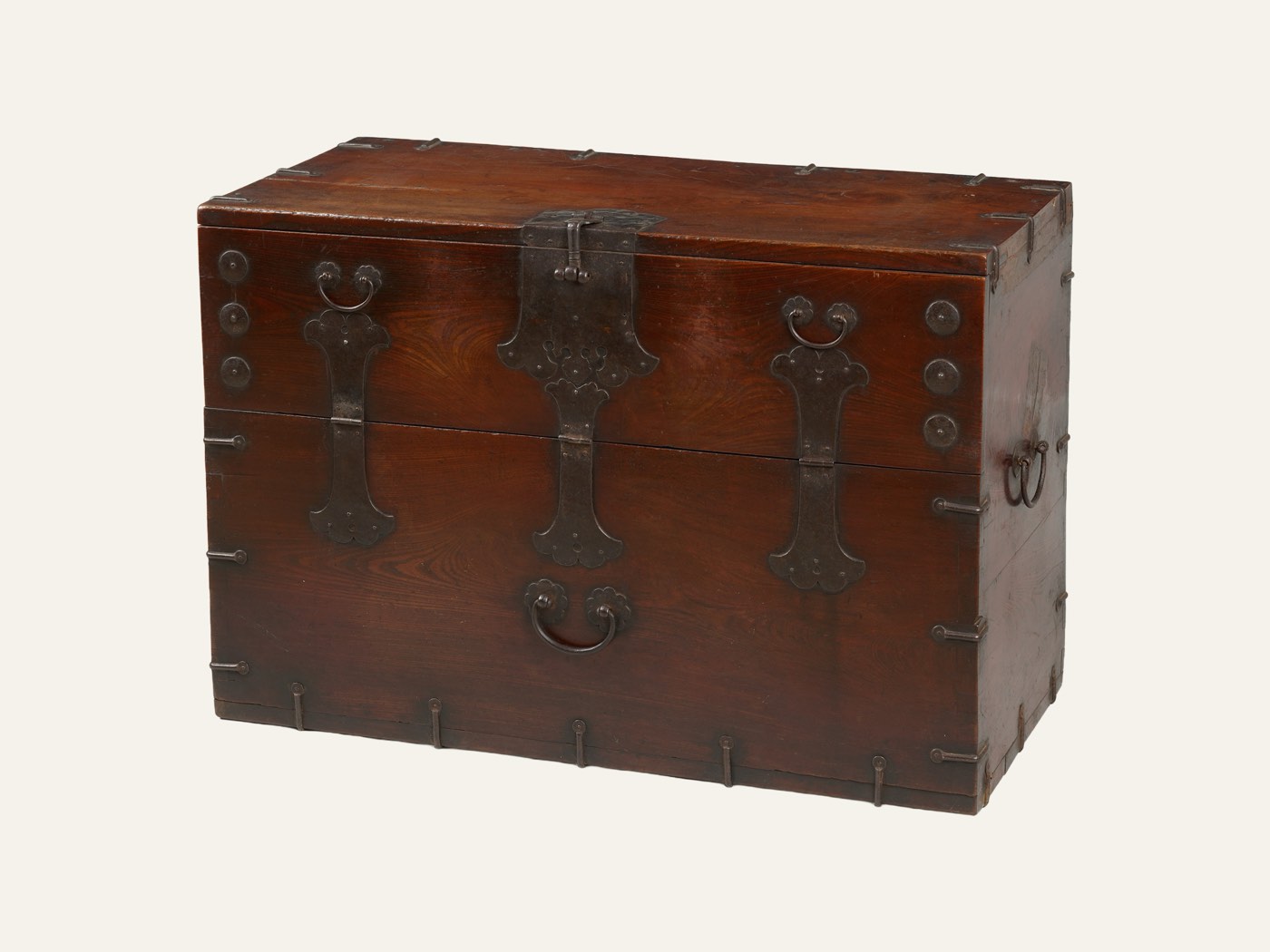
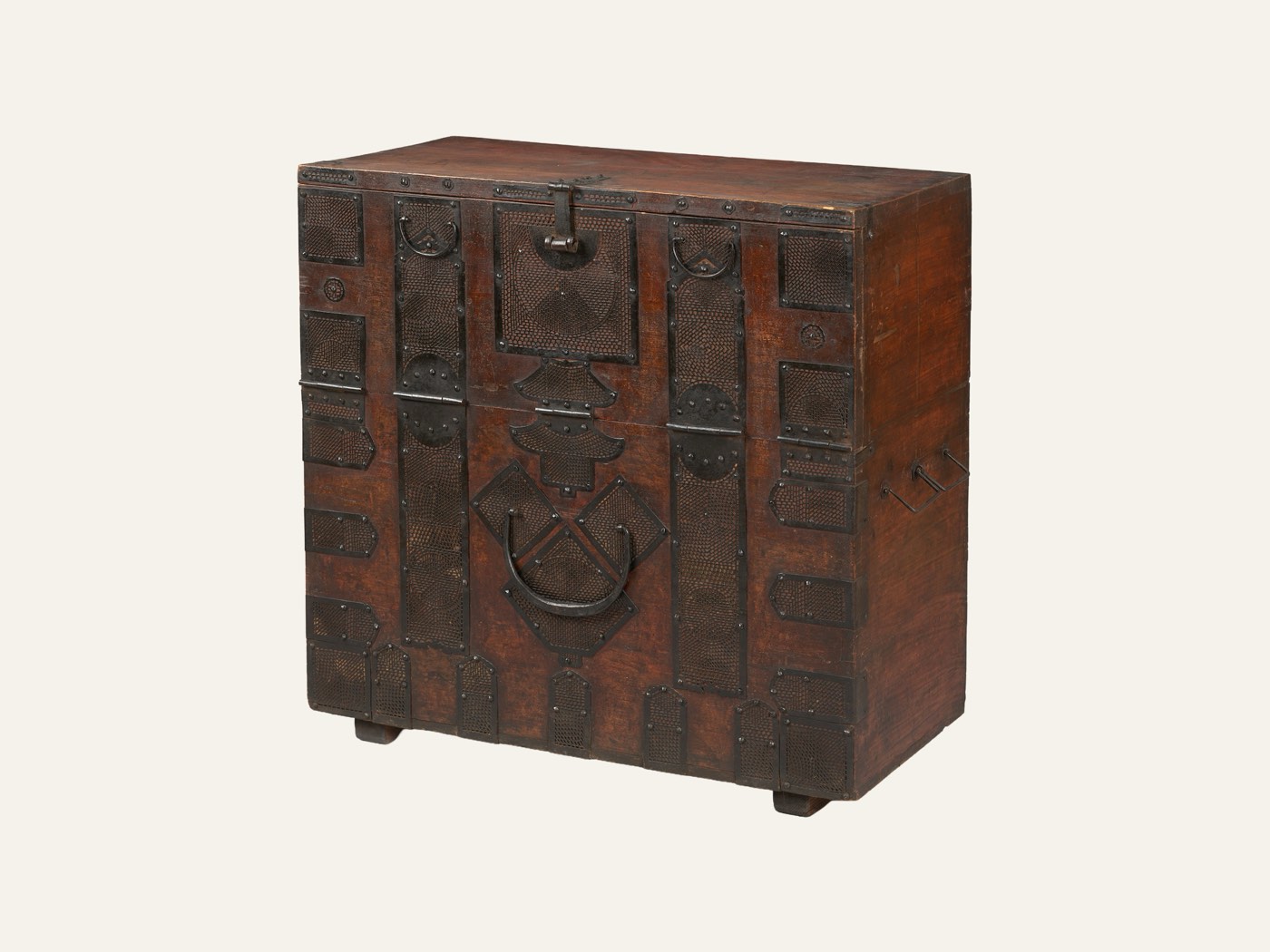
The bandaji, a front-opening wooden chest of the Joseon period, held folded clothes and important documents, with bedding stacked on top. Its role depended on the household, and its form varied by region.
Bandaji held clothing, books and rolled documents, as well as vessels for ancestral rites. Not every chest held all of these; its role depended on who used it and in which room.
Households that could not afford larger storage furniture used a bandaji instead, and it was an important part of a bride’s furnishings. Bedding placed on top made use of the space above the chest as well.
Wood, metal fittings, proportions and construction varied by region. Ganghwa, Pyongyang, Pakchon, Miryang and Jeju name regional traditions, while “sungsungi” refers to pierced metal ornament. The names overlap and do not form a list of separate types.
Ganghwa chests stored clothing, textiles and ritual vessels; some had shelves or small drawers, and their fittings include gourd, bat and taeguk shapes. Pyongyang chests are described as large and tall with abundant metal fittings, used for clothes with thick bedding on top; some have three small drawers inside the upper part. Pakchon chests are known for elaborately pierced ironwork, so even these two northern traditions differ.
Miryang chests are relatively low and wide. Gyeongsang-region furniture often shows more wood grain, but Miryang examples can carry comparatively plentiful iron fittings, including chrysanthemum-shaped nailheads and crescent-shaped handles, and records describe them holding clothes in the main room with bedding on top. Jeju chests stored books, writing materials and brass or ritual vessels. Researchers note similarities between some Jeju fittings and those of Jangheung and Haenam on the southwestern mainland.
The metal fittings were functional as well as decorative. Hinges let the upper panel open, corner pieces reinforced joints and plates around the lock protected the wood from wear. Floral and geometric shapes gave each chest its own look.
The photos show four different museum objects: a Ganghwa bandaji (Seoul Museum of History, Seoul History 021990), a Jeju-gwe chest (National Museum of Korea, Geonhui 4556), a Jeolla bandaji (Geonhui 4539) and a Pyeongan-do sungsungi bandaji (Geonhui 4630). The name Jeju-gwe follows the museum catalog.
The furniture, fittings and patterns are unaltered; only the photo backgrounds have been standardized to light ivory. Individual examples should not be taken as representative of whole regional traditions.
2026-10-09T22:20:00+09:00
National Museum of Korea ↗KOGL ↗National Museum of Korea ↗Encyclopedia of Korean Culture ↗Seoul Museum of History ↗Seoul Museum of History ↗National Museum of Korea ↗National Museum of Korea ↗National Museum of Korea ↗Ganghwa bandaji (Seoul History 021990). Original museum object; photograph background standardized to ivory. Source: 서울역사박물관.
Jeju-gwe chest (Geonhui 4556). Original museum object; photograph background standardized to ivory. Source: 국립중앙박물관.
Jeolla bandaji (Geonhui 4539). Original museum object; photograph background standardized to ivory. Source: 국립중앙박물관.
Pyeongan-do sungsungi bandaji (Geonhui 4630). Original museum object; photograph background standardized to ivory. Source: 국립중앙박물관.
In Korea, people end a meal by saying “잘 먹었습니다” (“I ate well”). The phrase pairs with “잘 먹겠습니다,” said before eating, and thanks whoever made the meal possible.
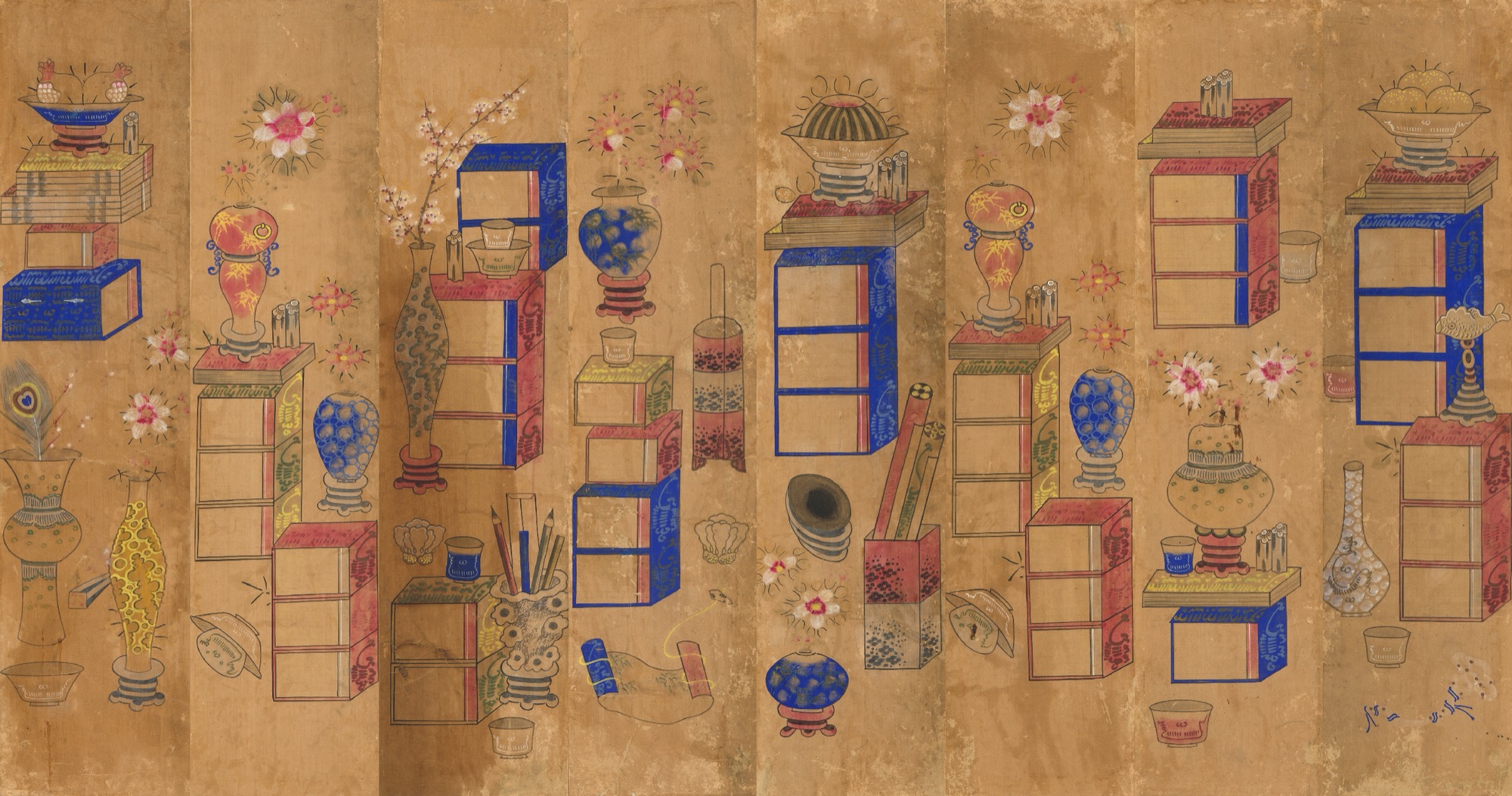
Korean chaekgeori paintings, popular in the late Joseon period, show books alongside vases, vessels and fruit. The still lifes reflect the objects people valued and the lives they hoped for.
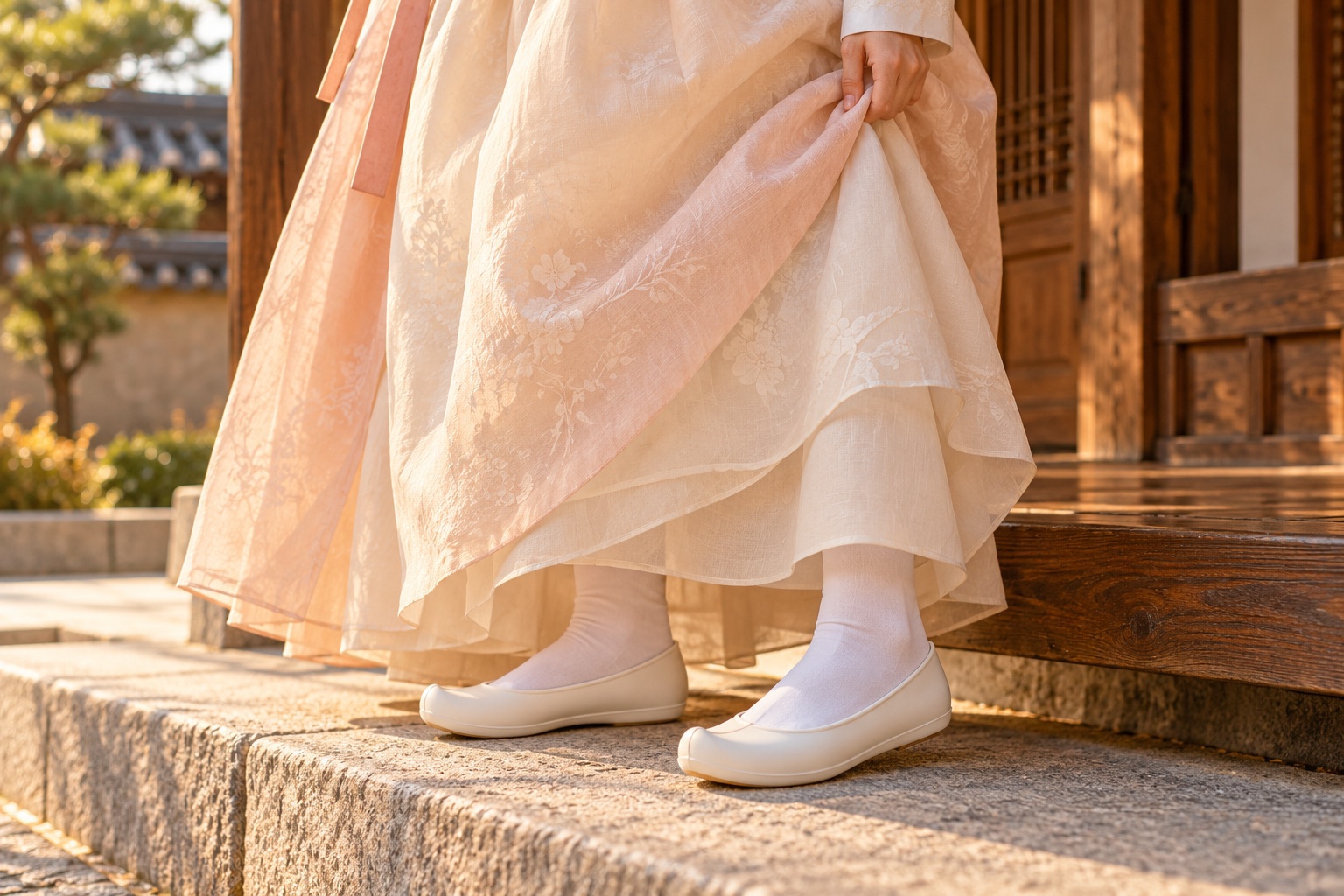
A low heel, an open instep and a gently raised toe: the outline of gomusin, Korea’s rubber shoes, carries both older footwear styles and the arrival of factory-made shoes. A practical pair for wet weather was once a coveted possession, and today it is a starting point for designers.
Rubber alone does not explain the shape of gomusin. According to the Encyclopedia of Korean Culture, men’s versions were modeled on gatsin, or leather shoes, and women’s on a type of danghye, a traditional low shoe. A National Folk Museum of Korea account also notes their resemblance to unhye, another women’s shoe.
The gently rising toe already appears in Joseon-period shoes, and factory-made gomusin carried that outline into rubber. Shapes varied, from broad and round-toed to slender with a pronounced toe.
Gomusin spread widely from the late 1910s through the 1920s, during Japanese colonial rule. Imports from Japan opened the market, and growing demand led to production on the Korean peninsula. The Joseon Rubber Works, founded in Seoul’s Jongno district in 1922, was one example.
Production centered on Gyeongseong, today’s Seoul, Pyongyang and Busan. Korean owners predominated in the first two cities, Japanese owners in Busan. The history of gomusin is one of urban factories, skilled workers and competing brands as well as rural memories.
Straw jipsin wore out quickly and soaked up water. Rubber shoes resisted water and lasted longer, making them practical for daily wear.
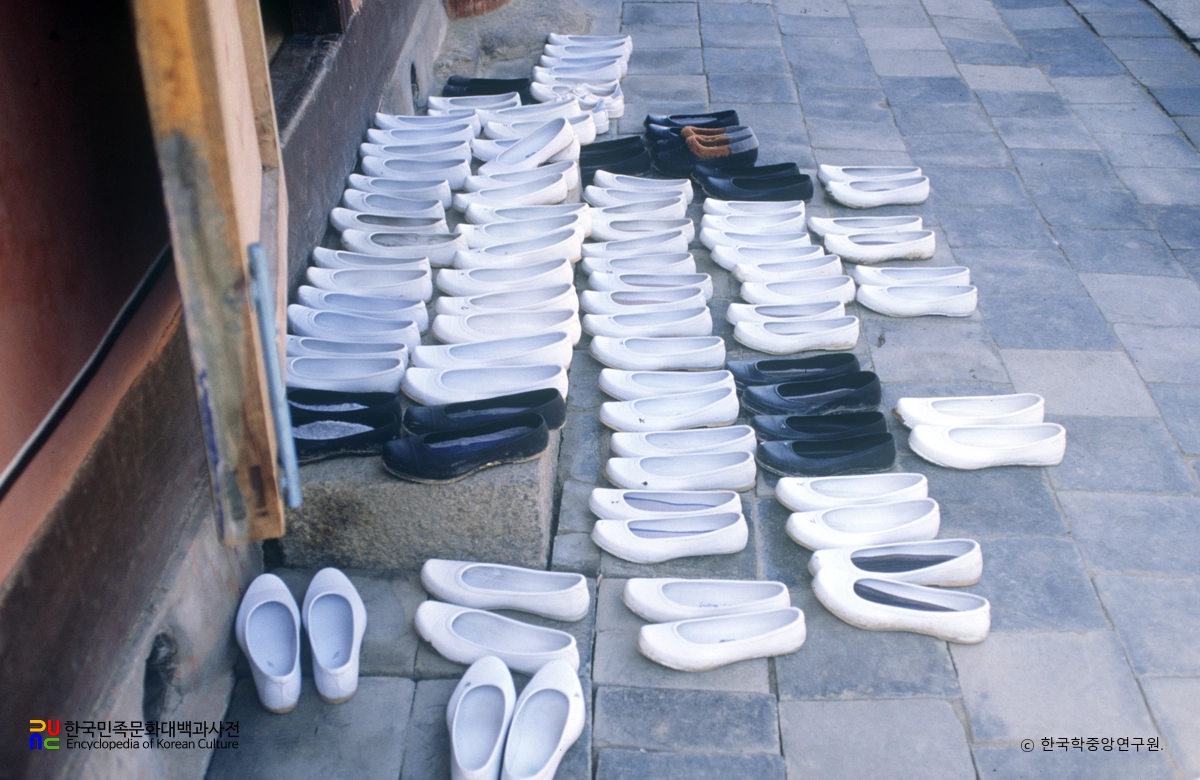
Men and women wore gomusin as their everyday outdoor shoes. An Academy of Korean Studies photograph shows rows of white and black pairs left outside monks’ quarters at Haeinsa Temple.
In Jeong Bi-seok’s 1937 story Seonghwangdang, cited by the National Institute of Korean History, Sun-i delightedly tries on her new white gomusin again and again. The scene shows how precious a seemingly modest pair could be.
Gomusin combined durability with the pleasure of dressing well. Factory production brought outlines associated with leather and silk shoes into more people’s daily lives.
Archival photographs show a broad black shoe, slender white pairs and a red-and-white version. Today’s colored gomusin build on an object that already came in different shapes and colors.
From around 1960, as sneakers and leather shoes became common, demand for gomusin fell. A once-new purchase became an everyday item and, later, a reminder of the past.
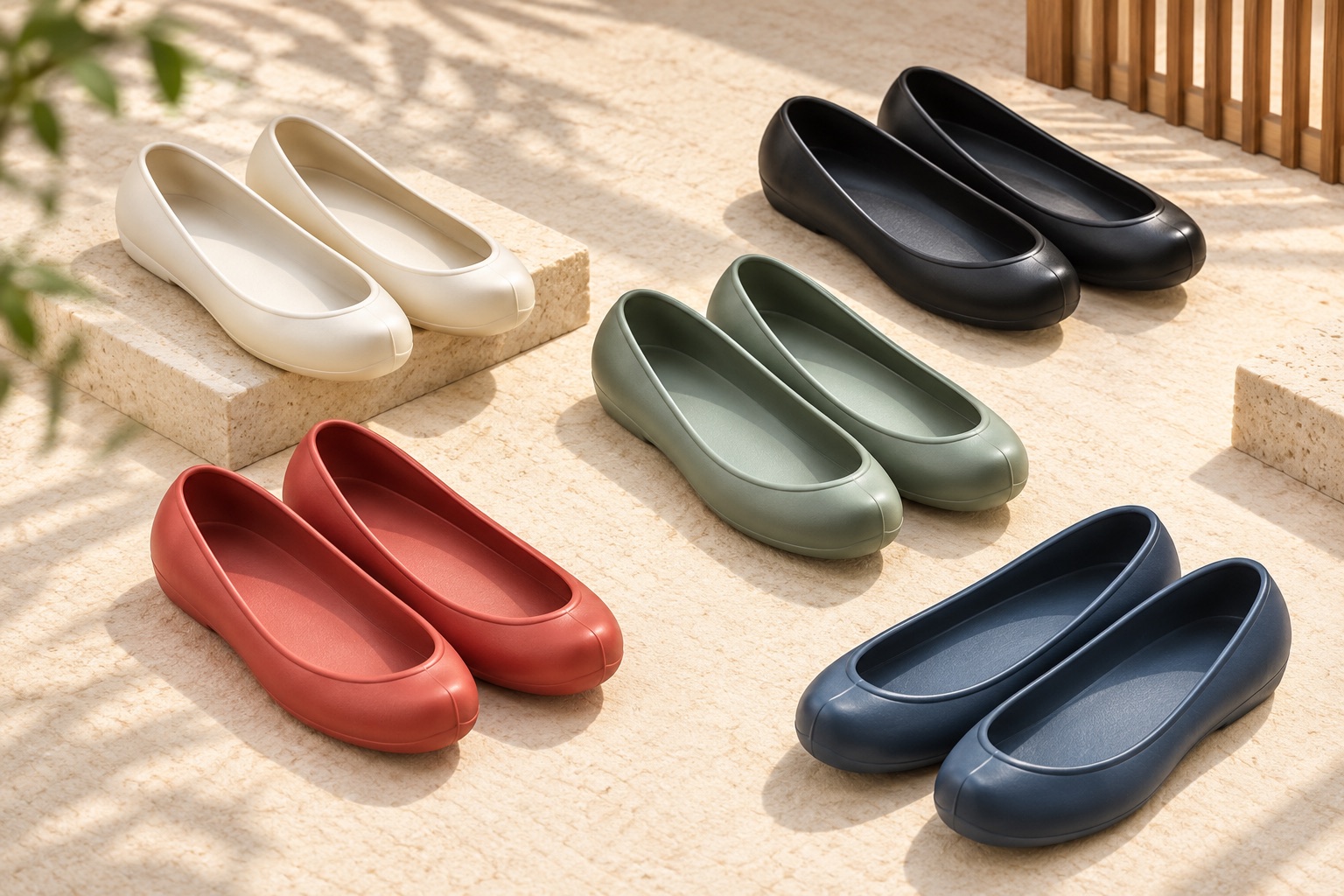
Blank Project worked with Woosung Chemical to launch PVC “New Color Gomusin” in 2019. The official crowdfunding campaign offered three colors and styled them with jeans and skirts. As of October 2026, the official product page lists seven colors: Pale Banana, Emerald, Burgundy, Eden Green, Coral Leaf, Purple Rose and Old Glory Red.
The familiar curve and open instep remain, while color and clothing change the effect. A shoe that once put an old form into a new material has itself become a basis for new design.
2026-10-09T11:21:15.541Z
Encyclopedia of Korean Culture ↗Academy of Korean Studies ↗Encyclopedia of Korean Culture ↗Encyclopedia of Korean Culture ↗Encyclopedia of Korean Culture ↗Encyclopedia of Korean Culture ↗New Color Gomusin 2019 ↗blankproject.kr ↗AI-staged white gomusin worn with hanbok, not a photograph of a specific brand's product.
AI gomusin color concept; not real product colorways or a particular brand.
Gomusin left outside monks’ quarters at Haeinsa Temple, as identified by the Academy of Korean Studies. Photograph undated.
The first two images are AI-staged styling and color concepts, not archive or product photographs.
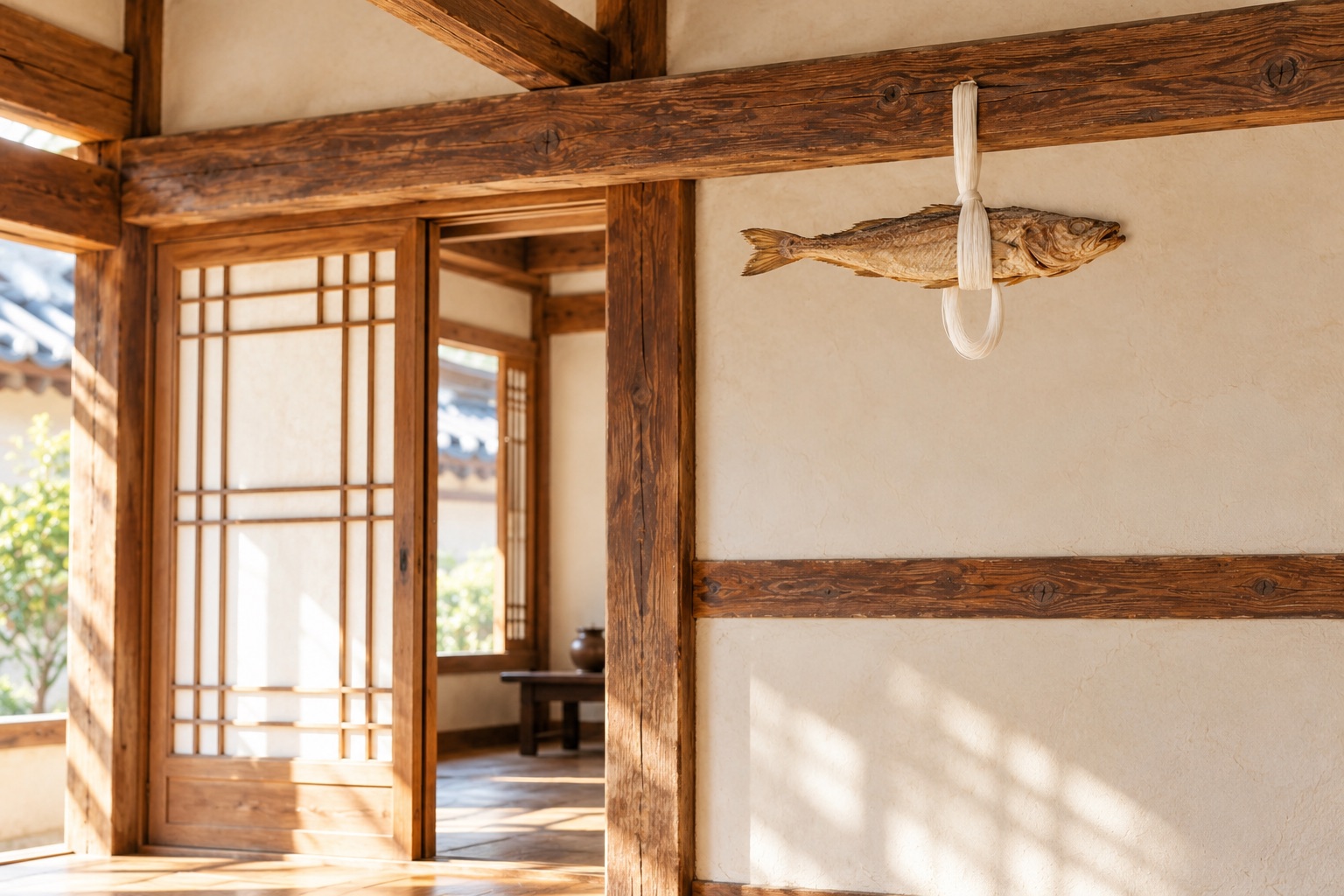
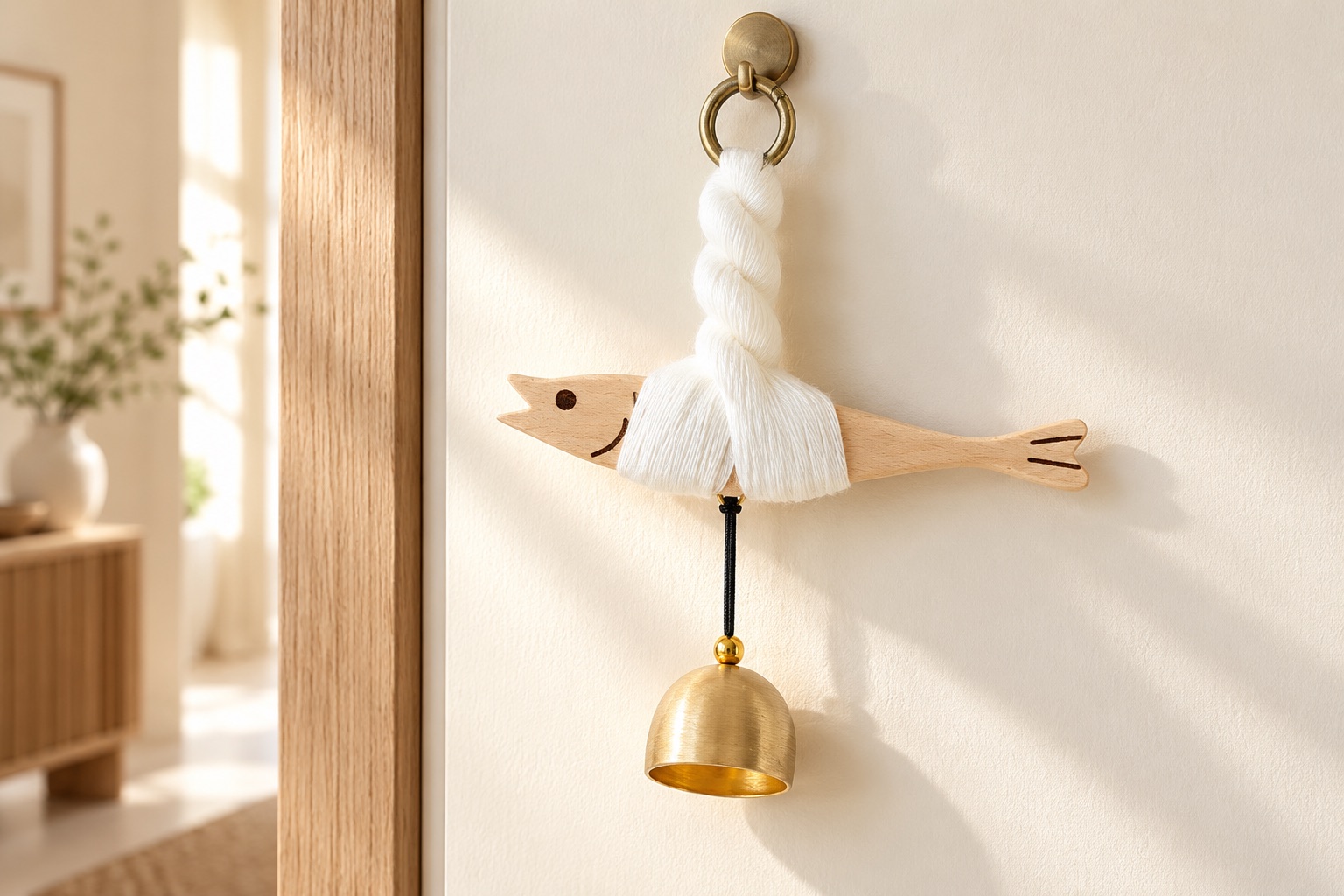
Dried pollack, a staple food in Korea, was also used in house-building rituals. Today, fish-shaped ornaments carry the same wish for a peaceful home.
Bugeo is dried pollack. Accounts of sangnyang-gosa, a ceremony held when a house’s ridge beam was raised, describe hanging bugeo along with thread and money. The ceremony marked a major stage of construction and asked for good fortune.
Aekmagi means warding off misfortune. In a 2025 craft class, the Gumi Public Health Center had participants make a door ornament from a fabric fish, cord and a bell.
The images here are not photos from that class. They are AI-generated reconstructions of a dried pollack tied with thread and of a wooden fish ornament.
The old ritual and the modern doorbell are different uses of the same motif. Both show how an everyday food found a place in expressions of care for a home. The ornament expresses a wish for well-being, not a promise of protection.
AI recreation of a dried pollack tied with silk thread above a hanok doorway, not a documentary photograph.
AI-styled concept of a wooden fish with silk thread and a bell, not an actual product photograph.
AI-created concept images, not actual ritual or product photographs.
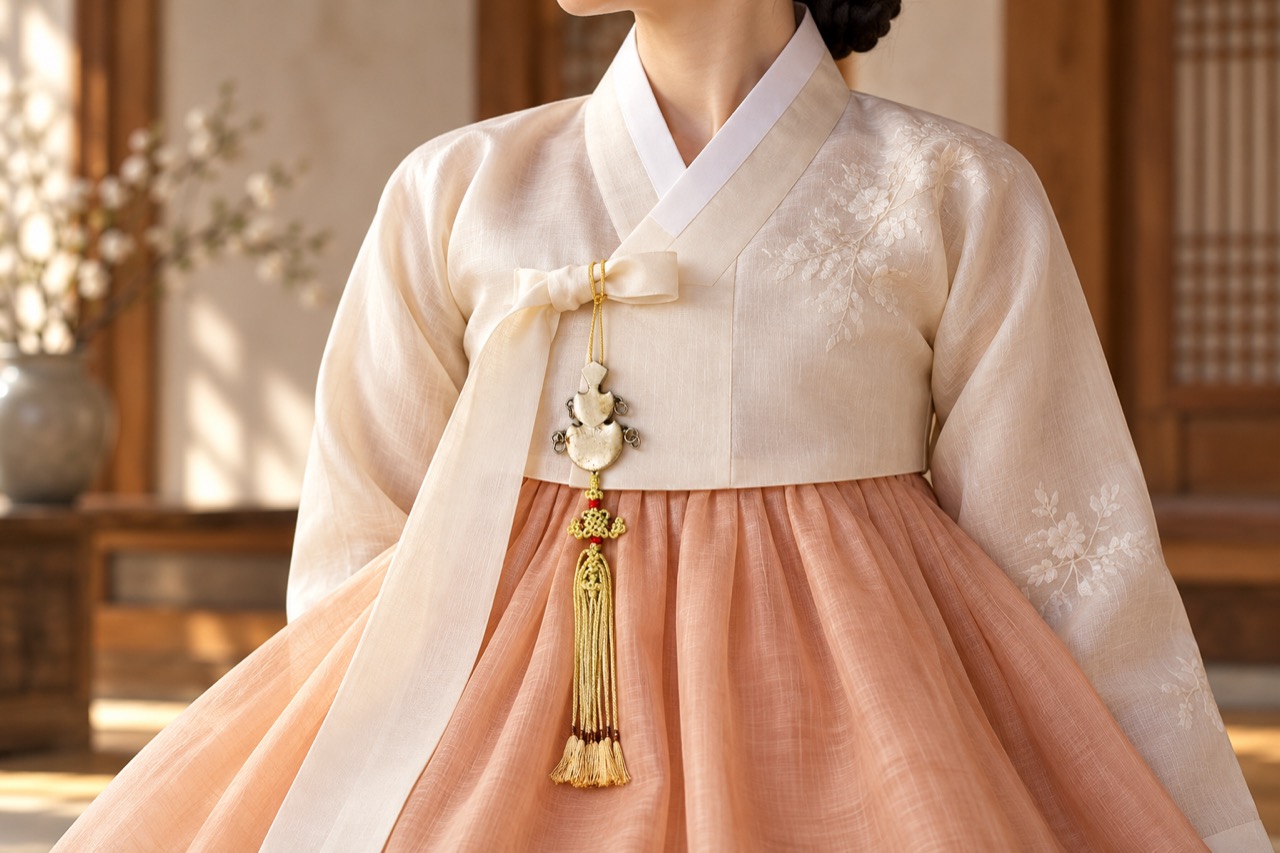
Some norigae, the knotted and tasseled ornaments worn with hanbok, held sewing needles. The needle-case norigae turned an everyday tool into an accessory.
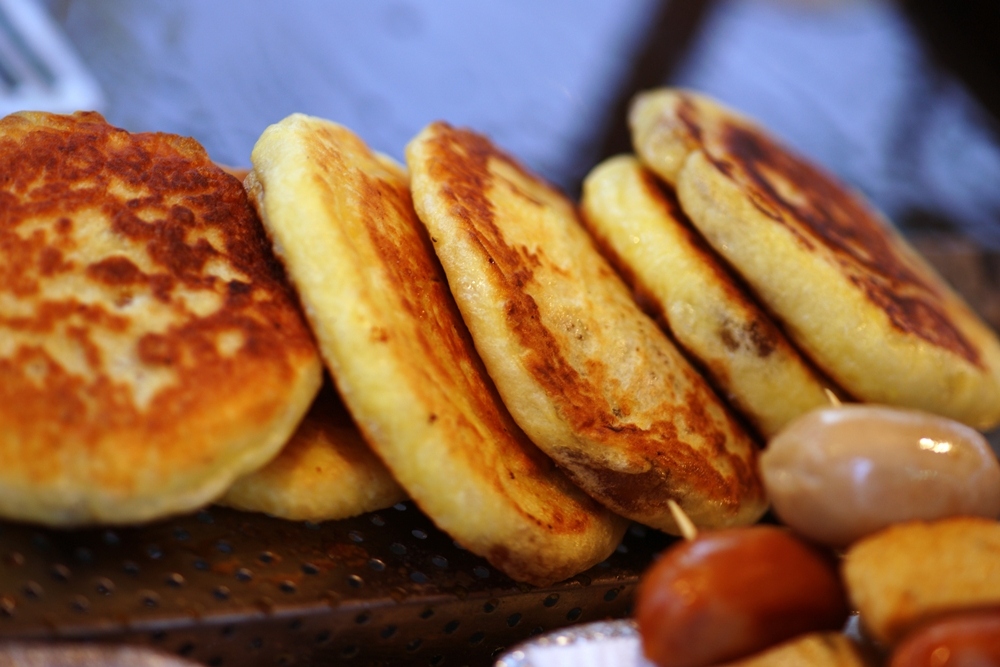
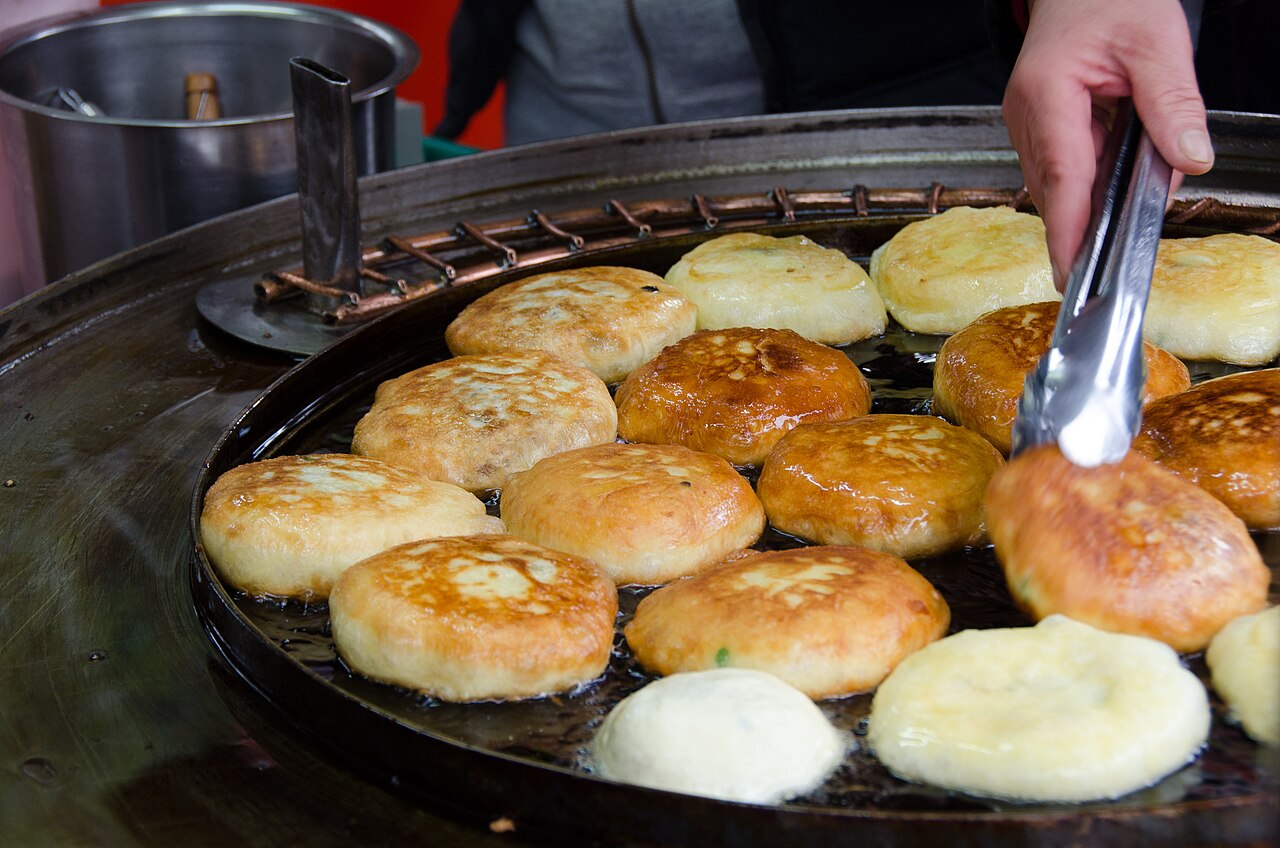
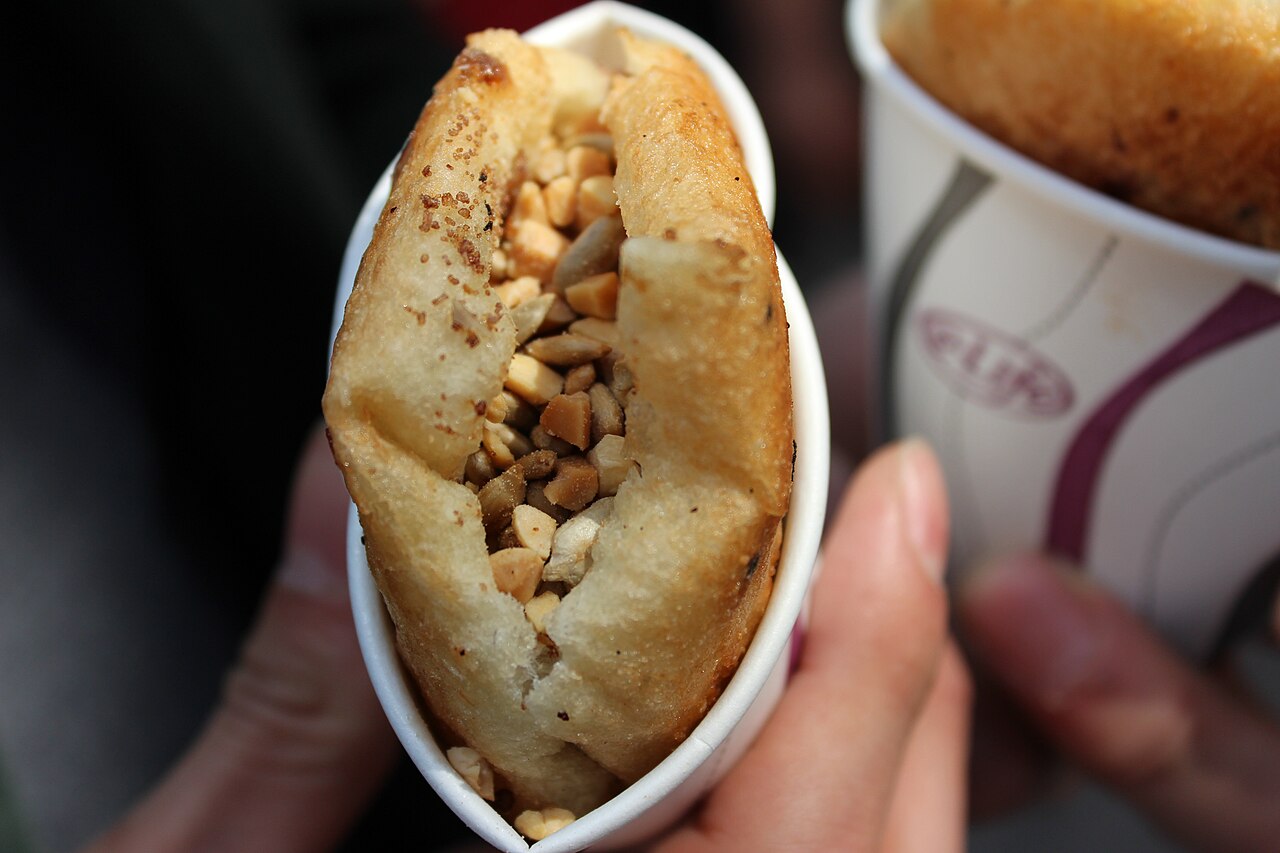
Golden dough wrapped around melted sugar, hotteok is a familiar winter street snack in Korea, and its dough and fillings have changed over time.
A ball of dough is pressed flat on a hot griddle. The edges spread thin, the surface turns golden and the sugar inside melts. Hotteok is a Korean street snack of wheat dough wrapped around a sweet filling.
By the 1920s, hotteok was already a popular food among ordinary Koreans. The Encyclopedia of Korean Culture notes that newspapers of the time published essays and short stories about hotteok and hotteok shops. A food bought as a meal or snack had entered both daily life and writing.
These records do not establish when today’s sugar-filled hotteok was first made.
Hotteok kept changing on Korea’s streets. Cooks fried it on oiled griddles, added cinnamon to the sweet filling, mixed glutinous rice into the dough or filled it with vegetables. The same name can describe very different textures.
Busan’s ssiat hotteok, or seed hotteok, is one example. Seeds and nuts add crunch and a nutty note to the sweetness. The Korea Tourism Organization describes it as a Busan street-food specialty made with pumpkin seeds, peanuts, almonds and walnuts, among other ingredients.
Part of hotteok’s appeal is the variety within a familiar taste. Dough thickness and fillings differ, and cities and shops add their own touches. A single pancake on a winter street carries the daily lives of those who make it and those who eat it.
2026-10-09T06:17:52.099Z
Encyclopedia of Korean Culture ↗Wikimedia Commons · Korea.net/KOCIS ↗Creative Commons ↗KOCIS Korea ↗Korea Tourism Organization ↗Golden hotteok with thick edges and patches of color from the griddle. Archival photograph, 2010.
Hotteok browns on an oiled griddle. A round press for flattening the dough rests beside the tongs. Archival photograph, 2013.
An opened ssiat hotteok reveals its filling, tucked into a paper cup for eating by hand. Archival photograph, 2012.
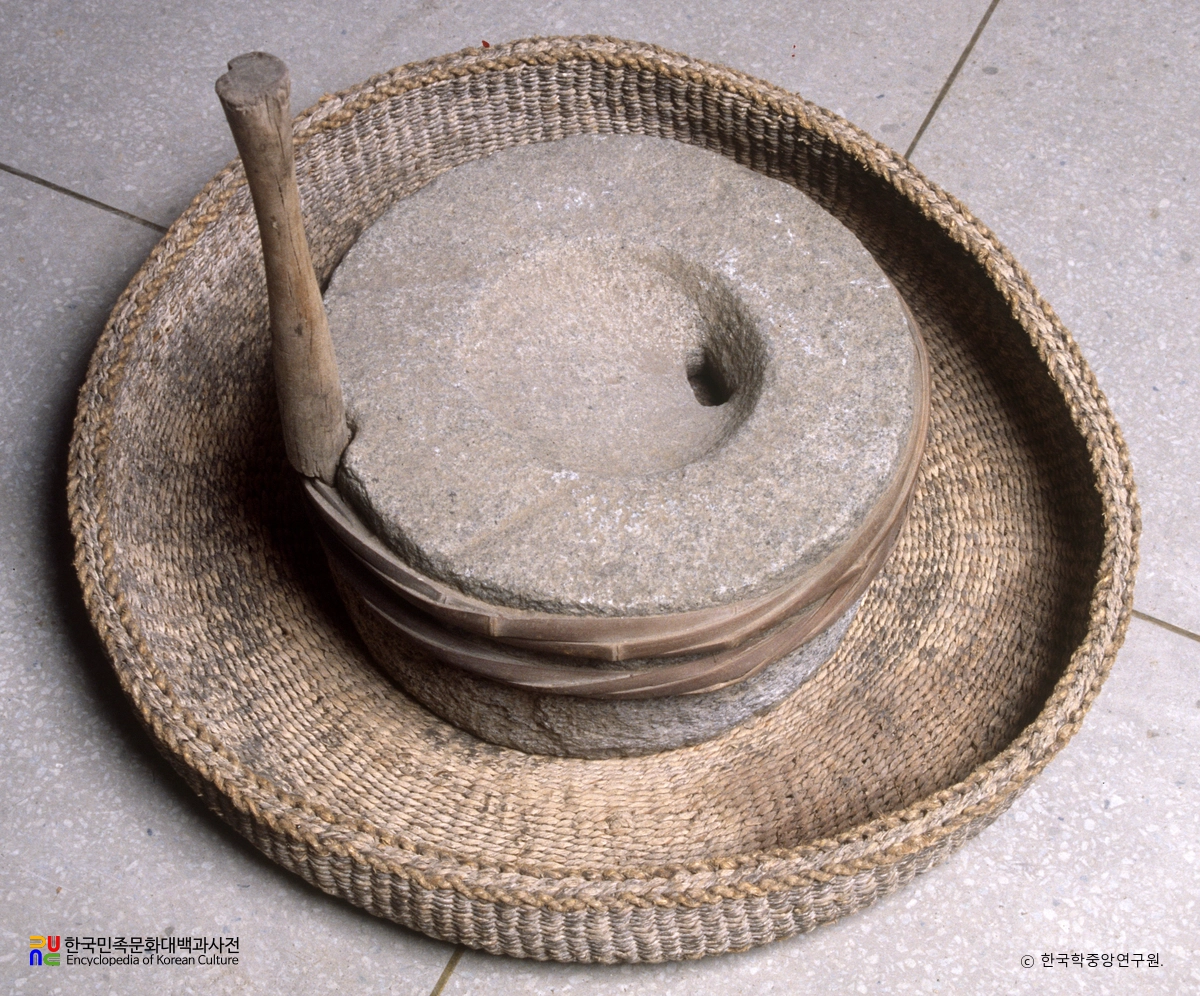
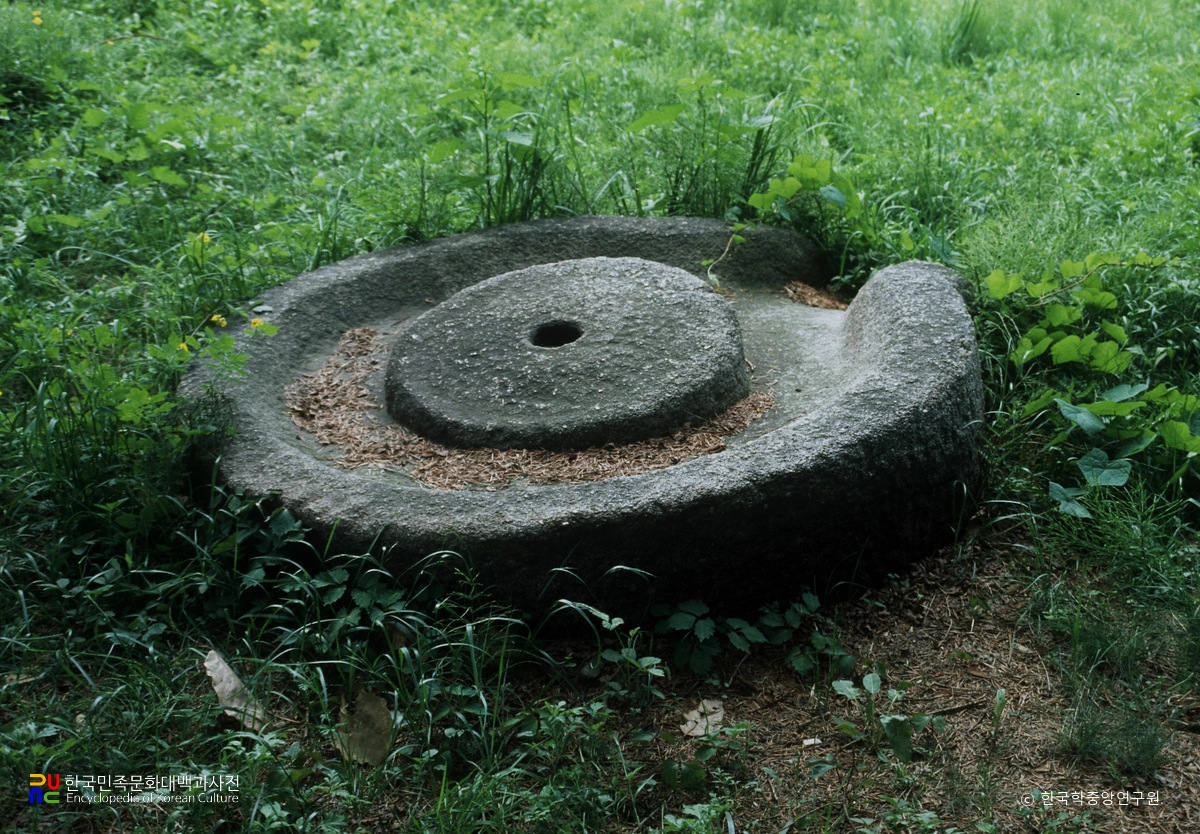
The maetdol, a Korean stone hand mill, ground beans for tofu and grain into flour. Its story links a long history of processing food with stone to the work of preparing meals in homes and temple kitchens.
Grinding food with stone predates the round hand mill. The National Museum of Korea displays grinding stones and slabs from Neolithic sites including Amsa-dong in Seoul and Gadeokdo in Busan. A long stone was pushed back and forth across a slab, mainly, archaeologists believe, to process gathered plant foods.
These are not rotary maetdol. They do show that breaking down hard food was part of daily work long ago.
A maetdol grinds grain between an upper and a lower stone. Ingredients go into a hole in the upper stone, which is turned by a handle, and the ground material comes out the side.
Small mills called pulmae also ground rice for fabric starch or ingredients for pine-nut and sesame porridge. Wooden mills were used in mountainous Gangwon, and Jeju had large mills turned by four people. Size, material and use varied.
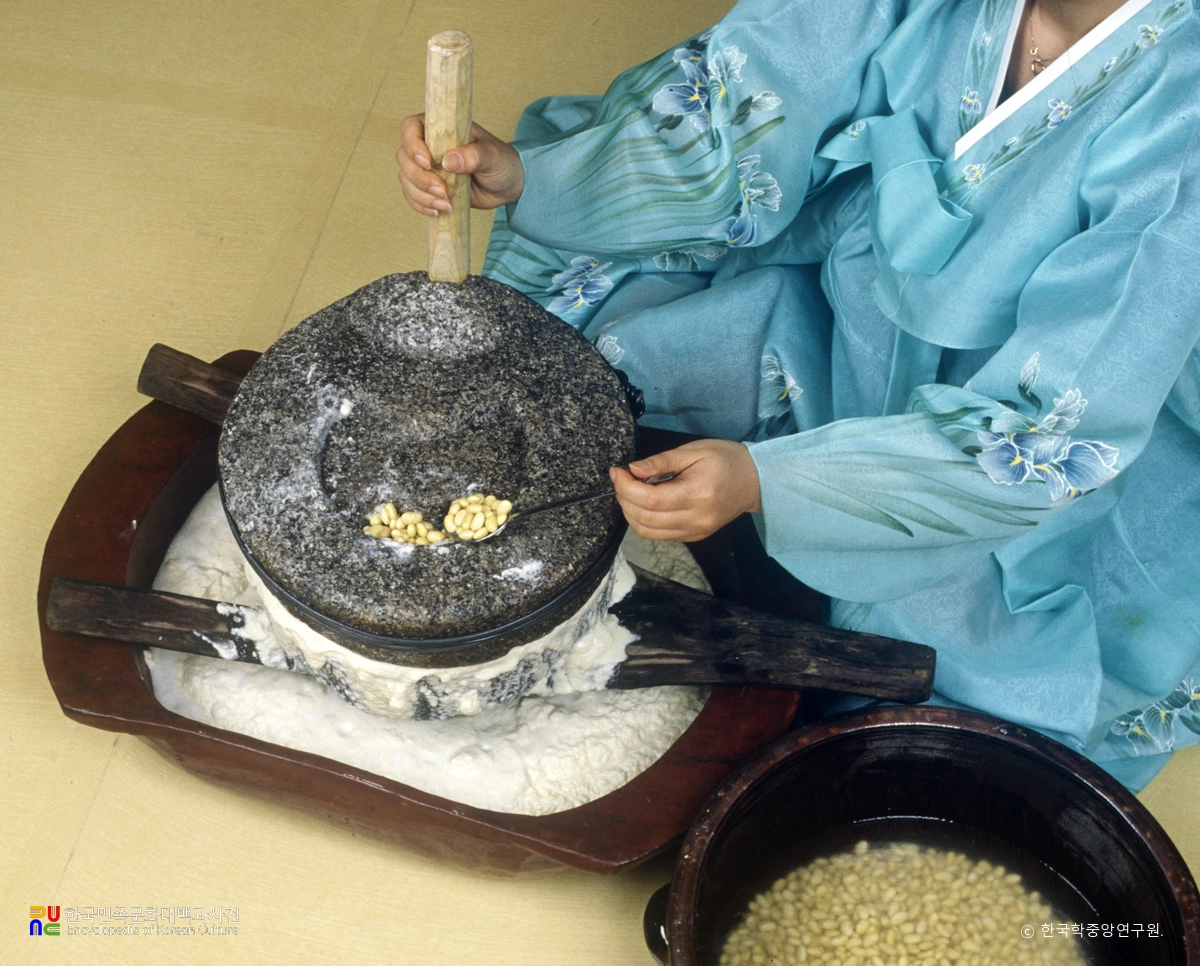
In traditional tofu-making, soaked beans were ground in a maetdol, then boiled and strained to obtain soy milk. A coagulant set the curds, which were pressed to drain the water.
One hand turned the handle while the other fed beans in with a spoon, and the ground beans collected in a basin below.
The same principle served larger kitchens. At Hoeamsa Temple Site in Yangju, each of two mills has a collecting basin and lower stone carved from a single block of granite. Large water tanks excavated nearby suggest the area was used for cooking.
The Korea Heritage Service tentatively dates the mills to early Joseon, when the temple flourished. Their large stone basins show the grinding method used on a scale fit for feeding many people.
2026-10-09T06:17:52.099Z
Encyclopedia of Korean Culture ↗Academy of Korean Studies ↗KOGL ↗Encyclopedia of Korean Culture ↗digital.khs.go.kr ↗National Museum of Korea ↗A millstone with a binding around the stone and a woven straw base. Photograph undated.
Beans are fed in with a spoon while the millstone is turned. The ground mixture collects in the wooden basin below. Photograph undated.
An archival photograph of a millstone at Hoeamsa Temple Site in Yangju, a separate example from the household tools above. Photograph undated.

After washing, fabric was laid on a stone and beaten with wooden paddles. The practice, called dadeumi, straightened the weave and gave cloth a finished sheen.

A banjitgori held the small things needed for sewing. Its compartments, layered paper bodies and lacquered surfaces with mother-of-pearl show how a practical household container could also be a carefully decorated object.

Before transit cards, Seoul bus passengers bought small metal tokens or paper coupon tickets in advance and handed one over for each ride. The objects record more than a payment method: fare collectors’ working conditions, student discounts and the gradual linking of the city’s transport system.
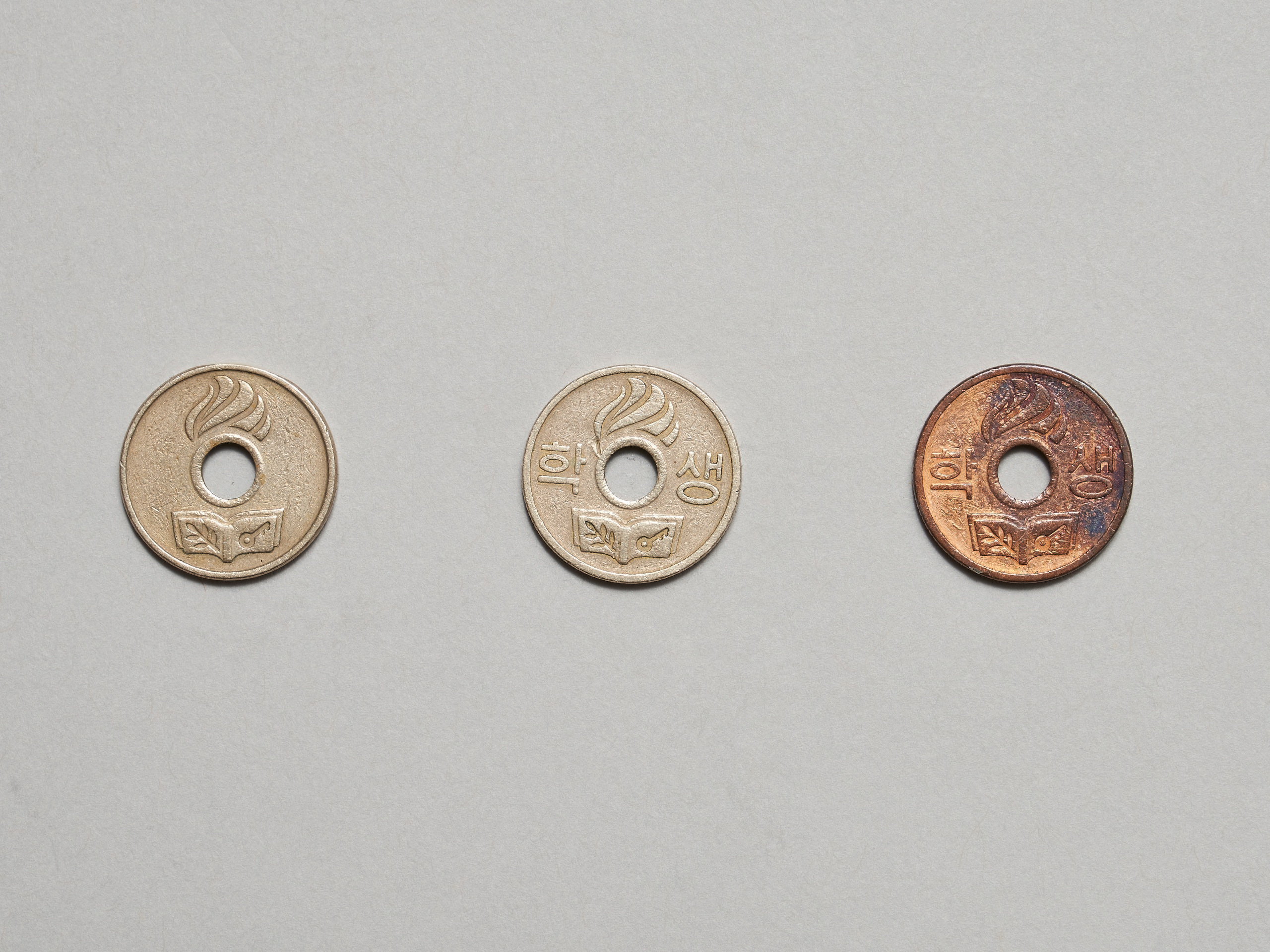
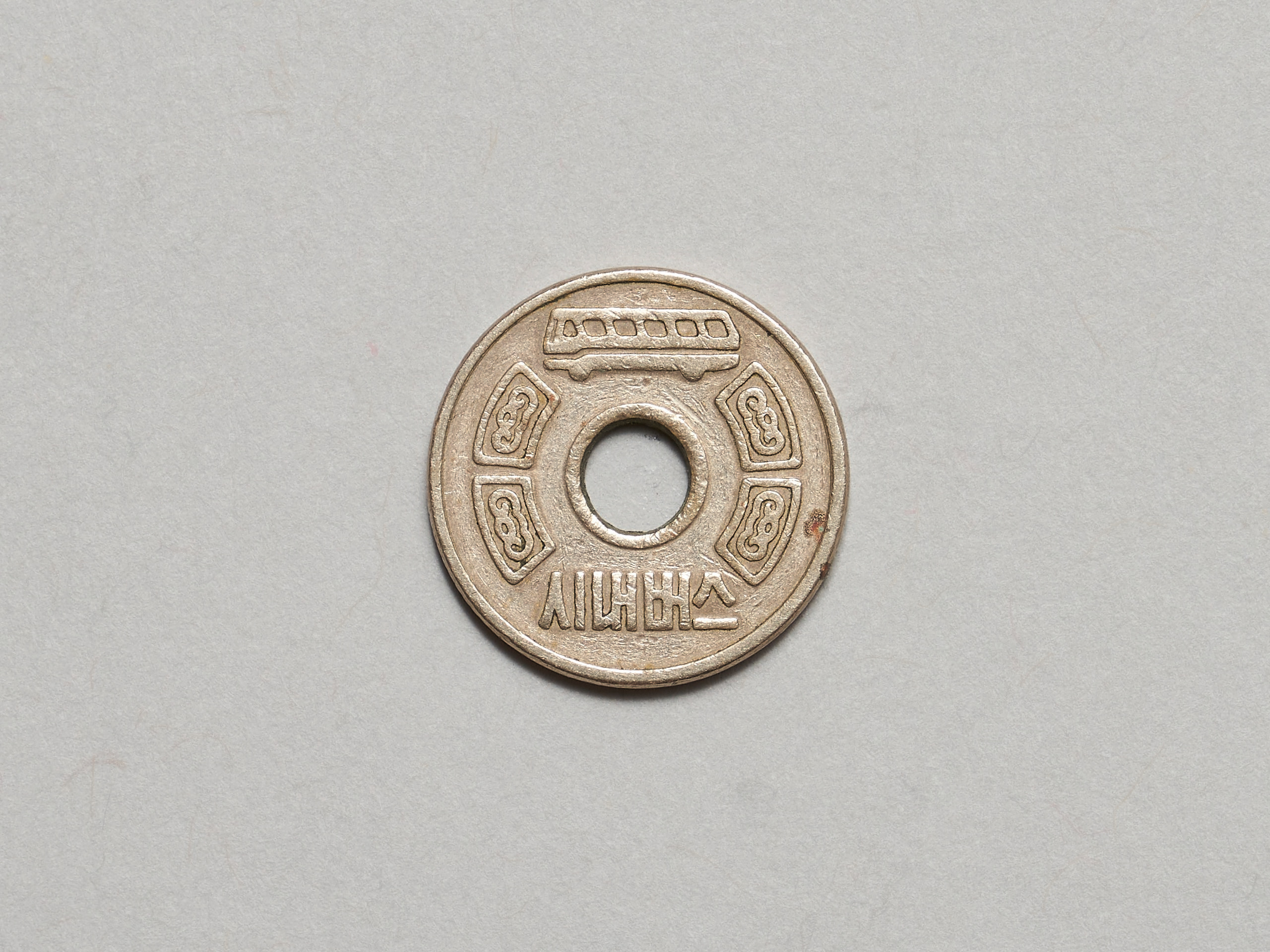
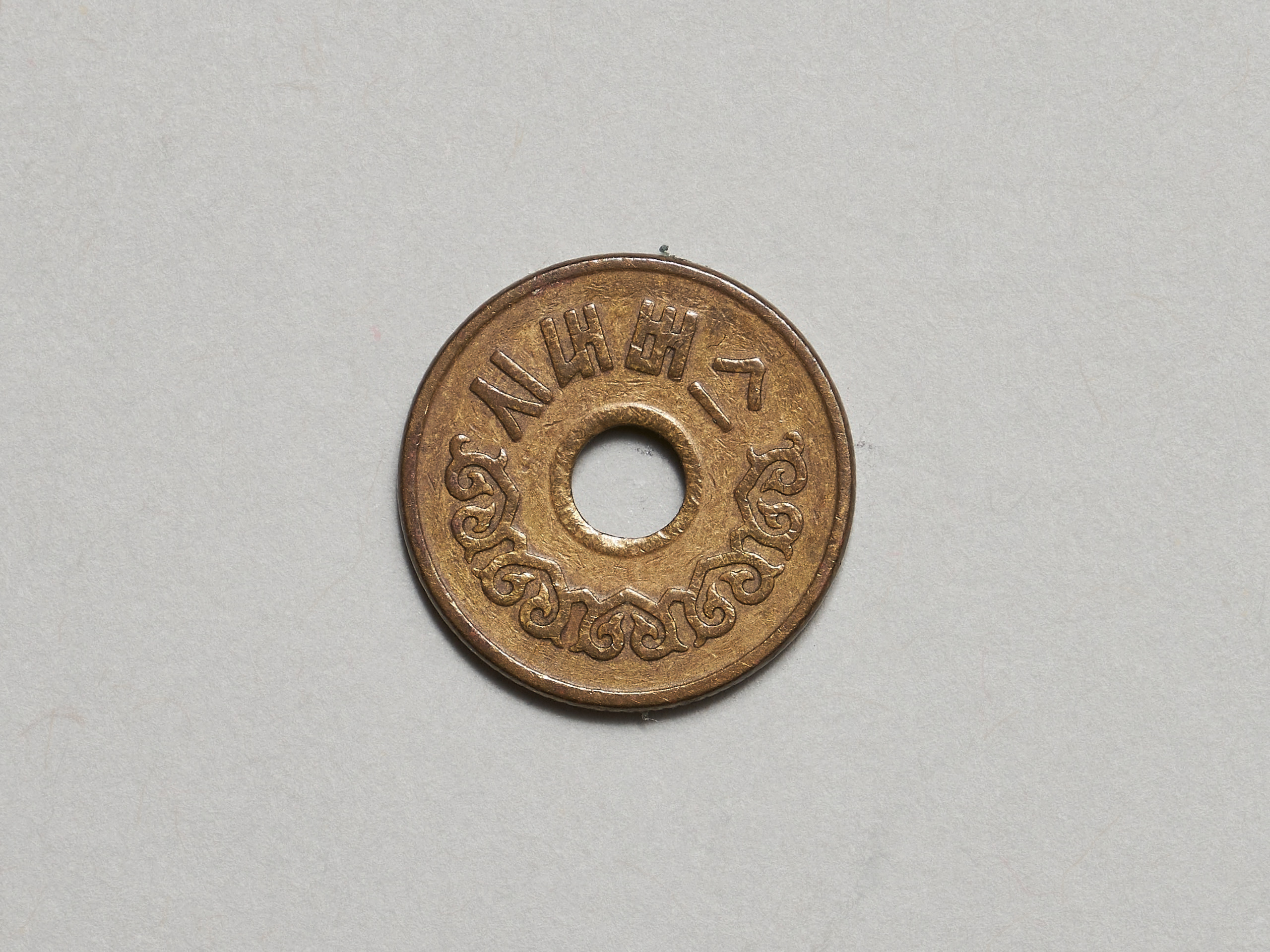
A bus token looked like a small coin but worked as a prepaid bus ticket. Passengers bought tokens at sales outlets, carried them and handed one over as the fare. Unlike money, it paid only for a specified transport service.
Paper coupon tickets were another option, bought in sets and handed over one per ride. Getting to school or work meant checking for tickets as well as cash.
Seoul introduced bus tokens in 1977, when conductors on board helped passengers on and off and collected fares. Tokens cut the need to count out change on a moving bus.
Seoul’s museum and municipal histories also cite another reason: women conductors accused of pocketing fares were subjected to abusive body searches. The stated aim does not mean those abuses ended at once.
The Seoul Urban Life Museum says early ordinary-fare tokens were yellowish brass, while student tokens were made of a silvery alloy known as nickel silver. The type of token marked the fare category.
In Seoul, paper coupon tickets replaced student tokens in May 1979. There were initially separate coupons for elementary pupils, secondary pupils and university students, but university coupons were dropped in 1990, and university students began paying the ordinary fare.
Seoul’s dates are Seoul’s history, not a national timeline. Other cities also used tokens and paper tickets. In July 2026, Busan’s city government announced a bus-history exhibition featuring its local tokens and coupon tickets.
That similar tickets existed in different cities does not mean passengers could use one city’s token in another.
Transit cards appeared in Seoul in 1996, and tokens were abolished there in 1999, so the shift to today’s Tmoney did not happen overnight. Tmoney’s own history dates the launch of Seoul’s new transit-card system to July 2004, followed by metropolitan integrated-fare settlement in July 2007.
More than the material changed. Electronic records allowed the system to link journeys and calculate fares across transport services.
A token was surrendered for one ride; a rechargeable card holds a balance and can be topped up and reused. In an integrated fare system, recorded journeys also feed into the fare.
Tokens and paper tickets in museums preserve an older routine of buying tickets in advance, carrying them and taking one out to board. Paying with a card or phone today grew out of those changes in objects and institutions.
2026-10-09T02:11:52.173Z
Tmoney ↗Tmoney · history ↗YTN Science ↗YTN Science · YouTube ↗Seoul Museum of Urban Life ↗Seoul Metropolitan Government ↗museum.seoul.go.kr ↗Three Seoul student bus tokens, showing different surfaces and colours.
An individual detail of a student token’s lettering and design; a separate source photograph from the group view.
An ordinary-fare bus token, used for a fare category different from student tokens.